


The best freelance websites are not universal. The right platform depends on your niche, proof, pricing model, and how you want to sell. This guide gives you a practical framework to choose the best freelance websites for your goals, plus a decision matrix, a checklist, and data-backed context for the market.
Search intent for "best freelance websites" is mixed. Some readers want a ranked list, others want a decision method. This guide focuses on fit: which platforms are best for specific situations and why. You will leave with a repeatable process instead of a one-time list.
Review results monthly and prune weak channels.
Consistency compounds results.
To compare marketplace options and build a balanced channel mix, explore the Markework blog, browse the freelancer directory, and check the find work hub.
A great freelance website does three things: it matches you with the right buyers, supports your pricing, and reduces friction in hiring. That is why the best platform for a technical writer is different from the best platform for a logo designer or a performance marketer.
You should evaluate platforms by fit, not hype. Use the framework below, then pick two primary channels and one backup. This reduces risk and improves your long-term pipeline.
- Freelancers contributed $1.27 trillion in annual earnings to the U.S. economy in 2023 (source: Upwork Freelance Forward 2023).
- 64 million Americans freelanced in 2023, or 38% of the U.S. workforce (source: Upwork Freelance Forward 2023).
- Freelancing grew by 4 million people from 2022 to 2023 (source: Upwork Freelance Forward 2023).
- 20% of freelancers regularly use generative AI versus 9% of non-freelancers, a 2.2x gap (source: Upwork Freelance Forward 2023).
- 47% of freelancers provide knowledge services such as marketing, IT, and business consulting (source: Upwork Freelance Forward 2023).
- 52% of Gen Z professionals and 44% of Millennials performed freelance work in 2023 (source: Upwork Freelance Forward 2023).
- Occasional independents grew from 15.8 million in 2020 to 36.6 million in 2023, a 130% increase (source: MBO Partners State of Independence 2023).
- 26 million full time independents in 2023, up 20% year over year (source: MBO Partners State of Independence 2023).
- BLS estimates 9.1 million unincorporated self-employed workers in Q4 2023, or 5.7% of nonagricultural employment (source: U.S. Bureau of Labor Statistics).
- U.S. internet advertising revenue reached $258.6 billion in 2024, up 14.9% year over year (source: IAB Internet Advertising Revenue Report 2024 PDF).
- Search advertising reached $102.9 billion in 2024 and held a 39.8% share of total ad revenue (source: IAB Internet Advertising Revenue Report 2024 PDF).
- Digital video reached $62.1 billion in 2024, up 19.2% year over year (source: IAB Internet Advertising Revenue Report 2024 PDF).
- Retail media hit $53.7 billion in 2024, up 23.0% year over year (source: IAB Internet Advertising Revenue Report 2024 PDF).
Use FIT to evaluate freelance websites objectively. It keeps you focused on demand, pricing power, and trust signals.
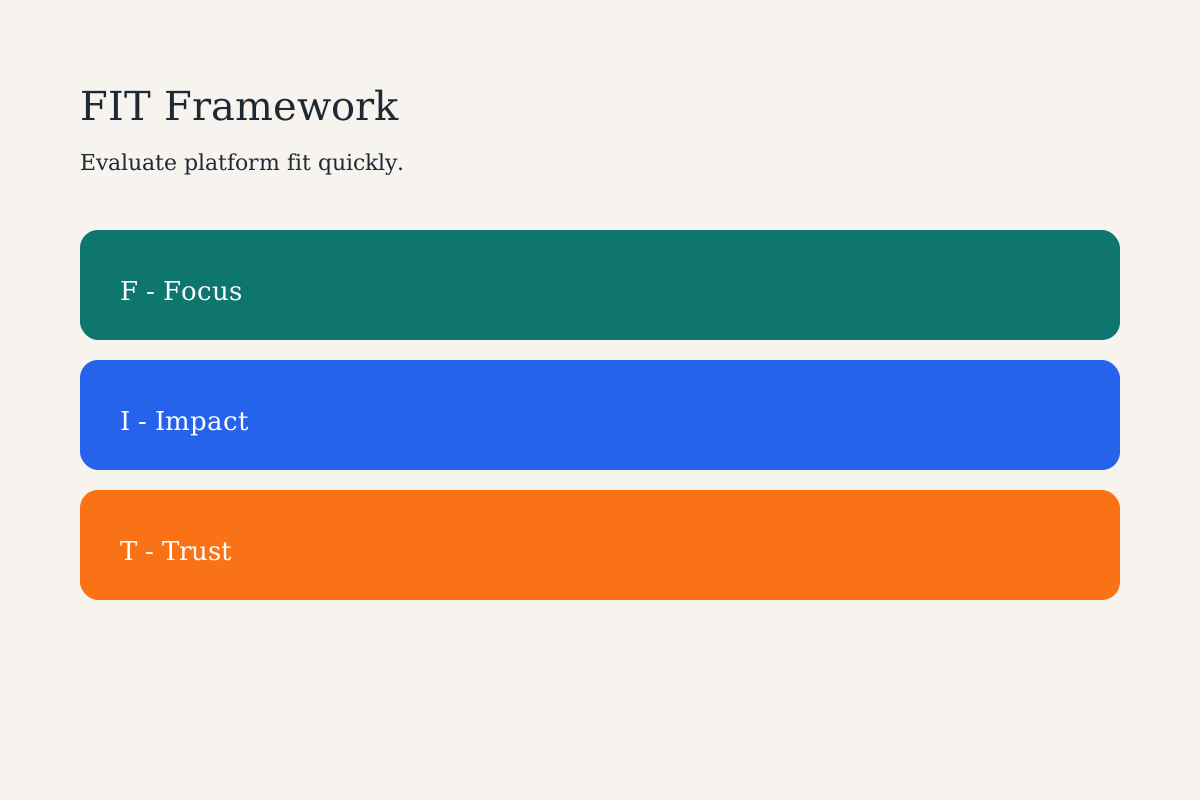
- Focus: Does the platform attract buyers in your niche?
- Impact: Can you sell outcomes, not just tasks?
- Trust: Are reviews, verification, and payment protection strong?
If any dimension is weak, you will feel price pressure or conversion friction.
The list below avoids ranking and focuses on best-fit use cases. Choose based on your offer and proof.
| Platform | Best for | Why it fits |
|---|---|---|
| [Upwork](https://www.upwork.com) | Broad services and steady demand | Large buyer base and diverse categories. |
| [Fiverr](https://www.fiverr.com) | Productized services | Gig format supports fixed-scope offers. |
| [Toptal](https://www.toptal.com) | Senior specialists | Curated network with higher-end buyers. |
| [Freelancer.com](https://www.freelancer.com) | Competitive bidding | Large global marketplace with many listings. |
| [PeoplePerHour](https://www.peopleperhour.com) | Project-based work | Strong for scoped projects and hourly gigs. |
| [Guru](https://www.guru.com) | Portfolio-led freelancers | Emphasis on profiles and repeat clients. |
| [99designs](https://99designs.com) | Design contests and branding | Design-specific marketplace with buyers. |
| [Contra](https://contra.com) | Independent-first portfolios | Portfolio-forward profiles and flexible deals. |
| [Malt](https://www.malt.com) | European market | Strong EU presence and local buyers. |
| [We Work Remotely](https://weworkremotely.com) | Remote job board access | Large remote listings including freelance roles. |
Use this matrix to pick a primary platform. The best choice is the one that matches your niche, pricing, and proof level.
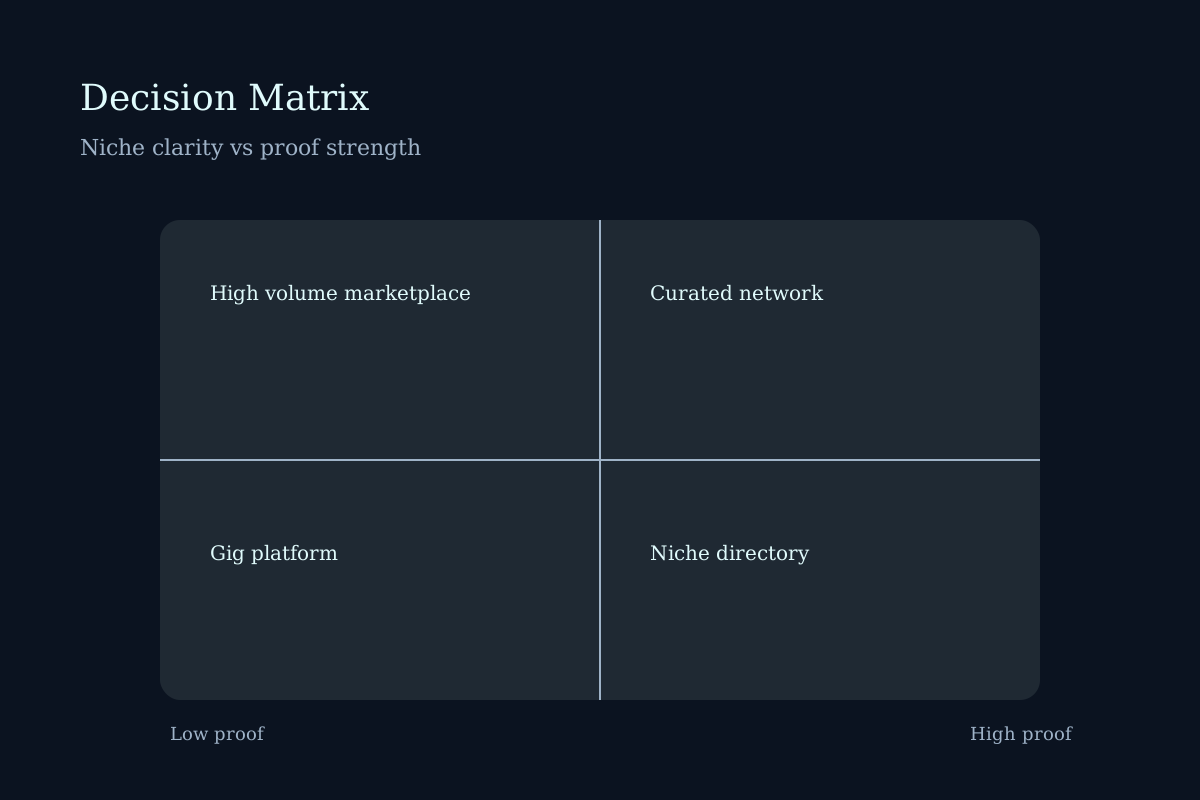
- If you are new and broad, start with a high-volume marketplace.
- If you are specialized, choose a curated or niche platform.
- If you sell productized services, choose a gig-based platform.
- If you have strong proof, test a premium network.
Platform fees change your effective rate. Treat fees like a cost of acquisition. If you target $8,000 per month and can sustain 32 billable hours, your base rate is $250 per hour. Add a 15% fee buffer and a 10% marketing buffer, and you need to price closer to $312 per hour. If that feels high, tighten the offer or increase value delivered per hour.
- Fee buffer: 10 to 20% to cover platform take rates.
- Marketing buffer: 10 to 20% to cover outreach time.
- Ops buffer: 5 to 10% for tools and reporting.
- Floor rate: The minimum you accept after buffers.
Great platforms reduce friction, but your onboarding is what creates repeat work. Use this checklist to keep clients aligned.
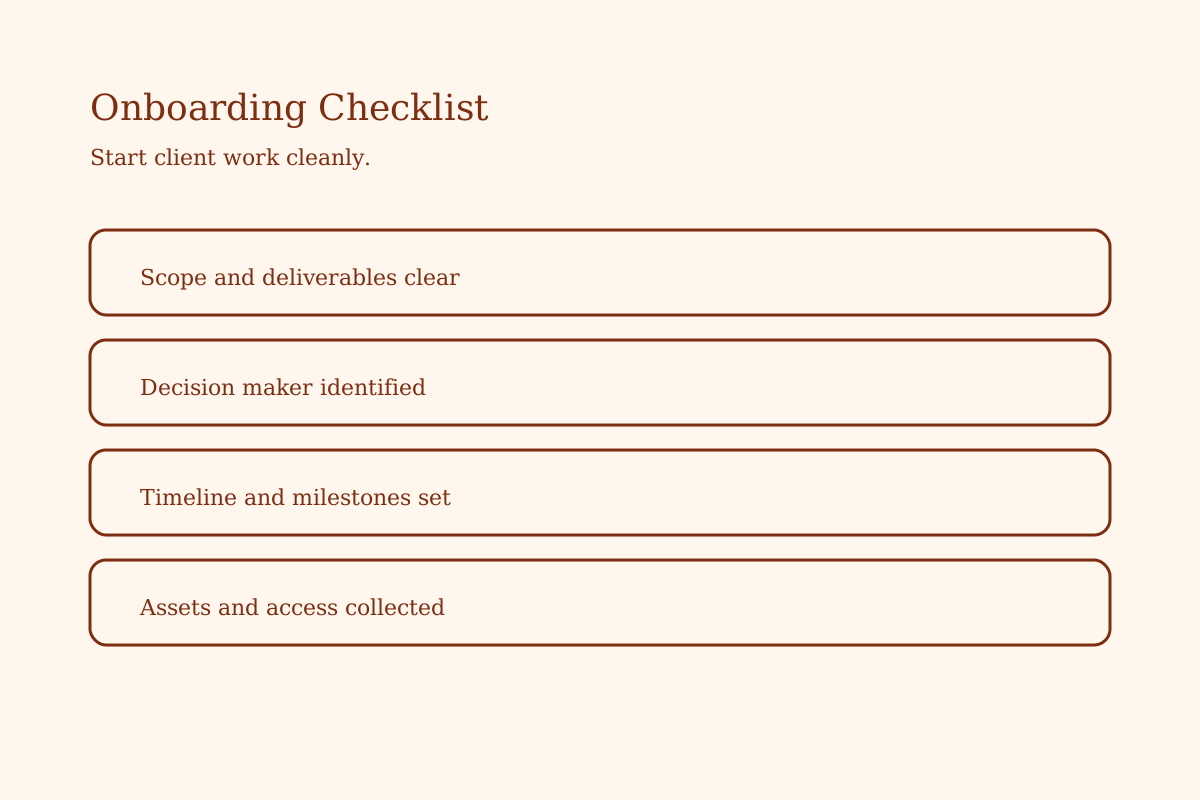
- Scope and deliverables confirmed.
- Decision maker identified.
- Timeline and milestones agreed.
- Access and assets collected.
- Revision limits and feedback cadence set.
Your profile is a landing page. The best freelance websites reward profiles that are clear, specific, and outcome-driven. Use this five-part structure to increase your response rate.
- Outcome headline: One sentence that names the niche and result.
- Proof bar: Two metrics or results, not just a portfolio grid.
- Offer ladder: Entry offer, core offer, and retainer option.
- Process preview: 3 to 5 steps with milestones and timelines.
- CTA: One next step and a response time promise.
Winning on any platform requires fast, relevant proposals. The best freelancers keep a reusable structure and customize only the opening. This keeps quality high without burning hours.
- Short intro with niche alignment and quick credibility.
- One paragraph on goals and expected outcomes.
- 3-step plan with milestones and timeline.
- Deliverables, scope limits, and revision rules.
- Proof asset or metric and a clear next step.
Platforms reduce payment risk, but you still need to protect scope and communication. The best freelance websites reward sellers who keep projects predictable.
- Use milestones for large projects.
- Write a short scope summary in every proposal.
- Set response windows and revision limits.
- Document approvals and deliverables in writing.
Most freelancers fail because they chase too many platforms. Two primary channels and one backup is enough. One high-volume marketplace plus one niche or curated platform balances stability and margin.
- Primary channel: steady lead flow.
- Secondary channel: higher quality or niche fit.
- Backup channel: seasonal or referral-based.
The best freelance websites are not just about one-off gigs. They are about turning project wins into repeatable monthly work. Use a simple retainer plan: monthly KPIs, a reporting cadence, and a minimum commitment.
- Define a monthly KPI and baseline.
- Outline 3 to 5 monthly deliverables.
- Send a short monthly results summary.
- Propose a 3-month minimum to see compounding results.
Proof assets are the fastest way to increase pricing power on any platform. The goal is to reduce buyer risk with evidence, not claims. Two strong assets can outperform a large portfolio with no results.
- Case study: before-and-after metrics and a short process summary.
- Audit or teardown: show how you diagnose problems and what you change.
- Results snapshot: a one-page KPI story that is easy to skim.
If you lack client data, create a speculative audit on a public brand and explain the changes you would make. This shows thinking and process even before you have live results.
Many freelancers blame platform fees, but the real issue is pricing without buffers. If you price based on value and include fee buffers, marketplaces can still be profitable. The key is knowing your floor rate and saying no to low-fit projects.
When you track profit per hour instead of headline rate, platform decisions become clearer and less emotional.
- Price for outcomes, not hours.
- Include platform fees in your baseline rate.
- Track win rate and average project value per platform.
Some platforms will not fit your service or pricing model. Use these signals to walk away early and protect your time.
- Most listings are far below your minimum rate.
- Buyers consistently lack clear goals or scope.
- You cannot show proof assets or outcomes in the platform format.
- Your win rate stays below 10% after refinement.
A short testing window prevents endless platform hopping. Commit to 90 days, track results, then double down or move on.
- Days 1-30: Build two proof assets and refine your profile.
- Days 31-60: Send consistent proposals and track win rate.
- Days 61-90: Convert wins into retainers or repeat projects.
At the end of 90 days, decide using data: win rate, average project value, and time spent per win. If the numbers are weak, switch platforms or narrow your offer.
This discipline protects your time and keeps your pipeline focused.
- Choosing platforms based on hype instead of fit.
- Ignoring fees and underpricing.
- Trying to be everywhere instead of focusing on two channels.
- Skipping proof assets that reduce buyer risk.
- Not tracking win rate by platform.
A senior data analyst used a curated network to win higher-value clients and avoid price pressure. She built two case studies with measurable outcomes and kept a narrow niche focus.
A designer packaged landing page audits into a fixed-scope gig. The clear scope reduced revisions and increased close rate.
A marketing freelancer used a high-volume marketplace for lead flow and a niche platform for premium clients. This balanced stability and margin.
Markework is built for marketing and creative freelancers who want less noise and clearer alignment with client goals. If your work is outcome-driven and you want to show proof fast, use Markework as a quality-first channel in your platform mix.
Learn more on the Markework homepage, review the pricing page, and see how the platform positions trust on the why Markework page. For direct inquiries, use the contact page. You can also browse common questions in the FAQ.
High-volume marketplaces are often best for beginners because they provide faster feedback and more listings. Use a narrow niche to stand out.
Yes if you have strong proof and a specialized offer. Curated platforms tend to favor higher rates and clearer buyers.
Two is enough: one for steady lead flow and one for higher-quality clients.
Fees are a cost of acquisition. If your pricing accounts for them and you win repeat work, marketplaces can be profitable.
Narrow your niche, lead with outcomes, and show proof assets. Track your win rate per platform.
Yes. Your site is your controlled narrative and proof hub. Platforms are channels, not ownership.
- Freelancers contributed $1.27 trillion to the U.S. economy in 2023 (source: Upwork Freelance Forward 2023).
- 64 million Americans freelanced in 2023, or 38% of the U.S. workforce (source: Upwork Freelance Forward 2023).
- Occasional independents grew 130% from 2020 to 2023, reaching 36.6 million (source: MBO Partners State of Independence 2023).
- U.S. internet advertising revenue reached $258.6 billion in 2024, up 14.9% year over year (source: IAB Internet Advertising Revenue Report 2024 PDF).
- Search advertising reached $102.9 billion in 2024 and held a 39.8% share of total ad revenue (source: IAB Internet Advertising Revenue Report 2024 PDF).
- Positioning: The clear statement of who you help and what outcome you deliver.
- Proof asset: A case study, audit, or KPI snapshot that builds trust quickly.
- Offer ladder: A set of services that moves clients from low risk to retainer.
- Win rate: The percent of proposals or calls that become paid work.
- Retainer: A monthly agreement tied to ongoing optimization and reporting.
- Pick a niche and define outcomes.
- Use the FIT framework to evaluate platforms.
- Choose two primary channels and track win rate.
- Price with buffers for platform fees and outreach.
- Convert wins into retainers with reporting.
Disclaimer: This blog post is provided for informational purposes only and is provided as-is. Markework, its owners, and contributors assume zero liability for any losses, damages, or outcomes resulting from the use of this information.