

Most people talk about affiliate marketing programs as if they are all basically the same. They are not. One program gives you clean tracking, fair commissions, solid conversion support, and a brand your audience will trust. Another gives you vague terms, weak reporting, short cookie windows, and a payout structure that looks good until you do the math.
That difference is why this topic matters so much right now. The channel is getting more sophisticated, brands are treating partnerships more seriously, and shoppers are using creator content, reviews, and comparison pages deeper into the buying journey, not just at the final click. Recent research from impact.com’s 2025 affiliate study of 1,500 marketers, publishers, and creators across 8 countries and Awin’s 2025 Forrester-backed survey of nearly 700 marketing leaders points in the same direction: affiliate is no longer a side tactic for random links. It is becoming a more structured growth channel.
That creates a simple opportunity and a simple problem. The opportunity is obvious: the right affiliate marketing programs can turn content, email, search traffic, or community trust into recurring revenue. The problem is that beginners often choose programs by headline commission rate, when the real money is usually hidden in fit, conversion quality, attribution rules, and how well the offer matches the audience.
Article Outline
- Why Affiliate Marketing Programs Matter Now
- How Affiliate Marketing Programs Actually Work
- The Core Pieces That Decide Whether a Program Is Worth Joining
- How to Evaluate Commission Structures, Cookie Windows, and Program Terms
- Which Affiliate Marketing Programs Fit Different Content and Business Models
- How to Build, Scale, and Stay Compliant With Affiliate Marketing Programs
Why Affiliate Marketing Programs Matter Now
Affiliate marketing programs sit right at the intersection of trust, intent, and measurable performance. That matters because modern buyers do a lot more research before they purchase, and recommendation-driven content now influences decisions across search, social, newsletters, reviews, and comparison pages. You can see that shift clearly in Pew Research data showing that 62% of U.S. adult TikTok users say product reviews or recommendations are a reason they use the platform.
For creators, publishers, consultants, and niche site owners, that means affiliate income is no longer just a blog sidebar play. It can be a real monetization layer on top of content that already helps people make decisions. The key is choosing programs that reward genuine influence rather than programs that just hand out links and hope something sticks.
For brands, the appeal is just as practical. Affiliate is performance-based by design, which is why networks like CJ describe it as a channel where brands pay for outcomes such as transactions and customer acquisition, and why Awin defines the network’s role around tracking, payment management, and optimization support. That is a very different mindset from paying for exposure alone.

How Affiliate Marketing Programs Actually Work
At a basic level, affiliate marketing programs connect three moving parts: the brand, the publisher or creator, and the tracking system that records the referral. Sometimes that system is run directly by the brand, and sometimes it sits inside a network or partnership platform. Either way, the model only works when attribution, reporting, and payouts are clear enough for both sides to trust the process.
The mechanics are simple, but the implications are not. A publisher promotes an offer with a unique tracking link, a visitor clicks, and the platform tries to connect that visit to a later action such as a sale, lead, free trial, or paid signup. Amazon’s Associates policies explain this in one of the clearest public examples: special links are used for accurate tracking and commission accrual, while Amazon’s own cookie explanation shows how even a well-known program can use a relatively short attribution window.
That is why two affiliate marketing programs can look similar on the surface and perform very differently in practice. A program with a lower listed commission can still win if the product converts better, the brand is trusted, and the attribution rules are reasonable. On the other hand, a flashy payout becomes almost meaningless when the cookie window is tight, the landing page is weak, or too many sales leak out of the tracking path.
Here is the framework you should keep in your head from the start:
- A person discovers your content.
- Your content creates enough trust and intent to earn the click.
- The affiliate platform tracks that click correctly.
- The merchant converts the visitor with a strong offer and checkout flow.
- The program attributes the sale fairly.
- You get paid on time and can verify what happened in reporting.
That framework sounds obvious, but it is where most mistakes happen. People obsess over traffic and ignore the middle of the chain, even though tracking, conversion quality, and payout rules are usually where profit is won or lost.
The Core Pieces That Decide Whether a Program Is Worth Joining
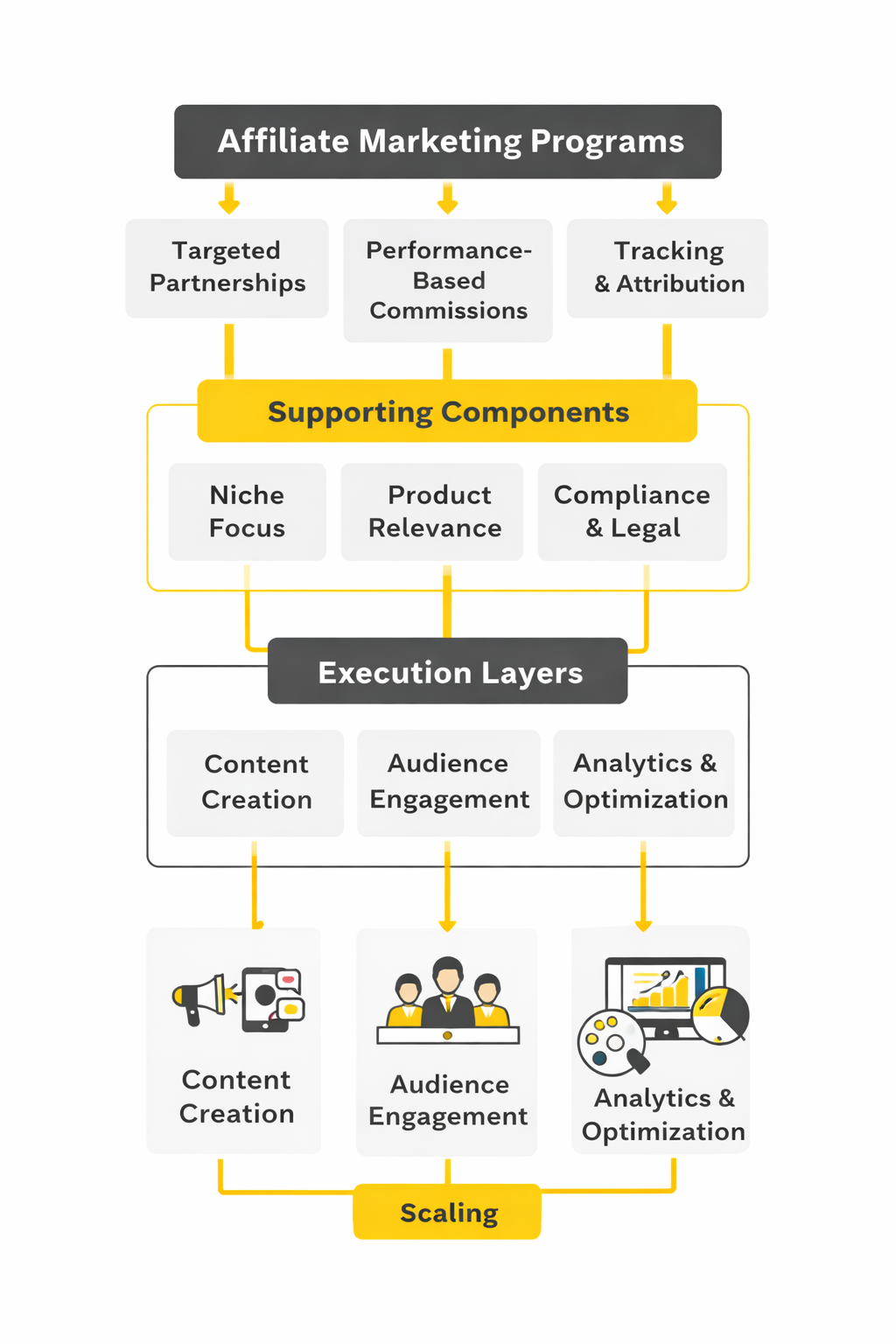
A serious affiliate marketing program is not defined by commission rate alone. It is defined by the full operating environment around that commission. When you look at programs this way, bad opportunities become much easier to spot.
The first core piece is offer-to-audience fit. If your audience wants email marketing software, a strong email platform is more valuable than a random high-ticket offer with weak relevance. That is why tools such as Brevo, Moosend, or Buffer make more sense in content about campaigns, newsletters, and social workflows than a generic business offer dropped into the page with no context.
The second core piece is tracking and attribution clarity. Some programs are explicit about how referrals are tracked through the signup path, like Shopify’s affiliate documentation and its public affiliate overview, while others leave critical details buried in legal language. If you cannot quickly understand how clicks are tracked, when commissions are credited, and what disqualifies a referral, that is already a warning sign.
The third core piece is brand conversion quality. This matters more than most affiliates admit. Amazon’s public Associates page highlights conversion strength as part of its pitch, while B2B programs like HubSpot’s affiliate overview focus on fit for business-focused audiences and formal program policies. Different models can work, but the real question is always the same: will your audience trust the brand enough to act?
The fourth core piece is operational reliability. Networks and platforms are not just middlemen. Awin’s FAQ and CJ’s overview of affiliate as a scalable performance channel show why infrastructure matters: you need dependable reporting, payment handling, technical support, and some level of transparency. When those basics are weak, scaling gets messy fast.
What Professional Implementation Looks Like Early On
Professional implementation starts with restraint. Instead of joining twenty affiliate marketing programs and spraying links everywhere, you pick a small set of offers that match specific reader intent, then build content around the buying questions people are already asking. That approach usually converts better because the recommendation feels earned, not inserted.
It also means building the content path before expecting revenue. A simple stack can be enough at first: a content page that solves a real problem, an opt-in or follow-up system, and a clean offer transition for readers who are ready to act. If the offer naturally fits funnel building or business automation, platforms like ClickFunnels, Systeme.io, or iMallin can fit that workflow, but only when the article or audience intent genuinely points there.
The other non-negotiable is trust. In the U.S., the FTC revised its Endorsement Guides in June 2023, and its guidance on material connection disclosures makes the standard clear: if you benefit from a recommendation, people should be able to understand that. The FTC also notes that its consumer reviews and testimonials rule took effect on October 21, 2024, which is another reminder that sloppy promotion is getting harder to defend.
That is the professional baseline now. Choose fewer programs, match them tightly to intent, understand the tracking rules, and make your disclosures obvious. Do that well, and affiliate marketing programs stop feeling like random side income and start behaving like an actual revenue system.
How to Evaluate Commission Structures, Cookie Windows, and Program Terms
This is where a lot of people get fooled. They compare affiliate marketing programs by headline commission percentage, then assume the highest number is the best opportunity. In practice, the smarter move is to look at the economics of the whole program, because payout size means very little when the offer does not convert, the attribution window is weak, or the terms quietly block the traffic methods you planned to use.
A good program should make the math easier, not murkier. You want to know what action gets paid, when it gets credited, what can reverse the commission, how long the cookie lasts, how payouts are handled, and whether the product has enough trust behind it to convert real buyers. When those details are hard to find, that is already useful information.
Start With Earnings Potential, Not Just Commission Rate
A 10% commission can beat a 40% commission without breaking a sweat. If the 10% offer sits on a strong product with good pricing, brand trust, and a tight conversion path, it can produce more revenue from the same audience. That is why experienced affiliates care more about earnings per click, average order value, and conversion behavior than they do about flashy payout headlines.
This is also why different categories behave so differently. Software affiliate marketing programs often look attractive because they may pay fixed bounties or recurring revenue, while ecommerce programs may offer lower percentages but convert much more consistently. Shopify’s guide to evaluating affiliate programs highlights exactly these variables, including cookie duration, payout method, and commission structure, because the listed percentage alone never tells the full story.
The practical question is simple: what is one qualified visitor worth inside this program? If you cannot answer that yet, you are not really evaluating the offer. You are just reacting to the marketing page.
Understand the Real Commission Model
Not all commissions are created equal, even when the numbers look similar. Some affiliate marketing programs pay a one-time bounty after a sale or trial conversion. Others pay recurring commissions, which can be much more valuable if the product has decent retention and the audience is a strong fit.
Recurring software offers are often attractive for that reason. An email tool, automation platform, booking system, or CRM can keep paying as long as the customer stays active, which changes how you think about content and acquisition. That is why tools like Brevo, Moosend, Cal.com, or Copper usually make more sense in content built around operations, lead generation, scheduling, and customer workflows than in broad lifestyle content.
You also need to check whether the payout is based on gross sale value, net sale value, qualified lead, approved subscription, or something more restrictive. Some programs only pay after a customer remains active beyond a refund or verification period. That is normal, but it changes cash flow and expected revenue, so you need to know it upfront.
Cookie Windows Matter More Than Most Beginners Think
Cookie duration sounds like a technical footnote until it starts costing you money. If a reader clicks today, thinks about the purchase, comes back next week, and buys later, the cookie window determines whether you still get credit. That makes cookie duration especially important for products with longer decision cycles, higher prices, or more comparison shopping.
Public program pages make this difference easy to see. Amazon’s Associates help documentation on cookie timing explains its short attribution window very clearly, while Shopify’s affiliate program comparison guide notes that cookie durations across programs can range from a single day to hundreds of days. That range is massive, and it changes which programs are realistic for which traffic sources.
Short cookies can still work, but usually only when intent is already very high. If your content is top-of-funnel, educational, or comparison-heavy, longer attribution windows are usually more forgiving and therefore more profitable. That is not a small detail. It is one of the filters that separates decent affiliate marketing programs from frustrating ones.
Read the Terms Like a Business Owner
Most affiliates skim the terms, grab the link, and move on. That is a mistake. Program terms define the actual business model you are allowed to run, and sometimes the restrictions are stricter than the promotional page suggests.
Look closely at the traffic rules. Some programs restrict paid search on branded terms, some prohibit email promotion without approval, some do not allow coupon-style placements, and some limit how you can discuss pricing or bonuses. HubSpot’s affiliate program policies are a good example of how official terms spell out promotional boundaries, and Amazon’s operating agreement and policies show how detailed these requirements can get in a major program.
This is where a lot of bad surprises happen. An affiliate builds content, buys traffic, or creates a lead magnet, then finds out later that the method does not qualify under the program rules. Reading the terms early is not boring admin work. It is basic risk control.
Watch for Reversal Risk and Payout Friction
Gross commission numbers look great until refunds, cancellations, duplicate leads, fraud screening, or minimum payout thresholds start eating into them. That does not mean a program is bad. It means you need a more realistic view of what actually lands in your account.
Payout friction shows up in small ways that matter over time. Maybe the threshold is higher than expected. Maybe commissions lock for longer than you can comfortably tolerate. Maybe reporting is delayed, or international payouts are clunky, or support takes too long when a conversion dispute appears. Networks like Awin explain their role in tracking and payment handling, and that kind of infrastructure matters a lot more once you are operating at scale.
A healthy affiliate marketing program should not leave you guessing about payment timing or reversal logic. You do not need perfection, but you do need predictability. Predictability is what lets you plan content, test traffic, and scale with confidence.
Match Program Type to Buyer Intent
This is the part many affiliates skip, and it is where the real lift happens. Different affiliate marketing programs fit different levels of intent, and when you mismatch them, conversions suffer even if the product itself is good.
For example, a reader looking for an all-in-one funnel builder is much closer to a product decision than a reader casually learning what affiliate marketing is. In the first case, it is natural to point toward tools like ClickFunnels, ClickFunnels’ entry offer, or Systeme.io, because the content and the click intent are aligned. If the audience is trying to speed up content workflows, social scheduling, AI assistance, or lead capture, then offers like Buffer, Flick, Wispr Flow, Fillout, Firecrawl, or Chatbase are a more natural fit.
The point is not to force more links into the article. The point is to make the recommendation feel inevitable because it solves the next obvious problem. When affiliate marketing programs fit intent that cleanly, clicks are higher quality and the whole funnel works better.
Use a Simple Scorecard Before You Join
You do not need a giant spreadsheet to evaluate programs properly. You just need a repeatable way to compare them without getting distracted by hype. A basic scorecard keeps you honest and makes weak programs easier to reject.
Use these filters before joining any affiliate marketing program:
- Audience fit
- Commission model
- Cookie duration
- Conversion quality
- Tracking clarity
- Payout reliability
- Traffic-source compatibility
- Refund or reversal risk
- Brand trust
- Content fit
If a program looks exciting but scores poorly on the fundamentals, walk away. There is no shortage of affiliate marketing programs. The real skill is not finding more of them. It is choosing the few that give you a legitimate chance to build durable revenue.
Which Affiliate Marketing Programs Fit Different Content and Business Models
At this point, you are not just choosing affiliate marketing programs. You are designing how your content turns into revenue. That only works when the type of program matches the way your audience consumes information and makes decisions.
Different business models create different expectations. A niche blog built on search traffic behaves differently than a personal brand on social media. A newsletter behaves differently than a comparison site. The mistake is trying to force one type of affiliate program into all of them.
Content-Driven SEO Sites
Search-based content works best when the user already has a problem and is actively looking for solutions. That means affiliate marketing programs tied to tools, platforms, or products with clear use cases perform much better than vague offers.
For example, if someone searches for email automation strategies, they are not looking for theory. They want tools that solve the problem immediately. That is where platforms like Brevo or Moosend naturally fit into tutorials, comparisons, and setup guides.
The key with SEO is depth and alignment. A surface-level article with random affiliate links will not hold attention or convert. A structured guide that shows how to solve a real problem and then introduces the right tool at the exact moment of need will.
Creator-Led Content and Social Platforms
Social and creator-driven channels operate differently. The audience is not always searching with intent. They are discovering, browsing, and reacting. That changes how affiliate marketing programs should be used.
Here, simplicity and clarity matter more than depth. Tools that improve workflow, speed, or visible results tend to perform better. If you are showing content scheduling, audience growth, or AI-assisted creation, offers like Buffer, Flick, or Wispr Flow make sense because the benefit is obvious and immediate.
The mistake here is overloading the audience with options. On social platforms, fewer, clearer recommendations almost always outperform long lists of affiliate marketing programs.
Funnels, Lead Magnets, and Email Monetization
Once you move into funnels and email, affiliate marketing programs behave differently again. You are no longer relying on a single click. You are building a sequence that educates, nurtures, and then converts.
This is where higher-ticket or system-based offers start to make more sense. If someone is already inside your ecosystem, you can guide them through a structured process that leads to a more complete solution. Platforms like ClickFunnels, ClickFunnels starter offer, or Systeme.io are often positioned at this stage because they require more context but can deliver higher lifetime value.
The difference is pacing. You are not forcing the offer. You are building toward it.
Utility-Based and Workflow Tools
Some affiliate marketing programs are not tied to a single niche but to productivity itself. These tools fit across multiple types of content because they solve operational problems that almost every online business runs into.
Think about scheduling, automation, forms, scraping, or AI-driven workflows. Tools like Fillout, Firecrawl, Chatbase, or ScaledMail fit into tutorials, case studies, and behind-the-scenes content because they improve how things get done.
These programs work best when you show them in action. Not as a list, but as part of a process.
How to Build, Scale, and Stay Consistent With Affiliate Marketing Programs
Now we get to execution. This is where most people either start making money or stall completely. The difference is not effort. It is structure.
You do not need more affiliate marketing programs. You need a repeatable system that turns attention into action.
Step 1: Start With One Clear Problem
Every profitable setup begins with a specific problem, not a product. If the problem is weak or vague, the entire funnel collapses because there is no urgency behind the click.
A strong starting point looks like this:
- “How do I build an email list from scratch?”
- “What is the fastest way to schedule social content consistently?”
- “How do I automate lead capture without coding?”
Each of these creates a natural path toward a solution. That is where affiliate marketing programs come in, not before.
Step 2: Build the Content Path Before Adding Links
Most people insert affiliate links too early. They focus on monetization before clarity. That usually kills conversions because the reader has not fully understood the problem or the solution yet.
Instead, structure your content like this:
- Define the problem clearly
- Break down the solution into steps
- Show what tools or systems are required
- Introduce the affiliate offer as part of the solution
This approach aligns with how people actually make decisions. It also matches how performance-based channels are designed to work, as described in CJ’s overview of affiliate marketing as outcome-driven.
Step 3: Connect Content to a Simple Funnel
This is where things become tangible. You are no longer relying on one click. You are guiding the user through a path.
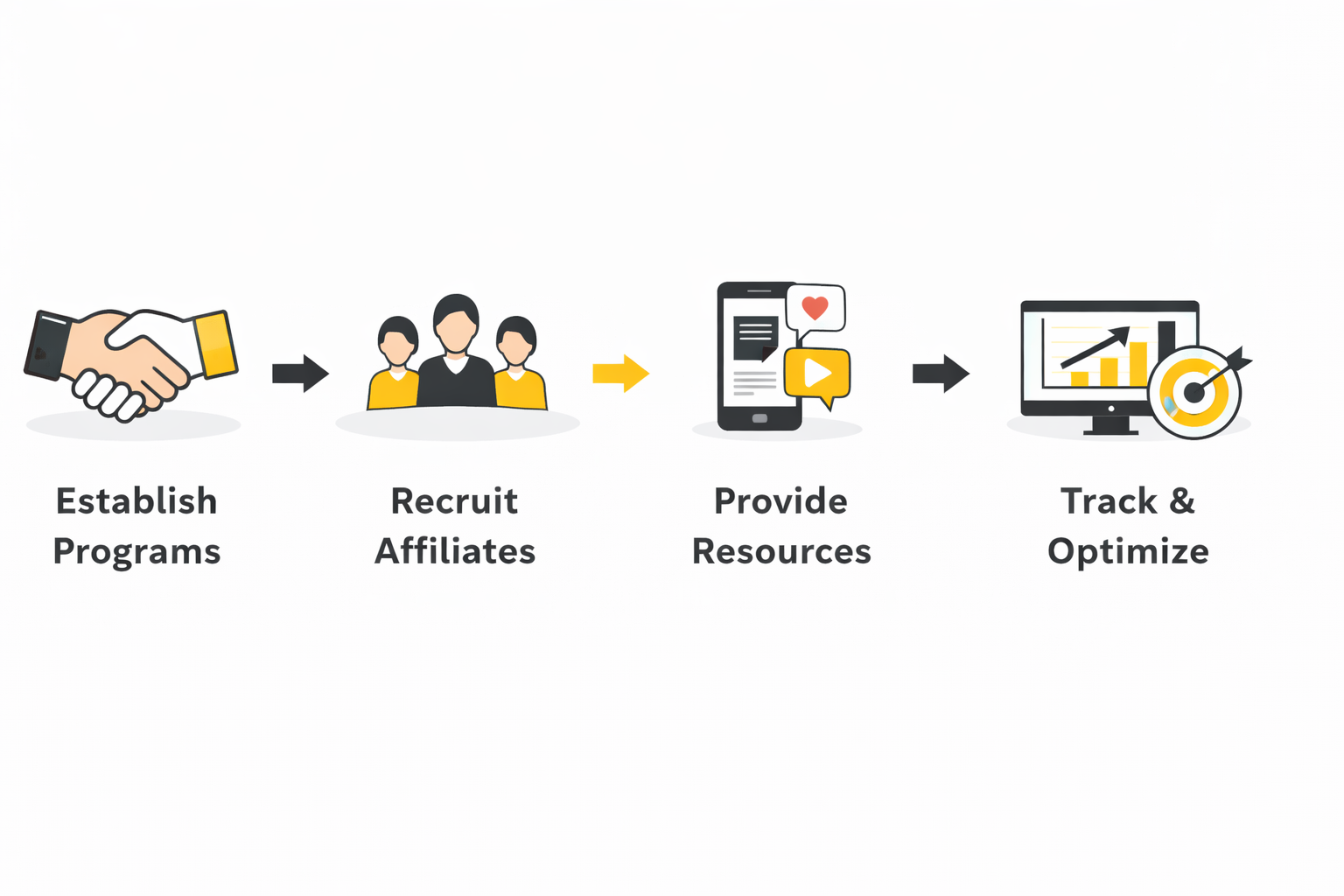
A basic execution flow looks like this:
- Traffic source (SEO, social, or content)
- Value-driven content (guide, tutorial, comparison)
- Optional opt-in (lead magnet or newsletter)
- Follow-up sequence (email or retargeting)
- Affiliate offer introduced at the right moment
This does not need to be complicated. In fact, simpler systems tend to convert better because there are fewer points of friction. Platforms like Systeme.io or iMallin exist specifically to connect these pieces without heavy technical setup.
The important part is continuity. Each step should feel like the natural next move, not a forced jump.
Step 4: Track What Actually Matters
Vanity metrics will waste your time here. Page views and clicks are useful, but they do not tell you if your affiliate marketing programs are working.
Focus on:
- Click-through rate to the offer
- Conversion rate after the click
- Earnings per visitor
- Revenue per piece of content
These numbers tell you whether your system is healthy. If traffic is high but revenue is low, the problem is usually alignment or conversion quality, not reach.
Step 5: Double Down on What Converts
Once something works, you do not need to reinvent it. You need to expand it.
That can mean:
- Creating more content around the same problem
- Building deeper tutorials or case studies
- Testing different angles of the same offer
- Adding complementary affiliate marketing programs that fit the same audience
This is where scale actually happens. Not by chasing new programs, but by extracting more value from the ones that already perform.
Step 6: Stay Within the Rules While Scaling
Growth without compliance is fragile. As affiliate marketing programs become more structured, enforcement becomes tighter.
Guidelines from regulators like the FTC’s endorsement rules and platform policies are not optional details. They shape how you disclose relationships, how you present offers, and how transparent your content needs to be.
The good news is simple. If your content is honest, your recommendations are real, and your disclosures are clear, you are already aligned with how this space is evolving.
And that matters, because long-term affiliate revenue is built on trust, not shortcuts.
What the Numbers Really Tell You About Affiliate Marketing Programs
Once you start running affiliate marketing programs seriously, raw stats stop being trivia and start becoming decision tools. That is the shift that matters. A benchmark is only useful when it changes what you do next.
The current data paints a pretty clear picture. The affiliate channel is still growing, but the growth is not evenly distributed, and not every increase in activity means better performance. That is exactly why measurement matters more than excitement.
Growth Is Real, but It Does Not Automatically Mean Better Profit
Affiliate is still expanding as a channel, and that matters because it confirms this is not some fading side tactic. In the US, eMarketer reported affiliate marketing would exceed $10 billion in spend in 2024 and continue double-digit growth through 2026, reaching $13.2 billion. In the UK, the APMA reported Ă‚ĹÂ1.7 billion in affiliate and partner marketing investment in 2024, up 9% year over year, with 360 million sales attributed to the channel. EMARKETER+1
But growth at the channel level can hide weaker performance inside individual programs. impact.com’s 2025 benchmark report found clicks rose 2% year over year while transactions fell 5% and conversion rates declined 6%. That is the kind of gap that catches lazy operators off guard, because more activity looks good until you realize it is producing less revenue efficiency. impact.com
That should immediately change how you read your own numbers. If your traffic is up but commissions are flat, that does not automatically mean your content is failing. It may mean you are attracting lower-intent visitors, pushing the wrong offers, or relying too much on click volume instead of conversion quality.
Revenue Contribution Is the Benchmark That Changes Strategy
One of the most useful current signals is not total clicks. It is how much revenue the channel contributes when it is run properly. impact.com’s 2025 research found that 74% of brands generate 11% to 30% of total revenue from affiliate marketing, based on its survey of more than 1,500 marketers, publishers, and creators across 8 countries. impact.com
That matters because it resets expectations. If you are treating affiliate marketing programs like a tiny side experiment, but serious brands are pulling a meaningful share of revenue from the channel, the issue is probably not the model. The issue is usually execution, partner mix, or measurement discipline.
It also tells you what not to do. Do not compare your early results to a mature program that has years of optimization behind it. Use that revenue benchmark as proof of potential, not as a shortcut to unrealistic expectations.
Partner Mix Is a Performance Variable, Not Just an Org Chart Detail
Another signal people underestimate is diversification. impact.com’s 2025 research says leading brands build ecosystems with three to four diverse partner types rather than relying on a single category. impact.com
That matters because overreliance creates fragility. If all your affiliate revenue comes from one content format, one traffic source, or one type of affiliate marketing program, your numbers can look stable right up until they suddenly are not. A search update, a platform policy change, or weaker conversion from one flagship offer can hit harder than expected.
The practical takeaway is simple. If one partner type or one monetization angle is doing all the work, do not just celebrate it. Stress-test it. Then build the next layer around it.
Higher Clicks Without Better Conversion Usually Signal a Quality Problem
This is one of the most important interpretation mistakes in affiliate analytics. More clicks are not always a win. In impact.com’s 2025 benchmark data, click growth and transaction decline happened at the same time, which strongly suggests that intent, timing, or conversion readiness had shifted. impact.com
That should change how you read top-of-funnel performance. A rising click-through rate can still be a bad sign if the offer page is pulling in curiosity clicks instead of buying clicks. The same is true when content gets broader, softer, or more entertainment-driven and starts attracting people who are interested but not ready.
So when clicks rise and earnings fall, ask sharper questions:
- Did the traffic source change?
- Did the audience intent get weaker?
- Did the merchant landing page change?
- Did the offer become less competitive?
- Did attribution or cookie behavior make delayed purchases harder to capture?
If you do not ask those questions, you end up rewarding the wrong content.
Measurement Is Moving Beyond Last Click for a Reason
This next trend is a big one. impact.com found that 94% of brands are experimenting with or planning to adopt alternative attribution models within the next year, which tells you where serious measurement is heading. impact.com
That matters because last-click attribution is often too blunt for modern affiliate marketing programs. A review article might introduce the buyer. A creator might build trust. An email follow-up might close the sale. If you only reward the final interaction, you can misread which assets are truly driving revenue.
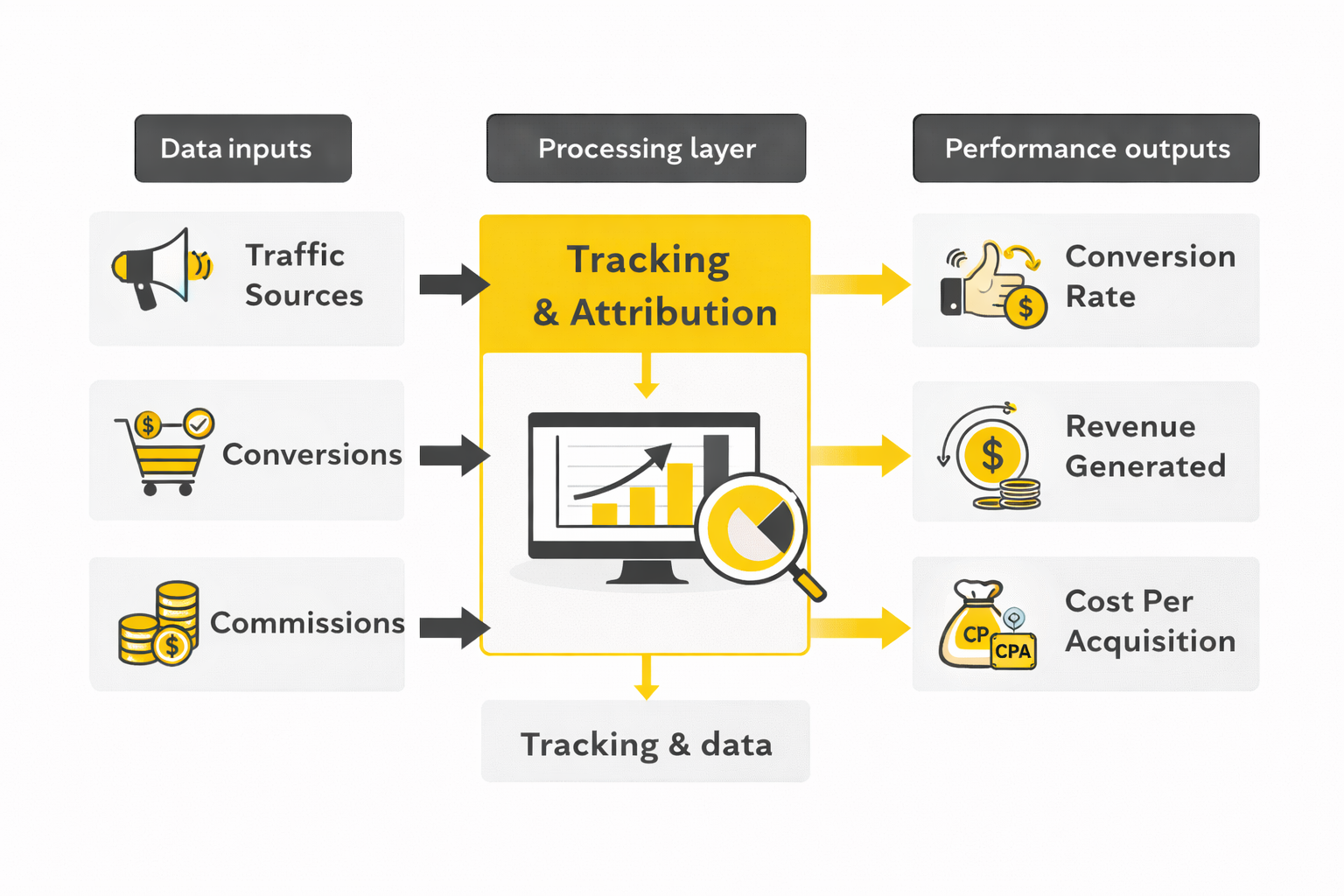
The smarter analytics system looks at the whole path:
- Traffic source quality
- Content-to-click rate
- Click-to-conversion rate
- Time lag to purchase
- Assisted conversions
- Net commission after reversals
That is the level where numbers become useful. You stop asking, “Did this article get clicks?” and start asking, “Did this content create profitable buying behavior that survived the full attribution path?”
Benchmarks Should Shape Decisions, Not Become Vanity Targets
Benchmarks are useful when they create better judgment. The APMA’s 2025 State of the Affiliate Nation report found UK brands generated an average of Ă‚ĹÂ16 for every Ă‚ĹÂ1 spent through affiliate and partner marketing. That is a strong signal that the channel can be highly efficient, but it does not mean every program or every publisher will hit that level. theapma.co.uk
What it does mean is that efficiency should stay central to your analysis. If a program brings in commissions but requires too much content effort, too much support, too many bonus incentives, or too much low-quality traffic to keep working, the headline revenue can fool you. Strong affiliate marketing programs should not just produce sales. They should produce efficient sales.
This is why earnings per visitor and revenue per content asset matter so much. Those metrics force you to compare output against effort, which is where weak programs often get exposed.
What Good Performance Signals Usually Look Like
Strong affiliate performance is rarely dramatic at the beginning. It usually looks calm, steady, and a little boring. That is a good thing.
Healthy signals usually include:
- Click-through rates that are stable, not wildly spiky
- Conversion rates that hold across multiple pieces of similar content
- Revenue concentrated in offers that clearly match reader intent
- Fewer reversals and payout surprises over time
- Better earnings from content updates, not just new publishing
Those patterns matter more than isolated wins. A single page can get lucky. A stable pattern means you are learning how your audience actually buys.
The Right Action Depends on Which Metric Breaks First
This is the part that turns analytics into execution. Different broken metrics point to different problems, and if you treat them all the same, you waste time.
If impressions are high but clicks are weak, the issue is usually positioning, angle, or trust. If clicks are strong but conversions are weak, the issue is more likely offer fit, landing page quality, or buyer readiness. If conversions happen but revenue is disappointing, the problem is often commission structure, reversals, or weak average order value.
That is why you should read affiliate marketing programs like systems, not like isolated payouts. The numbers only make sense when you connect them to the step in the funnel where performance starts leaking.
The Data Should Make You More Selective, Not More Busy
The biggest lesson from the current data is not that you need more dashboards. It is that you need better judgment. Channel growth, rising budgets, and better recognition from brands all point to stronger long-term opportunity for affiliate marketing programs, but the benchmark data also shows that weak intent and weak measurement can quietly eat into performance. EMARKETER+3
That is the real meaning behind the numbers. Do not chase activity. Chase profitable behavior. Measure the full path, compare revenue against effort, and keep the programs that convert cleanly enough to justify real focus.
Scaling Affiliate Marketing Programs Without Diluting Trust
Scaling sounds exciting right up until your content starts feeling generic. That is the trap. A lot of people grow affiliate marketing programs by adding more links, more pages, and more offers, then wonder why conversions flatten even while output rises.
The real ceiling is usually trust, not traffic. Once recommendations start feeling mechanical, readers pull back. That is why the best scaling move is often not expansion into ten new offers, but deeper coverage around the few products and systems that already match your audience well.
A smarter scaling path usually looks like this:
- update winning content before publishing more content
- expand into adjacent problems for the same audience
- add one complementary offer at a time
- build supporting email and comparison assets around proven pages
That approach is slower on paper, but stronger in practice. It preserves clarity, protects conversion quality, and keeps affiliate marketing programs tied to real user intent instead of turning them into background noise.
The Tradeoff Between High Commissions and High Conversions
This is one of the biggest strategic tradeoffs in the whole channel. A premium offer with a big payout can look amazing in a dashboard, but if the sales cycle is slow or the audience fit is weak, it can underperform a simpler offer with lower commissions and much stronger conversion behavior.
That is why experienced operators stop asking, “What pays the most?” and start asking, “What compounds best?” Recurring software offers, workflow tools, and operational products often win here because they can sit inside content that solves an ongoing problem. That creates more stable revenue than chasing one-off spikes from mismatched high-ticket promotions.
In practical terms, that means a stack built around tools such as Brevo, Moosend, Buffer, or Cal.com can sometimes outperform “bigger” offers because the recommendations fit repeated business needs. The same logic applies on the funnel side when a reader clearly needs an all-in-one system and a more complete platform like ClickFunnels or Systeme.io genuinely solves the next problem.
Why Program Dependency Becomes a Serious Risk
The more success you have with one offer, the easier it is to become dependent on it. That feels efficient at first. Then the commission changes, the terms tighten, the landing page gets worse, or the program closes entirely, and suddenly a healthy revenue stream looks fragile.
This is not a theoretical problem. Affiliate marketing programs change all the time because brands change priorities, attribution models evolve, and partner teams restructure. Even when a company is legitimate and stable, the economics of the program itself can shift faster than most content creators expect.
That is why concentration risk matters. You do not need twenty programs, but you also do not want your entire model hanging on one offer, one network, or one traffic source. A resilient setup usually includes a core offer, a backup option, and at least one adjacent recommendation that serves the same audience from a slightly different angle.
Attribution Friction Gets Worse as the Funnel Gets Longer
Longer funnels can increase revenue, but they also create more tracking complexity. A reader might discover you on search, join your email list, click an affiliate link days later on mobile, then convert after returning directly. That path is normal now, which is exactly why attribution can get messy.
This creates a strategic tradeoff. More touches can improve conversion, but more touches also create more chances for the referral to be lost, overwritten, or credited somewhere else. That is part of why strong affiliate marketing programs are increasingly valuable: they make a long buyer journey easier to monetize fairly.
Your response should not be panic. It should be system design. Use cleaner calls to action, reduce unnecessary handoffs, and favor programs with clearer tracking logic when your content naturally creates longer consideration cycles.
Content Depth Beats Content Volume in Competitive Niches
In easier markets, shallow content can still survive for a while. In competitive niches, it usually dies slowly. Readers compare more carefully, search engines reward stronger usefulness signals, and merchants benefit more from affiliates who can explain why a tool matters, not just list features.
That changes the job. A profitable affiliate article is no longer just a place to insert links. It has to reduce confusion, show fit, explain tradeoffs, and help the reader move forward. In other words, the content itself becomes part of the conversion system.
This is where demonstrations, workflows, and implementation logic matter more than generic “best tools” lists. If your audience is trying to automate forms, enrich workflows, or add AI utilities, it is more persuasive to show how tools like Fillout, Firecrawl, Chatbase, Guideless, or Dub fit into a specific outcome than to pile them into a huge roundup with no real buying context.
AI Makes Production Faster, but It Also Raises the Quality Bar
This matters now more than ever. impact.com’s 2025 research found that 97% of brands and 96% of creators are already using AI in partnership programs, which means AI is no longer the differentiator by itself. The differentiator is whether you use it to make content more useful, more specific, and more aligned with real user decisions. impact.com’s 2025 affiliate research
That changes the standard for affiliate marketing programs in a big way. Fast content is easier to produce, so weak content becomes easier to ignore. More pages alone will not protect you when everyone has access to the same production tools.
The advantage now comes from judgment. Choose better topics, show sharper tradeoffs, test real workflows, and create content that clearly deserves the click. AI can support that process, but it cannot replace the decision-making behind it.
Compliance Gets More Important as Revenue Gets More Serious
A small affiliate side hustle can get away with a surprising amount of sloppiness for a while. A growing affiliate business cannot. Once revenue becomes meaningful, compliance stops feeling like admin and starts feeling like asset protection.
That is especially true now that the FTC’s revised 2023 endorsement guidance continues to shape disclosure expectations, and its consumer reviews and testimonials rule has been in effect since October 21, 2024. Clear material connection disclosure and honest review practices are not optional details anymore. FTC endorsement guidance FTC reviews and testimonials rule Q&A
For affiliate marketing programs, that means three simple habits matter:
- disclose clearly where readers will actually notice it
- recommend only products you can defend honestly
- avoid fake urgency, fake proof, or borrowed credibility
This is one of those areas where boring discipline wins. Clean operations protect trust, reduce risk, and make your content stronger over time.
Expert Operators Build Around Systems, Not Offers
Beginners often organize their strategy around affiliate programs themselves. Experts usually do the opposite. They organize around audience problems, content systems, and monetization paths, then slot the right affiliate marketing programs into that structure.
That distinction matters because offers come and go. Systems survive. If your traffic, email, and content architecture are solid, replacing one program with another becomes a tactical change instead of a business crisis.
That is the mindset shift that usually separates unstable affiliate income from durable affiliate income. Do not build a business around a link. Build a business around a problem you can solve repeatedly, then attach the right offer to that solution. Once you start thinking that way, scaling becomes a lot cleaner and a lot less fragile.
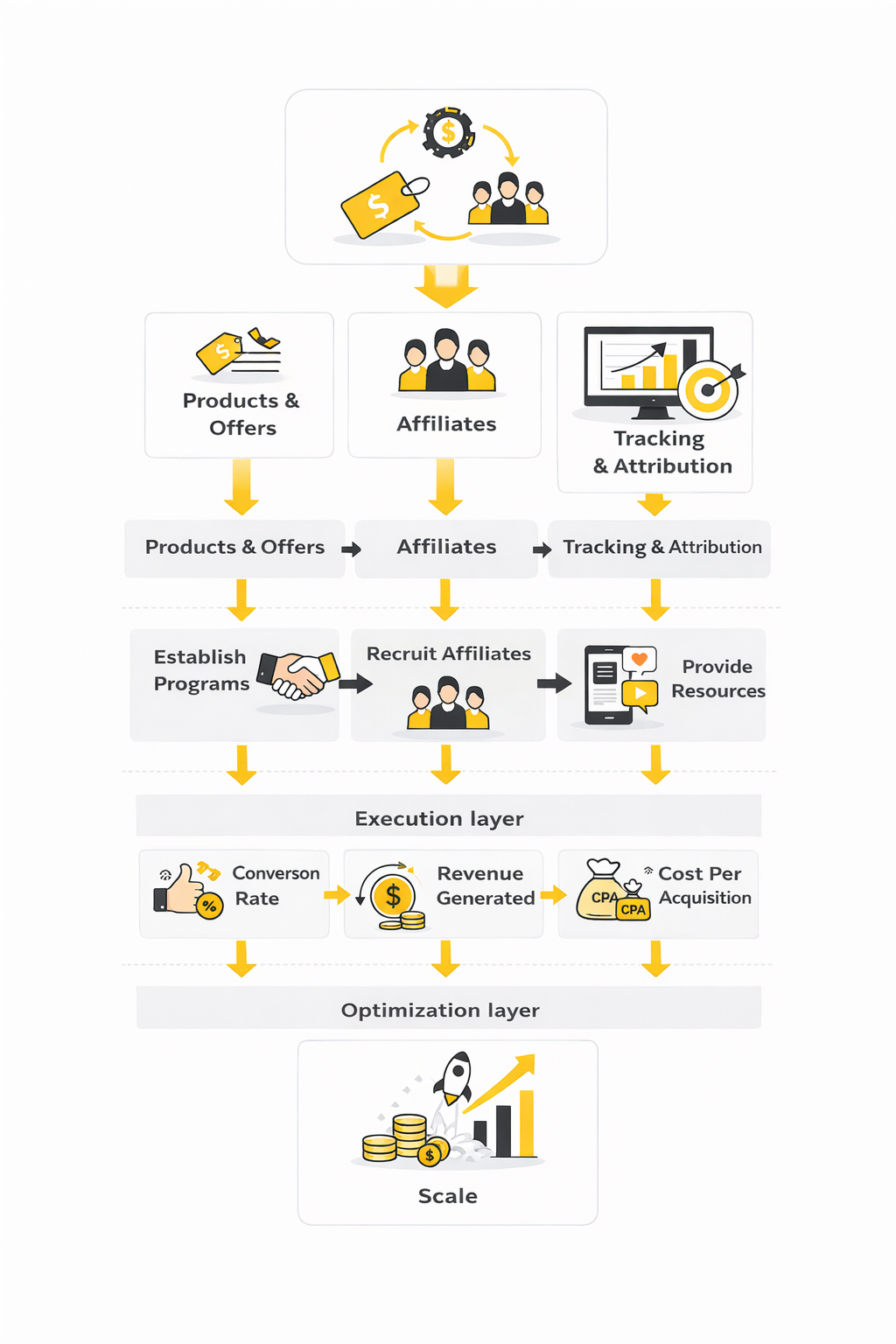
What to Prioritize Before You Try to Go Bigger
Before you scale further, tighten the foundation. That usually creates more growth than chasing a new platform or adding five more affiliate marketing programs this month.
Prioritize these in order:
- stronger content-offer alignment
- cleaner tracking and attribution visibility
- clearer disclosures and trust signals
- deeper support content around winning offers
- diversification across a small number of high-fit programs
Get those right, and the final stage becomes much easier. The question stops being whether affiliate marketing programs can work. The question becomes which ones deserve a permanent place in your business.
FAQ - Built for Complete Guide
What are affiliate marketing programs in simple terms?
Affiliate marketing programs are structured partnerships where you promote a product or service and earn a commission when someone takes a defined action through your referral. That action can be a sale, a signup, or even a qualified lead depending on the program.
What matters is not the link itself, but the system behind it. Good programs handle tracking, attribution, and payouts clearly enough that you can treat them like a predictable revenue stream instead of a guessing game.
How do beginners choose the right affiliate marketing programs?
Start with your audience, not the program. If you know what problem your audience is trying to solve, the right program becomes much easier to identify.
Then filter based on fit, conversion quality, and clarity of terms. A smaller, better-aligned program will outperform a popular one that does not match your content.
Can you make real money with affiliate marketing programs today?
Yes, but not in the way most beginners expect. The money comes from alignment, consistency, and systems, not from dropping random links into content.
Data from impact.com’s 2025 affiliate research shows that a large percentage of brands generate meaningful revenue through partnerships. That tells you the model works, but only when executed properly.
How many affiliate marketing programs should you join?
Fewer than you think. Most people join too many programs and spread their attention too thin, which hurts conversion and trust.
A better approach is to focus on a small number of high-fit programs, build content around them, and expand only after you see consistent results.
What is a good commission rate?
There is no universal “good” number. A lower commission on a high-converting product can easily outperform a higher commission on a weak offer.
Focus on earnings per visitor and total revenue per content asset instead of chasing percentages. That gives you a more realistic view of performance.
How important is cookie duration?
More important than most people realize. A short cookie window can wipe out commissions if your audience takes time to decide.
If your content sits higher in the decision process, longer cookie durations usually make affiliate marketing programs more viable.
Do you need a website to use affiliate marketing programs?
Not necessarily, but it helps. You can use social platforms, email, or communities, but a website gives you control over content, tracking, and long-term positioning.
That control becomes more valuable as your affiliate revenue grows and you want stability instead of relying on platform algorithms.
What tools help manage affiliate marketing programs effectively?
You do not need a huge stack, but a few tools can make a big difference. Email platforms like Brevo or Moosend help you build follow-up sequences, while scheduling and content tools like Buffer or Flick help maintain consistent output.
If you are building funnels or structured content paths, platforms like ClickFunnels or Systeme.io can connect everything into a single flow.
Why do some affiliate links get clicks but no sales?
That usually comes down to misalignment. Either the audience is not ready to buy, the offer does not match the problem, or the landing page does not convert well.
This is where analytics from earlier sections matter. You need to identify where the drop-off happens, not just assume the entire system is broken.
Are affiliate marketing programs still growing or saturated?
The channel is growing, but competition is also increasing. That means easy wins are disappearing, but structured systems still perform well.
Growth data from sources like emarketer’s affiliate spend analysis shows continued expansion, which means the opportunity is still there. The difference is that execution quality matters more now.
What is the biggest mistake people make with affiliate marketing programs?
Treating them like shortcuts instead of systems. People chase new programs, new links, and new tactics without fixing alignment, trust, or content quality.
The result is scattered effort and inconsistent revenue. The fix is almost always the same: simplify, focus, and build around real problems instead of offers.
How long does it take to see results?
It depends on your starting point, but most people underestimate the setup phase. You need content, traffic, and alignment before revenue becomes consistent.
Once the system starts working, growth becomes more predictable. The early phase is slow. The later phase compounds.
Work With Professionals
Explore 10K+ Remote Marketing Contracts on MarkeWork.com
Most marketers spend too much time chasing clients, competing on crowded platforms, and losing a percentage of every project to middlemen.
MarkeWork gives you a better way. Browse thousands of remote marketing contracts and connect directly with companies desperate to hire skilled marketers like you, without platform commissions and without unnecessary gatekeepers.
If you're serious about finding better opportunities and keeping 100% of what you earn, explore available contracts and create a profile for free at MarkeWork.com.