

Most people talk about affiliate marketing like the website barely matters. They obsess over networks, commissions, and traffic hacks, then wonder why their pages never turn into a real business. The hard truth is that affiliate marketing websites win or lose on structure, trust, and how well they help a reader make a decision.
That matters even more now because the channel is still growing fast. EMARKETER forecast US affiliate marketing spend at $10.72 billion in 2024, while Google’s guidance on helpful, reliable, people-first content and reviews content makes one thing clear: thin pages built just to push links are a weak bet. A serious affiliate website has to feel useful before it feels commercial.
The good news is that this creates a cleaner path for people willing to build properly. A strong affiliate site can compound because every article, comparison page, email capture, and internal link strengthens the whole system instead of acting like a disconnected campaign. And if you are building the site with lead capture and conversion in mind from day one, tools like Systeme.io or a funnel-first stack such as ClickFunnels can support the business model behind the content instead of forcing you to bolt it on later.
Article Outline
- Why Affiliate Marketing Websites Matter
- The 6-Part Framework Behind High-Performing Affiliate Sites
- Core Pages Every Affiliate Marketing Website Needs
- Traffic and Content Systems That Turn Articles Into Revenue
- Professional Implementation: Trust, Compliance, and Conversion Infrastructure
- Scaling, Optimization, and Long-Term Growth
Why Affiliate Marketing Websites Matter
Affiliate marketing websites matter because they sit right in the middle of attention and action. Social content can spark interest and paid ads can create bursts of clicks, but the website is where trust gets earned, objections get answered, and buying decisions get clarified. That is why the best operators treat the site like an asset, not just a container for links.
This is also where quality standards have risen. Google’s spam policies and its March 2024 update on tackling scaled, low-quality content pushed the industry further away from mass-produced affiliate pages and closer to genuine expertise, firsthand testing, and original insight. If your site looks interchangeable, it is easier than ever to lose visibility.
Readers have changed too. Large commerce publishers built their advantage on trust signals, transparent monetization, and editorial separation, which you can see in NerdWallet’s editorial guidelines, The Points Guy’s standards, and the broader emphasis on clear disclosures in the FTC’s endorsement guidance. In plain English, people click more when they feel informed rather than handled.
The 6-Part Framework Behind High-Performing Affiliate Sites
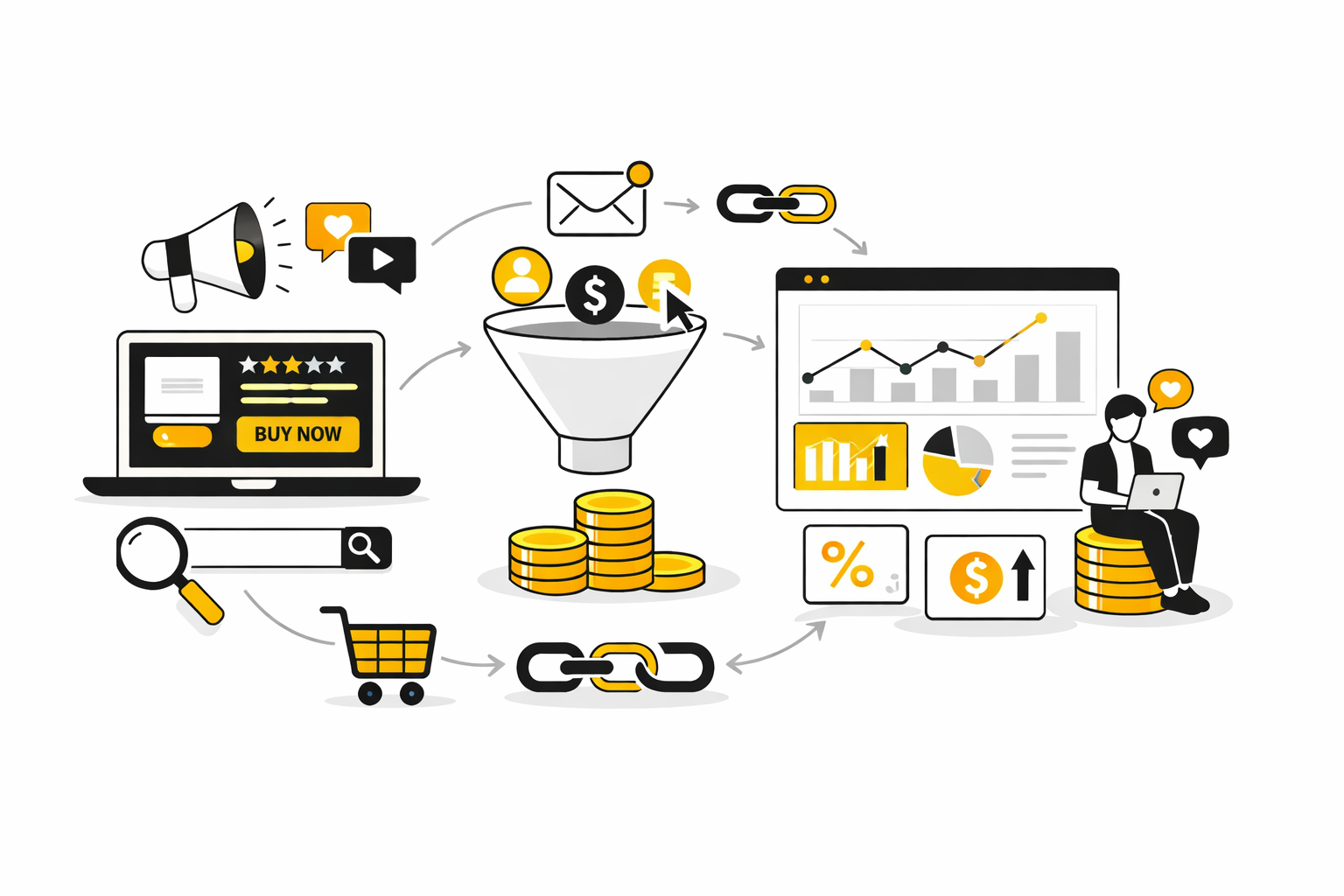
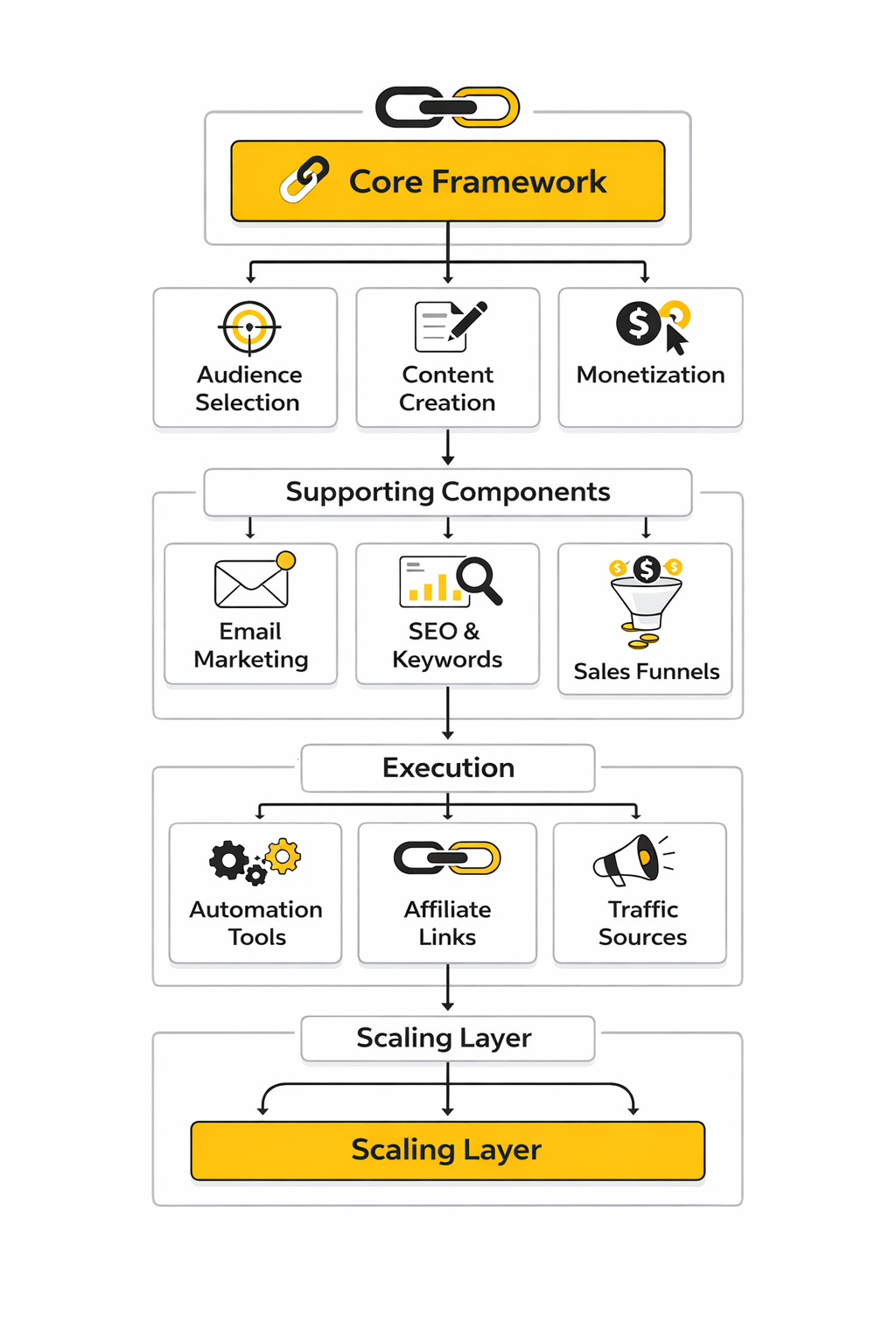
A high-performing affiliate marketing website usually follows a simple logic, even if the execution looks sophisticated on the surface. First, it targets a specific problem or category. Then it publishes content that matches buying intent, supports that content with trust-building pages and comparisons, captures leads where appropriate, and improves conversion paths over time. That is the framework the rest of this article will build out.
The reason this framework works is that affiliate revenue rarely comes from one magic page. It comes from a connected system of discovery content, commercial intent pages, editorial standards, user experience, analytics, and follow-up. When site owners skip that system, they often end up with scattered blog posts that get some traffic but never become a business.
There is also a practical build angle here. If the monetization path includes email, simple lead magnets, or productized offers alongside affiliate promotions, using infrastructure built for conversion can save a lot of pain later. For example, ClickFunnels, Moosend, and Brevo are the kind of tools that fit naturally when an affiliate website is designed as a conversion system instead of a content graveyard.
Core Pages Every Affiliate Marketing Website Needs
Once the strategy is clear, the next question is structural. Not every affiliate marketing website needs dozens of pages on day one, but every serious one needs the right page types. That is what turns random content into a site that can rank, convert, and survive algorithm shifts without feeling fragile.
A lot of weak sites fail here because they publish whatever comes to mind first. They end up with ten blog posts, no clear money pages, no comparison structure, no trust layer, and no real path from visitor to click. Strong affiliate marketing websites feel organized because each page has a job.
The Homepage Should Clarify the Site Fast
Your homepage does not need to do everything, but it does need to explain what the site is about within seconds. A new visitor should immediately understand the niche, the type of help you provide, and where to go next. If that is fuzzy, the rest of the site feels harder to trust.
This matters for search and human behavior at the same time. Google’s guidance around helpful, reliable, people-first content pushes site owners toward clarity, usefulness, and obvious audience fit. That means your homepage should not read like a vague personal blog if the site is really a decision platform for buyers.
The practical move is simple. State the category, show the best entry points, and make the site feel editorially intentional. A homepage that highlights buying guides, comparisons, and cornerstone topics does more for an affiliate business than a generic welcome paragraph ever will.
Commercial Intent Pages Drive the Revenue
This is where a lot of the money usually comes from. Commercial intent pages include best-of lists, alternatives pages, comparison pages, product roundups, and solution-focused guides for readers who are already evaluating options. These pages sit close to the buying decision, so they deserve more care than casual blog content.
Google’s reviews system documentation is blunt about what high-quality review content should do. It rewards insight, original analysis, evidence of expertise, and content that helps a user decide between options. That is why lazy “top 10” pages without clear criteria are getting weaker over time.
The best commercial pages are specific. Instead of writing one giant page that tries to rank for everything, build pages around genuine decision moments. “Best email tools for solo creators” is stronger than “best marketing software” because the intent is clearer, the comparison is tighter, and the page can actually help.
Individual Reviews Need Depth, Not Hype
A review page should reduce uncertainty. It should help the reader understand who the product is for, where it fits, where it falls short, and what kind of user should probably skip it. That sounds obvious, but many affiliate marketing websites still write reviews like sales pages in disguise.
Readers can feel that instantly. So can regulators. The FTC’s endorsement guidance makes it clear that material relationships need clear disclosure, and that deceptive impressions still count even when the exact words look compliant. In other words, a glowing review with buried disclosure is not a smart long-term play.
That is why balanced reviews convert better than overhyped ones. When you explain trade-offs honestly, you attract the readers who are actually ready to buy. And those are the clicks that matter.
Comparison Pages Help Buyers Make the Final Call
Comparison pages deserve their own place because they solve a different problem from reviews. A review answers, “Is this good?” A comparison answers, “Which one should I choose?” That second question shows up late in the buyer journey, which makes these pages incredibly valuable when done well.
The mistake is turning comparisons into feature-dump tables with no point of view. Readers do not need raw specs copied from landing pages. They need judgment, context, and a recommendation based on different use cases.
This is exactly where affiliate marketing websites can create real value. If someone is deciding between funnel builders, for example, a clear comparison that explains when ClickFunnels makes sense and when Systeme.io is the smarter lightweight choice is far more useful than pretending one tool wins for everybody. That kind of practical framing increases trust because it respects the reader’s situation.
Informational Content Builds the Pipeline
Not every page should ask for the click right away. Informational content brings in earlier-stage readers who are still learning the space, defining the problem, or comparing approaches before they compare products. Without that layer, affiliate marketing websites rely too heavily on bottom-of-funnel traffic and become easier to outcompete.
This is where topic depth matters. A strong site does not just target product keywords. It also covers definitions, workflows, beginner questions, mistakes, strategic trade-offs, and implementation guides. Those pages build topical relevance and create internal links into the commercial layer.
There is a second payoff here too. Informational content gives you more chances to capture email leads, segment readers by intent, and move people toward the right offer later. If that is part of the model, platforms like Brevo or Moosend fit naturally because they help turn education traffic into a retained audience instead of one-off visits.
Trust Pages Quietly Increase Conversions
Trust pages are rarely glamorous, but they do serious work in the background. An about page, contact page, editorial policy, privacy policy, affiliate disclosure, and testing methodology page all help the site feel legitimate. They also reduce the “Who exactly is behind this?” friction that many affiliate websites create without realizing it.
This is not just theory. Major commerce publishers have made these standards visible because credibility affects everything from click-through rates to brand partnerships. You can see that in public-facing standards from NerdWallet and The Points Guy, both of which make editorial process and monetization transparency part of the user experience.
For smaller operators, the lesson is straightforward. You do not need a giant media company setup, but you do need visible signs that the site has standards. That alone separates a real affiliate business from a disposable niche site.
Lead Capture Pages Make the Site More Valuable Than a Click Broker
This is where the business gets more durable. If your entire model depends on a visitor clicking an affiliate link on the first session, revenue will always feel volatile. Building email capture into the right parts of the site gives you a second chance to monetize later and a way to compound attention over time.
The smartest affiliate marketing websites do this without wrecking the user experience. They match the lead magnet to the page intent, keep the opt-in relevant, and use follow-up content to continue the buying conversation. That could be a checklist, a template, a buyer’s guide, or a short email sequence that helps the reader narrow choices.
If you want this side of the system to be simple, conversion-focused platforms such as ClickFunnels or Systeme.io can make more sense than stitching together too many tools too early. The point is not complexity. The point is creating a path where the site can earn more than a single click.
Internal Linking Is the Hidden Page Type Multiplier
Internal linking is not a page type by itself, but it changes the performance of every page on the site. It tells users where to go next, helps search engines understand relationships between topics, and moves authority toward the pages that matter commercially. When this is done well, the whole site feels easier to navigate and easier to trust.
A lot of affiliate marketing websites treat internal links as an afterthought. They publish pages one by one, add a few random anchors, and hope rankings sort themselves out. That leaves commercial pages isolated and informational pages underused.
A better approach is intentional flow. Informational pages should feed comparisons, comparisons should feed reviews, and reviews should feed the best next action. When the architecture supports the buying journey, the site starts acting like a system instead of a stack of URLs.
Traffic and Content Systems That Turn Articles Into Revenue
Having the right pages is only half the job. Affiliate marketing websites also need a content and distribution system that keeps sending qualified visitors into those pages without depending on luck. The sites that grow steadily are usually the ones that stop thinking in terms of isolated posts and start thinking in terms of repeatable pipelines.
That shift matters because the channel is getting bigger and more competitive at the same time. EMARKETER’s affiliate coverage shows why more brands keep investing here, while Google’s people-first content guidance keeps raising the bar for what deserves visibility. More money in the channel is good, but it also means mediocre affiliate marketing websites get squeezed faster.
Search Intent Should Decide What You Publish
The smartest content plans begin with intent, not volume. A keyword may look attractive in a tool, but if you do not understand whether the searcher wants education, comparison, or a direct recommendation, the page will miss the moment. That is why affiliate marketing websites that convert well map content to where the reader is in the decision journey.
This is also where many sites quietly sabotage themselves. They target high-volume phrases with vague pages, then wonder why rankings are unstable and conversions are weak. A page should match one dominant intent, then support that intent with evidence, structure, and the right next step.
In practice, this means separating early-stage educational content from mid-stage evaluation content and late-stage buying content. When those categories blur together, readers have to do too much work. When they are clear, the site feels sharper and the monetization becomes more natural.
Topic Clusters Beat Random Publishing
Random publishing feels productive right up until it produces nothing meaningful. A better model is the topic cluster: one core commercial theme supported by surrounding educational and comparative content. This helps search engines understand the site’s authority and helps users move deeper into the site without hitting dead ends.
For affiliate marketing websites, clusters are especially useful because buying decisions rarely happen in one visit. A reader might start with a “what is” query, come back for alternatives, then return again for a detailed review. If your content architecture supports that path, your site earns multiple chances to build trust before the click.
This is why content planning should happen at the cluster level. Instead of saying, “We need another article,” ask which commercial page needs stronger support, what questions surround it, and how those supporting pages can feed into the money page. That is a much better way to grow.
Distribution Should Extend the Value of Each Article
Publishing and waiting is not a strategy. Even strong affiliate marketing websites benefit when every serious article is repurposed into email, short-form social content, and supporting posts that bring more readers back to the core page. The goal is not to be everywhere. The goal is to get more mileage from the work you already did well.
This matters more now because traffic sources are fragmenting. Search still matters, but discovery also happens through newsletters, creator platforms, AI-assisted research workflows, and social search behavior. The sites that adapt are the ones that turn one useful asset into multiple entry points.
A practical setup is to publish the main article first, then extract short insights, comparison angles, quote-style takeaways, and quick summaries for distribution. Tools like Buffer or Flick fit naturally here because they help extend the reach of a good content asset without forcing you into a chaotic posting routine.
Professional Implementation: Trust, Compliance, and Conversion Infrastructure
This is where affiliate websites either become durable businesses or stay lightweight side projects forever. Professional implementation is not about making the site look corporate. It is about building the systems that make traffic easier to convert, easier to measure, and safer to scale.
A lot of affiliate marketers delay this stage because it feels less exciting than publishing content. That is a mistake. Once traffic starts arriving, weak implementation costs real money.
The Execution Process That Actually Works
The simplest process is still the best one. Define the target problem, map the search intent, build the right page type, connect it to a lead or offer path, and then measure what happens before expanding. That sounds basic, but affiliate marketing websites usually break because people skip steps, not because the model is too complicated.
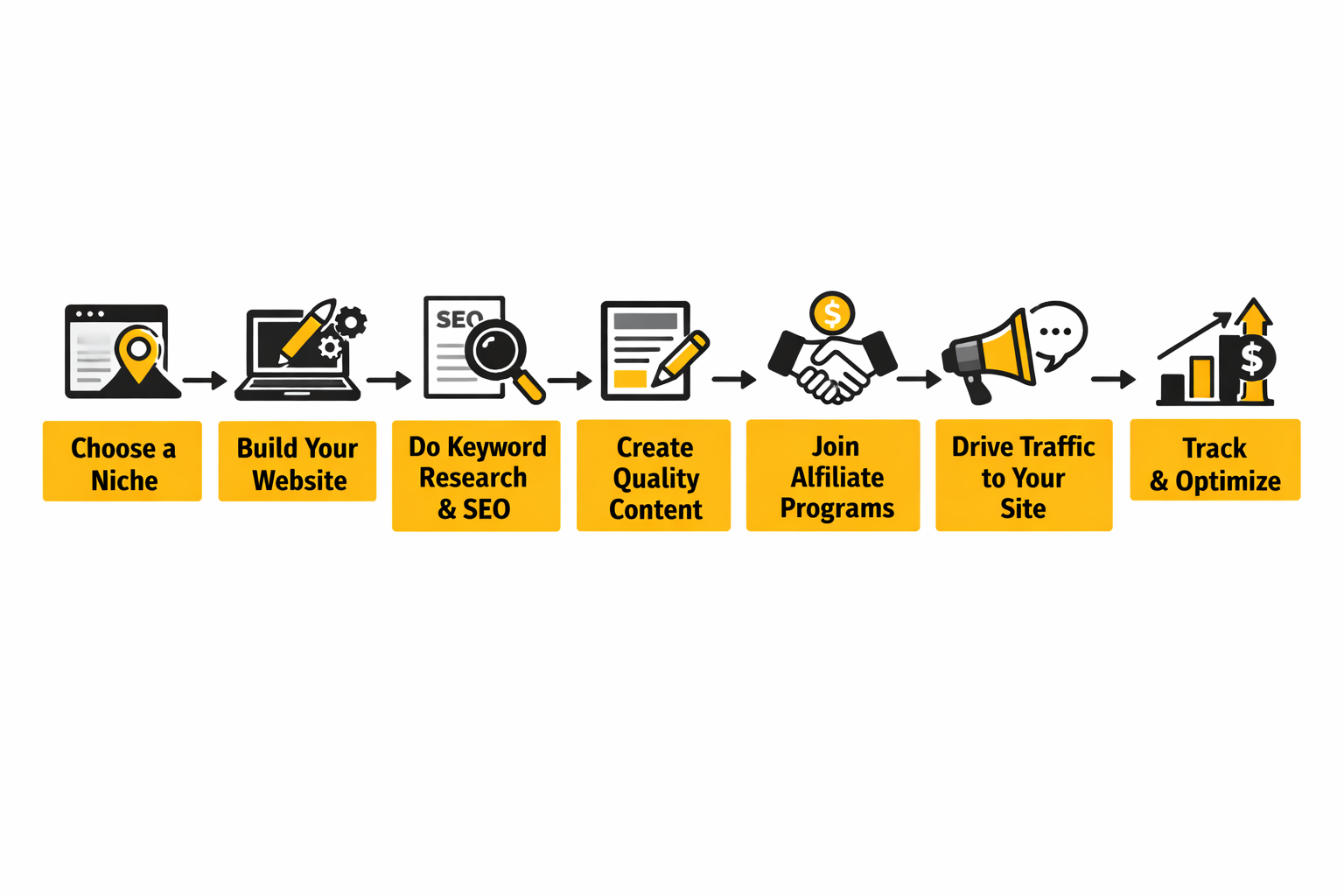
A clean implementation process usually looks like this:
- Choose one focused niche or subcategory with clear buying decisions.
- Build the core commercial pages first so the site has monetization paths from the start.
- Add informational content that supports those money pages and answers adjacent questions.
- Create internal links that move readers from learning to comparing to choosing.
- Add email capture where the reader would benefit from a follow-up resource.
- Track clicks, rankings, and conversions before scaling output.
What matters here is sequence. Too many affiliate marketing websites start with endless top-of-funnel content and postpone their commercial structure, their email system, and their measurement setup until later. Later usually turns into never.
Clear Disclosure Is Part of the Product
Disclosure is not just a compliance box. It is part of how users interpret your honesty. The FTC’s endorsement guidance and the FTC rule on deceptive reviews and testimonials that took effect on October 21, 2024 make the direction of travel obvious: affiliate publishers should be transparent, readable, and hard to misunderstand.
That means burying disclosures in a footer is a weak move. If a page includes affiliate links, the reader should understand that without hunting for it. Good affiliate marketing websites do this in a calm, direct way that protects trust instead of damaging it.
The irony is that transparent sites often convert better anyway. People are not offended by monetization when the content is genuinely useful. They get irritated when the commercial relationship feels hidden.
Conversion Infrastructure Should Be Built Early
Once a site starts getting traffic, the next bottleneck is almost always conversion infrastructure. That includes calls to action, email capture, link tracking, form flows, and landing pages that give the visitor a clear next step. Without that layer, even strong content leaks value.
This is where tool choice starts to matter. If the business model includes lead magnets, nurture sequences, or product recommendation funnels, then ClickFunnels or Systeme.io can make sense because they reduce implementation friction. If the priority is email-first follow-up, Brevo and Moosend are a cleaner fit.
The bigger point is not which tool wins. It is that affiliate marketing websites become more valuable when they can capture intent, not just rent attention. That is the difference between a site that earns only on first click and a site that compounds.
Measurement Has to Go Beyond Pageviews
Pageviews make people feel busy. Revenue comes from understanding what those pageviews actually do. Professional affiliate marketing websites track rankings, click-through behavior, affiliate link engagement, lead capture rates, and the pages that assist conversions even when they do not close them directly.
This changes how you evaluate content. A page with modest traffic may still be extremely valuable if it sends visitors into high-converting comparison pages. A flashy article with lots of visits may be almost worthless if it attracts the wrong intent and sends nobody deeper into the site.
That is why implementation should include a regular review cycle. Look at which pages attract qualified traffic, which calls to action get ignored, and where users drop out of the path. The sites that improve fastest are usually the ones that treat measurement as editorial feedback, not just reporting.
Reading the Numbers That Actually Matter
By this stage, the site is built and the process is in place, so the next question becomes brutally simple: is it working? This is where a lot of affiliate marketing websites get lost. They look at traffic, feel optimistic, and miss the deeper signals that tell them whether the business is getting stronger or just getting busier.
The data only helps when you interpret it in context. A page with rising impressions but flat clicks is not performing the same job as a page with stable traffic and rising affiliate revenue. One is a visibility signal, the other is a commercial signal, and confusing the two leads to bad decisions.
Market Growth Explains Why Better Measurement Matters
The affiliate channel is not a small side corner of digital marketing anymore. EMARKETER projected US affiliate marketing spend to pass $10 billion in 2024 and keep climbing through 2028. That matters because bigger budgets attract stronger competitors, more sophisticated publishers, and more scrutiny from brands.
For site owners, the takeaway is straightforward. When the market gets larger, weak reporting becomes more expensive. You cannot manage an affiliate business on instinct once the content library grows, the pages multiply, and different traffic sources start influencing revenue in different ways.
That is why measurement is not just an optimization layer. It is part of the business model. The more competitive the channel becomes, the more important it is to know which pages assist revenue, which pages waste effort, and which pages deserve to be expanded into clusters.
Search Console Tells You Whether Visibility Is Turning Into Interest
Google defines the core Search Console performance metrics clearly: clicks, impressions, average CTR, and average position. For affiliate marketing websites, those four numbers are the cleanest starting point because they reveal where the content is visible, where it is attractive, and where it is underperforming relative to its visibility.
Impressions tell you that Google is testing or showing your page. Clicks tell you that users actually chose it. CTR tells you how often that happened, and position helps explain why. A page with growing impressions and weak CTR usually has a messaging problem, a SERP mismatch, or stronger competitors above it.
That is why CTR should never be read in isolation. Search results behave differently across industries and layouts, but benchmark research from Advanced Web Ranking’s Q3 2024 CTR study still shows the same broad reality: top positions capture a disproportionate share of clicks. For affiliate marketing websites, the action this drives is obvious. If a money page is sitting in the middle of page one with solid impressions and weak CTR, rewriting the title and description can be more profitable than publishing another article.
Engagement Data Tells You Whether the Page Is Actually Useful
Traffic without engagement is weak evidence. Google Analytics 4 measures this through engaged sessions, engagement rate, and bounce rate, and Google defines an engaged session as one that lasts longer than 10 seconds, includes a key event, or has at least two page or screen views. That definition matters because it stops you from overvaluing shallow visits.
For affiliate marketing websites, engagement helps separate curiosity traffic from useful traffic. A visitor who lands on a guide, scrolls, clicks into a comparison, and later joins an email list is behaving very differently from someone who bounces after a few seconds. Both count as traffic. Only one behaves like a future customer.
This is where many publishers misread content performance. A page can have lower total traffic but stronger engagement and still be the better asset. When you see high engagement on informational content, the action is usually to strengthen internal links and calls to action. When you see weak engagement on a commercial page, the page probably needs sharper intent matching, clearer structure, or better trust signals.
Core Web Vitals Tell You Whether the Site Feels Frictionless
Not every performance problem is editorial. Some of them are operational. Google describes Core Web Vitals as real-world measurements of loading performance, interactivity, and visual stability, and the Search Console Core Web Vitals report uses field data rather than lab estimates. That distinction matters because users experience the real site, not your ideal test environment.
For affiliate marketing websites, this is more than technical housekeeping. Slow page loads, jumpy layouts, and delayed interactions reduce trust at exactly the moment a reader is evaluating products or deciding whether to click. That kind of friction quietly damages both revenue and user confidence.
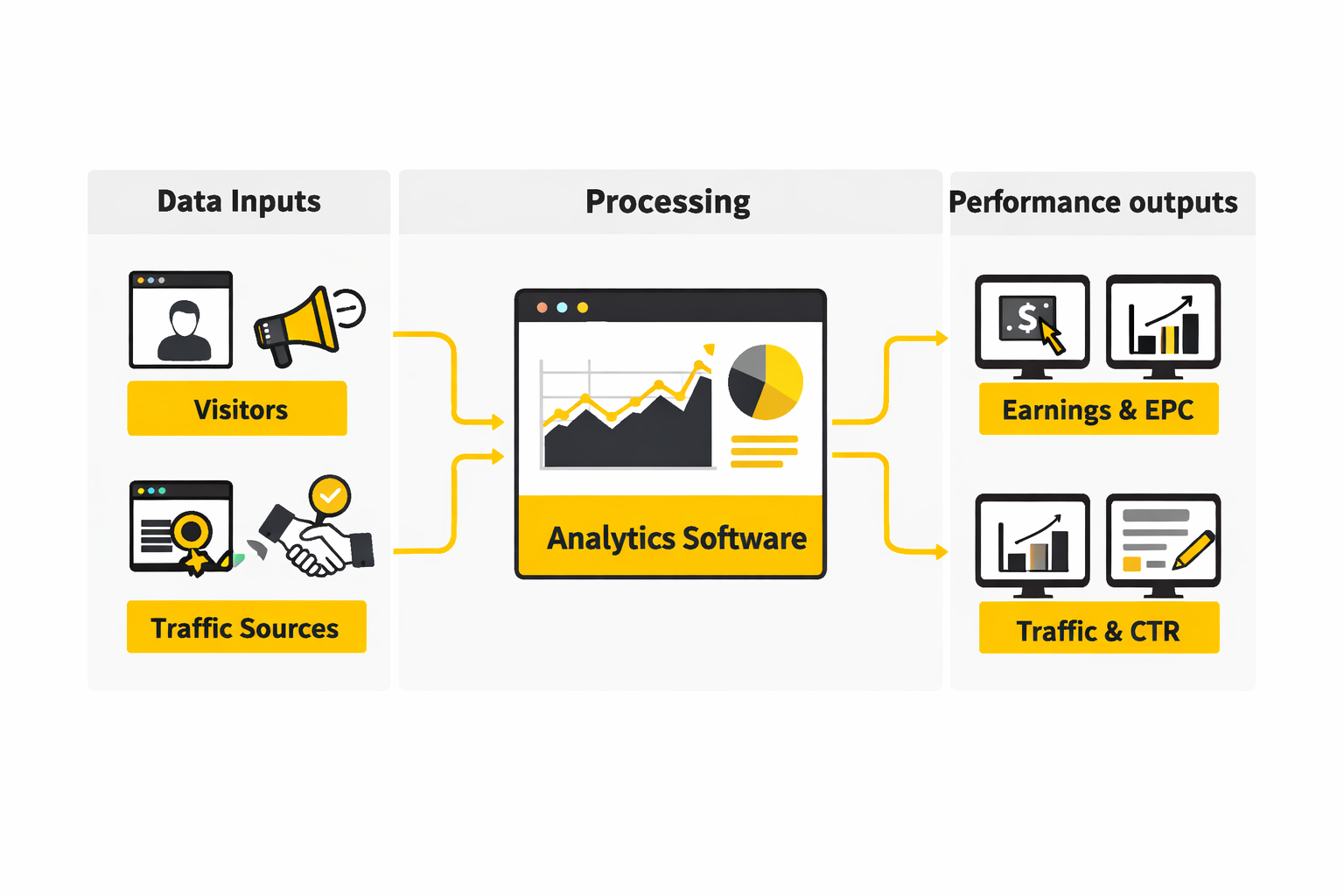
The thresholds matter because they turn vague speed complaints into concrete priorities. Google’s documented standards treat Largest Contentful Paint under 2.5 seconds, Interaction to Next Paint under 200 milliseconds, and Cumulative Layout Shift under 0.1 as good. So the right move is not to chase abstract “speed optimization.” It is to identify which templates, plugins, scripts, or ad elements are pushing key pages out of those ranges and fix them in order of commercial importance.
Revenue Signals Matter More Than Vanity Metrics
This is the part too many people delay. Affiliate marketing websites do not exist to collect pageviews. They exist to generate profitable actions. That means the most important performance layer sits below traffic and asks harder questions: which pages create affiliate clicks, which pages create leads, which traffic sources create buyers, and which content assists revenue without getting direct credit.
That changes how you read the data. A buying guide with modest traffic but strong affiliate click-through may deserve more updates, stronger internal links, and more supporting content. A broad informational article with impressive traffic but weak downstream behavior may need better intent alignment or a clearer path into comparison content.
The practical lesson is simple. Do not judge pages only by how many visitors they attract. Judge them by the quality of the next action they create. That is how affiliate marketing websites move from content publishing into business building.
Good Benchmarks Are Directional, Not Universal
Benchmarks help, but only when used properly. Search CTR studies, engagement norms, and revenue-per-visit targets can guide decisions, yet affiliate marketing websites vary massively by niche, device mix, traffic source, and buying cycle. A software comparison page and a consumer product roundup do not behave the same way, so copying generic targets blindly is lazy analysis.
That is why your own baselines matter more over time. Once you have enough data, the real question is not whether a 3% CTR is “good” in the abstract. The question is whether that page used to convert better, whether its competitors changed the SERP, whether its snippet got weaker, or whether the intent shifted underneath it.
Use industry numbers to spot possibilities, not to replace thinking. Google’s documentation on combining Search Console and Analytics data is useful here because it encourages a fuller view: search visibility on one side, on-site behavior on the other. That combined view is where better decisions come from.
The Data Should Trigger Specific Actions
This is where measurement becomes useful instead of decorative. If impressions rise and CTR stays weak, improve the title, snippet angle, or query match. If engagement is low on informational pages, strengthen the structure and internal links. If commercial pages get traffic but few outbound clicks, tighten comparisons, reposition calls to action, and remove distractions.
The same logic applies to infrastructure. If key pages underperform on Core Web Vitals, fix those before publishing another wave of content. If email capture works on one cluster but not another, analyze the offer match instead of assuming the channel itself failed. Data becomes powerful when it points to the next move with some clarity.
That is the real job of analytics on affiliate marketing websites. Not to impress you with dashboards, but to show where the site is leaking value and where a smart operator can create lift fastest.
Scaling, Optimization, and Long-Term Growth
Once affiliate marketing websites start working, the temptation is to scale everything at once. More articles, more offers, more partnerships, more tools, more channels. That sounds ambitious, but it usually creates a mess before it creates leverage.
The better move is controlled expansion. Growth works when the site keeps its clarity while increasing output, coverage, and conversion capacity. The moment scale starts weakening quality, trust, or intent matching, the business begins to slide even if publishing volume goes up.
Scaling Content Without Diluting the Site
The first scaling decision is not how much content to publish. It is how to publish more without making the site feel generic. Google’s guidance on helpful, reliable, people-first content, review content quality, and spam policies all point in the same direction: more pages do not help if they add little original value.
That is why the best affiliate marketing websites scale by deepening clusters before chasing random adjacent keywords. They expand from one proven category into tightly related comparisons, implementation guides, alternatives pages, and use-case content that reinforces commercial intent. This keeps the site coherent and makes each new page more useful to the existing system.
The practical rule is simple. Do not scale with content that only fills a calendar. Scale with content that strengthens revenue paths, topical authority, and user decision-making. That sounds less flashy, but it is the version that lasts.
Revenue Concentration Is a Serious Risk
A lot of affiliate sites look diversified on the surface and are not diversified at all. They may have dozens of pages, yet most of the revenue comes from one traffic source, one partner program, or one small group of keywords. That is dangerous because affiliate marketing websites are exposed to forces they do not control, including algorithm shifts, commission cuts, and program closures.
This risk gets bigger as the market grows. EMARKETER’s affiliate coverage and its 2024 forecast both show expanding spend and rising competition, which is good for the industry but harder on fragile operators. More money attracts more publishers, and more publishers usually compress easy margins.
So the action here is not panic. It is diversification with purpose. Spread revenue across multiple offers where it makes editorial sense, build owned channels like email, and avoid letting one page or one partner quietly become the entire business.
The Best Offers Are Not Always the Highest Payouts
This is where discipline matters. It is easy to get pulled toward the highest commission or the splashiest partner page, especially when dashboards make payout numbers look seductive. But affiliate marketing websites grow better when the recommended product actually fits the reader’s problem.
The long-term reason is trust. The short-term reason is conversion quality. A lower-paying tool that matches the audience well can outperform a high-commission offer that creates hesitation, refunds, or weak post-click behavior.
This is why experienced operators think in revenue quality, not commission percentage. In some cases, a lighter all-in-one platform like Systeme.io may be a cleaner recommendation for beginners, while ClickFunnels fits readers who need a more aggressive funnel setup. That kind of matching protects credibility and usually improves total earnings over time.
Email and Audience Ownership Become More Valuable as Search Gets Harder
Search can still drive enormous value, but it should not be the only relationship layer in the business. As competition rises and search visibility becomes less predictable, audience ownership becomes one of the clearest advantages a site can build. That means email lists, direct traffic habits, and repeat visitors matter more than many affiliate site owners admit.
This is not just a defensive move. It also gives affiliate marketing websites a cleaner path to nurture readers who are not ready on the first visit. A reader may land on an informational guide today, join the list for a checklist or comparison framework, and convert weeks later after seeing a more targeted recommendation.
That is why email is not an optional extra once a site has traction. Tools like Brevo or Moosend fit well when the goal is simple lifecycle follow-up, while ClickFunnels can make sense when the site is building more structured funnel sequences around higher-intent offers. The tool is secondary. Owning the audience is the real strategic move.
Brand Strength Starts Compounding Before Most People Notice
There is a stage where affiliate marketing websites stop behaving like anonymous search projects and start behaving like brands. It usually begins quietly. Readers return by name, newsletters get opened because of the sender rather than the subject line, and recommendations carry more weight because the site has earned a pattern of being useful.
This matters because brand strength changes the economics of the business. It improves click trust, softens algorithm shocks, helps with partnerships, and makes adjacent monetization easier. A known site can add sponsors, digital products, or services more naturally than a site that feels interchangeable.
The point is not to force branding before the site has substance. The point is to notice that consistency, editorial standards, tone, and recommendation quality eventually become assets in their own right. That is where affiliate marketing websites become much harder to replace.
Automation Should Remove Friction, Not Remove Judgment
As a site grows, automation becomes attractive for research, outlines, internal workflows, and lead handling. Used carefully, that can be smart. Used badly, it floods the site with content that sounds passable but says very little, which is exactly the kind of pattern Google has been moving against in its March 2024 search update and broader quality guidance. EMARKETER+4
The right way to think about automation is operational, not editorial. Use it to speed up organization, analysis, formatting, and follow-up where appropriate. Do not use it as an excuse to stop thinking, testing, or making judgments that readers actually depend on.
That is especially important for commercial content. Comparison pages, reviews, and recommendations need editorial control because they carry trust risk. If the site starts sounding synthetic or careless, the damage spreads fast.
Compliance Gets More Important as the Site Becomes More Commercial
The more successful the site becomes, the less room there is for vague disclosures and fuzzy practices. The FTC’s endorsement guidance, the FTC endorsements overview, and the Consumer Reviews and Testimonials Rule that took effect on October 21, 2024 all reinforce the same practical standard: commercial influence and deceptive review practices are not details to hide. They are issues to handle clearly. Federal Trade Commission+2
For affiliate marketing websites, that means simple, visible disclosures, honest product framing, and no fake authority games. It also means avoiding review language that implies experiences, testing, or independence you cannot support. Once money grows, sloppy compliance becomes more expensive.
This is one of those areas where professional implementation keeps paying off. If the site already has strong standards, scaling becomes safer. If the site was built on shortcuts, growth only magnifies the exposure.
The Real Endgame Is Optionality
The strongest affiliate marketing websites do not stay trapped inside one monetization path forever. Over time, they create options. That could mean adding software partnerships, sponsorships, digital products, consulting, communities, or their own tools once the audience trust is strong enough. Affiliate revenue may still remain central, but it stops being the only lever.
This is where patient operators separate themselves. They do not just ask how to get more clicks next month. They ask what kind of asset they are building and what other revenue models that asset could support two years from now.
That is the real scaling mindset. Not endless expansion for its own sake, but building a site with enough trust, structure, and audience value that growth opens more doors instead of creating more dependence.
Bringing the Entire Affiliate System Together
At this point, everything connects. The pages, the content system, the measurement layer, and the scaling strategy are not separate pieces anymore. They form a single operating system where each part reinforces the others.
Affiliate marketing websites that reach this stage feel different. Content flows into comparisons, comparisons flow into decisions, and decisions flow into revenue or long-term audience relationships. Nothing is isolated, and nothing exists without a clear role in the system.
This is also where small improvements start compounding. A better internal link increases conversions. A stronger comparison page improves click-through rates. A clearer email sequence captures value that used to disappear. Over time, these incremental gains turn into serious leverage.
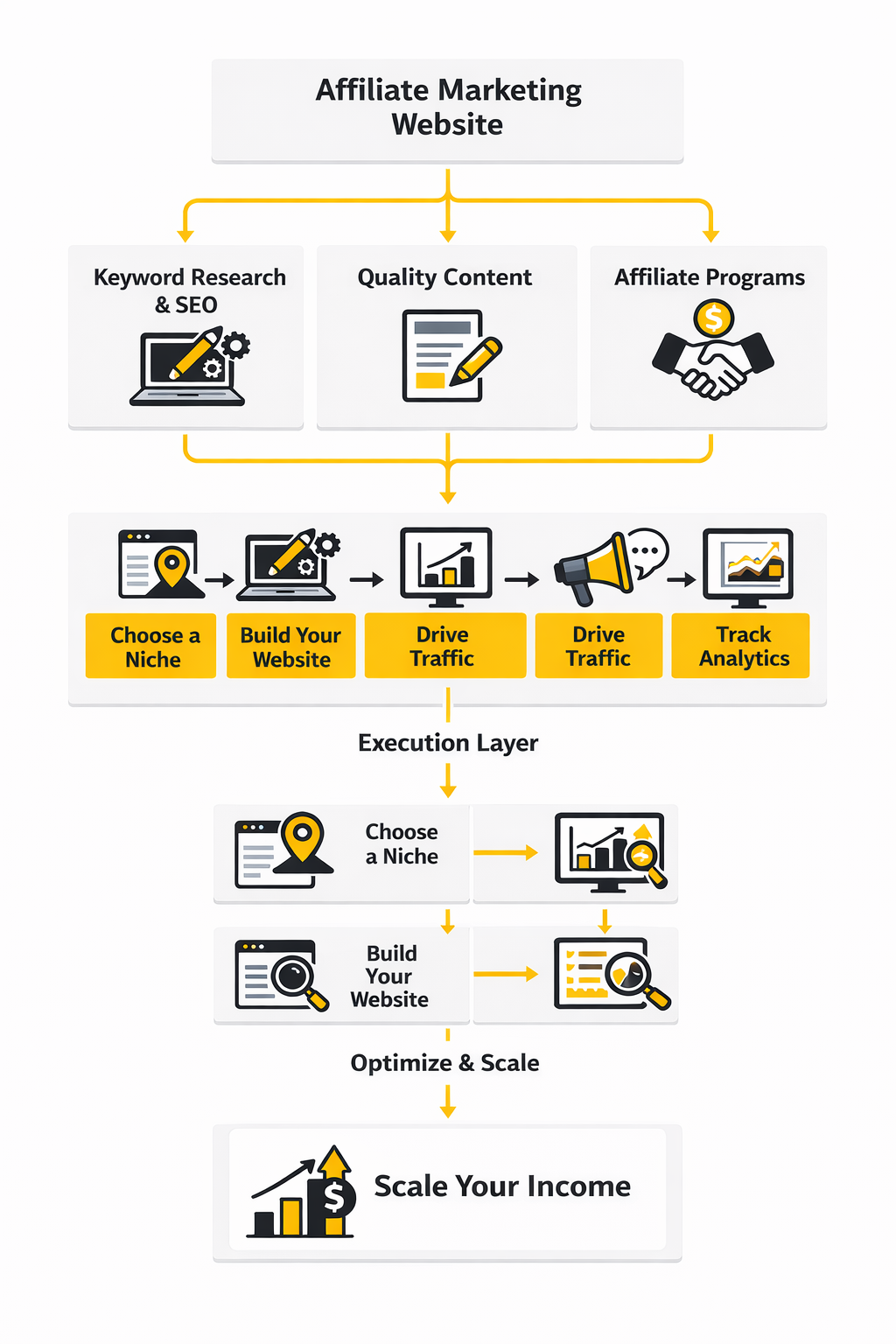
The key takeaway is simple but easy to ignore. You are not building pages. You are building a system that captures intent, builds trust, and converts attention into outcomes. The websites that win long term are the ones that stay aligned with that idea.
FAQ - Built for Complete Guide
What is the biggest mistake beginners make with affiliate marketing websites?
The biggest mistake is treating the site like a collection of blog posts instead of a structured system. Beginners often publish random content without thinking about intent, conversion paths, or internal linking. That leads to traffic without revenue and effort without direction.
A better approach is to build around clear commercial pages first, then support them with targeted content. That creates a foundation where every new page strengthens the business instead of sitting on its own.
How long does it take for affiliate marketing websites to make money?
Most affiliate marketing websites take several months before showing meaningful results. This depends on niche competition, content quality, and how well the site matches search intent. Sites that build commercial pages early usually see traction faster than those focused only on informational content.
The real timeline improves when you combine SEO with email capture and conversion-focused pages. That way, even early traffic can start generating value instead of waiting for perfect rankings.
Do you need SEO to succeed with affiliate marketing websites?
SEO is not the only traffic source, but it remains one of the most reliable for affiliate models. Organic search brings high-intent visitors who are actively looking for solutions. That makes it a natural fit for comparison pages, reviews, and buying guides.
That said, relying only on SEO creates risk. Strong affiliate marketing websites combine search with email, direct traffic, and distribution channels to reduce dependence on one source.
How many articles should an affiliate site have?
There is no fixed number that guarantees success. What matters is whether the content covers the topic deeply enough to support real buying decisions. Some niches require dozens of pages to compete, while others can perform well with a smaller, tightly focused structure.
The better question is whether each article has a clear role. If every page contributes to traffic, trust, or conversion, the total number becomes less important than the system it supports.
Are affiliate marketing websites still profitable in 2026?
Yes, but the model has matured. The easy wins from thin content and generic lists are disappearing as search quality standards improve. The opportunity now favors sites that offer real insight, clear comparisons, and trustworthy recommendations.
Growth in the industry supports this shift. As shown in affiliate marketing spend projections, brands continue increasing budgets, which creates opportunity for sites that deliver real value.
What types of pages convert best?
Comparison pages, alternatives pages, and focused buying guides tend to convert the best because they match late-stage intent. Readers on these pages are already evaluating options, which makes them more likely to click and convert.
That said, those pages work best when supported by informational content. Without that support, affiliate marketing websites miss earlier stages of the journey and lose potential buyers before they reach the decision point.
Should you build an email list for affiliate marketing?
Yes, especially if you want stability. An email list gives you a way to follow up with visitors who are not ready to buy immediately. It also protects your business from sudden traffic changes.
Platforms like Brevo or Moosend make it easier to build simple sequences that guide readers toward the right products over time.
What tools are best for building affiliate funnels?
The right tool depends on your approach. If you want simple lead capture and email follow-up, lightweight platforms are enough. If you plan to build more structured funnels with landing pages and upsells, tools like ClickFunnels or Systeme.io are designed for that type of workflow.
The key is not the tool itself, but how well it supports the journey from visitor to decision.
How do you choose the right affiliate products?
The best products are the ones that genuinely solve the reader’s problem. High commissions are appealing, but they do not matter if the product creates friction or mismatches the audience.
Strong affiliate marketing websites prioritize fit, usability, and trust over short-term payouts. That usually leads to better long-term performance and fewer issues with refunds or dissatisfaction.
Can you run multiple niches on one affiliate website?
It is possible, but it often weakens the site if the topics are unrelated. Search engines and readers both respond better to focused authority. A site that clearly specializes in one category tends to perform better than a generalist site with scattered topics.
If expansion makes sense, it is usually better to grow within closely related subcategories rather than jumping into completely different niches.
How do you know when to scale your affiliate site?
You scale when the system is working. That means your core pages are ranking, your content is driving relevant traffic, and your conversion paths are clear. Scaling before that usually amplifies problems instead of fixing them.
The best signal is consistency. When new content follows a pattern that produces results, that is the moment to increase output carefully.
Work With Professionals
Explore 10K+ Remote Marketing Contracts on MarkeWork.com
Most marketers spend too much time chasing clients, competing on crowded platforms, and losing a percentage of every project to middlemen.
MarkeWork gives you a better way. Browse thousands of remote marketing contracts and connect directly with companies desperate to hire skilled marketers like you, without platform commissions and without unnecessary gatekeepers.
If you're serious about finding better opportunities and keeping 100% of what you earn, explore available contracts and create a profile for free at MarkeWork.com.