

Artificial intelligence is no longer a futuristic concept—it's reshaping the way businesses approach digital marketing today. From automating routine tasks to generating predictive insights, AI offers marketers unprecedented efficiency and precision. Companies leveraging AI have reported higher conversion rates, better customer engagement, and smarter allocation of advertising budgets. Understanding how to implement AI in marketing is now essential for staying competitive.
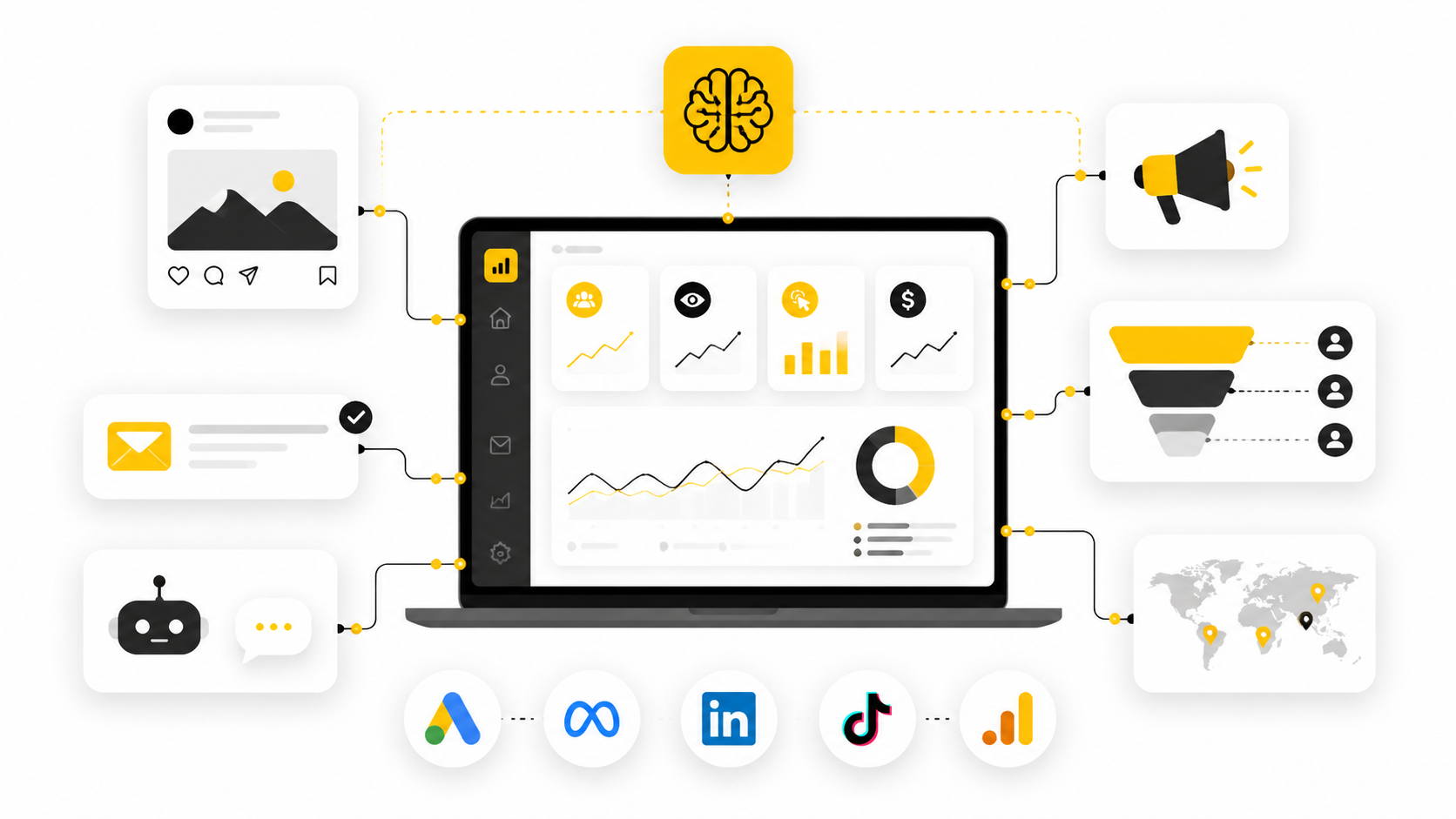
Article Outline
- Why AI Digital Marketing Matters
- Framework Overview of AI Marketing
- Core Components of AI Digital Marketing
- Professional Implementation Strategies
- Case Studies and Real-World Applications
- Future Trends and Opportunities
Why AI Digital Marketing Matters
AI digital marketing matters because it enables brands to make data-driven decisions at scale. Traditional marketing relies heavily on intuition and broad demographic assumptions, but AI can analyze millions of data points in real time to uncover patterns invisible to humans. Businesses using AI-powered tools like predictive analytics or automated content generation see improvements in customer targeting, lead nurturing, and ROI tracking. For example, companies integrating GoHighLevel AI have reported faster campaign optimization and personalized messaging that boosts engagement.
Framework Overview of AI Marketing
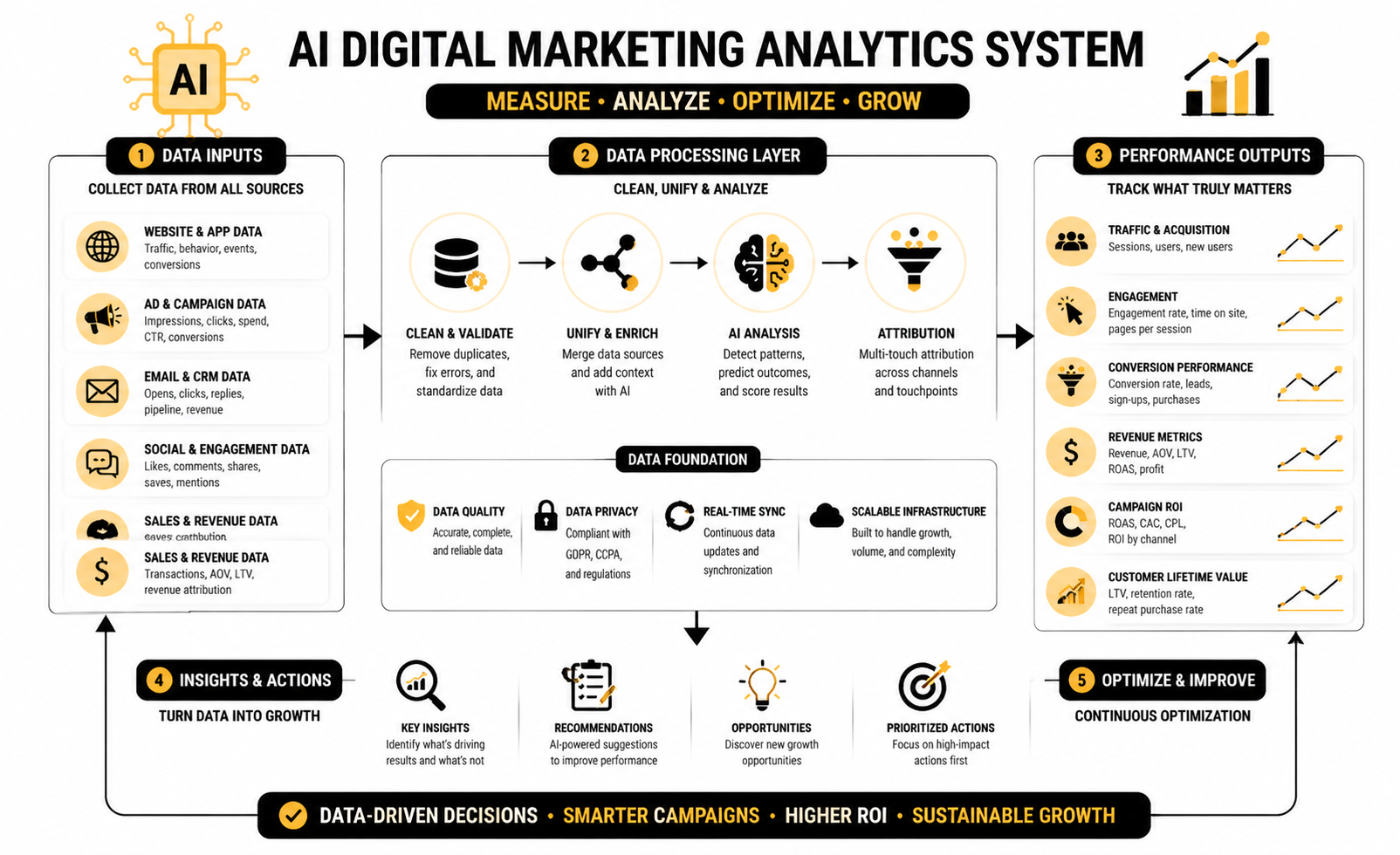
The AI digital marketing framework is designed to structure AI integration across key marketing functions. It typically includes three layers: data collection, algorithmic processing, and actionable insights. Data collection pulls from multiple sources—website analytics, CRM platforms, social media interactions, and more. Algorithms then analyze this data to identify trends, predict customer behavior, and suggest strategies. Finally, insights are operationalized through automated campaigns or optimization recommendations, ensuring every action is measurable and impactful. IMAGE 2
Core Components of AI Digital Marketing
AI marketing consists of several core components that work together to enhance marketing efficiency:
- Predictive Analytics: Uses historical data to forecast customer behavior and optimize campaigns.
- Content Generation: AI tools like Replo and ClickFunnels assist in producing personalized copy, landing pages, and ad creatives.
- Customer Segmentation: Automatically groups customers based on behavior, purchase history, and engagement.
- Chatbots & Conversational AI: Platforms like ManyChat enable instant, personalized communication at scale.
- Campaign Automation: AI automates campaign scheduling, bidding, and performance monitoring for maximum efficiency.
These components combine to reduce manual work, improve targeting accuracy, and deliver measurable results that traditional marketing methods struggle to achieve.
Professional Implementation Strategies
Successfully adopting AI in marketing requires more than installing tools—it demands a strategic approach. Start by auditing your current marketing processes to identify areas that benefit most from AI integration. Prioritize tasks like lead scoring, content personalization, or ad optimization, where AI can deliver immediate value. Ensure your team is trained to interpret AI insights correctly and integrate them into daily workflows. Additionally, platforms like GoHighLevel and Systeme.io offer turnkey solutions that simplify implementation for small and medium businesses.
Case Studies and Real-World Applications
AI digital marketing is not just theoretical—it has transformed campaigns across industries. One compelling example is Sephora, the global beauty brand, which implemented AI-driven personalization through its mobile app and website. Customers receive tailored product recommendations based on previous purchases, browsing behavior, and even seasonal trends. The result was a measurable increase in both average order value and customer retention. By leveraging AI, Sephora moved beyond generic email blasts and promotions to create experiences that feel uniquely personal, boosting engagement and loyalty.
Another example comes from the travel industry. Expedia integrated AI chatbots to handle booking queries, itinerary suggestions, and post-booking support. These bots reduced response times from hours to seconds, dramatically improving customer satisfaction. Moreover, AI-driven predictive pricing allowed Expedia to recommend the best booking times and packages for individual users, increasing conversion rates and reducing abandoned bookings. This demonstrates how AI can simultaneously enhance customer experience and business performance.
E-commerce startups are also benefiting from AI marketing platforms like GoHighLevel and Replo. These platforms allow small teams to automate email campaigns, segment audiences, and test creatives at scale without hiring large marketing departments. Startups using these tools have reported higher ROI and faster campaign iteration cycles, showing that AI can level the playing field for businesses of any size.
AI is particularly impactful when combined with data-driven strategy. Companies that integrate AI into their CRM systems can identify high-value leads automatically, target them with personalized messaging, and track every engagement touchpoint. This approach reduces wasted ad spend and increases the probability of closing deals. For example, using ManyChat for automated lead nurturing has enabled small B2B firms to engage prospects 24/7, capturing opportunities that traditional sales teams would miss.
Future Trends and Opportunities
The future of AI digital marketing is poised for even more innovation. One emerging trend is the use of generative AI for real-time content creation. Tools can now generate video scripts, ad copy, and social media posts tailored to audience segments in seconds, dramatically reducing production timelines. Platforms like ClickFunnels and Systeme.io are integrating these capabilities, enabling marketers to produce personalized campaigns with minimal manual input.
Another opportunity lies in predictive analytics evolving toward prescriptive insights. Instead of merely forecasting outcomes, AI will increasingly recommend the exact actions needed to maximize ROI. This could include adjusting ad spend in real-time, tweaking email messaging for different segments, or optimizing landing page elements dynamically based on user behavior.
Voice search and AI-driven SEO are also set to become critical. As consumers increasingly use smart assistants to find products and services, AI can analyze search intent and optimize content accordingly. Integrating tools like Brevo for email campaigns alongside AI-generated content ensures that brands maintain a consistent, targeted presence across channels.
Lastly, AI in marketing will extend beyond efficiency to ethics and personalization. Brands are beginning to leverage AI responsibly, ensuring data privacy while delivering tailored experiences. Transparent AI practices will build trust, while advanced segmentation and automation will allow marketers to engage audiences meaningfully at scale.
The trajectory is clear: businesses that adopt AI digital marketing now position themselves not only for operational efficiency but also for future growth and deeper customer connections.
Professional Implementation of AI Digital Marketing
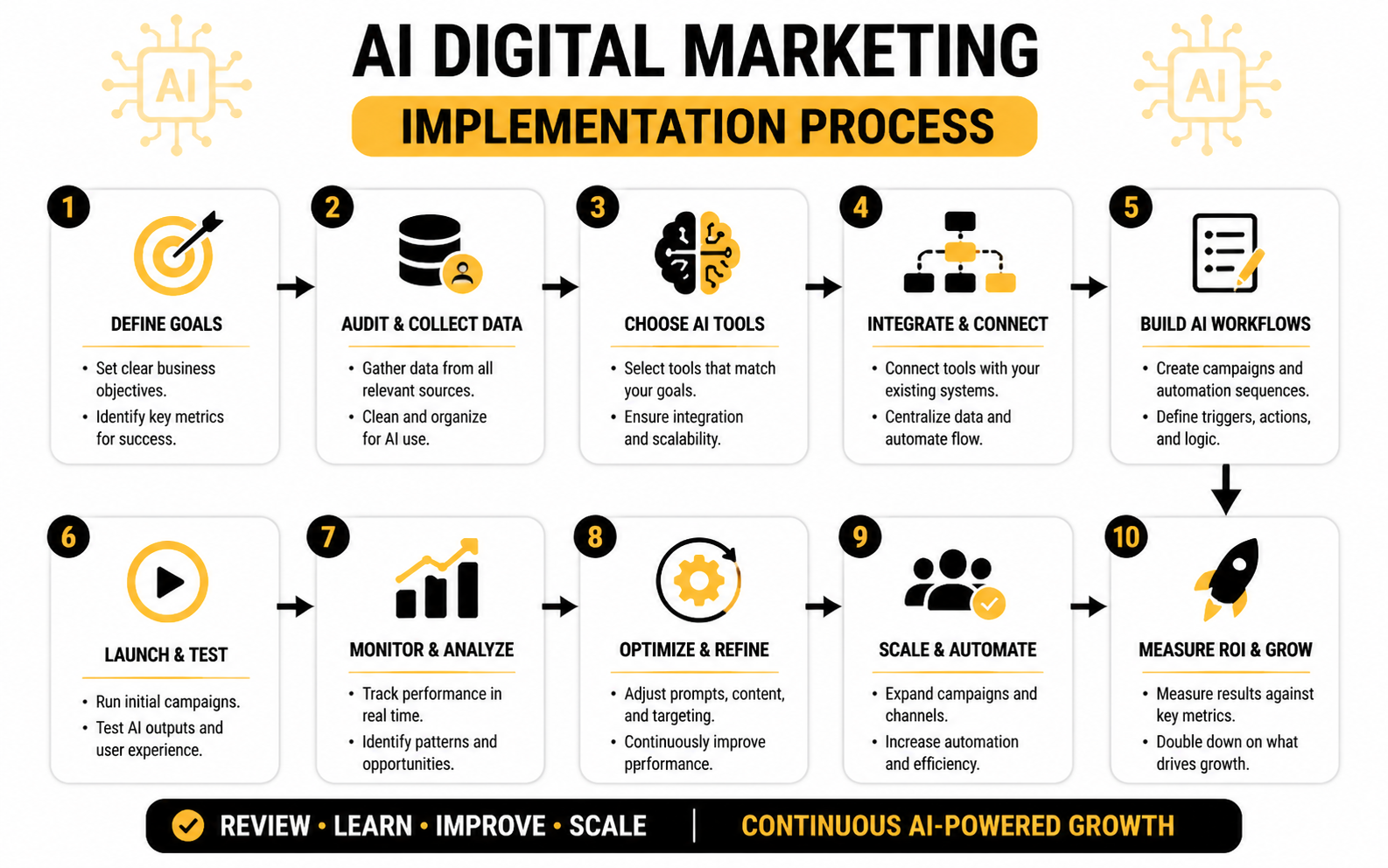
Implementing AI in digital marketing requires a clear process to move from strategy to execution. It's not enough to purchase tools—you need to integrate AI into workflows systematically, ensuring every campaign benefits from automation, personalization, and data-driven insights.
Step 1: Audit and Data Preparation
Begin by auditing your existing marketing assets and customer data. Identify gaps in data quality, such as incomplete CRM entries or inconsistent engagement metrics. Clean and consolidate these sources to provide AI algorithms with reliable input. Tools like GoHighLevel allow for centralized CRM integration, making it easier to collect, segment, and analyze customer behavior across channels.
Step 2: Select the Right AI Tools
Choosing the right AI platforms is critical. For content creation, tools like Replo or ClickFunnels can automate personalized landing pages and copy. For engagement, chatbots like ManyChat handle inquiries in real-time, while predictive analytics tools forecast customer behavior and optimize campaigns dynamically. Selecting tools aligned with specific objectives ensures AI adoption drives measurable results.
Step 3: Workflow Integration
Integrate AI into existing marketing workflows rather than replacing them abruptly. Automate repetitive tasks like email sequencing, ad bidding, or social media posting while keeping humans in the loop for strategic oversight. This hybrid approach maintains creative control while benefiting from AI efficiency. IMAGE 3
Step 4: Campaign Testing and Optimization
AI thrives on iterative learning. Launch small-scale pilot campaigns to test algorithms and collect performance data. Monitor KPIs closely, including conversion rates, click-throughs, and engagement metrics. AI platforms continuously refine targeting and content suggestions, allowing campaigns to improve automatically over time.
Step 5: Measure and Scale
Once pilots show consistent performance improvements, scale the AI-driven campaigns across channels. Use dashboards to visualize impact and adjust budgets, messaging, and audience segments in real time. Platforms like GoHighLevel AI provide actionable insights to ensure each campaign is optimized for maximum ROI.
By following this step-by-step approach, businesses can implement AI digital marketing effectively, transforming abstract strategies into tangible, measurable results that drive growth.
Statistics and Data in AI Digital Marketing
Understanding the numbers behind AI digital marketing campaigns is critical for making informed decisions. Raw metrics like clicks, impressions, or open rates are only meaningful when placed in context. For example, a 12% email open rate may seem low until compared against industry benchmarks for similar audiences and campaign types. Interpreting these metrics correctly allows marketers to identify which campaigns are performing, which are under-delivering, and where optimization is needed.
Key Performance Signals
The most effective AI marketing metrics focus on outcomes rather than vanity numbers:
- Conversion Rate: Measures how many users complete desired actions, such as purchasing or signing up. AI tools optimize campaigns to improve this metric automatically by predicting which content or channels are most effective.
- Customer Engagement: Tracks interactions across emails, chatbots, and social media. High engagement signals that AI personalization is resonating with audiences.
- ROI and Cost Efficiency: AI-powered bidding and audience targeting can reduce wasted ad spend, allowing marketers to compare costs per lead or acquisition against traditional methods.
Interpreting Analytics for Action
Data should always drive strategy, not overwhelm it. For instance, predictive analytics may show that a segment of users is likely to churn. The actionable step is to target them with personalized retention campaigns using platforms like GoHighLevel or ManyChat. Similarly, analyzing engagement trends over time can indicate whether content automation strategies are effective or need tweaking. AI dashboards often consolidate these signals into visual reports, helping teams spot patterns and make data-driven adjustments quickly.
Benchmarks and Context
Comparing metrics against benchmarks is essential. Different industries have varying engagement and conversion standards, and AI helps marketers adapt campaigns to those realities. For example, e-commerce sites using AI personalization tools can see revenue per visitor increase by over 20%, but this gain is meaningful only when measured against previous performance and competitor benchmarks. By continuously analyzing and contextualizing metrics, marketers can refine campaigns, maximize efficiency, and ensure AI implementation delivers measurable business impact.
Advanced Considerations and Strategic Tradeoffs in AI Digital Marketing
As businesses mature in their use of AI digital marketing, the focus shifts from basic automation to strategic sophistication. At this level, the challenge is balancing efficiency with creativity, data-driven precision with ethical considerations, and automation with human oversight.
Scaling AI Campaigns
Scaling AI-driven campaigns requires robust infrastructure and clear operational processes. Many companies start small with pilot projects but struggle when attempting enterprise-wide adoption. Critical considerations include data quality across multiple sources, system interoperability, and maintaining consistent brand messaging while AI generates personalized content. Platforms like GoHighLevel and Replo provide frameworks to centralize operations and manage scaling efficiently, but they still require careful planning to avoid overreliance on automation.
Risk Management and Oversight
AI tools introduce unique risks, such as algorithmic bias, privacy concerns, and over-optimization that can alienate certain customer segments. For example, predictive targeting may inadvertently exclude valuable demographics if the training data is skewed. Businesses must implement continuous monitoring, audit data regularly, and maintain human oversight for creative and ethical decision-making. Using tools like ManyChat or ClickFunnels responsibly means combining automation with guidelines that preserve brand integrity and customer trust.
Strategic Tradeoffs
Advanced AI marketing often involves tradeoffs between speed, personalization, and interpretability. Highly automated campaigns can adapt in real-time but may lack nuance, while more controlled campaigns require human input but provide richer context. Decision-makers should weigh the benefits of rapid execution against the value of strategic messaging. For example, AI-generated content can fill social feeds quickly, but high-value thought leadership pieces still benefit from human crafting and review.
Expert-Level Guidance
Experts recommend a hybrid approach: use AI for repetitive, data-intensive tasks while retaining humans for high-stakes decisions and creative execution. Establish clear KPIs for both machine-driven and human-driven elements to measure effectiveness objectively. Leveraging advanced analytics platforms like GoHighLevel AI ensures that every AI-driven action aligns with overarching business goals, providing a balance between operational efficiency and strategic impact.
By addressing these advanced considerations, businesses can scale AI digital marketing effectively, reduce risks, and maintain strategic control while reaping the benefits of intelligent automation.
FAQ - Built for Complete Guide
1. What is AI digital marketing?
AI digital marketing is the use of artificial intelligence technologies to optimize, automate, and personalize marketing campaigns. It includes tools for predictive analytics, content creation, customer segmentation, chatbots, and more.
2. How does AI improve marketing ROI?
AI enhances ROI by identifying high-value leads, optimizing ad spend in real-time, and personalizing messaging to increase conversion rates. Platforms like GoHighLevel help measure and refine performance efficiently.
3. Can small businesses benefit from AI marketing?
Absolutely. Even small teams can leverage tools like Replo or ManyChat to automate email campaigns, personalize customer interactions, and scale operations without large budgets.
4. Is AI marketing expensive to implement?
Costs vary depending on the tools and scale. Many platforms, such as ClickFunnels and Systeme.io, offer flexible plans that make AI accessible to both startups and enterprise teams.
5. How do I measure AI marketing performance?
Key metrics include conversion rates, customer engagement, and ROI. AI dashboards consolidate analytics, making it easy to track campaigns, spot trends, and optimize strategies in real-time.
6. What are the risks of using AI in marketing?
Risks include algorithmic bias, privacy concerns, and over-automation that can alienate customers. Continuous monitoring and human oversight are essential for ethical and effective campaigns.
7. Can AI generate marketing content automatically?
Yes. AI can produce emails, ad copy, landing pages, and even social media posts. Tools like Replo and ClickFunnels assist marketers in creating personalized, optimized content at scale.
8. How do chatbots fit into AI marketing?
Chatbots like ManyChat enable real-time customer interaction, lead nurturing, and automated support, providing a seamless experience while saving time and resources.
9. Is AI marketing suitable for all industries?
AI marketing can benefit virtually any industry, but implementation should be tailored to sector-specific needs, customer behavior, and regulatory constraints. Retail, e-commerce, travel, and B2B sectors have seen especially strong results.
10. What’s the future of AI in marketing?
Expect deeper personalization, generative AI for real-time content creation, predictive analytics with prescriptive recommendations, and increasingly ethical AI practices that balance automation with trust and customer experience.
Work With Professionals
Explore 10K+ Remote Marketing Contracts on MarkeWork.com
Most marketers spend too much time chasing clients, competing on crowded platforms, and losing a percentage of every project to middlemen. MarkeWork gives you a better way. Browse thousands of remote marketing contracts and connect directly with companies desperate to hire skilled marketers like you, without platform commissions and without unnecessary gatekeepers.
If you're serious about finding better opportunities and keeping 100% of what you earn, explore available contracts and create a profile for free at MarkeWork.com.