

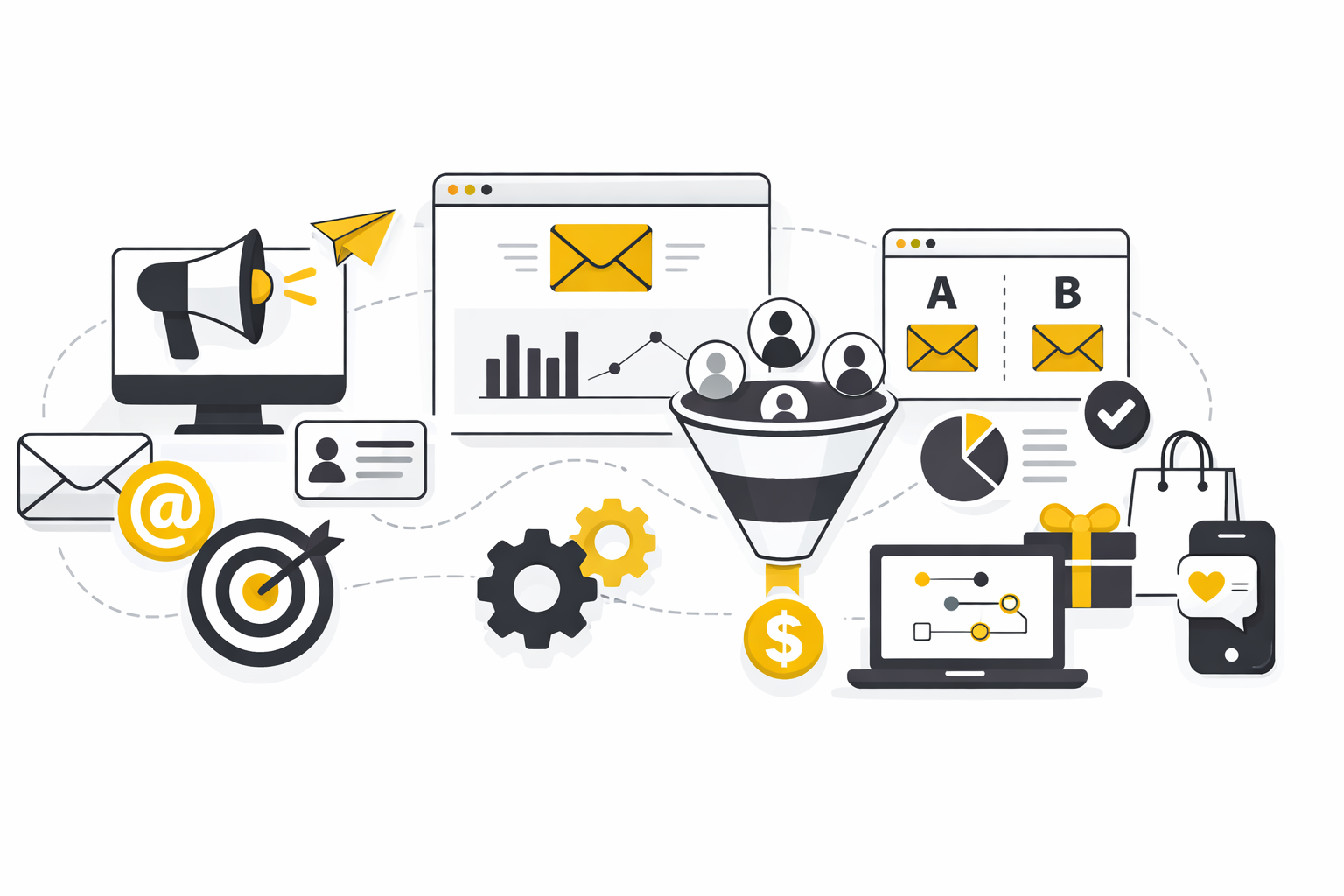
Finding the best email marketing platform used to be mostly about templates, price, and whether the editor felt annoying. That is not enough anymore. In 2026, the right tool has to handle automation, segmentation, deliverability, reporting, compliance, and increasingly AI-assisted production without turning your stack into a mess.
That matters because email is still one of the few owned channels that can scale without paying for every click. Global email traffic was projected to reach 376.4 billion messages per day by the end of 2025, while marketers in HubSpot’s research still ranked email among the highest-ROI channels for B2C brands. At the same time, the bar is higher than it was a few years ago, because inbox competition is tougher and privacy changes have made lazy reporting less useful.
This guide is built for that new reality. Instead of chasing hype, it will compare the strongest options by use case, explain what actually separates a solid platform from an expensive mistake, and show you how to choose a system that fits the way your business grows.
Article Outline
- Why the Best Email Marketing Platform Still Matters
- The Evaluation Framework That Separates Great Tools From Overpriced Ones
- Core Features Every Serious Email Marketing Platform Needs
- The Best Email Marketing Platforms by Business Type
- How to Implement Your Platform Without Hurting Deliverability
- Final Recommendations and FAQ
Why the Best Email Marketing Platform Still Matters
A lot of businesses still treat email software like a commodity, but that usually shows up later as weak reporting, clumsy automations, and stalled revenue. The platform you choose shapes how fast your team can launch campaigns, how intelligently you can segment audiences, and how reliably your messages reach the inbox. That is a strategy decision, not just a software subscription.
The market has also become less forgiving. The UK DMA’s latest benchmark report showed delivery rates rising to 98% in 2024, which sounds encouraging, but high delivery does not automatically mean strong engagement or revenue. Litmus has also highlighted how email teams are shifting away from overreliance on open rates and toward more privacy-resistant measures such as clicks, conversions, and long-term subscriber quality in its recent email trends research.
That shift is exactly why this topic deserves a deeper framework. The best email marketing platform is not the one with the longest feature list. It is the one that helps you turn audience attention into measurable business outcomes without creating technical debt or deliverability risk.
The Evaluation Framework That Separates Great Tools From Overpriced Ones
The rest of this article follows a simple structure: first, we define what a strong email platform has to do in the current market, then we compare the leading tools against those standards, and finally we look at implementation. That keeps the conversation grounded in business results instead of generic “best of” rankings. It also makes it easier to match a platform to your actual operating model, whether you run an ecommerce brand, a media newsletter, a B2B pipeline, or a service business.
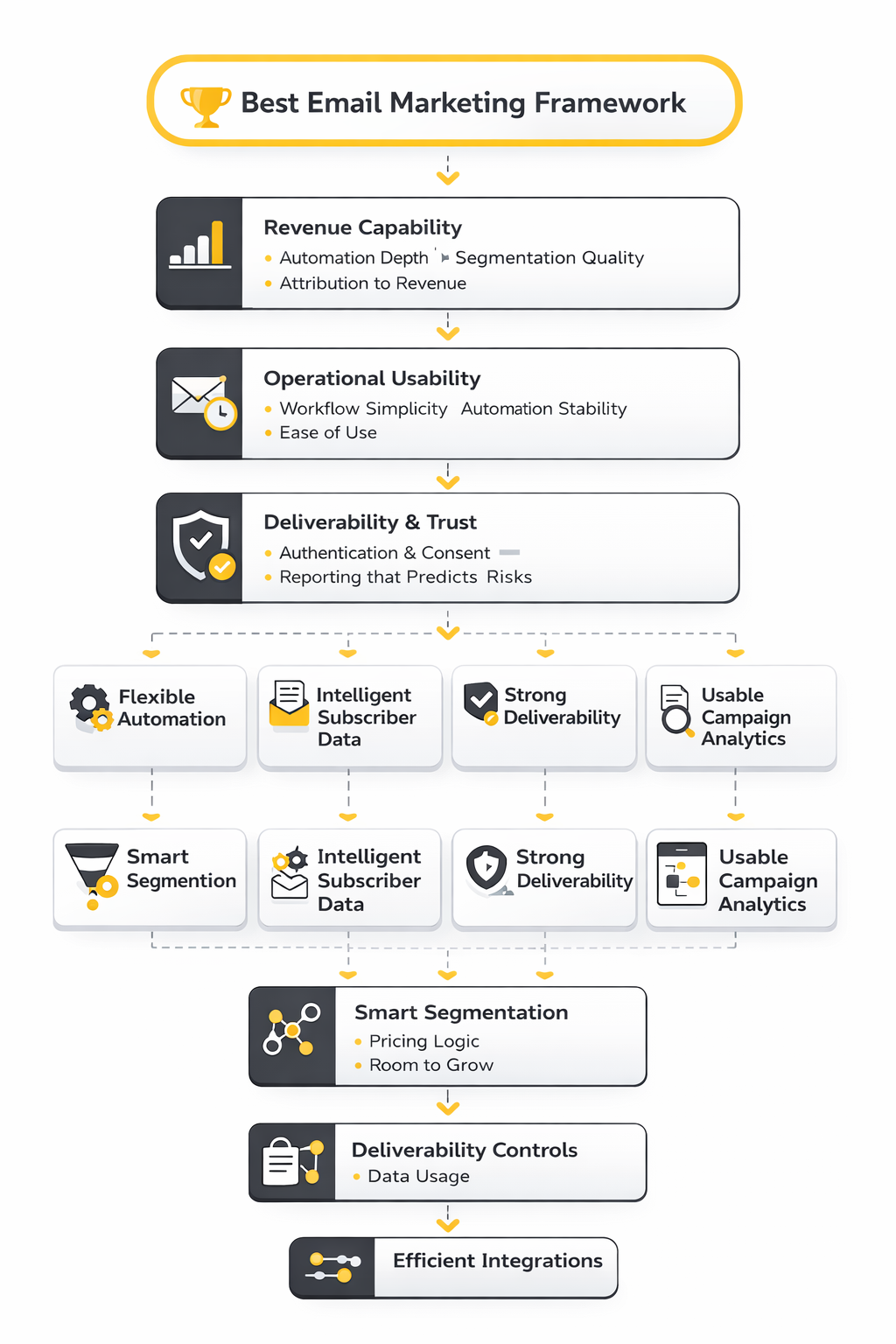
Four criteria will carry most of the weight throughout the guide. The first is revenue capability, which includes automation depth, segmentation quality, and how well the platform connects email activity to purchases, pipeline movement, or lead quality. The second is operational usability, because a tool can look powerful in a demo and still slow your team down every single week.
The third is deliverability and trust, which covers authentication, list hygiene support, consent handling, and the reporting you need to catch problems early. The fourth is scalability, meaning pricing logic, integration quality, and whether the platform still makes sense when your list, catalog, team, or campaign complexity grows. Those are the standards that separate tools that merely send emails from tools that help run a serious retention engine.
In the next part, we will break down the core components every serious buyer should evaluate before comparing brands directly. That is where features like automation builders, subscriber data models, testing depth, analytics, and ecosystem fit start to matter a lot more than flashy landing pages or low entry-level pricing.