

Finding the best email marketing service sounds simple until you actually compare the tools side by side. One platform is cheap at the start but gets expensive as your list grows, another is strong on automation but weak on deliverability controls, and a third looks great for creators yet feels limiting for ecommerce or sales-led teams. The real question is not which tool is most popular, but which one fits your business model, list size, sending volume, and growth plan.
That decision matters more now because email platforms are no longer just newsletter tools. They increasingly combine automation, segmentation, analytics, forms, landing pages, CRM features, and in some cases SMS, which means the wrong choice creates operational drag fast. At the same time, Gmail and Yahoo have made sender authentication and complaint control a baseline requirement, so choosing a platform without thinking about deliverability is a mistake.
Email is still one of the strongest owned channels in digital marketing, but the returns depend on execution, not just sending more campaigns. Recent industry research shows marketers still report strong returns from email, yet the gap between average and excellent results usually comes down to segmentation, automation quality, and platform fit. That is why this guide will focus less on hype and more on how to match the right service to the way you actually acquire, nurture, and convert customers.
Article Outline
- Why Choosing the Right Email Marketing Service Matters
- A Practical Framework for Comparing Email Marketing Platforms
- The Best Email Marketing Services by Business Type
- Core Features That Separate Good Tools From Expensive Mistakes
- How to Implement Your Chosen Platform Without Disrupting Growth
- Final Recommendations and Frequently Asked Questions
Why Choosing the Right Email Marketing Service Matters
The best email marketing service is not a universal winner, because different platforms are built around different growth engines. Klaviyo and Omnisend lean heavily into ecommerce data and multichannel selling, Kit is positioned around creators and digital products, while tools like Mailchimp, Brevo, ActiveCampaign, MailerLite, and Constant Contact serve broader business use cases with very different pricing logic and automation depth.
That difference shows up quickly once your list starts growing. Some tools charge mainly by contacts, some are more sensitive to send volume, and some lock better automation or reporting behind higher tiers, which means a platform that looks affordable on day one can become the wrong financial decision six months later. If you care about avoiding that kind of price creep, a send-volume model can be attractive, which is one reason many businesses keep an eye on Brevo.
There is also a risk most buyers underestimate: migration pain. Changing email platforms later can mean rebuilding forms, automations, segments, templates, reporting workflows, and integrations, all while protecting deliverability during the transition. That makes the upfront choice more strategic than it looks, especially for teams planning to scale into lifecycle marketing rather than just sending the occasional newsletter.
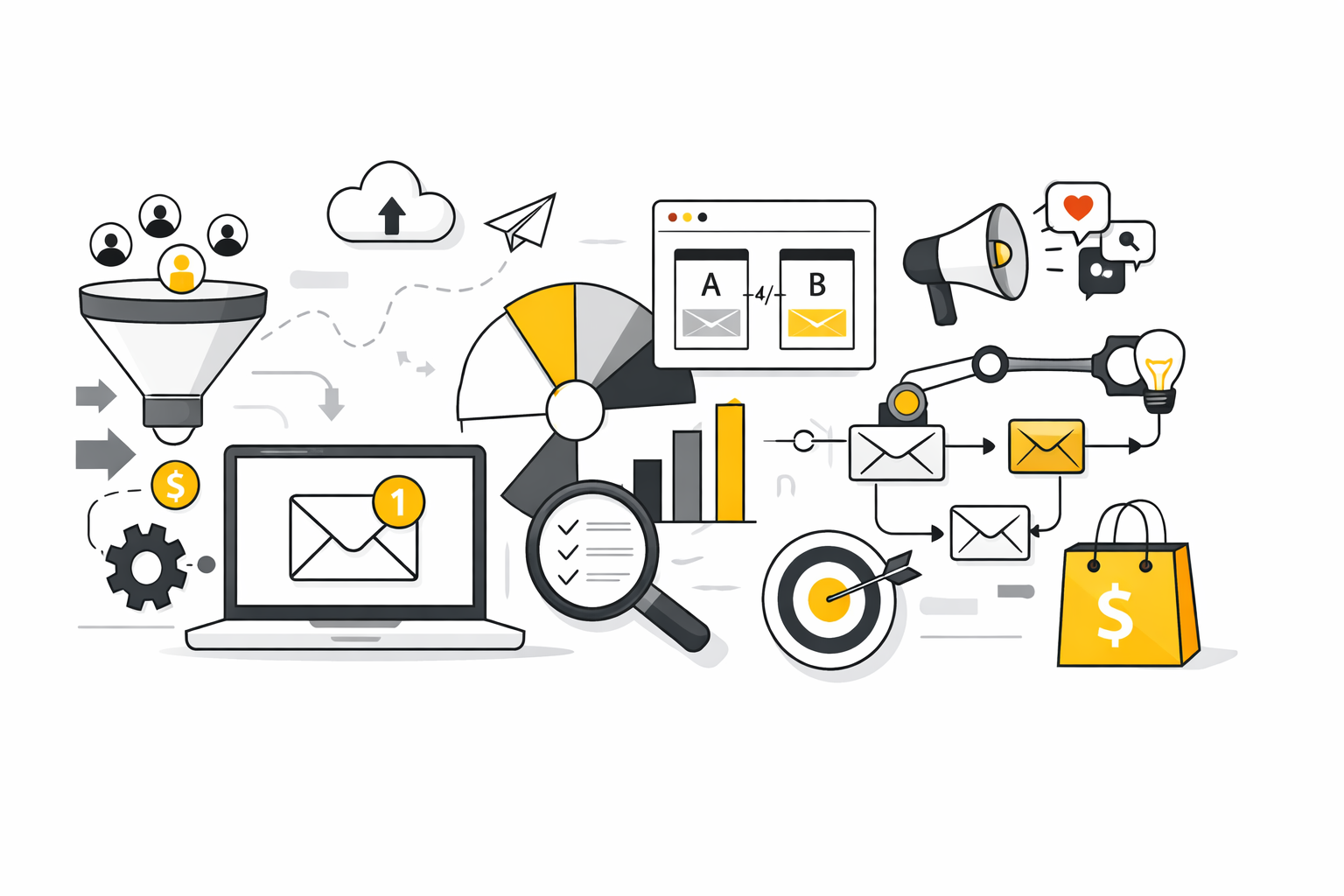
A Practical Framework for Comparing Email Marketing Platforms
The simplest way to compare platforms is to stop asking which one is best overall and start asking which one is best for your operating model. A creator business selling courses has different needs from a Shopify brand, a local service business, or a B2B company running longer sales cycles. When you evaluate tools through that lens, the market gets much easier to read.
A useful framework has four filters. First, look at audience and business type: creator, ecommerce, local business, agency, SaaS, or B2B service. Second, check the automation depth you actually need, because basic drip sequences and advanced behavioral workflows are completely different categories. Third, compare the pricing model against your expected growth, not your current list size. Fourth, confirm the platform supports the deliverability and compliance basics that now matter to mailbox providers, including proper authentication and low complaint rates.
This framework matters because flashy feature lists can be misleading. A tool can have AI writing help, nice templates, and dozens of integrations, yet still be a poor fit if its segmentation is shallow, its automation builder is restrictive, or its pricing punishes frequent sending. In the next parts of this article, we will use this framework to sort the strongest options by real-world fit instead of treating the category like a one-size-fits-all software contest.
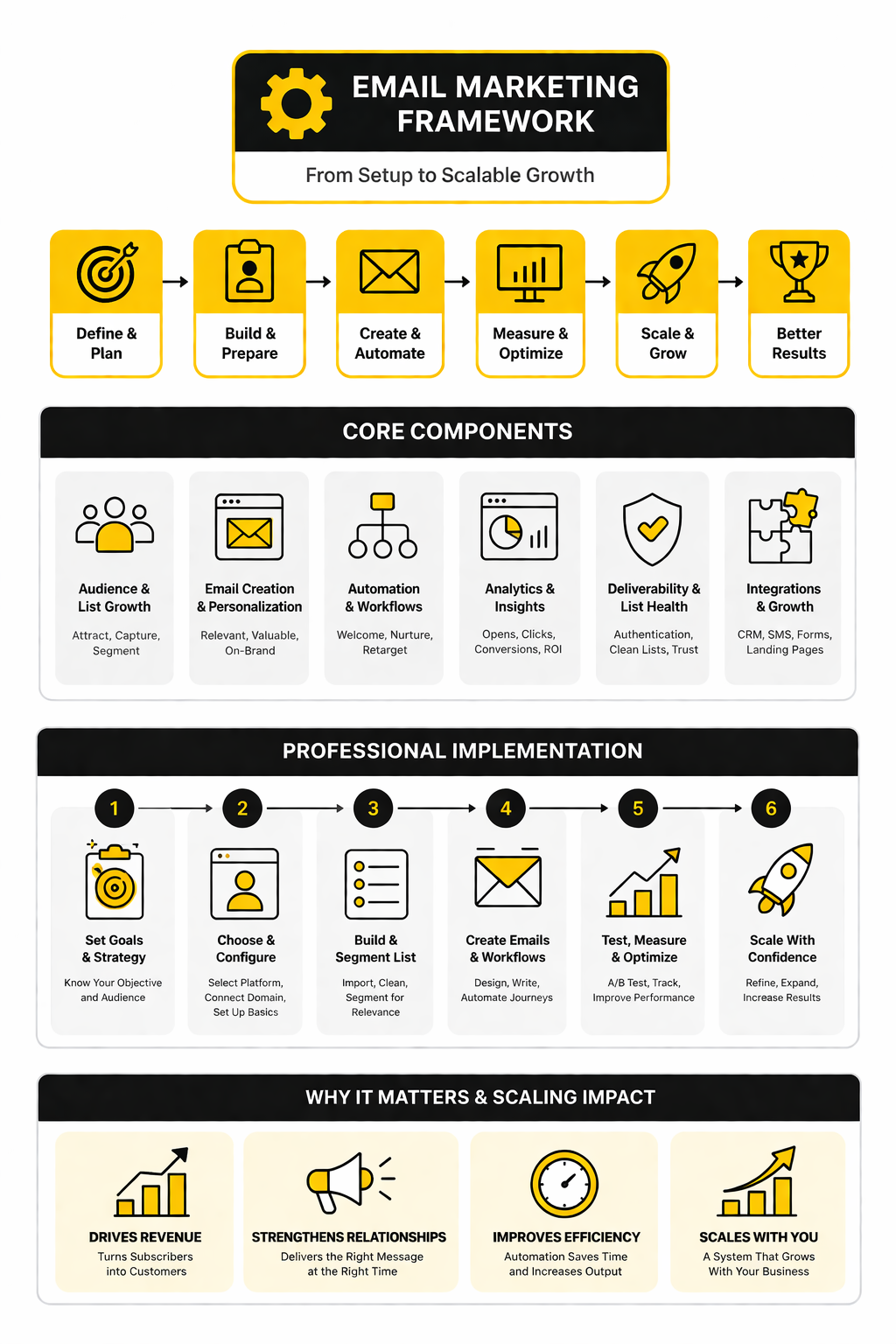
The Best Email Marketing Services by Business Type
Once you apply the framework from the first part, the market stops looking crowded and starts looking segmented. The best email marketing service for a creator, a Shopify brand, and a local service company is usually not the same tool, because each one needs different data, automations, and reporting. That is why the smartest way to compare platforms is by business type first and feature depth second.
Best for Creators and Digital Product Businesses
For creators, Kit is one of the strongest fits because the platform is built around newsletters, opt-ins, email sequences, creator monetization, and simple visual automations rather than heavy ecommerce infrastructure. That matters because most creators do not need deep catalog logic or complex product feed workflows. They need fast publishing, audience growth tools, subscriber tagging, and a system that helps them sell courses, memberships, coaching, or sponsorship inventory without becoming a full-time marketing ops team.
This is also where simplicity becomes a competitive advantage. A creator business often grows through consistent publishing and lightweight automation, so a platform that feels clean and fast can outperform a more advanced system that never gets used properly. Kit’s positioning is clearly creator-first, while broader tools often try to serve everyone at once, which can leave solo operators paying for features they do not need.
That said, Kit is not the only option if you sell digital products. Systeme.io can make sense when you want email, funnels, pages, and course delivery in one cheaper stack, especially if you are early-stage and want fewer software subscriptions. The tradeoff is that specialist email tools often feel more refined for segmentation and publishing, so the right choice comes down to whether you value creator workflow polish or broader all-in-one convenience more.
Best for Ecommerce Brands That Need Revenue Attribution
For ecommerce, Klaviyo remains one of the clearest answers when the business depends on customer data, revenue attribution, and behavior-based flows. Its current positioning centers on unifying email, SMS, push, WhatsApp, web activity, and commerce data into a single profile, which is exactly the kind of infrastructure stores need when they care about browse abandonment, cart recovery, post-purchase journeys, replenishment, and retention. If your business lives or dies on lifecycle revenue, that depth matters more than having the prettiest newsletter builder.
Omnisend deserves serious consideration in the same category, especially for brands that want ecommerce-focused automation without overcomplicating the stack. Its current pricing starts at $16 per month on paid plans, includes ecommerce-native workflows, and keeps the value proposition very clear for online stores that want email plus SMS without moving into enterprise-level complexity. That makes it especially attractive for small and mid-sized Shopify brands that need practical retention tools more than they need a sprawling customer data environment.
The deciding factor between the two is usually business maturity. Klaviyo tends to make more sense when you want richer data orchestration, stronger analytics, and more sophisticated lifecycle marketing. Omnisend often wins when you want speed, ecommerce fit, and easier economics for a growing store that still needs serious automation. Shopify Email can also be viable for very lean setups because Shopify includes 10,000 free email sends per month on its plans, but that works best for simpler programs rather than a full retention engine.
Best for Small Businesses That Want Value Without a Messy Upgrade Path
A lot of small businesses are not choosing between ten advanced platforms. They are choosing between something affordable they can actually use and something powerful that becomes expensive or confusing too early. That is where the best email marketing service is often the one with clean onboarding, sane pricing, enough automation to cover welcome flows and follow-up sequences, and room to grow without forcing a rebuild in six months.
This is why Brevo keeps showing up in serious shortlists for small and growing businesses. Its model is more send-volume oriented than pure contact-based pricing, and its platform bundles email, automation, CRM, forms, landing pages, SMS, and transactional messaging in a way that can reduce tool sprawl. For companies that want one practical system instead of a patchwork of point solutions, that is a meaningful advantage.
For service businesses, agencies, and operators who want tighter lead management with marketing automation, GoHighLevel enters the conversation for a different reason. It is less about classic newsletter marketing and more about combining CRM, automation, forms, funnels, and client communication in one place, which can be useful when the business runs on lead capture and follow-up rather than catalog sales. That does not make it the default answer for everyone, but it can be a strong fit when email is only one part of a larger sales workflow.
The key takeaway is simple: there is no honest single winner. Kit is strong for creators, Klaviyo and Omnisend are strong for ecommerce, and Brevo or GoHighLevel can make more sense for small businesses that care about operational simplicity or lead management. In the next section, the comparison gets more granular so you can see which core features actually separate a smart platform choice from an expensive mistake.
How to Implement Your Chosen Platform Without Disrupting Growth
Choosing the best email marketing service is only half the job. The real win comes from getting the platform live without wrecking deliverability, breaking forms, or losing segmentation logic you already depend on. That is why the smartest implementation plan is boring on purpose: migrate carefully, authenticate early, and launch the smallest set of high-impact automations first.
Start With a Migration Audit, Not a Template Redesign
Most teams waste time redesigning emails before they even know what needs to survive the move. A better approach is to audit your current list structure, active forms, key segments, automation triggers, sending domains, and any revenue-critical campaigns before touching the new platform. That gives you a clean map of what must be rebuilt first and what can be retired instead of dragged into the new system out of habit.
This is also the point where platform fit becomes obvious in practice. If you need email plus CRM and lead follow-up, GoHighLevel may justify the migration effort because the operational upside is bigger than just changing newsletter software. If you mainly need straightforward campaigns, transactional messaging, and cleaner list growth workflows, Brevo is often easier to implement without turning the project into a full systems rebuild.
Set Up Authentication Before You Import a Single Contact
This part is not optional. Brevo’s current authentication guidance is explicit about setting up domain verification and records such as DKIM and DMARC, and HighLevel’s recent email sending guidance makes the same point from the deliverability side: sender reputation starts with technical setup, not clever copy. If you skip this step and start blasting a fresh domain, you are creating your own future headache.
A clean rollout usually means using a dedicated sending domain or subdomain, publishing the required DNS records, verifying them properly, and only then moving into imports and campaigns. If you are implementing for a local business or agency, this is where a more operations-heavy system like GoHighLevel can help because its own documentation now emphasizes warm-up and sender best practices directly inside the ecosystem. If you want a simpler path for standard email programs, Brevo gives you a more straightforward authentication workflow for getting the technical basics right.
Build Only the First Three Automations at Launch
This is where a lot of teams overbuild. They try to recreate fifteen flows, six segments, four lead magnets, and a giant reporting stack before the platform has sent enough mail to establish a stable baseline. A much better implementation process is to launch just three automations first: a welcome sequence, a lead or inquiry follow-up sequence, and one re-engagement or nurture flow tied to the core customer journey.
That approach works because it gives you signal fast. You learn whether forms are passing data correctly, whether tags and custom fields are mapping cleanly, whether deliverability looks healthy, and whether the new platform actually improves the business metric you care about. Tools like Moosend lean into this with visual workflow building and segmentation logic, while ManyChat can make sense if your rollout is really about combining conversational channels with email follow-up rather than treating email as a standalone system.
A Practical Rollout Sequence That Actually Works
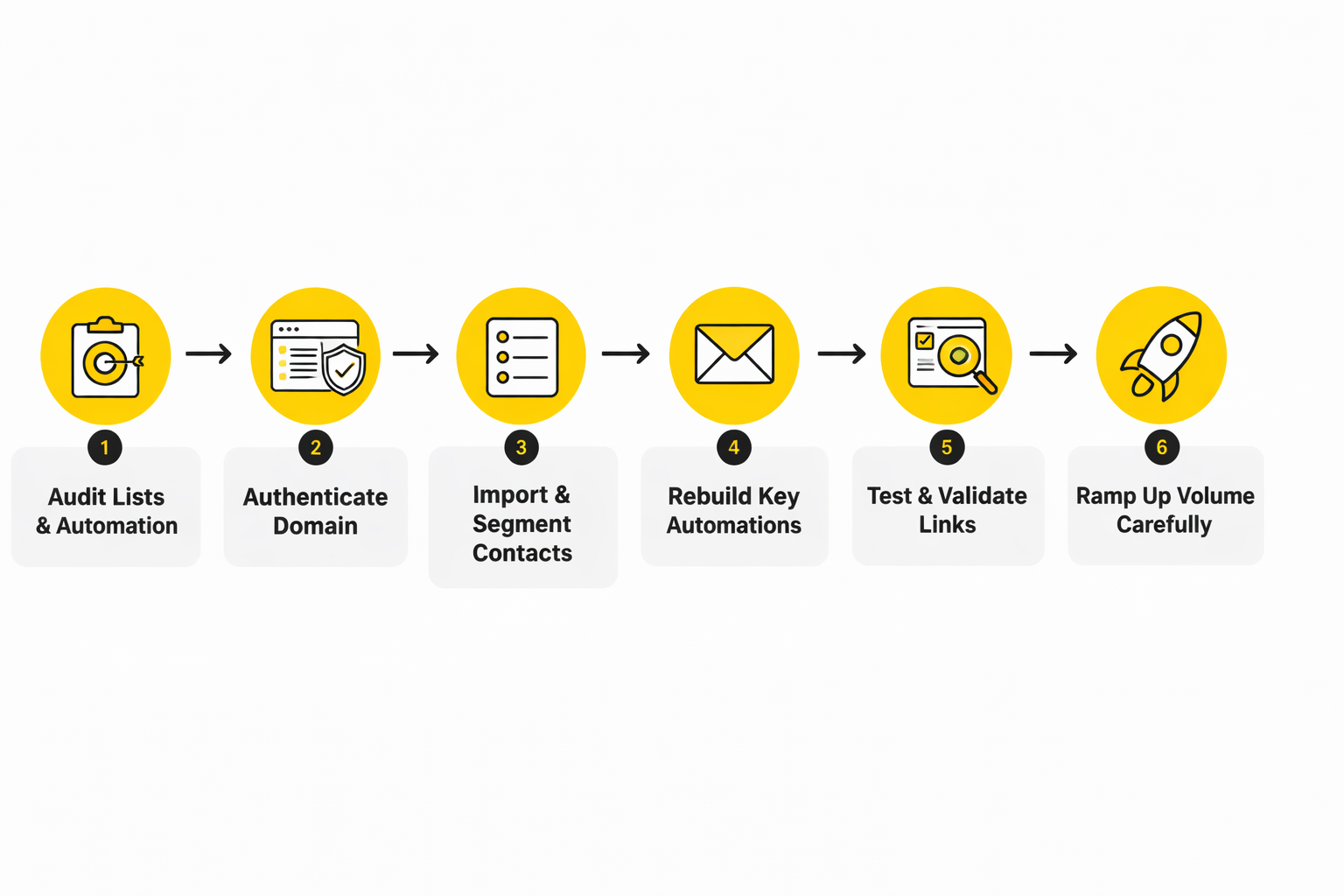
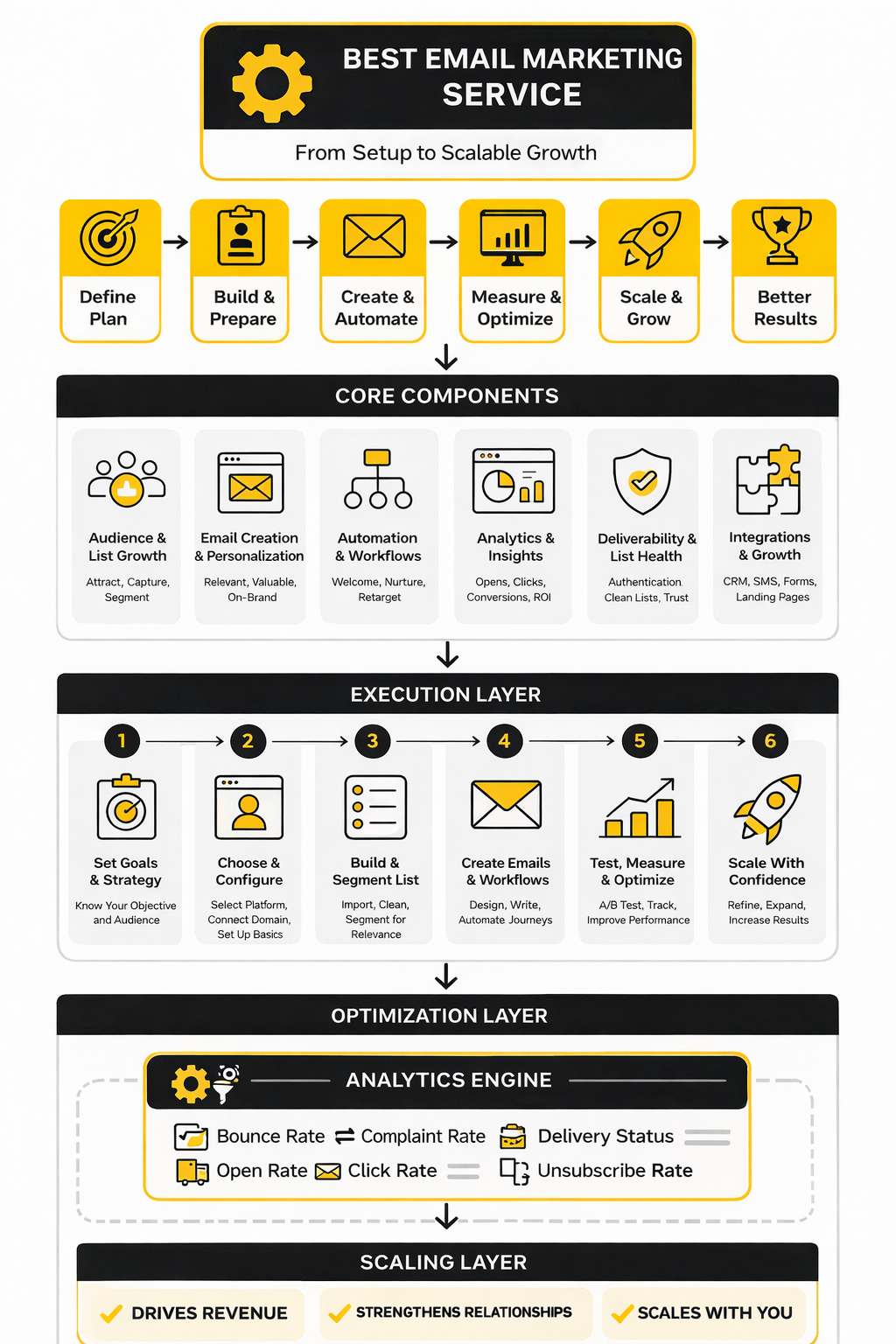
The cleanest rollout usually follows a predictable order. First, define the business goal for the platform so you know whether success means more sales, better follow-up speed, stronger retention, or lower software sprawl. Second, configure authentication and sender infrastructure. Third, import contacts in a structured way with tags, custom fields, and suppression logic intact. Fourth, rebuild the essential automations. Fifth, test before you scale volume.
- Audit lists, forms, segments, and existing automations.
- Authenticate the domain and confirm DNS records are live.
- Import clean data, not your entire historical mess.
- Rebuild only the most important flows first.
- Test links, triggers, suppression rules, and inbox placement.
- Increase sending volume gradually instead of all at once.
That sequence is not flashy, but it is what keeps implementation from becoming expensive chaos. If you are serious about choosing the best email marketing service, this is the part to take seriously, because even a strong platform underperforms when the rollout is rushed. In the next section, we will get into the feature-level details that separate a tool that feels good in a demo from one that keeps delivering once your list, workflows, and revenue expectations start growing.
What the Data Really Tells You
Most teams look for the best email marketing service by comparing features first, but analytics usually tells you whether the platform is actually helping or quietly hurting performance. That is why raw numbers are only useful when you know what each metric means, what can distort it, and what action it should trigger next. Good reporting does not just show activity. It helps you decide whether the problem is list quality, message relevance, offer strength, or deliverability. (mailchimp benchmark data)
Benchmarks are still useful, but only as directional context. Mailchimp’s current benchmark data puts overall average open rate at 35.63%, click rate at 2.62%, and unsubscribe rate at 0.22%, while Brevo’s 2025 benchmark data reports a 21% average open rate and 3.96% click-through rate across its dataset. Those differences are exactly why benchmarking without understanding methodology can mislead you. One platform’s numbers may include different audiences, different regions, and different treatments of privacy-distorted opens, so smart operators use benchmarks to spot outliers, not to copy-paste targets blindly. (mailchimp benchmark data) (Brevo benchmark data)
Why Open Rates Need Context Now
Open rate used to be the headline metric. It still tells you something about subject line appeal and inbox placement, but it is not clean enough to carry your measurement system on its own anymore. Litmus notes that more than 50% of email opens happen on a device with Apple Mail Privacy Protection activated, which means opens can be inflated and open timing data can be unreliable. (Litmus on Apple Mail Privacy Protection)
That changes how you judge the best email marketing service in practice. A platform that makes open rates look pretty but does not give you strong click, conversion, and journey reporting can leave you steering the program with blurry instruments. If open rate rises sharply while click rate, conversion rate, and downstream revenue stay flat, that is not always improvement. Sometimes it is just measurement noise. (Litmus on Apple Mail Privacy Protection)
The Metrics That Actually Drive Decisions
Click rate is one of the cleanest performance signals because it shows that someone not only received the email but also took a meaningful action. If opens are healthy but clicks are weak, the issue is usually inside the message: weak offer framing, poor CTA clarity, too much copy, or bad audience-message fit. If both opens and clicks are weak, the problem is more likely deliverability, subject lines, or list quality. (mailchimp benchmark data)
Unsubscribe rate is not just a retention metric. It is feedback on relevance and frequency. Mailchimp’s current benchmark data puts the all-user average unsubscribe rate at 0.22%, and ActiveCampaign’s benchmark guidance treats anything below 0.5% as good and below 0.2% as excellent, which gives you a useful frame for interpreting whether people are simply filtering themselves out or whether your sending strategy is irritating the list. (mailchimp benchmark data) (ActiveCampaign unsubscribe benchmarks)
Bounce rate matters because it is one of the clearest signals of list hygiene. High bounce rates usually point to stale data, poor acquisition practices, or sloppy imports during migration. This is one reason the best email marketing service is not just about automation depth. It also needs to help you manage suppression, list cleaning, and consent cleanly enough that your infrastructure stays healthy as volume grows. (Brevo benchmark data)
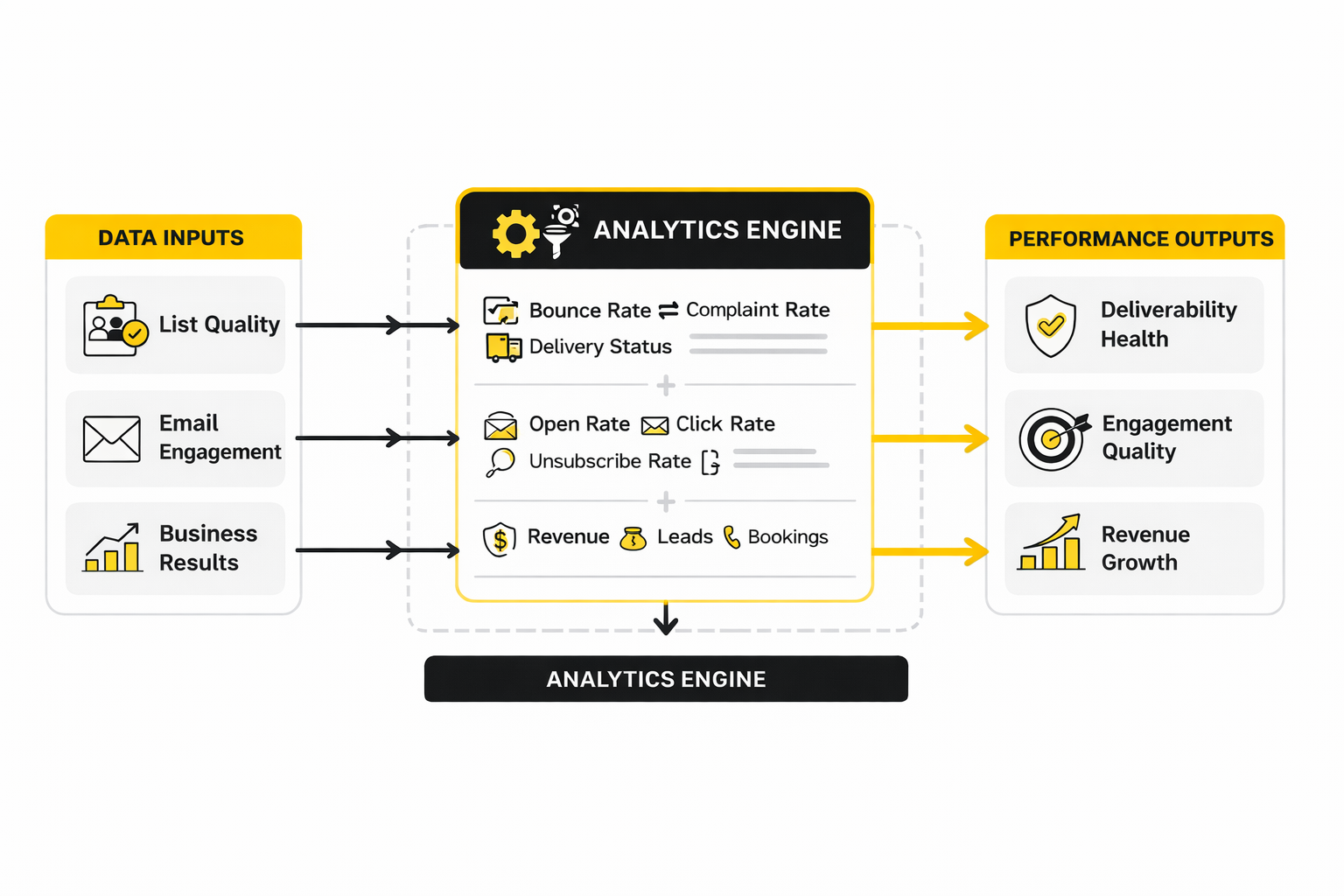
The Analytics System That Makes Email Decisions Easier
A practical analytics system is simpler than most dashboards make it look. You track delivery metrics first, engagement metrics second, and business metrics third. Delivery tells you whether messages are reaching inboxes. Engagement tells you whether the message resonates. Business metrics tell you whether the email program is creating outcomes that matter. (Google sender guidelines) (Yahoo sender best practices)
Here is the sequence that actually works:
- Check delivery health through bounce rates, complaint rates, and authentication status.
- Review engagement through clicks, unsubscribes, and trend direction rather than one-off spikes.
- Tie campaigns and automations to revenue, leads, bookings, or whatever core conversion the business runs on.
- Compare automated flows against broadcasts, because lifecycle emails often behave very differently from newsletter sends.
- Investigate changes by segment, not just account-wide averages.
This matters because averages hide the truth. A campaign can look fine at account level while one acquisition source is producing poor-quality subscribers, one segment is overmailed, or one automation is quietly causing complaints. Once you see reporting through that layered lens, the platform comparison gets more honest because you stop rewarding tools for vanity metrics and start rewarding them for clarity. (Litmus 2025 recap)
The Deliverability Numbers You Cannot Ignore
Some numbers are not suggestions anymore. Google’s sender requirements for Gmail have applied since February 1, 2024, and Yahoo’s best practices explicitly say to keep spam complaint rates below 0.3%. That means complaint rate is no longer a niche deliverability metric for specialists. It is a frontline operating number that should directly influence send frequency, targeting, and list hygiene decisions. (Google sender guidelines) (Yahoo sender best practices)
This is where interpretation matters. A rising complaint rate is rarely solved by a prettier template. It usually points to a mismatch between what people expected when they subscribed and what they are receiving now. When complaint rate starts climbing, the action is to tighten segmentation, slow frequency where needed, clean inactive profiles, and review acquisition quality before mailbox providers do it for you. (Yahoo sender best practices)
What Good Performance Should Push You To Do Next
The real job of data is to force better decisions. If clicks are strong but conversions are weak, the bottleneck is probably your landing page or offer, not the email platform. If automations outperform broadcasts, that is a sign to invest more in lifecycle journeys instead of only sending campaigns. Litmus’ 2025 recap reported that email still produces strong returns, with many marketers reporting ROI between 10:1 and 36:1, but it also highlighted that many teams still struggle to measure ROI clearly. That gap is exactly where better reporting discipline creates an advantage. (Litmus 2025 recap) (Litmus ROI recap)
So when you evaluate the best email marketing service, do not ask only whether the dashboard looks polished. Ask whether it helps you connect deliverability, engagement, and business outcomes without guesswork. That is the difference between a platform that sends emails and one that helps you improve them.
Advanced Tradeoffs That Matter Once You Start Scaling
At a small list size, a lot of platforms feel interchangeable. Once volume climbs, the differences get expensive fast. The best email marketing service at 2,000 contacts is not always the best one at 200,000 contacts, because pricing logic, data structure, segmentation depth, and sending risk start to matter much more than template polish. (2026 platform comparison)
This is where buyers make one of the most common mistakes in the category. They choose for today’s newsletter workflow instead of tomorrow’s operating model. If your business is likely to add SMS, lifecycle automation, multiple lead sources, sales handoff, or more complex reporting, the real question is not whether a platform works now. It is whether it still works when growth creates complexity.
The Real Cost Is Usually Not the Monthly Plan
Software buyers love comparing headline prices because the numbers look concrete. But once you scale, the bigger cost is often hidden in contact inflation, duplicated profiles, tool sprawl, and the hours required to maintain automations that became messy over time. A platform can look cheap on the pricing page and still become expensive if it forces you to add separate tools for CRM, landing pages, SMS, forms, or reporting. (2026 platform comparison)
This is why the best email marketing service depends heavily on how many adjacent jobs the platform needs to handle. If email is one part of a broader lead-generation and client-management system, an all-in-one tool like GoHighLevel can reduce operational sprawl even if it is not the prettiest pure email platform. If you care more about straightforward email, automation, and transactional messaging with a cleaner learning curve, Brevo can be the more efficient long-term choice.
All-in-One Convenience Versus Specialist Precision
This tradeoff is where experienced operators usually get sharper than beginners. All-in-one platforms reduce vendor count and can speed up execution because forms, funnels, CRM, automation, and communication live in the same environment. The downside is that they may be less refined in one specific area than a specialist tool built for that job alone. That is not always a dealbreaker, but it should be a conscious trade. (Klaviyo migration guide from HighLevel)
Specialist platforms usually win on depth. Klaviyo is a good example in ecommerce because the strength is not just sending campaigns. It is the ability to act on customer behavior and commerce data with much more precision than a generic newsletter tool. The same general logic applies to creator-focused tools like Kit, where the benefit is not feature sprawl but a tighter fit for the workflow creators actually live in. (Klaviyo platform perspective)
Migration Risk Gets Bigger as Your System Gets Smarter
A basic newsletter list is easy to move. A mature lifecycle system is not. Once you have layered segments, custom fields, multiple opt-in sources, suppression logic, and behavior-based automations, migration becomes a real project with deliverability and data-quality risk attached. (Brevo Klaviyo import guidance)
This is exactly why switching platforms too casually can backfire. Brevo’s current Klaviyo integration guidance notes limits such as importing one list at a time and not reflecting subsequent Brevo-side contact changes back into Klaviyo, which is a good reminder that migrations are rarely seamless mirror copies. HighLevel’s Klaviyo migration guide makes the same broader point from the other side: moving platforms means rebuilding assets and logic, not just exporting a CSV and calling it done. (Brevo Klaviyo import guidance) (Klaviyo migration guide from HighLevel)
Personalization Is Powerful, but Data Quality Is the Gatekeeper
A lot of marketers talk about personalization as if it is mostly a copywriting trick. In practice, personalization quality depends on having usable data, clear segmentation logic, and a system that can operationalize those inputs reliably. Litmus’ 2025 reporting highlighted that marketers still struggle with collecting and analyzing the data needed for personalization, developing personalized content efficiently, and measuring the impact of that work. (Litmus on segmentation and personalization)
That creates an important strategic filter. If your business does not have reliable behavioral or customer data, buying a more advanced platform does not magically create relevance. It just gives you more sophisticated ways to send mediocre emails. The better move is often to simplify segmentation, tighten data capture, and build a smaller number of high-confidence journeys before expanding into advanced personalization.
Deliverability Becomes a Scaling Constraint Before Most Teams Expect It
At low volume, weak practices can stay hidden for a while. At scale, they get exposed. Google’s sender guidance still makes the enforcement threshold very clear: bulk senders with a user-reported spam rate above 0.3% are ineligible for mitigation, and Yahoo continues to tell bulk senders to stay below the same complaint level. (Gmail sender FAQ) (Yahoo sender best practices)
That means scaling is not just a volume problem. It is a relevance problem. When list growth outpaces segmentation quality, complaint risk rises. When frequency rises faster than subscriber trust, complaint risk rises. When acquisition sources get sloppier because the team is chasing top-line list growth, complaint risk rises again. The best email marketing service helps, but it cannot rescue a strategy that ignores those fundamentals.
AI Features Are Useful, but They Are Not the Core Decision
By this point almost every serious platform is adding AI to writing, segmentation, analysis, or workflow support. That can save time, and some teams will absolutely benefit from it. But AI should be a secondary factor in your platform decision, not the main one, because the core economics of email still come down to deliverability, segmentation, automation logic, and measurement clarity. (2026 platform comparison)
This is worth saying plainly because buyers get distracted by demos. AI can help you move faster, but it does not fix weak offers, poor audience fit, or broken data. If two tools are close and one has better AI support, great. Just do not let that feature pull you into the wrong system architecture.
The Expert-Level Filter Before You Commit
A strong final decision usually comes down to five questions. Can the platform support your likely scale without ugly pricing surprises. Can it handle the data and automation complexity your business model will need. Can your team realistically use it well. Can it protect deliverability as volume grows. And can you leave later without tearing the business apart.
If you run every option through that filter, the shortlist gets much cleaner. The best email marketing service is not the one with the loudest brand or longest feature page. It is the one that stays useful, affordable, and operationally sane as your business gets bigger. The last part of this guide will bring everything together with direct recommendations and a practical FAQ so you can make the call with less second-guessing.
Final Recommendations
After all the comparisons, tradeoffs, benchmarks, and implementation details, the best email marketing service usually comes down to business model more than brand recognition. If you are a creator, a creator-first platform can keep your workflow lighter and your publishing cadence easier to maintain. If you run ecommerce, a data-rich lifecycle platform usually earns its keep faster because revenue attribution, segmentation, and retention flows matter more than surface-level ease of use. (Mailchimp benchmarking guidance) (Litmus on measurement shifts)
For a lot of small businesses, the smartest decision is the platform that balances cost control, automation depth, and operational simplicity without forcing an ugly rebuild later. That is why Brevo stands out for businesses that want a practical email-first stack with room for CRM, transactional messaging, and automation, while GoHighLevel makes more sense when email sits inside a broader lead-generation and client-management system. If you want a simpler all-in-one option for digital products, funnels, and beginner-friendly business setup, Systeme.io is also worth a look. (Litmus pricing context)
The strongest final filter is brutally simple. Pick the platform that your team can actually use well, that supports the level of segmentation your business really needs, and that will not punish growth with weak reporting or bad pricing logic. The wrong tool can still send emails, but the right tool makes it easier to protect deliverability, learn from data, and scale without constantly fighting your own stack. (Google sender guidelines) (Yahoo sender best practices)
FAQ
What is the best email marketing service overall?
There is no honest one-size-fits-all winner because the best email marketing service depends on what kind of business you run. A creator, an ecommerce brand, and a local service business usually need different automation depth, pricing logic, and reporting views. The better question is which platform fits your operating model with the least friction and the clearest path to scale. (Mailchimp home) (Litmus home)
Which email marketing service is best for beginners?
Beginners usually do best with a platform that keeps setup simple, gives them clean templates, and does not require advanced segmentation skills on day one. That is why Brevo and Systeme.io can make sense for newer operators who want an easier path to campaigns, forms, and automation. The real priority at the start is not maximum feature depth. It is getting the basics live without creating a mess you will need to rebuild later.
Which platform is best for ecommerce?
Ecommerce businesses usually need stronger behavior-based automation, customer segmentation, and purchase-linked reporting than a general newsletter platform offers. That is why ecommerce-focused systems tend to win when you care about abandoned carts, post-purchase flows, replenishment reminders, and retention revenue. If revenue attribution from lifecycle email matters a lot, ecommerce-native tooling usually gives you a clearer edge than a broad small-business platform. (Klaviyo platform perspective)
Which platform is best for creators?
Creators often need a very different stack from ecommerce brands. They care more about audience building, lead magnets, newsletter workflows, and selling digital products or services than about catalog logic or deep product feeds. That is why creator-focused tools can feel better in daily use, even if they are less complex on paper. (Litmus 2025 recap)
Is free email marketing software enough to start?
For very early-stage projects, a free plan can absolutely be enough to validate an offer, start list building, and learn what kind of content gets engagement. The problem starts when free tiers limit automation, reporting, branding control, or list growth in ways that slow real progress. A free plan is fine for learning, but once email starts contributing to sales or lead flow, the right paid setup usually becomes a smarter decision.
How important is deliverability when choosing a platform?
It is critical, and it matters more than a lot of buyers realize. Google’s sender rules require proper authentication and make clear that high complaint rates can lead to delivery problems, while Yahoo still tells bulk senders to keep spam complaints below 0.3%. That means the best email marketing service is not just the one with nice templates. It is the one that helps you maintain clean sending practices as your volume grows. (Google sender guidelines) (Yahoo sender best practices)
Are open rates still useful in 2026?
Yes, but they need context. Litmus continues to note that Apple Mail Privacy Protection affects open tracking, which means open rates can be inflated and timing data can be unreliable for a large part of your audience. That makes opens a directional signal, not a clean source of truth. Clicks, conversions, unsubscribes, and complaint trends usually give you a more reliable picture of performance. (Litmus email client market share) (Litmus on AI and measurement)
What metrics should I care about most?
The most useful metrics are the ones that actually guide decisions. Delivery signals like bounce rate and complaint rate tell you whether your infrastructure and list quality are healthy, engagement signals like clicks and unsubscribes tell you whether the message lands, and business metrics tell you whether the program creates revenue or qualified leads. That three-layer view is far better than chasing open rate alone. (Mailchimp reporting guide) (Google sender guidelines FAQ)
Should I choose an all-in-one platform or a specialist tool?
That depends on whether your biggest problem is tool sprawl or channel depth. An all-in-one platform can reduce vendor count and make operations simpler, especially for service businesses and agencies that want CRM, forms, automation, and follow-up in one place. A specialist tool usually wins when email is central enough to the business that deeper segmentation, testing, and journey control matter more than consolidation. (Litmus pricing context)
When should I switch email platforms?
You should usually switch when the current system is clearly limiting growth, not just because another tool looks more exciting in a demo. Common reasons include weak automation, poor reporting, painful pricing as the list grows, or the inability to support the data structure your business now needs. If you do switch, treat it like a real migration project because rebuilding automations, authentication, and list logic is where the risk lives. (Brevo Klaviyo import guidance) (Klaviyo migration guide from HighLevel)
How many automations do I need at the beginning?
Usually fewer than you think. Most businesses get strong early value from a welcome sequence, a lead or inquiry follow-up sequence, and one nurture or re-engagement flow tied to their core conversion path. Starting with those three gives you cleaner data, fewer moving parts, and a much better chance of implementing the platform properly before expanding into advanced journeys.
Is AI a good reason to choose one platform over another?
AI can be helpful, but it should not be the main reason you choose a platform. Litmus’ recent guidance shows that AI is becoming more relevant in email production and analysis, yet the real performance drivers are still segmentation, data quality, deliverability, and measurement discipline. AI can speed up execution, but it does not rescue weak strategy. (Litmus top tips for 2026) (Litmus guide to AI in email marketing)
What is the biggest mistake people make when picking an email platform?
They choose for today’s newsletter needs instead of tomorrow’s system needs. A platform can feel perfect at a small list size and become expensive, restrictive, or operationally messy once your team adds more segments, more channels, and more automations. The best email marketing service is the one that still feels sane when your business gets bigger, not just when your list is small.
Work With Professionals
Explore 10K+ Remote Marketing Contracts on MarkeWork.com
Most marketers spend too much time chasing clients, competing on crowded platforms, and losing a percentage of every project to middlemen.
MarkeWork gives you a better way. Browse thousands of remote marketing contracts and connect directly with companies desperate to hire skilled marketers like you, without platform commissions and without unnecessary gatekeepers.
If you're serious about finding better opportunities and keeping 100% of what you earn, explore available contracts and create a profile for free at MarkeWork.com.