

The best email newsletter services are not just email editors anymore. They are growth systems, automation engines, reporting layers, and in some cases full-blown revenue infrastructure. That is why lazy “top 10” lists usually miss the point: the right platform for a paid writer is often the wrong platform for a SaaS company, an ecommerce brand, or a local business that just wants reliable campaigns and simple reporting.
Email still earns its place. Litmus found that 35% of companies see email ROI of 36:1 or more, and Constant Contact’s 2025 small business report found that 44% of SMBs say email is their most effective marketing channel. At the same time, Google’s sender guidelines and Yahoo’s bulk-sender requirements have made authentication, complaint control, and easy unsubscribes non-negotiable, which means your software choice now affects deliverability in a very real way.
So this article is going to do something more useful. Instead of pretending there is one universal winner, it will separate creator-first platforms like Kit, beehiiv, and Substack from broader marketing tools like Mailchimp, Brevo, MailerLite, Moosend, and more operational stacks like HighLevel. That is how you actually find the best email newsletter services for your business instead of the most popular brand name on social media.
- Why Choosing the Right Email Newsletter Service Matters
- A Practical Framework for Comparing Newsletter Platforms
- The Core Features That Actually Change Results
- The Best Email Newsletter Services by Use Case
- How to Match a Platform to Your Budget and Growth Stage
- Final Recommendations, Migration Tips, and FAQ

Why Choosing the Right Email Newsletter Service Matters
Most people shop for newsletter software like they are buying a prettier editor. That is a mistake, because once your forms, automations, branded sending domain, archived issues, and subscriber segments are live, switching platforms gets annoying fast. The wrong choice does not just waste money. It slows down growth, makes reporting harder to trust, and can lock simple automation behind a pricing tier you did not plan for.
This matters even more because newsletters are no longer a side project channel. HubSpot’s 2025 newsletter report shows marketers are actively tracking platform changes, automation trends, and privacy shifts around newsletters, which tells you the space is maturing quickly. In plain English, the software you choose now shapes how easily you can grow later.
Performance data makes the same point from another angle. Benchmark datasets from Mailchimp, Constant Contact, and Klaviyo show that open and click performance moves a lot by industry, audience quality, and sending behavior. That is why I do not care much if a platform has 200 templates. I care more about segmentation, automation, reporting, compliance support, and how the pricing behaves when your list stops being tiny.
There is also a category problem hiding inside this keyword. A paid publication may care most about referrals, sponsorships, and subscription revenue, while a business newsletter may care more about welcome flows, lead scoring, CRM sync, and sales follow-up. That is exactly why a creator-first platform can feel perfect for one operator and frustrating for another, and why a stack like HighLevel can go from overkill to completely logical once a newsletter becomes part of a broader lead-generation system.
A Practical Framework for Comparing Newsletter Platforms
The easiest way to compare platforms is to stop asking which one is best and start asking what job the platform is supposed to do. In practice, almost every serious option falls into one of a few buckets: publish-and-grow, automate-and-nurture, sell-and-segment, or run-everything-in-one-place. Once you know the job, half the market becomes irrelevant in a good way.
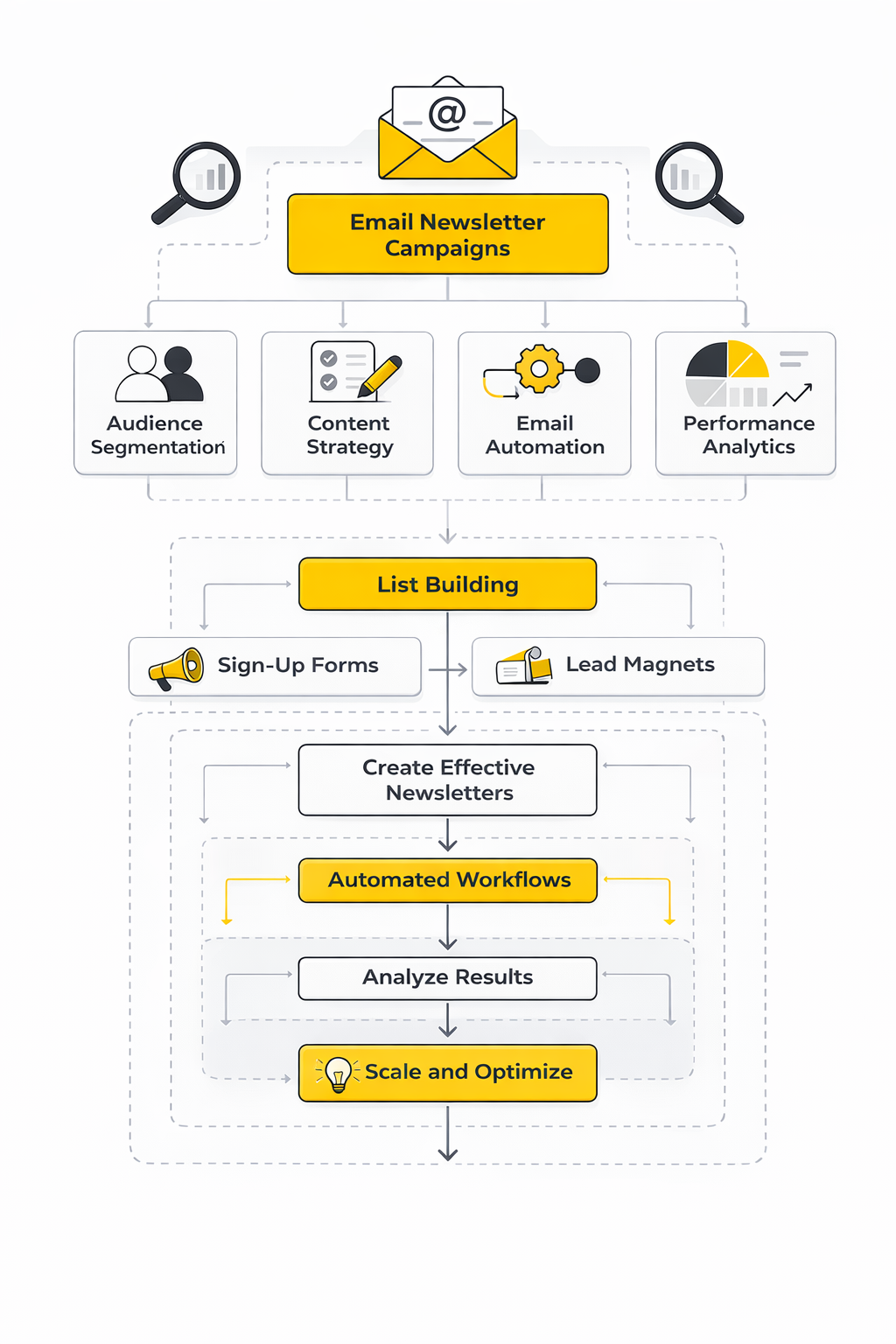
Use this framework before you get distracted by branding, hype, or a free trial. It will keep your shortlist honest, and it will also explain why two people can both be right when they recommend completely different tools. Here is the filter I use.
- Publishing model Some tools are built around running a media-style newsletter, while others treat email as one channel inside a broader marketing system. beehiiv’s pricing and feature set lean heavily into growth and monetization, while Substack is free to publish and takes 10% of paid subscription transactions plus Stripe fees. That difference alone changes who should even consider each platform.
- Growth mechanics Look at how a platform helps you acquire subscribers, not just email them. Landing pages, embedded forms, website hosting, referral systems, recommendations, and audience segmentation all matter more than an extra gallery of newsletter templates. This is one reason creator platforms keep getting attention: they try to solve growth, not just sending.
- Automation depth This is where lightweight newsletter tools separate from real lifecycle platforms. Kit’s visual automations, beehiiv’s automation workflows, MailerLite’s automation builder, and Brevo’s automation tools all exist, but they are designed for different operating styles. If automation is central to your strategy, this is not a detail. It is the product.
- Monetization fit Some platforms are built to help you sell paid subscriptions, run sponsorships, or launch digital products. Others are better at supporting ecommerce flows, onboarding sequences, and sales-qualified leads. For example, beehiiv’s Scale plan includes an ad network, boosts, automations, and a 0% take rate on paid subscriptions, while Substack’s model is free upfront but fee-based on paid revenue. Those are very different economics.
- Pricing curve The headline price is rarely the real price. You need to know what happens at 1,000, 10,000, and 50,000 subscribers, whether automation is included early, whether sends are capped, and whether extra seats or advanced reporting cost more. Right now, Kit’s paid plans start at $33 a month for 1,000 subscribers, MailerLite starts at $10 a month, Mailchimp’s free plan caps at 250 contacts, and Brevo offers a free plan with paid tiers built around sending volume and multichannel features.
- Operations and compliance This is the unsexy part that becomes very sexy when your emails stop landing. The right platform should make it easier to handle authentication, unsubscribes, complaint rates, reporting, and list hygiene in a way that lines up with Google’s requirements for senders and Yahoo’s rules for bulk mail. A tool that looks cheap on day one can become expensive fast if it makes those basics harder than they need to be.
That framework is how the rest of this article will rank the field. It is also why I would rather compare real operating models than argue about whichever platform had the best Twitter thread this week. If your business use case is more automation-heavy than media-heavy, names like Brevo and Moosend deserve a closer look before you pay for creator features you may never touch.
The Core Features That Actually Change Results
The easiest way to get this wrong is to compare newsletter platforms by surface-level polish. A pretty editor is nice, but it rarely decides whether your newsletter grows, lands in the inbox, or turns readers into customers. The features that actually change outcomes are the ones tied to deliverability, automation, segmentation, growth loops, reporting, and the way pricing behaves once your audience stops being small.
That is also why the phrase “best email newsletter services” can be misleading. A creator running a paid publication, a SaaS brand nurturing leads, and a local service business sending weekly updates are all solving different problems, even if they are all technically sending newsletters. Once you look at the underlying job instead of the homepage copy, the important features become a lot clearer.
Deliverability and Compliance Come First
If a platform makes authentication and unsubscribe handling awkward, it is not a serious contender anymore. Google requires one-click unsubscribe for marketing and subscribed messages once you send more than 5,000 messages a day to Gmail addresses, and Yahoo says bulk senders should support one-click unsubscribe, keep a visible unsubscribe link in the message body, honor unsubscribes within two days, and keep spam complaint rates below 0.3%. Those are not edge-case details for big brands. They shape how every serious sender should think about platform selection.
This is where a lot of “cheap” tools quietly get expensive. If domain authentication, list hygiene, suppression handling, and sender reputation are hard to manage, you do not just lose time. You increase the odds that good emails underperform for reasons that have nothing to do with your content. A newsletter service does not need to magically create deliverability for you, but it should make the non-negotiables easier instead of hiding them behind friction.
That is also why I care less about a giant template gallery than I do about how a platform handles the basics of sending correctly. If your software supports the compliance side cleanly and keeps unsubscribes simple, you protect the channel before you start optimizing the channel. That sounds boring, but boring is exactly what you want from infrastructure.
Automation and Segmentation Turn a Newsletter Into a System
Once deliverability is handled, automation is usually the next dividing line. A newsletter that only sends broadcasts can still work, but the real gains usually show up when new subscribers get a proper welcome path, buyers get different messaging than non-buyers, and engaged readers are treated differently from cold ones. That is where the best email newsletter services stop being sending tools and start becoming operating systems.
Kit’s visual automations are built around creator workflows like welcomes, launches, and product funnels, and its help documentation shows actions such as sequences, delays, tagging, custom fields, and unsubscribe steps. That makes Kit attractive when your business revolves around audience nurture and creator-style offers instead of heavy CRM complexity. It is also why Kit keeps showing up on serious creator shortlists even when it is not the cheapest option.
beehiiv also supports trigger-based workflows with actions, delays, and branches, but the context is different. Its automation layer sits inside a product that leans hard into newsletter publishing, audience growth, and monetization rather than broad business operations. If your newsletter is the product, that balance can make a lot of sense.
On the more traditional marketing side, MailerLite’s automation builder and its segmentation system give smaller teams a strong mix of usability and targeting without turning setup into a project. Brevo’s automation tools and dynamic segments are worth attention too, especially if email is tied to CRM activity, sales follow-up, or other lifecycle messaging beyond a pure editorial newsletter. If you want a more operational option without jumping straight into enterprise-style sprawl, Brevo is one of the better platforms to compare here.
Pricing tiers matter a lot in this category because automation is often where free plans stop being generous. Mailchimp’s current free plan is capped at 250 contacts and 500 monthly sends, and automation support is far more limited than on paid tiers, while Kit’s pricing page shows one automated email sequence on the free newsletter plan. That does not make either platform bad. It just means you should be honest about whether you are buying a test environment or a real workflow engine.
Growth Tools Matter More Than Most Buyers Expect
A newsletter platform should not just help you send better. It should help you grow faster. That can mean forms, landing pages, recommendation networks, referral loops, hosted websites, popups, embeddable signup units, or smarter subscriber routing after signup.
This is where creator-first platforms have pushed the category forward. beehiiv’s pricing and feature stack include a recommendation network, referral program, boosts, ad network, paid subscriptions, dynamic content, and detailed analytics, and its referral feature is explicitly designed to turn subscribers into advocates. That is not just a nice add-on. It changes how a newsletter compounds.
The same thing is true with network-based growth inside Kit. Kit’s Creator Network and recommendations system gives creators a way to get discovered through adjacent newsletters, which is much more useful than yet another stock template pack. When list growth is a real priority, built-in distribution mechanics beat cosmetic extras almost every time.
For businesses that care more about lead capture than media-style discovery, simple form and landing page execution still matters a lot. MailerLite positions landing pages, signup forms, websites, and automation as part of one stack, and Moosend includes landing pages, subscription forms, automation, and even transactional email on its platform. If your goal is practical lead generation without paying for a creator-media layer you will never use, Moosend is one of the cleaner low-friction options to look at.
Reporting, Monetization, and Pricing Decide Whether the Tool Still Works a Year From Now
A lot of newsletter buyers focus too much on opens because opens are easy to understand. The better question is whether the platform helps you see who subscribed, who clicked, who converted, what content drove action, and how much revenue or pipeline a campaign influenced. Once your newsletter has business value, vanity metrics stop being enough.
That is why platform direction matters. Klaviyo’s benchmark reporting emphasizes not just opens and clicks, but revenue per recipient and order rate by industry, which is a good reminder that serious email reporting should connect activity to outcomes. A creator who sells sponsorships, an ecommerce store recovering carts, and a B2B team pushing demos all need more than a prettier open-rate screen.
Monetization structure matters too. Substack is free to publish, but it takes 10% of each paid subscription transaction, and Stripe adds payment and recurring billing fees. beehiiv’s positioning is very different, with paid subscriptions, ad network access, boosts, and newsletter-focused monetization features built into the product direction. Neither model is automatically better. One keeps upfront cost low, while the other is designed to preserve more upside once revenue grows.
Then there is the broader “run everything in one place” model. HighLevel describes itself as an all-in-one system that can replace CRM, funnel building, email marketing, appointment scheduling, SMS, and review tools, which is exactly why it can feel either excessive or brilliant depending on your business. If your newsletter is tightly tied to lead management, nurture, booking flows, and sales follow-up, HighLevel becomes a serious alternative to stitching together multiple separate tools. If you want to test that kind of setup without going all in immediately, the HighLevel trial is the practical place to start.
The big takeaway is simple: the best email newsletter services are usually the ones that stay useful after the honeymoon period. That means they help you send reliably, segment intelligently, automate at the right depth, grow the list without hacks, and make the economics work as your audience expands. Once you judge platforms by those standards, the next step gets easier, because now we can compare the actual winners by use case instead of pretending every reader needs the same tool.
The Best Email Newsletter Services by Use Case
Now the shortlist gets real. At this stage, you are not looking for the platform with the prettiest homepage or the biggest ad budget. You are looking for the tool that fits the actual job your newsletter needs to do, because that is where the best email newsletter services start separating from the most recognizable brand names.
Best for Creators Building an Owned Audience: Kit
Kit is still one of the strongest choices when your newsletter is tied to a creator business instead of a traditional marketing department. The product is built around newsletters, visual automations, forms, opt-ins, and landing pages, and its Creator Network is designed to help creators recommend one another and grow together. That combination makes Kit especially strong for coaches, educators, authors, consultants, and digital product sellers who need email to sit at the center of the business, not off to the side. Kit+2
The pricing structure supports that positioning too. Kit’s free Newsletter tier gives you a real starting point, while the Creator plan starts at $33 per month for up to 1,000 subscribers and adds unlimited visual automations, unlimited email sequences, A/B subject-line testing, polls, and branding control. That makes Kit easier to justify once your newsletter stops being a side project and starts behaving like revenue infrastructure. Kit
Best for Newsletter-Led Media Brands: beehiiv
beehiiv makes the most sense when the newsletter itself is the business or is becoming one fast. Its free Launch plan supports up to 2,500 subscribers with unlimited sends, a custom website, campaign analytics, recommendation network access, custom domains, and API access, which is a serious starting point for a publication-first brand. Once you move up to Scale, beehiiv adds its Ad Network, Boosts Network, 0% take rate on paid subscriptions, email automations, surveys, and more, which is exactly why it keeps showing up in serious media-style newsletter stacks. beehiiv.com+1
What really makes beehiiv different is the way growth and monetization are wired into the product instead of bolted on later. Its Boosts system is a two-sided marketplace that lets newsletters grow by paying for qualified subscribers and monetize by promoting other newsletters, so the platform is thinking about audience acquisition and revenue at the same time. If your goal is to build a modern publication with sponsorship, paid subscriptions, referral mechanics, and editorial distribution under one roof, beehiiv is one of the cleanest fits on the market. beehiiv.com+1
Best for Writers Who Want the Simplest Path to Paid Subscriptions: Substack
Substack is still the easiest recommendation for writers who care more about publishing cadence than marketing operations. Publishing is free regardless of subscriber count, and if you turn on paid subscriptions, Substack takes 10% of each transaction on top of Stripe’s payment and recurring billing fees. That model keeps setup simple, which is exactly why journalists, essayists, and independent writers still find it attractive. support.substack.com
The tradeoff is that Substack is less of a flexible marketing engine and more of a publishing ecosystem. That ecosystem is real, though: Substack says its Recommendations feature, together with the Substack app, drives 50% of all new subscriptions and 25% of new paid subscriptions. If that built-in network effect matters more to you than deep segmentation, advanced automations, or broader business tooling, Substack remains a legitimate pick rather than just a default beginner option. on.substack.com+1
Best Value for Smaller Businesses and Solo Operators: MailerLite
MailerLite stays near the top of the list because it gives smaller operators a lot of real utility without making the product feel heavy. The free plan covers up to 500 subscribers, includes 12,000 monthly emails, an automation builder, a website, 10 landing pages, comparative reporting, and signup forms and pop-ups. That is enough for many early-stage businesses to launch a serious newsletter without immediately outgrowing the tool. mailerlite.com
Once you need more room, the Growing Business plan starts at $10 per month and expands into unlimited landing pages, unlimited websites, RSS and AutoResend campaigns, logo removal, and broader growth features. That is why MailerLite keeps earning the “best value” label: it covers the basics well, scales cleanly, and does not force small teams to pay creator-media pricing for features they may never touch. mailerlite.com+1
Best for Practical Multichannel Marketing: Brevo
Brevo is easiest to recommend when you want email to live inside a broader customer communication stack. The platform combines email, SMS, WhatsApp, push, transactional messaging, sales tools, and 150+ integrations, which makes it more useful than a pure newsletter sender for businesses that need campaigns, automations, and basic sales coordination in one place. That broader shape is what makes Brevo attractive for service businesses, SaaS teams, and lean operators who want one system to cover more of the funnel. brevo.com+1
Its pricing model helps too. Brevo’s free plan includes 300 daily email sends and 100,000 contact storage, while paid plans start with Starter and move into Standard, which adds marketing automation, A/B testing, advanced reporting, send-time optimization, web and event tracking, and landing pages. If you want something more operational than MailerLite but less sprawling than an enterprise stack, Brevo is one of the most practical tools to trial. help.brevo.com+2
Best for Ecommerce Newsletters and Revenue Flows: Omnisend for Simplicity, Klaviyo for Depth
For ecommerce, the best answer usually depends on how much complexity you can actually use. Omnisend keeps the setup friendlier by including pre-built workflows and segments, popups, signup forms, landing pages, 160+ integrations, sales and performance reports, list cleaning, and automation splits across its plans. Its free plan covers 250 contacts and 500 emails per month, and its Standard plan starts at $16, which makes it a strong choice for stores that want real ecommerce workflows without immediately stepping into a premium learning curve. Omnisend+2
Klaviyo still deserves a place on the shortlist when a store wants deeper reporting and is prepared to use it. The platform offers a free plan with up to 250 profiles, 500 emails per month, built-in reporting, basic segmentation, and revenue attribution, and its 2026 benchmark dataset is based on over 183,000 customers. More importantly, that same benchmark work shows why ecommerce teams keep paying for serious automation: flows generated nearly 41% of total email revenue from just 5.3% of sends, with revenue per recipient nearly 18 times higher than campaigns. Klaviyo+1
Best When the Newsletter Is Part of a Bigger Lead-Gen Machine: HighLevel
HighLevel is not the cleanest pure newsletter platform, but that is also the point. Its Starter plan is $97 per month and includes lead capture, nurture tools, booking, pipelines, website building, unlimited contacts, unlimited users, and up to three sub-accounts, while the Unlimited plan at $297 adds API access and unlimited sub-accounts. If your newsletter sits inside a broader client acquisition system with forms, appointments, CRM movement, and follow-up automation, HighLevel starts making a lot more sense than a creator-first tool. gohighlevel.com+1
This is especially true for agencies, consultants, local businesses, and operators who think in funnels rather than publications. In those cases, the newsletter is not the destination. It is one touchpoint inside a larger system that needs attribution, nurture, scheduling, and sales visibility. If that sounds like your setup, the HighLevel trial is a more useful test than forcing a traditional newsletter platform to pretend it is a CRM. gohighlevel.com
Best for Affordable Automation Without a Heavy Learning Curve: Moosend
Moosend fits the buyer who wants practical automation and campaign control without turning onboarding into a project. Its official pricing page offers a 30-day free trial with no credit card required, and the core feature stack includes unlimited email campaigns, automation, landing pages, subscription forms, SMTP, transactional email options, A/B testing, and real-time reports. That gives smaller teams a lot to work with before they hit the complexity wall that some larger platforms create. The Easiest Email Marketing Platform+1
This also explains where Moosend fits best. It is not the strongest pick for publication-style monetization, paid newsletter ecosystems, or heavy ecommerce analytics, but it is a very reasonable option for straightforward newsletter marketing with automation muscle. For founders and lean teams who want useful features fast and do not need a giant software ecosystem around the newsletter, Moosend deserves more attention than it usually gets. The Easiest Email Marketing Platform+1
Where Mailchimp Still Makes Sense
Mailchimp is no longer the automatic default, but it is still relevant for teams that want a familiar interface and broad ecosystem support. The current free tier is limited to 250 contacts, a maximum of 500 emails per month or 250 per day, and it does not include automation flows, while paid plans increase flows, seats, audiences, and support. That means Mailchimp still works, but it is harder to call it the best starting point when several competitors now give smaller teams more room before the pricing or feature walls show up. Mailchimp+1
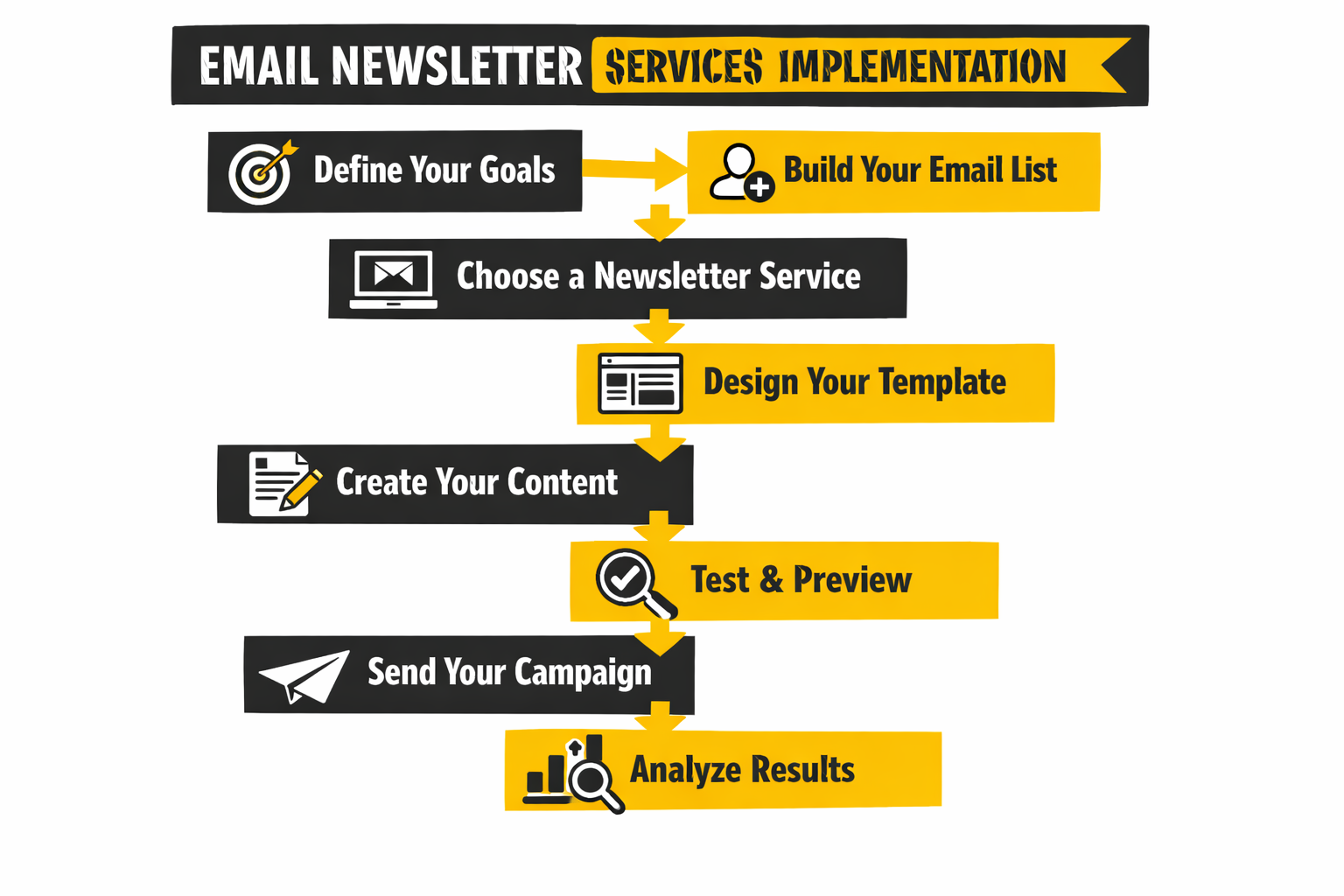
A Simple Implementation Process for Choosing the Right Platform
Once you narrow your shortlist to two realistic options, the smartest move is not a six-week evaluation. It is a controlled rollout with the minimum viable assets that actually matter. The goal is to test workflow fit, not to spend a month admiring dashboards. Google Podpora+2
- Define the job before you touch the software. Write down whether your newsletter is meant to grow an audience, sell products, nurture leads, book calls, or run a paid publication. If you cannot say that in one sentence, every demo will look good and none of them will help you choose. This sounds basic, but it prevents most expensive software mistakes.
- Set up the minimum live assets first. Build one signup form, one landing page or archive destination, one welcome sequence, and one core segment or tag structure. Do not create fifteen automations on day one. A clean starting system beats a clever messy one every time.
- Handle sender setup before scaling sends. Authenticate the domain, confirm unsubscribe behavior, and make sure complaint management is not an afterthought. Google requires bulk senders to authenticate mail and support one-click unsubscribe for subscribed and marketing messages over the threshold, and Yahoo tells bulk senders to watch complaint rates and stay below 0.3%. If your platform makes those basics hard, that is useful information early, not later. Google Podpora+2
- Run one short pilot instead of a fake comparison. Import a clean segment, send a real newsletter, and let the welcome sequence run for actual subscribers. Then compare how easy it was to build, send, segment, report, and iterate. The tool that makes your weekly workflow lighter usually wins over the one with the better feature list.
- Judge the platform by the next six months, not the next six days. Ask what happens when your list doubles, when you need a second sequence, when you want a referral loop, or when reporting has to connect to revenue. That is the difference between choosing a newsletter tool and choosing the platform you will still be happy with after the honeymoon period ends.
At this point, the field is a lot less confusing. You can already see that the best email newsletter services are not fighting for the exact same buyer, which is why broad comparison lists tend to waste your time. The next step is to make this even more practical by matching these tools to budget, list size, and growth stage so the final decision gets much easier.
What the Data Actually Means
Before you match platforms to budget or growth stage, you need to know what “good” actually looks like. That sounds obvious, but Litmus’s 2025 email research recap shows a strange gap: marketers report email ROI between 10:1 and 36:1, yet 21% still say they do not know their current ROI. That tells you most teams are not short on dashboards. They are short on a measurement system that connects newsletter performance to business results. Litmus
This is where a lot of newsletter software comparisons fall apart. People obsess over editors, templates, and feature lists, then barely look at whether the reporting helps them make better decisions next week. The best email newsletter services do not just send campaigns. They help you see what is improving, what is breaking, and what deserves more effort. Mailchimp+1
Start With the Metric That Matches the Job
A newsletter for an independent writer, an ecommerce store, and a B2B lead-generation business should not be judged by the same scoreboard. If your model is audience growth, subscriber growth rate, source quality, click rate, and retention matter most. If your model is revenue, you need conversion, revenue per recipient, and flow performance to sit closer to the top of the dashboard than open rate ever will. Klaviyo+1
That is the practical reason benchmark articles are useful but dangerous. They help you avoid flying blind, yet they can also push you into chasing averages that do not match your business model. A strong newsletter operator uses benchmarks as context, then builds decisions around the one or two metrics that actually map to growth, revenue, or qualified demand. mailerlite.com+1
Open Rate Is Still Useful, but It Is No Longer a Verdict
Open rate is not dead, but it is a softer signal than it used to be. Mailchimp’s benchmark page puts the average open rate around 34.23%, with industries ranging from 27.34% to 40.55%, which is useful as a rough orientation point. But rough is the key word here, because Apple’s Mail Privacy Protection downloads remote content in the background and limits what senders can infer about actual opens, which weakens open rate as a clean measure of genuine attention. Mailchimp+1
That means open rate is best used as a directional signal, not a final grade. If subject lines, send timing, or sender name changes move opens sharply, the number still tells you something. It just should not be the only thing you trust when deciding whether your newsletter is working. Mailchimp+1
Click Rate and CTOR Tell You More About Content Fit
This is where the data gets more actionable. MailerLite’s 2026 benchmark analysis is based on more than 3.6 million campaigns and shows an average click rate of 2.09% across all industries, with a median click-to-open rate of 6.81%. The same analysis also makes the most important practical point: because privacy changes distort opens, click rate is currently a more accurate indicator of newsletter engagement than open rate. mailerlite.com
Here is how to read those two metrics without fooling yourself. A low open rate with a healthy CTOR usually means your content works for people who actually see it, so the next move is often improving subject lines, sender recognition, or send timing. A decent open rate with a weak click rate usually means the promise got attention but the email body, structure, or offer did not create enough momentum to act. mailerlite.com
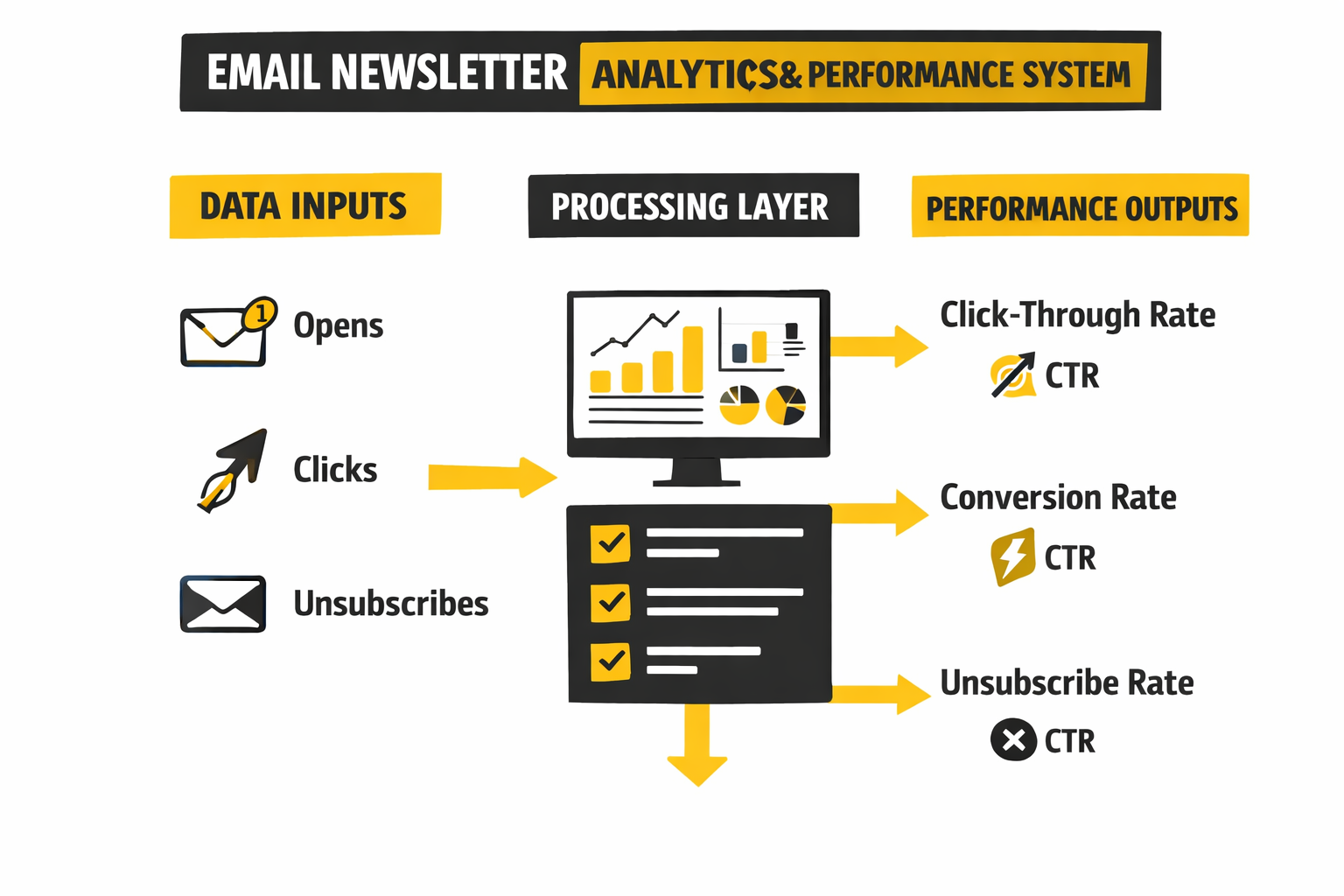
Build an Analytics System That Mirrors the Funnel
The cleanest reporting setup is not the one with the most charts. It is the one that mirrors how a subscriber moves from inbox to action. Once you track the funnel in the right order, the platform comparison gets easier too, because you can quickly see whether a tool like Brevo, Moosend, or HighLevel gives you enough visibility for the way your business actually converts. Mailchimp+1
- Delivery health comes first. Start with delivery rate, bounce rate, unsubscribe behavior, and spam complaints. If delivery is weak, nothing further down the dashboard is trustworthy because the message never had a fair chance to perform. Mailchimp’s reporting guide makes this point clearly, and its bounce documentation also explains why repeated hard bounces are a list-quality problem, not just a campaign problem. Mailchimp+1
- Attention comes second. This is where open rate, subject-line testing, and send-time testing still belong. They are useful for spotting packaging problems, but they should be treated as early-stage indicators rather than proof of success. MailerLite’s regional benchmark notes even point out that markets with high iPhone ownership can show inflated open behavior because of Apple privacy changes, which is exactly why attention metrics need context. mailerlite.com+1
- Engagement comes third. Click rate, click-to-open rate, reply rate, and forwards tell you whether the content created real movement. If the newsletter is editorial, these are often your sharpest signs that the writing, structure, and call to action are getting stronger rather than just getting seen. mailerlite.com
- Business outcome comes last and matters most. For creators, that might mean paid subscriptions, sponsorship demand, or product sales. For service businesses, it may mean booked calls, qualified leads, or pipeline movement. For ecommerce, it means orders and revenue per recipient, which is why platforms that expose downstream action cleanly are usually worth more than platforms that simply make the dashboard look nice. Klaviyo+2
Revenue and Conversion Metrics Should Drive the Big Decisions
This is where the vanity layer ends. Klaviyo’s 2026 benchmark data shows that campaigns account for 94.7% of send volume but only generate nearly 41% of total email revenue, while flows produce that same revenue share from just 5.3% of sends. The same benchmark set says average revenue per recipient from flows is nearly 18 times higher than campaigns, which is the clearest possible argument for taking automation seriously once your newsletter has commercial intent. Klaviyo
The conversion gap is just as revealing. Klaviyo’s 2026 benchmark breakdown shows an average campaign placed order rate of 0.16% across industries, while automated flows average 2.11%, with top performers reaching 4.3%. That does not mean every newsletter needs a giant automation map, but it does mean welcome series, post-signup nurture, abandoned cart, and re-engagement flows are often where the money is hiding. Klaviyo
For newsletter software buyers, this should drive a very specific action. If the newsletter is tied to sales, pipeline, bookings, or products, choose a platform that can surface downstream outcomes without forcing you into spreadsheet archaeology. That is one reason more operational stacks like HighLevel and multichannel tools like Brevo become more attractive as the business model gets more complex. Klaviyo+1
Deliverability Metrics Tell You When the Audience Relationship Is Slipping
Most people only look at deliverability after performance drops. That is backwards. Bounce rate, spam complaints, and unsubscribe trends are early warnings that your list quality, targeting, or content relevance is drifting in the wrong direction. Mailchimp+1
The complaint threshold is the number that deserves more respect than it usually gets. Google’s sender FAQ says bulk senders become ineligible for mitigation when their user-reported spam rate rises above 0.3%, and that spam-rate data in Postmaster Tools is updated daily. That means a newsletter can look healthy on surface metrics while quietly training mailbox providers to trust it less. Google Podpora
This is also why unsubscribe spikes should be read as signal, not insult. MailerLite’s benchmark guide ties lower unsubscribe pressure to stronger relevance, regular cadence, double opt-in, and list cleaning, and Mailchimp’s bounce guidance reinforces the same operational lesson from the delivery side. In practice, that means weak deliverability numbers usually call for better acquisition quality, tighter segmentation, cleaner sending habits, and fewer lazy sends to disengaged subscribers. mailerlite.com+1
The useful takeaway from all this data is not “aim for a higher open rate.” It is that newsletter analytics only become valuable when each number tells you what to do next. Open rate can shape packaging, click metrics can sharpen content, conversion metrics can justify automation, and deliverability metrics can warn you before inbox placement gets expensive. Mailchimp+3
That sets up the next decision properly. Once you know which metrics actually matter for your kind of newsletter, it becomes much easier to match the right platform to your current budget, list size, and stage of growth.
How to Match a Platform to Your Budget and Growth Stage
The smartest way to choose from the best email newsletter services is to stop treating price as a flat monthly number. What matters more is the pricing curve, the feature unlock point, and the kind of business model the platform assumes you are building. A free plan that looks generous can still be the wrong choice if it limits automation, brand control, or the reporting you will need three months from now. mailerlite.com+3
This is also where a lot of buyers overpay. They choose a platform built for a future stage they have not reached yet, then spend months dealing with complexity they do not use. The opposite mistake is just as common: starting on the cheapest option, building forms, tags, automations, and archives there, then discovering the platform becomes awkward or expensive right when growth starts to work. Kit+2
If You Are Still Early, Buy for Simplicity and Clear Upgrades
At the earliest stage, the right choice is usually the platform that helps you publish consistently, capture subscribers cleanly, and build one welcome sequence without friction. That is why free-plan math matters, but only in context. MailerLite’s free plan covers up to 500 subscribers and 12,000 emails every 30 days, beehiiv’s Launch plan supports up to 2,500 subscribers with unlimited sends, Brevo’s free plan allows 300 email sends per day with storage for 100,000 contacts, and Mailchimp’s free plan is much tighter at 250 contacts and 500 emails per month. mailerlite.com+3
That does not make beehiiv automatically “best value” for everyone, because free subscriber room is not the same thing as fit. If you are building a media-style newsletter and care about referrals, recommendations, and future monetization, beehiiv’s free plan is unusually generous for that use case. If you are a small business that wants simple campaigns, landing pages, and automations without a publication layer, MailerLite or Brevo is often the cleaner decision. beehiiv.com+3
Once Automation Becomes Important, Free Plans Stop Being the Real Comparison
The first real upgrade point usually arrives when you need branded sending, multiple sequences, deeper segmentation, or better reporting. Kit’s Creator plan starts at $33 per month for up to 1,000 subscribers and includes unlimited visual automations and unlimited email sequences, which is why it becomes attractive as soon as your newsletter starts behaving like a real creator business instead of a simple broadcast list. beehiiv’s Scale plan starts at $43 per month billed annually and adds its Ad Network, Boosts Network, 0% take rate on paid subscriptions, automations, surveys, and three team seats, which makes far more sense for newsletter-led businesses than for a local service company sending a weekly update. Kit+1
At the same stage, smaller-business operators often get better economics from simpler tools. MailerLite’s paid plans start at $10 for Growing Business and $20 for Advanced, while Brevo’s Standard plan starts at $18 per month and adds more serious marketing features beyond the free tier. If your newsletter is part of a broader lead-generation system with pipelines, calendars, and follow-up, HighLevel becomes easier to justify at $97 per month for Starter because it is solving a wider business problem than email alone. mailerlite.com+3
The Real Cost Usually Hides in Limits, Not in the Sticker Price
This is the part most comparison articles rush past. Mailchimp’s plan documentation explicitly says sending will be paused if contact or email send limits are exceeded, which means a low entry price can become a workflow problem fast if your list grows faster than expected. beehiiv’s Max tier adds up to 10 publications and unlimited seats, which can make it look expensive in isolation but much cheaper than stitching together multiple properties elsewhere if you run several newsletter brands. Mailchimp+1
The monetization model matters just as much as the monthly fee. Substack is free to publish, but it takes 10% of paid subscription revenue on top of Stripe fees, while beehiiv highlights a 0% take rate on paid subscriptions on its Scale plan. That means a platform that feels cheaper at the beginning can quietly become the more expensive option once the newsletter starts generating meaningful subscription revenue.
Final Recommendations and the Tradeoffs That Matter
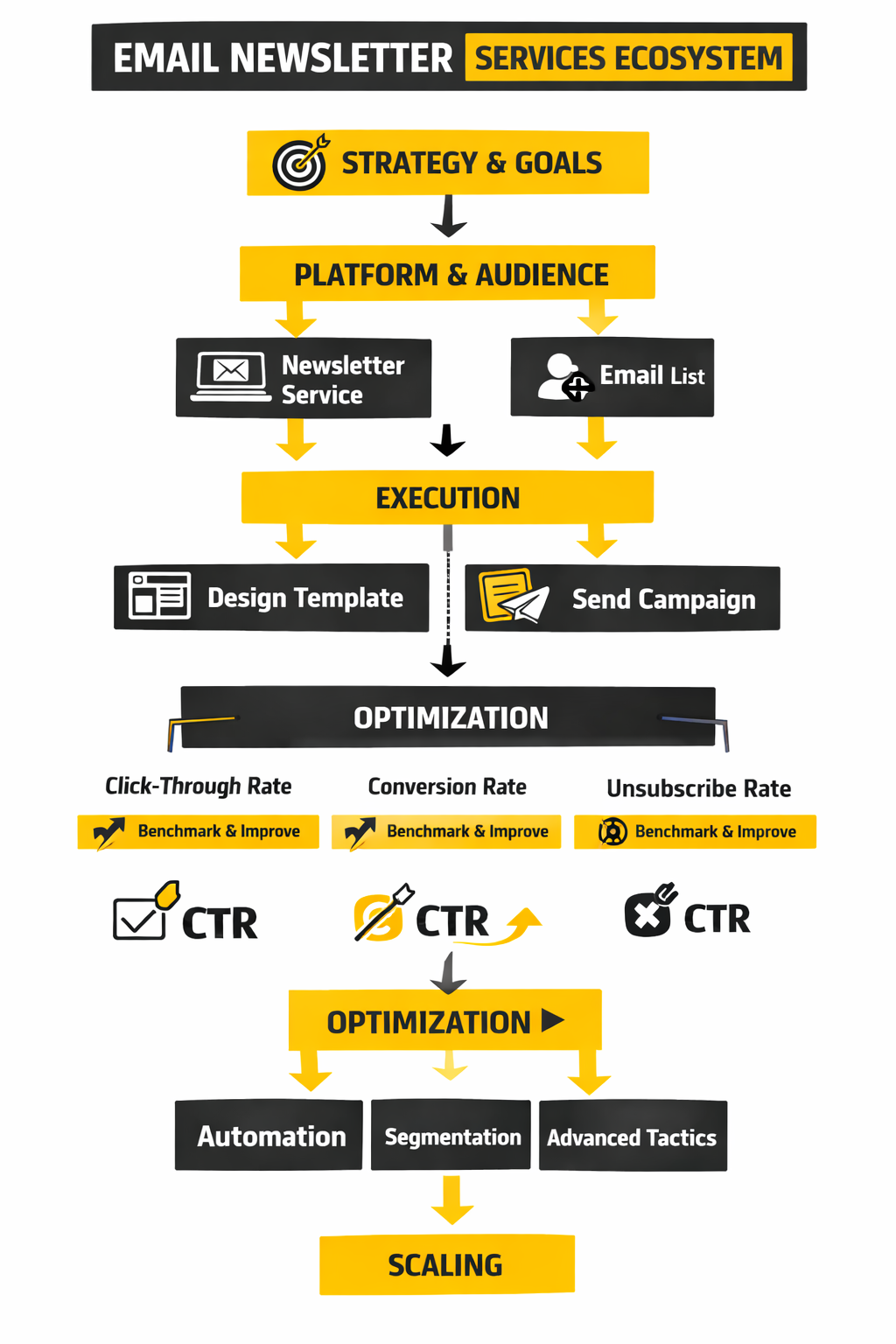
At this point, the best email newsletter services are easier to sort because the categories are no longer blurred together. If you are a creator building an owned audience, Kit stays one of the strongest choices because it is explicitly built around newsletters, automations, opt-ins, paid newsletters, and creator monetization, and it also advertises free migration from another platform. If the newsletter itself is the media product, beehiiv still makes more sense than most general-purpose tools because its product direction is built around publishing, growth, and monetization rather than broad CRM work. Kit+3
If you want the simplest path to publishing and paid subscriptions, Substack remains compelling because publishing is free, but the economics matter once revenue grows: Substack takes 10% of each paid subscription transaction, Stripe processing and recurring billing fees still apply, and even a custom domain comes with a one-time $50 fee. That is a great trade when you want simplicity first and control second, but it is not the cheapest long-term setup for every serious operator. support.substack.com+1
For smaller businesses and solo operators who want sensible pricing and a lighter learning curve, MailerLite and Brevo are usually safer bets than chasing creator hype. MailerLite’s official pricing pages keep the ladder simple, with paid plans starting low and a free tier that supports up to 500 subscribers and 12,000 monthly emails, while Brevo positions itself as a broader marketing and contact-management platform without hidden fees on plan sign-up. If your newsletter sits inside a bigger lead-generation machine with contacts, pipelines, scheduling, and follow-up, HighLevel becomes the better strategic fit because its pricing and product are built for that wider operating system, not just email sends. mailerlite.com+3
The real expert move is not picking the flashiest platform. It is choosing the one that still fits when your list doubles, your automations get heavier, or revenue starts flowing through the newsletter. That is usually where smart buyers win and casual buyers get trapped. Kit+2
Protect Portability Before You Scale
The biggest risk is not choosing the “wrong” homepage brand. The bigger risk is building forms, fields, automations, archives, and paid subscriber operations in a system you cannot leave cleanly. The official docs tell a clear story here: Kit, MailerLite, Brevo, Mailchimp, HighLevel, and Substack all support migration in some form, but they mostly center on CSV imports, field mapping, subscriber data, and content transfer rather than perfect one-click recreation of every automation and every historical detail. Kit Help Center+5
That matters because subscriber portability is usually decent, while behavior history and workflow logic are much messier. HighLevel’s export documentation explicitly says CSV exports do not include automation history, and even its notes export has a truncation limit for long notes, which is a useful reminder that switching systems is never just a matter of downloading emails and uploading them somewhere else. beehiiv, Substack, MailerLite, and Brevo all make subscriber exports possible, but what you get out is structured list data, not a magical copy of your full operating environment. HighLevel Support Portal+4
Paid subscriptions add another layer of risk. Substack’s migration guidance says paid subscriber moves need renewal or expiration data in the CSV, and it also tells creators to pause billing on the old platform during the move, which shows how careful you need to be once recurring revenue is involved. That is exactly why newsletter operators should think about portability before they think about theme design. support.substack.com
A Smart Migration Checklist
- Export your subscribers before you redesign anything, and make sure you preserve statuses, tags, groups, tiers, and custom fields wherever the platform supports them. Mailchimp’s import flow supports field matching, groups, tags, and updating existing contacts, while beehiiv’s full subscriber export includes custom fields and statistics. Mailchimp+1
- Audit what will not move cleanly. HighLevel says automation history does not export in CSV, and that single note exports can be truncated, so assume that workflow history, event logs, and certain object relationships may need to be rebuilt rather than transferred. HighLevel Support Portal
- Decide whether you need a CSV migration or a direct connector. MailerLite supports importing from Mailchimp, Kit offers dedicated importers for some platforms, and Omnisend says its Mailchimp integration can sync contacts, tags, segments, and engagement data automatically without a CSV export. Kit Help Center+2
- Treat paid subscribers and domains as separate projects. Substack’s migration documentation calls out paid subscriber renewal or expiration data, and its custom domain help page shows that domains can involve extra setup and extra cost. support.substack.com+1
- Run a small staged import first. Brevo, Mailchimp, MailerLite, and HighLevel all document import flows that rely on file preparation and field mapping, which is exactly why a small pilot batch saves pain before you migrate the whole business. Mailchimp+3
FAQ for Choosing the Right Newsletter Platform
What is the best email newsletter service overall?
There is no honest single winner because the best platform changes with the job. Kit is stronger for creator businesses, Substack is simpler for writers who want the fastest route to paid publishing, and HighLevel makes more sense when email is only one part of a wider lead-gen stack. The right answer is the platform that matches your operating model, not the one with the loudest fan base. Kit+2
Is Mailchimp still worth considering in 2026?
Yes, but it is no longer the obvious default for everyone. Its import tooling is still solid and supports groups, tags, field matching, and updating existing contacts, which helps on the data-management side, but smaller operators often get more room or better value elsewhere. That is why Mailchimp still belongs on a shortlist, but not automatically at the top of it. Mailchimp+1
Should I choose beehiiv or Substack?
Choose beehiiv when you want the newsletter to behave like a media business with more intentional growth and monetization tooling. Choose Substack when you care more about getting published fast and tapping into a simpler paid-subscription model, even if that means living inside Substack’s fee structure and product ecosystem. The choice is really control and operating leverage versus simplicity and speed. beehiiv.com+1
Should I choose Kit or MailerLite?
Choose Kit when the business is fundamentally creator-led and you know automations, paid newsletters, or creator monetization matter. Choose MailerLite when you want straightforward email marketing, simpler pricing, and a lighter stack for a smaller business or solo operation. Both are good, but Kit is more creator-native while MailerLite is usually the cleaner budget-conscious business tool. Kit+3
How hard is it to migrate from one newsletter platform to another?
Moving subscriber data is usually manageable, but moving the whole operating system is harder. Kit, Mailchimp, Brevo, MailerLite, HighLevel, beehiiv, and Substack all document import or export flows, yet those flows mostly focus on contacts, CSVs, mapped fields, and content rather than perfect recreation of automations and history. That means migrations are very possible, but rarely frictionless. Kit Help Center+6
Will I lose automations or reporting history if I switch platforms?
Sometimes, yes, and that is exactly why migrations need a real plan. HighLevel explicitly says automation history does not export in CSV, which is one of the clearest official examples of how platform history can stay trapped even when contact data moves. In practice, you should expect to preserve the audience more easily than the full behavior trail. HighLevel Support Portal
Does paid newsletter revenue change which platform is best?
Absolutely. Substack’s model is easy to start with because publishing is free, but it takes 10% of each paid subscription transaction and Stripe fees still apply, while creator-first alternatives may make the economics look better once revenue scales. As soon as paid subscriptions become material, fee structure stops being a footnote and becomes part of the platform decision itself. support.substack.com
How much should I spend when I am just getting started?
Spend as little as possible without sabotaging the core workflow you need. MailerLite’s free plan supports up to 500 subscribers and 12,000 monthly emails, which is enough for many early-stage businesses, while HighLevel starts at a much higher monthly price because it is solving a much broader operational problem. The right starter budget depends on whether you need a newsletter tool or an all-in-one customer system. mailerlite.com+1
Do I really need a custom domain for a newsletter?
Not always on day one, but it usually becomes more important as the newsletter becomes a brand asset. Kit’s pricing page emphasizes customizable domains for branded landing pages, while Substack’s custom domain setup exists but comes with a one-time fee and additional configuration. That makes a custom domain less about vanity and more about long-term brand ownership and portability. Kit+1
What should I measure every week?
Measure the numbers that match the job of the newsletter. At a minimum, watch subscriber growth, unsubscribes, clicks, and the business outcome that actually matters to you, whether that is paid subscriptions, product sales, booked calls, or qualified leads. A platform is only helping if its reporting makes those signals easier to see and easier to act on. Kit+2
Is an all-in-one system better than a dedicated newsletter platform?
It is better only when your business actually benefits from the extra surface area. HighLevel’s pricing and feature structure make sense when you need unlimited contacts, users, sub-accounts, and broader business workflows, but that same setup can be excessive if you mainly want to publish and grow a newsletter. Dedicated tools usually win on simplicity, while all-in-one systems win when email is deeply tied to operations. gohighlevel.com
Which platform is easiest for a small business that wants email plus a bit more?
For many small businesses, Brevo is one of the most practical middle-ground choices because it combines email and broader contact-management workflows without pushing you straight into a big agency-style stack. MailerLite is also strong when you want to stay focused on email, landing pages, and simple automation with lower pricing pressure. The difference is that Brevo leans more toward multichannel operations, while MailerLite leans more toward clean and efficient newsletter marketing. mailerlite.com+1
Work With Professionals
Explore 10K+ Remote Marketing Contracts on MarkeWork.com
Most marketers spend too much time chasing clients, competing on crowded platforms, and losing a percentage of every project to middlemen.
MarkeWork gives you a better way. Browse thousands of remote marketing contracts and connect directly with companies desperate to hire skilled marketers like you, without platform commissions and without unnecessary gatekeepers.
If you're serious about finding better opportunities and keeping 100% of what you earn, explore available contracts and create a profile for free at MarkeWork.com.