

Branding and marketing get treated like the same thing all the time, but they do different jobs. The American Marketing Association defines marketing as the process of creating, communicating, delivering, and exchanging value, while its recent guide to branding describes brand as the long-term effort that shapes how people perceive a business. When those two ideas are clear, the rest of the strategy gets a lot easier to build. American Marketing Association+1
That distinction matters more now because the market is noisier, trust is harder to earn, and inconsistency gets exposed fast. Nielsen shows North American marketers are almost evenly split between brand awareness and revenue growth priorities, Salesforce found only 42% of customers trust businesses to use AI ethically, and Adobe reports that 35% of retailers say fragmented data is already creating inconsistent experiences across channels. In other words, branding and marketing can no longer afford to operate like separate departments sharing a logo. Nielsen+2
There is real upside when the two work as one system. Kantar BrandZ ties brand value to demand power, pricing power, and future growth, Interbrand still frames brand as a driver of revenue and market value, and Google’s Effectiveness Equation argues that brand and performance work best together, not as rivals competing for budget. That is the practical heart of branding and marketing: build preference before the click, then convert demand when the buying moment arrives. Kantar+3
Why Branding and Marketing Work Better Together
Branding creates memory, meaning, and trust, while marketing distributes that meaning through campaigns, channels, offers, and follow-up. When the brand is weak, marketing has to work harder every single time because each campaign starts from almost zero. When the brand is strong, marketing compounds because every ad, landing page, email, and sales touchpoint reinforces a promise people already recognize. American Marketing Association+2
The most useful way to think about this is not brand versus performance, but long-term demand creation plus short-term demand capture. Google’s recent effectiveness research says media effectiveness for e-commerce brands peaks when 40% to 60% of investment goes to brand building, and Nielsen’s latest marketing report shows many teams are already trying to rebalance awareness with revenue pressure. That shift is a clue: smart operators are realizing that branding and marketing are strongest when they are measured separately but designed to support the same commercial outcome. services.google.com+1
The operational challenge is alignment. Google and BCG’s media effectiveness roadmap makes the point clearly by putting cross-functional KPI alignment at the foundation of the whole system, and Deloitte’s CMO research shows marketers who outperform their markets are far more likely to credit differentiated strategy than just bigger budgets. That is why this article treats branding and marketing as one connected machine instead of two parallel workstreams. Google Business+1

Article Outline
This article is built as one continuous piece, but it moves in a practical order so each section solves the next problem. We will start with the relationship between branding and marketing, then move into the framework, the core components, the execution layer, and the operating model that makes the strategy stick. In the implementation section, I will also connect the strategy to practical tools and systems such as HighLevel, Manychat, and Buffer, because execution matters just as much as theory.
- Why Branding and Marketing Work Better Together
- The Branding and Marketing Framework
- The Core Brand Components That Shape Demand
- The Marketing System That Turns Brand Into Revenue
- Professional Implementation Across Teams, Channels, and Data
- What to Audit, Fix, and Scale Next
The Branding and Marketing Framework
The framework for the rest of this article is simple on purpose. A business needs a clear position, recognizable assets, consistent messaging, and a channel plan that turns that foundation into demand without diluting it. Once that is in place, branding stops feeling abstract and marketing stops feeling random. American Marketing Association+2
That framework also has to survive the real world, where trust can slip quickly and fragmented systems can break the customer experience long before leadership notices. Salesforce’s latest customer research and Adobe’s retail trends report both point to the same pressure: brands are being judged not just on what they say, but on whether the experience feels coherent across the journey. The next part picks up there and breaks the framework down into the decisions that actually shape perception and performance. Salesforce+2
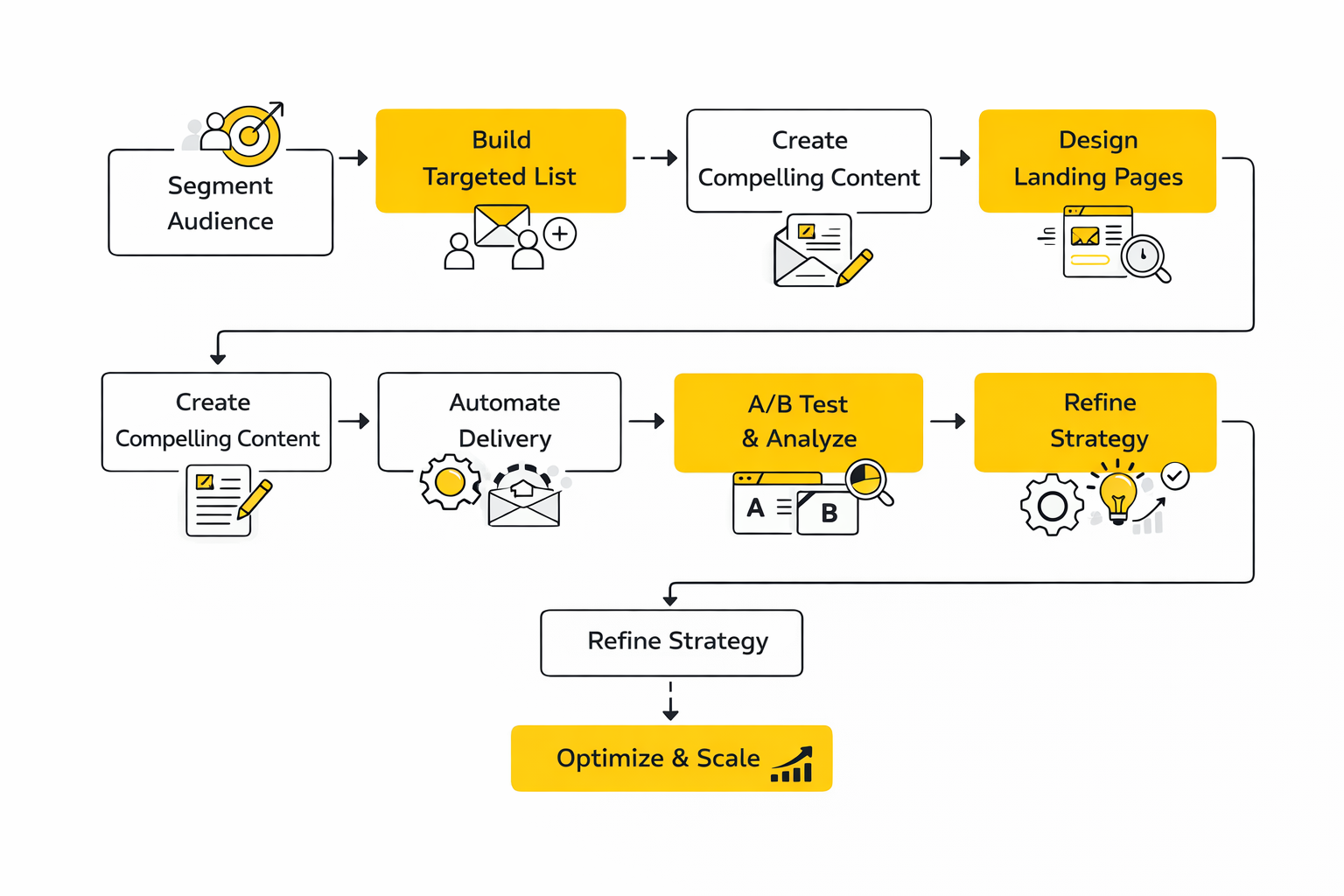
A useful branding and marketing framework should make decisions simpler, not more abstract. When a team is under pressure, the framework should tell them what to say, where to say it, how to recognize whether it is working, and what not to change just because a channel trend is getting attention. That is the real job of strategy in this space: reduce drift, increase coherence, and make execution compound instead of fragment. American Marketing Association+1
Start With Position Before Promotion
The first move is positioning, not promotion. In practice, that means getting clear on the category you want to win in, the needs or occasions you want to be remembered for, and the value you want people to associate with your name before you start pushing spend into campaigns. Kantar’s work on meaningful brands makes the point well: brands grow stronger mental connections when they meet more needs for more people, and those connections become easier to access during buying moments. Kantar+1
This is where a lot of branding and marketing teams go wrong. They build channel plans before they decide what the brand should stand for in the market, so every campaign ends up sounding slightly different and performance creative starts doing strategy’s job badly. A solid position gives paid media, content, email, sales, and customer experience the same center of gravity, which is exactly why sharp positioning creates leverage instead of just language. Kantar+1
Build Recognition Before You Chase More Reach
Once the position is clear, the next priority is recognition. Kantar defines a brand asset as a mental shortcut that activates memories from previous communications or experience, and the Ehrenberg-Bass Institute argues that a distinctive asset needs to be both unique and famous, with uniqueness doing the heaviest lifting. That matters because branding and marketing do not work in real markets unless people can quickly tell it is you before they have fully processed the message. Kantar+1
This is why distinctive assets are not cosmetic extras. Your colors, type treatment, sonic cues, packaging shapes, recurring phrases, and visual style are part of the growth system because they help the brain make a fast connection without extra effort. If every campaign looks fresh but barely recognizable, the team may feel creative, but the market has to keep relearning who is speaking. Kantar+1
Connect the Brand Promise to the Real Experience
A brand promise that breaks the moment a customer moves channels is not a brand strength. Salesforce reported that 69% of consumers expect consistent interactions across departments, while Adobe’s 2025 retail trends research found that fragmented data causes inconsistent experiences across channels for 35% of retailers. That is the operational reality behind branding and marketing now: the promise in the ad, the landing page, the sales follow-up, and the support experience all have to feel like they came from the same company. Salesforce+1
Trust sits right in the middle of that experience layer. Salesforce’s latest connected customer research shows that only 42% of customers trust businesses to use AI ethically, and 64% believe companies are reckless with customer data, which means brand credibility is increasingly built through clarity, privacy, and dependable execution rather than polished copy alone. If your messaging says helpful and premium but your handoff is messy, slow, or invasive, the market will believe the experience, not the slogan. Salesforce
Measure Brand and Performance on One Scorecard
The framework is not complete until measurement is connected. In the Google and BCG media effectiveness roadmap, only 39% of U.K. advertisers reported that a standardized KPI framework is widely used in their organization, and only 10% of surveyed advertisers in EMEA said they had fully integrated real-time collaboration with KPIs linked to business goals. That gap explains why branding and marketing often get forced into false tradeoffs: teams are using separate dashboards, separate language, and separate definitions of success. Google Business
A better model is one shared commercial scorecard with different time horizons inside it. The same Google and BCG roadmap says a well-implemented marketing mix model routinely improves marketing ROI by 10% and often by 20% to 30%, while also making it possible to connect brand equity metrics to short-term and long-term return. That is the direction serious teams are moving in now, because awareness, consideration, conversion, retention, and margin belong in the same system even when they are measured differently. Google Business
The Core Brand Components That Shape Demand
Once the framework is clear, the next question is what actually deserves protection. Not everything inside a brand carries equal weight. The components that shape demand most consistently are positioning, distinctive assets, messaging, and the lived experience that proves the message was real in the first place. American Marketing Association+1
Positioning That Gives Marketing a Direction
Good positioning is not a decorative line in a slide deck. It tells the market what kind of value you want to own, which buying situations you want to be remembered in, and why choosing you should feel easier or smarter than choosing someone else. Kantar’s Blueprint for Brand Growth found that brands seen as meaningfully different by more people can command up to five times the market penetration of brands low in meaningful difference and up to 2x the average category price point. Kantar
That should change how you think about campaign planning. The point is not to sound clever in a launch week; it is to create a repeatable market impression that can survive across search ads, product pages, creator partnerships, outbound email, sales calls, and onboarding flows. When positioning is strong, the rest of branding and marketing stops improvising and starts reinforcing. Kantar+1
Distinctive Assets That Make You Easy to Recognize
Distinctive assets are how the brand shows up before the audience has fully read or listened. Kantar describes them as mental shortcuts, and Ehrenberg-Bass boils the test down to something brutally practical: do these cues point to your brand, and mostly your brand, quickly enough to matter. That is why the strongest assets are usually the ones teams use patiently and repeatedly rather than the ones they keep redesigning to feel new internally. Kantar+1
In practical terms, this means choosing a small set of recognizable cues and protecting them hard. A visual system, a verbal rhythm, a recurring headline structure, a packaging pattern, or a sonic marker can all do real work if they are used often enough and consistently enough. Distinctiveness does not remove the need for strong offers or good media buying, but it makes every impression easier to attribute and every campaign easier to remember. Kantar+1
Messaging That Stays Consistent Without Sounding Scripted
Messaging is where many branding and marketing strategies either scale or collapse. The strongest teams build one core promise, a small set of proof points, and a clear voice standard, then adapt the expression by channel without changing the underlying meaning. That kind of consistency matters because customers do not experience your organization as separate internal teams, and they notice quickly when the website, ads, lifecycle emails, and service language feel disconnected. Salesforce+1
This is also the moment to document the system somewhere people will actually use it. A central operating layer like HighLevel can help keep customer journeys and follow-up logic aligned, Brevo is useful when email consistency matters, Buffer helps keep social publishing disciplined, and Manychat becomes far more effective when your conversational tone is already defined. Once those core components are locked, the next step is turning them into a marketing system that reliably converts brand strength into revenue.
The Marketing System That Turns Brand Into Revenue
A strong brand does not automatically create revenue. It gives the market a reason to notice you, remember you, and trust you, but the commercial lift only happens when that brand is connected to a working system for distribution, conversion, and follow-up. That is why the best branding and marketing strategies are built like operating systems, not campaign calendars.
The practical shift is this: stop expecting every channel, asset, and campaign to do the same job. Google’s Effectiveness Equation makes the case for balancing brand building with demand capture, and Nielsen’s recent analysis of performance marketing priorities shows why so many teams keep leaning on social, search, display, and video to cover different parts of the funnel. When branding and marketing are aligned, awareness creates warmer traffic, better traffic makes conversion easier, and stronger conversion gives you more room to keep investing in the brand.
Match Creative to Intent, Not Just to Platforms
The first implementation rule is simple: build for buyer intent before you build for channel format. Someone discovering your category for the first time needs clarity, memory cues, and a reason to care, while someone comparing options needs proof, differentiation, and a frictionless next step. If you use the same message for both moments, your branding and marketing will feel noisy at the top and generic at the bottom.
This is why message sequencing matters so much. The ad, the landing page, the email, the retargeting asset, and the sales follow-up should feel like one conversation moving forward instead of five teams talking over each other. McKinsey’s work on personalization keeps pointing to the same pressure from customers: relevance is expected now, and irrelevance feels expensive fast.
Build a Channel Mix Where Each Channel Has a Job
A lot of wasted spend comes from channel confusion. Teams run every platform like a direct-response machine, then wonder why branded search is doing all the cleanup while social is hard to attribute and email is carrying too much of the conversion burden. A better approach is to assign each channel a primary job, then judge it against that job before you start moving budget around.
In most cases, branding and marketing work best when reach channels build memory, intent channels capture demand, and owned channels deepen the relationship. Nielsen’s marketing report analysis found that marketers rate social media and search among the most effective digital channels, but effectiveness depends on how clearly each one fits the system around it. Search is excellent when demand already exists, video and social are powerful when you need attention and recall, and email, SMS, direct messaging, and CRM flows become far more valuable when the brand promise is already doing some of the persuasion before the click.
Turn Campaigns Into a Repeatable Execution Process
Execution gets easier when the team stops reinventing the campaign from scratch every time. The goal is not to build a perfect funnel diagram; the goal is to create a repeatable process that protects the brand while still letting the offer, audience, and channel mix evolve. Once you have that, branding and marketing stop competing for attention internally and start working like one commercial engine.
A practical process usually looks like this:
- Lock the commercial objective first. Decide whether the campaign is meant to grow reach, generate qualified leads, increase trials, lift conversion rate, improve retention, or support pricing power. That sounds obvious, but many teams still launch creative before they agree on what success actually means.
- Translate the brand into one campaign message stack. Start with the core promise, then define the supporting proof, the objection handling, and the call to action for each audience segment. This is where your brand voice stops being a guideline and becomes working copy.
- Build one high-conviction destination. Whether that is a landing page, quiz, offer page, demo booking flow, or lead form, it should look and sound unmistakably like the brand people just saw in the ad. Tools like Replo, ClickFunnels, or systeme.io can help operationalize that faster when the team needs pages live without a full development cycle.
- Instrument the capture points before traffic goes live. Form fills, booked calls, purchases, assisted conversions, and downstream retention events should be visible before launch, not discovered afterward. This is one reason the Google and BCG measurement roadmap keeps emphasizing KPI alignment early instead of treating measurement like a reporting task at the end.
- Launch follow-up as part of the campaign, not as an afterthought. If a lead comes in, the nurture sequence should already exist. If a prospect wants a call, a scheduling layer like Cal.com, a form flow such as Fillout, or a CRM workflow inside HighLevel should be ready on day one.
- Create a response loop around speed and relevance. Conversational channels matter here because they reduce friction between interest and action. Tools like Manychat, Brevo, and Moosend make more sense when they are carrying a defined message system instead of improvising one.
- Review results by time horizon, not just by platform. Some assets are supposed to create immediate response, while others are supposed to improve recall, lift branded search, or make later conversion cheaper. The point is to measure branding and marketing in a way that respects both short-term demand capture and long-term demand creation.
This is where a lot of teams finally feel the whole thing become tangible. The campaign is no longer just creative plus media spend; it is a connected process from promise to proof to conversion to follow-up. That is the point where brand strategy starts showing up in pipeline, revenue quality, and customer experience instead of living in a slide deck.
Automate Follow-Up Without Making the Brand Feel Robotic
Automation is useful right up until it damages trust. Salesforce’s latest State of the Connected Customer shows that trust in how companies use AI is still low, and that customers increasingly care about transparency, data protection, and human validation when stakes are high. So yes, automate the repetitive work, but do not let automation flatten the voice or remove judgment where judgment is the actual value.
This matters because speed alone is not the win. McKinsey’s personalization research shows customers now expect relevant interactions, but relevance is not the same thing as blasting more messages through more channels. Strong branding and marketing make automation feel helpful because the timing, language, and next step are all consistent with what the brand already promised.
A good rule here is to automate routing, reminders, segmentation, and simple education first. Use conversational tools like Manychat or an on-site assistant such as Chatbase to remove friction, but keep high-stakes moments human and clearly signposted. That balance protects trust while still giving the business the speed and scale automation is supposed to create.
Professional Implementation Across Teams, Channels, and Data
Once the campaign system is clear, the next challenge is organizational. Branding and marketing break down in execution when nobody owns the handoffs, when data sits in separate tools, or when creative, paid media, CRM, and sales are all optimizing for different definitions of success. This is exactly why implementation deserves its own section rather than being treated like a footnote after strategy.
The Google and BCG roadmap for media effectiveness is useful here because it puts cross-functional KPI alignment right at the start, not halfway through. Adobe’s 2025 digital trends research reinforces the same idea from the data side: fragmented systems are still blocking real-time personalization and causing inconsistent experiences across channels. In other words, the implementation problem is not just about doing more marketing work; it is about making the system coherent enough that every team strengthens the same market impression.
What to Audit, Fix, and Scale Next
At this stage, the work is less about inventing another strategy deck and more about finding where the system breaks under pressure. Nielsen’s 2025 ROI Blueprint says brands need to prioritize business outcomes over basic delivery metrics, strengthen cross-media integration, and connect creative accountability to sales and brand lift, while Salesforce’s latest data and analytics research shows many organizations still struggle to turn all their data effort into real business priorities. That combination is the real late-stage problem in branding and marketing: the market-facing story may sound sharp, but the operating model underneath it is often too fragmented to scale cleanly. Nielsen+1
Audit the Gap Between the Promise and the Experience
The first audit is brutally simple: does the lived customer experience feel like the promise your marketing is making? Salesforce’s latest AI customer research shows only 42% of customers trust businesses to use AI ethically, and 61% say it is even more important for companies to be trustworthy as AI use expands. That means every handoff matters more now, because the brand is no longer judged only by what it claims in public but by whether the journey feels transparent, human, and dependable once someone actually engages. Salesforce
In practice, this audit should follow the path a real buyer takes. Check the ad, the landing page, the form, the email sequence, the calendar flow, the sales conversation, the onboarding message, and the support response as one connected experience rather than separate channel outputs. For teams that need to make this visible fast, a structured site and content crawl with Firecrawl and a documented process map inside Guideless AI can help surface where the voice, offer, or handoff starts drifting away from what the brand originally promised. Salesforce+1
Choose the Right Tradeoff Between Efficiency and Distinctiveness
The hardest strategic decision is usually not whether to cut waste. It is whether you are cutting waste or quietly cutting the very signals that make future conversion easier. Google’s Effectiveness Equation argues that customer lifetime value is one of the clearest ways to reconcile brand and performance because brand building affects whether customers keep buying, what price they will tolerate, and whether they recommend you later, while Kantar’s Cannes analysis warns that stopping advertising entirely can create long-lasting damage that may take years to recover from. services.google.com+1
That matters when budgets tighten and every channel is forced to defend itself in a short reporting window. Efficiency is important, but if your pursuit of lower acquisition cost strips away recognizability, emotional memory, and message consistency, the business often gets cheaper clicks and weaker demand at the same time. Kantar’s 2025 Cannes review highlighted the growing value of long-term brand platforms, and Interbrand continues to frame strong brands as assets that influence choice, loyalty, profits, and share price rather than decorative marketing extras. Kantar+1
Scale Reach Without Fragmenting the System
Scaling branding and marketing gets dangerous when the team adds channels faster than it adds coherence. Nielsen’s 2025 media planning work says well-balanced cross-media strategies can improve on-target reach 5X, moving from 17% for campaigns concentrated in one media type to 90% for balanced plans, while Kantar’s CrossMedia database shows a well-integrated campaign can generate more than 1.5 times the contribution to impact of a non-integrated one. The lesson is not to be everywhere; it is to expand only when the message spine, measurement spine, and creative cues are strong enough to survive expansion. Nielsen+2
This is where operational discipline becomes a growth advantage. A scattered publishing rhythm, disconnected creator briefs, or a different offer structure on every platform will make the brand feel larger internally and weaker externally. Tools like Buffer, Flick, and Anything.link are most useful when they support one visible system for distribution rather than creating more channel-level improvisation. Nielsen+2
Use AI to Extend Judgment, Not Replace It
AI changes the economics of execution, but it does not remove the trust problem. Salesforce’s latest customer research shows trust in ethical AI use is still low, and both consumers and business buyers generally prefer human expertise in complex or high-stakes situations unless transparency and human involvement are easy to access. Deloitte’s current human capital research pushes the same point from the operator side: organizations that treat AI as a human-centered work design challenge, not just a technology rollout, are more likely to realize stronger returns. Salesforce+2
The expert move is to automate volume while protecting judgment. Let AI help with message versioning, summarization, routing, segmentation, and first-response assistance, but keep pricing conversations, objection handling, sensitive support issues, and brand-defining moments under clear human review. Branding and marketing lose their edge fast when scale turns the brand voice into generic machine output, which is exactly why governance now matters as much as speed. Salesforce+1
Scale on Customer Value, Not Cheap Acquisition
The most mature way to scale is to stop asking which campaign produced the cheapest lead and start asking which system produces the best customers. Google’s effectiveness research makes CLTV central because it captures the contribution of both performance activity and brand strength over time, and McKinsey’s latest personalization work says consumers increasingly expect relevant interactions, with earlier McKinsey research still showing that 71% expect personalized interactions and 76% get frustrated when they do not get them. Cheap acquisition that leads to weak retention, low trust, or poor repeat purchase is not efficient; it is just delayed waste. services.google.com+2
This changes how advanced teams decide what deserves more budget. They scale when direct traffic strengthens, branded search holds, conversion quality improves, repeat purchase rises, and the post-click experience makes the brand easier to buy from again. Systems that connect CRM visibility, outbound follow-up, and customer history through tools like Copper or ScaledMail become valuable here because they help the team judge growth by customer value instead of by top-of-funnel vanity alone. services.google.com+2
The bigger point is simple, and it is worth saying clearly. Branding and marketing scale well when the brand sharpens demand, the system captures that demand cleanly, and the data tells you which parts of the engine are compounding versus quietly leaking value. Once that is visible, the final step is not more complexity but clearer decisions about what to keep, what to fix, and what to stop doing altogether. Nielsen+2
Bringing the Full Ecosystem Together
At the end of this guide, the biggest takeaway is not that branding sits at the top of the funnel and marketing sits at the bottom. The better model is an ecosystem where positioning shapes the message, distinctive assets improve recognition, channels play defined roles, measurement tracks both short-term and long-term effects, and customer experience proves the promise was real. That is also why recent Adobe, Google, and Nielsen research keeps circling the same operational truth: fragmented data, weak KPI alignment, and overreliance on short-window attribution make good strategy look weaker than it really is. Adobe for Business+2
The companies that get branding and marketing right usually do not win because they publish more content or buy more ads. They win because the whole system feels coherent, the handoffs are tighter, the signals are easier to read, and the team knows which levers create attention, which ones create conversion, and which ones increase customer value over time. That is the standard worth aiming for, because once the ecosystem is working, growth becomes easier to repeat and much harder for competitors to copy. services.google.com+2
FAQ
What is the difference between branding and marketing?
Branding defines the meaning people attach to your business, while marketing is the system used to communicate, distribute, and convert that value in the market. Put more bluntly, branding shapes perception and preference, while marketing turns that preference into attention, leads, sales, and retention. When the two are aligned, campaigns feel more credible and conversion usually gets easier because the market already has context for why you matter. American Marketing Association+2
Which should come first, branding or marketing?
Branding should come first at the strategic level, because promotion works better when the market position, message, and recognizable cues are already clear. That does not mean a business has to wait for a giant brand project before doing any marketing, but it does mean campaigns work better when they are built on a stable promise rather than improvisation. The practical sequence is position first, then message system, then channel execution. American Marketing Association+1
How should a company split budget between brand building and performance marketing?
There is no universal ratio for every company, but current Google research on e-commerce effectiveness says marketing efficiency peaks when brand building accounts for roughly 40% to 60% of media investment. That does not mean copying the ratio blindly; it means recognizing that demand creation and demand capture work best together instead of competing for budget every quarter. The right split depends on market maturity, brand recognition, sales cycle length, and how much existing demand the business already enjoys. services.google.com+1
What metrics matter most in branding and marketing?
The most useful metrics sit in layers. You need attention signals such as reach, recall, branded search, and direct traffic, conversion signals such as qualified leads, booked calls, trials, and sales, and value signals such as retention, margin, customer lifetime value, and payback period. Looking at only one layer usually produces the wrong decision because branding and marketing create value across different time horizons. services.google.com+1
How long does branding take to affect revenue?
Branding can influence revenue immediately when it improves recognition, message clarity, and conversion consistency, but its biggest effects often build over longer windows through memory, trust, and pricing power. Google’s effectiveness work points to measurable links between brand awareness and both short-term and long-term sales, which is exactly why strong brand investment can make later performance activity more efficient. The practical lesson is to stop expecting every brand move to prove itself on the same timeline as a retargeting ad. services.google.com+1
Can a small business compete on branding and marketing without a huge budget?
Yes, but the advantage usually comes from clarity and consistency, not from trying to look like a giant company. A smaller business can often win by choosing a narrower position, using a few distinctive cues consistently, and building a cleaner follow-up system than larger competitors that move slowly or communicate inconsistently. The market does not reward polish alone; it rewards being easy to understand, easy to remember, and easy to buy from. American Marketing Association+1
How often should a company change its messaging?
Core messaging should stay stable long enough to build memory, while campaign expression can adapt to audience, offer, and channel context. Frequent changes to the fundamental promise usually reset recognition and make it harder for the market to connect each new campaign back to the same brand. The better approach is to protect the message spine and vary the proof, format, and call to action around it. American Marketing Association+1
What role should AI play in branding and marketing?
AI is best used to increase speed, coverage, and responsiveness, but not to replace human judgment in moments where trust or nuance matters. Salesforce’s current customer research shows trust in ethical AI use is still limited, which means automation can help with routing, drafts, segmentation, and first-response support, but the brand still needs clear oversight and transparency. In other words, let AI extend the system, but do not let it flatten the voice or damage trust. Salesforce+1
Which tools are most useful for putting this system into practice?
The best tools are the ones that keep the brand message, conversion flow, and customer data connected instead of scattering them further. A stack built around HighLevel, Replo, Manychat, Brevo, Cal.com, and Buffer can work well when each tool has a clear job inside one visible system. Tools do not fix weak strategy, but they do make a strong branding and marketing system much easier to execute consistently. Adobe for Business+2
When should a company rebrand instead of refining what it already has?
A full rebrand makes sense when the business model, audience, category position, or reputation has changed so much that the old brand no longer supports growth. In many other cases, the smarter move is refinement: sharpen the positioning, simplify the message, strengthen the assets, and repair the customer journey before throwing out equity you have already built. Brand change should solve a real market problem, not just internal boredom. American Marketing Association+1
Can performance marketing work without a strong brand?
It can work for a while, especially in categories with clear intent and short buying cycles, but it usually gets more expensive and less resilient over time. Nielsen’s current reporting warns that easy measurement does not always equal higher effectiveness, and Google’s effectiveness research argues that demand capture works better when demand creation is already happening in the background. That is why businesses built only on short-term performance often feel efficient right before they plateau. Nielsen+1
What is the clearest sign that branding and marketing are finally working together?
You usually see it in the pattern, not in one isolated number. Branded search strengthens, direct traffic improves, conversion quality gets better, repeat business becomes easier to earn, and the customer journey starts feeling more coherent from first touch to follow-up. When those signals move together, the brand is no longer just decorating the funnel; it is making the whole system more effective. services.google.com+2
Work With Professionals
Explore 10K+ Remote Marketing Contracts on MarkeWork.com
Most marketers spend too much time chasing clients, competing on crowded platforms, and losing a percentage of every project to middlemen.
MarkeWork gives you a better way. Browse thousands of remote marketing contracts and connect directly with companies desperate to hire skilled marketers like you, without platform commissions and without unnecessary gatekeepers.
If you're serious about finding better opportunities and keeping 100% of what you earn, explore available contracts and create a profile for free at MarkeWork.com.