

Buying emails for marketing sounds like a shortcut. In reality, it is usually where deliverability problems, compliance risk, and weak conversion quality begin.
The better question is not “Where can I buy emails for marketing?” It is “How do I acquire reachable, relevant, permission-safe contacts without damaging my sender reputation?”
Rules have become stricter, inbox providers have become less forgiving, and people are faster than ever to report unwanted email. The FTC’s CAN-SPAM guidance makes commercial email responsibilities clear in the U.S., while the UK’s ICO is even more direct that bought third-party lists do not qualify for soft opt-in consent.
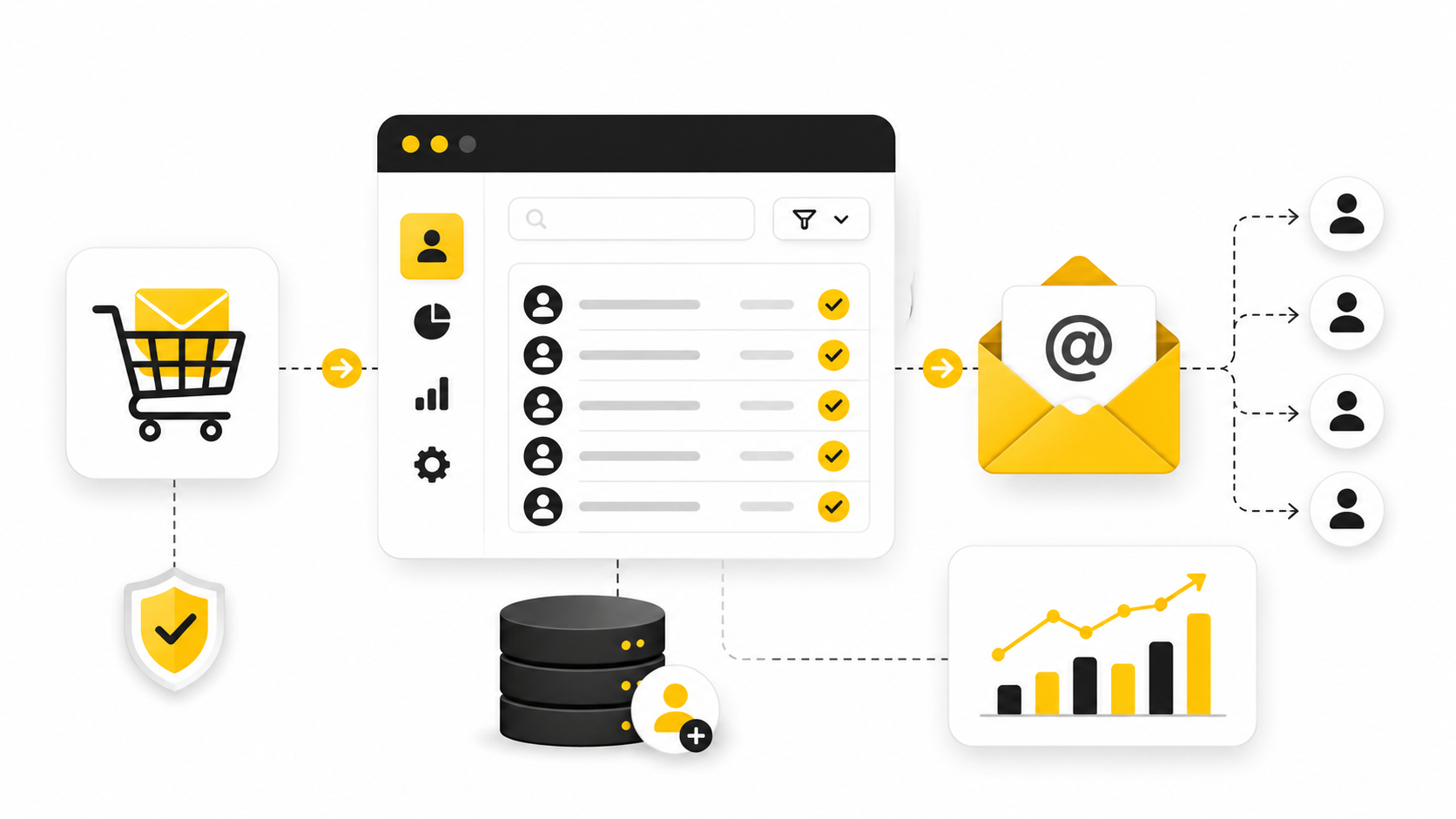
Article Outline
This guide is split into six parts so we can move from risk to execution without pretending that cold email and email marketing are the same thing. Each section builds toward a practical system for list growth, compliance, deliverability, and conversion. The goal is not to scare you away from outreach, but to help you stop treating email addresses like a commodity.
- Part 1: Why Buying Emails For Marketing Is Usually The Wrong Question
- Part 2: What “Buying Emails” Really Means
- Part 3: The Compliance And Deliverability Risks
- Part 4: Better Ways To Build A Marketable Email List
- Part 5: How To Use Purchased Data More Safely In B2B
- Part 6: Tools, Checklist, And FAQ
Why Buying Emails For Marketing Is Usually The Wrong Question
A purchased email list does not give you a relationship. It gives you a file of contacts who may not know you, may not want your offer, and may report you the moment your message lands. That matters because Google’s sender guidance warns bulk senders to keep spam complaints very low, with user-reported spam rates above 0.1% already creating deliverability pressure.
The real asset is not the email address itself. The real asset is permission, relevance, timing, and trust. When those are missing, even a large list can become expensive fast because poor engagement teaches inbox providers that people do not want your messages.
This is why the phrase buy emails for marketing needs careful handling. For consumer marketing, it is often a bad idea. For B2B prospecting, third-party data can sometimes support a compliant outbound motion, but only when it is treated as prospecting data rather than a newsletter list.
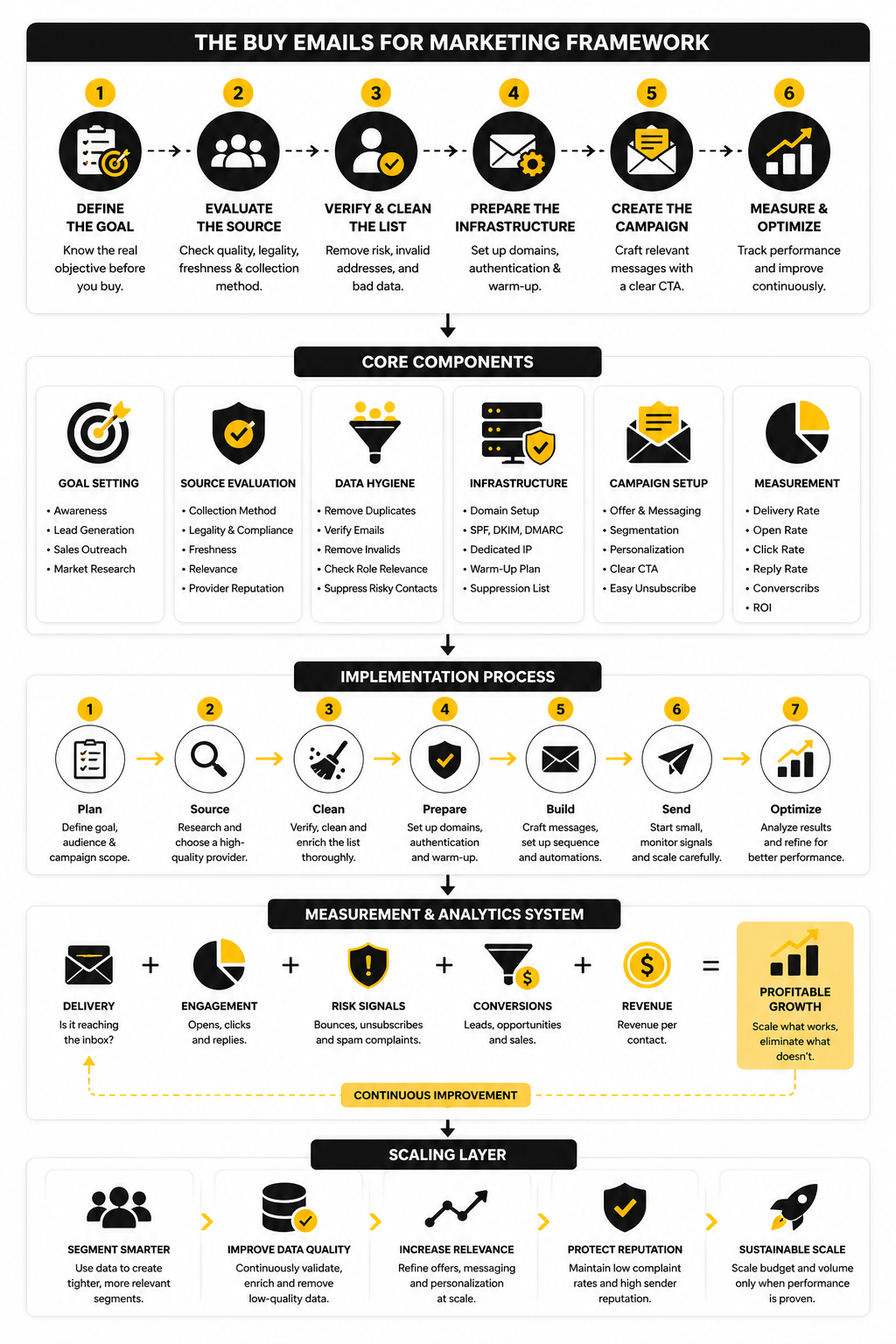
Framework Overview
The safest way to think about email acquisition is a simple four-part framework. First, define whether you are doing permission-based email marketing, B2B cold outreach, customer communication, or lead nurturing. These are different channels with different expectations, and mixing them together is where many teams get into trouble.
Second, check the legal basis and platform rules before sending anything. Laws like CAN-SPAM set baseline requirements, but mailbox providers now also enforce technical standards such as authentication, easy unsubscribes, and low complaint rates. In practice, compliance is no longer just legal protection; it is part of deliverability.
Third, build the list around intent instead of volume. A smaller list of people who requested a lead magnet, booked a demo, joined a waitlist, or engaged with your brand will usually outperform a huge bought list with no context. That is the foundation the rest of this guide will use.
What “Buying Emails” Really Means
When people say they want to buy emails for marketing, they are usually talking about one of three things. They may want a scraped list of addresses, a rented audience from a media partner, or verified B2B contact data for outbound prospecting. Those are not the same thing, and treating them the same way is a fast way to make bad decisions.
A scraped list is the most dangerous version because the people on it usually have no relationship with you and no clear reason to expect your message. A rented audience can be cleaner if the partner sends the message to its own subscribers and you never receive the raw list. B2B contact data sits somewhere in the middle because it can be useful for sales prospecting, but it still needs relevance, suppression, opt-out handling, and careful sending.
The mistake is assuming that an email address equals permission. It does not. Permission is earned through a clear action, a clear expectation, and a clear reason for the person to believe your message belongs in their inbox.
Purchased Lists
Purchased lists are usually sold as ready-made databases segmented by industry, location, job title, company size, or consumer interest. On paper, that sounds efficient. In practice, the quality depends on how the list was collected, when it was last verified, whether consent exists, and whether the seller can prove anything they claim.
This is where the word “marketing” becomes important. If you plan to add purchased contacts to a newsletter, promotional sequence, product launch list, or automated campaign, you are no longer just researching prospects. You are sending commercial messages to people who may never have asked to hear from you.
That is why many email platforms restrict or reject purchased lists. They are not doing that to be difficult. They are protecting their sending infrastructure, because one bad imported list can trigger bounces, spam complaints, and blacklist problems that affect more than one account.
Rented Audiences
A rented audience works differently. Instead of buying the email addresses, you pay a publisher, newsletter owner, community, or media company to promote your offer to their own subscribers. You get reach, but you do not automatically get the list.
This can be a much better model when the audience is real, engaged, and relevant. The relationship stays with the list owner, and your job is to earn the click through a strong offer, useful landing page, and clear value exchange. If people opt in after that, they become your subscribers because they chose to.
That distinction matters. You are not forcing your way into someone’s inbox as an unknown sender. You are borrowing attention from a trusted source and converting it into permission through a proper signup flow.
B2B Prospecting Data
B2B prospecting data is often what marketers actually mean when they search for buy emails for marketing. They want verified work emails for specific decision-makers, usually to support outbound sales. This can be legitimate when it is tightly targeted, transparent, and handled like cold outreach rather than newsletter marketing.
The key is intent. A CFO at a SaaS company may be a reasonable prospect for a finance automation tool if the message is relevant to their role. That same person should not be dumped into a generic weekly promo sequence just because their email appeared in a database.
Good B2B data still needs guardrails. You need a lawful basis where required, a real business reason for contacting the person, accurate sender identity, an easy opt-out, and a clean suppression process so people who say no are not contacted again.
The Difference Between Email Marketing And Cold Outreach
Email marketing is built around permission. Someone subscribes, requests a lead magnet, starts a trial, buys something, joins a waitlist, or otherwise gives you a reason to send follow-up messages. That relationship is what makes automation, newsletters, launches, and lifecycle campaigns work.
Cold outreach is different. It starts without an existing relationship, so the bar for relevance is much higher. The message has to feel specific, useful, and easy to reject without friction.
This is why the same email address can be treated very differently depending on context. Adding a cold B2B contact to a CRM for one-to-one prospecting is not the same as uploading ten thousand bought addresses into an email marketing tool. One is targeted outreach. The other is usually spam with better formatting.
Where CRM Data Fits
A CRM should be the place where you track relationships, not a dumping ground for every address you can find. If you are using a platform like GoHighLevel, the goal should be segmentation, follow-up discipline, and pipeline visibility. The software can organize the process, but it cannot make a weak list ethical or effective.
This matters because automation makes mistakes bigger. A bad manual email annoys one person. A bad automated sequence annoys hundreds or thousands before you notice what happened.
Before importing any third-party data, decide what the contact is allowed to receive. A cold prospect might get a short, relevant sales email. A subscriber might get a nurture sequence. A customer might get product education. Those lanes should stay separate.
Where Lead Capture Fits
Lead capture is the cleaner alternative because it creates a clear exchange. Someone gives you their email because they want a checklist, quote, demo, webinar, discount, calculator, audit, or other specific outcome. That does not mean you can send them anything forever, but it gives you a much stronger starting point.
This is where landing pages and forms matter more than most people think. A focused funnel built with tools like ClickFunnels or systeme.io can turn paid traffic, partner traffic, or organic traffic into owned contacts without relying on risky list buying. The difference is simple: people raise their hand before you start marketing to them.
A good opt-in also improves message quality. When you know what someone requested, you know what to send next. That context is worth more than another thousand random emails.
Core Components Of A Safer Email Acquisition Strategy
A safer email acquisition strategy starts with source clarity. You should know exactly where each contact came from, what they were told, what they expected, and what type of message they can reasonably receive. If you cannot answer those questions, you do not have a marketing asset yet.
Next comes segmentation. Purchased data, partner leads, trial users, customers, webinar registrants, and newsletter subscribers should not sit in one giant bucket. Each group has different trust levels and different expectations.
Finally, you need suppression and consent records. When someone unsubscribes, objects, bounces, or complains, that signal has to follow them across your systems. This is boring operational work, but it protects the entire channel.
The Compliance And Deliverability Risks
The biggest risk with purchased email data is not that one campaign performs badly. The bigger risk is that the campaign teaches inbox providers, prospects, and email platforms not to trust you. Once that happens, even your legitimate subscribers and customers can stop seeing your messages where they should.
This is why the “buy emails for marketing” shortcut often becomes expensive after the invoice is paid. You may save time on list building, but you inherit uncertainty around consent, accuracy, intent, and deliverability. If those pieces are weak, your sender reputation takes the hit.
Compliance is part of the same problem. The FTC’s CAN-SPAM guidance requires accurate sender information, honest subject lines, a valid physical postal address, and a clear way to opt out. The ICO’s electronic mail marketing guidance is stricter for many UK situations because the soft opt-in does not apply to prospective customers from bought-in lists.
Why Inbox Providers Care So Much
Inbox providers are not judging your campaign by how excited you are about your offer. They are watching recipient behavior. Opens, replies, deletes, bounces, spam complaints, and unsubscribes all help determine whether your future messages deserve the inbox, promotions tab, or spam folder.
Google tells senders to keep spam rates below 0.1% and avoid reaching 0.3% or higher in its email sender guidelines FAQ. That is a tiny margin. If you send to 10,000 cold or poorly sourced addresses, a small number of annoyed recipients can create a real deliverability problem.
Purchased lists are risky because they start with low trust. People do not recognize your brand, did not ask for the campaign, and may not understand why you have their address. That makes complaints more likely, and complaints are one of the fastest ways to damage your sending reputation.
The Legal Risk Is Not Just About Fines
A lot of marketers reduce compliance to fines, but that misses the practical issue. Legal rules force you to define who you are, why you are contacting someone, how they can opt out, and whether you had a legitimate reason to send the message in the first place. Those are also the same questions that determine whether your campaign feels professional or intrusive.
In the U.S., CAN-SPAM does not require the same kind of prior consent for every commercial email that some other jurisdictions require, but it still sets clear rules. You cannot mislead people with sender information or subject lines, and you have to honor opt-out requests. That means a purchased list still needs serious operational controls before it ever touches your sending system.
In the UK and EU context, the bar can be much higher depending on the recipient type, location, and lawful basis. Bought-in lists are especially sensitive because you may not be able to prove the person expected to hear from your brand. If you cannot prove the source, permission status, and opt-out history, you are guessing with your reputation.
A Safer Implementation Process
A professional process starts before you upload anything. The goal is to separate true subscribers from cold prospects, verify the quality of the data, and decide what each contact is allowed to receive. This is the point where execution becomes real, because vague ideas about “doing email” turn into specific rules inside your CRM, email platform, and outreach workflow.
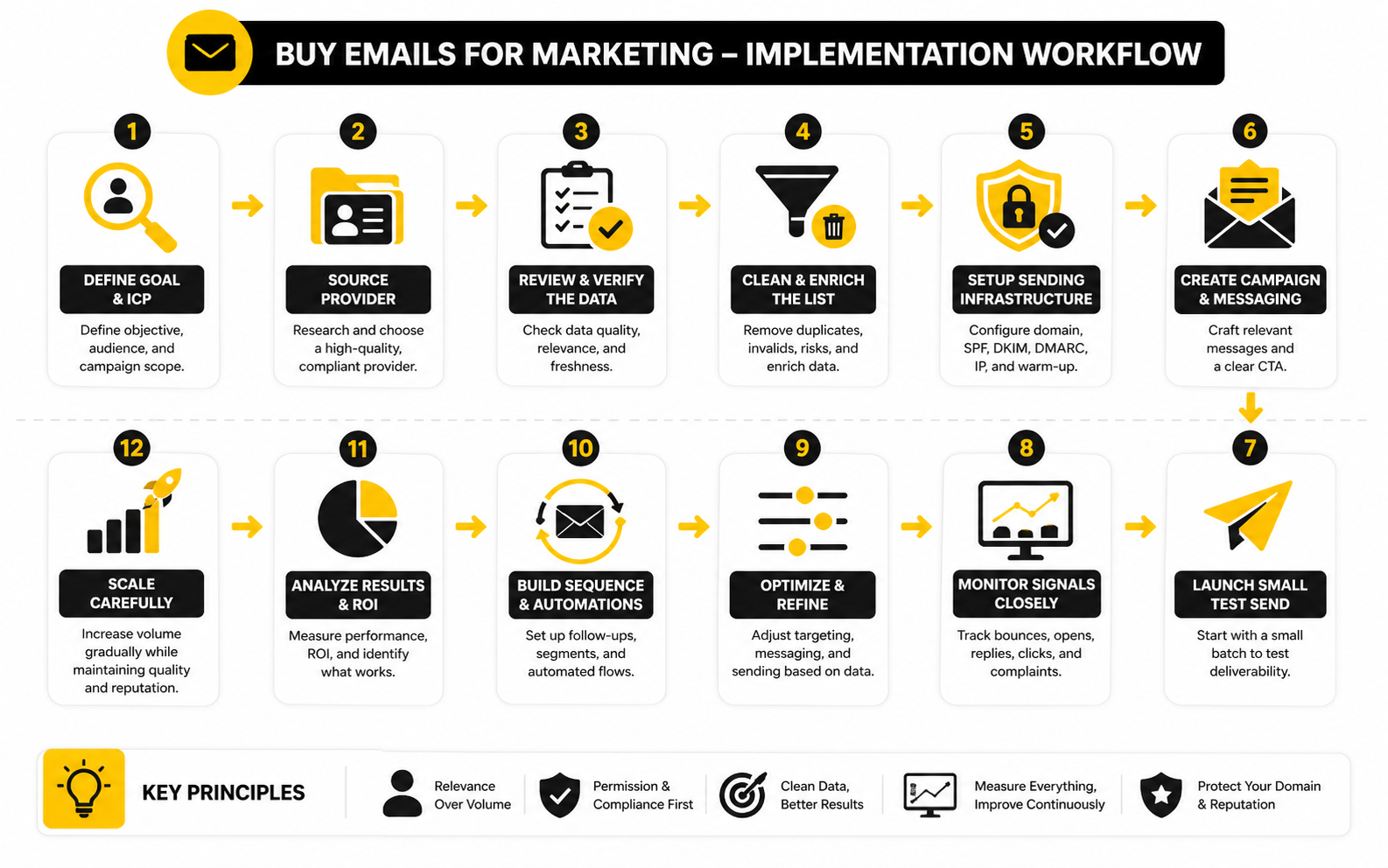
- Classify the contact source. Label every contact by origin, such as opt-in form, customer, webinar, partner referral, rented audience signup, or third-party B2B data. Do not mix these sources into one master campaign list. Source clarity protects both compliance and messaging quality.
- Define the allowed message type. Subscribers can receive the content they signed up for, customers can receive relevant relationship-based communication, and cold prospects should only receive targeted outreach where legally appropriate. This prevents the classic mistake of dropping cold data into a newsletter sequence. The more distant the relationship, the more restrained the messaging should be.
- Verify and clean the data. Remove invalid addresses, role-based addresses where they do not fit the campaign, duplicates, obvious junk, and contacts that already opted out. Cleaning does not create consent, but it reduces unnecessary bounces and operational mistakes. It also forces you to look closely at whether the list is actually usable.
- Set up authentication and unsubscribe handling. Before sending, make sure your domain has SPF, DKIM, and DMARC configured, and that every marketing email includes a working unsubscribe path. Google and Yahoo’s bulk sender requirements made authentication and easier opt-outs a baseline expectation for serious senders. This is not advanced deliverability anymore; it is table stakes.
- Start with a small, controlled send. Do not blast a new list just because you can. Send in smaller batches, watch bounce rates, complaint signals, replies, and unsubscribes, then decide whether continuing makes sense. If the early signal is bad, stop instead of trying to “push through” the list.
- Move interested people into a separate nurture path. When someone replies, books, downloads, subscribes, or otherwise engages, their context changes. That is when tools like Brevo, Moosend, or GoHighLevel can help you organize follow-up properly. The important part is that the automation reflects the person’s actual behavior, not just the fact that their email was available.
What To Check Before Sending
Before sending to any third-party data, ask whether the campaign would still feel reasonable if the recipient asked, “Why did you email me?” If your answer is vague, the campaign is not ready. A relevant role, relevant company, relevant problem, and clear opt-out path are the minimum.
You should also check whether your email platform allows the data source you plan to use. Many providers restrict purchased lists because their business depends on shared deliverability. Trying to sneak around those rules is short-term thinking, and it can get accounts suspended at the worst possible moment.
Finally, confirm that your suppression list is working across every tool. If someone unsubscribes in one platform but continues receiving messages from another, that is not just messy. It is the kind of operational failure that makes a brand look careless.
What To Avoid Completely
Do not buy consumer email lists and push them into promotional campaigns. That is the highest-risk version of this strategy and usually the weakest commercially. People who did not ask for your offer rarely become great customers because you bought their address cheaply.
Do not use deceptive subject lines, fake familiarity, or misleading personalization. A subject line that looks like an existing conversation might get a short-term open, but it burns trust immediately. The point is not to trick someone into reading; the point is to be relevant enough that reading feels worthwhile.
Do not keep sending after negative signals. High bounces, no replies, poor engagement, and spam complaints are feedback. Treat them as a stop sign, not as a reason to send the next batch harder.
Statistics And Data
The numbers around email only matter when they change what you do next. A high open rate looks good in a screenshot, but it does not prove that a purchased list is working. A low complaint rate looks safe, but it can still hide weak targeting if nobody clicks, replies, books, buys, or moves deeper into your funnel.
This is especially important when evaluating whether to buy emails for marketing. The question is not whether email can perform as a channel. Email can perform extremely well when the audience expects to hear from you, the offer is relevant, and the sending infrastructure is clean. The question is whether your specific contact source is producing profitable, safe, and repeatable outcomes.
Benchmarks help you spot danger, but they should not become vanity goals. Your real job is to compare sources against each other: opt-in leads, customers, webinar registrants, partner leads, rented audience traffic, and third-party B2B data. Once you measure by source, the truth gets much easier to see.
The Metrics That Actually Matter
Open rate is useful, but it is weaker than it used to be. Privacy features, image loading, inbox placement differences, and automated opens can all distort the number. Treat opens as a directional signal, not proof that people care.
Click rate tells you whether the message created enough interest for someone to act. This is usually more useful than open rate because it connects the email to a real behavior. If a purchased or third-party list opens but does not click, the subject line may be doing the work while the offer fails.
Reply rate matters most in B2B outreach. A cold email campaign with low clicks but strong qualified replies may still be valuable. A campaign with opens but no replies is usually telling you that the targeting, message, or offer is too weak.
Unsubscribe rate is not automatically bad. Some unsubscribes are healthy because they clean the list and reduce future complaints. The real problem is when unsubscribes rise alongside spam complaints, low clicks, and poor replies because that means people are not just opting out; they are rejecting the entire premise of the campaign.
Spam complaint rate is the one metric you cannot treat casually. Google tells senders to keep reported spam rates below 0.1% and avoid ever reaching 0.3% in its email sender guidelines FAQ. That means even a small number of complaints can matter when you are sending to people who do not recognize your brand.
How To Read Benchmarks Without Fooling Yourself
Industry benchmarks are useful only when you compare like with like. A customer newsletter, a product onboarding sequence, a Black Friday campaign, and a cold B2B outreach sequence should not be judged by the same numbers. They have different intent levels, different relationship strength, and different tolerance for promotion.
Broad benchmark reports from sources like GetResponse, Mailchimp, and MailerLite can help you understand normal ranges for open rate, click rate, click-to-open rate, and unsubscribe rate. The useful move is not copying the average. The useful move is asking why your campaign is above or below it.
If your opt-in list performs below benchmark, your offer, segmentation, timing, or creative may need work. If your purchased data performs below your owned list, that is normal and should be expected. If it performs poorly and also creates deliverability risk, the data is not cheap anymore.
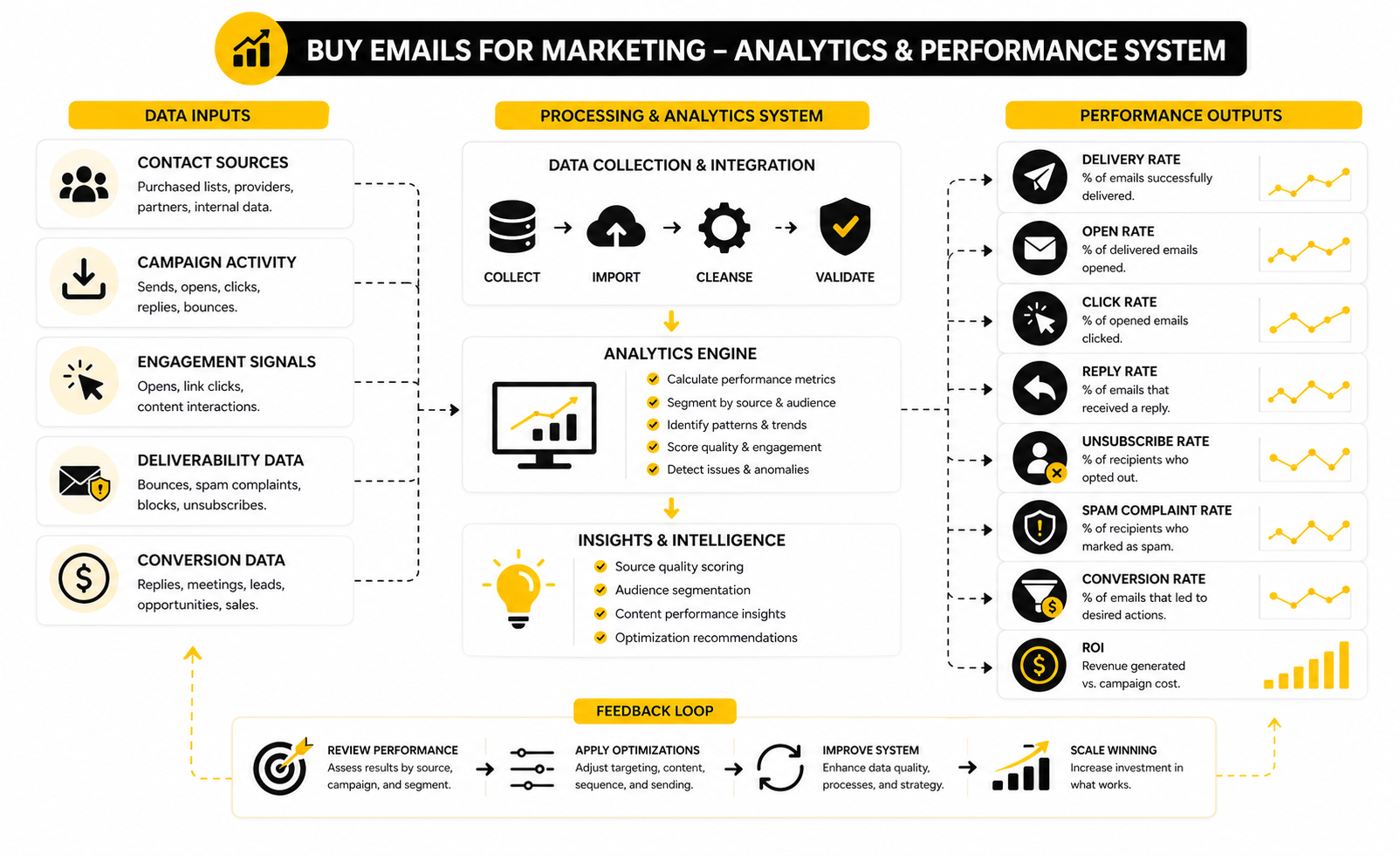
A Practical Measurement System
Start by tagging every contact source before the first send. This one step changes everything because it lets you compare the real cost and risk of each acquisition channel. Without source tags, your reporting turns into a blended average that hides the list quality problem.
Track these metrics by source, not just by campaign:
- Delivery rate: Shows whether the addresses are technically reachable.
- Bounce rate: Shows whether the data is old, low quality, or poorly verified.
- Open rate: Shows whether the sender, subject, and inbox placement are strong enough to earn attention.
- Click rate: Shows whether the message and offer are relevant.
- Reply rate: Shows whether cold prospects are actually willing to engage.
- Unsubscribe rate: Shows whether people want out without escalating.
- Spam complaint rate: Shows whether the audience believes the email should not have been sent.
- Conversion rate: Shows whether the campaign creates business value.
- Revenue per contact: Shows whether the source is worth scaling.
- Suppression rate: Shows how many contacts become unusable because they bounced, opted out, complained, or were disqualified.
This is where tools matter, but only if the process is clear first. A CRM like GoHighLevel can help you track pipeline movement, follow-up stages, and conversion by source. Email platforms like Brevo or Moosend can help you monitor engagement and unsubscribes. The platform is not the strategy; it is the place where the strategy becomes visible.
What Good Data Should Make You Do
Good analytics should force decisions. If third-party B2B data produces qualified replies, clean delivery, low complaints, and positive revenue per contact, you may have a prospecting channel worth improving. That does not mean you should start blasting marketing newsletters to those contacts. It means the source may be useful under controlled outreach rules.
If the same data produces high bounces, weak replies, low clicks, and rising complaints, stop. Do not rationalize it because the list was expensive or because there are still thousands of names left. Bad engagement is not a creative problem when the audience never wanted the message in the first place.
If opt-in leads outperform purchased data, shift budget toward acquisition systems that create consent. Improve landing pages, lead magnets, webinars, referral flows, search content, and partner promotions. When the data shows that permission beats volume, listen to it.
The Real Benchmark Is Source Profitability
The most honest benchmark is not open rate. It is profitable, compliant, repeatable growth from a source you can defend. If a contact source produces revenue but damages sender reputation, it is not a good source. It is a liability with delayed consequences.
Measure the full path from contact source to revenue. That means looking at acquisition cost, campaign cost, list cleaning cost, platform cost, opportunity creation, close rate, refund rate, and lifetime value. A cheap purchased list can become expensive when you include the hidden cost of poor deliverability and brand damage.
This is the mindset shift. You are not trying to prove that buying emails for marketing can work in theory. You are building a system that shows whether each source deserves more budget, tighter controls, or a hard stop.
How To Use Purchased Data More Safely In B2B
If there is one place where third-party email data can still make sense, it is narrow B2B prospecting. Not broad email marketing. Not newsletter growth. Not consumer promotions. B2B prospecting can work when the contact is relevant, the message is restrained, and the process respects the recipient’s right to ignore you or opt out immediately.
That distinction is the whole game. When someone searches for buy emails for marketing, they usually want speed, but speed without control creates avoidable risk. The better approach is to treat purchased B2B data as a starting point for research, not as permission to market.
This means your first job is qualification. Before any email goes out, the contact should match a real ideal customer profile, a current business problem, and a specific reason your message belongs in their work inbox. If you cannot explain the fit in one sentence, the contact should not be in the campaign.
Build Around Fit, Not Volume
Most bad outreach starts with a list that is too broad. “Marketing managers in the U.S.” is not a strategy. “Heads of demand generation at B2B SaaS companies hiring sales development reps and running paid acquisition” is closer because it gives you a real buying context.
A tighter list usually beats a bigger list because every part of the campaign improves. The subject line becomes more specific, the opening line feels less generic, and the call to action can match the recipient’s actual role. You also reduce the number of people who receive a message that was never meant for them.
This is where purchased data should be filtered aggressively. Remove contacts outside your target accounts, remove people with unclear titles, and remove anyone where the business reason is weak. A smaller, cleaner send gives you better signal and less downside.
Separate Prospecting From Marketing Automation
Cold B2B outreach should not flow directly into the same automation used for subscribers, customers, or warm leads. The person has not opted into your newsletter, downloaded your guide, or asked for ongoing education. They are simply a potential prospect who may or may not care.
That means the sequence should be short, specific, and easy to exit. One relevant message and a light follow-up can be reasonable in some B2B contexts. A long promotional nurture sequence with case studies, discounts, launches, and weekly content is a different thing entirely.
Once the prospect engages, you can change the path based on their action. If they ask for details, book a call, request a resource, or explicitly subscribe, the relationship has moved forward. Until then, keep the outreach lane separate from the marketing lane.
Protect Your Main Domain
Do not test risky data on the same domain that sends customer updates, invoices, onboarding emails, or important newsletters. Your main domain carries brand trust. If you damage it, the consequences can hit legitimate communication that has nothing to do with the experiment.
This does not mean you should hide who you are. It means you should structure sending responsibly, authenticate properly, and avoid letting unproven campaigns contaminate critical email streams. Google’s sender guidance expects bulk senders to authenticate messages, support easy unsubscribes, and keep reported spam rates low through its email sender requirements.
Domain protection also includes pacing. Sudden spikes from a new sender, weak engagement, and high bounces can look suspicious. Scaling should follow performance, not ambition.
Make The Offer Low-Friction
A cold prospect does not owe you a demo. They do not owe you a reply. They do not owe you attention just because their email was available in a database.
That is why the offer should be easy to understand and easy to decline. Instead of pushing a hard sales call immediately, consider a useful audit, a short benchmark, a relevant teardown, or a specific observation tied to their business. The less trust you have, the lighter the ask should be.
A strong landing page can help when the prospect clicks but is not ready to talk. Tools like Replo, ClickFunnels, or systeme.io can support that path when the page is built around one clear next step. The page should not pretend the person opted into a relationship they never started.
Scaling Without Losing Control
Scaling email acquisition is not about sending more as quickly as possible. It is about increasing volume only when the source, message, offer, and infrastructure keep producing clean signals. If performance gets worse as volume rises, the system is telling you that the campaign is not ready to scale.
The first scaling lever is segmentation. Break campaigns by industry, company size, role, trigger, pain point, and offer. This makes reporting sharper and prevents one weak segment from poisoning the performance of an entire campaign.
The second lever is suppression discipline. Every opt-out, bounce, complaint, disqualification, and negative reply should reduce future waste. The faster your system learns who not to contact, the safer scaling becomes.
When To Pause A Campaign
Pause when bounce rates rise beyond your normal range. Pause when complaints appear faster than qualified replies. Pause when the campaign generates curiosity but no real pipeline.
This is not being cautious for the sake of it. It is protecting the channel before damage compounds. Email problems often show up slowly at first and then suddenly become hard to reverse.
A pause is also useful when the message and source are giving conflicting signals. If one segment replies positively and another segment ignores or rejects the campaign, do not average them together. Keep the winner, cut the loser, and rebuild from what the data proves.
When To Shift Budget Back To Owned List Growth
If third-party data requires too much cleaning, too much manual review, and too much reputation management, it may be cheaper to build an owned audience instead. Paid search, content, partner newsletters, webinars, calculators, communities, and referral systems can all create leads with clearer intent. They may look slower at first, but they often compound better.
Owned list growth gives you more control over expectation. A person who joins through a clear form knows why they are hearing from you. That one difference improves segmentation, messaging, and long-term conversion.
This is where a simple funnel can outperform a complex buying strategy. A focused lead magnet, a clean opt-in page, and a practical follow-up sequence can build a more valuable list than thousands of cold contacts. Buying emails for marketing feels faster, but earning emails usually scales cleaner.
The Expert-Level Tradeoff
The tradeoff is simple: purchased data buys access, not trust. Owned acquisition earns trust, but usually takes more time. Smart teams use that distinction instead of pretending one channel can do everything.
For B2B, third-party data can support account research, targeted outreach, and sales development. For email marketing, owned and clearly permission-based lists should remain the foundation. Mixing those two worlds is where most of the trouble starts.
The mature move is to design separate systems. Use prospecting data carefully for outreach where appropriate. Use opt-in funnels for marketing automation. Use analytics to decide what deserves more investment. That is how you grow without gambling the inbox.
Tools, Checklist, And FAQ
At this point, the practical answer is clear. You can buy emails for marketing in the sense that contact data is available, but that does not mean you should treat every purchased address as marketable. The safer system is built around source clarity, consent level, message type, deliverability controls, and clean measurement.
The final layer is the ecosystem. You need the right tools for capturing permission, managing prospecting, tracking replies, measuring source quality, and protecting your sender reputation. No platform can turn bad data into a good relationship, but the right stack can stop a small mistake from becoming a full-channel problem.
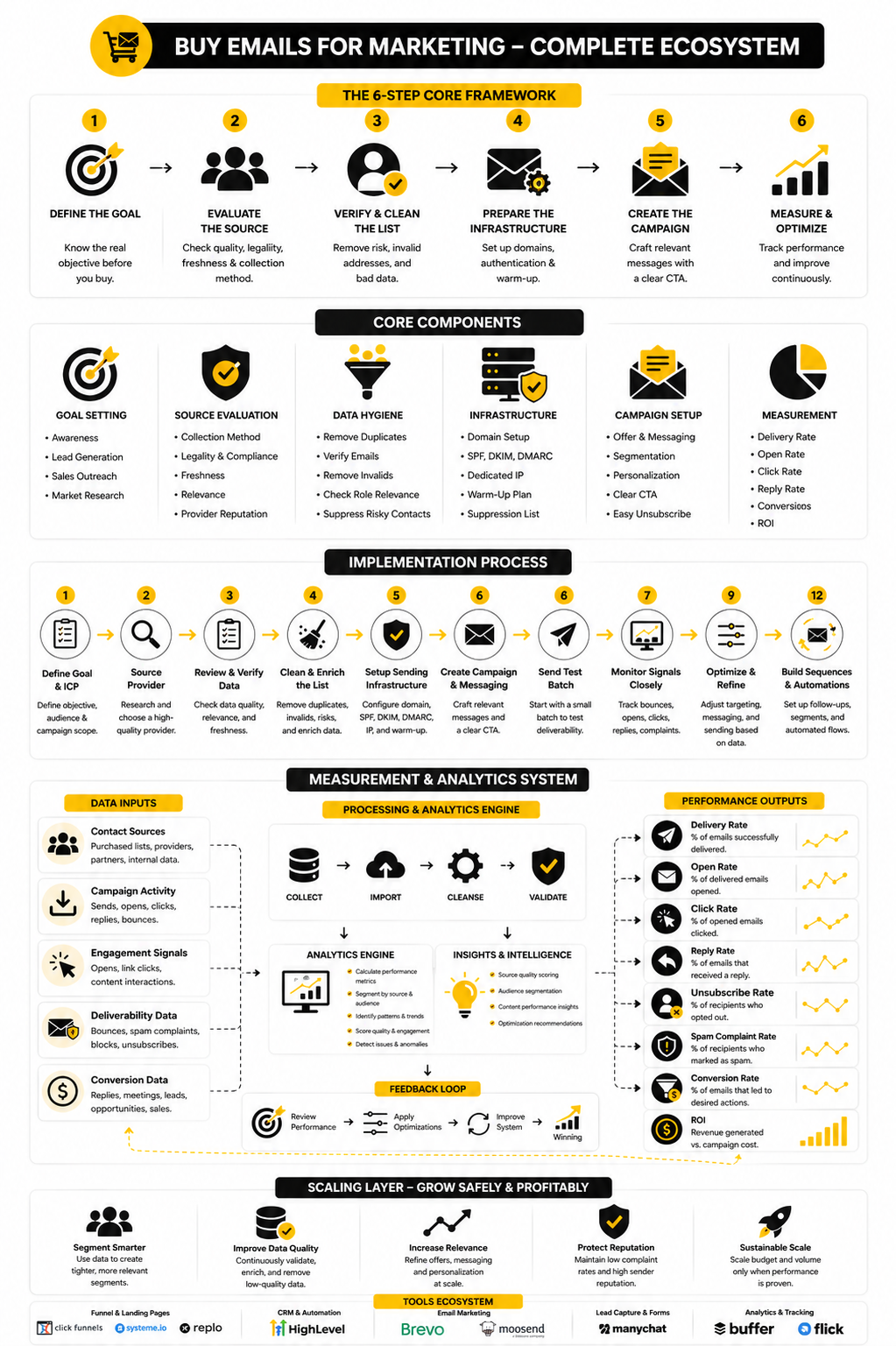
Final Checklist Before You Send
Use this checklist before importing or sending to any third-party email data. If you cannot answer these clearly, the campaign is not ready. Simple rules beat messy recovery work every time.
- Source: Do you know exactly where the contacts came from?
- Permission: Do you know whether the person opted in, became a customer, engaged through a partner, or came from third-party B2B data?
- Purpose: Is this email marketing, sales outreach, customer communication, or lead nurturing?
- Relevance: Can you explain why this specific person should reasonably receive this specific message?
- Compliance: Does the campaign follow the rules that apply to the recipient’s location and contact type?
- Unsubscribe: Can the person opt out easily, and will that opt-out sync everywhere?
- Authentication: Are SPF, DKIM, and DMARC configured correctly?
- Suppression: Are unsubscribed, bounced, complained, and disqualified contacts excluded?
- Measurement: Are contacts tagged by source so you can judge performance honestly?
- Scale: Are you starting small enough to stop quickly if the signal is bad?
A Practical Tool Stack
For owned list growth, start with a clear offer and a clean capture path. A landing page built in ClickFunnels, systeme.io, or Replo can help turn traffic into subscribers when the value exchange is obvious. The goal is to earn the email before you start sending campaigns.
For CRM and pipeline management, GoHighLevel is useful when you need follow-up systems, segmentation, automations, and lead tracking in one place. That is especially helpful when you are separating cold prospects from warm leads and customers. The more sources you use, the more important that separation becomes.
For email marketing, tools like Brevo and Moosend can support newsletters, automations, and lifecycle campaigns when the list is permission-based. Use them for people who have a clear reason to hear from you. Do not use them as a dumping ground for questionable purchased lists.
FAQ - Built For Complete Guide
Is it legal to buy emails for marketing?
It depends on where the recipients are, how the data was collected, what they were told, and what kind of message you send. In the U.S., the FTC’s CAN-SPAM guidance sets rules for commercial email, including truthful sender information, honest subject lines, a physical mailing address, and a clear opt-out method. In the UK, the ICO’s guidance on electronic mail marketing makes bought-in lists much harder to use because the soft opt-in does not apply to prospective customers from bought-in lists.
Is buying email lists a good idea?
For general email marketing, usually no. Purchased lists tend to create weak engagement, higher complaint risk, and unclear permission. For narrow B2B prospecting, third-party data can be useful when it is verified, relevant, and handled as controlled outreach rather than newsletter marketing.
What is the safest alternative to buying emails?
The safest alternative is to build an owned list through opt-in offers. That can include lead magnets, webinars, trials, quotes, calculators, audits, newsletters, communities, partner promotions, or gated resources. People who request something from you create a cleaner starting point than people who simply appear in a database.
Can I upload a purchased list into an email marketing platform?
Many platforms restrict or prohibit purchased lists because they increase bounce, complaint, and deliverability risk. Even when a platform technically allows imports, that does not mean the list is safe or compliant. Check the platform’s rules, verify the data source, and keep cold prospecting separate from permission-based email marketing.
What is the difference between a purchased list and a rented audience?
A purchased list gives you contact data, which creates responsibility and risk. A rented audience usually means a publisher, newsletter, or partner promotes your offer to its own subscribers while keeping control of the list. Rented audiences are often cleaner because people can choose to opt in before they become your contacts.
Can B2B cold email be part of a marketing strategy?
Yes, but it should be treated as prospecting, not as standard email marketing. The message should be relevant to the person’s role, business context, and likely problem. Keep the sequence short, identify yourself clearly, and make opting out easy.
What metrics should I watch first?
Start with bounce rate, spam complaint rate, unsubscribe rate, reply rate, click rate, and conversion rate. Google tells senders to keep reported spam below 0.1% and avoid reaching 0.3% in its email sender guidelines FAQ. That is why complaint rate deserves special attention when testing any third-party data source.
Do open rates prove a list is good?
No. Open rates can be distorted by privacy features, automatic image loading, and inbox behavior. A list is only valuable if it creates clean delivery, real engagement, qualified replies, conversions, and low complaint risk. Opens are a signal, not a business outcome.
Should I use my main domain for purchased email data?
Be careful. Your main domain is tied to your brand, customers, invoices, onboarding, newsletters, and important communication. If you test unproven data, protect critical sending streams and make sure authentication, pacing, and monitoring are handled properly.
What should I ask a data provider before buying B2B contacts?
Ask how the data was collected, how often it is verified, whether opt-out records are maintained, what regions are covered, what fields are included, and whether the provider can explain the lawful basis for processing. Also ask whether they can support narrow targeting by role, industry, company size, technology use, or buying signal. If the answers are vague, walk away.
When should I stop using a purchased data source?
Stop when bounce rates are high, complaints appear, replies are poor, or the source does not create qualified opportunities. Do not keep sending just because you already paid for the list. A bad list becomes more expensive the longer you try to force it to work.
What is the best long-term strategy?
Use third-party B2B data carefully when it supports targeted outreach, but build your real marketing engine around owned permission-based lists. That gives you cleaner data, stronger trust, better segmentation, and more durable revenue. The best email strategy is not the biggest list; it is the list that wants to hear from you.
Work With Professionals
Explore 10K+ Remote Marketing Contracts on MarkeWork.com
Most marketers spend too much time chasing clients, competing on crowded platforms, and losing a percentage of every project to middlemen.
MarkeWork gives you a better way. Browse thousands of remote marketing contracts and connect directly with companies desperate to hire skilled marketers like you, without platform commissions and without unnecessary gatekeepers.
If you're serious about finding better opportunities and keeping 100% of what you earn, explore available contracts and create a profile for free at MarkeWork.com.