

The ClickFunnels free trial sounds simple on the surface. You sign up, test the platform, and decide whether the software deserves a place in your business. In reality, that decision gets expensive fast if you start the trial without a plan.
Right now, ClickFunnels is positioning the trial as a full-featured hands-on test, not a watered-down demo. The official signup page says the trial runs for 14 days, requires a credit card, and gives you access to all features, while the billing help docs make clear that your card is charged automatically if you do not cancel before the trial ends. That matters because ClickFunnels is not cheap, with current pricing pages showing monthly plans starting at $97 for Launch, $197 for Scale, and $297 for Optimize, plus a higher annual-only Dominate tier.
That is why the smart question is not just whether a ClickFunnels free trial exists. The real question is whether you can use those 14 days to prove that the platform can help you build, launch, and improve a funnel that actually moves revenue.
Article Outline
- Why the ClickFunnels Free Trial Matters
- How the ClickFunnels Free Trial Works Right Now
- The Features You Should Test Before Paying
- Where Most People Waste the Trial
- A Practical Setup Plan for Serious Users
- Final Verdict, Best Alternatives, and FAQ
Why the ClickFunnels Free Trial Matters
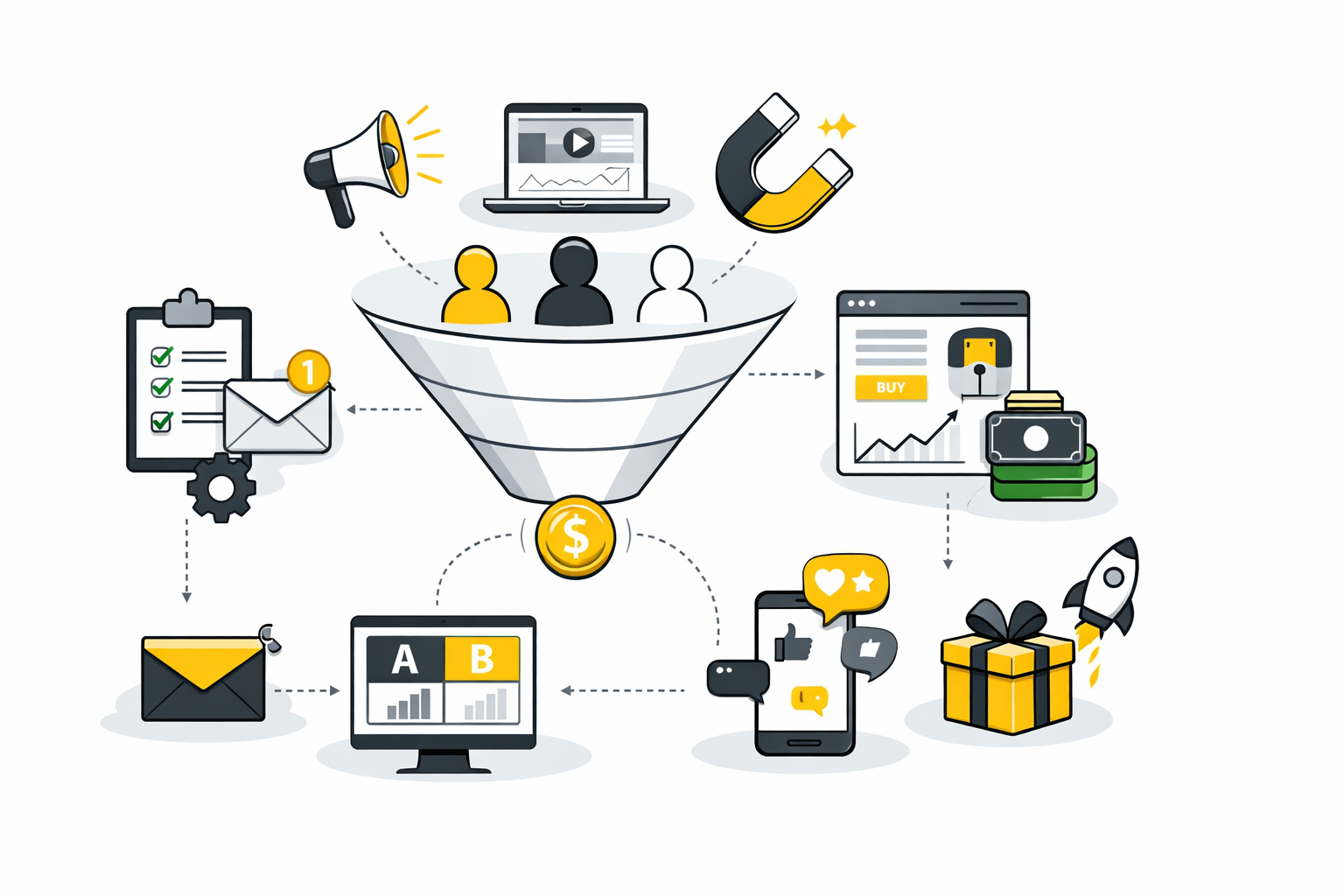
A free trial matters most when the software has real upside and real cost. ClickFunnels still sits in that category because it combines funnel building, checkout flows, email tools, analytics, courses, and CRM-style features inside one platform, which is exactly why some users love its convenience and others question whether the price is justified. Review platforms like G2 and Capterra consistently show that split: users often like the all-in-one workflow, but price and complexity keep coming up.
For the right business, a ClickFunnels free trial can save a lot of time. If you are selling a course, coaching, services, digital products, event registration, or a focused offer with a clear conversion path, the platform can shorten the distance between idea and launch. If you are still unclear on your offer, traffic source, pricing, or follow-up sequence, the same trial can turn into two weeks of random clicking.
That is the big filter. The trial is most valuable when you already have something to sell and need infrastructure, not when you are hoping the software will invent the business for you. ClickFunnels can help you execute faster, but it cannot fix weak positioning or a vague offer.
How the ClickFunnels Free Trial Works Right Now
The current ClickFunnels trial offer is straightforward on paper. The official signup page promotes a 14-day free trial, says signup takes less than 60 seconds, and notes that a credit card is required to prevent interruption of service. The company’s own billing help content also states that if the account is not canceled before the trial ends, the card on file is charged automatically at the end of the 14-day period.
The pricing side is equally important because the trial leads into a paid plan, not a low-cost hobby tool. ClickFunnels currently lists Launch at $97 per month, Scale at $197 per month, and Optimize at $297 per month on monthly billing, with discounted annual equivalents shown on the pricing page. That means the trial is best treated as a buying decision window, not just a casual sandbox.
There is also a practical cancellation issue most beginners miss. ClickFunnels support says that once you cancel, you lose access to contacts, pages, and live funnels, so you should not build blindly and assume everything will stay neatly parked forever. If you start the trial, you should go in with a tight test plan and a clear decision date.
A Simple Framework for Deciding Whether to Start
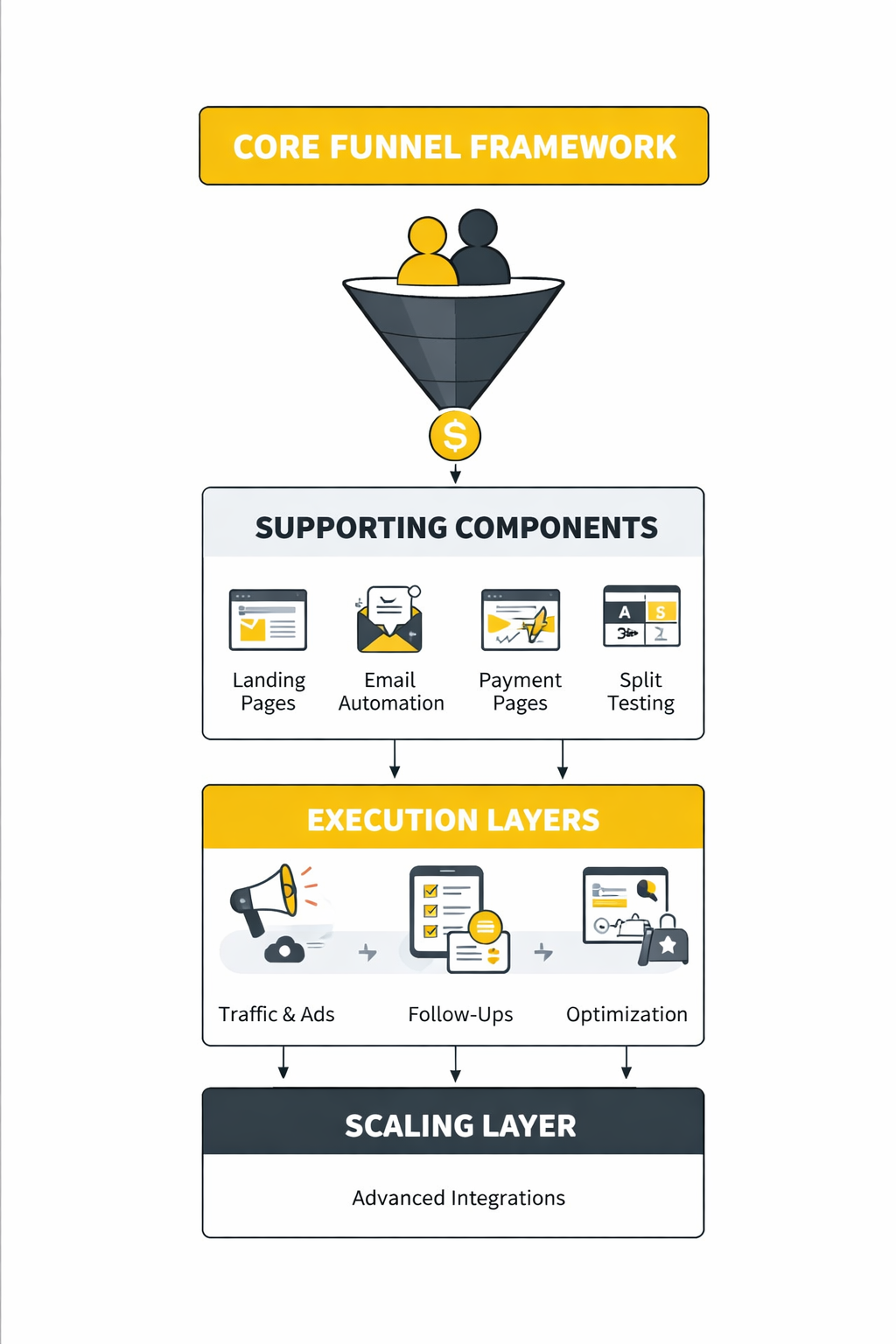
The easiest way to judge a ClickFunnels free trial is to stop thinking about features and start thinking about use case. If you need a fast way to build a landing page, order form, upsell flow, and email follow-up in one place, ClickFunnels has a fair case. If you mainly need a basic website or simple email automation, the platform may be overkill.
A practical framework is this: test the trial only if you can answer three questions before day one. What exactly are you selling, what funnel do you need first, and what result would convince you to keep paying after the trial ends? If those answers are fuzzy, you are not really evaluating software yet. You are paying later for indecision.
This is also where comparison shopping becomes healthy, not distracting. If cost is your biggest concern, keeping a leaner option like Systeme.io in mind gives you a useful benchmark. If you already know you want to test ClickFunnels seriously, the most direct path is still the official ClickFunnels free trial signup, because that is where the current trial terms live.
The next part will break down the exact features you should test before paying, so you do not burn most of the trial on dashboard tours and template browsing.
The Features You Should Test Before Paying
The biggest mistake during a ClickFunnels free trial is testing the platform like a toy instead of testing it like a sales system. You do not need to click every menu, explore every template, or admire the dashboard. You need to find out whether ClickFunnels can help you build one working funnel that captures leads, processes payments, and supports follow-up without creating technical friction.
That means your test should focus on the pieces that directly affect revenue. ClickFunnels officially positions itself as an all-in-one platform with funnel building, websites, store functionality, opportunities, analytics, and course delivery built into the same ecosystem, which is exactly why the trial can be valuable for businesses that want fewer moving parts and a faster path to launch. The flip side is real too: even ClickFunnels admits the trade-off with all-in-one software is that specialized tools can still be stronger in a single category, especially for businesses with more advanced email or ecommerce needs.
Funnel Builder and Page Editing
Start with the core question first: can you build the exact funnel you need without fighting the editor? ClickFunnels offers the classic promise of fast page creation with templates, sections, and drag-and-drop editing, and its help center is packed with guidance around the funnel builder and page editor because that is still the heart of the platform. If the builder feels smooth to you, that is a good sign. If it feels clunky after a few hours, a paid subscription will not magically fix that.
Your test funnel should be simple and real. Build a landing page, an order page, a thank-you page, and at least one follow-up step. Do not test with fake blocks of lorem ipsum and vague headlines because that tells you nothing about how the funnel behaves when you are under real launch pressure.
It is also worth checking the mobile experience early. ClickFunnels’ own support docs warn that order elements should not be duplicated across desktop and mobile layouts on order-related pages because that can break the purchase flow, which tells you something important: this is not just about pretty design, it is about implementation discipline. During the trial, preview every step on mobile before you even think about keeping the platform.
Checkout Flow, Order Bumps, and Upsells
This is where a ClickFunnels free trial either proves its value or falls apart. A funnel platform is not really being tested until you see how the sales flow behaves from opt-in to payment to post-purchase offer. ClickFunnels support materials and feature documentation make it clear that order forms, one-time offers, downsells, and product setup are central parts of the system, so these are not side features you can ignore.
You should run a complete test purchase. That means checking the order page, confirming the payment gateway setup, verifying the thank-you page, and making sure any bump, upsell, or downsell behaves the way you expect. ClickFunnels also provides specific guidance for one-click offer logic and product setup, which is useful, but it also shows that this part of the platform deserves careful testing before your real traffic ever sees it.
This matters more than most beginners think. A beautiful page with a broken checkout is worthless. If your business depends on digital products, coaching offers, subscriptions, or webinar sales, the checkout flow is one of the first things you should stress-test during the trial.
Email Automation and Lead Capture
A funnel without follow-up is rarely enough. ClickFunnels supports lead capture through forms and also offers automation paths for emails, notifications, and list actions, but support articles also show there are testing quirks, including the fact that some automated emails only trigger once for a contact during testing. That is the kind of detail you want to learn on day two of a trial, not after a live launch.
So test the whole handoff. Submit a form, confirm the lead gets saved, check whether the contact lands in the right list or workflow, and make sure the first email actually arrives. If your email setup feels limited for your use case, that is a useful answer too. Some businesses will be better off connecting a specialist email platform such as Brevo or Moosend rather than forcing ClickFunnels to do everything.
This is where people get distracted by features instead of outcomes. The real test is not whether the automation panel looks powerful. The real test is whether a new lead goes exactly where you need them to go, without missed steps, weird delays, or manual cleanup.
Courses, Membership, and Delivery
If you sell education, paid communities, onboarding content, or digital access, you should not end the ClickFunnels free trial without testing delivery. ClickFunnels supports membership funnels and protected content areas, including lesson management and drip delivery, which makes it relevant for creators and educators who want funnel plus fulfillment in one platform. That can be a major advantage when you want fewer integrations to babysit.
But this part needs a real test, not a quick glance. Create the access page, add sample content, log in as a user, and confirm that the post-purchase experience actually feels clean. If your product delivery feels awkward, confusing, or too limited, that is a serious warning sign because customers judge your brand after the sale, not just before it.
This is also where expectations matter. If you only need a lean lead magnet or a simple one-product funnel, the membership side may be unnecessary. But if your business model depends on paid content delivery, you need to know whether ClickFunnels can handle both conversion and fulfillment well enough to justify its monthly price.
Analytics, Sales Tracking, and Visibility
A ClickFunnels free trial should not end with “I built a funnel.” It should end with “I can see what is happening inside the funnel.” ClickFunnels highlights analytics, long-term performance tracking, and sales visibility as core value points, and its support materials also cover sales-page reporting and exportable transaction history, which tells you the platform wants to be more than a page builder.
That means you should inspect reporting before you buy. Check whether you can easily see page views, opt-ins, orders, sales details, and customer activity without opening five tabs and guessing what changed. Good analytics will not make a weak offer strong, but bad visibility makes improvement much slower.
For serious users, this is a quiet but important part of the decision. If you cannot confidently diagnose what is working and what is leaking, you are not buying leverage. You are buying extra software around a blind spot.
Where Most People Waste the Trial
Most people do not waste the ClickFunnels free trial because the software is bad. They waste it because they behave like tourists. They browse templates, rename workspaces, watch a few tutorials, and spend half the trial “getting ready” instead of building one complete path from traffic to conversion.
The second way people waste it is by trying to test ten business ideas at once. That never works. ClickFunnels is far more useful when you choose one offer, one audience, and one funnel goal, then measure whether the platform helps you move faster with less technical drag.
The third trap is ignoring the cost of staying. The official pricing structure is generous in terms of features and limits, but it is still a real monthly commitment once the trial ends. If you are serious about starting, the direct ClickFunnels trial signup makes sense. If you already know budget is your biggest constraint, something leaner like Systeme.io may deserve equal attention before you build your whole stack around the more expensive option.
The next section gets even more practical. I am going to break down the setup plan that gives you the best shot at getting a real answer from the trial instead of just a temporary burst of funnel-builder excitement.
A Practical Setup Plan for Serious Users
If you want to get real value from a ClickFunnels free trial, you need structure. Not motivation, not inspiration, not “I’ll figure it out as I go.” You need a simple execution plan that forces you to build something real, test it, and decide fast.
Most people drift through the trial because they do not define what success looks like. That is why this section is different. This is a step-by-step process designed to answer one question: should you keep paying for ClickFunnels after the trial ends or not?
Step 1: Lock One Offer Before You Touch the Dashboard
Before you even open the builder, decide exactly what you are selling. Not three ideas, not five “maybe” offers, just one. ClickFunnels works best when the funnel is built around a clear value proposition, a defined audience, and a single conversion goal.
This matters more than people expect. Industry data from HubSpot and Salesforce consistently shows that businesses with a clearly defined offer and buyer journey outperform those with vague messaging. If your offer is unclear, your funnel will reflect that immediately.
So define:
- What are you selling
- Who is it for
- What problem it solves
- What action you want the user to take
If you cannot answer these in a few sentences, pause. The ClickFunnels free trial will not fix that.
Step 2: Build One Complete Funnel, Not Five Half Funnels
Once your offer is locked, build a simple funnel that mirrors a real customer journey. You do not need complexity here. You need clarity and execution.
Start with:
- Landing page (lead capture or direct offer)
- Order page (if selling)
- Thank-you page
- Optional upsell or follow-up step
That is enough to test the core engine. ClickFunnels templates can speed this up, but do not over-customize too early. Focus on getting a working flow, not a perfect design.
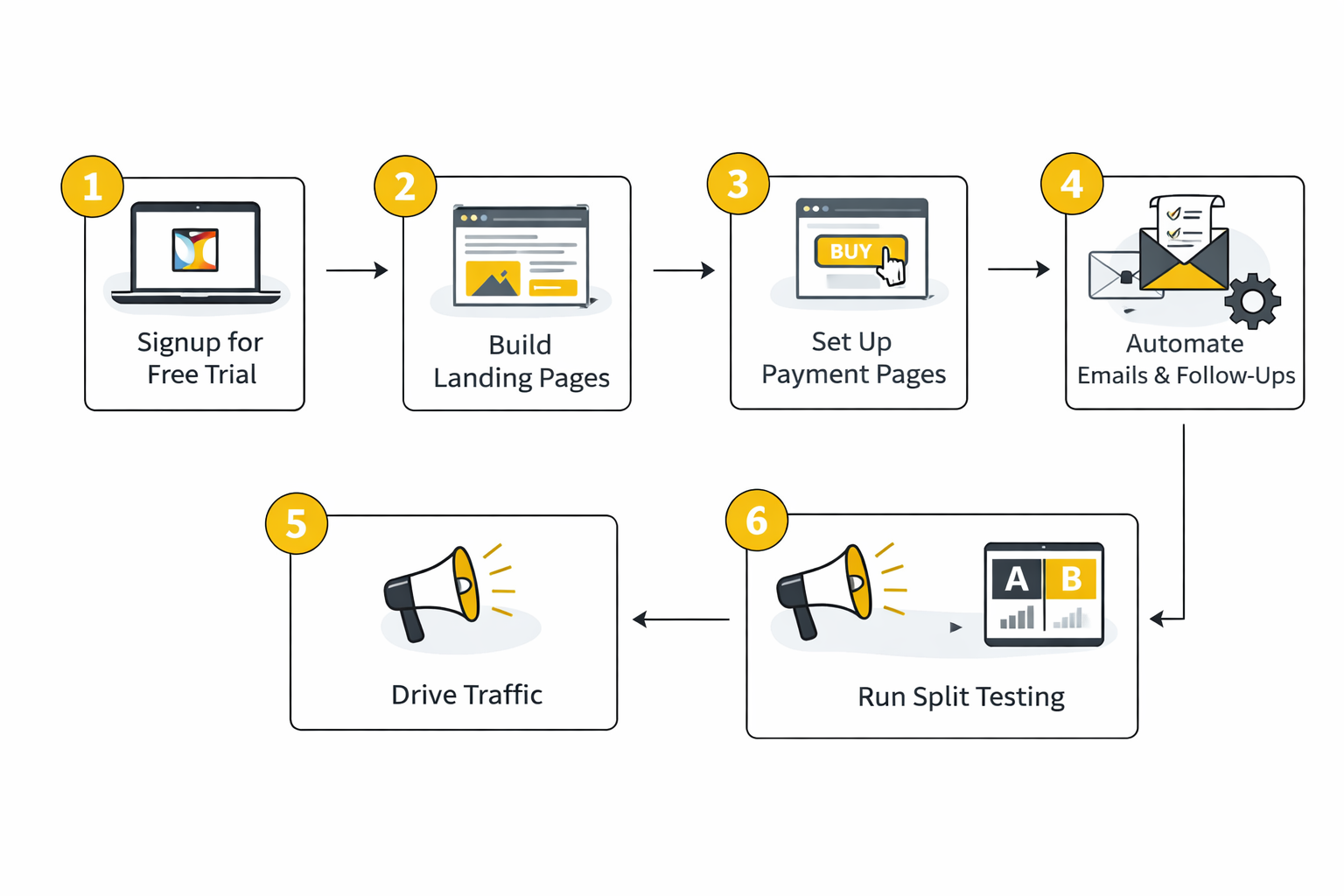
This is where the ClickFunnels free trial becomes tangible. You are no longer exploring features. You are building a path that a real customer could follow from first click to final action.
Step 3: Connect Payments, Emails, and Tracking Early
Most beginners delay integrations because they feel “technical.” That is exactly why they fail the trial. The real value of ClickFunnels is not pages. It is the system working together.
You should connect:
- Payment gateway (Stripe or equivalent)
- Email automation or internal workflows
- Basic tracking and analytics
ClickFunnels documentation shows that order setup, email workflows, and contact tracking are core parts of the platform, not optional extras. If these pieces are not working together, you are not testing the platform properly.
If you find the email side limiting, this is where external tools like Brevo or Moosend can fill the gap without abandoning your funnel setup.
Step 4: Run a Real End-to-End Test
Do not trust previews. Run the funnel like a customer would.
That means:
- Submit your own form
- Complete a test purchase
- Trigger the email sequence
- Go through the entire flow on mobile
ClickFunnels’ own support materials highlight how specific issues can break flows, especially in checkout and mobile layouts. This is not theoretical. Small mistakes here directly impact revenue.
If something breaks, fix it now. This is the entire point of the trial.
Step 5: Drive Small, Real Traffic
A funnel with zero traffic tells you nothing. You do not need a big campaign, but you do need real behavior.
You can:
- Send traffic from your existing audience
- Share with a small test group
- Use a limited paid campaign
The goal is not scale. The goal is signal. Even a small number of users can show you whether the funnel is confusing, slow, or ineffective.
Marketing research aggregated in reports like Statista digital advertising data shows how quickly user behavior reveals friction points in online funnels. You do not need thousands of visitors to see problems. You just need honest interaction.
Step 6: Decide Based on Outcomes, Not Effort
This is where most people lie to themselves. They spend 10 days building, tweaking, learning, and then justify the subscription because of the time invested.
Ignore that.
Your decision should come down to:
- Did the funnel work technically without constant friction
- Did users understand the flow
- Did you feel faster or slower using ClickFunnels compared to alternatives
- Can you realistically justify $97–$297 per month for this setup
If the answer is yes, continuing with ClickFunnels makes sense. If not, do not force it. There are leaner platforms like Systeme.io that may align better with your stage.
If you are ready to test properly, go straight to the official ClickFunnels free trial signup and treat the next 14 days like a focused experiment, not a casual exploration.
The next part will break down the biggest mistakes and hidden pitfalls that can quietly ruin your results, even if your funnel looks “finished” on the surface.
Understanding the Numbers That Actually Matter
A ClickFunnels free trial only becomes valuable when you stop asking “does this look good?” and start asking “is this working?” That shift is everything. Funnels are not design projects. They are performance systems, and performance is measured, not guessed.
ClickFunnels includes built-in analytics for page views, contacts, sales, and conversion tracking, which gives you a baseline view of what is happening inside your funnel. But raw numbers are not useful on their own. What matters is knowing which numbers signal progress and which ones expose problems.
The goal during your trial is simple: identify whether your funnel can convert attention into action in a predictable way. If you cannot see that clearly in the data, you are not ready to commit to a paid plan.
The Core Funnel Metrics You Should Watch
You do not need dozens of metrics. You need a handful that directly reflect user behavior across your funnel.
Focus on:
- Page conversion rate (visitors → leads or buyers)
- Cost per lead or acquisition if you are running paid traffic
- Order conversion rate (visitors → completed purchases)
- Average order value including bumps and upsells
- Drop-off points between steps
Industry-wide benchmarks give useful context here. Data aggregated by WordStream and Unbounce shows that average landing page conversion rates often sit around 2%–5%, while high-performing pages can exceed 10%. That does not mean your funnel is “bad” if you are below those numbers, but it does give you a reality check.
If your funnel converts at 0.5% during the ClickFunnels free trial, that is not a design issue. That is a positioning, offer, or targeting problem. The platform is not the bottleneck.
How to Read Funnel Behavior, Not Just Numbers
Numbers without context are misleading. A 20% opt-in rate might look strong, but if no one buys afterward, the funnel is broken further down. A low conversion rate might look weak, but if traffic quality is poor, the funnel might not be the issue at all.
This is where ClickFunnels analytics becomes useful. You can see how users move from page to page, where they stop, and which steps leak the most attention.
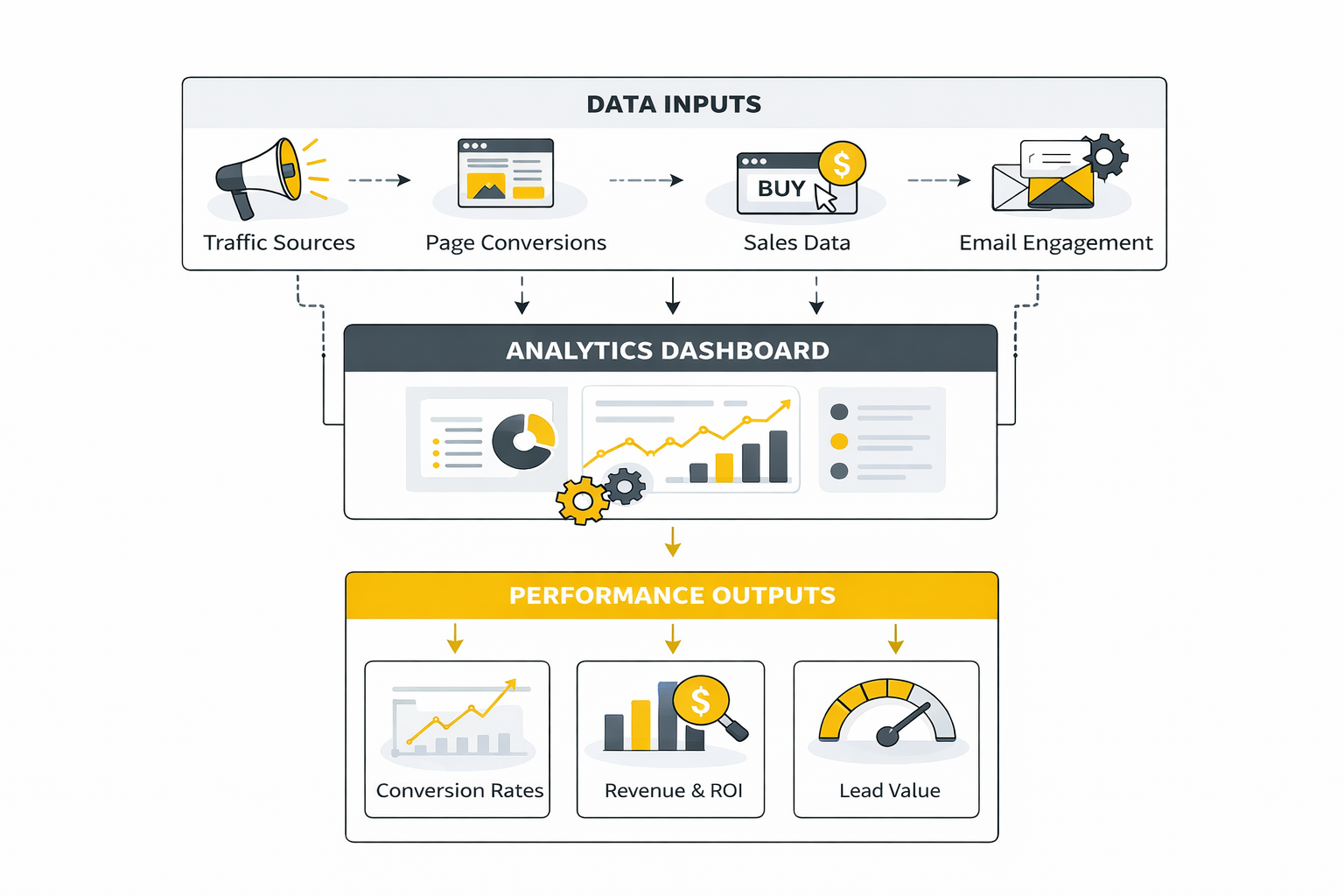
The real insight comes from patterns:
- High traffic + low opt-in → messaging problem
- High opt-in + low sales → offer or pricing problem
- Strong sales page + weak upsell → post-purchase friction
- Good desktop performance + poor mobile → layout or usability issue
This is how you turn data into decisions. You are not just tracking performance. You are diagnosing friction.
Benchmarks That Actually Help You Decide
Benchmarks are only useful if they guide action. During a ClickFunnels free trial, you are not trying to beat industry leaders. You are trying to answer whether your funnel has potential.
Here is a practical way to evaluate your numbers:
- If people are not opting in at all, fix the hook first
- If people opt in but do not buy, fix the offer or trust elements
- If people buy but ignore upsells, refine the value stacking
- If everything feels inconsistent, simplify the funnel
Reports like HubSpot conversion benchmarks show that performance improves significantly when messaging, targeting, and funnel flow are aligned. That alignment matters more than any specific percentage.
During your trial, you are not chasing perfect numbers. You are looking for signs that the system works when you adjust inputs.
What Good Data Should Lead You To Do
The worst thing you can do is collect data and change nothing. The entire purpose of analytics is to guide your next move.
If your funnel is underperforming, your options are:
- Improve headline and positioning
- Simplify the page structure
- Adjust pricing or offer structure
- Change traffic source or audience targeting
- Add proof, testimonials, or guarantees
This is also where tools outside ClickFunnels can support your process. If you need deeper audience insights or social testing, platforms like Flick or scheduling tools like Buffer can help you refine traffic quality before it even reaches your funnel.
The key point is this: data should drive action quickly. If you spend the entire ClickFunnels free trial watching numbers without making adjustments, you are missing the point.
When the Data Says “Do Not Continue”
This is the part most people avoid. Sometimes the data clearly shows that continuing with ClickFunnels does not make sense for your situation.
If you see:
- Constant friction in setup
- Confusing analytics or lack of clarity
- Weak results even after multiple adjustments
- A mismatch between cost and expected return
Then the honest move is to stop. Not because ClickFunnels is bad, but because it may not fit your current stage.
If the system feels smooth, the data is improving, and the funnel shows real potential, then continuing becomes a logical step. At that point, moving forward through the official ClickFunnels trial signup is no longer a gamble. It is a calculated decision.
In the next part, we will break down the final decision layer: when ClickFunnels is actually worth paying for, when it is not, and how it compares to simpler alternatives depending on your business model.
When ClickFunnels Is Worth Paying For
By this point, the ClickFunnels free trial should have given you a real answer, not just a feeling. You should know whether the builder fits your workflow, whether the funnel can handle payments and follow-up, and whether the reporting is clear enough to guide decisions. ClickFunnels is still built around the promise of letting businesses market, sell, and deliver from one system, and its current plans are positioned around that all-in-one model rather than a lightweight single-purpose tool. clickfunnels.com+1
That all-in-one angle is the biggest reason to keep paying. If you value having landing pages, funnels, products, analytics, and delivery inside one platform, ClickFunnels can reduce tool sprawl and shorten execution time. The tradeoff is obvious too: the more you expect one platform to do, the more important it becomes that its workflow genuinely matches your business instead of forcing awkward workarounds. clickfunnels.com+2
ClickFunnels is usually worth paying for when speed and consolidation matter more than squeezing every dollar out of your software stack. If you are launching offers often, testing funnel variations, and selling through structured conversion paths instead of a basic brochure-style site, the platform has a stronger case. If your business only needs a simple landing page and a few automations, paying premium software pricing every month gets harder to justify. clickfunnels.com+1
The Real Strategic Tradeoff: Convenience Versus Precision
This is the part beginners usually miss. The decision is not just “is ClickFunnels good?” The decision is whether you want convenience from one connected system or maximum precision from a stack of specialized tools.
ClickFunnels clearly leans toward convenience. Its product pages emphasize that pages, funnels, analytics, products, and delivery are meant to work together, which can be a serious advantage if you want fewer integrations and less technical glue holding everything together. clickfunnels.com+2
But convenience has a price, literally and operationally. Current pricing puts the entry monthly plan at $97, with higher tiers at $197 and $297, and some features such as Countdown Funnels are only included in higher plans. That means your long-term decision is not just about whether the ClickFunnels free trial felt productive. It is about whether the platform’s bundled value will still feel justified three or six months from now. clickfunnels.com+1
If you already know you prefer simpler, leaner stacks, a lower-cost alternative like Systeme.io may fit better. If you want to centralize more of your customer journey in one place, continuing with ClickFunnels becomes easier to defend.
Scaling Changes the Answer
A ClickFunnels free trial can feel great at small scale and still become the wrong choice later. That is not a contradiction. It is just what happens when a platform solves your first bottleneck but introduces new ones as complexity grows.
Scaling changes what matters. At the beginning, you care about getting a funnel live without hiring developers. Later, you care more about segmentation, reporting depth, team workflows, custom integrations, and how cleanly products and contacts can be managed across a larger operation. ClickFunnels is clearly trying to address that with higher-tier plans, more workspaces, larger contact limits, higher email limits, and API access, but those benefits only matter if your business will actually use them. clickfunnels.com+1
This is why serious users should think one step ahead. Do not just ask whether ClickFunnels works for the funnel you built during the trial. Ask whether it still works when you add more offers, more traffic, more team members, and more follow-up complexity. A platform that feels efficient at one product can feel expensive and rigid if your operating model changes quickly.
Risks That Quietly Kill ROI
The biggest risk is not the monthly fee. The biggest risk is paying for software you never fully implement. That happens all the time with all-in-one platforms because the promise of “everything in one place” feels powerful, but the actual return only comes when you use enough of the system to replace other tools or create measurable revenue.
The second risk is overbuilding. During and after a ClickFunnels free trial, people often create more funnel steps, more pages, and more upsells than the offer actually needs. Complexity feels sophisticated, but it usually just adds friction. If your funnel is not converting at a basic level, adding more moving parts rarely fixes the real problem.
The third risk is weak operational discipline. ClickFunnels gives you the ability to move fast, but speed can hide sloppy execution. If your offer is vague, your tracking is inconsistent, or your follow-up is half-finished, the software can make the mess look polished without making it profitable. That is the trap.
What Experienced Marketers Usually Do Differently
Experienced marketers use the ClickFunnels free trial as a validation window, not a learning playground. They do not try to master every feature. They identify the shortest route from traffic to conversion and judge the platform on how cleanly it supports that route.
They also separate platform problems from market problems. If traffic is weak, the software is not the villain. If the offer is unclear, the builder is not the bottleneck. Strong operators use the trial to answer precise questions: can this stack support my sales process, can I track what matters, and does the total cost make sense relative to the expected return?
That is also why they tend to keep companion tools where those tools earn their place. A team may use ClickFunnels for core funnel flow, then add Brevo for broader email work, Buffer for distribution, or Flick for social content workflows. The smartest setups are not loyal to software brands. They are loyal to outcomes.
The Best Pre-Purchase Question to Ask Yourself
Before you move from trial to paid account, ask one blunt question: am I buying leverage, or am I buying hope?
If the trial showed that ClickFunnels made you faster, gave you clearer funnel visibility, and supported a working sales flow, then paying for it is rational. If the platform mostly gave you busywork, confusion, or another monthly bill attached to an unproven offer, then continuing is probably a mistake.
That is the cleanest way to think about it. A ClickFunnels free trial is useful when it reduces uncertainty. If it leaves you with more uncertainty than you started with, that is already your answer.
The final part will wrap this up with a direct verdict, the best alternative paths depending on your situation, and the FAQ that covers the questions most people ask right before they decide.
Final Thoughts: Building a Simple, Profitable Funnel System
By now, the ClickFunnels free trial should feel less like a mystery and more like a decision tool. You have seen how the platform works, where it fits, where it struggles, and what kind of business actually benefits from it.
The real takeaway is simple. ClickFunnels is not magic, but it is leverage. If you already have a clear offer and a defined path to conversion, it can compress your build time, simplify your stack, and give you a working funnel faster than stitching tools together manually. If you do not have those fundamentals, the platform will only amplify confusion.
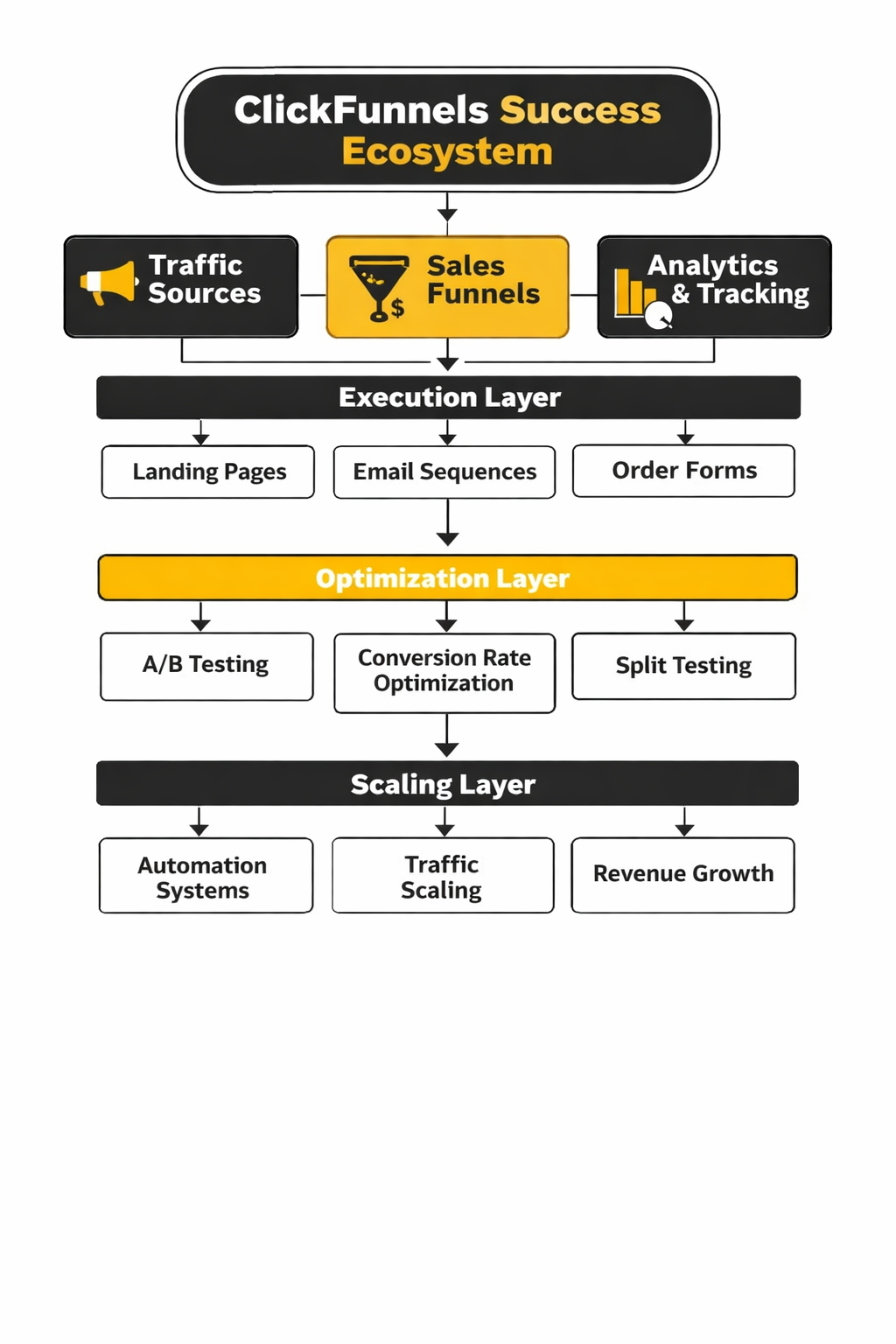
The smartest move is to treat your funnel like a system, not a one-time project. That means aligning traffic, conversion, follow-up, and delivery into one clean flow. If ClickFunnels helps you do that with less friction, it earns its place. If it does not, there are other tools that will.
At this stage, if you are confident in your setup and ready to move forward, the most direct path is still the official ClickFunnels free trial. If you want to compare before committing, testing a leaner system like Systeme.io alongside it gives you a clearer perspective on cost versus capability.
What matters is not which tool you choose. What matters is whether your funnel works.
FAQ - Built for Complete Guide
Is the ClickFunnels free trial really free?
Yes, but only for the trial period. The ClickFunnels free trial typically runs for 14 days and requires a credit card. If you do not cancel before the trial ends, you are automatically charged for the selected plan.
Do I need a credit card to start the trial?
Yes. ClickFunnels requires a valid payment method upfront. This is standard for most SaaS tools to prevent abuse of free trials and ensure uninterrupted service if you continue.
What happens if I forget to cancel?
You will be charged for the next billing cycle. This is why it is important to set a reminder during your ClickFunnels free trial so you can make a clear decision before the trial expires.
Can I build a real business during the trial?
You can build the foundation of one. The trial is long enough to create a funnel, test it, and validate your setup, but not long enough to scale aggressively unless you already have traffic ready.
Is ClickFunnels good for beginners?
It can be, but only if the beginner already understands basic marketing concepts. The platform simplifies technical work, but it does not replace strategy, positioning, or offer clarity.
What is the biggest mistake people make during the trial?
They explore instead of execute. Instead of building one complete funnel, they jump between features, templates, and ideas, which leads to no real outcome by the end of the trial.
How does ClickFunnels compare to cheaper alternatives?
ClickFunnels focuses on an all-in-one experience. Cheaper tools like Systeme.io offer similar core functionality at a lower price, but may not match the same ecosystem depth depending on your needs.
Can I connect other tools during the trial?
Yes. You can integrate email platforms, payment gateways, and other tools. In some cases, using specialized tools like Brevo or Moosend can improve your overall setup.
How quickly should I decide after starting?
You should have a clear answer within 7 to 10 days. That gives you enough time to build, test, and evaluate performance without rushing at the last minute.
Is ClickFunnels worth it long term?
It depends on your business model. If you rely heavily on funnels, upsells, and structured customer journeys, it can be worth the investment. If your needs are simple, the cost may outweigh the benefits.
What should I do right after starting the trial?
Start building immediately. Define your offer, create one funnel, connect essential tools, and run a real test. Do not spend days learning passively without execution.
Work With Professionals
Explore 10K+ Remote Marketing Contracts on MarkeWork.com
Most marketers spend too much time chasing clients, competing on crowded platforms, and losing a percentage of every project to middlemen.
MarkeWork gives you a better way. Browse thousands of remote marketing contracts and connect directly with companies desperate to hire skilled marketers like you, without platform commissions and without unnecessary gatekeepers.
If you're serious about finding better opportunities and keeping 100% of what you earn, explore available contracts and create a profile for free at MarkeWork.com.