

ClickFunnels pricing in 2026 looks simpler on the surface than it used to, but that does not mean the buying decision is simple. The current lineup has four plans on the official pricing page: Launch at $97 per month, Scale at $197 per month, Optimize at $297 per month, and Dominate at $5,997 per year, with annual billing lowering the effective monthly cost for the first three tiers. ClickFunnels also still pushes a free trial, which matters because this is the kind of platform that can feel obvious in a sales demo and expensive once you start using it in the real world. clickfunnels.com+2
That is why this article is not just a list of ClickFunnels prices. The real question is whether the plan you choose matches your contact volume, email needs, number of workspaces, team size, API requirements, and how many extra tools you are trying to replace with one platform. If you want to see the current offer yourself before we break it down, you can check the official ClickFunnels free trial and signup page or the promotional 3 months for $99 offer page. clickfunnels.com+1
Article Outline
- What ClickFunnels Pricing Looks Like In 2026
- Why ClickFunnels Pricing Matters More Than The Sticker Price
- The Pricing Framework To Choose The Right Plan
- Launch, Scale, Optimize, And Dominate Explained
- Hidden Costs, Add-Ons, And Smart Alternatives
- Which ClickFunnels Plan Is Actually Worth It In 2026
Why ClickFunnels Pricing Matters More Than The Sticker Price
A lot of people look at ClickFunnels pricing 2026 and stop at the monthly number. That is a mistake, because the platform is no longer just a page builder. Even the lower tiers now bundle funnels, email, courses, domains, AI usage, and varying levels of support, while the higher tiers add bigger contact limits, larger email allowances, more workspaces, custom code, and full API access. clickfunnels.com+1
That changes the economics completely. A solo creator might see $97 per month and compare it to a simple landing page tool, but ClickFunnels is trying to replace several categories at once, which is why the better comparison is your total stack cost, not one isolated subscription. The company itself positions the product as covering funnels, CRM, email marketing, online courses, and ecommerce-style selling inside one system. clickfunnels.com+1
There is another reason this matters: the headline price is not always the full price. ClickFunnels support documents state that metered usage can apply for things like emails sent through its own system, email validation, integration runs, video hosting, and video bandwidth, even though the core plans themselves are fixed-price subscriptions. That means the wrong plan can feel affordable at checkout and frustrating later, especially once your contact list grows or your automation gets heavier. support.myclickfunnels.com
For readers who are already cost-sensitive, this is also where alternatives enter the conversation. Systeme.io prominently markets itself as a free way to launch an online business, while Brevo emphasizes flexible pricing for email, sales, and transactional messaging, and Buffer offers a free entry plan plus annual discounts for social scheduling. Those are not one-to-one substitutes for ClickFunnels, but they are relevant because many buyers are really comparing business stacks, not just funnel builders. systeme.io+2
The Pricing Framework To Choose The Right Plan
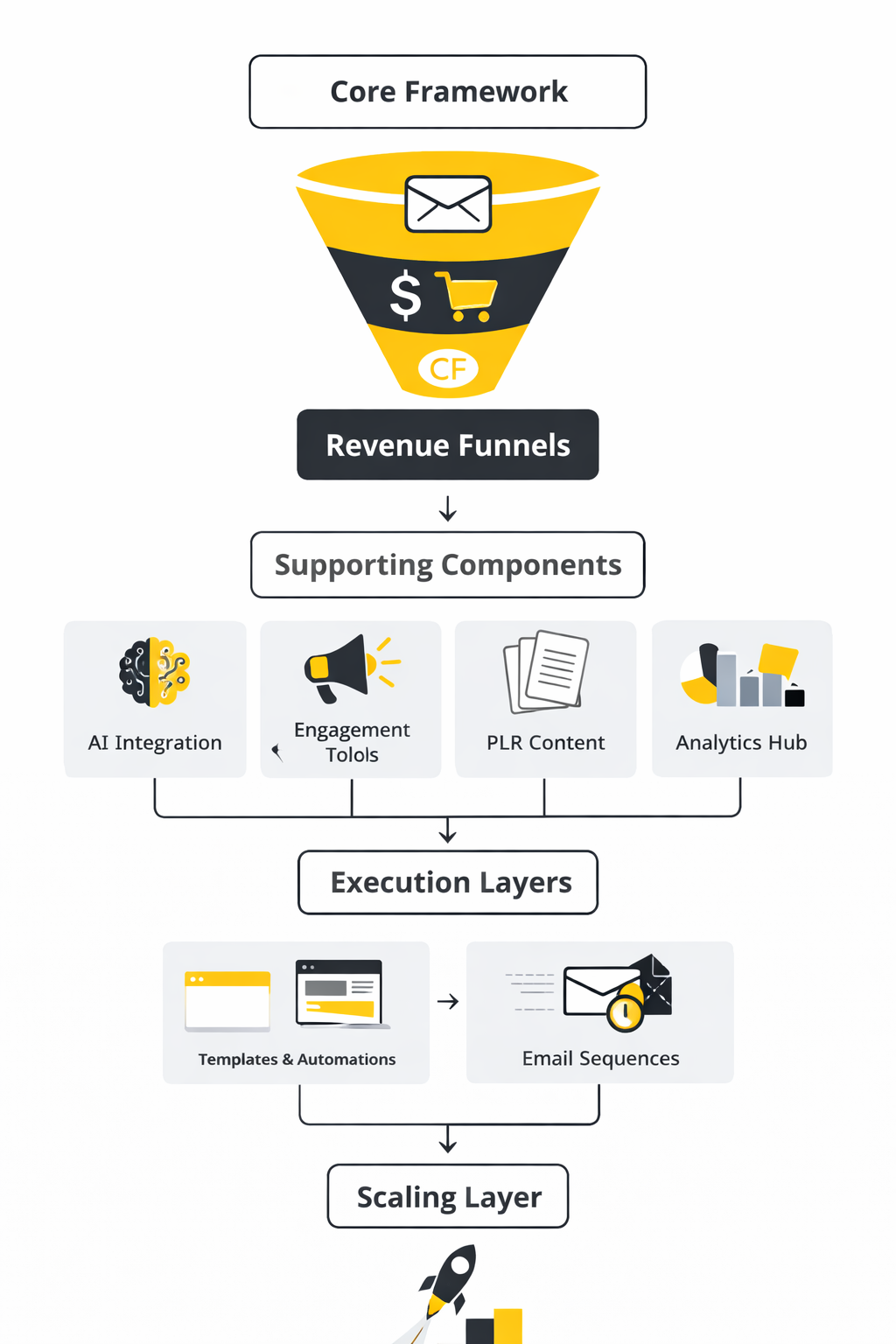
The clean way to evaluate ClickFunnels pricing in 2026 is to use a four-part framework. First, look at revenue stage. Second, look at operational complexity. Third, look at audience and sending volume. Fourth, look at replacement value, meaning how many other tools the platform can realistically remove from your stack. Those four filters will save you from buying too much software too early or getting boxed in by a plan you outgrow in a month.
Revenue stage matters because Launch is clearly designed for getting a business off the ground, while Scale and Optimize are built for businesses that already have traction and need more contacts, more emails, more workspaces, and more infrastructure. On the current pricing page, Launch includes 10,000 contacts and 50,000 emails per month, Scale jumps to 75,000 contacts and 300,000 emails, and Optimize goes to 150,000 contacts and 750,000 emails. That is not a small difference. It tells you ClickFunnels expects very different business models at each tier. clickfunnels.com+1
Operational complexity matters just as much. If you are a solo operator building a couple of funnels, one workspace and two team members may be enough. If you are running multiple brands, clients, offers, or internal teams, the jump to five, ten, or even twenty workspaces can be the real reason to upgrade, not the extra pages or the badge of being on a higher plan. clickfunnels.com+1
Replacement value is the final filter, and this is where people either overpay or make a smart move. If ClickFunnels can replace your funnel builder, basic email marketing tool, course platform, and at least some light CRM or automation needs, the monthly price can be easier to justify. If you are still going to keep separate tools for email, scheduling, social publishing, forms, and CRM, then the better financial decision may be a lighter stack built around specialized tools like Moosend, Brevo, Buffer, or Systeme.io. The Easiest Email Marketing Platform+3
What ClickFunnels Pricing Looks Like In 2026
Here is the clean version of ClickFunnels pricing 2026 as it stands right now. The official pricing page lists Launch at $97 per month, Scale at $197 per month, Optimize at $297 per month, and Dominate at $5,997 per year, with annual billing dropping the effective monthly cost of the first three plans to about $81, $164, and $248. That annual discount is real, but it only matters if you already know you are going to stay on the platform long enough to earn it back.
The more useful way to read these prices is by capacity, not by branding. ClickFunnels ties each plan to a specific ceiling for contacts, monthly email volume, workspaces, team members, courses, AI usage, support level, and platform access like custom code or full API support on higher tiers. The support documentation also confirms that the product line now centers on these four current plans, while older users can remain on grandfathered legacy plans if they were already subscribed before the changeover. ClickFunnels support says that directly here and here in its legacy-vs-current comparison.
That distinction matters because the entry plan is no longer a stripped-down page builder. Even the Launch tier includes unlimited funnels for the current offer period, one workspace, two team members, 10,000 contacts, 50,000 emails per month, three courses, five custom domains, unlimited visitors, onboarding calls, and 1 million AI words. So when people ask whether ClickFunnels is expensive, the honest answer is that it depends on whether you will actually use enough of the stack to justify replacing separate tools.
There is also a practical buying angle here. ClickFunnels says you can start with a 14-day free trial, and its pricing FAQ says the company also offers a 30-day money-back guarantee after the trial. That gives you a real evaluation window, which is worth using before you lock yourself into annual billing just because the monthly math looks better on paper.
Launch, Scale, Optimize, And Dominate Explained
Launch
Launch is the starter plan, but it is only a starter plan in price, not in usefulness. At $97 per month or $970 annually, it is clearly aimed at solo founders, small creators, coaches, consultants, and early-stage online businesses that need funnels, email, courses, and a basic operating system in one place. You get one workspace, two team members, 10,000 contacts, 50,000 emails per month, three courses, five custom domains, standard support, and 1 million AI words.
This is the right plan when you are still validating offers or building your first serious funnel stack. It is also the safest entry point if your business is simple enough that one brand workspace and a relatively lean team structure will not hurt you. Where Launch starts to break down is not usually pages or traffic, because those are generous, but contact growth, email volume, and the moment you need advanced flexibility like API access or custom code.
Scale
Scale is where ClickFunnels starts acting like a real growth platform instead of an all-in-one starter kit. The plan is $197 per month or $1,970 annually, and the upgrade is substantial: five workspaces, five team members, 75,000 contacts, 300,000 emails per month, six courses, unlimited custom domains, priority plus live chat support, a custom code editor, and webhooks with full API access. That is not a cosmetic jump. It changes what kind of business can run comfortably on the platform.
This is also the first tier where the operational case gets stronger. If you are managing multiple offers, multiple brands, client work, or more advanced automations, Scale gives you breathing room that Launch simply does not. ClickFunnels also positions apps like Countdown Funnels as included in Scale and above, which tells you this tier is meant for businesses that are already pushing harder on conversion optimization, not just publishing pages.
For a lot of buyers, this is the real decision point. Scale is expensive enough that you should expect it to replace several tools, but it is also the first plan that feels like it can support a serious growth machine without forcing awkward workarounds. That is why it is labeled “most popular” on the official pricing page, and frankly, that tracks with the feature gap between this tier and Launch.
Optimize
Optimize is built for companies that already know funnels are central to revenue and do not want capacity anxiety getting in the way. It comes in at $297 per month or $2,970 annually and increases the ceiling to 10 workspaces, 10 team members, 150,000 contacts, 750,000 emails per month, 10 courses, and 5 million AI words. It also keeps the higher-end support, custom code, and full API access from Scale.
The important difference is not just more volume. Optimize also adds the Affiliate Center, which makes the plan more attractive for brands that want partners, affiliates, or a broader revenue ecosystem around their offers. Once you are at this level, you are no longer choosing a plan for convenience. You are choosing infrastructure that supports multiple teams, bigger lists, heavier campaign calendars, and a more mature acquisition model.
That means Optimize makes sense for established education brands, agencies with internal brand portfolios, ecommerce operators running funnel-heavy launches, and information businesses with large owned audiences. It does not make sense for someone who is still trying to get their first funnel profitable. This is one of those moments where paying for “future proofing” can quietly become waste.
Dominate
Dominate is the top-end plan, and ClickFunnels prices it that way on purpose. It is $5,997 per year and sold as an annual-only tier, with 20 workspaces, 20 team members, 400,000 contacts, 1.2 million emails per month, 20 courses, 10 million AI words, VIP support, full API access, custom code, and private onboarding. The support article also lists SSO on Dominate, which signals that this plan is aimed at companies with more demanding operational and administrative needs.
This is not a “maybe I’ll grow into it” plan. It is a high-commitment tier for companies that already have complexity, already know they need multiple workspaces and deeper support, and already view software as infrastructure instead of a monthly experiment. If that is not your business today, Dominate is almost certainly overkill.
Still, there is a real audience for it. Multi-brand operators, serious agencies, education companies with large course libraries, and teams that want both premium onboarding and large list capacity can justify the price if ClickFunnels becomes their central operating layer. Everyone else should treat Dominate like enterprise software: impressive, but only worth it when the problem is big enough.
Hidden Costs, Add-Ons, And Smart Alternatives
Once you understand the base pricing, the next layer is where most people either win or lose money with ClickFunnels. The platform itself is transparent about core plan limits, but the real-world cost depends on how you actually use it. That includes email volume, integrations, automation depth, and whether you push beyond included limits.
The first hidden cost is email usage scaling. Each plan includes a defined monthly email allowance, but once you exceed that, additional usage can apply depending on how your account is configured. This matters because email volume grows faster than most people expect. A list of 10,000 contacts sending just a few campaigns per week can push limits quickly, especially if you layer automations on top.
The second area is integrations and external tools. Even though ClickFunnels positions itself as an all-in-one system, many businesses still connect scheduling tools, CRMs, analytics platforms, or automation layers. That means you may still be paying for tools like Brevo for advanced email segmentation, Moosend for automation flexibility, or Buffer for social distribution. The platform reduces stack size, but it rarely eliminates it completely.
Then there is time cost, which is rarely discussed but very real. ClickFunnels is powerful, but it has a learning curve. Building funnels, setting up automations, structuring workspaces, and managing contacts takes time, especially if you are replacing multiple tools at once. That time has an opportunity cost, and for some businesses, a simpler system like Systeme.io can be enough without the overhead.
The smart way to think about alternatives is not “cheaper vs expensive.” It is fit vs overkill. ClickFunnels makes sense when you are actively using funnels as a primary revenue engine. If you are not, then a lighter stack with focused tools will almost always be more efficient.
Professional Implementation: How To Choose And Deploy The Right Plan
Choosing a ClickFunnels plan is one decision. Implementing it correctly is where the real leverage happens. Most people skip this step and end up blaming the tool instead of their setup.
Step 1: Define Your Funnel Role In The Business
Before you even touch pricing, you need clarity on how funnels actually fit into your revenue model. Are funnels your main acquisition channel, or just a support layer behind ads, content, or referrals? If funnels are central, investing in Scale or Optimize becomes logical. If they are secondary, Launch is often more than enough.
This step sounds simple, but it forces you to align pricing with strategy. Without that alignment, you are just picking a plan based on features you may never use.
Step 2: Map Your Contact And Email Growth
This is where most people underestimate their needs. Look at how fast your list is growing, how often you plan to send emails, and how many automations you want running in the background. The difference between 50,000 and 300,000 emails per month is not theoretical. It directly affects your campaigns.
If you expect growth, it is often smarter to choose a plan that gives you headroom instead of upgrading mid-launch. You can explore current onboarding options through the ClickFunnels signup flow and evaluate limits during the trial period.
Step 3: Decide What You Are Replacing
This is where ClickFunnels either becomes a smart investment or an expensive layer on top of your existing stack. List every tool you are currently paying for:
- Funnel builder
- Email marketing platform
- Course hosting
- CRM or automation tool
- Landing page builder
Now compare that list to what ClickFunnels actually replaces for you. If it removes three or more paid tools, the pricing becomes much easier to justify. If it replaces only one, it is probably not the right move yet.
Step 4: Build A Lean First Funnel
Do not try to build everything at once. Start with one funnel that has a clear purpose: lead generation, product sale, or webinar registration. Keep it simple, launch it, and collect real data.
This step matters because ClickFunnels pricing 2026 is not about features. It is about how effectively you turn those features into revenue. A single working funnel is more valuable than ten unfinished ones.
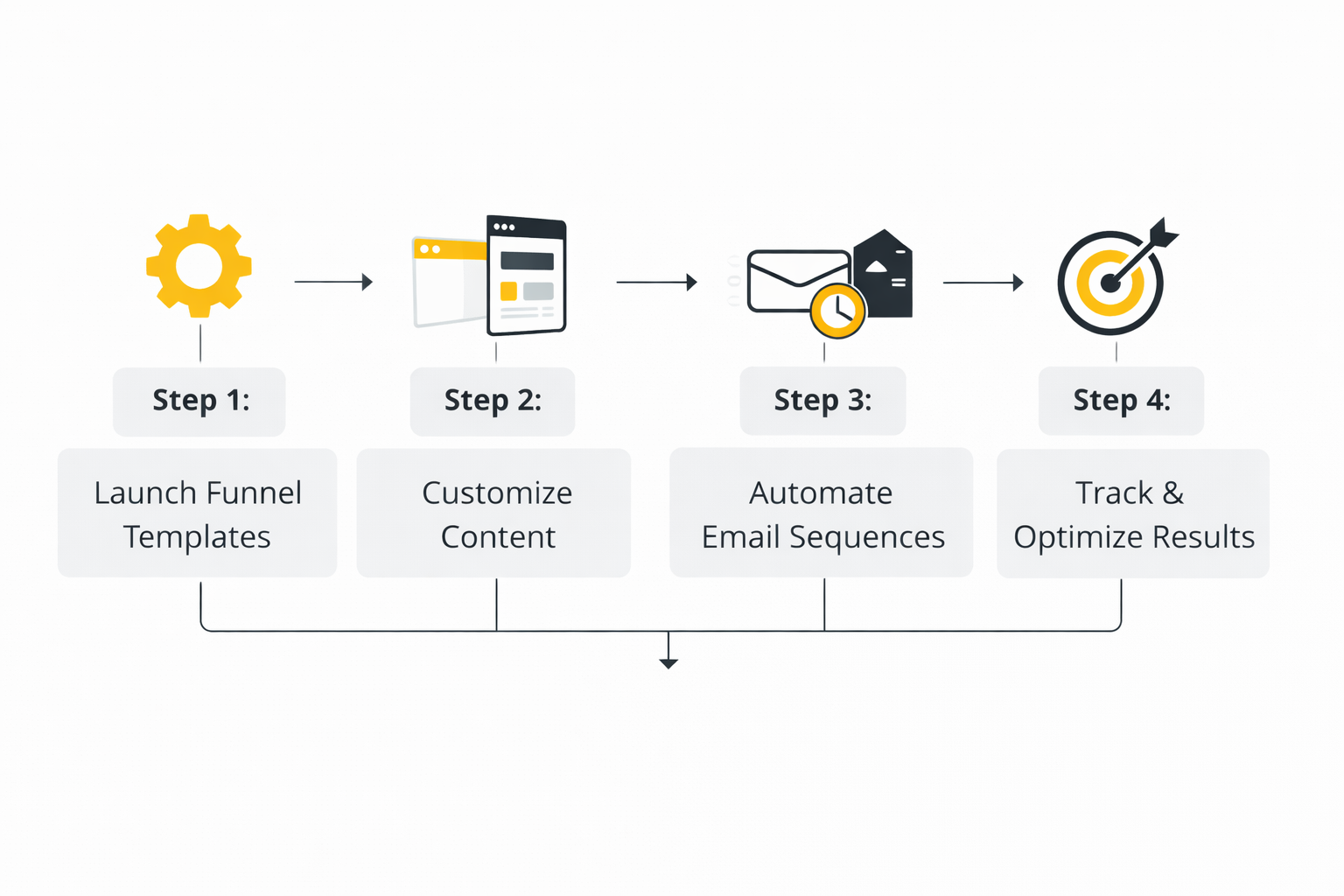
Step 5: Layer In Automation And Scaling
Once your first funnel is working, then you start expanding. Add email sequences, segmentation, follow-ups, and additional funnels. This is where higher plans like Scale and Optimize start to make more sense, because you are actually using the increased capacity.
At this stage, you are no longer guessing. You are scaling something that already converts, which is the only time upgrading your plan is a rational move.
Step 6: Reevaluate Every 60 To 90 Days
Your business will change faster than your assumptions. What felt like the right plan three months ago may already be limiting you or costing too much. Set a recurring check to review:
- Contact growth
- Email usage
- Funnel performance
- Tool overlap
If the numbers justify it, upgrade. If not, stay lean. The goal is not to be on the highest plan. The goal is to be on the right plan for your current stage.
And if you are still deciding whether to commit, testing the platform through the 3 months for $99 offer is one of the lowest-risk ways to see how ClickFunnels actually fits your workflow before scaling up.
ClickFunnels Pricing Benchmarks, Data, And What Actually Matters
At this point, you understand what ClickFunnels pricing 2026 looks like and how to implement it. Now comes the part most people ignore: measurement. Because the truth is simple — the platform is only expensive if it does not produce measurable return.
The mistake is focusing on subscription cost instead of performance metrics. A $97 plan that does not convert is expensive. A $297 plan that consistently generates profitable funnels is cheap. The only way to know the difference is to track the right numbers and understand what they actually mean.
The Core Metrics That Define Whether Your Plan Is Worth It
You do not need dozens of dashboards. You need a handful of metrics that directly connect to revenue:
- Conversion rate (visitor to lead or buyer)
- Cost per lead (if running paid traffic)
- Average order value
- Email engagement (open and click-through rates)
- Revenue per subscriber
These numbers tell you whether your current plan is enough or holding you back. For example, if your conversion rate is strong but your email volume is capped, your bottleneck is not your funnel — it is your plan limits. That is when upgrading makes sense.
Industry-wide benchmarks give you a rough baseline. Landing pages across industries often convert in the 2% to 5% range, with optimized funnels performing higher depending on offer quality and traffic intent, as shown in multiple aggregated conversion studies like this landing page benchmark breakdown. Email marketing data also consistently shows that engagement varies widely by niche, but strong campaigns regularly outperform average baselines when segmentation and targeting are done correctly, which is why platforms like Brevo and Moosend emphasize automation and personalization.
The key is not the exact percentage. It is whether your funnel is improving over time. If your numbers are flat, the problem is not pricing. It is execution.
How To Build A Simple Analytics System Inside ClickFunnels
Most users overcomplicate this. You do not need a full data warehouse to evaluate ClickFunnels pricing. You need a clear loop:
- Track traffic entering each funnel
- Measure conversion at each step
- Monitor email performance tied to that funnel
- Calculate revenue generated per funnel
- Compare revenue against your monthly software cost
That is it. If your funnels consistently produce more than your plan costs, the system is working.
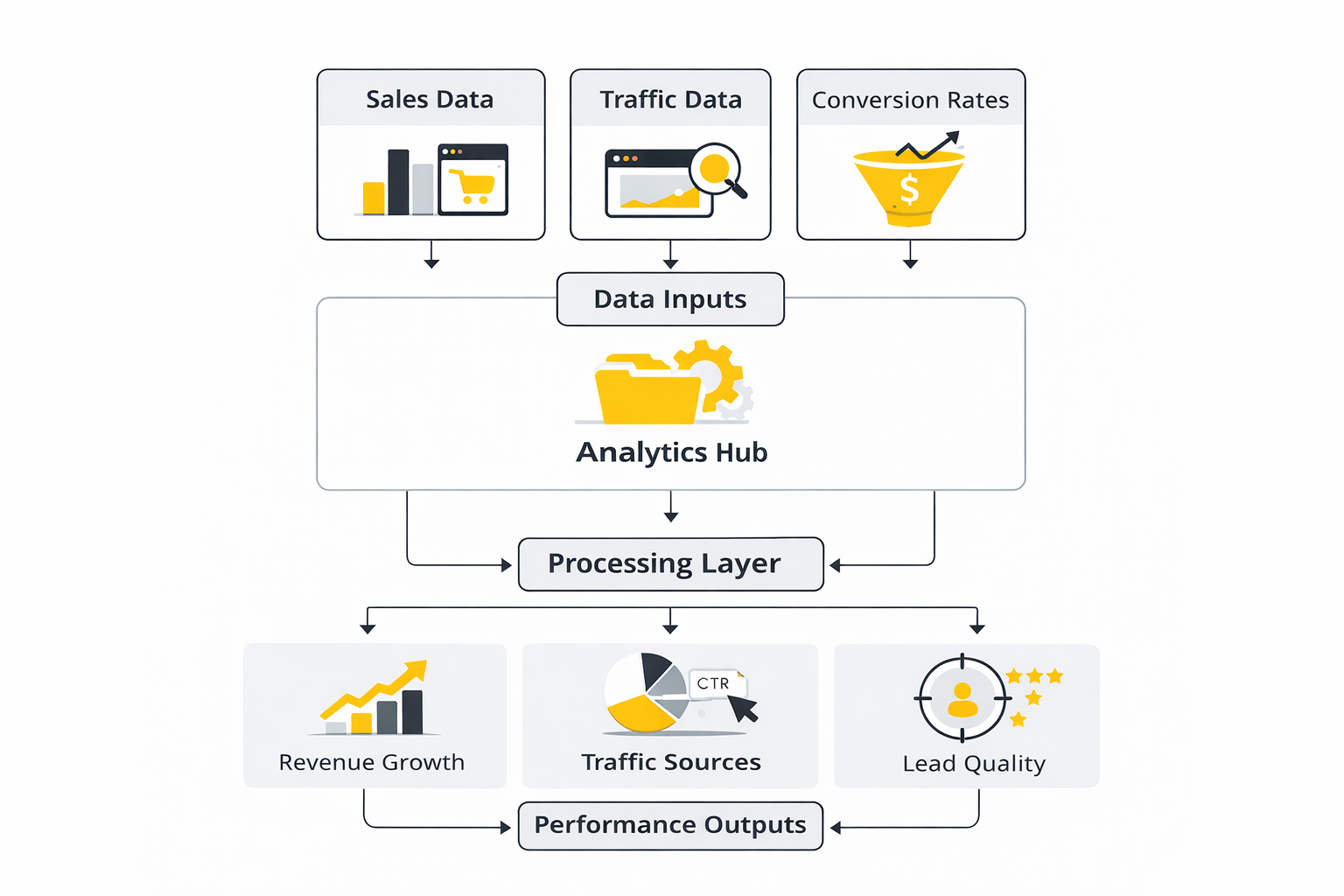
ClickFunnels itself provides built-in funnel stats, but serious users often layer in external analytics for better clarity. That can include tracking tools, CRM integrations, or email platforms like Brevo if deeper segmentation is needed. The point is not the tool. The point is visibility.
What The Data Should Tell You About Your Plan
This is where data becomes actionable instead of theoretical. Your numbers should drive decisions like:
- Stay on your current plan if your usage is well within limits and your funnels are profitable
- Upgrade your plan if your growth is hitting contact or email ceilings and limiting revenue
- Downgrade or switch tools if your funnels are not producing enough to justify the cost
For example, if you are on Scale and only using a fraction of your email allowance, you are paying for capacity you are not using. On the other hand, if you are on Launch and constantly hitting limits, you are artificially slowing down your growth.
The smartest move is always based on data, not assumptions.
The One Metric Most People Ignore
There is one metric that quietly determines whether ClickFunnels pricing 2026 makes sense for you: revenue per contact.
If you have 10,000 contacts and generate $10,000 per month, that is $1 per contact. If you increase that to $2 per contact through better funnels and email sequences, you just doubled your revenue without increasing traffic. That is where platforms like ClickFunnels can justify their cost, because they enable that optimization layer.
This is also why switching to cheaper tools does not automatically save money. If your revenue per contact drops because your funnel experience gets worse, you lose far more than you save on subscription fees.
What High-Performing Users Do Differently
The pattern is consistent. Businesses that get strong ROI from ClickFunnels do three things:
- They focus on one working funnel first, then scale
- They track performance weekly, not occasionally
- They upgrade plans only when data proves the need
They do not chase features. They chase results.
And that is the real takeaway from all the data. ClickFunnels pricing is not about whether the platform is cheap or expensive. It is about whether you are using it in a way that turns traffic into predictable revenue.
Which ClickFunnels Plan Is Actually Worth It In 2026
Here is the blunt answer: the best ClickFunnels pricing 2026 option is not the cheapest plan and it is not the most feature-rich one. It is the plan that matches your current business model without forcing you to pay for unused capacity or trapping you in limits that choke growth. That sounds obvious, but it is where most bad software decisions start.
For most solo operators, creators, coaches, and smaller online businesses, Launch is the default starting point. The current plan already includes 10,000 contacts, 50,000 emails per month, one workspace, two team members, three courses, five domains, and unlimited funnels for the present offer period. That is enough room to build a serious funnel business if you are still validating offers, tightening positioning, and learning what actually converts.
For businesses with real traction, Scale is usually the smartest long-term value tier. The jump to 75,000 contacts, 300,000 emails, five workspaces, five team members, priority support, custom code, webhooks, full API access, and apps like Countdown Funnels changes the conversation from “Can I launch?” to “Can I operate efficiently?” That is a meaningful difference, especially when you have multiple offers, multiple campaigns, or a team that needs more than a single sub-account.
For mature operators, Optimize is where ClickFunnels starts acting like revenue infrastructure. You are paying more, but you also gain 150,000 contacts, 750,000 monthly emails, 10 workspaces, 10 team members, more AI capacity, and the built-in Affiliate Center. If affiliate-driven growth, multiple brands, or high-volume campaigns are already part of your business, that extra cost can be rational very quickly.
Dominate is only worth it when complexity is already real. The official plan is $5,997 annually, and it is clearly built for businesses that need large contact capacity, many workspaces, premium onboarding, VIP support, and enterprise-style operational control. This is not a confidence purchase. It is an infrastructure purchase.
The Strategic Tradeoffs Most Buyers Miss
The first tradeoff is all-in-one convenience versus best-of-breed flexibility. ClickFunnels can replace a lot, but not always perfectly. If you are happy running funnels, email, simple courses, and a central marketing system in one place, that simplicity is valuable. If your business needs deep CRM workflows, specialized email logic, or a broader martech stack, then a modular setup may still serve you better.
The second tradeoff is speed versus precision. ClickFunnels helps businesses move fast because fewer moving parts means less setup friction. That is a real advantage when speed matters more than perfect customization. But when a company grows, specialized tools often give better control in areas like advanced email infrastructure, sales pipeline management, or analytics depth.
The third tradeoff is platform dependence. The more of your operations you run inside one system, the more efficient the day-to-day experience can feel. But you also increase switching costs. That is not automatically bad, but it is something serious operators should think about before building their entire sales process around one vendor.
The Biggest Risks To Watch Before You Commit
The biggest risk is not overpaying by $100 or $200 a month. The biggest risk is building a stack that does not match your business. If you buy ClickFunnels because it looks powerful but you only use a fraction of the features, the subscription becomes dead weight. If you avoid it because the price feels high but your current tool stack is fragmented and slowing execution, you can end up paying more in hidden inefficiency.
Another real risk is upgrading too early. A lot of buyers see higher tiers and assume more features will solve weak performance. They usually do not. If your offer is weak, your traffic is low-quality, or your messaging is off, moving from Launch to Scale will not rescue the business. It will just make your software bill bigger.
There is also the risk of underbuying. Staying on the smallest plan too long can quietly hurt growth if you keep hitting contact or email ceilings during active campaigns. That is especially true when you are running live launches, webinars, or aggressive follow-up sequences and the plan itself starts becoming the bottleneck.
When An Alternative Makes More Sense
Not every business should buy ClickFunnels, and saying that clearly matters. If you are early, budget-sensitive, or you mainly need a lighter tool for pages, simple email, and basic automation, Systeme.io is often the cleaner low-cost option. If email is the center of your business and you care more about sending flexibility than funnel depth, Brevo or Moosend may fit better.
If your content engine is the bigger growth lever, social scheduling tools can matter more than another funnel feature. In that case, something like Buffer or Flick may solve a more urgent problem. And if you want prebuilt funnel assets rather than building from scratch, PLR Funnels or I’m All In can be relevant depending on how you work.
That is the real strategic filter. Do not ask whether ClickFunnels is good in the abstract. Ask whether it is the right operating system for the next stage of your business.
The Practical Expert Take
If you want the shortest expert version, it looks like this. Launch is the right entry plan for most people. Scale is the real sweet spot for businesses that are already working. Optimize is for operators who know exactly why they need the extra capacity. Dominate is for companies with enough complexity to justify enterprise-style spend.
That means the smartest move is rarely to buy the highest plan you can afford. It is to buy the lowest plan that fully supports your current growth path, then move up only when the numbers force the decision. If you want the lowest-friction way to test that fit, the official ClickFunnels free trial and the promotional 3 months for $99 offer are the most practical entry points.
And that is really the whole game. ClickFunnels pricing in 2026 is only expensive when the platform does not fit your model, your stage, or your execution. When it does, the subscription is not the cost that matters most. The missed revenue from picking the wrong system is.
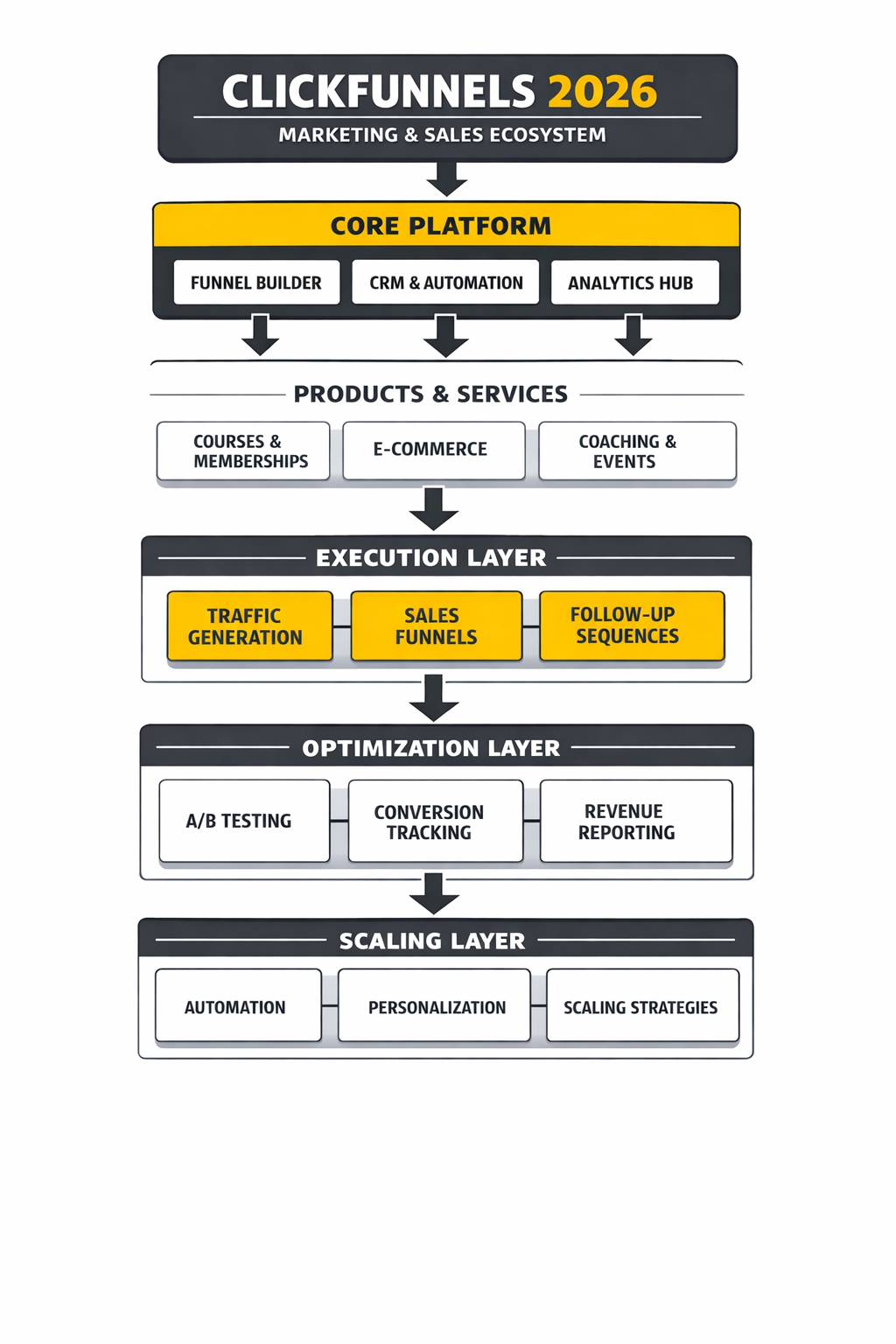
FAQ - Built for Complete Guide
Is ClickFunnels worth the price in 2026?
ClickFunnels pricing 2026 is worth it if funnels are a core revenue driver in your business. If you are actively generating leads, selling offers, and using email follow-up, the platform can replace multiple tools and justify the cost. If you are not using funnels seriously, it will feel expensive very quickly.
What is the cheapest way to use ClickFunnels right now?
The lowest-risk entry is through the ClickFunnels free trial or the promotional 3 months for $99 deal. That gives you enough time to build a real funnel and test performance before committing to a full monthly or annual plan.
Which ClickFunnels plan is best for beginners?
Launch is the best starting point for most beginners. It gives you enough contacts, email volume, and features to build a working funnel system without overpaying for capacity you do not need yet. The key is to focus on execution, not upgrades.
When should I upgrade from Launch to Scale?
You should upgrade when your data forces the decision. That usually happens when you are hitting contact limits, email limits, or workspace restrictions while your funnels are already working. If you upgrade before that, you are guessing instead of scaling.
Does ClickFunnels replace email marketing tools completely?
It can, but not always perfectly. ClickFunnels includes built-in email capabilities, but some businesses still prefer dedicated platforms like Brevo or Moosend for advanced segmentation or deliverability control. It depends on how complex your email strategy is.
Are there hidden costs in ClickFunnels pricing?
The main variable cost comes from usage, especially email volume and certain platform features beyond included limits. There are also indirect costs if you continue using external tools alongside ClickFunnels. That is why total stack cost matters more than subscription price alone.
Can I run multiple businesses on one ClickFunnels account?
Yes, but it depends on your plan. Higher tiers like Scale and Optimize include multiple workspaces, which are designed specifically for managing different brands, offers, or clients. Lower plans are more limited in that structure.
Is ClickFunnels better than Systeme.io?
ClickFunnels is more advanced and flexible, especially for scaling businesses. However, Systeme.io is significantly cheaper and easier to start with. The right choice depends on whether you need power or simplicity at your current stage.
How long does it take to see results with ClickFunnels?
You can technically launch a funnel in a day, but meaningful results depend on traffic, offer quality, and follow-up systems. Most users start seeing real performance insights within the first few weeks once traffic and email sequences are active.
Do I need technical skills to use ClickFunnels?
No advanced coding is required. The platform is built for marketers, not developers. However, there is still a learning curve, especially when it comes to structuring funnels, writing copy, and setting up automations properly.
What is the biggest mistake people make with ClickFunnels?
The biggest mistake is focusing on features instead of results. People build complex funnels without validating their offer, then assume the platform is the problem. In reality, success comes from a simple funnel that converts, not from using every feature available.
Can ClickFunnels scale with a growing business?
Yes, that is exactly what the higher-tier plans are designed for. With increased contact limits, email capacity, workspaces, and API access, ClickFunnels can support businesses from early-stage to high-volume operations, as long as the underlying strategy is sound.
Work With Professionals
Explore 10K+ Remote Marketing Contracts on MarkeWork.com
Most marketers spend too much time chasing clients, competing on crowded platforms, and losing a percentage of every project to middlemen.
MarkeWork gives you a better way. Browse thousands of remote marketing contracts and connect directly with companies desperate to hire skilled marketers like you, without platform commissions and without unnecessary gatekeepers.
If you're serious about finding better opportunities and keeping 100% of what you earn, explore available contracts and create a profile for free at MarkeWork.com.