

Most people hear cold email marketing services and picture outsourced volume: scraped lists, generic copy, and a dashboard full of sends that never turn into real opportunities. That picture is outdated. In modern B2B, buyers do a huge amount of research before they ever speak with a seller, and bad outreach does not just underperform; it actively trains the market to ignore you. 69% of the purchase process happens before buyers engage sellers, 81% choose a preferred vendor before speaking with sales, and 73% of B2B buyers actively avoid suppliers who send irrelevant outreach. 6sense+1
That does not mean outbound is dead. It means the bar is higher. HubSpot’s 2024 State of Sales report still found email, calling, and social among the most effective prospecting channels, while McKinsey’s 2024 B2B Pulse research shows buyers now use an average of ten touchpoints across the journey. The job of a good service is not to blast more messages. It is to make email work inside a credible, targeted, well-run outbound system. 8348499.fs1.hubspotusercontent-na1.net+1
- Why Cold Email Marketing Services Still Matter
- The Modern Cold Email Framework
- The Core Components Behind Consistent Results
- How Professional Teams Build and Run Campaigns
- How to Choose the Right Cold Email Marketing Service
- What to Measure, What to Avoid, and Final FAQs
Why Cold Email Marketing Services Still Matter
The biggest reason is simple: the work is harder than it looks. Deliverability is now an operational discipline, not a side task. Google’s sender guidelines require authentication and stricter sending standards, and domains sending more than 5,000 emails a day to Gmail accounts now need SPF, DKIM, DMARC, aligned sending domains, TLS, and spam rates below 0.30%. Microsoft announced similar high-volume sender requirements for Outlook, which tells you exactly where the market is going. Google Podpora+2
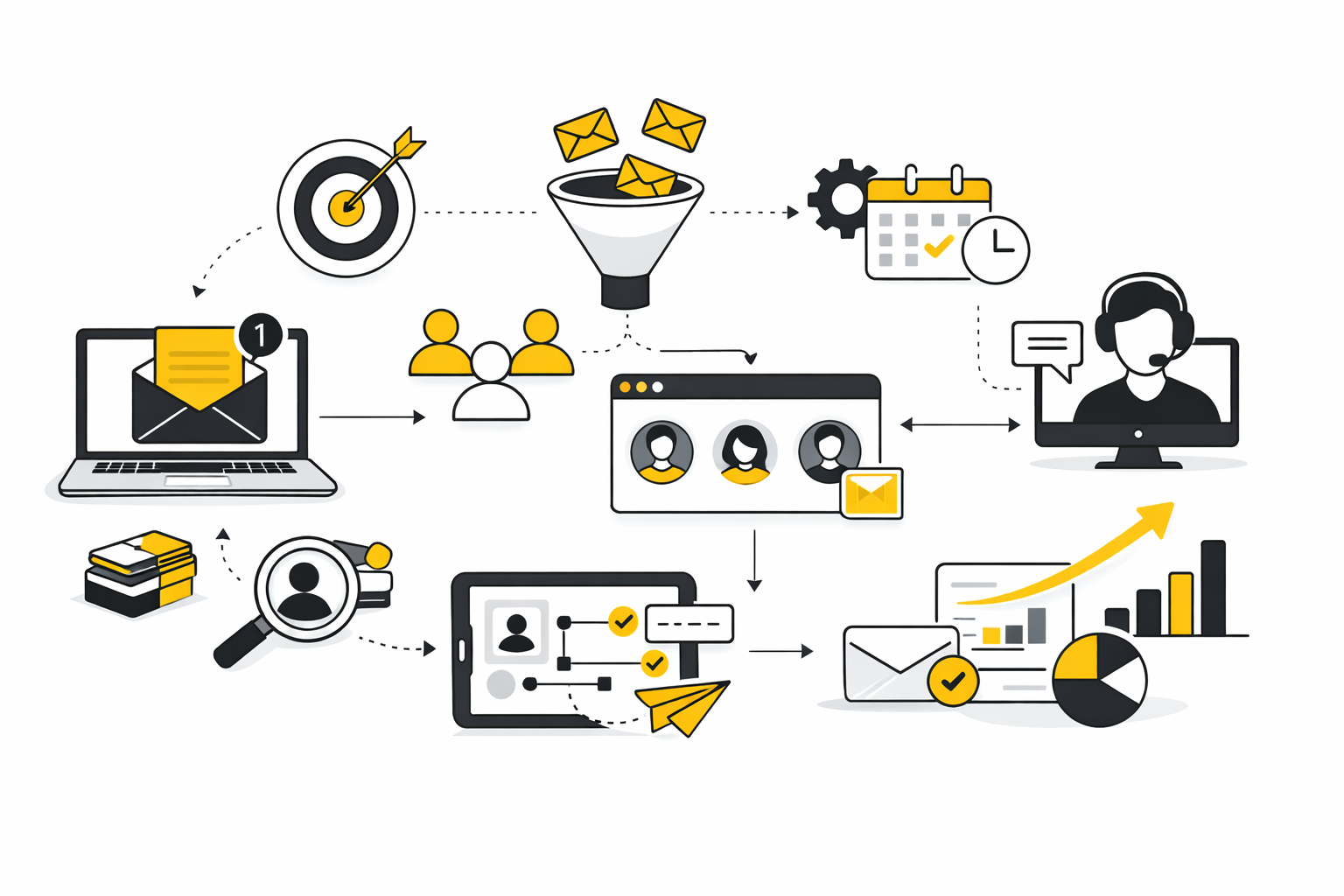
There is also a legal and brand-risk layer that too many in-house teams underestimate. In the U.S., the FTC’s CAN-SPAM guidance requires accurate header information, non-deceptive subject lines, a physical address, and a clear way to opt out. In the UK, ICO guidance on electronic mail marketing makes an important distinction between individuals and companies, which is exactly the kind of detail that separates disciplined outbound from careless outbound. Federal Trade Commission+1
A serious provider matters because buyers increasingly evaluate support and execution earlier than many sellers expect. In G2’s 2024 Buyer Behavior Report, 38% of buyers said they start considering service providers during research and 24% do so even earlier during discovery. That is a useful signal for outbound too: companies are not just buying promises anymore; they are buying competence, process, and confidence that someone can execute without creating chaos. research.g2.com+1
The Modern Cold Email Framework
A modern cold email service is really a four-part operating system. First, it protects inbox placement. Second, it narrows the market to people who could plausibly care. Third, it turns research into messaging that sounds informed instead of automated. Fourth, it connects replies to real sales follow-through so interest does not die in a spreadsheet. Google Podpora+2
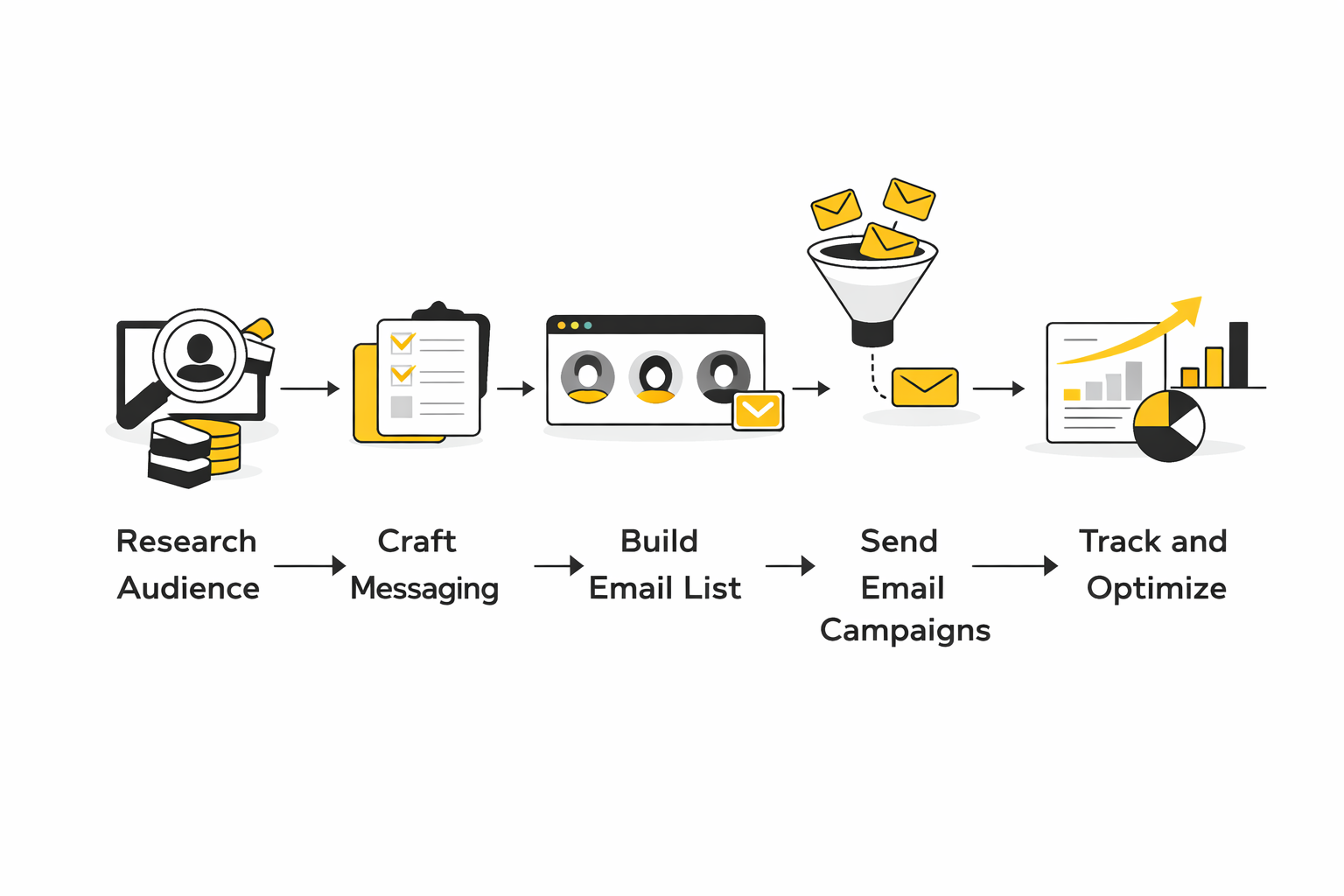
- Infrastructure and deliverability come first. A service that cannot configure domains, authentication, tracking, and monitoring is not running outbound; it is gambling with your domain reputation. The technical baseline now includes SPF, DKIM, and DMARC, plus active visibility into deliverability through tools like Google Postmaster Tools. IETF Datatracker+2
- Targeting has to be tighter than most teams think. The easiest way to ruin cold email is to treat it like paid reach and assume more volume fixes weak relevance. It does not. When 73% of buyers say they avoid irrelevant outreach, list quality, segmentation, and account selection stop being admin work and become strategy. gartner.com
- Messaging has to match the rest of the buying experience. If your email says one thing, your site says another, and your rep says a third, trust breaks fast. Gartner found 69% of B2B buyers report inconsistencies between what a company says on its website and what sellers tell them, while Edelman and LinkedIn’s 2024 research shows strong expertise-led content makes buyers more willing to seek a company out. Good cold email does not sound like a trick. It sounds like the first useful interaction with a company that knows what it is talking about. gartner.com+1
- Execution has to be connected to sales operations. The service cannot stop at getting replies. HubSpot’s sales research shows teams are prioritizing meetings and qualified meetings over raw activity, which is exactly right because activity without progression is just motion. On the ops side, some teams centralize follow-up in GoHighLevel, manage relationships in Copper, route booking through Cal.com, qualify inbound handoffs with Fillout, and add deliverability support with ScaledMail or this outbound stack option. The point is not the software itself. The point is that professionals build a system around the campaign instead of treating the campaign as the whole business. 8348499.fs1.hubspotusercontent-na1.net+1
When you look at cold email this way, the service is not just “someone to write emails.” It is part deliverability team, part market researcher, part copy strategist, and part sales-ops function. That is the foundation the rest of this article will build on.
The Core Components Behind Consistent Results
If the framework explains what modern outbound has to do, the next question is what actually makes it work. This is where most cold email marketing services split into two groups: vendors that send messages and teams that build pipeline. The second group wins because it gets a few core components right before scale ever enters the picture.
Infrastructure Before Volume
The first component is boring to talk about and absolutely critical in practice: sending infrastructure. Gmail’s sender guidelines now expect proper authentication from all senders, while bulk senders must meet stricter requirements around SPF, DKIM, DMARC alignment, TLS, unsubscribe handling, and complaint control. Outlook’s high-volume sender requirements push in the same direction, which means infrastructure is no longer optional technical hygiene.
That changes what a competent service needs to include. It is not enough to buy domains and start sending. The team has to configure authentication correctly, separate sending reputation from the main brand where appropriate, monitor domain health, and keep complaint rates under control, especially when Google uses Postmaster Tools data and flags bulk senders above a 0.3% spam rate.
This is also why low-cost providers often look good for a month and bad for the next six. They optimize for activity before they earn deliverability stability. A strong service treats inbox placement as the foundation that every other result depends on.
Targeting That Respects How Buyers Actually Buy
The second component is targeting, and this is where most campaigns quietly fail. Modern B2B buyers do not want random interruption; they want relevance that matches where they are in the buying process. That matters because 81% of buyers choose a preferred vendor before speaking with sales and 85% establish requirements before contacting sellers.
That reality makes lazy list building expensive. If someone is already deep into research, your outreach has to feel like a timely, credible nudge, not a cold interruption from a company that clearly does not understand them. The cost of getting this wrong is high, especially when 73% of B2B buyers actively avoid suppliers that send irrelevant outreach.
Good cold email marketing services therefore spend more time on market selection than most clients expect. They define the right segments, firmographic filters, job functions, buying triggers, exclusions, and account priorities before copywriting starts. That work feels slower at the front end, but it is exactly what prevents a campaign from becoming a high-volume relevance problem.
Messaging That Can Survive Scrutiny
Once targeting is right, messaging becomes the next leverage point. A service does not need to write clever emails. It needs to write emails that still make sense after the prospect checks your website, looks up your company, and forwards your message to a colleague. That standard matters because Gartner found 69% of B2B buyers see inconsistencies between what sellers say and what company websites say.
This is why the best teams do not treat personalization as random first-line trivia. They connect the email to a real business problem, a believable point of view, and a proof structure the buyer can verify quickly. The best-performing message usually is not the most “personalized” one. It is the one with the clearest fit between audience, problem, offer, and credibility.
There is a wider trust angle here too. The strongest B2B thought leadership works because it uses research, helps buyers understand their challenges, and offers concrete guidance, which is exactly what Edelman and LinkedIn found in their 2024 thought leadership study. Good outbound copy borrows that same logic. It should sound like the first useful conversation with an informed company, not like a growth hack dressed up as empathy.
Measurement That Tells the Truth
The fourth component is measurement, and this one matters more than ever because bad metrics create bad decisions. A lot of weak providers still obsess over opens, but Apple’s Mail Privacy Protection downloads remote content in the background by default, which makes open-rate data much less reliable than it used to be. If a service is selling you vanity metrics as proof of performance, that is a warning sign.
Professional teams care more about signals that survive scrutiny. They track positive replies, qualified conversations, booked meetings, show rates, opportunity creation, unsubscribe patterns, bounce trends, and complaint rates. They also use Google Postmaster Tools to watch sender reputation and spam diagnostics instead of pretending the only thing that matters is how many emails went out.
This is one of the clearest differences between real execution and outsourced activity. Activity-based reporting makes a campaign look busy. Outcome-based reporting tells you whether the campaign deserves to keep running.
How Professional Teams Build and Run Campaigns
A professional service does not begin with a sequence. It begins with a system. The real work behind effective cold email marketing services is operational: deciding who to target, setting up the technical environment, controlling risk, launching in stages, and connecting replies to a sales process that can actually convert demand.
They Start With the Offer, Not the Tool
Strong teams begin by pressure-testing the offer. They look at the client’s market, deal size, sales cycle, proof points, target roles, and why someone should care now rather than later. That step sounds obvious, but it is the difference between outreach that creates curiosity and outreach that just asks strangers for time.
This is also where channel fit gets decided. HubSpot’s 2024 State of Sales report still shows email, calling, and social among the top prospecting channels, while McKinsey’s 2024 B2B research shows buyers split time across in-person, remote, and digital self-service interactions. In plain English, email works best when it opens the door to a broader buying journey instead of trying to carry the entire sale by itself.
That is why experienced providers build around one sharp promise rather than a vague company description. They identify the most believable wedge into the market, then make every part of the campaign support that wedge.
They Build the Technical and Compliance Layer Early
After strategy comes setup, and the sequence still is not the first priority. The team has to configure domains, mailboxes, authentication, forwarding rules, reply routing, suppression lists, and tracking conventions before sending begins. That work is not glamorous, but it is what keeps the campaign stable once volume increases.
Compliance belongs here too, not at the end. In the U.S., the FTC’s CAN-SPAM guide makes clear that commercial email needs accurate routing information, non-deceptive subject lines, a valid physical postal address, and a working opt-out mechanism. In the UK, ICO guidance on electronic mail marketing draws important distinctions around who can be contacted and under what conditions.
That means a serious service does not treat opt-outs or suppression handling as admin cleanup. It builds them into the campaign from day one. The best operators know that legal discipline, brand protection, and deliverability are all tied together.
They Launch Narrow, Then Earn the Right to Expand
Good teams do not start by flooding the market. They launch with controlled segments, tight messaging angles, and a measured ramp so they can see how the market responds before scaling. This is especially important now that sender standards are tighter and mailbox providers are less forgiving of noisy behavior.
In practice, that means watching response quality as closely as response volume. A campaign that produces a lot of replies but mostly confusion, complaints, or low-fit conversations is not ready to scale. A campaign that produces fewer replies but cleaner signals usually has a much stronger base to build on.
This is also where professional testing looks different from amateur testing. Weak providers A/B test random lines. Strong providers test audience slices, offer framing, proof structures, and call-to-action friction because those are the variables that actually change business outcomes.
They Connect Replies to Real Sales Operations
A reply is not the finish line. It is the start of a new operational problem: qualifying interest quickly, routing it to the right person, getting a meeting booked, and making sure follow-up does not disappear into a shared inbox. This is where many campaigns lose the value they worked so hard to create.
Professional cold email marketing services solve that with process and tooling. Some teams centralize pipeline movement and follow-up in GoHighLevel, manage relationship data in Copper, use Cal.com to remove booking friction, and collect qualification details through Fillout. For infrastructure-heavy outbound programs, teams may also use ScaledMail to support sending operations and mailbox management.
What matters is not the exact stack. What matters is that the service owns the handoff from interest to pipeline. Once that handoff is clean, cold email stops being a disconnected lead-gen tactic and starts functioning like a repeatable growth channel.
The Step-by-Step Execution Process
This is the point where strategy stops being theoretical. Buyers now move across an average of ten interaction channels during the B2B journey, while sales teams still rank email, calling, and social as the most effective prospecting mix, which means the best cold email marketing services are really building an outbound system instead of a single channel campaign. The same sales research also shows teams care more about meetings booked and qualified meetings than raw activity, so implementation has to be built around progression, not just send volume. McKinsey & Company+1
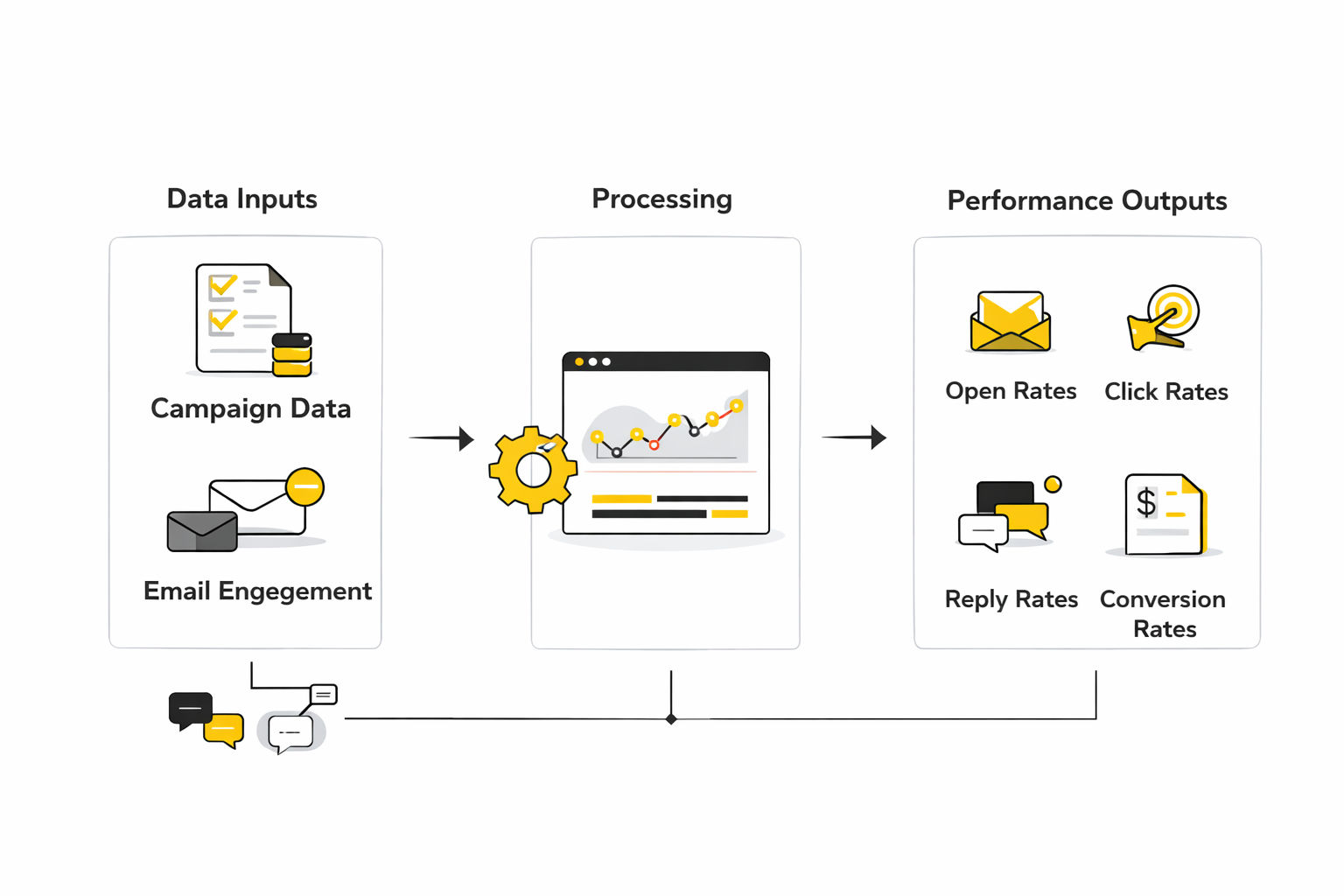
Step 1: Lock the market definition before touching copy
Professional teams start by narrowing the market harder than most clients expect. They define who belongs in the campaign, who should be excluded, what buying signals matter, and which segments deserve different angles before a single email gets drafted. That discipline matters because buyers are already deep into their decision process before they talk to sellers: 81% choose a preferred vendor before speaking with sales, and 85% establish their requirements first. 6sense
This is why good implementation begins with segment architecture, not creative brainstorming. A provider that cannot explain its segmentation logic is usually compensating with volume, and that is exactly how relevance drops and complaint risk rises. In practice, the real work is deciding which accounts, roles, geographies, industries, and trigger conditions are worth contacting now and which ones should wait. 6sense+1
Step 2: Build the sending environment like infrastructure, not like a quick setup task
The next step is technical, and it has to be right. Google’s sender rules call for proper authentication and tell senders to keep spam rates in Postmaster Tools below 0.10% while avoiding 0.30% or higher, and Microsoft’s Outlook requirements now push high-volume senders toward the same standards with SPF, DKIM, and DMARC. A serious service builds around those rules from the beginning instead of treating deliverability like cleanup after launch. Google Podpora+2
That usually means setting up the right domains or subdomains, separating sending infrastructure from critical brand email where appropriate, verifying authentication, and actively monitoring sender health in Google Postmaster Tools. Teams that want a more managed sending layer sometimes also use tools such as ScaledMail, but the principle is the same either way: infrastructure comes first, because once mailbox providers stop trusting you, everything downstream gets more expensive. This is the part many cheap cold email marketing services skip, and it is one of the biggest reasons campaigns look fine in week one and weak in month two. gmail.com+2
Step 3: Build data and research around fit, not around sheer volume
Once the sending environment is stable, the next job is building a prospect base that is actually usable. HubSpot’s 2024 sales research shows 57% of respondents say they spend at least $6,000 to $7,000 annually per rep on tech stack, contact data is one of the most common areas of investment, and for smaller companies building prospect lists is the top cost connected to the sales process. That tells you something important: good data is not a side input anymore; it is part of the core operating cost of outbound. 8348499.fs1.hubspotusercontent-na1.net
The right approach is to collect only enough information to improve relevance and timing. That means confirming company fit, role fit, current priorities, and any useful trigger or context that changes the angle, rather than stuffing the list with low-value enrichment fields nobody will use. On the execution side, teams often keep workflow and follow-up in GoHighLevel, relationship context in Copper, qualification details in Fillout, and scheduling in Cal.com so research does not fall apart the moment replies start coming in. 8348499.fs1.hubspotusercontent-na1.net
Step 4: Turn research into a message ladder, not a single email
This is where the process becomes visible to the prospect. Strong providers do not write one email and hope for the best. They build a message ladder: one clear offer, two or three credible angles, a low-friction call to action, and follow-ups that add new context instead of repeating the opener with different wording. 8348499.fs1.hubspotusercontent-na1.net
That structure lines up with what sales teams are seeing in the field. HubSpot’s report shows it now takes between three and nine touchpoints to book a meeting, down from seven to fifteen the year before, which means the sequence needs to be deliberate rather than bloated. The first message should earn attention, the next ones should deepen credibility, and the CTA should match the actual buying friction of the offer instead of forcing every prospect straight into a meeting request. 8348499.fs1.hubspotusercontent-na1.net
A lot of weak campaigns fail here because they confuse personalization with relevance. Mentioning a recent post or podcast appearance is not a strategy by itself. The message has to connect a real business problem, a believable reason for outreach now, and a proof path the prospect can verify quickly if they check your site, your profile, or your offer. 6sense
Step 5: Launch slowly and optimize on reply quality, not vanity metrics
Good implementation does not begin with a giant send. It starts with controlled batches, because early signals tell you whether the campaign is truly relevant or just temporarily getting through. Google explicitly ties deliverability to complaint rates and gives senders a way to monitor spam reports and delivery errors in Postmaster Tools, so the first goal is stability, not speed. gmail.com+1
This is also where smart teams stop worshipping open rates. Apple’s Mail Privacy Protection downloads remote content in the background by default and prevents senders from reliably knowing whether and when many users opened an email, which makes opens a much weaker optimization signal than they used to be. Serious operators therefore watch positive replies, qualified replies, bounces, unsubscribes, spam signals, and booked conversations much more closely than open dashboards. Apple+1
If the market response is weak, the answer is rarely “send more.” It is usually one of four things: the segment is wrong, the offer is weak, the angle is unclear, or the technical setup is hurting inbox placement. Professional cold email marketing services earn the right to scale only after those variables start working together. Google Podpora+1
Step 6: Route replies into a real sales workflow
A reply is only useful if somebody can act on it fast and consistently. HubSpot’s sales data shows teams are increasingly judged on meetings booked and qualified meetings rather than raw activity, which means reply handling is part of campaign performance, not a separate sales problem. The service has to know how interested replies are tagged, who owns each next step, how calendar links are used, and how no-fit conversations are filtered out without wasting rep time. 8348499.fs1.hubspotusercontent-na1.net
This is where implementation gets very practical. One team might push every positive reply into a centralized workflow, assign ownership, and use Cal.com to reduce scheduling friction. Another might manage the same handoff through GoHighLevel or Copper, while using Fillout to collect the extra qualification data needed before a call. The exact stack can change, but the handoff cannot be improvised. 8348499.fs1.hubspotusercontent-na1.net
Step 7: Review weekly, cut weak segments, and expand only where trust is holding
The final part of implementation is the review loop. Every week, strong teams look at performance by segment, angle, inbox group, call to action, and reply quality instead of just glancing at a top-line dashboard. They are asking where relevance is strongest, where complaints or bounces are creeping up, and which parts of the campaign deserve more volume versus less. gmail.com+2
This is also where a provider proves whether it is strategic or just busy. A strategic team will pause weak segments, rewrite thin offers, tighten exclusions, and protect sender reputation before it chases more activity. That is the operational difference between a service that sends cold email and a service that can turn outbound into a repeatable pipeline engine. Google Podpora+2
Once this process is in place, choosing a provider gets much easier. You can stop evaluating them by promises and start evaluating them by whether they actually own the parts of execution that matter.
The Numbers That Actually Matter
Once a campaign is live, the next risk is not low activity. It is bad interpretation. A lot of cold email marketing services still report dashboards that look impressive on the surface, even when the campaign is not creating trustworthy conversations or pipeline. The smart way to read cold email data is to treat it like a chain: if inbox placement is weak, engagement data gets distorted, and if reply quality is weak, meeting volume will not turn into revenue anyway. Litmus+2
The cleanest measurement setup maps every campaign through the same sequence. First, ask whether the email was accepted and where it landed. Then ask whether the right people replied. Then ask whether those replies became booked meetings, qualified meetings, and real opportunities. Teams that centralize those handoffs in systems like GoHighLevel, Copper, and Fillout usually get a much more honest picture because campaign events and sales outcomes sit in one workflow instead of three disconnected tools. 8348499.fs1.hubspotusercontent-na1.net+1
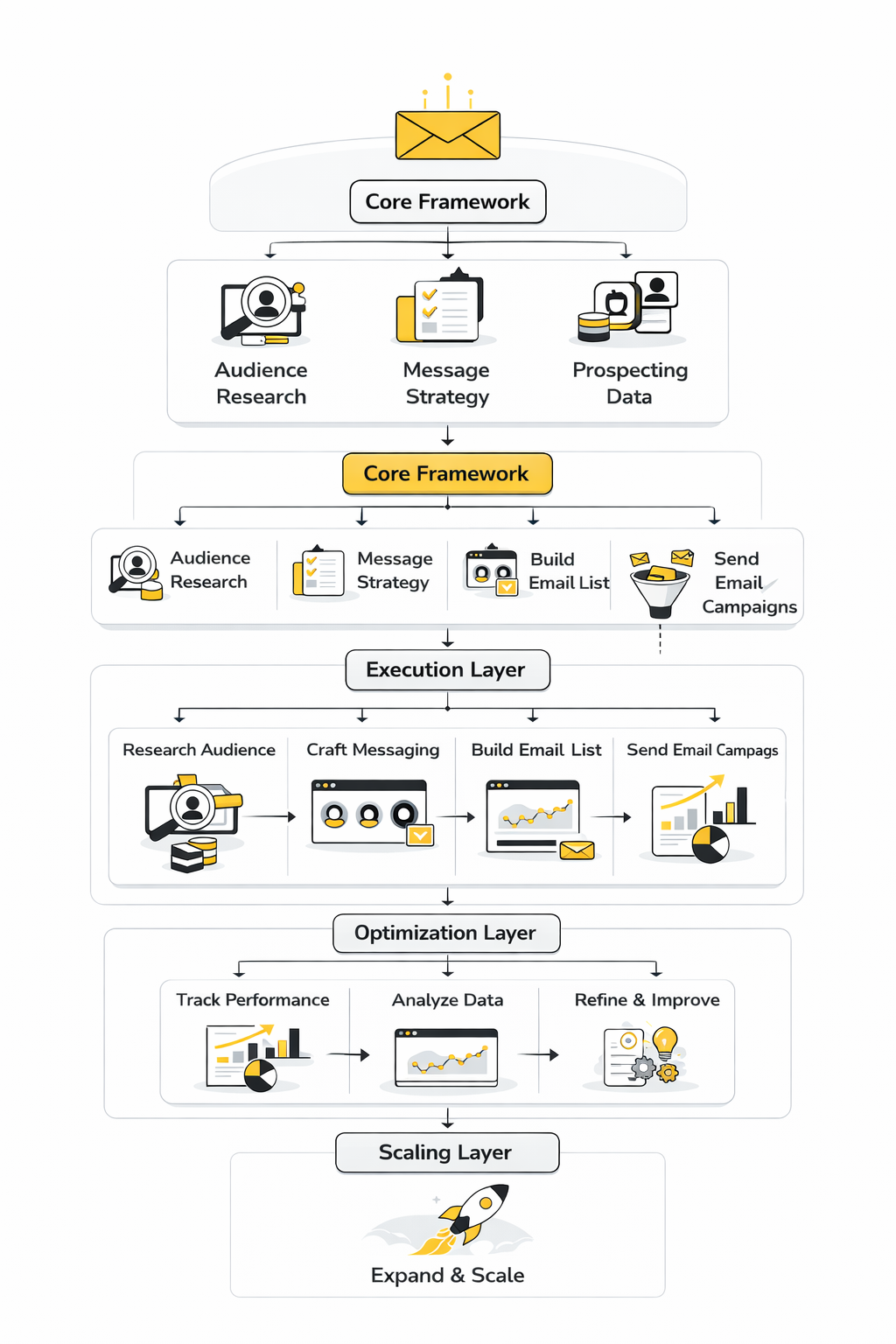
- Delivery rate tells you whether the receiving server accepted the message, not whether the prospect actually saw it in the inbox.
- Inbox placement tells you whether the message reached the inbox instead of landing in spam, promotions, or another filtered location.
- Bounce rate tells you whether your data quality, list hygiene, or technical setup is creating avoidable damage.
- Spam complaint rate tells you whether recipients think your outreach is irrelevant or untrustworthy, and mailbox providers take that signal very seriously.
- Opt-out rate tells you whether the campaign is creating visible resistance even when it is technically compliant.
- Reply rate tells you whether the message earned any response at all, but not whether that response was useful.
- Positive reply rate tells you whether the offer and targeting are actually creating interest.
- Meeting rate tells you whether replies are translating into conversations.
- Qualified meeting rate tells you whether those conversations are happening with the right accounts and the right intent.
- Opportunity rate tells you whether the campaign is helping create revenue, which is the only reason the rest of the dashboard exists. Litmus+2
Start With Deliverability, Not Vanity
This is where measurement has to begin, because a campaign cannot outperform poor inbox placement. Google’s sender guidance tells senders to keep spam rates in Postmaster Tools below 0.10% and avoid reaching 0.30% or higher, while Microsoft’s Outlook requirements now push high-volume senders toward the same basics: SPF, DKIM, DMARC, list hygiene, and transparent sending practices. That means deliverability is not just a technical sidebar anymore; it is the first performance layer. Google Podpora+2
A lot of teams still measure the wrong thing. Mailgun’s 2025 deliverability study found that 53% of senders use delivery rate to measure deliverability, while only 13% use inbox placement testing. That gap matters because delivery rate only tells you the mailbox provider accepted the message, while inbox placement tells you whether the message actually landed somewhere the recipient is likely to see it. mailgun.com+1
The action here is straightforward. If delivery is high but reply quality is weak, do not assume the market rejected your message immediately. First check whether the campaign is truly landing in the inbox, whether complaint rates are rising, and whether one segment or domain group is dragging down the rest of the program. Litmus+1
Stop Letting Open Rates Drive Decisions
Open rate used to act as a rough proxy for subject-line performance and sender trust. That is much less reliable now. Apple says Mail Privacy Protection prevents senders from seeing whether a recipient opened an email, and it downloads remote content in the background by default regardless of whether the user actually engages. Apple
That one change is enough to break a lot of lazy reporting. If a provider still treats opens as the headline number, the reporting model is behind the market. Use opens only as a secondary directional signal, and only when they line up with harder signals like replies, complaints, meetings, and opportunities. Apple+1
This is also why “great open rate, weak results” is such a common pattern in mediocre outbound. The campaign may not be resonating, or the open data may simply be inflated. Either way, open rate should not be the metric that decides whether a campaign is healthy. Apple+1
Use Benchmarks Carefully, Not Blindly
Benchmarks help when they give you context, but they become dangerous when people treat them like guarantees. Outreach’s sequence benchmarks are useful here because they separate baseline performance from stronger cold outbound performance: average sequence email open rate sits at 27.2%, average sequence email reply rate at 2.9%, average bounce rate at 2.8%, and average opt-out rate at 1.1%, while expected cold outbound reply rate is listed at 8% to 15% with meeting rates around 1% to 3%. Even Outreach frames those numbers as baselines that vary by sequence type and buyer familiarity. Outreach
That nuance matters. A 3% reply rate can be perfectly fine in one market and a warning sign in another. If deliverability is clean and targeting is narrow, a low reply rate usually points to weak offer framing, poor timing, or a sequence that sounds generic. If reply rate looks solid but meeting rate stays weak, the problem is usually in the CTA, qualification, or handoff rather than the initial outreach. Outreach+1
Bounce and opt-out benchmarks need the same care. Outreach’s 2.8% bounce baseline and 1.1% opt-out baseline are not numbers to aim for; they are warning lines that tell you how quickly bad data or weak targeting can pollute a sequence. In practical terms, if bounce or opt-out is climbing, the right move is not more sending. It is tighter list hygiene, better exclusions, and sharper segmentation before your sender reputation gets dragged down. Outreach+1
The Reply Only Matters if It Becomes a Qualified Conversation
This is where most analytics get more honest. HubSpot’s 2024 sales research shows organizations now care more about meetings booked and qualified meetings than raw activity goals, with 61% naming meetings booked as the most important KPI and 44% naming qualified meetings. The same report shows it now takes between three and nine touchpoints to book a meeting, which means a campaign should be judged across the full outreach sequence and the sales handoff, not just the first email. 8348499.fs1.hubspotusercontent-na1.net
That should change how you read response data. A campaign with plenty of neutral replies but very few booked meetings is not really performing. A campaign with booked meetings but weak qualification is also not performing, because it is moving work downstream without creating pipeline. The useful question is never “Did people reply?” It is “Did the right people move to the next stage, and did they keep moving after that?” 8348499.fs1.hubspotusercontent-na1.net+1
This is exactly why professional cold email marketing services build analytics around stage progression. The best reporting view is not sent, opened, replied. It is delivered, inboxed, replied, positively replied, booked, qualified, opportunity created. Once you see the campaign that way, weak points stop hiding behind vanity metrics. Litmus+2
What the Data Should Make You Do
The value of analytics is not the dashboard. It is the decision. If spam rate rises toward Google’s red line, fix relevance, list quality, and sending behavior before scaling anything. If replies are low but complaints are also low, revisit the offer, timing, and market segment before blaming the channel. If replies are decent but meetings are weak, reduce CTA friction and tighten routing, often with a cleaner booking flow through Cal.com or a better follow-up workflow in GoHighLevel. Google Podpora+2
There is a broader strategic point here too. Buyers already move across many touchpoints and increasingly avoid irrelevant outreach, so no single cold email metric can be read in isolation. The right numbers tell you where trust is being earned, where it is being lost, and whether the campaign is creating forward motion across the buying journey instead of just generating surface-level activity. McKinsey & Company+1
That is the standard worth using when you evaluate performance. It is also the standard worth using when you evaluate the provider behind the campaign, because once you know which numbers matter, it becomes much easier to spot the difference between a real operator and a service that is just reporting motion.
How to Choose the Right Cold Email Marketing Service
By this point, the pattern should be obvious: choosing among cold email marketing services is not really about finding someone who can send emails. It is about finding a partner that can help your company show up credibly in a buying process where most research happens before sales gets a real chance to influence the deal. That matters even more when buyers increasingly prefer self-directed research, reps still spend a surprisingly small share of their week actually selling, and prospecting personalization still eats up hours of research and follow-up every week. Gartner+3
Pick the Right Operating Model First
The first decision is not agency versus freelancer. It is whether you need a list-and-copy vendor, a deliverability and infrastructure partner, or a team that can run a full outbound motion from targeting through meeting handoff. That distinction matters because many internal sales teams are already overloaded: Salesforce’s latest State of Sales says reps spend only about 30% of their average week selling, while HubSpot found 67% of respondents spend at least 11 hours weekly on research and follow-up. If your internal team already has strong messaging and sales management, you may only need infrastructure support; if not, hiring a provider to send more email without fixing those gaps usually just creates more activity and more noise. Assets+1
A good provider should be able to tell you exactly which problem it solves. If the answer sounds like “we handle everything” but there is no clear ownership of research, targeting, copy, deliverability, and reply management, that is not a full-service function. It is usually a bundle of tasks with blurry accountability, and blurry accountability is how outbound programs stall after the first burst of activity. Assets+1
Make Deliverability Ownership Explicit
This is the part too many buyers leave vague, and it is a mistake. Google’s sender guidelines now require authenticated sending and instruct senders to keep spam rates in Postmaster Tools below 0.3%, while Microsoft’s newer Outlook rules push high-volume senders toward the same SPF, DKIM, and DMARC standards. In plain English, if a provider cannot explain who owns domain setup, authentication, inbox health monitoring, suppression handling, and complaint control, you are not hiring a growth partner; you are renting risk. Google Podpora+2
This is also where you want clean operational answers, not vague reassurance. Ask who controls the sending domains, who has access to Postmaster data, what happens if complaint rates rise, and how the provider prevents one weak segment from damaging the rest of the program. Some teams prefer to centralize this inside an outbound-specific setup such as ScaledMail, but the tool matters less than the ownership model. Google Podpora+1
Demand a Real Targeting Thesis
A provider should be able to explain why it is going after a specific market, role, and trigger set before it ever talks about templates. That is not overkill. 6sense reports that 81% of buyers choose a preferred vendor before speaking with sales and 85% establish requirements before contacting sales, while Gartner says 73% of B2B buyers actively avoid suppliers that send irrelevant outreach. 6sense+1
Those numbers change what “good targeting” means. It is not enough to say a list matches your ICP on paper; the provider should be able to tell you why the segment is likely to care now, what signal or business context makes outreach timely, and what exclusions protect relevance. If a service leads with volume before it can defend that logic, it is telling you exactly how it plans to compensate for weak fit. 6sense+1
Choose a Team That Builds Credibility, Not Just Copy
A lot of providers still sell cold email as if the real job is writing catchy lines. It is not. Gartner found that 69% of B2B buyers report inconsistencies between what a company says on its website and what sellers tell them, and Edelman and LinkedIn’s 2024 research says strong thought leadership works when it uses research, clarifies real business challenges, and offers concrete guidance. Gartner+2
That is the standard your provider should meet. The message does not need to sound clever; it needs to survive scrutiny after the prospect checks your site, offer, and proof. The best partners therefore spend more time aligning the promise, the proof, and the next step than they do chasing novelty in the copy itself. Gartner+1
Inspect the Handoff Into Sales Before You Scale
A campaign is only as good as its follow-through. HubSpot’s 2024 sales research shows organizations prioritize meetings booked and qualified meetings over raw activity, while McKinsey’s 2024 B2B work shows buyers move across an average of ten interaction channels and increasingly expect a seamless omnichannel experience. That means the provider cannot stop at generating replies; it has to fit into the way your company qualifies, books, and advances real conversations. HubSpot+1
This is where tooling becomes practical instead of theoretical. If your team needs a cleaner handoff, a provider should be able to work inside systems such as GoHighLevel, Copper, Fillout, and Cal.com so replies do not die in someone’s inbox or bounce around between SDRs and founders. The right question is not “Can you book meetings?” but “What exactly happens after a prospect says yes?” HubSpot+1
Understand the Tradeoffs of Scaling
Scaling outbound always looks attractive in a spreadsheet. In reality, scale increases the cost of every weak assumption: poor data decays faster, complaint risk rises, legal mistakes get more expensive, and one sloppy segment can hurt the broader sending environment. Google’s rules around spam rates and authentication make that operationally important, while regulators such as the FTC and the UK ICO make it legally important as well. Google Podpora+4
There is also a geographic tradeoff that sophisticated buyers should not ignore. In the U.S., CAN-SPAM still allows commercial email under specific rules around identification, opt-outs, and truthful headers, while the UK ICO makes a clearer distinction between companies and individuals and stresses the need to respect objections and maintain do-not-contact lists. A provider that wants to scale internationally should already understand those differences without treating compliance as a footnote. Federal Trade Commission+2
Watch for the Red Flags That Predict Failure Early
Some red flags are obvious, and some are subtle. If a provider leads with guaranteed reply rates, treats open rate as its main proof of performance, or cannot explain how it checks inbox placement, you should slow down. Apple’s Mail Privacy Protection weakened open-rate reliability, Mailgun’s 2025 deliverability study says only 13% of senders use inbox placement testing, and Outreach’s published sequence benchmarks still show how quickly bounce and opt-out rates can expose weak data or weak targeting. mailgun.com+2
The more subtle red flag is strategic shallowness. If the provider talks constantly about personalization, AI, and send volume but says very little about segment logic, message-proof alignment, reply handling, or sender reputation, it is probably optimizing the visible parts of outbound and ignoring the parts that actually determine whether the program lasts. That is the difference between a service that can produce a busy dashboard and one that can support a durable pipeline channel. Google Podpora+3
The smartest way to choose is to evaluate the provider the same way you would evaluate a campaign. Look for clarity of ownership, technical discipline, relevance in targeting, honesty in reporting, and evidence that the team understands what happens after the first reply. Once those pieces are in place, the remaining question is not whether cold email can work, but what you should measure, what you should avoid, and how to separate healthy performance from expensive noise. Google Podpora+3
The Outbound System That Lasts
The strongest outbound programs stop looking like isolated email campaigns and start looking like coordinated buying systems. McKinsey’s 2024 B2B Pulse research found that buyers now use an average of ten interaction channels during the buying journey, and more than half want a genuinely seamless omnichannel experience rather than a pile of disconnected touchpoints. That is why the best cold email marketing services do not treat the inbox as the whole funnel; they treat it as the opening move inside a larger system buyers can trust. McKinsey & Company
In practice, that system usually connects outbound email to a clear next step. Some teams route prospects to sharper landing pages, collect qualification context with simple forms, book calls through Cal.com, and keep sales follow-up inside GoHighLevel or Copper. Others add a nurture layer with Brevo or Moosend, then keep social touchpoints consistent with tools like Buffer or Flick.
That broader view is what keeps cold email useful as volume grows. HubSpot’s 2024 sales report showed that meetings booked and qualified meetings matter more to teams than raw activity, while McKinsey’s work makes it clear that buyers move between channels and expect the experience to stay coherent. The service that wins long term is the one that can make every handoff feel intentional instead of accidental. HubSpot+1
Frequently Asked Questions About Cold Email Marketing Services
Are cold email marketing services legal?
They can be, but legality depends on how the program is run and which jurisdiction you are targeting. In the United States, the FTC says the CAN-SPAM Act covers all commercial messages, including B2B email, and requires accurate headers, honest subject lines, a valid postal address, and a working opt-out process. In the UK, ICO guidance says you generally cannot send marketing emails to individuals without specific consent, while companies can be emailed, but you should maintain a do-not-email list for businesses that object. Federal Trade Commission+1
Do I need separate sending domains and mailboxes?
Google and Microsoft do not say you must use separate outbound domains, but both now require stronger authentication and tighter spam control for commercial sending. That is why many serious providers isolate outbound infrastructure from the main brand domain as a risk-management choice rather than a legal requirement. The practical logic is simple: when Gmail and Outlook expect SPF, DKIM, DMARC, and low complaint rates, protecting your primary domain becomes part of responsible execution. Google Podpora+1
How much personalization is enough?
Enough personalization makes the prospect feel the message belongs to their world, but not so much that the campaign becomes impossible to run consistently. HubSpot’s sales report notes that personalization helps reduce the time it takes to book a meeting, which is a good reminder that relevance matters more than gimmicks. In practice, the best cold email marketing services personalize the segment, the problem, the proof, and the CTA before they worry about custom first lines. HubSpot
Are open rates still worth watching?
Only as a secondary signal. Apple says Mail Privacy Protection prevents senders from learning key details about Mail activity and downloads remote content in the background by default, which means opens are no longer a clean indicator of real interest. That makes reply quality, complaint rate, qualified meetings, and opportunities much more useful than headline open-rate bragging. Apple
What metrics matter most?
Start with sender health, then move to commercial outcomes. Google says Postmaster Tools gives senders visibility into spam rate, reputation, authentication, and delivery errors, while HubSpot’s sales report shows meetings booked and qualified meetings are the KPIs many teams care about most. So the right reporting ladder is not sent, opened, clicked; it is delivered, inboxed, positively replied, booked, qualified, and turned into opportunity. Google Podpora+1
Should I hire a provider that guarantees meetings?
Treat aggressive guarantees with caution. The FTC makes clear that you cannot contract away your legal responsibility when another company sends on your behalf, so accountability matters more than flashy promises. A better standard is whether the provider owns targeting logic, deliverability, reporting, and reply handling in a way that still makes sense after the first few weeks of sending. Federal Trade Commission
How fast should a campaign scale?
Scale only after the basics hold under pressure. Google tells senders to keep spam rates in Postmaster Tools below 0.10% and avoid reaching 0.30% or higher, while Microsoft’s newer Outlook rules reinforce the same direction with SPF, DKIM, and DMARC requirements for high-volume sending. That means scaling should follow clean sender health, stable relevance, and solid reply quality, not come before them. Google Podpora+1
Can AI replace a cold email marketing service?
AI can speed up research, drafting, and workflow support, but it does not replace the hard parts of outbound. McKinsey found that 19% of B2B sales forces are already implementing gen AI use cases and another 23% are experimenting, which shows adoption is real, but Google’s sender rules and the FTC’s compliance rules still have to be handled operationally. In other words, AI can help a good team move faster, but it does not remove the need for deliverability discipline, legal care, or clean sales handoffs. McKinsey & Company+2
Is cold email enough on its own?
Usually not. McKinsey’s 2024 research says buyers use an average of ten interaction channels and expect smooth movement between them, so email works best when it connects to the rest of the buyer journey instead of trying to do everything alone. That is why smart operators pair email with clearer landing pages, forms, booking flows, CRM automation, and sometimes a simple nurture email layer. McKinsey & Company
When should I pause a campaign immediately?
Pause fast when the warning signs are structural, not cosmetic. If spam complaints rise toward Google’s threshold, if bounce patterns suggest bad data or broken infrastructure, or if the campaign relies on misleading headers or deceptive subject lines, the safer move is to stop, fix, and relaunch. That is not just a performance decision; Google ties high spam rates to worse classification, and the FTC explicitly prohibits misleading routing information and deceptive subject lines. Google Podpora+1
What separates professional cold email marketing services from cheap ones?
The difference is ownership. Cheap providers usually sell activity, while professional cold email marketing services own infrastructure, targeting, compliance, testing, and the handoff into qualified pipeline. Google’s guidance, the FTC’s enforcement position, and HubSpot’s KPI data all point in the same direction: the serious work is not sending more email, but making every step from delivery to booked meeting hold together under scrutiny. Google Podpora+2
Work With Professionals
Explore 10K+ Remote Marketing Contracts on MarkeWork.com
Most marketers spend too much time chasing clients, competing on crowded platforms, and losing a percentage of every project to middlemen. MarkeWork gives you a better way. Browse thousands of remote marketing contracts and connect directly with companies desperate to hire skilled marketers like you, without platform commissions and without unnecessary gatekeepers. markework.com
If you're serious about finding better opportunities and keeping 100% of what you earn, explore available contracts and create a profile for free at MarkeWork.com. markework.com
Work With Professionals
Explore 10K+ Remote Marketing Contracts on MarkeWork.com
Most marketers spend too much time chasing clients, competing on crowded platforms, and losing a percentage of every project to middlemen. MarkeWork gives you a better way. Browse thousands of remote marketing contracts and connect directly with companies desperate to hire skilled marketers like you, without platform commissions and without unnecessary gatekeepers. markework.com
If you're serious about finding better opportunities and keeping 100% of what you earn, explore available contracts and create a profile for free at MarkeWork.com. markework.com
I couldn’t generate the infographic image in this turn because the image generation service is temporarily rate-limited. Please send the same request again, and I’ll create it then.
I couldn’t generate the infographic image in this turn because the image generation service is temporarily rate-limited. Please send the same request again, and I’ll create it then.
I couldn’t generate the infographic image in this turn because the image generation service is temporarily rate-limited. Please send the same request again, and I’ll create it then.
I couldn’t generate the infographic image in this turn because the image generation service is temporarily rate-limited. Please send the same request again, and I’ll create it then.