

A digital marketing plan is more than a checklist of online activities; it's the blueprint for how a business connects with its audience, grows its presence, and drives measurable results. In a world where online attention is fragmented across social media, search engines, and apps, having a structured plan ensures that every marketing dollar works harder and smarter. Businesses without a clear plan often struggle with inconsistent messaging, wasted ad spend, and missed opportunities.
Developing a digital marketing plan also allows teams to align objectives, set realistic timelines, and track performance against key metrics. It’s the difference between reactive posting and proactive strategy. Brands like ClickFunnels and GoHighLevel have demonstrated how structured digital marketing approaches can transform audience engagement and revenue growth, making the strategy itself a competitive advantage.
Article Structure
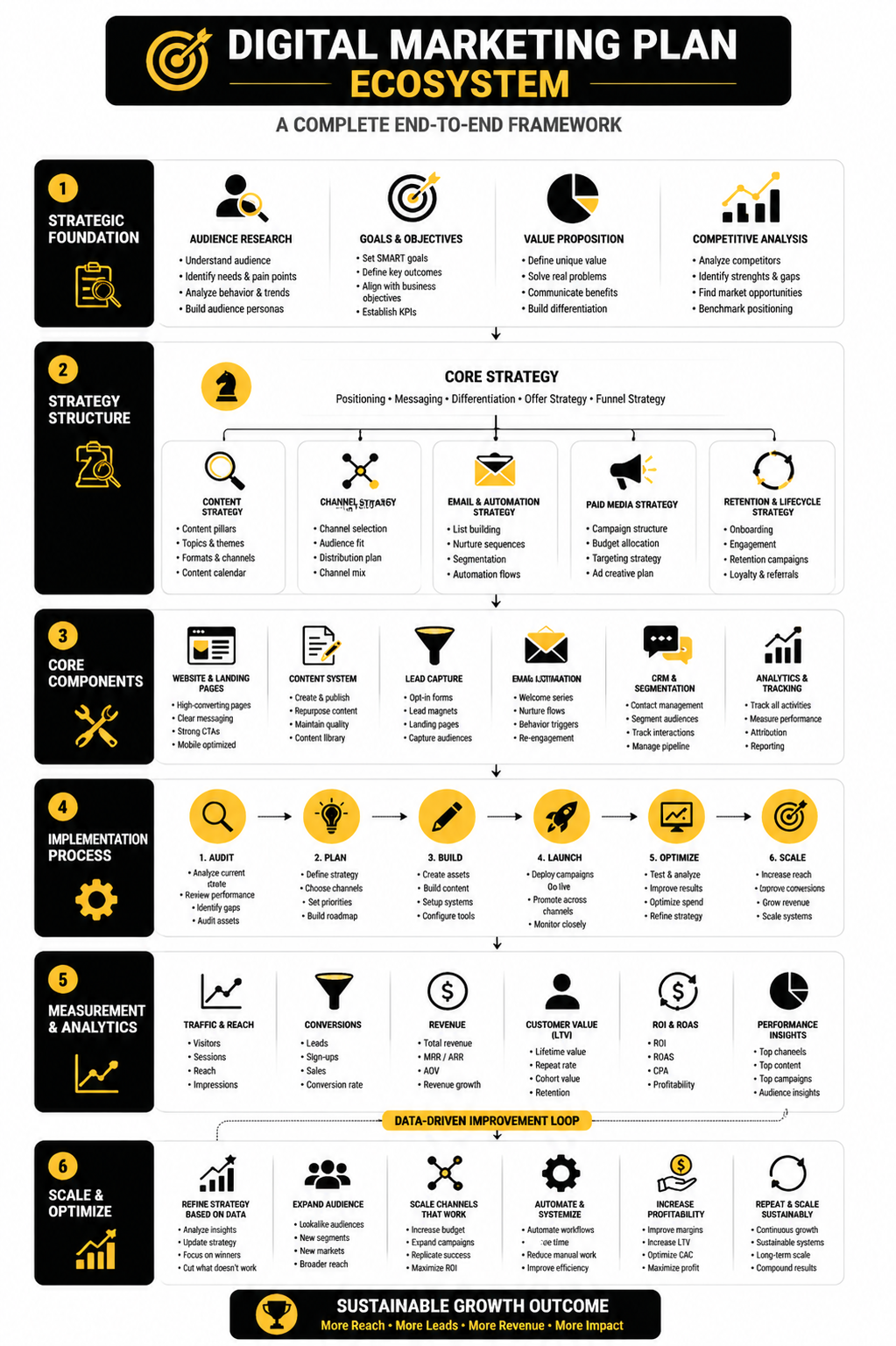
To fully explore the topic, this article is divided into six cohesive parts:
- Why It Matters – Understanding the critical role of digital marketing strategy in business success
- Framework Overview – Laying out the structure that underpins a successful plan
- Core Components – Breaking down the essential elements every plan must include
- Professional Implementation – How to execute the plan effectively and efficiently
- Measurement and Optimization – Tracking results and refining tactics for maximum impact
- Future Trends and Innovations – Emerging opportunities to stay ahead in digital marketing
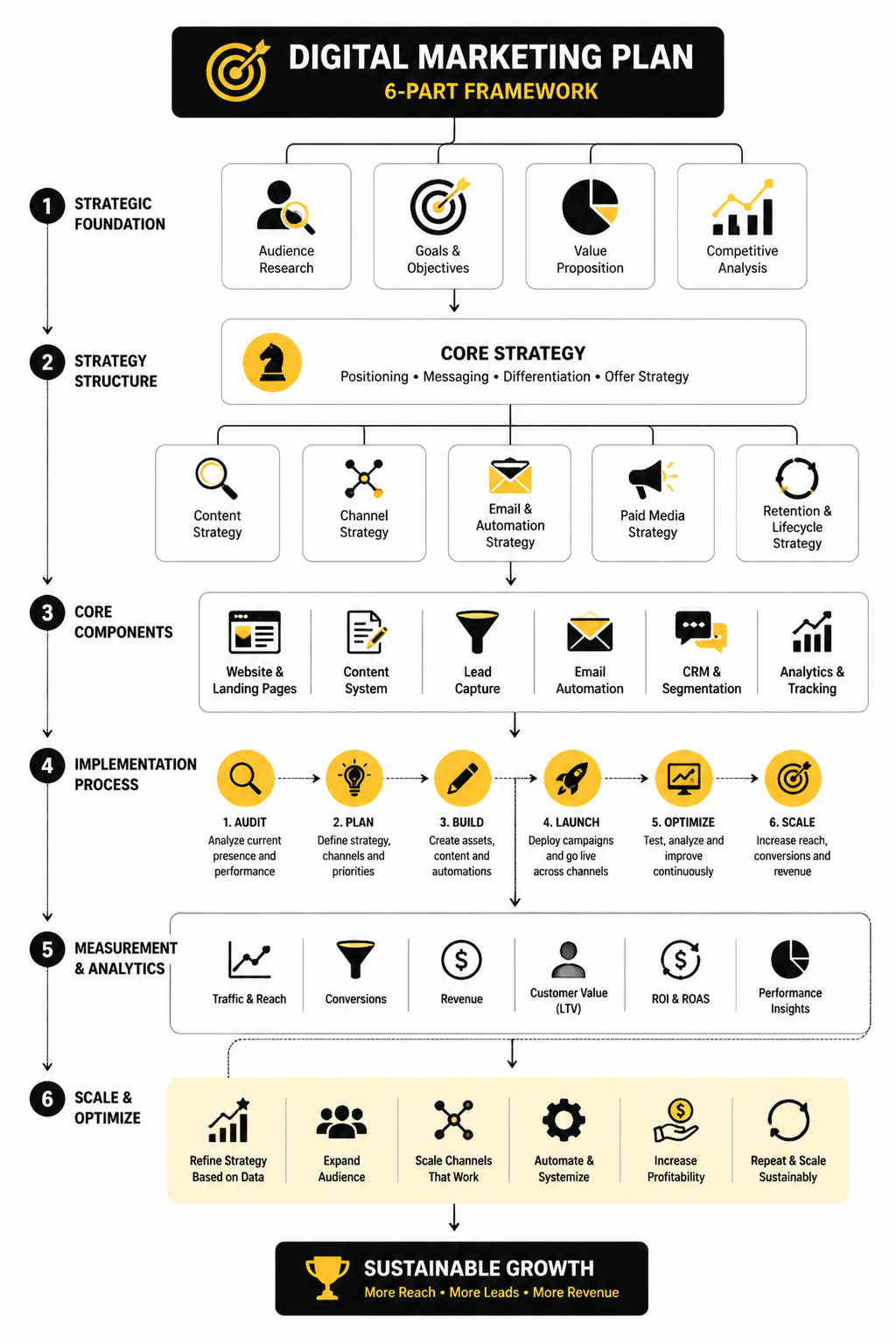
This structure ensures a clear progression from understanding the importance of a plan to seeing it implemented and optimized, giving readers both strategic insight and practical guidance. Each section will dive into actionable insights backed by the latest research and real-world examples.
Why It Matters
A well-structured digital marketing plan is critical because it transforms fragmented efforts into coordinated, measurable actions. Without a plan, businesses often operate reactively, chasing trends and hoping for engagement rather than strategically cultivating it. Companies that adopt structured digital strategies report stronger ROI, more predictable lead generation, and higher customer retention.
Consider the story of HubSpot's early years. The company faced intense competition in marketing automation and struggled to reach new audiences efficiently. By investing in a comprehensive digital marketing plan that combined content marketing, SEO, and targeted email campaigns, they were able to break through the noise. The turning point came when they systematically tracked conversion metrics across channels, allowing real-time optimization. Within three years, HubSpot grew from a small startup to a public company valued at over $500 million, demonstrating the transformative power of strategy-driven marketing.
A digital marketing plan also ensures alignment across teams. From social media managers to content creators, everyone understands their role, goals, and key performance indicators. This prevents wasted effort and creates a consistent brand voice across all channels. Organizations with aligned strategies are proven to have up to 20% higher revenue growth than peers without clear digital marketing structures.
Finally, a robust plan mitigates risk. Markets change, consumer behavior evolves, and platforms update algorithms. A documented strategy allows for agile responses while maintaining long-term objectives. This proactive approach ensures that marketing initiatives aren’t just reactive, but a sustained engine for growth.
Framework Overview
A digital marketing plan relies on a clear framework to guide actions and prioritize resources. At its core, the framework should connect business goals with marketing tactics, metrics, and timelines. This ensures that each effort contributes directly to measurable outcomes rather than creating isolated campaigns.
The foundation begins with audience understanding. Detailed buyer personas, segmented by demographics, behavior, and intent, inform content creation and ad targeting. From there, channels are selected strategically—organic search, social media, email, and paid advertising each serve specific purposes in the customer journey. For example, social platforms might drive engagement, while search campaigns capture high-intent prospects.
Next, the framework incorporates goal-setting and measurement. Objectives should be specific, measurable, attainable, relevant, and time-bound (SMART). Common KPIs include website traffic growth, lead conversion rates, social engagement, and return on ad spend. By defining success upfront, teams can make informed decisions and quickly pivot when tactics underperform.
Finally, a successful framework includes a content and campaign calendar. Scheduling content and campaigns ensures consistency and maximizes impact, preventing gaps in messaging. Tools like GoHighLevel and ClickFunnels help streamline planning and automation, allowing teams to focus on creative strategy rather than manual execution.
With this framework, businesses move from ad hoc marketing to coordinated campaigns that drive growth and measurable results.
Professional Implementation
Executing a digital marketing plan transforms strategy into tangible results. Even the best frameworks fail without disciplined, step-by-step implementation. Professional execution ensures that every campaign, channel, and message contributes directly to measurable business goals rather than existing as isolated activity.
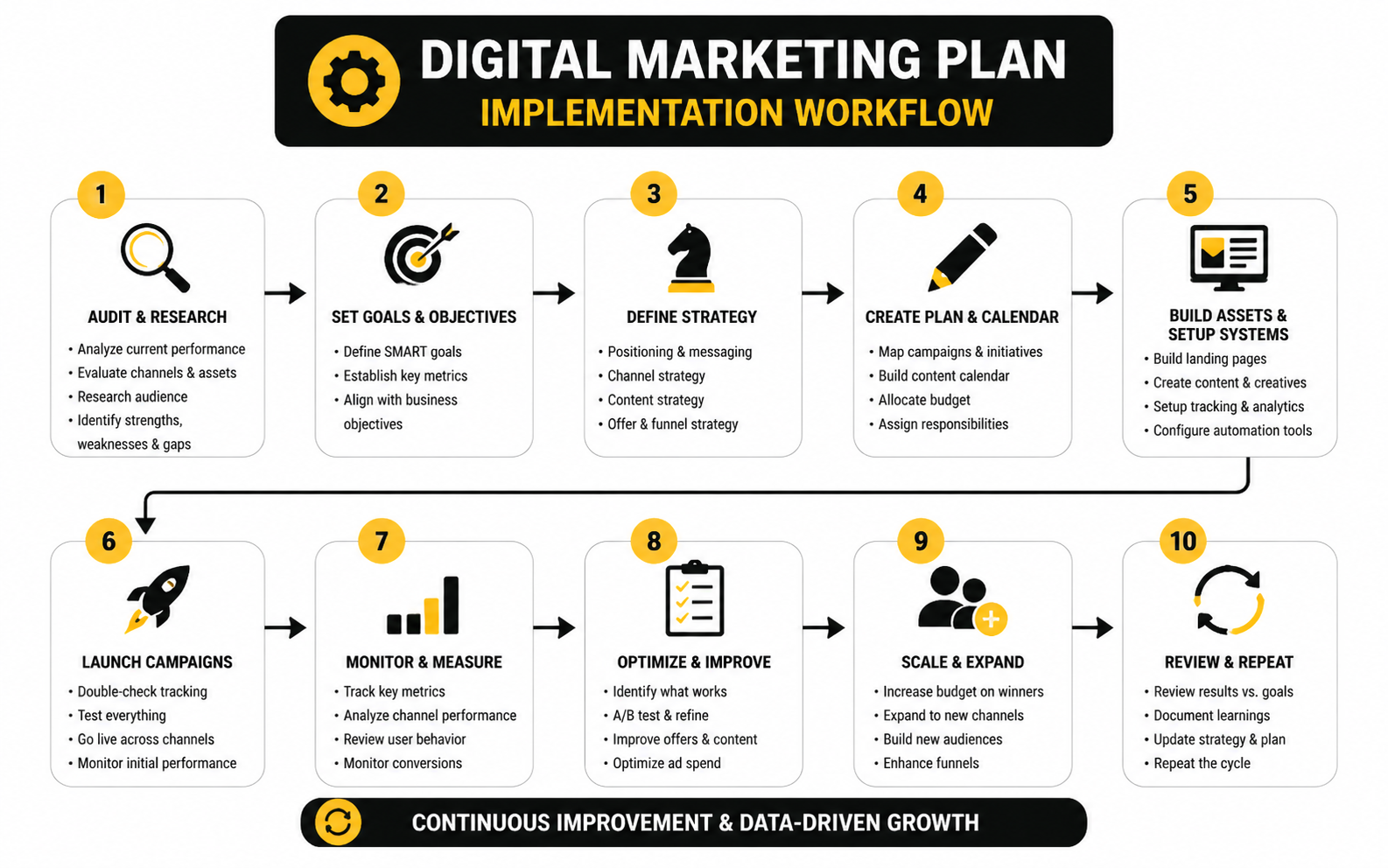
The implementation process begins with prioritizing initiatives based on impact and resources. Not every tactic should launch simultaneously. Teams often start with high-leverage channels such as targeted social ads, SEO improvements, and email automation. Platforms like GoHighLevel allow marketers to automate workflows, segment audiences, and manage campaigns efficiently, turning manual tasks into repeatable processes.
Next, content and creative assets must align with audience needs. Effective campaigns combine value-driven content with persuasive calls-to-action, distributed across relevant channels. For example, long-form content and email sequences nurture leads over time, while social media posts drive engagement and brand awareness. Using integrated tools like ClickFunnels can simplify landing page creation, lead capture, and sales funnel management, ensuring that each piece of content contributes to conversions.
Finally, monitoring and adjusting in real-time is critical. Implementation is not static; it requires continuous testing of messaging, creative, targeting, and channel mix. Tracking KPIs such as conversion rates, engagement metrics, and cost per acquisition informs iterative improvements. This dynamic approach allows marketers to optimize performance, ensuring the digital marketing plan delivers measurable growth while minimizing wasted spend.
The next step in the journey is learning how to quantify success and refine the strategy, which will be covered in the measurement and optimization section.
Measurement and Optimization
A digital marketing plan isn’t complete without rigorous measurement. Understanding performance metrics allows businesses to determine what’s working, what needs adjustment, and where to allocate resources for maximum impact. Simply collecting data isn’t enough—the insight comes from interpreting trends and translating them into actionable strategies.
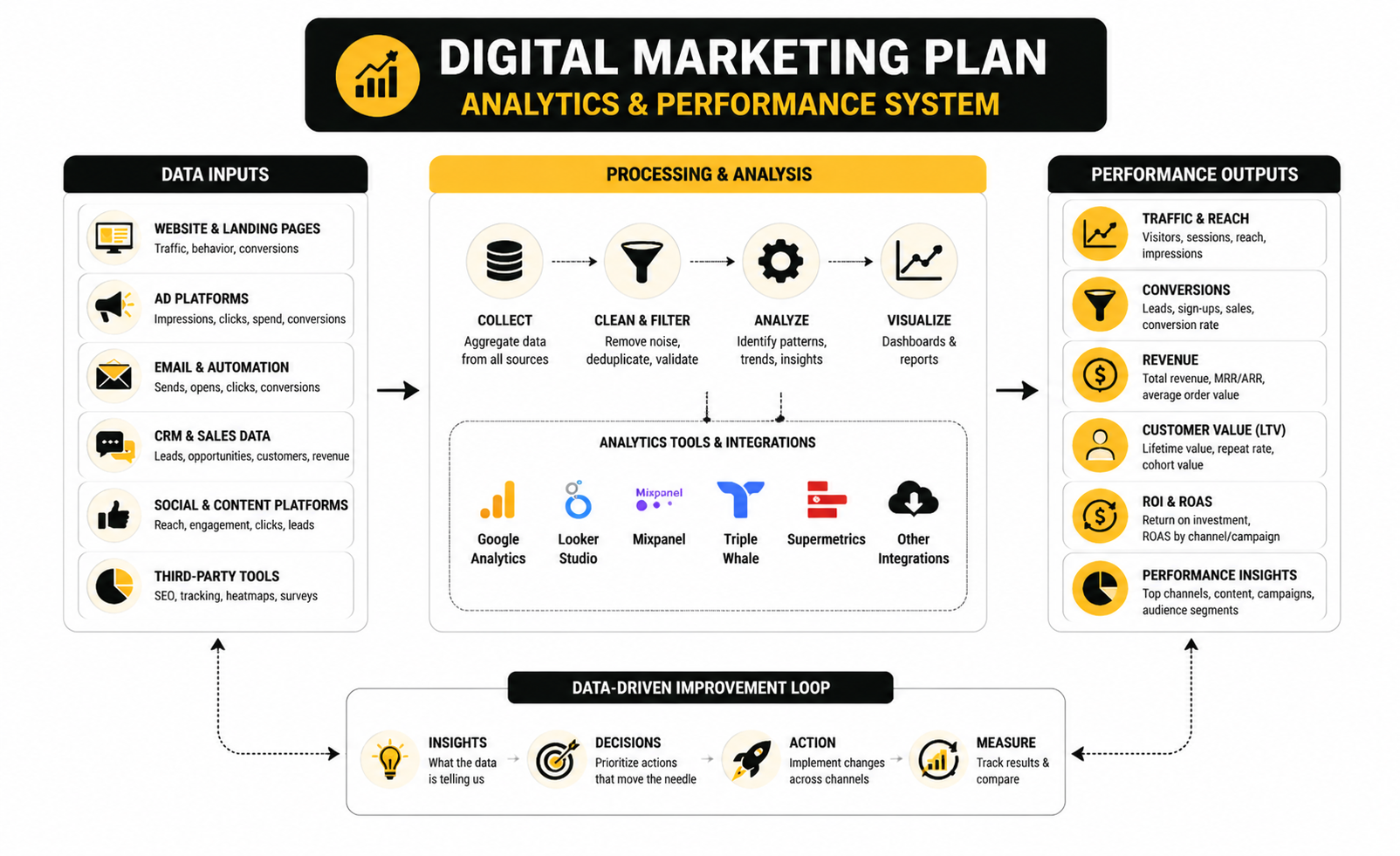
Key metrics to monitor include traffic sources, engagement rates, conversion rates, and cost per acquisition. For instance, high website traffic is promising, but if conversion rates are low, the campaign isn’t delivering tangible results. Tools like GoHighLevel and ClickFunnels make it easier to track these metrics across channels and visualize performance over time, allowing teams to make informed decisions quickly.
Benchmarking against industry standards provides context for these numbers. For example, an email open rate of 25% may seem low until compared to the average for B2B software campaigns, which sits around 22–28%. Similarly, understanding the typical cost per click in your sector helps determine whether paid ads are performing efficiently or need optimization.
Actionable insights come from analyzing patterns and experimenting. A/B testing landing pages, subject lines, or ad creatives identifies what resonates with the audience. Tracking engagement over time informs timing and content strategy. The ultimate goal of measurement is not to accumulate numbers but to refine tactics, ensuring each dollar spent on digital marketing drives measurable growth and moves closer to business objectives.
Advanced Considerations for Scaling
Once a digital marketing plan is producing measurable results, the next challenge is scaling effectively without losing efficiency. Scaling isn’t just about increasing ad spend or posting more content—it requires careful orchestration of resources, automation, and strategic tradeoffs.
First, automation becomes essential. Platforms like GoHighLevel or ClickFunnels allow businesses to automate lead capture, nurture sequences, and reporting. This reduces manual work and ensures campaigns remain consistent as volume increases. However, over-automation can reduce personalization, so it’s crucial to maintain audience-specific messaging and segmentation.
Second, strategic resource allocation must balance short-term wins with long-term growth. Investing heavily in paid media can boost immediate traffic, but neglecting content development or organic SEO may undermine sustainable growth. Monitoring ROI across channels helps determine where to scale without creating bottlenecks or wasting budget.
Third, risk management and testing are key at higher scale. Increasing ad spend or expanding campaigns into new markets introduces variability in performance. Implementing controlled experiments, A/B tests, and phased rollouts allows marketers to learn and adapt before committing significant resources. For example, segmenting campaigns by geography or audience type helps isolate what drives results and avoids large-scale underperformance.
Finally, continuous strategic refinement separates good marketing plans from exceptional ones. Advanced teams track multi-touch attribution, customer lifetime value, and cohort analysis to guide both tactical and budget decisions. Scaling without this data-driven insight risks diminishing returns and operational strain.
By addressing these considerations, businesses can expand their digital presence confidently, ensuring that every increase in effort or budget translates into meaningful, sustainable growth.
Future Trends and FAQ - Built for Complete Guide
FAQ
1. What is a digital marketing plan?
A digital marketing plan is a strategic roadmap that outlines how a business will use online channels—like social media, search engines, email, and paid ads—to reach its goals and engage its audience.
2. How often should a digital marketing plan be updated?
Plans should be reviewed quarterly to adjust for changes in trends, platform algorithms, customer behavior, and campaign performance.
3. What are the key components of a digital marketing plan?
Core elements include audience analysis, marketing objectives, channel selection, content strategy, budget allocation, and performance measurement.
4. How do I measure the success of my plan?
Track KPIs such as traffic, conversion rates, lead generation, ROI, engagement, and customer retention across platforms using analytics tools.
5. Can small businesses benefit from a digital marketing plan?
Absolutely. Even small teams benefit from clear goals, structured campaigns, and data-driven decision-making, often achieving higher ROI with fewer resources.
6. How do I choose the right channels for my audience?
Analyze where your target customers spend time online, what content they engage with, and which platforms convert best for your industry.
7. What role does content play in a digital marketing plan?
Content is central—it educates, builds trust, drives traffic, and nurtures leads throughout the customer journey.
8. Is automation necessary in a digital marketing plan?
While not strictly required, automation streamlines repetitive tasks like email sequences and ad management, allowing teams to focus on strategy and creative work.
9. How do I adjust my plan if a campaign underperforms?
Use real-time analytics to identify weak points, test alternative creatives or messaging, and reallocate budget toward higher-performing channels.
10. Can digital marketing plans help in long-term growth?
Yes, by establishing a clear framework, tracking results, and optimizing campaigns, businesses create sustainable growth, higher retention, and predictable revenue streams.
11. What are common mistakes to avoid?
Neglecting measurement, over-relying on a single channel, ignoring audience segmentation, and failing to align campaigns with business goals are frequent pitfalls.
12. How do I integrate emerging trends into my plan?
Stay informed through industry research, experiment with new technologies like AI tools (GoHighLevel AI), and test small before scaling widely.
Work With Professionals
Explore 10K+ Remote Marketing Contracts on MarkeWork.com
Most marketers spend too much time chasing clients, competing on crowded platforms, and losing a percentage of every project to middlemen. MarkeWork gives you a better way. Browse thousands of remote marketing contracts and connect directly with companies desperate to hire skilled marketers like you, without platform commissions and without unnecessary gatekeepers.
If you're serious about finding better opportunities and keeping 100% of what you earn, invite readers to explore available contracts and create a profile for free at MarkeWork.com.