

The easiest email marketing platform is not the one with the longest feature list. It is the one your team can understand quickly, use consistently, and trust when campaigns, automations, forms, segments, and reporting all need to work without constant technical help.
That matters because email is still one of the few marketing channels you actually own. Recent email ROI research shows many teams still earn meaningful returns from email, with Litmus reporting strong revenue return ranges per dollar spent, while benchmark reports from the DMA show email delivery and click performance remain measurable enough to guide real decisions through delivery, open, and click benchmarks.
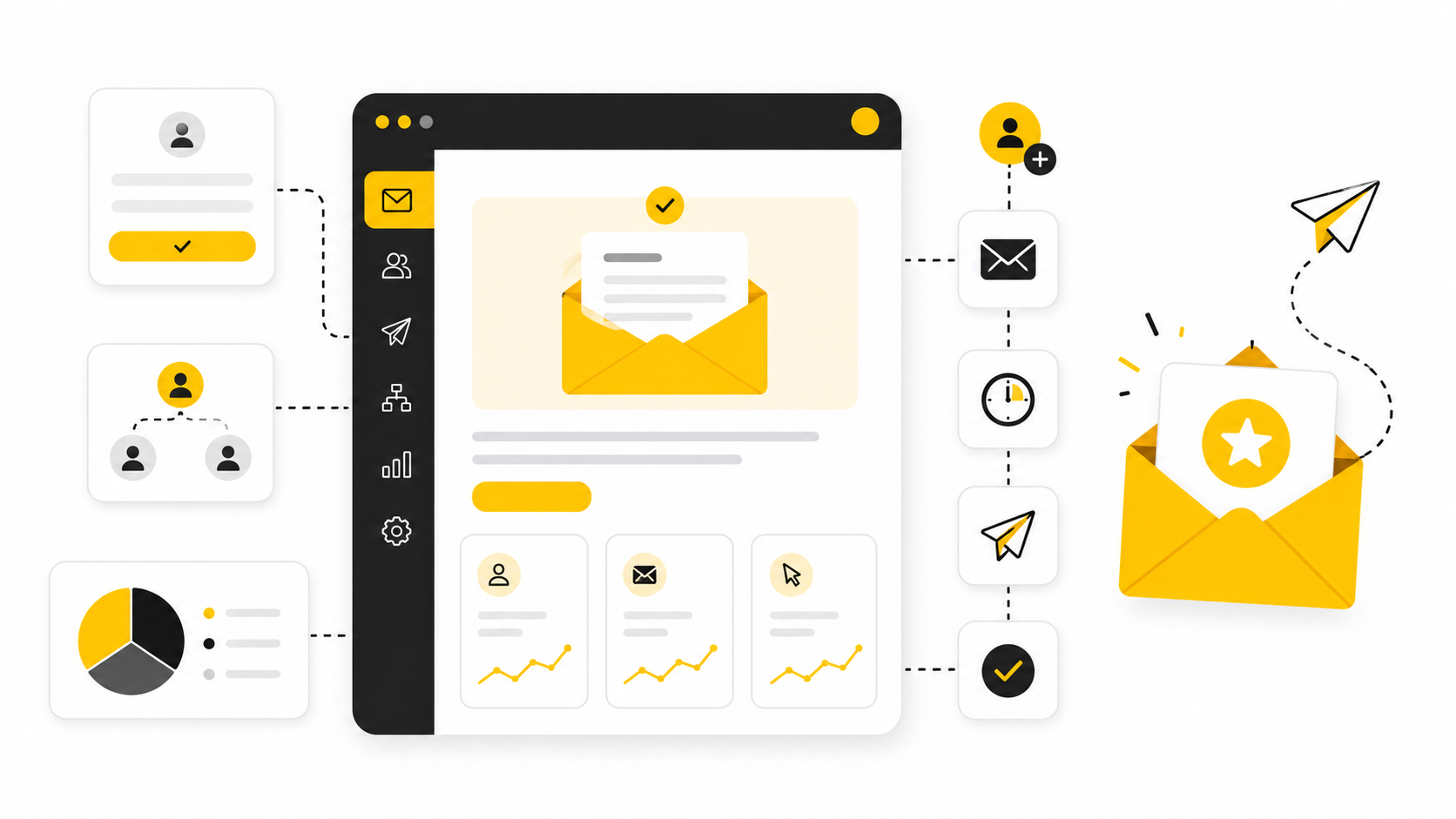
This guide is built for founders, creators, service businesses, ecommerce teams, and small marketing departments that do not want a bloated enterprise system. You want something simple enough to launch with, but serious enough that you will not outgrow it the moment your list starts producing revenue. That is the real standard for easy.
Article Outline
- Why The Easiest Email Marketing Platform Matters
- The Simple Framework For Choosing The Right Platform
- Core Components Every Beginner-Friendly Platform Needs
- Professional Implementation Without The Overwhelm
- Platform Comparisons For Real Business Use Cases
- Final Recommendations, Checklist, And FAQ
Why The Easiest Email Marketing Platform Matters
Easy does not mean basic. It means the platform removes friction from the work that actually creates revenue: capturing subscribers, sending useful campaigns, automating follow-up, and understanding what happened afterward. A tool can have advanced features and still be easy when those features are organized around the way real people work.
The wrong platform creates hidden costs. You pay with time, messy contacts, unfinished automations, inconsistent branding, and campaigns that never ship because every small change feels technical. For a small business, that can be more expensive than the monthly subscription.
The right platform helps you move from random newsletters to a repeatable system. You can welcome new subscribers, follow up with leads, recover missed opportunities, and keep customers engaged without rebuilding everything from scratch each week. That is why ease of use should be judged by speed to execution, not just how clean the dashboard looks.
The Simple Framework For Choosing The Right Platform
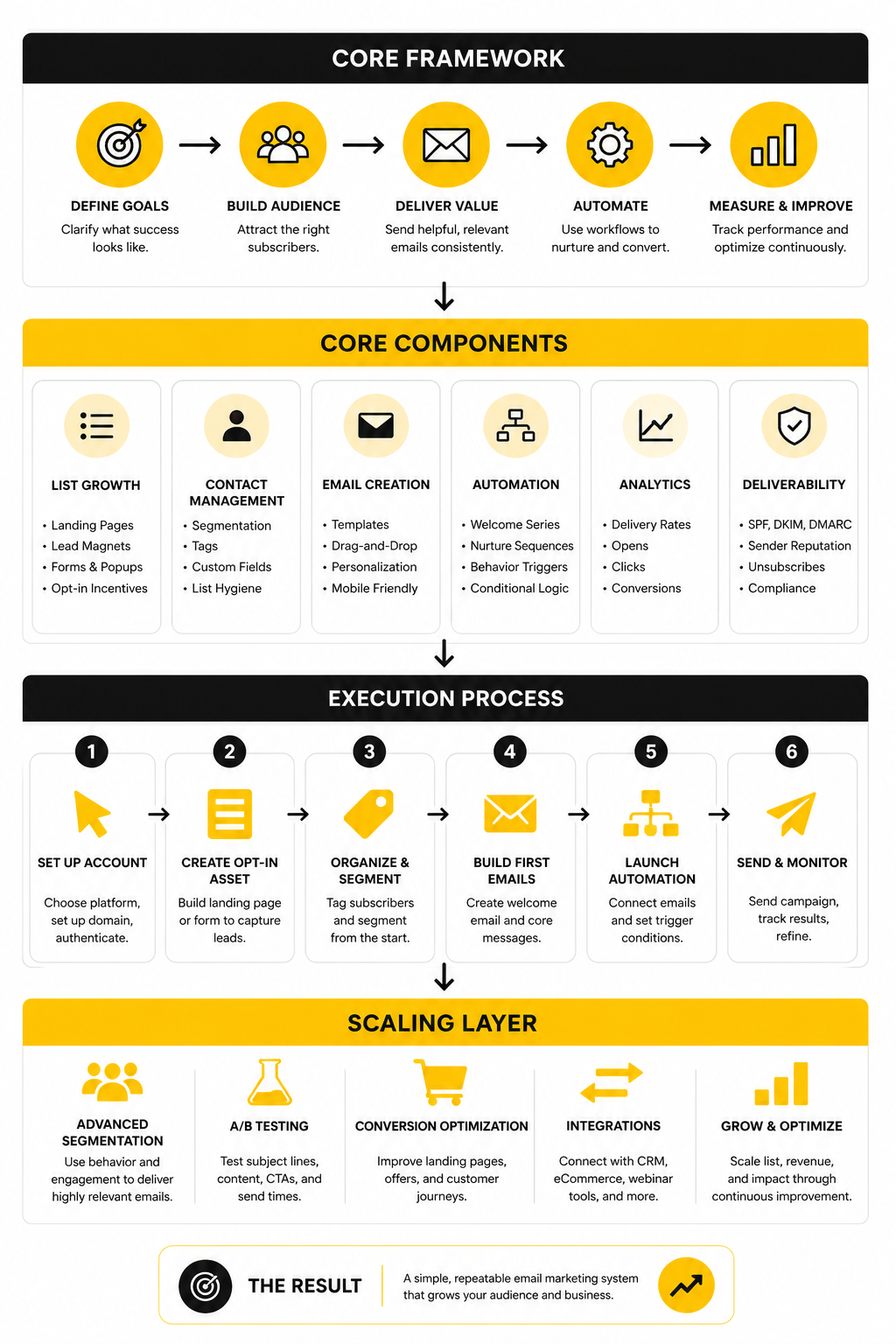
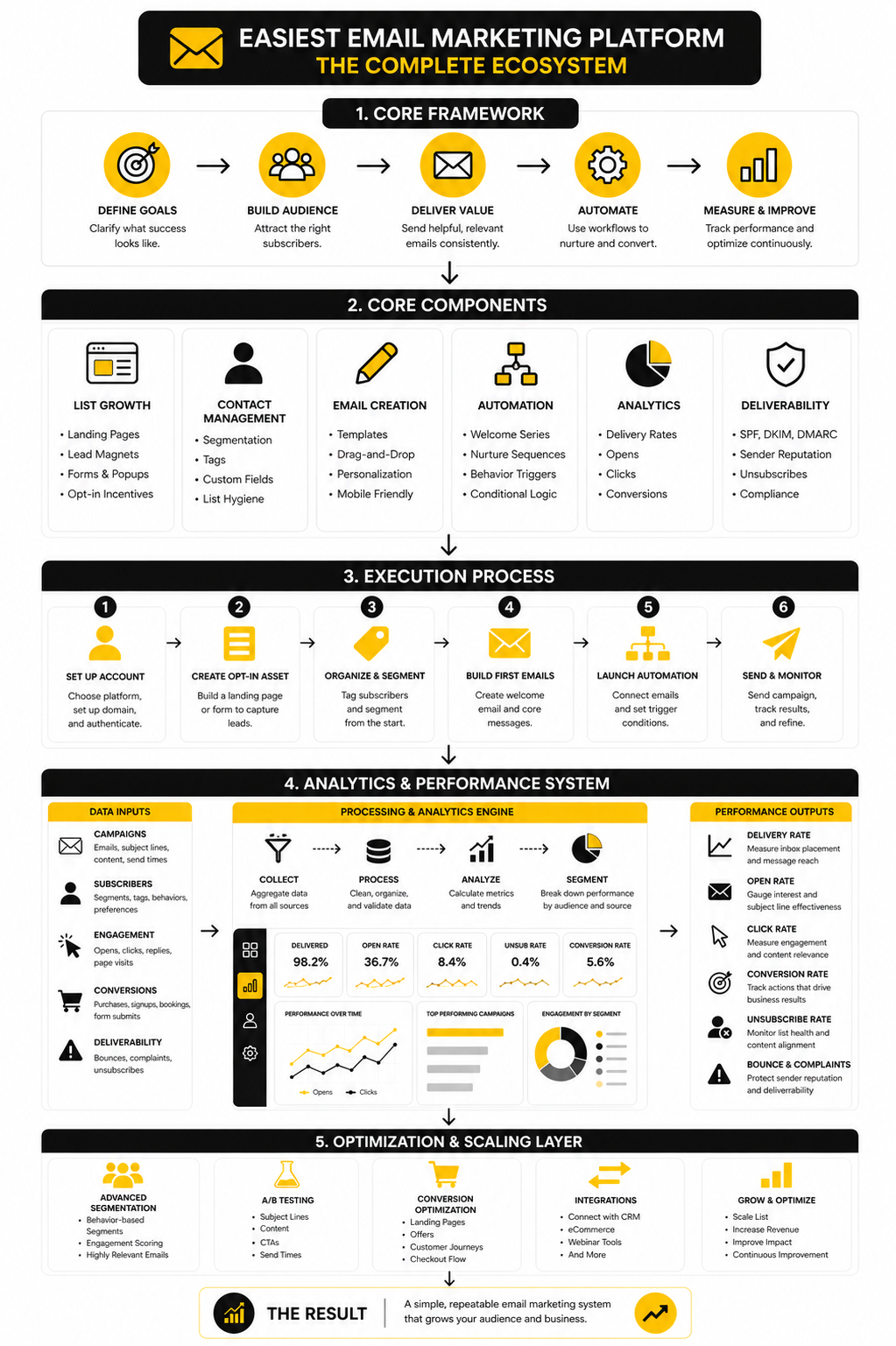
The best way to choose the easiest email marketing platform is to look at four practical layers: setup, creation, automation, and measurement. If one of those layers feels painful, the platform will eventually slow you down. If all four feel clear, you have a tool that can become part of your operating rhythm.
Setup covers list import, forms, landing pages, compliance basics, and sender authentication. Creation covers the email editor, templates, brand controls, content blocks, and preview tools. Automation covers welcome sequences, lead nurturing, tagging, segmentation, and behavior-based follow-up.
Measurement is the layer people often ignore until later, but it matters from day one. You need to see opens, clicks, unsubscribes, conversions, and list growth without digging through confusing reports. Email benchmarks are only useful when your own platform makes performance easy to read, compare, and improve.
Core Components Every Beginner-Friendly Platform Needs
A genuinely beginner-friendly platform should include a drag-and-drop email builder, simple signup forms, contact tagging, segmentation, automation workflows, and clear reporting. These are not luxury features anymore. They are the minimum foundation for running email marketing properly.
For many businesses, platforms like Brevo, Moosend, and Systeme.io are attractive because they combine email tools with practical business features instead of forcing you to stitch together too many apps too early. For agencies and service businesses that want CRM, funnels, SMS, pipelines, and automations in one place, GoHighLevel often fits a different kind of “easy”: fewer disconnected systems.
The important thing is not choosing the most popular name. It is choosing the platform that matches your workflow. A solo creator needs speed and simplicity, an ecommerce brand needs segmentation and purchase-based automations, and an agency needs repeatable systems across multiple clients.
The Simple Framework For Choosing The Right Platform
Choosing the easiest email marketing platform gets much simpler when you stop comparing every feature side by side. Most feature tables look useful, but they usually hide the real question: can you build, send, automate, and improve campaigns without needing a specialist every time? That is the filter that matters.
A simple platform should help you complete the first useful campaign quickly. That means importing contacts, creating a signup form, writing a welcome email, and seeing basic performance data without hunting through menus. If those first steps feel confusing, the platform will probably feel worse once you add automations, segments, and sales campaigns.
The framework below keeps the decision practical. You are not trying to find the most powerful tool in the market. You are trying to find the tool that gives you the least friction for the kind of business you actually run.
Start With Your Main Use Case
Your use case should decide the platform before pricing does. A newsletter creator, ecommerce store, consultant, course seller, local agency, and SaaS company all need email marketing, but they do not need the same workflow. The easiest email marketing platform for one business can feel completely wrong for another.
If you mostly send newsletters, you need fast writing, clean templates, simple lists, and reliable scheduling. If you sell products, you need behavior-based segments, abandoned cart emails, product recommendations, and purchase history. If you run a service business or agency, you may care more about CRM, pipelines, appointments, SMS, and client follow-up than a beautiful newsletter editor.
This is where tools like Brevo, Moosend, Systeme.io, and GoHighLevel start to separate. They can all support email marketing, but they are not built around the same customer. Pick based on your operating model first, then compare details.
Judge Ease By The First 60 Minutes
A platform can look simple in screenshots and still feel slow when you actually use it. The real test is what you can accomplish in the first hour. You should be able to create or import a contact list, build a signup form, design a basic email, and understand where automation starts.
This test exposes hidden complexity fast. If the builder feels clunky, the templates need too much editing, or the automation screen makes you second-guess every step, that is not a small issue. It means the platform will demand more attention than your marketing deserves.
Do not ignore small annoyances during setup. Small annoyances become permanent bottlenecks when you repeat them every week. Easy platforms reduce decisions, guide you through the next step, and make common actions obvious.
Check Automation Without Getting Distracted
Automation is where many beginners get overwhelmed. The platform shows triggers, conditions, tags, branches, delays, goals, scoring, and webhooks, and suddenly a simple welcome sequence feels like engineering work. You do not need to master everything at once.
The first automation you need is usually simple: someone joins a list, receives a welcome email, gets a helpful follow-up, and is tagged based on interest or behavior. That is enough to prove the system works. Once that is running, you can add lead nurturing, sales reminders, reactivation emails, or customer onboarding.
Recent email benchmark data from Brevo’s analysis of more than 44 billion emails reinforces the bigger point: performance depends heavily on relevance, industry, and engagement quality. Automation helps because it lets you send based on context instead of blasting the same message to everyone. But only if the automation is simple enough that you will actually use it.
Look For Clear Reporting, Not Vanity Dashboards
Reporting should help you make decisions, not impress you with charts. You need to know which emails people opened, which links they clicked, which forms are growing your list, and which automations are creating movement. That is enough to improve most campaigns.
Open rates still give directional feedback, but they are not perfect because privacy changes and inbox behavior can distort them. Clicks, conversions, replies, unsubscribes, and list growth usually tell you more about whether your message is working. The easiest email marketing platform should make those numbers easy to find without exporting data every time.
This is also where simplicity protects your focus. If a dashboard shows everything but explains nothing, it creates noise. A useful platform makes the next action obvious: improve the subject line, tighten the offer, segment the audience, rewrite the call to action, or stop sending a weak sequence.
Match The Platform To Your Growth Stage
Beginners usually need fewer features than they think. The danger is buying a complex system because it feels “future-proof,” then never using most of it. A simpler tool that helps you publish consistently will usually beat an advanced tool that sits untouched.
Growing businesses need a different balance. Once email becomes connected to lead generation, sales calls, checkout pages, webinars, appointments, or customer support, switching between too many tools becomes painful. At that stage, an all-in-one platform like GoHighLevel or a funnel-focused setup like Systeme.io can feel easier than managing separate tools for every function.
The smart move is to choose for the next 12 months, not for a fantasy version of your business five years from now. You want enough room to grow without paying in complexity today. That is the balance that makes a platform feel easy after the honeymoon period ends.
Core Components Every Beginner-Friendly Platform Needs
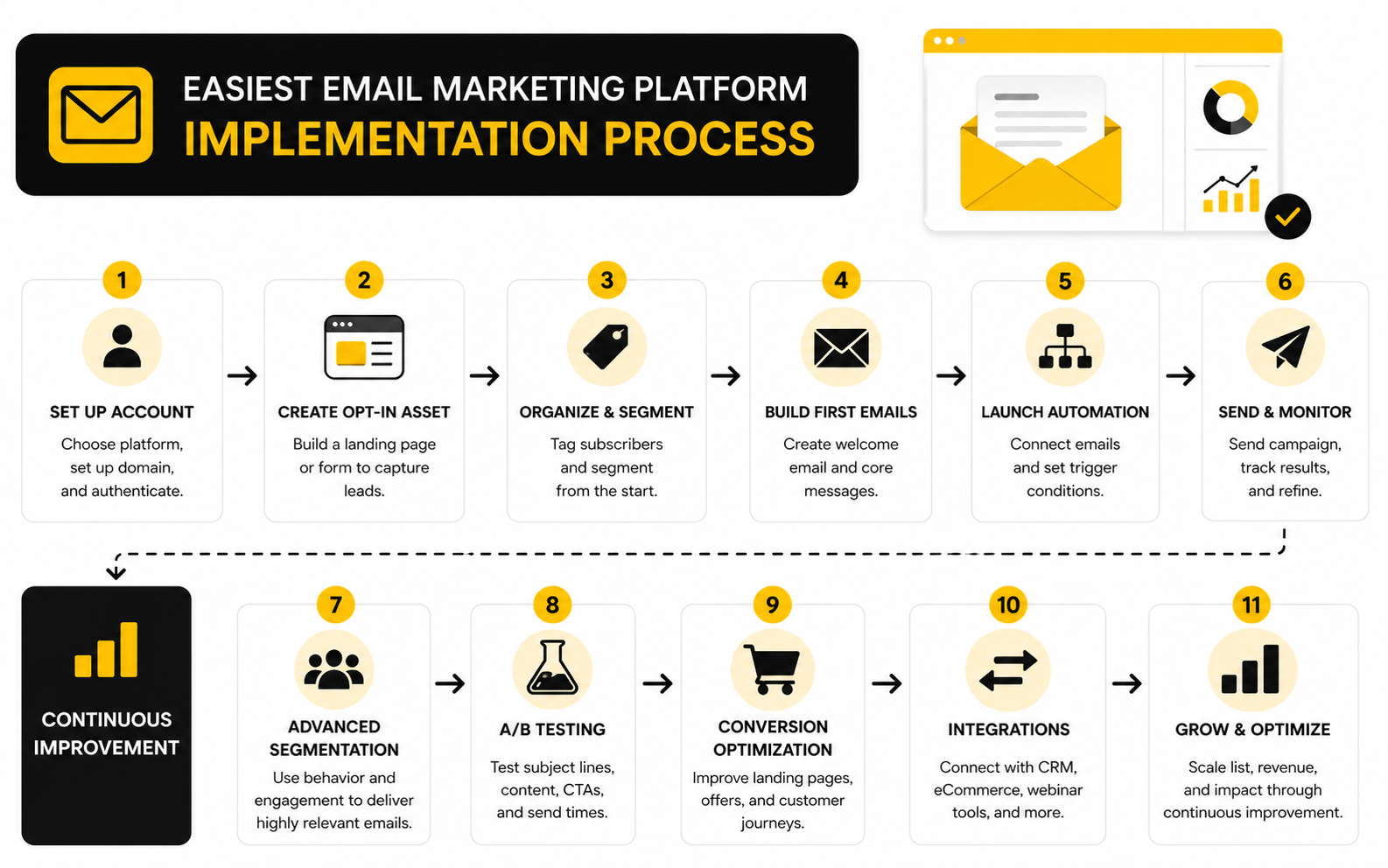
Once you understand the framework, the next step is implementation. This is where a lot of people make email marketing harder than it needs to be. They start with advanced automations, complicated funnels, and too many tags before they have even built the basic system.
The easiest email marketing platform should help you build a working foundation first. You need a clean contact structure, a simple way to collect subscribers, one strong welcome sequence, and reporting that tells you what to fix. Everything else can come later.
A good platform does not just give you features. It gives you a clear path from idea to execution. That path matters because email marketing only becomes valuable when your system is actually live.
Build The Foundation Before You Automate
Your first job is not to create the perfect automation map. Your first job is to make sure the basic pieces work together without friction. That means your form sends people to the right list, your list applies the right tag, your first email sends correctly, and your reporting shows the result.
Start with one audience and one primary goal. For example, your goal might be to turn website visitors into consultation leads, newsletter subscribers into product buyers, or trial users into booked calls. When the goal is clear, the platform becomes much easier to set up because every form, tag, and email has a purpose.
This is where simple tools can win. Brevo, Moosend, and Systeme.io are useful options when you want the email foundation to come together quickly. GoHighLevel becomes more interesting when the same foundation also needs CRM, pipelines, forms, calendars, and follow-up across multiple channels.
Set Up Your Contact Structure Carefully
Contact structure is boring until it breaks. Then it becomes the reason your campaigns feel messy, your reporting gets confusing, and your automations send the wrong message to the wrong people. Do this part properly from the start.
Keep your structure simple. Use lists for broad audience groups, tags for behavior or interests, and custom fields for stable information like business type, location, lead source, or purchase status. If you create a new tag for every tiny action, your platform will become harder to manage within a few weeks.
The easiest email marketing platform should make this logic visible. You should be able to look at a contact and understand why they are receiving a specific email. If you cannot explain your own segmentation in plain English, the system is already too complicated.
Create One High-Quality Signup Path
Most beginners create too many signup paths too early. They add a newsletter form, a lead magnet, a popup, a footer form, a webinar form, and a checkout opt-in before they understand which one actually attracts qualified subscribers. More forms do not automatically mean better growth.
Start with one clear signup path tied to one promise. Tell people exactly what they will receive and why it is worth their email address. Then connect that form to the right list, tag the source, and trigger the welcome sequence.
This is also where compliance and trust matter. People should know what they are signing up for, and they should be able to unsubscribe easily. Clean permission-based growth may feel slower at first, but it protects deliverability and gives your emails a better chance of being wanted.
Launch A Practical Welcome Sequence
Your welcome sequence is the first real test of your platform. If building this sequence feels painful, the tool is probably not as easy as it looked. A simple welcome sequence should be easy to create, edit, test, and improve.
Start with three emails. The first email delivers the promise and sets expectations. The second email gives practical value, handles a common objection, or points people to the next useful resource. The third email invites action, such as replying, booking a call, visiting a product page, or choosing a preference.
Do not turn the welcome sequence into a giant sales machine on day one. Make it useful first. Once it works, you can add branches, tags, offers, and behavior-based follow-up based on what subscribers actually do.
Test The System Like A Customer
Before you send traffic to your signup path, test everything from the customer’s point of view. Use a fresh email address, submit the form, check the confirmation message, read the first email, click every link, and make sure the next email is scheduled correctly. This takes a few minutes and saves you from embarrassing mistakes.
Check the mobile version too. A campaign that looks fine on desktop can feel cramped or broken on a phone. That matters because many subscribers will read your emails on mobile, and a confusing layout can kill momentum even if the message is good.
Then check your tracking. Make sure clicks are recorded, contacts are tagged correctly, and unsubscribes work. Email benchmarks from Brevo’s 2025 report show wide performance differences by region and industry, so your own data matters more than generic averages once campaigns are live.
Improve One Thing At A Time
After launch, resist the urge to rebuild everything. Look at the data and improve one specific thing. That might be the signup promise, subject line, first email, call to action, segment, or landing page.
Simple improvement beats constant redesign. If your open rate is weak, test the subject line and sender name. If people open but do not click, improve the offer and link placement. If subscribers click but do not convert, the issue may be the page or offer after the email, not the platform itself.
This is the practical reason to choose an easy platform. You want to spend your energy improving the marketing, not fighting the software. When the tool gets out of the way, consistency becomes much easier.
Statistics And Data That Actually Matter
Data should make email marketing easier, not more confusing. The goal is not to collect every possible number inside your dashboard. The goal is to understand which signals show audience interest, which signals show buying intent, and which signals tell you something is broken.
This is why the easiest email marketing platform should give you clean reporting without forcing you to become an analyst. You need a simple way to see delivery, opens, clicks, conversions, unsubscribes, bounces, and automation performance. When those numbers are easy to read, you can make better decisions faster.
Benchmarks are useful, but only when you use them correctly. A benchmark tells you whether your performance is roughly in the right range. It does not tell you whether your offer, audience, timing, or follow-up strategy is good enough.
Start With Deliverability Before You Judge Content
Deliverability comes first because no subject line or offer can perform if the email does not reach the inbox. Before you worry about creative improvements, check whether your emails are being accepted, delivered, bounced, or flagged. This is the foundation.
The DMA Email Benchmarking Report 2025 reported delivery rates of 98% in 2024, with B2C reaching 99.2%. That gives you a useful reference point, but it should not make you complacent. If your bounce rate is climbing or your delivered rate is slipping, clean your list, review your signup sources, and check your sending practices.
Deliverability is also why purchased lists are a bad shortcut. They may look like growth, but they usually bring weak engagement, complaints, and poor sender reputation. A smaller permission-based list will often outperform a larger list that never asked to hear from you.
Treat Open Rates As Directional, Not Absolute
Open rates can still help, but they are not the same clean signal they used to be. Privacy features, image loading, inbox behavior, and different tracking methods can all affect the number. That means you should use opens as a directional signal, not as the final proof of success.
The Brevo 2025 benchmark report shows a global open rate of 21% in its dataset, while regional and industry results vary widely. The same report shows EMEA at 33.21%, North America at 29.42%, APAC at 26.84%, and LATAM at 26.32%. That range alone proves why a single “good open rate” is too simplistic.
Use open rates to test first impressions. If one subject line consistently beats another with a similar audience and send time, that is useful. But do not celebrate high opens if nobody clicks, replies, books, buys, or takes the next step.
Use Clicks To Measure Real Engagement
Clicks are usually more useful than opens because they show action. A subscriber saw something in the email and cared enough to move forward. That does not mean every click becomes revenue, but it is a stronger signal than passive attention.
The DMA 2025 report shows unique click rates reaching 2.3%, while Brevo’s benchmark data reports a 3.96% click-through rate across its 2025 analysis. Those numbers are not targets to copy blindly. They are context for asking whether your audience, message, and offer are aligned.
If people open but do not click, the subject line did its job but the email body did not move them. The fix may be a clearer promise, fewer links, stronger copy, better segmentation, or a more obvious call to action. Do not change ten things at once, because then you will not know what worked.
Build A Simple Analytics System
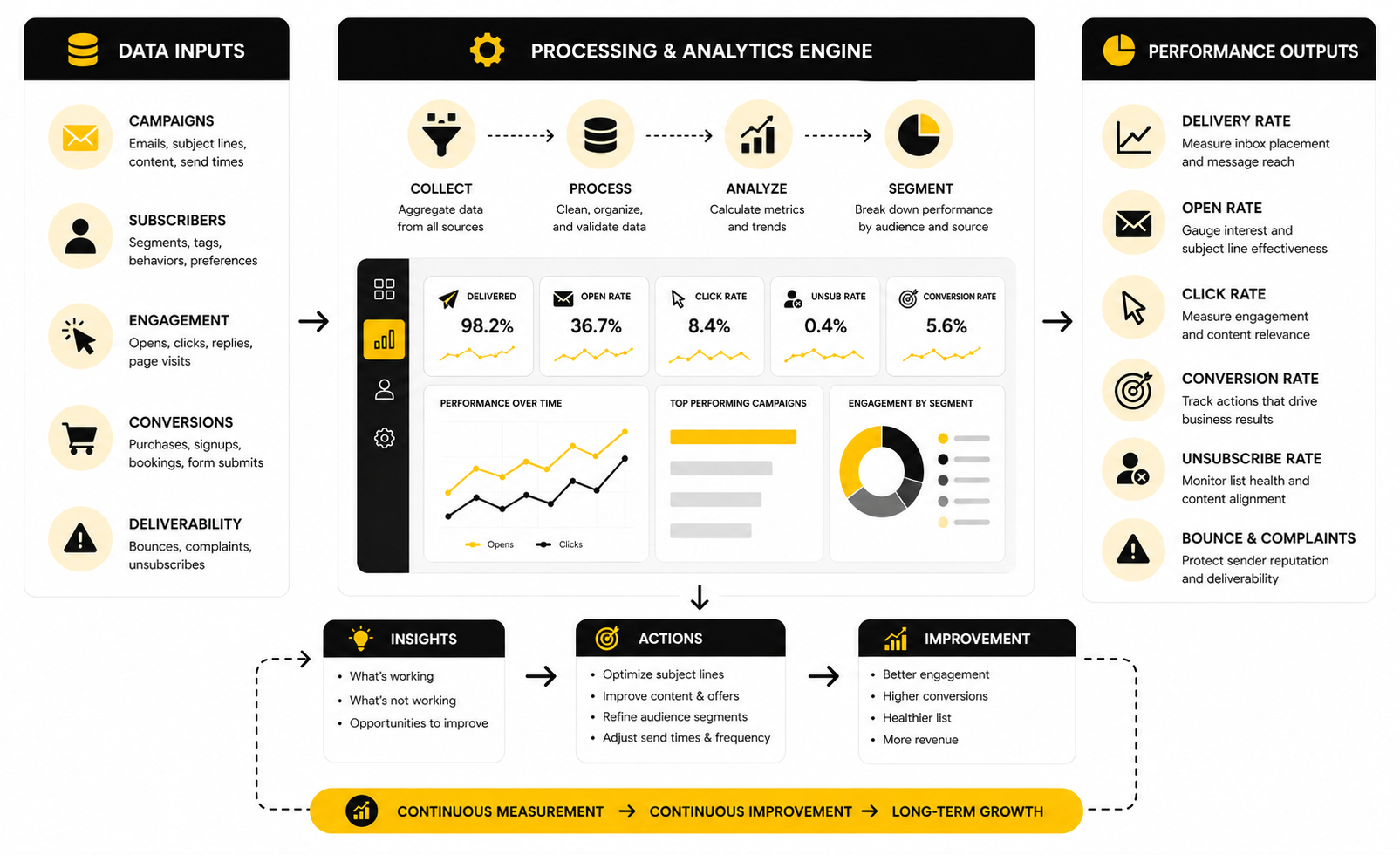
Your analytics system does not need to be complicated. It should connect each metric to a decision. That is the part most people miss.
Use this simple measurement flow:
- Delivery rate tells you whether your email reached subscribers.
- Open rate tells you whether the subject line and sender name created interest.
- Click rate tells you whether the message and offer created action.
- Conversion rate tells you whether the next step worked.
- Unsubscribe rate tells you whether the audience still wants this type of email.
- Revenue or pipeline value tells you whether the campaign justified the effort.
This is where the easiest email marketing platform earns its place. You should not need five disconnected tools to understand this path. If your email platform, forms, landing pages, CRM, and automations are connected, it becomes much easier to see where the system is leaking.
Watch Unsubscribes Without Panicking
Unsubscribes are not automatically bad. Some people should leave your list because they are no longer interested, not a fit, or only joined for one specific resource. A healthy list is not just big; it is responsive.
The problem starts when unsubscribes rise after specific campaigns or sequences. That usually means the message did not match expectations, the send frequency changed too aggressively, or the offer felt irrelevant. Your platform should make that pattern easy to spot.
If unsubscribes increase, look at the promise that brought people onto the list. Did the emails match it? Did you suddenly switch from helpful content to constant promotion? The fix is often not sending less forever; it is sending more relevant emails to better-defined segments.
Measure Automations Separately From Broadcasts
Broadcast campaigns and automated sequences should not be judged the same way. A broadcast goes to a group at one moment in time. An automation works continuously in the background and may influence leads or customers over days, weeks, or months.
For automations, look at completion rate, drop-off points, clicks by email, replies, bookings, purchases, and tag movement. If the first email performs well but the second email loses people, the issue is sequence flow. If people click through but do not convert, the issue may be the page, offer, calendar, or checkout experience.
This is why platforms with connected workflows can feel easier as your business grows. A tool like GoHighLevel can make sense when email performance needs to connect with CRM stages, calls, appointments, SMS, and pipelines. A lighter option like Moosend or Brevo may be easier when your main focus is email campaigns and straightforward automation.
Turn Metrics Into Better Decisions
The point of measurement is action. If your dashboard does not lead to decisions, it is just decoration. Every metric should answer one practical question.
Low delivery means fix list quality and sender setup. Low opens mean improve the subject line, sender identity, or audience match. Low clicks mean improve the email content, offer, segmentation, or call to action. Low conversions mean improve what happens after the click.
Email continues to matter because it can be measured and improved over time. Litmus research shows many marketers still see strong return from email, but the same research also shows not everyone tracks ROI clearly. That is the gap to avoid: do not just send emails because everyone says email works. Build a simple system that shows what is working for your business.
Platform Comparisons For Real Business Use Cases
At this stage, the question is no longer whether email marketing matters. The real question is which platform gives you the cleanest path for your specific business model. That is where the easiest email marketing platform becomes a strategic choice, not just a software preference.
Every platform has tradeoffs. A lightweight email tool may be faster to learn but weaker once you need CRM, appointments, or multi-channel follow-up. An all-in-one platform may solve more operational problems, but it can feel heavier if all you want is a simple weekly newsletter.
The mistake is looking for one universal winner. There is no perfect platform for everyone. There is only the best fit for your current workflow, growth stage, and tolerance for complexity.
For Solo Creators And Newsletter-First Businesses
Solo creators need speed. They usually care more about writing, scheduling, list growth, and simple automation than complex CRM logic. If publishing consistently is the priority, the platform should make email creation feel almost frictionless.
For this use case, the easiest platform is usually the one with clean templates, simple forms, basic segmentation, and fast reporting. You do not need a massive automation suite if it slows you down. You need a tool that helps you show up every week without turning each send into a technical project.
A platform like Moosend can make sense here because it keeps the focus on campaigns and automation without forcing a full sales operating system on you. Brevo can also fit if you want email plus broader communication channels without jumping into a heavier stack. The right choice depends on whether you value pure email simplicity or room for multi-channel communication.
For Service Businesses And Agencies
Service businesses need follow-up more than decoration. A polished newsletter is nice, but the money is often in lead capture, reminders, booking flows, pipeline movement, and sales conversations. That changes what “easy” means.
For an agency, consultant, coach, clinic, or local service provider, the easiest email marketing platform may be the one that reduces tool switching. When your form, CRM, calendar, SMS, pipeline, and email follow-up live together, it becomes easier to see where each lead stands. That can matter more than having the prettiest email editor.
This is where GoHighLevel becomes a serious option. It is not the lightest platform, but it can be operationally easier when your email marketing is tied to appointments, deals, client communication, and automation across multiple channels. The tradeoff is that you should be ready to set it up properly instead of treating it like a basic newsletter app.
For Course Sellers, Funnel Builders, And Digital Product Businesses
Digital product businesses often need more than email. They need landing pages, checkout flows, upsells, lead magnets, sales sequences, and post-purchase onboarding. If those pieces are scattered across too many tools, the system becomes fragile.
For this use case, the easiest setup may be a platform that keeps funnels and email close together. Systeme.io is worth considering when you want email, funnels, courses, and simple automation in one place. ClickFunnels can fit when funnel building is the center of the business and email supports that sales path.
The tradeoff is flexibility versus focus. A funnel-first tool can make campaign execution easier when your business is built around offers and conversion paths. But if you mainly need advanced email segmentation or newsletter-style publishing, a dedicated email platform may feel cleaner.
For Ecommerce And Product-Based Brands
Ecommerce email marketing depends heavily on behavior. Browsing, carts, purchases, product interest, repeat buying, and customer lifetime value all matter. A basic newsletter tool can work early, but it may become limiting once purchase data drives most of your segmentation.
The easiest platform for ecommerce is the one that helps you act on customer behavior without manual work. You want abandoned cart flows, post-purchase sequences, win-back campaigns, product-based segments, and revenue reporting. If those require complicated workarounds, the platform is not really easy for ecommerce.
This is where you should be careful with all-in-one promises. A platform can be excellent for funnels or service businesses and still not be the cleanest fit for ecommerce. Choose based on the customer data you need to use, not just the number of features on the homepage.
For Teams That Care About Compliance And Deliverability
As your list grows, deliverability becomes less optional. Google’s sender guidelines require proper authentication, and the domain in the From header must align with SPF or DKIM for DMARC to pass through Google’s published sender requirements. Yahoo also tells senders to authenticate mail, keep spam complaint rates low, and keep spam complaints below 0.3% in its sender best practices.
This matters because ease of use is not only about the editor. A platform that makes domain authentication, unsubscribe handling, list hygiene, bounce management, and compliance settings easy can save you real trouble. If those controls are buried or confusing, your “simple” platform can become risky as volume increases.
When comparing platforms, look for clear setup guidance around SPF, DKIM, DMARC, unsubscribe links, suppression lists, consent records, and bounce handling. You do not need to become a deliverability engineer. But your platform should make the right behavior easy and the risky behavior hard.
For Teams Planning To Scale
Scaling email marketing creates new pressure. More subscribers mean more segmentation decisions. More campaigns mean more reporting complexity. More revenue tied to email means mistakes become more expensive.
At this stage, the easiest email marketing platform is the one that keeps your system understandable as it grows. You need naming conventions, reusable templates, approval flows, clear ownership, and simple documentation. Without that, even a good platform becomes messy.
A practical scaling setup should answer three questions:
- Who owns the email calendar?
- Who can edit automations and templates?
- How do we decide what gets tested next?
These questions sound simple, but they prevent chaos. Most email problems at scale are not caused by missing features. They are caused by unclear ownership and messy systems.
The Hidden Risk Of Choosing Only On Price
Price matters, but it should not be the only filter. The cheapest tool can become expensive if it wastes time, blocks growth, or forces you into awkward workarounds. The most expensive tool can also be wasteful if your team only uses 20% of it.
Look at total operating cost. That includes subscription fees, setup time, training time, integrations, support, migration risk, and the cost of campaigns that never ship because the workflow is too annoying. Easy platforms reduce those hidden costs.
This is why a low-cost tool like Brevo, a funnel-friendly tool like Systeme.io, or a broader operating system like GoHighLevel can each be the right answer in different situations. The smartest choice is the one that makes execution easier for your business, not the one that wins a generic comparison chart.
When To Switch Platforms
Switching platforms is worth it when the current tool is actively slowing execution. If your team avoids sending campaigns because the editor is painful, avoids automations because the logic is confusing, or cannot trust the reports, the platform is costing you more than the invoice suggests. That is a valid reason to move.
But do not switch just because another platform looks newer. Migration creates risk. You have to move contacts, tags, templates, forms, automations, unsubscribe records, and sometimes historical performance data. If the current system works and the problems are mostly strategic, switching tools will not fix the real issue.
A good rule: switch when the platform blocks a necessary workflow, not when you are bored. If the bottleneck is poor positioning, weak offers, unclear segmentation, or inconsistent sending, fix the marketing first. Software should support strategy, not replace it.
Final Recommendations, Checklist, And FAQ
The easiest email marketing platform is the one that helps you build a working system without turning every campaign into a project. By now, the pattern should be clear. You need simple setup, clean contact management, useful automation, practical reporting, and enough room to grow without drowning in features.
For most beginners, the safest path is to choose the platform that matches the next 12 months of execution. If you want straightforward email campaigns and automation, Moosend and Brevo are practical places to start. If you want funnels, courses, and email in one simple business system, Systeme.io is a strong fit. If you run a service business, agency, or lead-generation operation where CRM, appointments, SMS, and pipelines matter, GoHighLevel may be the better long-term choice.
The smartest decision is not the tool with the most features. It is the tool that helps you launch, measure, improve, and stay consistent. That sounds simple, but it is exactly where most email marketing results are won.
The Final Selection Checklist
Use this checklist before you commit to any platform. It will keep you focused on execution instead of getting distracted by feature pages.
- Can you create a signup form without technical help?
- Can you build and send a clean campaign in under an hour?
- Can you create a simple welcome automation without confusion?
- Can you tag and segment contacts in a way you understand later?
- Can you see delivery, opens, clicks, unsubscribes, and conversions clearly?
- Can you connect email to your real business goal, such as sales, bookings, or product purchases?
- Can you authenticate your sending domain with SPF, DKIM, and DMARC guidance?
- Can you manage unsubscribes and bounces without manual cleanup?
- Can your team learn the platform without constant support?
- Can the platform still support your workflow as your list and campaigns grow?
If the answer is no to several of those questions, keep looking. An email platform should reduce friction, not add another operational headache. Easy should mean usable, reliable, and practical under real business pressure.
FAQ - Built For Complete Guide
What is the easiest email marketing platform for beginners?
The easiest email marketing platform for beginners is usually the one that lets you set up a form, send a campaign, and create a welcome automation without needing technical support. For simple campaigns and automations, Brevo and Moosend are practical options. For creators who also need funnels, courses, and checkout pages, Systeme.io may feel easier because more pieces are included in one place.
What makes an email marketing platform easy to use?
An easy platform has clear navigation, a simple email editor, understandable automation, clean contact management, and reporting that leads to action. It should not make you guess where forms, lists, tags, campaigns, and workflows live. The best test is whether you can launch a basic subscriber journey without watching hours of tutorials.
Is the easiest platform always the cheapest?
No, and this is important. The cheapest platform can become expensive if it wastes time, limits automation, or forces awkward integrations. The best choice is the platform with the lowest total friction for your business, including setup, training, reporting, support, and future growth.
Should I choose an all-in-one platform or a dedicated email tool?
Choose a dedicated email tool if email campaigns and simple automations are your main focus. Choose an all-in-one platform if email needs to connect closely with funnels, CRM, appointments, SMS, sales pipelines, or client management. For service businesses and agencies, GoHighLevel can be easier operationally because more of the customer journey sits in one system.
How many emails should be in my first welcome sequence?
Start with three emails. The first email should deliver the promise and set expectations, the second should provide practical value, and the third should guide the subscriber toward a clear next step. You can add more emails later once you see where people click, reply, book, or buy.
Which metrics matter most for beginners?
Beginners should focus on delivery rate, open rate, click rate, unsubscribe rate, and conversions. Delivery tells you whether your emails are reaching people, opens show first-level interest, clicks show engagement, and conversions show whether the campaign supports the business goal. Do not obsess over every dashboard metric before your basic system is live.
What is a good open rate for email marketing?
A good open rate depends on industry, region, audience quality, and list source. The Brevo 2025 benchmark report shows open rates vary widely by region and industry, so your own trend matters more than one generic benchmark. Use open rates to improve subject lines and sender trust, but judge business impact by clicks, replies, bookings, purchases, and revenue.
How important is deliverability when choosing a platform?
Deliverability is critical because a beautiful campaign is useless if it does not reach the inbox. Google’s sender requirements emphasize authentication with SPF, DKIM, and DMARC alignment through published sender guidelines, and Yahoo’s sender best practices tell senders to keep complaint rates below 0.3% through its sender guidance. The easiest email marketing platform should make authentication and list hygiene easy to manage.
Should I use AI features in an email marketing platform?
AI can help with subject lines, drafts, segmentation ideas, summaries, and campaign variations. But AI does not replace positioning, list quality, offer clarity, or customer understanding. Use AI to move faster, not to outsource the strategy completely.
When should I switch email marketing platforms?
Switch when your current platform blocks an important workflow, creates reporting confusion, or slows execution so much that campaigns do not ship. Do not switch just because another tool looks more exciting. Migration takes work, so the reason should be strong enough to justify moving contacts, templates, automations, forms, and suppression data.
What is the best platform for agencies?
For agencies, the best platform is usually the one that helps manage leads, clients, campaigns, appointments, automations, and reporting in one place. GoHighLevel is often a strong fit because it combines email with CRM, funnels, pipelines, SMS, and client-focused workflows. It may be more than a solo newsletter creator needs, but for agencies, that broader system can reduce tool chaos.
What is the best platform for digital product sellers?
Digital product sellers should look for email, landing pages, checkout, automation, and course or product delivery support. Systeme.io can be a practical choice when you want those pieces in one simpler stack. ClickFunnels can also fit when funnel building is the center of the business.
Can I start email marketing without a website?
Yes, you can start with a landing page, form, or simple funnel before building a full website. Many platforms let you collect subscribers, send emails, and automate follow-up without a traditional website. The key is having one clear signup promise and one clear next step.
How do I avoid making email marketing too complicated?
Start with one audience, one signup path, one welcome sequence, and one primary conversion goal. Do not build ten automations before you know whether the first one works. The easiest email marketing platform will help, but simplicity is also a strategic decision.
Work With Professionals
Explore 10K+ Remote Marketing Contracts on MarkeWork.com
Most marketers spend too much time chasing clients, competing on crowded platforms, and losing a percentage of every project to middlemen.
MarkeWork gives you a better way. Browse thousands of remote marketing contracts and connect directly with companies desperate to hire skilled marketers like you, without platform commissions and without unnecessary gatekeepers.
If you're serious about finding better opportunities and keeping 100% of what you earn, explore available contracts and create a profile for free at MarkeWork.com.