

An email blast sounds simple. Write one message, hit send, and put it in front of a lot of people at once. That basic idea is still true, but the way it works in practice has changed fast, especially after Google tightened sender requirements for Gmail in February 2024 and bulk sending became much less forgiving.
That is why most weak email blasts fail for the same reason: they treat reach as the goal, when the real goal is response. A mass send that lands in spam, gets ignored, or trains people to unsubscribe is not efficient. It is just loud.
A modern email blast has to do two things at the same time. It has to scale like a broadcast, but it also has to feel relevant, technically sound, and easy to trust. When you get that balance right, email is still one of the highest-performing channels, with Litmus reporting strong returns from email investment in 2025 and Mailchimp benchmark data showing that healthy open and click rates are still very achievable across industries.
- What an Email Blast Really Is
- Why Email Blasts Still Matter
- The Modern Email Blast Framework
- Core Components of a High-Performing Email Blast
- Professional Implementation and Deliverability
- Measuring Performance, Fixing Mistakes, and FAQ
What an Email Blast Really Is
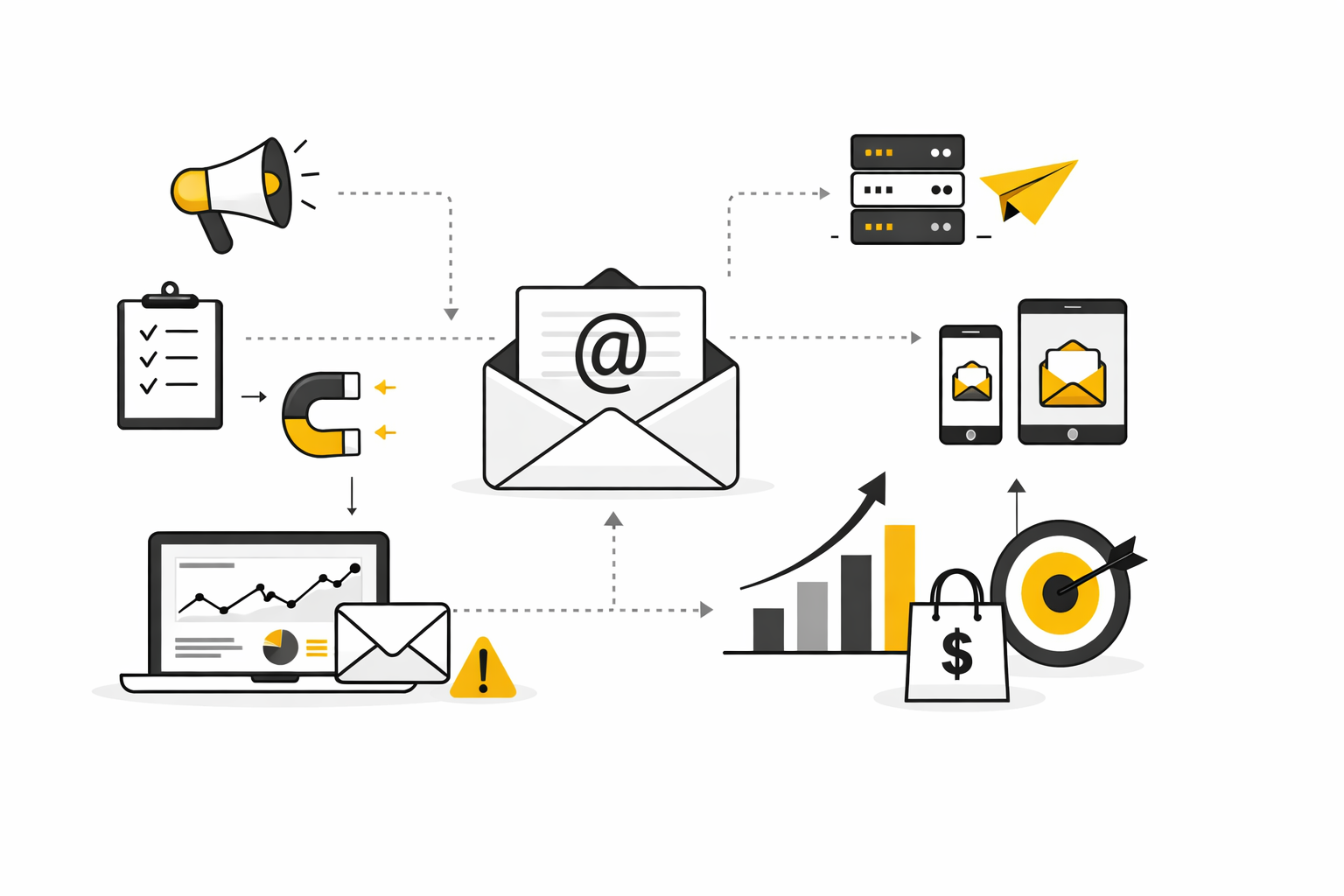
An email blast is a single marketing message sent to a large group of recipients at the same time. That definition shows up consistently across major email platforms, including Twilio, Campaign Monitor, and Klaviyo. The common thread is scale, speed, and one message going to many inboxes at once.
The problem is that the term itself carries baggage. In practice, “blast” often implies low targeting, low personalization, and low respect for subscriber intent. That reputation is not just a branding issue. It usually points to the exact behaviors that hurt performance: weak segmentation, generic copy, poor list hygiene, and an overreliance on volume.
So the smartest way to think about an email blast today is this: it is still a mass send, but it should not be a blind send. You can absolutely send one campaign to a large audience, but the audience still needs to be permission-based, the offer still needs to be relevant, and the delivery setup still needs to be clean. Otherwise, you are not running a campaign. You are just increasing the chance of being filtered out.
Why Email Blasts Still Matter
Email blasts still matter because there are moments when you need reach more than complexity. Product launches, flash promotions, deadline reminders, event announcements, major updates, and seasonal campaigns all benefit from getting one clear message in front of a large audience quickly. In those cases, a mass send is not outdated. It is practical.
The reason email remains so valuable is not that it is flashy. It is that it is direct, owned, and measurable. Unlike rented attention on social platforms, your list is an asset you control, and industry data keeps reinforcing that email remains a serious performance channel, from DMA reporting 381 billion emails sent in 2023 to Litmus showing that many marketing leaders still report strong email ROI.
But this is where the nuance matters. Email blasts work best when they are used deliberately, not as the default for every campaign. A broad send can create a spike in traffic, orders, replies, or registrations, but only if the list trusts you already. The inbox is crowded, and even small advantages in relevance matter. Campaign Monitor’s personalization research and its summary of segmentation-driven revenue gains both point in the same direction: broad reach performs better when it is built on targeted logic.
The Modern Email Blast Framework
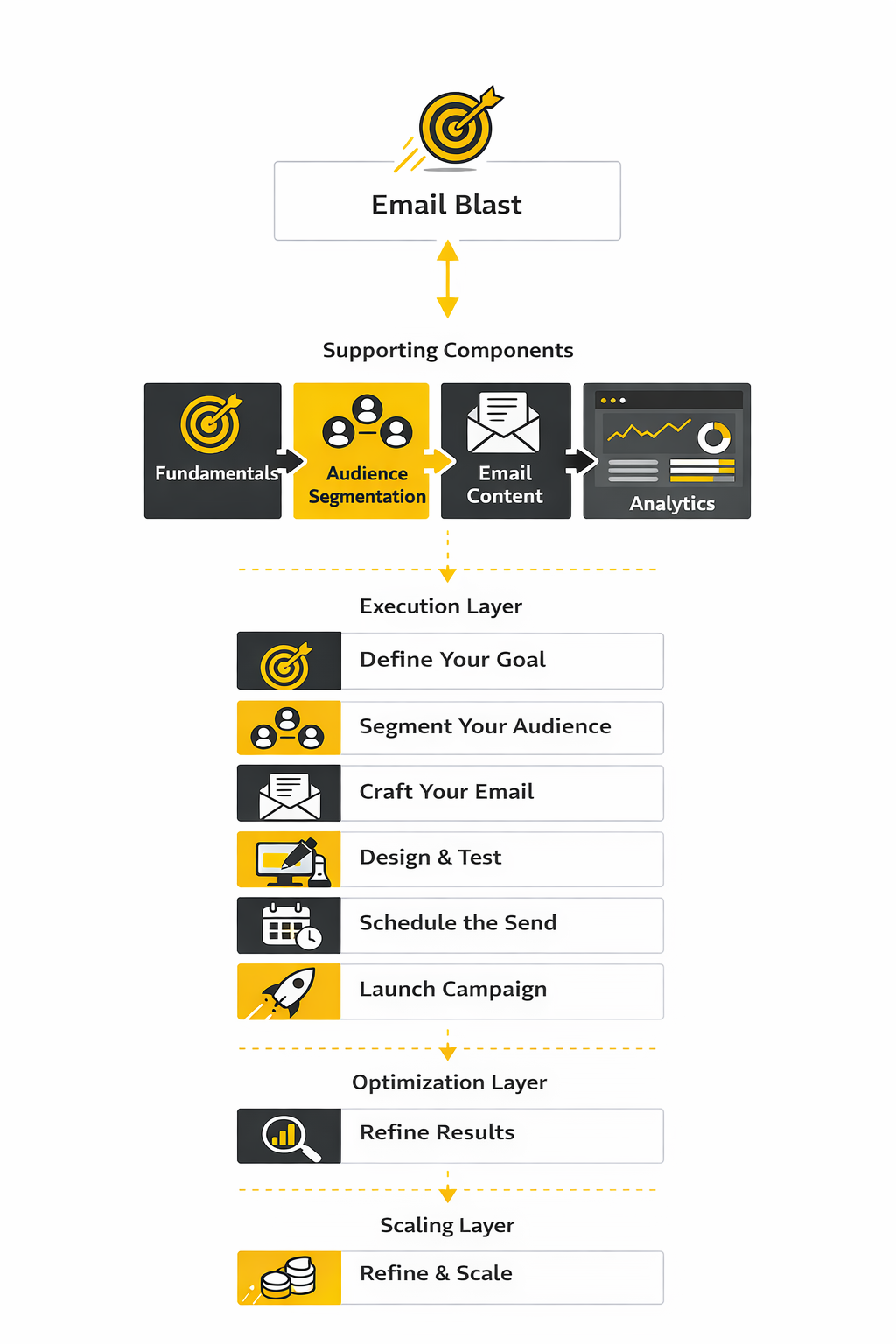
A strong email blast follows a simple framework: audience, offer, message, send conditions, and measurement. That sounds basic, but most underperforming campaigns break because one of those pieces is weak. The audience is too broad, the offer is vague, the message is too long, the domain is poorly configured, or the team never defines what success should look like before sending.
The first layer is strategic. You decide who should receive the campaign, why they should care right now, and what single action you want them to take. This is where modern email marketing separates itself from the old “blast everyone” mindset. Even a large send should have a reason behind the audience selection, whether that means sending to active subscribers, recent buyers, leads from a specific source, or people who showed intent around a category.
The second layer is operational. Your sending setup has to be trustworthy enough for inbox providers to take you seriously. Google now requires senders to follow specific standards around authentication, and bulk senders need SPF, DKIM, and DMARC configured correctly, along with one-click unsubscribe for marketing messages and a reported spam rate that stays below 0.10% and never reaches 0.30%. That is not a technical side note anymore. It is part of the campaign strategy.
The third layer is tooling. You need a platform that makes segmentation, compliance, reporting, and testing easy enough to use consistently. For many teams, that means choosing a practical sender like Brevo, Moosend, or Systeme.io instead of forcing bulk email through systems that were never designed for serious campaign delivery.
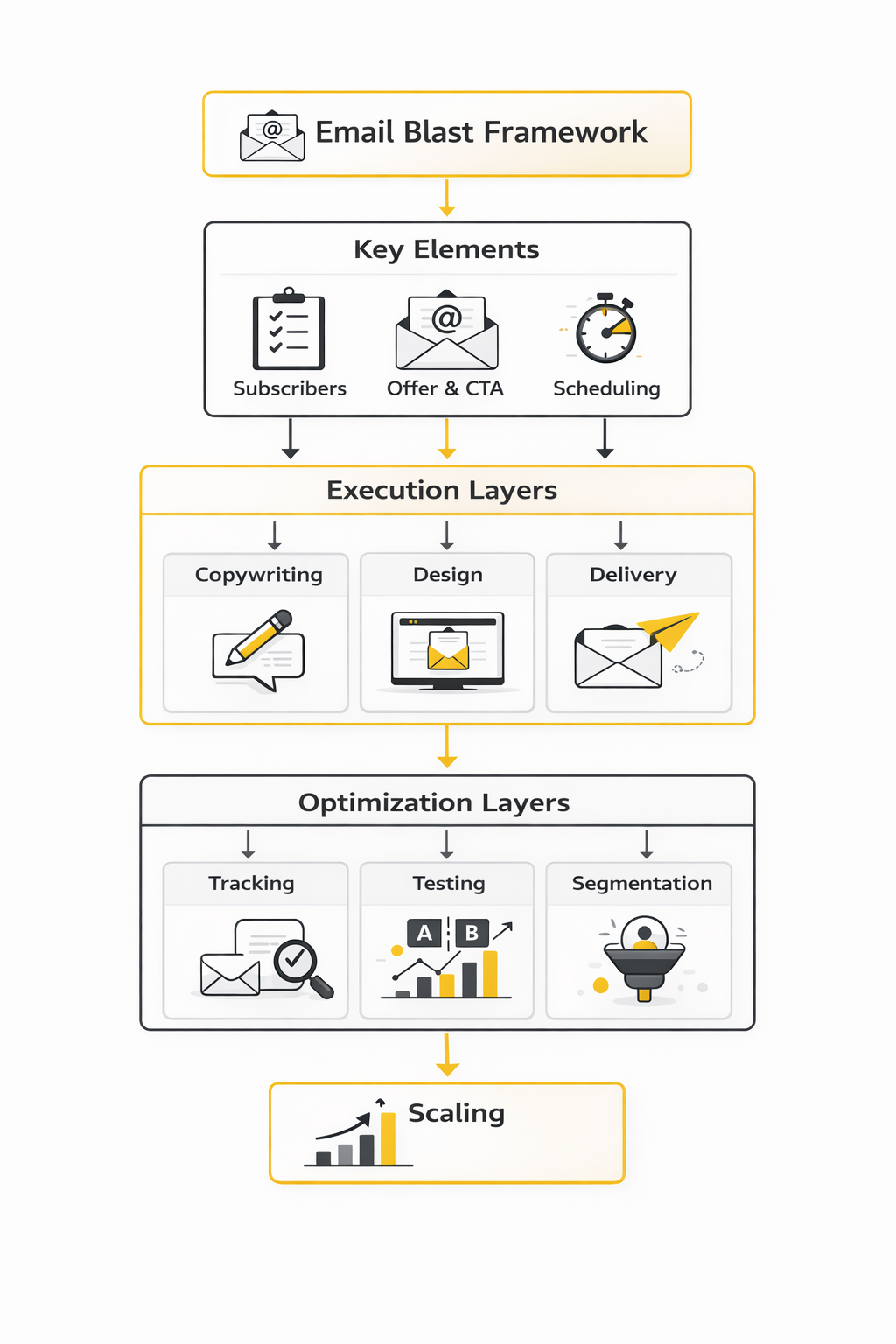
The big takeaway is simple. A modern email blast is no longer just a message. It is a system. When the system is solid, a mass send can feel timely, relevant, and profitable. When the system is sloppy, even a great offer struggles before the reader ever sees it.
Core Components of a High-Performing Email Blast
Once the framework is clear, the next step is execution. This is where an email blast either turns into a focused revenue asset or stays a generic mass send that people ignore. The difference usually comes down to a handful of components that shape how the message is perceived before, during, and after the open.
A lot of teams overcomplicate this part. They spend too much time tweaking button colors and not enough time tightening the audience, the promise, and the action. Strong email performance still comes back to fundamentals: who gets the message, what they see first, why they should care, and how easy it is to act.
Audience Selection Comes First
The biggest mistake in email blast strategy is treating the whole list like one audience. That is exactly how relevance drops, unsubscribes rise, and engagement weakens over time. Mailchimp’s benchmark data shows that performance varies widely by industry, which is a useful reminder that context matters and “average” behavior is not a strategy on its own email benchmark data.
That is why the first real decision is not copy. It is inclusion. You need a clear reason why these people, specifically, should receive this campaign now, whether they are active subscribers, recent buyers, webinar registrants, trial users, or people who clicked around a product category recently.
This does not mean every email blast needs advanced behavioral automation. It means the send should be intentional. Even basic segmentation usually beats the lazy alternative of sending the same message to everyone on the database.
A Clear Offer Beats a Clever Email
Most weak campaigns do not fail because the writing is terrible. They fail because the offer is muddy. If readers cannot tell within a few seconds what is new, useful, urgent, or beneficial, the email blast loses momentum immediately.
A strong offer is concrete. It gives the reader a clear reason to care, whether that is a deadline, a launch, a pricing change, a limited bundle, a practical update, or access to something they want. Vague promotional language sounds like marketing. Specific value sounds like a decision.
This is also where discipline matters. One email blast should usually drive one primary action. You can include supporting details, but once the message asks readers to do five different things, the campaign starts competing with itself.
Subject Line and Preview Text Do the Heavy Lifting
The inbox decision happens before your email body gets a chance. That is why subject line and preview text deserve far more attention than they usually get. They are not decoration. They are the first filter between your campaign and the open.
The practical goal is not to sound clever. It is to sound worth opening. Clear subject lines often outperform inflated ones because they reduce uncertainty and match what the reader actually expects to find inside the message.
Preview text matters just as much because it either reinforces the main promise or wastes space. If the preheader repeats the subject line, shows navigation filler, or displays random formatting text, you are throwing away one of the easiest opportunities to strengthen the open.
The Body Needs One Message, Not a Parade of Ideas
Once someone opens the email, the job changes. Now the campaign needs to deliver on the promise from the inbox and move the reader toward action without friction. That is why the body of a strong email blast feels narrow, not crowded.
The best structure is usually simple:
- Lead with the main point.
- Explain why it matters.
- Show the next step.
- Make the call to action obvious.
That may sound almost too basic, but basic works when attention is limited. People do not read marketing emails like white papers. They scan, judge, and decide. If the message cannot survive that behavior, it is not built for the inbox.
Good Copy Sounds Human
A surprising amount of email copy still sounds like it was written by committee. It leans on filler, broad claims, and corporate phrasing that adds length without adding clarity. In an email blast, that style usually kills momentum fast.
Good copy sounds like a capable person explaining something useful. It gets to the point, uses normal words, and avoids trying too hard. That does not mean it has no personality. It means the personality supports the message instead of distracting from it.
This matters even more in promotional sends. Readers already know they are being marketed to. What they want is a message that respects their time and makes a real case for the click.
Design Should Support the Decision
Design is important, but not in the way most people think. A high-performing email blast does not need to be visually flashy. It needs to be easy to understand, easy to scan, and easy to act on.
That means clean hierarchy, strong spacing, readable text, and a visible call to action. The design should direct attention, not compete for it. On mobile especially, visual clutter creates friction fast, and friction kills clicks.
This is one reason many teams do well with straightforward email builders instead of overdesigned templates. Platforms like Brevo, Moosend, and Systeme.io make it easier to ship practical campaigns without turning every send into a design project.
The Call to Action Must Be Obvious
A lot of campaigns lose results at the very end. The reader gets interested, understands the offer, and then meets a weak or confusing call to action. That is completely avoidable.
A strong CTA tells the reader what happens next. It is direct, concrete, and aligned with the message that came before it. If the email is about booking, downloading, claiming, registering, or buying, the CTA should say that clearly.
It also helps when the email blast does not hide the action. One primary CTA usually works better than scattering multiple competing buttons throughout the layout. You want momentum, not choice overload.
Trust Signals Matter More Than Hype
Email is an intimate channel compared with most marketing platforms. People are letting you into their inbox, which means trust is a performance factor, not just a branding nice-to-have. If the message feels exaggerated, vague, or oddly aggressive, that trust erodes quickly.
Trust signals can be simple. Clear branding, a recognizable sender name, realistic claims, working links, consistent formatting, and an easy unsubscribe option all make the email feel safer to engage with. Google’s bulk sender rules also reinforce this direction by requiring easier unsubscribing and stronger authentication for large-scale senders sender requirements.
That is the bigger point. The strongest email blast is not the loudest one. It is the one that makes the reader comfortable enough to keep going.
Professional Implementation and Deliverability
This is the part most people underestimate. They think the hard part of an email blast is writing the message, when the real risk usually sits behind the scenes in setup, sending discipline, and deliverability. If the technical foundation is weak, even strong copy and a strong offer can disappear before the campaign has a fair chance.
The good news is that professional implementation is not mysterious. It is a repeatable process. Once you build the workflow properly, each new email blast becomes easier to launch, easier to troubleshoot, and much more likely to land where it should.
Start With a Permission-Based List
A professional email blast begins with consent. That means the list is built from people who knowingly signed up, purchased, registered, or otherwise gave a clear reason to hear from you. That sounds obvious, but it is still where many bad campaigns begin to unravel.
Purchased lists and scraped contacts create a delivery problem before you even write the subject line. They tend to produce low engagement, more complaints, and weaker trust signals, which is exactly the behavior mailbox providers watch for. Google’s sender guidance is built around this logic, and Yahoo’s best practices reinforce the same standard for legitimate marketing sends Google sender guidelines Yahoo sender best practices.
A clean list is not just a legal or ethical checkbox. It is a performance advantage. The more your email blast goes to people who actually expect it, the more likely it is to generate opens, clicks, and conversions instead of friction.
Set Up Authentication Before You Scale
This is where email moves from “marketing task” to “infrastructure task.” If you are sending serious volume, authentication is not optional anymore. Google requires bulk senders to have SPF, DKIM, and DMARC configured, and Yahoo has aligned its requirements in the same direction for promotional email Google sender guidelines Yahoo one-click unsubscribe and requirements.
These standards help inbox providers verify that your domain is actually authorized to send the message. Without that trust layer, your email blast has a harder time reaching the inbox consistently, no matter how polished the creative looks. That is why implementation starts with domain setup, not with templates.
This is also the stage where serious senders should pay attention to reputation monitoring. Google notes that spam rates are tracked in Postmaster Tools, and bulk senders lose mitigation eligibility if the user-reported spam rate rises above 0.3% sender guidelines FAQ. That threshold is not abstract. It directly affects how forgiving the system will be when your email program slips.
Warm Up Sending Volume Instead of Spiking It
A common mistake is going from almost no activity to a huge campaign overnight. That kind of jump can look suspicious, especially from a newer domain or a domain with inconsistent history. Professional implementation means ramping volume in a controlled way so mailbox providers see stable behavior instead of a sudden blast of activity.
That does not mean you need months of elaborate warm-up rituals for every campaign. It means respecting the sending history of the domain and being realistic about what your infrastructure can support. A list of 50,000 cold or semi-cold subscribers behaves very differently from 50,000 engaged readers who have been hearing from you regularly.
This is one reason consistency matters so much. Mailbox providers are not judging one message in isolation. They are forming a pattern around your sender behavior over time.
Build a Pre-Send Checklist You Actually Use
The cleanest way to professionalize an email blast is to make the process boring. That may sound unglamorous, but boring is good here. A repeatable checklist catches avoidable mistakes before they become expensive.
A useful checklist usually includes:
- confirming the audience segment
- checking suppression and unsubscribe rules
- reviewing subject line and preview text
- testing links and tracking
- confirming sender identity and reply-to address
- checking mobile rendering
- verifying plain-text version
- confirming legal footer and unsubscribe function
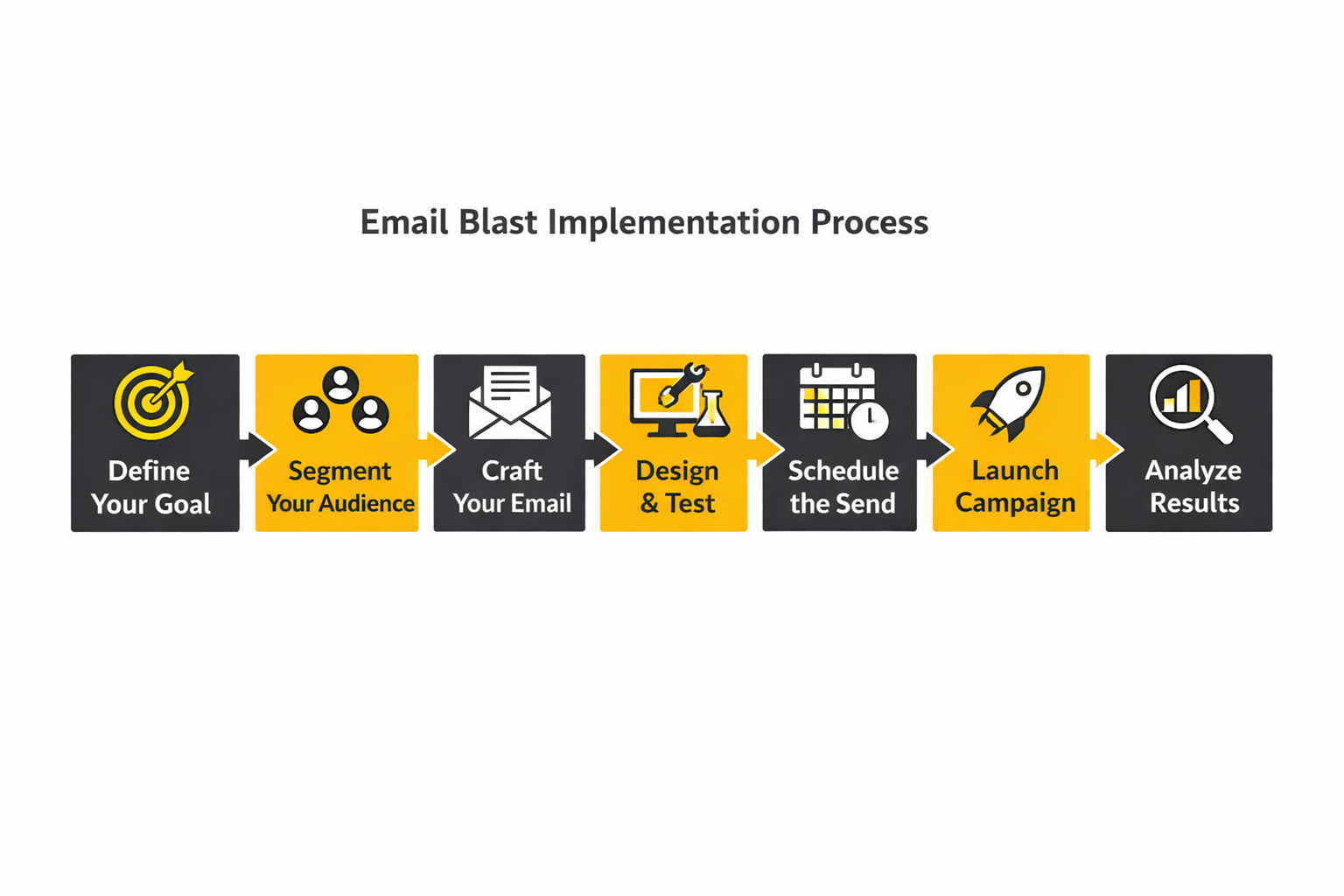
This is also the moment to test the message in realistic conditions. Not just in the editor. In actual inboxes. Litmus continues to position testing and deliverability preparation as core parts of professional email operations because rendering, accessibility, and inbox behavior still vary more than many marketers assume email resources and deliverability guidance.
Choose a Platform Built for Bulk Email
Trying to run an email blast through the wrong tool creates needless pain. You want software that supports segmentation, authentication, unsubscribe handling, reporting, and automation without forcing manual workarounds. That is not a luxury. It is basic operational hygiene.
For smaller teams or practical operators, tools like Brevo, Moosend, and Systeme.io are appealing because they reduce setup friction while still supporting real campaign infrastructure. If the email blast is closely tied to funnel pages, lead capture, and offer sequences, ClickFunnels can fit that workflow better than a standalone sender.
The point is not to chase the most hyped platform. It is to choose one that lets you execute reliably. The best email system is the one your team can use consistently without breaking segmentation, compliance, or reporting every time a campaign goes out.
Treat Unsubscribes as a Health Signal
Too many marketers treat unsubscribes like failure. In reality, unsubscribes are part of list health. A subscriber who no longer wants the emails and leaves cleanly is far less damaging than a subscriber who stays annoyed and starts marking your messages as spam.
That is why one-click unsubscribe now matters operationally, not just politically. Google requires one-click unsubscribe for marketing and subscribed messages from bulk senders, and Yahoo requires a functioning list-unsubscribe header for promotional email as well Google sender guidelines Yahoo sender best practices. Easy exit paths protect the sender as much as the recipient.
A professional email blast accepts that not everyone should stay on the list forever. The goal is not forced retention. The goal is a healthier audience with stronger intent.
Use a Simple Execution Workflow
The easiest way to keep implementation under control is to reduce the send into a clear operational rhythm. That rhythm does not need to be fancy. It just needs to be followed every time.
A practical workflow looks like this:
- Define the audience and exclusion logic.
- Confirm the single offer and campaign goal.
- Write the subject line, preview text, and body around one action.
- Check authentication, links, suppression rules, and unsubscribe behavior.
- Test rendering across devices and inboxes.
- Send to the selected segment, not the entire database by default.
- Review performance quickly after launch, then again after the campaign settles.
That process sounds disciplined because it is. And that discipline is exactly what makes an email blast dependable instead of random. The teams that win with email are rarely improvising. They are running a system.
Implementation Gets Better When the Inputs Get Better
One last thing matters here. Deliverability and execution are not isolated from strategy. If your audience is weak, your offer is weak, and your message is weak, no technical fix will rescue the campaign completely. The infrastructure gives the email blast a fair chance, but the fundamentals still decide what happens once it lands.
That is why professional implementation is really the bridge between planning and results. It takes the strategic work from earlier sections and turns it into something that can survive real inbox conditions. When that bridge is strong, the campaign performs more predictably. When it is weak, the whole send becomes guesswork.
Statistics and What the Data Actually Tells You
Most people look at email blast metrics the wrong way. They chase isolated numbers like open rate or click rate without understanding what those numbers actually represent. The result is confusion. Campaigns feel inconsistent, and decisions become reactive instead of intentional.
The reality is simple. Metrics only matter when they connect to behavior. An email blast is not about hitting arbitrary benchmarks. It is about understanding what your audience did, why they did it, and what that means for your next move.
The Core Metrics That Actually Matter
There are dozens of metrics available inside most email platforms, but only a few truly drive decision-making. Everything else is secondary or diagnostic.
The core signals to watch are:
- delivery rate
- open rate
- click-through rate
- conversion rate
- unsubscribe rate
- spam complaint rate
Each one reflects a different stage of the email blast journey. Delivery tells you if your infrastructure worked. Opens reflect initial interest. Clicks show engagement. Conversions prove business impact. Unsubscribes and complaints reveal friction and misalignment.
Industry benchmark data from Mailchimp shows how widely these metrics can vary depending on industry and audience type. That variation is the key insight. There is no universal “good” number. There is only performance relative to your audience and your past campaigns.
Open Rates Are Directional, Not Absolute
Open rate still matters, but not in the way it used to. Privacy changes, especially Apple Mail Privacy Protection, have made open tracking less precise because some opens are automatically triggered without real user intent. Apple’s own documentation explains how this behavior protects user privacy by preloading email content Apple Mail Privacy Protection overview.
That means open rate is now best used as a directional signal. If your email blast suddenly drops in opens, something likely changed in subject line quality, audience targeting, or inbox placement. If opens rise, your message probably became more relevant or better positioned.
What you should not do is treat open rate as a final success metric. It is an entry point, not an outcome.
Click-Through Rate Shows Real Engagement
Click-through rate is where intent becomes visible. A click requires a conscious decision, which makes it a stronger indicator of message quality than opens alone. When someone clicks, they are saying the email blast delivered enough value to justify action.
This is also where message clarity becomes measurable. If your open rate is solid but clicks are weak, the problem is rarely the audience. It is usually the offer, the structure, or the call to action. The message created curiosity but failed to convert that curiosity into movement.
That is actionable insight. It tells you exactly where to improve next time.
Conversion Rate Is the Only Metric That Pays You
Everything in an email blast leads to one outcome: conversion. That might be a purchase, a booking, a signup, or a download, depending on the campaign goal. Without conversion tracking, you are guessing about performance.
This is why serious email setups connect campaigns to landing pages, funnels, or product flows. Tools like ClickFunnels or Systeme.io make it easier to tie an email blast directly to revenue events instead of stopping at clicks.
Once conversion tracking is in place, everything becomes clearer. You can see which campaigns actually produce results and which ones only create activity.
Unsubscribes and Complaints Reveal Misalignment
These are the metrics most people try to avoid looking at, but they are some of the most useful. An unsubscribe is not just a loss. It is feedback. It tells you the message, timing, or targeting did not match the reader’s expectations.
Spam complaints are even more serious because they affect deliverability directly. Google requires bulk senders to keep spam complaint rates below strict thresholds, with 0.3% flagged as a level where mitigation eligibility is lost sender requirements FAQ. That is not a vanity metric. It directly impacts whether future email blasts reach the inbox.
A rising unsubscribe or complaint rate usually points to one of three issues:
- sending too frequently
- sending to the wrong audience
- sending messages that feel misleading or irrelevant
Fixing those problems improves both performance and deliverability at the same time.
Building a Simple Analytics System
To make data useful, you need a system, not just a dashboard. That system should connect campaign inputs to measurable outcomes so you can learn from each send.
A simple structure works well:
- Define the goal before sending the email blast.
- Track opens, clicks, and conversions for that specific goal.
- Compare performance against recent campaigns, not global averages.
- Identify one variable that likely influenced the result.
- Apply that insight to the next campaign.
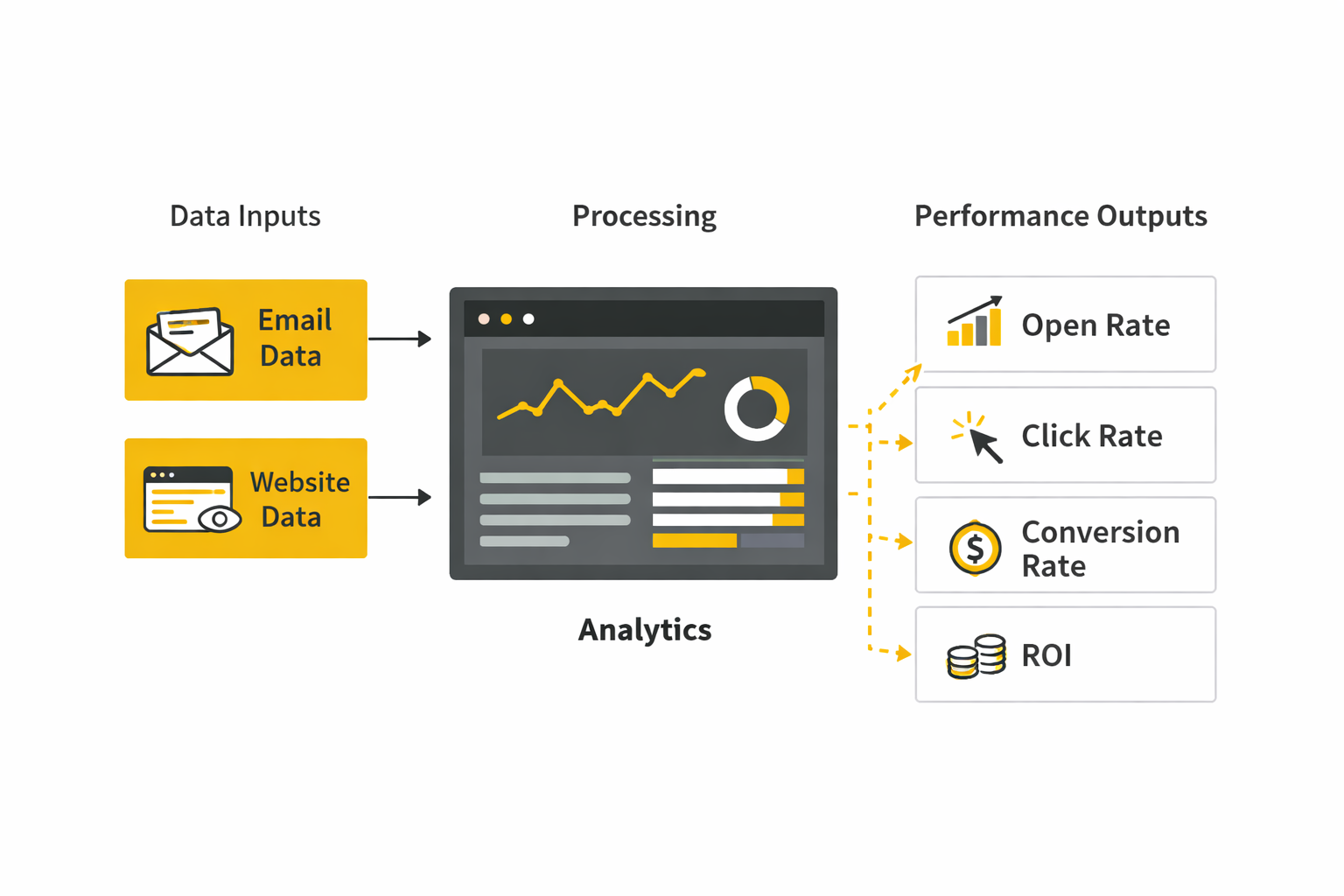
This approach keeps analysis focused. You are not trying to decode everything at once. You are looking for patterns that repeat over time. That is how email programs improve consistently instead of randomly.
Benchmarks Are Useful Only When Used Correctly
Benchmark data has value, but only when it is used as context, not as a target. Reports like those from Mailchimp and Campaign Monitor help you understand what is typical across industries, but they cannot define what success should look like for your specific list.
Your audience, your offer, your frequency, and your positioning all shape your results. A niche B2B list behaves differently from a large e-commerce database. A high-ticket offer behaves differently from a low-friction signup.
The smarter way to use benchmarks is to sanity-check your performance. If your numbers are drastically below typical ranges, something is likely broken. If they are in range or improving over time, the system is working.
Data Should Drive Action, Not Just Reporting
The biggest mistake in email analytics is stopping at reporting. Seeing the numbers is not the goal. Changing behavior based on those numbers is.
Every email blast should answer a simple question: what will we do differently next time? That might mean tightening the audience, rewriting subject lines, simplifying the offer, improving the landing page, or adjusting send timing.
When data leads to action, performance compounds. When it does not, metrics become noise.
Advanced Strategy, Tradeoffs, and Scaling Risks
Once the basics are working, the next challenge is judgment. This is where an email blast stops being a simple campaign and starts becoming part of a larger growth system. The hard part is no longer just sending. It is knowing when a broad send is the right move, when it is the wrong move, and what it will cost you over time.
That tradeoff matters because scale amplifies everything. A good decision reaches more people and produces more revenue. A bad decision reaches more people, weakens engagement, and quietly damages future deliverability. Google and Yahoo both keep pushing senders toward higher standards because the long-term pattern matters more than any one campaign. Podpora Google+2
Not Every Campaign Should Be an Email Blast
A broadcast works best when the message is broadly relevant. A launch, a pricing update, a deadline reminder, a major feature release, or a seasonal campaign can justify a large send because the topic has wide appeal across the list. But once relevance starts narrowing, the logic changes fast.
If only one segment truly cares, a broad email blast becomes expensive noise. It may still generate some clicks, but it usually does so by burning trust with everyone else. That is why more mature email teams use blasts selectively and let automation or segmentation handle the rest. The point is not to send less for the sake of restraint. The point is to protect audience quality so the bigger sends still work when they matter. Mailchimp+2
Frequency Is a Revenue Lever and a Reputation Risk
More sends can create more opportunities, but only up to the point where the audience starts feeling chased. After that, the math gets ugly. Clicks flatten, unsubscribes rise, complaint rates creep up, and the email blast loses power because the inbox relationship gets weaker.
This is why send frequency should be treated like a tested variable, not a fixed belief. Some audiences respond well to regular promotional cadence. Others fatigue quickly and need more selectivity. When unsubscribe rates rise or complaint rates drift upward, the problem is often not just the message. It is the accumulation of too many messages without enough perceived value. Podpora Google+2
List Growth Can Hide List Decay
A lot of businesses think their email program is healthy because the list keeps growing. That can be misleading. Subscriber growth looks good on paper, but if older contacts stop engaging, the real asset is weakening underneath the surface.
An email blast sent to a bloated list often underperforms not because the offer is bad, but because too much of the database is stale. That is why expert teams watch active audience size more closely than raw subscriber count. Growth matters, but active, reachable, interested subscribers matter much more.
This is also where practical systems help. If your email blast strategy depends on steady lead capture, the right funnel and form stack matters. Tools like Fillout, ClickFunnels, and Systeme.io make it easier to keep feeding the list with opted-in subscribers instead of relying on old contacts forever. Podpora Google+2
Engagement Segmentation Becomes More Important at Scale
At smaller volume, weak engagement can stay hidden for a while. At larger volume, it becomes impossible to ignore. Mailbox providers look at signals like complaints, engagement quality, and sending consistency, so blasting the entire database without regard for recent activity becomes riskier as volume rises. Podpora Google+2
That is why scaling usually requires some version of engagement-based segmentation. Your hottest subscribers can handle more frequent campaigns and stronger promotional intensity. Your colder subscribers often need a different path, whether that is a lighter cadence, a re-engagement sequence, or temporary suppression.
This is not about being cautious for the sake of it. It is about protecting the performance of future sends. A cleaner engaged segment often produces better business results than a much larger tired audience.
The Real Goal Is Not More Opens but More Qualified Action
This matters even more now because open rate is imperfect. Apple’s mail privacy protections continue to distort parts of open tracking, which means a large email blast can look stronger on the surface than it really is. That pushes smart operators toward downstream metrics like clicks, conversions, and revenue per recipient instead of obsessing over inflated top-line open numbers. documentation.bloomreach.com+2
That shift changes strategy in a useful way. It forces you to ask harder questions. Did the campaign create action from the right people? Did it generate profitable movement? Did it strengthen the list or just create a temporary spike in attention?
Those are better questions because they lead to better decisions. Vanity metrics encourage more volume. Business metrics encourage better targeting.
Scaling Requires Clear Channel Roles
One of the smartest strategic moves is deciding what role email actually plays in your business. For some brands, the email blast is the main sales engine. For others, it is a support channel that amplifies content, launches, events, or retargeting. Problems start when teams expect one channel to do everything.
Email works best when it fits into a broader system. Social can create awareness. Search can capture intent. Landing pages can convert. CRM can track the relationship. Email then becomes the connective tissue that drives repeated attention and controlled follow-up.
This is where supporting tools can become useful without overcomplicating the stack. Brevo and Moosend are practical for campaign execution, while platforms like Copper can help when the email blast needs to sit inside a more structured pipeline and customer follow-up process. The tool choice matters less than role clarity. The system should make the campaign easier to track, not harder to understand.
Re-Engagement Is Better Than Endless Resending
When performance drops, many marketers react by pushing harder. More discounts, more urgency, more reminders. Sometimes that works briefly. Often it just accelerates fatigue.
A better move is to separate under-engaged subscribers and handle them differently. A re-engagement campaign can ask whether they still want the emails, invite them to update preferences, or offer a reason to stay connected. If they do not respond, removing or suppressing them often improves the health of the overall email blast program.
This feels painful because it means willingly shrinking the list. In practice, it often improves core metrics and reduces complaint risk. A smaller, sharper list is usually worth more than a larger, indifferent one. Podpora Google+2
The Best Email Programs Build Memory
There is one more advanced point that matters a lot. Every email blast teaches the audience what to expect from you. If the campaigns are useful, relevant, and consistent, readers build positive memory. They recognize your sender name, trust the tone, and open with less resistance.
If the campaigns are noisy, repetitive, or overhyped, the opposite happens. The audience develops negative memory, and each new send starts from a trust deficit. That is why long-term email performance is not only about tactics. It is also about pattern recognition in the mind of the subscriber.
That is the real strategic edge. A strong email blast does not just perform on the day it is sent. It strengthens the odds that the next one performs too.
The big picture is straightforward. A successful email blast is never just a message. It is a connected system that starts with consent, runs through deliverability and execution, and ends with measured business outcomes.
That is also why the strongest teams stop treating email like a one-off task. They build a repeatable operating model around audience quality, offer clarity, tracking, and platform discipline. Once that system is in place, an email blast becomes far more predictable, and predictability is what turns email from a marketing chore into a real asset.
FAQ
What is an email blast in plain English?
An email blast is one message sent to a large group of recipients at the same time. In practice, that usually means a campaign email for a launch, promotion, event, update, or deadline. The modern version works best when it is still targeted, permission-based, and sent through a proper email platform instead of being sprayed at everyone with no logic behind it.
Is an email blast the same thing as email marketing?
Not exactly. An email blast is one tactic inside a bigger email marketing system. Email marketing also includes automation, segmentation, nurture sequences, transactional emails, win-back flows, testing, and reporting, so the blast is only one part of the machine.
Are email blasts still effective in 2026?
Yes, but only when the basics are done right. The inbox is stricter now, especially after Google and Yahoo enforced stronger bulk sender rules around authentication and unsubscribes, so a careless email blast gets punished much faster than it used to Google sender guidelines Yahoo sender best practices. A relevant campaign sent to a clean list can still work extremely well, but a lazy mass send can hurt both short-term results and future deliverability.
How many people can I send an email blast to?
There is no single magic number that defines a safe send size. What matters more is list quality, domain reputation, platform limits, and how engaged the recipients are. A smaller, active list often performs much better than a much larger stale list, so the better question is not how many you can send to, but how many you should send to.
What is the best time to send an email blast?
There is no universal best time that works for every audience. Send time depends on who the recipients are, what they expect from you, and what kind of action you want them to take. The smartest move is to test send windows inside your own audience and judge them by clicks and conversions, not by generic advice pulled from random blog posts.
What metrics matter most for an email blast?
The most useful metrics are delivery rate, click-through rate, conversion rate, unsubscribe rate, and spam complaint rate. Open rate can still be directionally useful, but Apple Mail Privacy Protection has made it less reliable as a standalone performance signal because remote content can be downloaded in the background rather than only when the user actively opens the message Apple Mail privacy settings. If you want the numbers to mean something, tie them back to a specific campaign goal.
What is a good open rate for an email blast?
A good open rate depends heavily on industry, audience type, brand familiarity, and measurement limitations. Benchmark reports from large senders like Mailchimp are useful for context, but they should never replace internal performance history. The better standard is whether your opens are stable or improving alongside healthy clicks and conversions.
How often should I send an email blast?
You should send as often as you can maintain relevance without creating fatigue. That might mean weekly for one brand and only a few times per month for another. When unsubscribes and complaints climb, frequency is often part of the problem, so cadence should be tested and adjusted instead of treated like a fixed rule.
What is the difference between a newsletter and an email blast?
A newsletter is usually recurring and content-led. An email blast is usually campaign-led and action-led. A newsletter might aim to educate, update, or nurture, while an email blast typically tries to drive a more immediate response such as a click, registration, or purchase.
Do I need a separate platform to send an email blast?
In most cases, yes. A proper email platform handles unsubscribe logic, segmentation, tracking, and deliverability infrastructure much better than a normal inbox tool. Practical options like Brevo, Moosend, and Systeme.io are built for this kind of work and remove a lot of manual friction.
Why do email blasts go to spam?
An email blast usually goes to spam because of some combination of weak authentication, poor list quality, low engagement, misleading content, or high complaint rates. Google’s guidance for bulk senders makes it clear that authentication, low spam rates, and easy unsubscribing are now core expectations, not optional extras Google sender guidelines Google sender FAQ. If the infrastructure or audience quality is weak, inbox placement suffers fast.
Should I buy an email list for an email blast?
No. Buying a list is one of the fastest ways to wreck performance and reputation. Those contacts did not ask to hear from you, which usually leads to lower engagement, more complaints, and worse deliverability.
How long should an email blast be?
It should be as short as it can be while still making the offer clear. Some campaigns need a few tight paragraphs. Others need more explanation if the product, event, or decision is more complex. The real rule is clarity: say what matters, explain why now, and make the next action obvious.
How many links should an email blast include?
Usually fewer than most marketers think. One primary call to action is often enough, especially when the campaign has one clear goal. More links can make sense when they support the same conversion path, but too many options often dilute attention instead of improving results.
Should every business use email blasts?
No. Some messages should be automated, segmented, or triggered instead of broadcast. The best use case for an email blast is when the message is broadly relevant to a meaningful portion of the list and there is a clear reason to send it now. If the topic only matters to a narrow segment, targeted sending is usually the smarter move.
Final Takeaway
If you strip everything else away, the lesson is simple. An email blast works when it respects the reader, the inbox, and the data. That means sending to people who actually want the message, making the offer clear, implementing the technical basics properly, and learning from every campaign instead of repeating the same mistakes.
Most weak email programs are not failing because email stopped working. They are failing because they are still using outdated habits in a stricter environment. The opportunity is still there. The standard is just higher now.
Work With Professionals
Explore 10K+ Remote Marketing Contracts on MarkeWork.com
Most marketers spend too much time chasing clients, competing on crowded platforms, and losing a percentage of every project to middlemen.
MarkeWork gives you a better way. Browse thousands of remote marketing contracts and connect directly with companies desperate to hire skilled marketers like you, without platform commissions and without unnecessary gatekeepers.
If you're serious about finding better opportunities and keeping 100% of what you earn, explore available contracts and create a profile for free at MarkeWork.com.
The big picture is straightforward. A successful email blast is never just a message. It is a connected system that starts with consent, runs through deliverability and execution, and ends with measured business outcomes.
That is also why the strongest teams stop treating email like a one-off task. They build a repeatable operating model around audience quality, offer clarity, tracking, and platform discipline. Once that system is in place, an email blast becomes far more predictable, and predictability is what turns email from a marketing chore into a real asset.
Work With Professionals
Explore 10K+ Remote Marketing Contracts on MarkeWork.com
Most marketers spend too much time chasing clients, competing on crowded platforms, and losing a percentage of every project to middlemen.
MarkeWork gives you a better way. Browse thousands of remote marketing contracts and connect directly with companies desperate to hire skilled marketers like you, without platform commissions and without unnecessary gatekeepers.
If you're serious about finding better opportunities and keeping 100% of what you earn, explore available contracts and create a profile for free at MarkeWork.com.