

Email marketing for service businesses is not about blasting discounts to a list and hoping someone books. It is about staying useful, trusted, and easy to say yes to before, during, and after the sales conversation.
That matters because most service buyers do not decide instantly. They compare options, ask for recommendations, delay decisions, forget follow-ups, and come back when the problem becomes urgent again. Email gives you a direct channel to keep that relationship warm without depending entirely on ads, algorithms, or manual chasing.
The channel still earns its place. Recent email marketing benchmarks show many companies seeing strong returns from email, with Litmus reporting that 35% of companies see email ROI of 36:1 or more in its current State of Email data (Litmus State of Email). For small businesses, the bigger issue is not whether email works. It is whether the business has a simple system that captures leads, follows up, educates prospects, and reactivates past customers before competitors do.
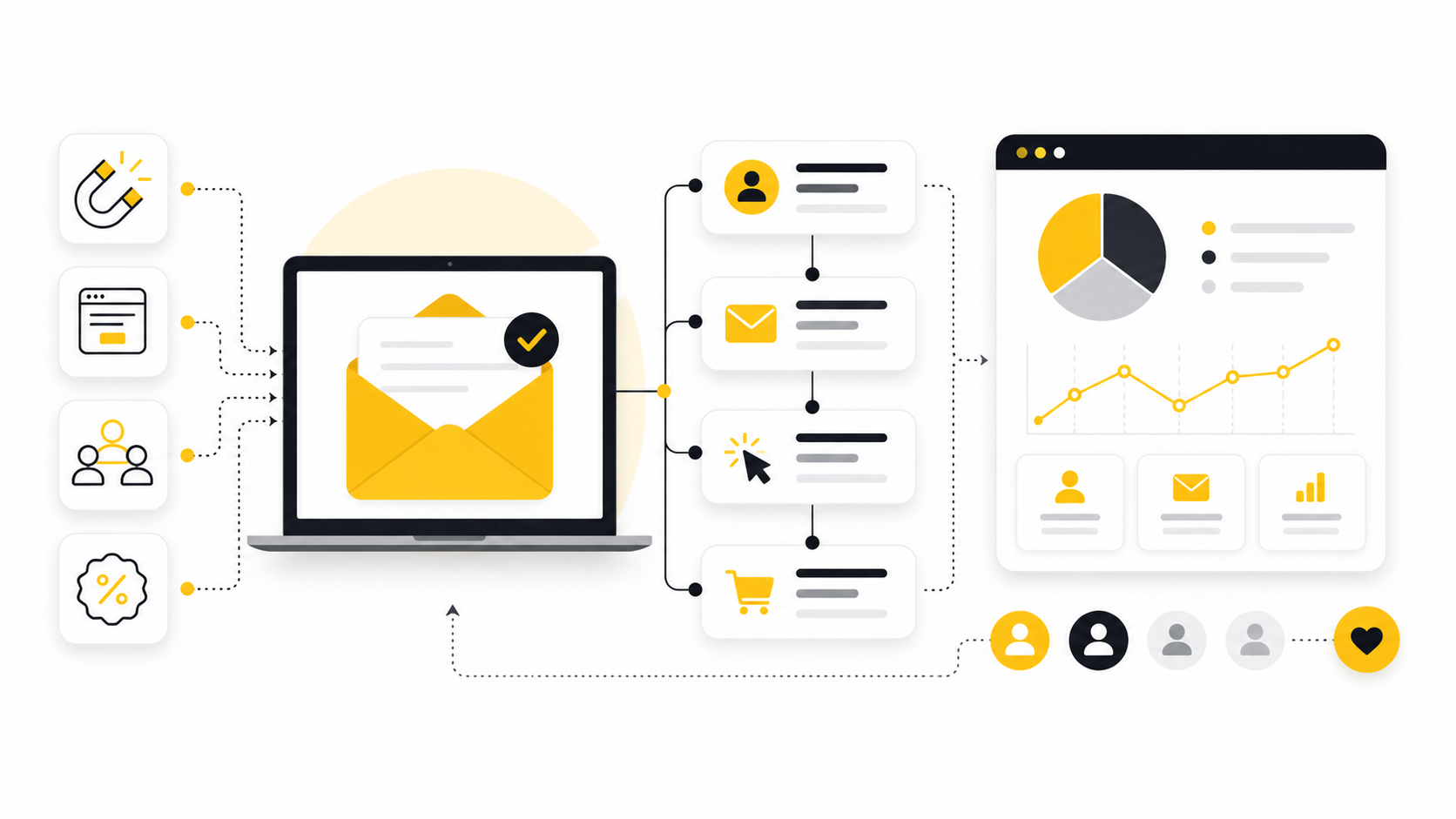
Here is the structure this article will follow across six parts:
- Why Email Marketing Matters For Service Businesses
- The Service Business Email Framework
- Building A List That Actually Converts
- Core Email Campaigns Every Service Business Needs
- Professional Implementation And Automation
- Measurement, Optimization, And FAQs
Why Email Marketing Matters For Service Businesses
Service businesses usually sell trust before they sell the service. A potential client may need a roofer, consultant, med spa, accountant, agency, coach, clinic, contractor, or local professional, but they still need reassurance before booking. Email gives you a place to build that reassurance over time with education, proof, reminders, and timely offers.
This is especially important because service demand is often delayed. Someone can read your website today, ask for a quote next week, compare providers next month, and finally book when the pain becomes expensive enough. Without email, that person often disappears into the gap between interest and action.
Email also protects you from relying too heavily on paid traffic. Ads can bring attention, but attention leaks fast when there is no follow-up. A good email system turns more of that attention into booked calls, consultations, appointments, estimates, renewals, referrals, and repeat purchases.
The Service Business Email Framework
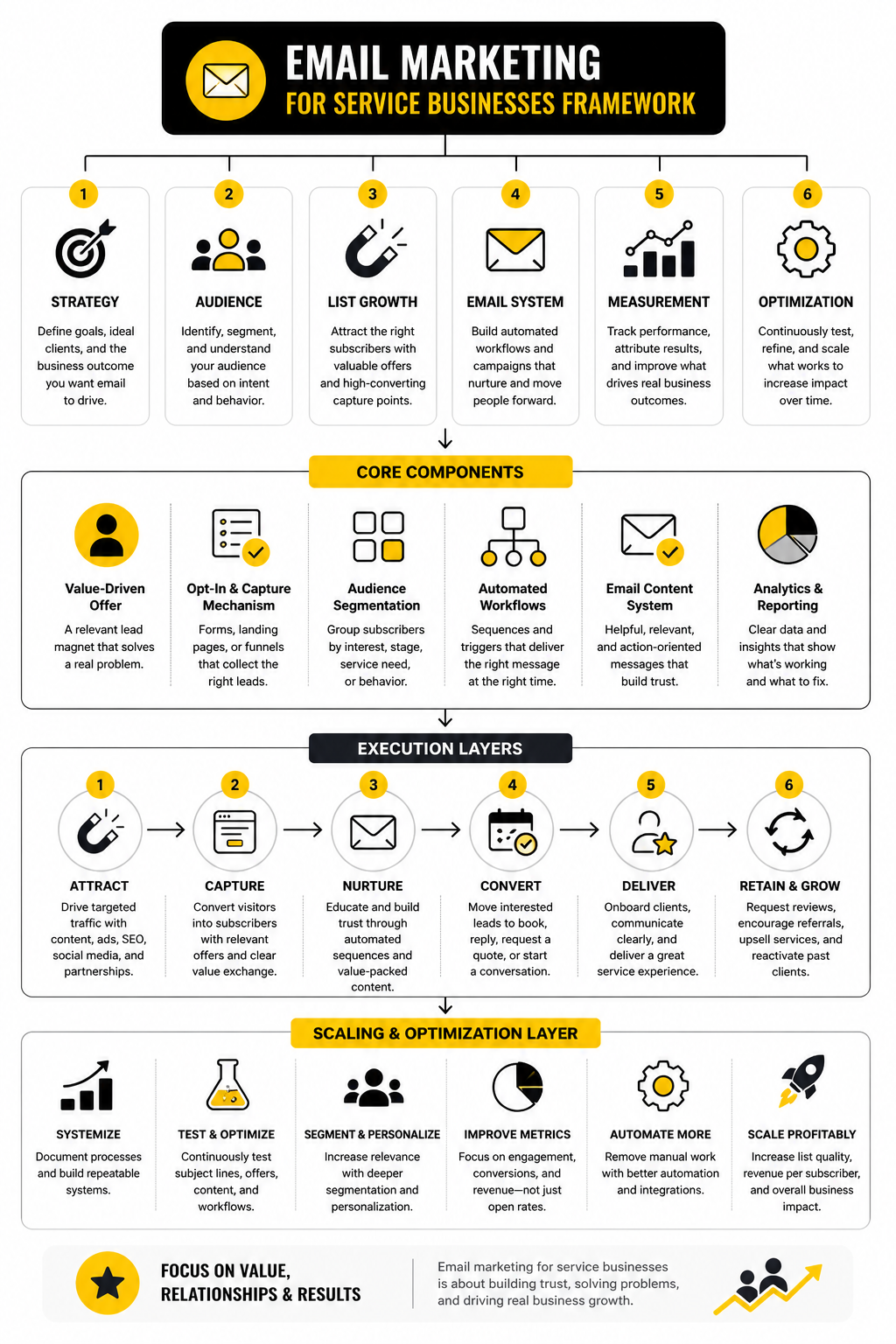
The simplest framework is capture, segment, nurture, convert, deliver, and reactivate. Capture means you give interested people a reason to join your list before they are ready to buy. Segment means you separate leads, prospects, active clients, past clients, referral partners, and cold contacts instead of treating everyone the same.
Nurture means you send useful emails that answer real buying questions. Convert means you use clear calls to action when someone shows intent, such as booking a call, requesting a quote, attending a workshop, or replying with a question. Deliver and reactivate matter because service businesses often make the best profit from repeat work, upgrades, maintenance, referrals, and long-term relationships.
For many service teams, a CRM and automation platform such as GoHighLevel can make this easier because the email system connects with forms, pipelines, calendars, SMS, reviews, and follow-up workflows. A simpler newsletter-first setup such as Brevo can also fit if the business mainly needs email campaigns, basic automation, and contact management. The right tool matters less than the system behind it.
Building A List That Actually Converts
A service business does not need the biggest list in the market. It needs a list of people who understand the problem, trust the provider, and have a clear next step when they are ready to move. That is the difference between collecting email addresses and building a real demand asset.
The best lists usually start with intent. Someone downloads a checklist because they are researching a problem. Someone books a consultation because they are closer to buying. Someone joins a webinar because they want guidance before making a decision. Those people should not receive the same follow-up because they are not in the same buying stage.
This is where email marketing for service businesses becomes more precise than a normal newsletter. You are not just sending updates. You are sorting attention into useful groups, then helping each group move one step closer to the right decision.
Start With The Buying Journey
Most service buyers move through four simple stages: problem-aware, solution-aware, provider-aware, and ready to act. A problem-aware lead knows something is wrong but may not know the exact solution yet. A ready-to-act lead already understands the need and mainly wants proof, timing, pricing clarity, or a low-friction way to book.
Your list-building offers should match those stages. A checklist, guide, calculator, quiz, estimate request, audit, consultation, or workshop can all work, but only when the promise is specific. “Join our newsletter” is weak because it gives the reader no reason to care right now.
For example, a home service business might offer a seasonal maintenance checklist. A consultant might offer a diagnostic scorecard. A clinic might offer a treatment-readiness guide. The format is less important than the intent behind it.
Segment Before You Automate
Segmentation is not a fancy enterprise tactic. It is basic respect for context. HubSpot’s marketing statistics highlight subscriber segmentation as one of the most effective email campaign strategies, and that makes practical sense because people respond better when the message matches their situation (HubSpot marketing statistics).
At minimum, a service business should segment by lead source, service interest, buying stage, customer status, and location if geography matters. That gives you enough context to avoid awkward messaging. A past client should not receive the same “nice to meet you” sequence as a brand-new lead.
You can keep this simple inside a platform like GoHighLevel, Brevo, or Moosend. The goal is not to build a complicated machine. The goal is to stop treating a hot referral, a cold website lead, and a repeat buyer like they are the same person.
Use Lead Magnets That Pre-Sell The Service
A good lead magnet does more than collect an email. It makes the buyer smarter, frames the problem correctly, and helps them understand why professional help may be worth it. That is how email starts doing sales work before a sales conversation happens.
Weak lead magnets attract people who want free information but have no buying intent. Strong lead magnets attract people who are already feeling the cost of inaction. For service businesses, the best offers usually help the reader diagnose risk, compare options, estimate effort, avoid mistakes, or prepare for a decision.
Keep the promise narrow. “The complete guide to marketing” is too broad. “The 12-point checklist to fix slow lead follow-up before ad spend gets wasted” is much stronger because it names a real business problem and hints at the value of solving it.
Make Capture Points Easy To Find
Your email capture points should appear where intent already exists. That means service pages, blog posts, pricing or quote pages, booking pages, exit-intent moments, thank-you pages, social bios, paid ad landing pages, and offline touchpoints like QR codes on printed materials. Do not hide the offer in one footer form and call that a strategy.
Forms should ask for only what you need to continue the conversation. Name and email are enough for many top-of-funnel offers. If the next step is a quote, estimate, or consultation, asking for service type, location, phone number, and timing can be useful because it helps you respond properly.
Tools like Fillout can help when the form itself needs to qualify leads cleanly. For higher-intent funnels, ClickFunnels or Systeme.io can work when you need dedicated landing pages, lead magnets, and follow-up flows in one place.
Keep Permission Clean
Email works best when people actually expect to hear from you. That sounds obvious, but many service businesses damage their own deliverability by importing messy contacts, buying lists, or sending generic campaigns to people who never asked for them. Bad inputs create bad outcomes.
Clean permission also makes your marketing sharper. When someone joins through a specific offer, you know what they care about. When someone books a call, you know they are closer to buying. When someone becomes a client, you know the relationship has changed.
So build the list slowly if you have to. A smaller list with real intent is more valuable than a large list that ignores you. In service businesses, relevance beats volume almost every time.
Core Email Campaigns Every Service Business Needs
Once the list is clean and segmented, the next job is execution. This is where many service businesses get stuck because they think email marketing means writing a fresh newsletter every week forever. That can work, but it should not be the foundation.
The foundation should be a small set of campaigns that run consistently, match the buyer journey, and support revenue. These campaigns do not need to be complicated. They need to be useful, timely, and connected to clear next steps.
For service businesses, the goal is not to send more email. The goal is to send the right email at the moment when it helps the buyer make progress.
The Welcome Sequence
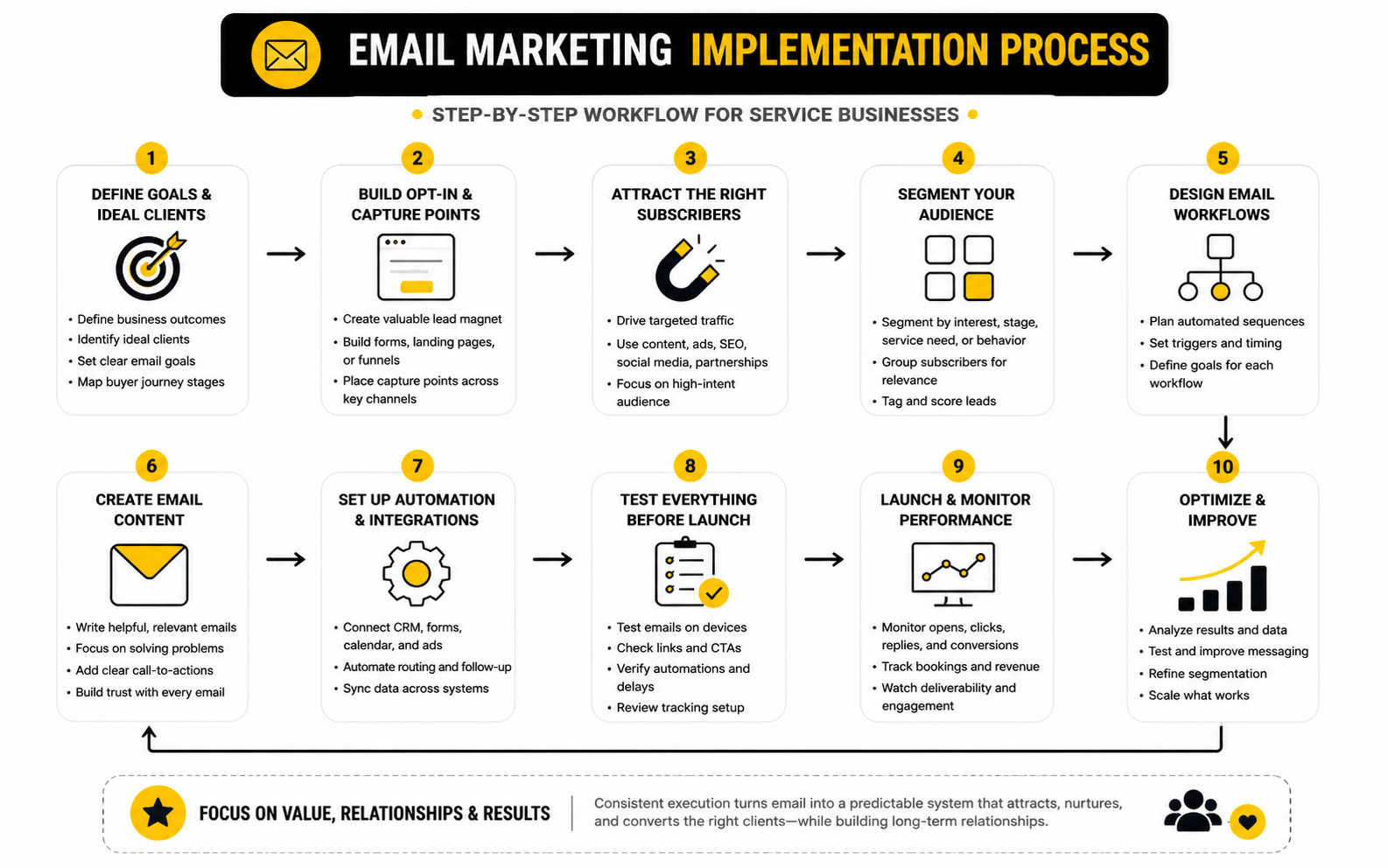
The welcome sequence is the first automated campaign most service businesses should build. It confirms the subscription, delivers the promised resource, explains what the business helps with, and gives the reader a simple next step. It also sets expectations so the subscriber knows why they are hearing from you.
A strong welcome sequence usually runs for three to five emails. The first email should deliver the resource or confirm the action immediately. The next emails should clarify the problem, explain common mistakes, show how the service helps, and invite the reader to book, reply, request a quote, or explore the next resource.
This sequence matters because early engagement is usually the highest. If someone just downloaded your checklist or requested information, they are paying attention right now. Do not waste that moment with a generic “thanks for subscribing” message and nothing else.
The Lead Nurture Sequence
A lead nurture sequence is for people who are interested but not ready to buy yet. These emails should educate without overwhelming. They should answer the questions buyers normally ask before they trust a service provider.
Good nurture emails cover topics like what causes the problem, what happens if it is ignored, how to compare providers, what the process looks like, what affects cost, and what a good outcome should feel like. This is where email marketing for service businesses becomes genuinely valuable because you are reducing uncertainty before the sales call. When the buyer finally talks to you, they are already warmer and better informed.
Do not turn every nurture email into a pitch. That makes the sequence feel needy. Give useful context, then offer a natural next step for people who are ready.
The Booking And Consultation Follow-Up
A booking follow-up sequence protects revenue that is already close. It can confirm the appointment, reduce no-shows, remind the prospect what to prepare, and explain what happens next. That is basic, but basic is where a lot of money gets lost.
For appointment-based businesses, this sequence should include confirmation, reminder, pre-call preparation, missed-appointment follow-up, and post-call next steps. If you use scheduling tools, Cal.com can help connect booking pages with the rest of the customer journey. If you need the booking, pipeline, reminders, and follow-up in one place, GoHighLevel is usually the more complete option.
This campaign should sound human. Nobody wants to feel like they are being processed through a machine before a personal service. Keep the reminders clear, friendly, and useful.
The Quote Or Proposal Follow-Up
Many service businesses lose deals after sending the quote. The prospect goes quiet, the team assumes they are not interested, and the opportunity slowly dies. A quote follow-up campaign prevents that by continuing the conversation without forcing the salesperson to remember every manual touchpoint.
This sequence should reinforce the value behind the quote, answer common objections, clarify timelines, and make it easy to ask questions. It should not bully the prospect with fake urgency. The best tone is helpful, confident, and direct.
A simple quote follow-up can include five messages: one confirmation, one value recap, one objection-handling email, one timing check, and one final “should we close the loop?” email. That final email is especially useful because it gives the prospect permission to say yes, no, or not now.
The Customer Onboarding Sequence
Email does not stop after the sale. In many service businesses, the handoff after payment is where trust either deepens or starts to crack. A customer onboarding sequence makes the client feel guided from the first day.
This sequence should explain what happens next, what the client needs to provide, how communication works, where to ask questions, and what milestones to expect. The goal is to reduce confusion before it creates support tickets, delays, or buyer’s remorse. It also helps your team because clients arrive prepared instead of scattered.
Onboarding emails should be specific to the service. A med spa, agency, legal office, roofing company, and coaching business should not use the same generic copy. The more your onboarding reflects the real service experience, the more professional the business feels.
The Review And Referral Sequence
Happy clients are often willing to help, but they rarely do it without a prompt. A review and referral sequence makes the ask at the right time, after value has been delivered and the client has a reason to say something positive. Timing matters here.
The first email should thank the client and ask for feedback. If the feedback is positive, the next step can be a review request or referral ask. If the feedback is negative, the sequence should route the issue internally so the business can fix the problem before asking for public praise.
This is one of the simplest ways to turn email into an asset beyond new lead conversion. Service businesses run on trust, and reviews, referrals, and repeat recommendations are trust signals buyers actually care about.
The Reactivation Sequence
A reactivation sequence is for past customers, old leads, and inactive subscribers who may still be valuable. Some people do not buy because the timing was wrong. Others bought once and simply forgot to come back.
This campaign should be respectful, not desperate. Remind people what you help with, share something timely, offer a reason to reconnect, and give them a clear option to stay subscribed or opt out. Clean reactivation is good for revenue and good for deliverability.
Email benchmarks continue to show that clicks and conversions are more useful than open rates alone, especially as privacy features make opens less reliable; MailerLite’s 2025 benchmark data reported an average click rate of 2.09% and unsubscribe rate of 0.22%, which gives service businesses a practical reminder to measure real action, not vanity attention (MailerLite email benchmarks). That is the mindset to bring into reactivation. A quiet list is not dead until you have given it a relevant reason to respond.
Measurement, Analytics, And Benchmarks
Email data is useful only when it changes what you do next. A high open rate feels good, but it does not automatically mean more booked calls, signed proposals, or retained clients. For service businesses, the most important numbers are the ones that show whether attention is turning into trust, conversations, and revenue.
That is why email marketing for service businesses should be measured across the full journey, not just inside the email platform. You need to know which lead source created the subscriber, which campaign moved them forward, which offer triggered the response, and which follow-up actually produced a sale. Otherwise, you are staring at surface-level numbers and guessing.
Industry benchmarks can help you spot obvious problems, but they are not the finish line. MailerLite’s 2025 benchmark data showed an average open rate of 43.46%, average click rate of 2.09%, click-to-open rate of 6.81%, and unsubscribe rate of 0.22% across its dataset (MailerLite email benchmarks). Those numbers are useful as a reference point, but your own baseline matters more because a local legal firm, a coaching business, and a home services company will not behave exactly the same.
What The Main Email Metrics Really Mean
Open rate tells you whether the subject line, sender name, timing, and list quality are strong enough to earn attention. It is still worth watching, but it should not be treated as a perfect measure of real human interest. Privacy changes and automatic image loading can make opens look better than they really are, so use open rate as a directional signal, not a final verdict.
Click rate tells you whether the email created enough interest for someone to take action. This is usually more useful than open rate because it shows movement. If opens are strong but clicks are weak, the subject line may be doing its job while the email body, offer, or call to action is not.
Conversion rate tells you whether the click produced the business outcome you wanted. That could mean a booked consultation, completed form, accepted estimate, paid deposit, review submission, referral, or repeat purchase. This is where email becomes a business system instead of a content habit.
Build A Simple Analytics System
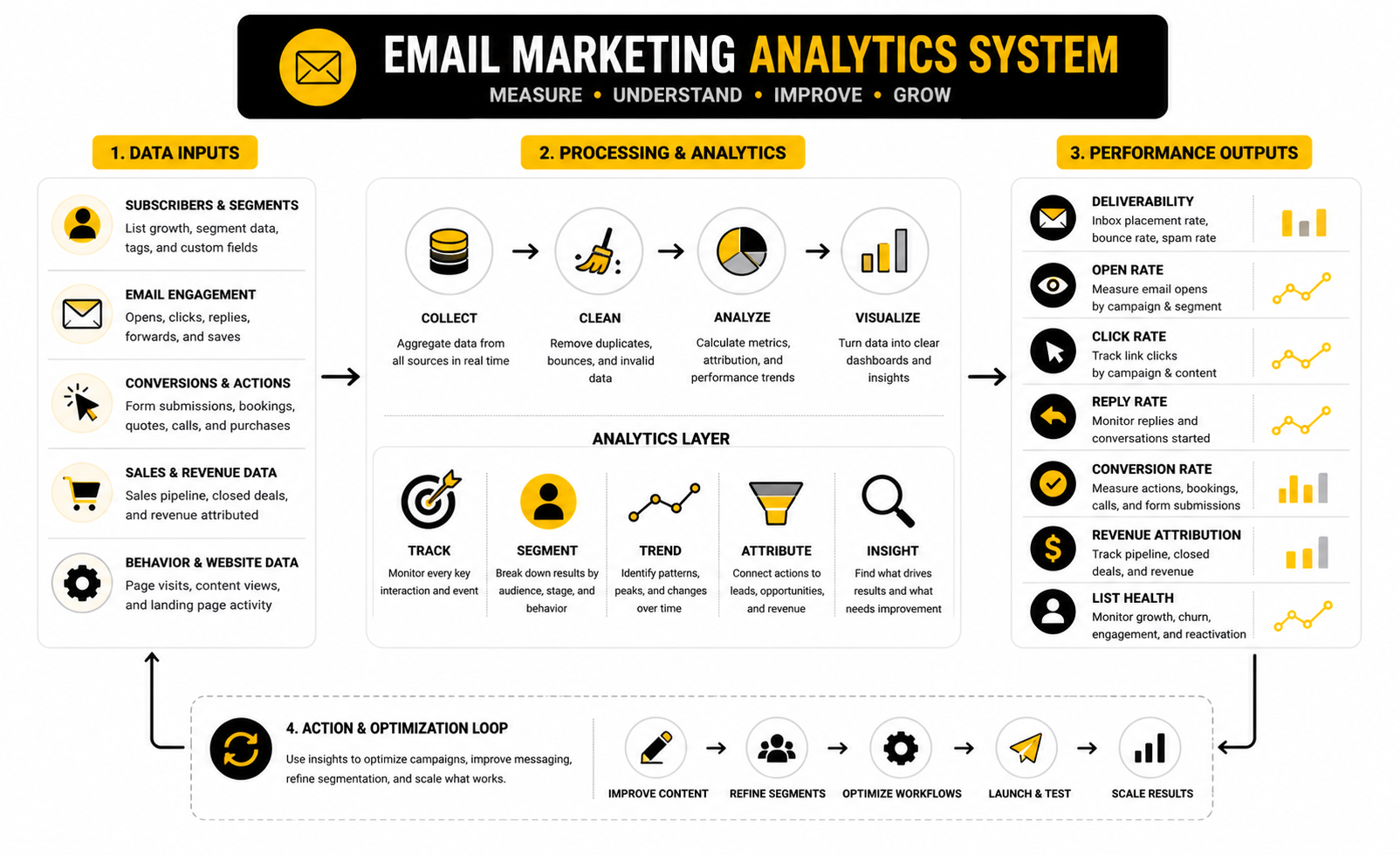
The easiest way to measure email properly is to connect each campaign to one primary goal. A welcome sequence might aim for a booked call. A quote follow-up might aim for a signed proposal. A reactivation campaign might aim for replies, bookings, or repeat purchases from past clients.
Your tracking system does not need to be complicated. It needs clean naming, consistent links, clear campaign goals, and a CRM or spreadsheet that connects email activity with sales activity. A platform like GoHighLevel can be useful here because email, forms, calendars, conversations, pipelines, and attribution can live closer together instead of being scattered across disconnected tools.
For smaller setups, the same principle still applies. Use campaign names you can understand later, tag leads based on source and intent, and review the numbers on a fixed rhythm. Random checking creates random improvement.
The Metrics To Review Every Month
Monthly review is where the system gets sharper. You are not looking for one magic number. You are looking for friction in the journey.
Track these numbers every month:
- List growth by source
- New leads by offer
- Deliverability issues and bounce rate
- Open rate by campaign type
- Click rate by campaign type
- Reply rate for sales-oriented emails
- Booking rate from email traffic
- Proposal or quote close rate after follow-up
- Unsubscribe rate by campaign
- Revenue influenced by email
Each number should lead to a decision. If list growth is weak, improve the offer or capture points. If clicks are weak, improve the message and call to action. If bookings are weak after clicks, fix the landing page, form, calendar, or sales handoff.
Benchmarks Are A Starting Point, Not A Strategy
Benchmarks can keep you honest, but they can also make you lazy if you use them wrong. Being above average does not mean your email program is finished. Being below average does not automatically mean the campaign is bad if the audience is small, high-ticket, niche, or heavily sales-led.
For service businesses, one booked call from a small campaign can be worth more than hundreds of cheap clicks. A specialist consultant selling a high-ticket engagement should not judge success the same way as a low-cost newsletter. The business model determines what the numbers mean.
Litmus reports that many companies see email ROI between 10:1 and 36:1, with 35% of companies seeing ROI of 36:1 or more (Litmus State of Email). That is a strong reminder that email can be profitable, but only if tracking connects campaigns to outcomes. ROI cannot be managed if you never connect the inbox to the sale.
What To Fix First When Performance Drops
When performance drops, do not panic and rewrite everything. Start by checking the basics. Look at deliverability, list source, recent sending frequency, offer relevance, subject lines, email length, call to action, landing page friction, and sales follow-up speed.
If open rates fall, test clearer subject lines and sender names before blaming the whole strategy. If clicks fall, sharpen the offer and make the next step more obvious. If conversions fall, the problem may sit after the email, especially on the booking page, quote process, or sales call.
This is the practical mindset: email data should tell you where the leak is. Then you fix the leak. That is how measurement turns into growth.
Professional Implementation And Scaling
At a certain point, email marketing for service businesses stops being a writing problem and becomes an operations problem. The business needs clean data, reliable handoffs, compliance, deliverability, and a process that still works when lead volume increases. That is where the difference between “we send emails sometimes” and “email supports revenue every week” becomes obvious.
Scaling does not mean making everything more complex. It means removing fragile manual steps, tightening the message around real buyer intent, and making sure every important contact gets the right follow-up without depending on someone’s memory. If the system only works when one person remembers to send the perfect email at the perfect time, it is not a system yet.
This is also where the business has to make tradeoffs. More automation can improve consistency, but too much automation can make a service brand feel cold. More segmentation can improve relevance, but too many segments can become impossible to maintain. The smart move is to scale the few workflows that clearly affect revenue before building anything fancy.
Protect Deliverability Before You Chase Volume
Deliverability is not glamorous, but it is non-negotiable. If your emails do not reach the inbox, the copy does not matter. Google’s sender guidelines require proper authentication and make easy unsubscribe especially important for higher-volume senders, including one-click unsubscribe for marketing and subscribed messages sent at scale (Google email sender guidelines).
Service businesses should treat deliverability like reputation management. Use authenticated sending domains, avoid purchased lists, remove hard bounces, watch spam complaints, and stop emailing people who never engage. A smaller healthy list will beat a bloated risky list almost every time.
This is where discipline matters. Do not dump old contacts into a new campaign just because they exist in a spreadsheet. If you cannot clearly explain why someone expects to hear from you, do not treat them like a warm subscriber.
Balance Automation With Human Follow-Up
Automation should handle timing, reminders, routing, and education. Humans should handle judgment, nuance, objections, and important conversations. When those roles are clear, the business feels responsive without feeling robotic.
For example, an automation can notify the team when someone clicks a pricing link, requests a quote, or replies to a nurture email. The human follow-up should then feel personal because the team knows what the person just did. That is much better than sending every lead the same generic “checking in” message.
A tool like GoHighLevel fits this kind of workflow because it can connect email, CRM stages, forms, appointment reminders, and sales pipelines. For a more traditional CRM-heavy service business, Copper can make sense when relationship tracking and sales visibility matter more than all-in-one marketing automation.
Match The System To The Sales Model
A low-ticket service, a high-ticket advisory offer, a recurring membership, and an emergency local service should not use the same email strategy. The buying timeline, urgency, risk, and decision process are different. Your automation should reflect that reality.
High-ticket service businesses usually need fewer but stronger emails. Those emails should build authority, answer objections, and move prospects toward a call. Lower-ticket or repeat-service businesses can often use more frequent reminders, seasonal campaigns, maintenance prompts, and simple promotional windows.
This is why copying another company’s email calendar rarely works. You can borrow structure, but not blindly copy cadence. The right cadence depends on how urgently the customer needs the service, how often they buy, and how much trust they need before saying yes.
Manage Compliance As Part Of The Workflow
Compliance should not be treated as a boring legal afterthought. It affects list quality, deliverability, brand trust, and long-term risk. The FTC’s CAN-SPAM guidance requires accurate header information, non-deceptive subject lines, clear identification where required, a valid physical postal address, and a way for recipients to opt out of future marketing emails (FTC CAN-SPAM compliance guide).
If you market to people in the EU or similar privacy-focused jurisdictions, consent and lawful processing need even more care. European data protection guidance describes consent as freely given, specific, informed, and unambiguous, which means vague permission and hidden opt-ins are not good enough (EDPB consent guidelines). This is not just a legal detail. It is also a trust signal.
The practical move is simple: document how people joined, what they agreed to receive, and how they can opt out. Keep unsubscribe links clear. Keep preference management simple. Respecting the inbox is part of professional implementation.
Decide When To Add More Channels
Email is powerful, but it does not need to work alone. Some service businesses should connect email with SMS, voicemail drops, chat, retargeting, direct mail, or messenger flows. The key is to add channels because the buyer journey needs them, not because the software makes them available.
SMS can be excellent for appointment reminders and urgent confirmations, but it can feel intrusive if used casually. Messenger can work well for conversational lead capture, especially when connected to social campaigns, and ManyChat is often useful for that kind of flow. Retargeting can reinforce trust while email handles deeper education.
Do not add channels before the core email system is stable. More channels multiply mistakes. Fix the message, offer, and follow-up first, then expand.
Build A Content Library Instead Of Starting From Scratch
Scaling gets much easier when the business builds a reusable content library. Every common sales objection can become an email. Every important client question can become a nurture topic. Every seasonal reminder, service milestone, and post-project next step can become part of the system.
This prevents the weekly blank-page problem. Instead of asking, “What should we send?” the team can ask, “Which buyer problem should we solve this week?” That is a much better question.
A strong content library should include service explainers, objection responses, process breakdowns, comparison emails, review prompts, referral asks, reactivation messages, and seasonal campaigns. Once those assets exist, the business can improve them over time instead of constantly improvising.
Measurement, Optimization, And FAQs
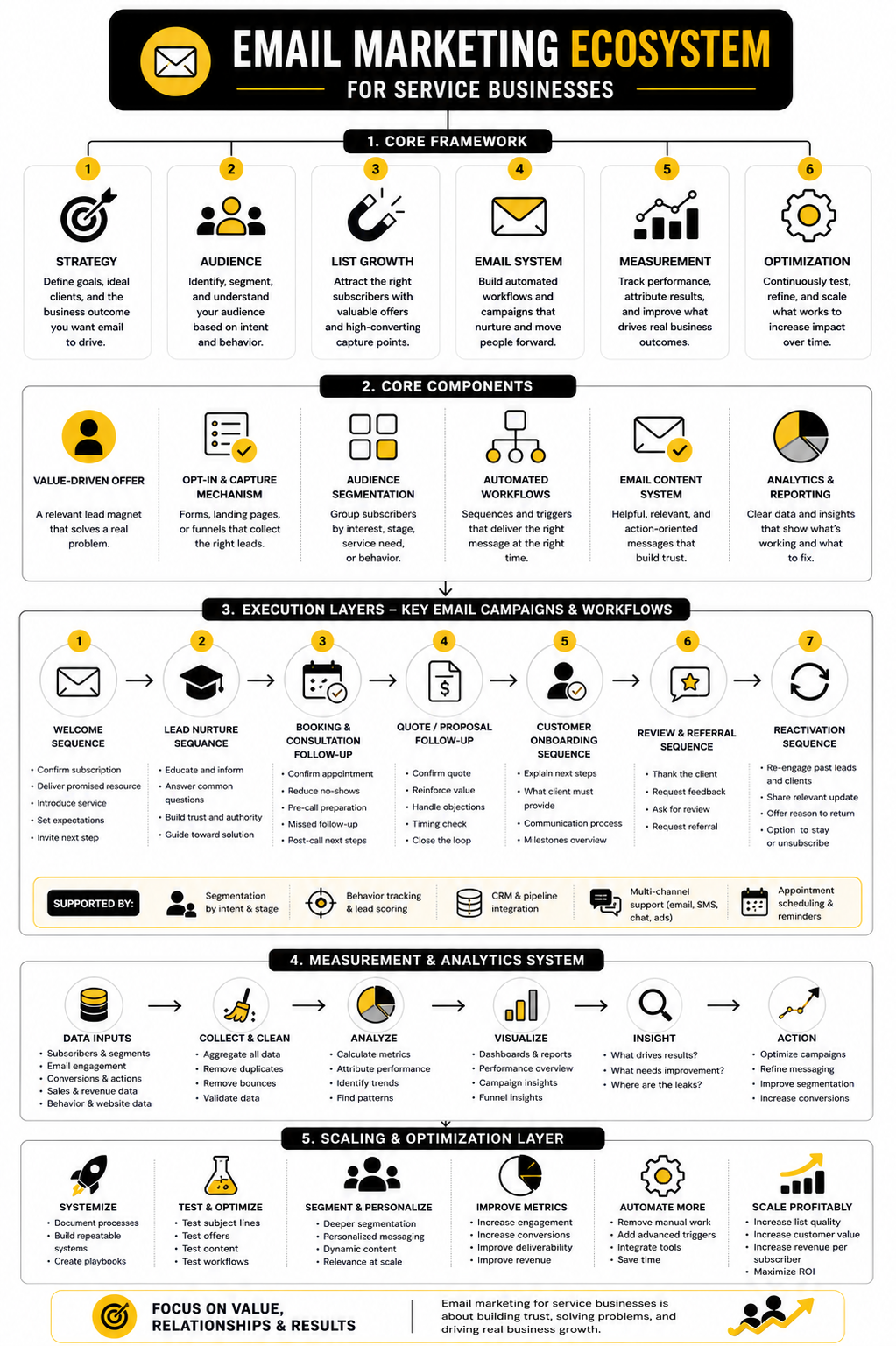
The final system should feel simple from the outside and organized on the inside. A lead joins through a relevant offer, receives useful follow-up, gets routed into the right campaign, books when ready, and stays connected after the sale. That is the full ecosystem.
The real power is not one perfect email. It is the connection between list growth, segmentation, automation, human follow-up, measurement, compliance, and improvement. When those pieces work together, email marketing for service businesses becomes a steady operating system instead of another random marketing task.
Keep Improving The System
Optimization should be steady, not chaotic. Change one meaningful thing at a time so you know what caused the result. Subject lines, calls to action, lead magnets, timing, segmentation, booking pages, and follow-up logic can all be tested, but not all at once.
Start with the biggest leak. If people join but never click, improve the welcome and nurture emails. If people click but do not book, improve the landing page or calendar flow. If people book but do not show, improve reminders and pre-call preparation.
Strong service businesses review their email system like they review sales calls, pipeline stages, and client delivery. The inbox is not separate from the business. It is part of how the business earns trust.
FAQ - Built For Complete Guide
What is email marketing for service businesses?
Email marketing for service businesses is the process of using email to capture leads, educate prospects, follow up with buyers, onboard clients, request reviews, generate referrals, and reactivate past customers. It is different from ecommerce email because the sale often depends on trust, timing, consultation, and relationship quality. The goal is not just clicks; the goal is more qualified conversations and better client relationships.
Why is email marketing important for service businesses?
Service buyers often take time before making a decision. Email gives the business a direct way to stay helpful while the prospect compares options, asks questions, and waits for the right timing. Without email, many interested leads disappear after the first visit, first quote, or first call.
How often should a service business send emails?
Most service businesses should send often enough to stay remembered, but not so often that the list feels pressured. A useful starting point is a welcome sequence after signup, automated follow-up around key actions, and one helpful broadcast every one to four weeks. The right rhythm depends on the service, urgency, buying cycle, and audience expectations.
What emails should a service business automate first?
Start with the emails closest to revenue. Build a welcome sequence, booking reminders, missed-appointment follow-up, quote or proposal follow-up, client onboarding, review requests, referral prompts, and reactivation campaigns. These campaigns support moments where leads and clients already need guidance.
What is a good email open rate for a service business?
Open rate depends on the list, industry, sender reputation, and audience relationship. Recent MailerLite benchmark data showed an average open rate of 43.46%, but open rate should be treated as a directional signal because privacy changes can distort it (MailerLite email benchmarks). For service businesses, clicks, replies, bookings, and revenue usually matter more.
What is a good click rate for service business emails?
A good click rate depends on the intent of the campaign. A newsletter may have a lower click rate than a quote follow-up or appointment email because the reader’s intent is different. MailerLite’s 2025 benchmark data showed an average click rate of 2.09%, which can help as a reference point, but your own baseline is more useful than a generic average (MailerLite email benchmarks).
Should service businesses use newsletters?
Yes, but newsletters should not be the whole strategy. A newsletter can keep the brand visible and useful, but automated lifecycle campaigns usually create more predictable revenue impact. The best setup uses both: automation for critical moments and broadcasts for timely education, reminders, and offers.
What should a service business send to inactive leads?
Inactive leads should receive a respectful reactivation campaign. Remind them what you help with, share a useful update, offer a clear next step, and give them an easy way to opt out. The point is not to pressure them; it is to find out whether the timing has changed.
How does email support sales teams?
Email helps sales teams by educating prospects before the call, following up after quotes, reminding people about appointments, and surfacing buying intent through clicks, replies, and form submissions. It reduces manual chasing and keeps the conversation alive when prospects go quiet. The sales team still matters, but email makes their follow-up more consistent.
Which platform is best for email marketing for service businesses?
The best platform depends on how the business sells. GoHighLevel is useful when the business wants email, CRM, forms, calendars, pipelines, SMS, and automation in one place. Brevo can fit businesses that want simpler email campaigns and automation. Systeme.io or ClickFunnels can make sense when landing pages and funnels are central.
How do service businesses avoid annoying subscribers?
Send emails that match the subscriber’s intent. A person who requested a quote should receive different follow-up than someone who downloaded a basic checklist. Clear segmentation, useful content, honest subject lines, and simple unsubscribe options keep the relationship healthy.
What compliance rules should service businesses remember?
Service businesses should use honest sender information, avoid deceptive subject lines, include a valid business address where required, and make unsubscribing easy. The FTC says opt-out requests under CAN-SPAM must be honored within 10 business days (FTC CAN-SPAM compliance guide). Google also requires one-click unsubscribe for many high-volume marketing senders, which reinforces the same practical point: make leaving easy and keep permission clean (Google email sender guidelines).
How long should a service business email be?
The email should be as long as needed to move the reader one step forward. A reminder email can be short. A high-ticket objection-handling email may need more context. The mistake is not length by itself; the mistake is sending unfocused emails with no clear point.
What is the biggest mistake service businesses make with email?
The biggest mistake is treating email like occasional promotion instead of a full follow-up system. They send a newsletter when they remember, but they do not automate the moments that affect revenue. Welcome emails, quote follow-ups, booking reminders, onboarding, reviews, referrals, and reactivation are where the real leverage usually sits.
How should a service business start if it has no email system?
Start with one offer, one form, one welcome sequence, and one clear next step. Then add booking reminders, quote follow-up, onboarding, review requests, and reactivation in that order. Keep it simple, measure what happens, and improve the system every month.
Work With Professionals
Explore 10K+ Remote Marketing Contracts on MarkeWork.com
Most marketers spend too much time chasing clients, competing on crowded platforms, and losing a percentage of every project to middlemen.
MarkeWork gives you a better way. Browse thousands of remote marketing contracts and connect directly with companies desperate to hire skilled marketers like you, without platform commissions and without unnecessary gatekeepers.