

Email marketing solutions are the tools and systems that enable businesses to plan, execute, and optimize email campaigns that connect with customers and prospects. At its core, email marketing is a digital channel that helps brands deliver targeted messages directly into a person’s inbox to drive engagement, conversions, and long‑term loyalty—a strategy that remains highly cost‑effective compared with many other channels.
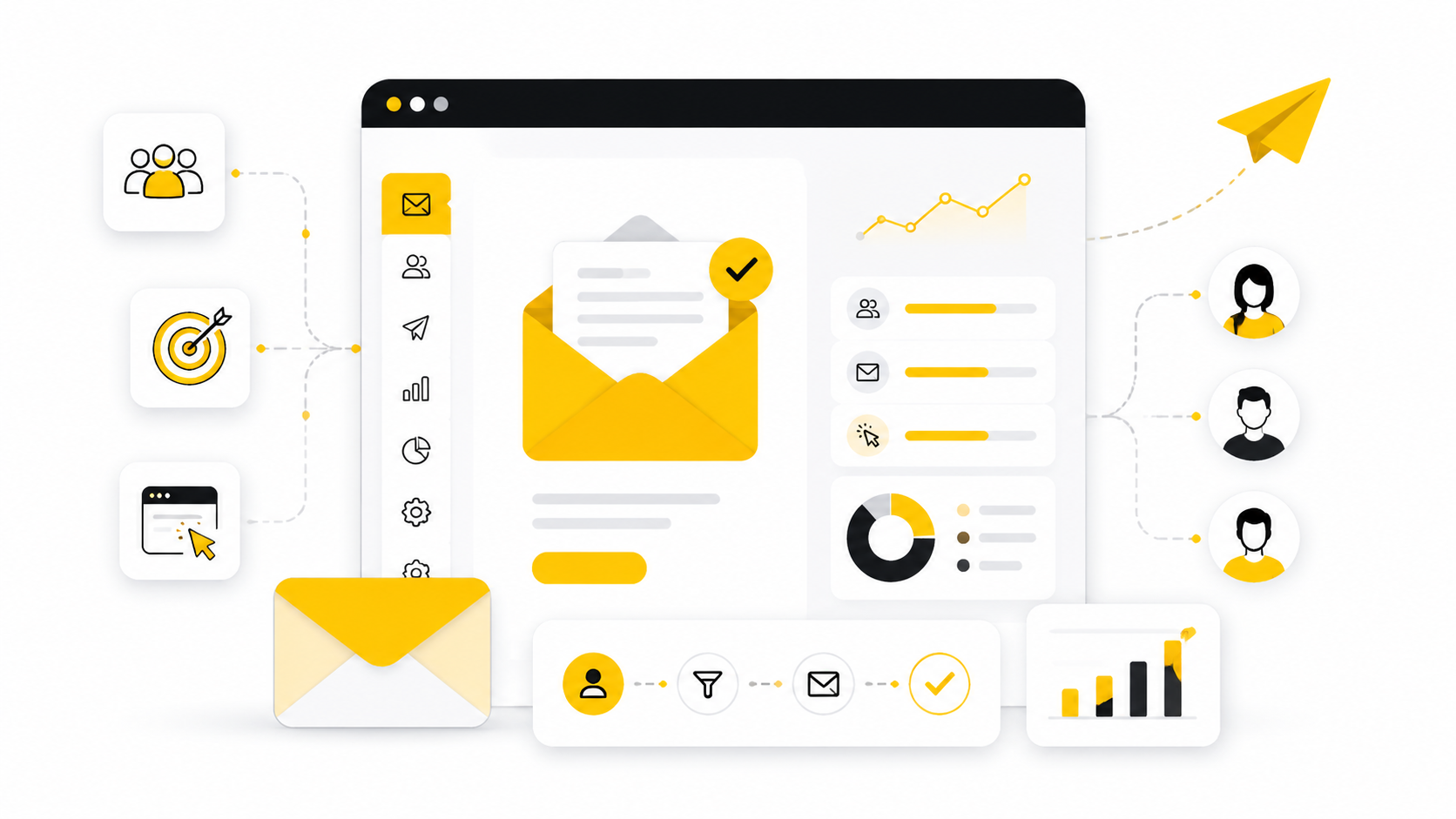
Whether you’re sending a weekly newsletter, a cart‑abandonment reminder, or a re‑engagement sequence, a complete email marketing solution gives you the infrastructure to manage contacts, design emails, automate workflows, and measure results across campaigns.
In this article, we’ll explore how email marketing solutions work, what goes into building an effective program, and why they continue to matter in 2026 and beyond. Below is the full outline of the sections that will guide this discussion:
- Why Email Marketing Solutions Matter
- How Email Marketing Systems Work
- Core Components of Email Marketing Solutions
- Professional Implementation: Tools and Best Practices
- Measuring Success: Metrics That Matter
- Future Trends in Email Marketing
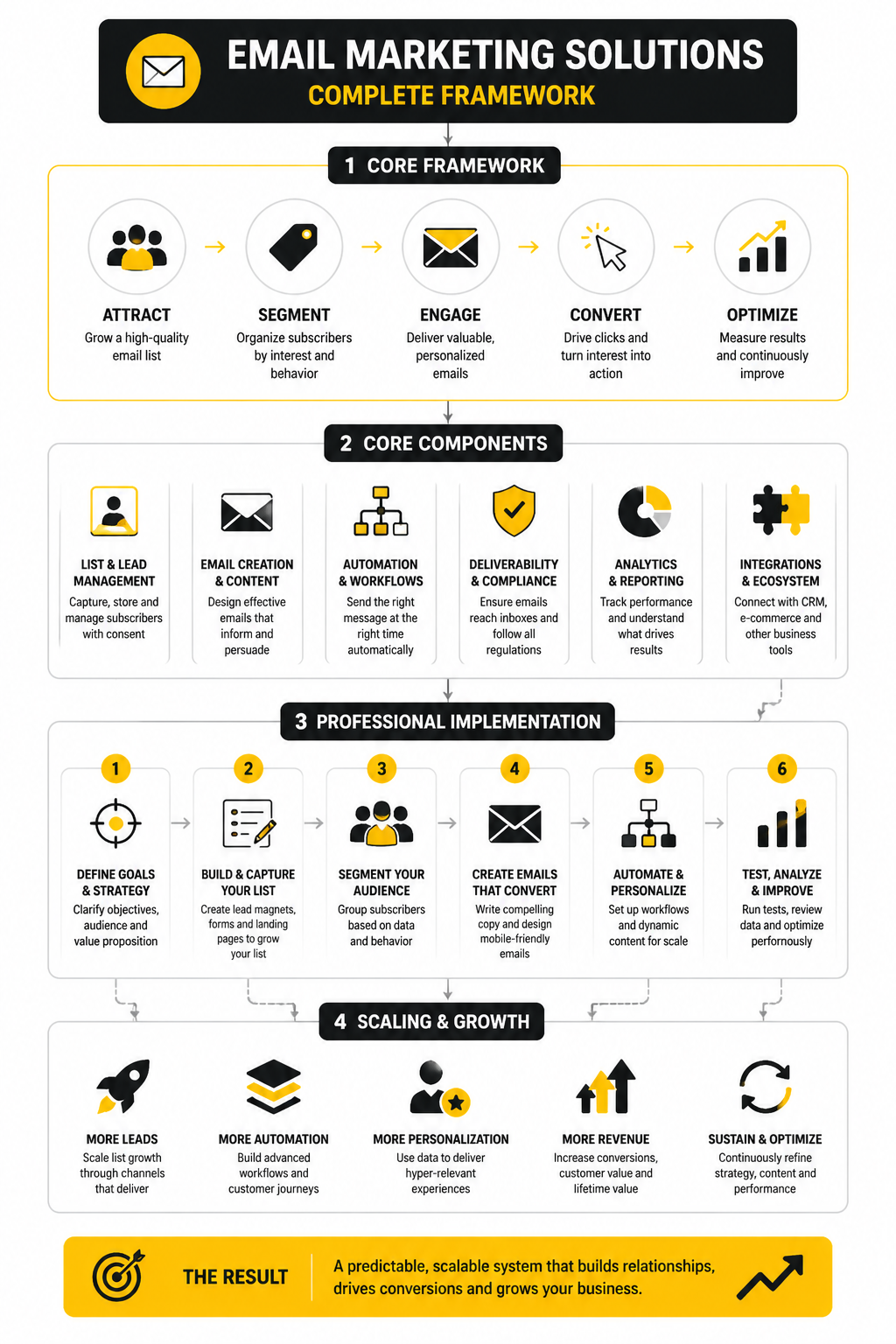
From foundational benefits like direct audience access and scalability to advanced automation and analytics, we’ll break down the framework that makes email marketing a cornerstone of digital strategy.
Why Email Marketing Solutions Matter
Email marketing solutions are more than just tools—they’re central to how modern businesses communicate with their audiences. With billions of people checking email daily, this channel offers direct access to customers in a space they already visit multiple times every day. A well‑implemented email marketing system enables brands to build relationships, promote products, and maintain ongoing engagement without the cost and noise of many other digital channels. These solutions help companies of all sizes maintain consistent visibility with their audience while achieving measurable results.
One of the biggest advantages of using dedicated email marketing solutions is that they handle tasks that would otherwise consume too much time manually. Instead of sending individual messages one by one, businesses can automate sequences that greet new subscribers, nurture leads, or follow up after purchases. This automation doesn’t just save time—it boosts relevance by sending the right message at the right moment.
Beyond efficiency, these platforms also enable deeper personalization. By keeping data about subscriber behavior, preferences, and engagement in one place, brands can tailor content that resonates with different segments of their audience. That means higher open rates, better click‑throughs, and ultimately more conversions than generic, one‑size‑fits‑all emails.
How Email Marketing Systems Work
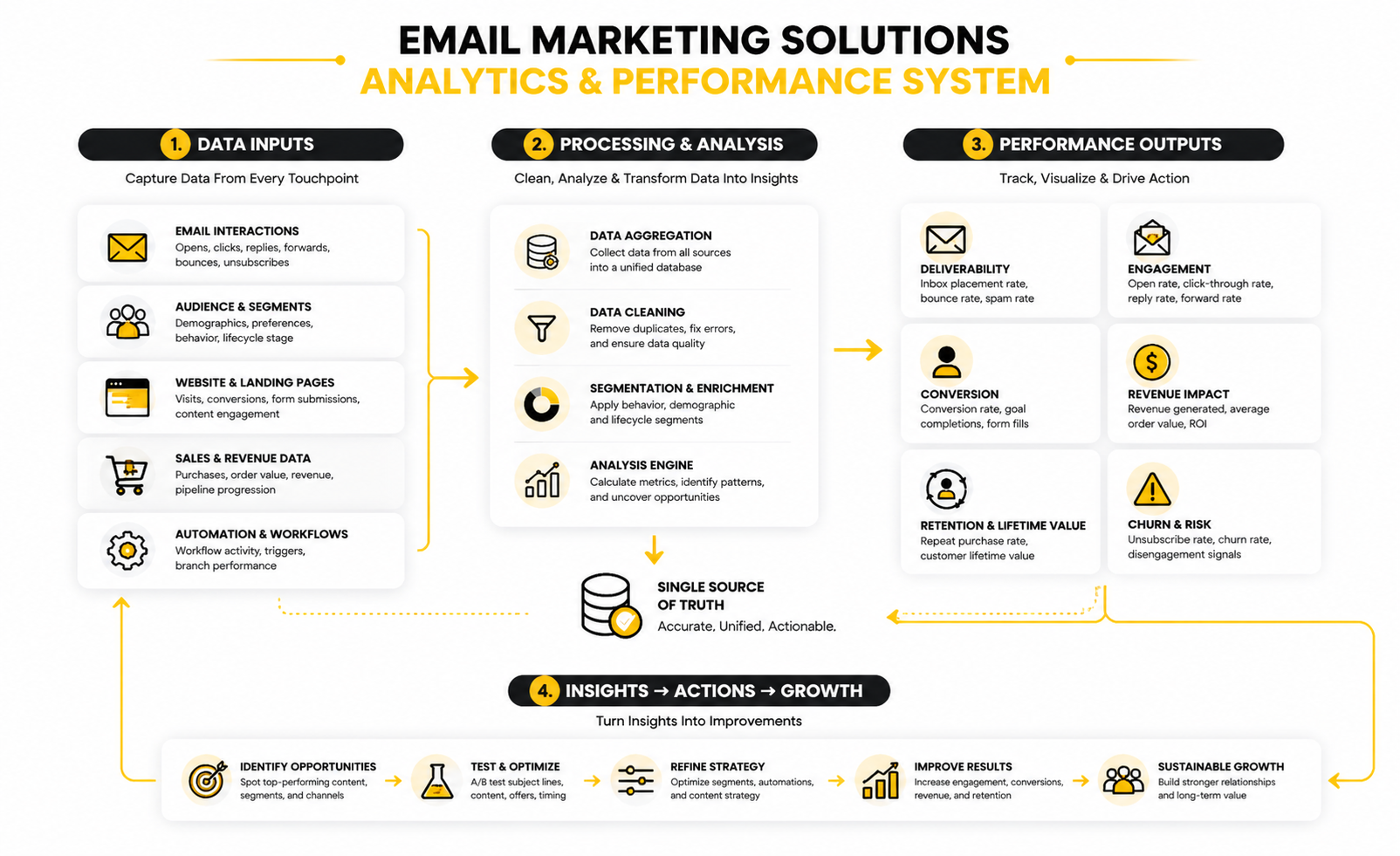
At the core, email marketing solutions streamline the process of creating, sending, and tracking email campaigns at scale. Successful platforms combine tools for list management, message design, delivery automation, and performance analytics into a unified system that supports every step of a campaign’s lifecycle.
Most solutions begin with list collection and storage, where businesses gather subscriber information through signup forms, landing pages, or integrations with other systems. These contacts are stored in a database where attributes like purchase history, location, and engagement behavior can be tracked and used for segmentation.
From there, segmentation lets marketers divide their audience into meaningful groups based on shared traits or behaviors, making it possible to send more relevant content to each group. For example, a segment might include subscribers who abandoned a shopping cart or those who haven’t engaged in 90 days.
Once segments are defined, marketers use a drag‑and‑drop editor or templates to design professional emails that reflect their brand and goals. These platforms often support A/B testing, letting teams experiment with different subject lines or designs to see what performs best.
The final piece is automation and delivery. Through automated workflows, the system can send emails based on a subscriber’s actions or on a time‑based schedule. For example, a new subscriber might receive a welcome series over several days, while another person gets a reminder about items left in their cart.
With everything sent, advanced solutions provide tracking and reporting that show open rates, clicks, bounces, and other key metrics. These insights help marketers refine future campaigns and improve results over time.
Core Components of Email Marketing Solutions
Email marketing solutions share a set of core features that make them powerful and practical for businesses. Understanding these components can help you choose the right platform and use it effectively.
List Management and Segmentation
Effective contact management allows you to store and organize subscribers based on data like demographics, purchase history, or engagement levels. Segmentation then lets you tailor messages to specific groups rather than sending the same email to everyone.
Email Design Tools
Most systems include a visual editor with drag‑and‑drop capabilities and a library of templates, so you can build professional emails without coding skills. These tools often support responsive design, ensuring emails look great on any device.
Automation Workflows
Automated sequences let you send messages based on triggers like signup date, website behavior, or purchase actions. This capability increases relevance and timeliness, driving higher engagement rates.
Performance Analytics
Insights into metrics such as open rates, click‑through rates, and deliverability help you measure success and optimize future campaigns. Access to accurate data turns email marketing into a data‑driven strategy rather than guesswork.
Integration and APIs
Modern solutions can integrate with CRM systems, e‑commerce platforms, and analytics tools, creating a seamless flow of data across your marketing stack. This connectivity enhances personalization and overall campaign effectiveness.
By combining these components, email marketing solutions empower teams to run campaigns that are timely, relevant, and measurable—making email one of the most reliable channels in any digital marketing strategy.
Professional Implementation: Tools and Best Practices
Implementing email marketing solutions effectively means choosing the right platform, setting up your processes thoughtfully, and applying best practices that make every campaign more targeted and impactful. A strong implementation is practical and rooted in strategy rather than just technology. The right solution should fit your business needs, scale with your audience, and make automation and measurement intuitive.
Choosing the Right Platform
Start by evaluating platforms based on your goals—whether that’s building lists, automating sequences, or integrating with e‑commerce systems. Many businesses find value in tools that combine email with other marketing workflows to reduce platform fragmentation. Platforms vary in pricing, ease of use, automation capabilities, and analytics depth, so clarity on what you need before you commit will save time and money. Look for trial periods or demos to test real campaign workflows before buying.
Setting Up Your Email Infrastructure
Once you’ve selected a platform, your next step is building the infrastructure that makes campaigns possible:
- Import and Clean Your Lists: Consolidate existing contacts and remove invalid or unengaged addresses to protect your sender reputation and improve deliverability.
- Define Segments: Set up audience segments based on behavior, purchase history, and preferences to tailor your messaging.
- Design Templates: Build reusable templates that reflect your brand and adapt to various campaign types like newsletters, promotions, and automated triggers.
- Connect Integrations: Link your CRM, e‑commerce, or analytics tools so data flows seamlessly and reflects the most current customer behaviors.
Taking time here prevents costly errors later and ensures your system is organized for growth.
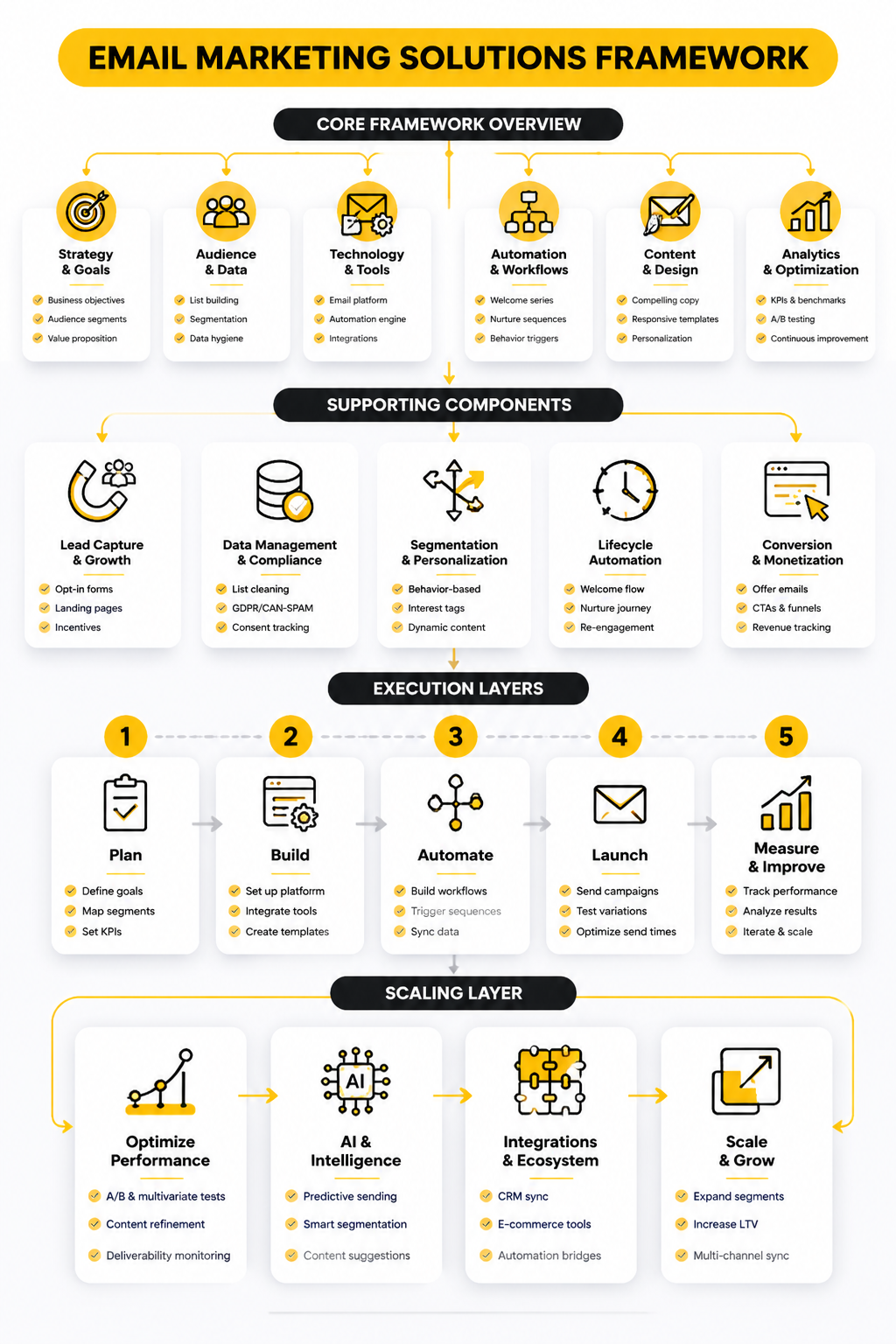
Step‑by‑Step Campaign Execution
With your infrastructure in place, executing your first campaigns becomes much more tangible. A solid workflow follows a repeatable series of steps that minimize mistakes and maximize results:
- Define the Goal: Decide what you want each email or series to achieve—product sales, signups, event attendance, or engagement growth.
- Plan the Content: Outline subject lines, body copy, visuals, and calls to action that support your goal while speaking to your audience segment.
- Build and Test: Use your platform’s editor to assemble the email, then send test versions to your team to check rendering across devices and links.
- Schedule or Automate: For one‑offs, choose the optimal send time based on your audience’s past engagement patterns. For sequences, set triggers like signups, purchases, or inactivity.
- Monitor and Optimize: Once live, watch key metrics like opens, clicks, and conversions to see what’s working and where improvements are needed.
Best Practices That Drive Results
Great implementation isn’t just about following steps—it's about embracing practices that consistently move the needle:
- Personalize Where It Matters: Use subscriber data in subject lines and body content to increase relevance without feeling intrusive.
- Keep Your Lists Clean: Regularly remove inactive subscribers and update preferences so your campaigns stay efficient and your deliverability stays high.
- Leverage Automation: Let triggered sequences nurture leads and re‑engage lapsed customers without manual intervention.
- Test Continuously: A/B testing subject lines, send times, and content keeps your approach data‑driven and evolving.
By following a structured implementation process and applying these best practices, your email marketing solutions become engines for sustained engagement and measurable business impact.
Measuring Success: Analytics, Benchmarks, and What the Data Means
For email marketing solutions to be truly effective, they must help you understand how your campaigns are performing and why the numbers matter. Without analytics and benchmarks, you’re essentially flying blind—even if your design and automation feel polished. The right performance data lets you interpret engagement, optimize strategy, and make decisions that lead to real business outcomes.
Why Metrics Are More Than Numbers
Email marketing analytics reveal the health of your campaigns at every stage of the customer journey. Rather than obsessing over a single metric in isolation, the most effective teams focus on patterns and relationships between numbers:
- Open rates show whether your subject lines and sender names are compelling enough to get attention.
- Click‑through rates (CTR) tell you whether the content inside the email is interesting and actionable.
- Click‑to‑open rate (CTOR) isolates content relevance by showing what percentage of people who opened the email actually clicked a link.
- Bounce and unsubscribe rates indicate list quality and audience satisfaction.
Each of these metrics triggers a different action—low open rates suggest you refine your subject lines or segmentation, while low CTR could signal issues with the message itself. Benchmarks provide context so you know whether a given number is strong or weak relative to peers and broader trends.
Key Benchmarks and What They Tell You
Below are commonly tracked performance signals and how to interpret them in practice:
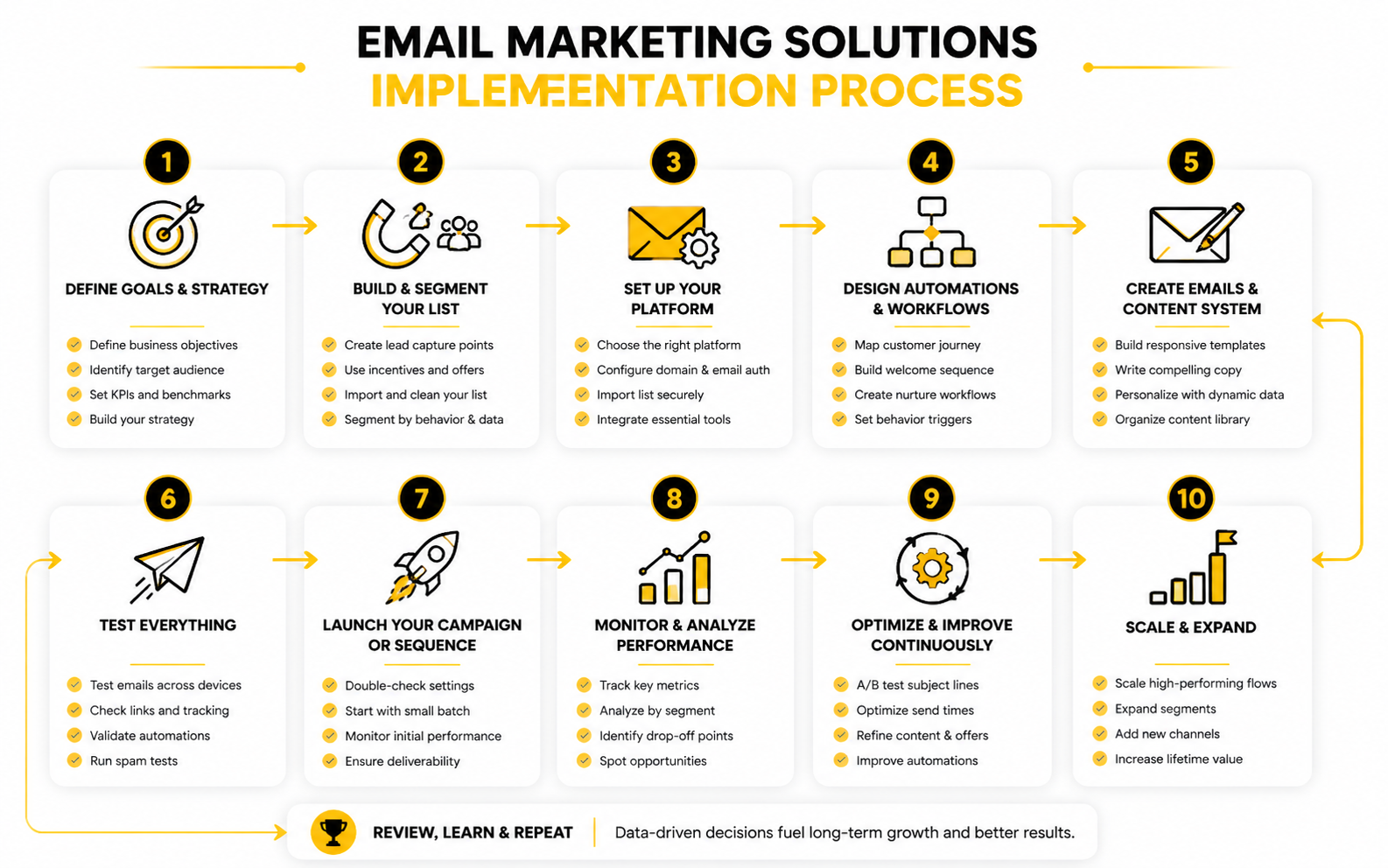
- Open Rate: While privacy protections like Apple Mail Privacy Protection can inflate open rate numbers, typical averages across industries settle in the 35–45% range for engaged lists. High open rates show initial interest, but they don’t guarantee deeper engagement without supporting CTR data.
- Click‑Through Rate (CTR): A CTR of around 2.5–3.5% is typical across many sectors. CTR is often considered a more reliable engagement metric than open rate because it reflects a deliberate action by the subscriber rather than just an inbox display.
- Click‑to‑Open Rate (CTOR): CTOR benchmarks typically sit between 10–18%, and this metric directly ties email content quality to user engagement. A strong CTOR suggests the email delivered clear value after being opened.
- ROI: Email marketing consistently delivers strong returns. Recent aggregated data shows email remains one of the highest‑return digital channels, with an average return of $36–$42 for every $1 spent. This means that even modest engagement gains can translate into meaningful revenue.
Interpreting the Numbers
Benchmarks are useful context, but what matters most is how your data compares against your own goals and past performance:
- If your open rates improve but CTR stays flat, that suggests subject lines are working but content isn’t compelling enough.
- A high CTOR with low open rates indicates your content resonates with those who do open—so you may need better segmentation or subject lines to expand reach.
- Rising bounce or unsubscribe rates signal list quality issues that can harm long‑term deliverability and engagement.
These interpretations lead to practical actions. For example:
- Segmenting your audience to tailor content can lift CTR and conversions.
- Regularly cleaning your list can reduce bounce rates and protect your sending reputation.
- A/B testing subject lines and CTAs provides data‑driven decisions rather than guesswork.
What Data Should Drive Action
- Segment performance over time: Look for trends within each audience segment to determine where engagement is strongest or weakest.
- Lifecycle metrics: Compare how welcome sequences, promotional blasts, and re‑engagement campaigns perform against each other.
- Conversion tracking: Tie email engagement to revenue or lead generation goals to understand real business impact.
True measurement isn’t about hitting a magic number; it’s about understanding your audience’s behavior and using benchmarks and analytics to make strategic improvements that drive your business forward.
Advanced Considerations for Scaling Email Marketing Solutions
As organizations grow, scaling email marketing solutions introduces complexities that go beyond basic campaign execution. Larger audiences, multiple segments, and diverse product lines require more sophisticated strategies, automation, and governance to maintain deliverability, engagement, and ROI.
Strategic Tradeoffs and Risk Management
Scaling introduces tradeoffs. For instance, increasing sending frequency can boost visibility but may also raise unsubscribe rates if content relevance isn’t maintained. Expanding segmentation increases personalization, yet more segments mean more design and testing workload. Brands must balance reach, relevance, and operational efficiency.
Another critical consideration is deliverability risk. Larger sending volumes require clean lists, domain authentication (SPF, DKIM, DMARC), and monitoring reputation. Ignoring these factors can lead to inbox placement issues that nullify even the most creative campaigns.(litmus.com)
Automation at Scale
Advanced email marketing solutions support multi-step workflows across customer lifecycles. At scale, automation can include:
- Trigger-based sequences for onboarding, cart recovery, or re-engagement.
- Behavioral targeting based on web visits, app usage, or purchase patterns.
- Dynamic content insertion to personalize emails across segments without building separate templates for each group.(gohighlevel.com/ai?fp_ref=h8wfn)
Properly architected automation reduces manual effort while maintaining relevance and timeliness.
Expert Guidance for Scaling
Expert-level implementation involves continuous monitoring and iterative optimization:
- Audit Campaign Performance Regularly: Identify which sequences, segments, and content types drive conversions and which require adjustments.
- Invest in Testing Infrastructure: Maintain robust A/B or multivariate testing practices to validate assumptions and uncover optimal strategies.
- Integrate Across Platforms: Connect email systems to CRMs, analytics, e-commerce, and social platforms to unify data, ensuring insights are actionable and campaigns remain personalized.(www.gohighlevel.com/297upgrade?affiliate_upgrade_credit_to_%24297=&fp_ref=h8wfn)
Monitoring Compliance and Privacy
As email volume grows, adherence to regulations like GDPR, CAN-SPAM, and CASL becomes non-negotiable. Scaling strategies must include:
- Consent tracking and preference management.
- Automated suppression of unsubscribed or non-permissioned contacts.
- Transparent privacy policies and opt-out options.
Ignoring these considerations can lead to legal penalties and erode customer trust.
Strategic Outcomes
When done correctly, scaling email marketing solutions allows businesses to:
- Deliver highly personalized experiences to millions without additional headcount.
- Maintain high engagement and deliverability metrics.
- Increase ROI with automated, data-driven campaigns.
- Leverage insights from analytics to continuously refine strategy.
Expert guidance, robust infrastructure, and disciplined monitoring are essential to ensure that scaling is not just about sending more emails, but sending the right emails, to the right people, at the right time.
FAQ - Built for Complete Guide
1. What is an email marketing solution?
An email marketing solution is a software platform or service that helps businesses create, send, automate, and analyze email campaigns. It centralizes contact management, content creation, workflow automation, and performance analytics.(webopedia.com)
2. How does segmentation improve email campaign results?
Segmentation divides your audience into groups based on demographics, behaviors, or preferences. Targeted messaging increases relevance, boosts engagement, and reduces unsubscribe rates, making campaigns more effective.
3. What role does automation play in email marketing?
Automation allows you to send emails triggered by specific actions or schedules, such as welcome sequences, cart reminders, or re-engagement campaigns. This increases efficiency while maintaining personalized communication.(gohighlevel.com/ai?fp_ref=h8wfn)
4. Which metrics matter most for performance tracking?
Key metrics include open rates, click-through rates, click-to-open rates, conversion rates, and unsubscribe rates. Tracking these metrics helps refine content, timing, and segmentation to improve ROI.(dollarpocket.com)
5. How can I improve email deliverability?
Use verified lists, authenticate domains with SPF/DKIM/DMARC, regularly remove inactive contacts, and avoid spam-triggering language. Consistently sending relevant content also maintains a positive sender reputation.(litmus.com)
6. What are common mistakes when scaling email marketing?
Common mistakes include over-segmentation without automation, neglecting compliance, sending irrelevant content at high frequency, and failing to monitor metrics consistently. Strategic scaling requires process, governance, and data-driven adjustments.
7. Are templates necessary for professional campaigns?
Yes, templates ensure consistent branding, faster creation, and mobile-friendly layouts. Modern platforms often include drag-and-drop editors that streamline template design.(webopedia.com)
8. How often should I A/B test campaigns?
Continuous testing is recommended for subject lines, send times, content layouts, and calls-to-action. Regular A/B tests help discover high-performing elements and avoid stagnation.(gohighlevel.com/297upgrade?affiliate_upgrade_credit_to_%24297=&fp_ref=h8wfn)
9. Can small businesses benefit from enterprise-level solutions?
Yes, scalable solutions can accommodate smaller lists while offering automation, analytics, and integration capabilities. Choosing the right plan ensures cost-effectiveness without losing advanced features.(manychat.partnerlinks.io/fmgh24bi2i)
10. How do email marketing solutions integrate with other tools?
They can sync with CRMs, e-commerce platforms, social media, and analytics systems. Integrations unify data streams, personalize campaigns, and provide actionable insights to improve strategy.(www.gohighlevel.com/?fp_ref=h8wfn)
11. What trends should I watch for in email marketing?
Key trends include AI-powered personalization, interactive emails, privacy-compliant data collection, and integration with multi-channel automation. Staying current ensures competitiveness and relevance in your campaigns.
Work With Professionals
Explore 10K+ Remote Marketing Contracts on MarkeWork.com
Most marketers spend too much time chasing clients, competing on crowded platforms, and losing a percentage of every project to middlemen. MarkeWork gives you a better way. Browse thousands of remote marketing contracts and connect directly with companies desperate to hire skilled marketers like you, without platform commissions and without unnecessary gatekeepers.
If you're serious about finding better opportunities and keeping 100% of what you earn, invite readers to explore available contracts and create a profile for free at MarkeWork.com.