

Freelance digital marketing looks simple from the outside. Pick a niche, post a few opinions online, promise leads, and wait for inbound. In reality, the people who last are usually the ones who stop treating this like a loose collection of tactics and start treating it like a professional service business.
That shift matters more now than it did a few years ago. Clients are dealing with noisier channels, faster platform changes, higher expectations around proof, and a growing pile of AI-generated sameness. The opportunity is still very real, but it is getting captured by freelancers who can position clearly, execute cleanly, and tie their work to actual business outcomes.
This article is built for that version of the market. Across six parts, we are going to break down how freelance digital marketing works when you approach it like an operator instead of a hobbyist.
Article Outline
The structure below is the exact path the rest of the article will follow. It starts with market reality, moves into offer design and client acquisition, then finishes with delivery, operations, and smart scaling. That order matters because most freelancers do these steps backward and then wonder why the work feels unstable.
- Why Freelance Digital Marketing Matters Right Now
- Choose Your Niche and Client Promise
- Build a Client Acquisition Engine
- Deliver Work That Keeps Clients Paying
- Set Up Your Pricing, Tools, and Workflow
- Scale Without Losing Quality or Trust
Why Freelance Digital Marketing Matters Right Now
The biggest reason is simple: independent work is no longer sitting on the edge of the economy. Upwork’s 2025 workforce research found that 28% of U.S. knowledge workers now work independently and generated $1.5 trillion in earnings in 2024. MBO Partners’ 2025 State of Independence reported a record 5.6 million independents earning more than $100,000, and Fiverr’s 2025 Freelance Economic Impact Report estimated 6.9 million skilled independent workers generated $319 billion in revenue in 2024. Upwork Inc.+2
At the same time, the work clients need is getting more digital, not less. IAB and PwC’s full-year 2024 report put U.S. internet ad revenue at a record $259 billion, while dentsu’s 2026 global forecast says worldwide ad spend should pass $1 trillion for the first time in 2026 and that digital will account for 68.7% of total investment. On top of that, Google’s 2024 economic impact data says its tools helped drive more than 2 billion monthly direct connections at no cost for American businesses, which tells you exactly where customer attention and buying intent keep showing up. IAB+3

What clients buy inside that environment is changing too. HubSpot’s 2026 marketing data says website, blog, and SEO remain the top ROI-generating channel for marketers, while Salesforce’s latest State of Marketing says 83% of marketers recognize the shift toward personalized, two-way messaging. Add in the fact that the U.S. Bureau of Labor Statistics still projects 36,400 openings a year for advertising, promotions, and marketing managers through 2034, and the signal is clear: businesses still need marketing expertise, but they need it tied to trust, relevance, and measurable performance. hubspot.com+3
A Practical Framework for Building a Freelance Digital Marketing Business
The rest of this article uses a simple framework because the market is punishing vague freelancers. Buyers want someone who understands a business model, can prioritize the right channels, and can translate activity into revenue, lead quality, retention, or pipeline movement. That is why successful freelance digital marketing usually rests on four working layers: positioning, pipeline, performance, and platform. Upwork Inc.+3
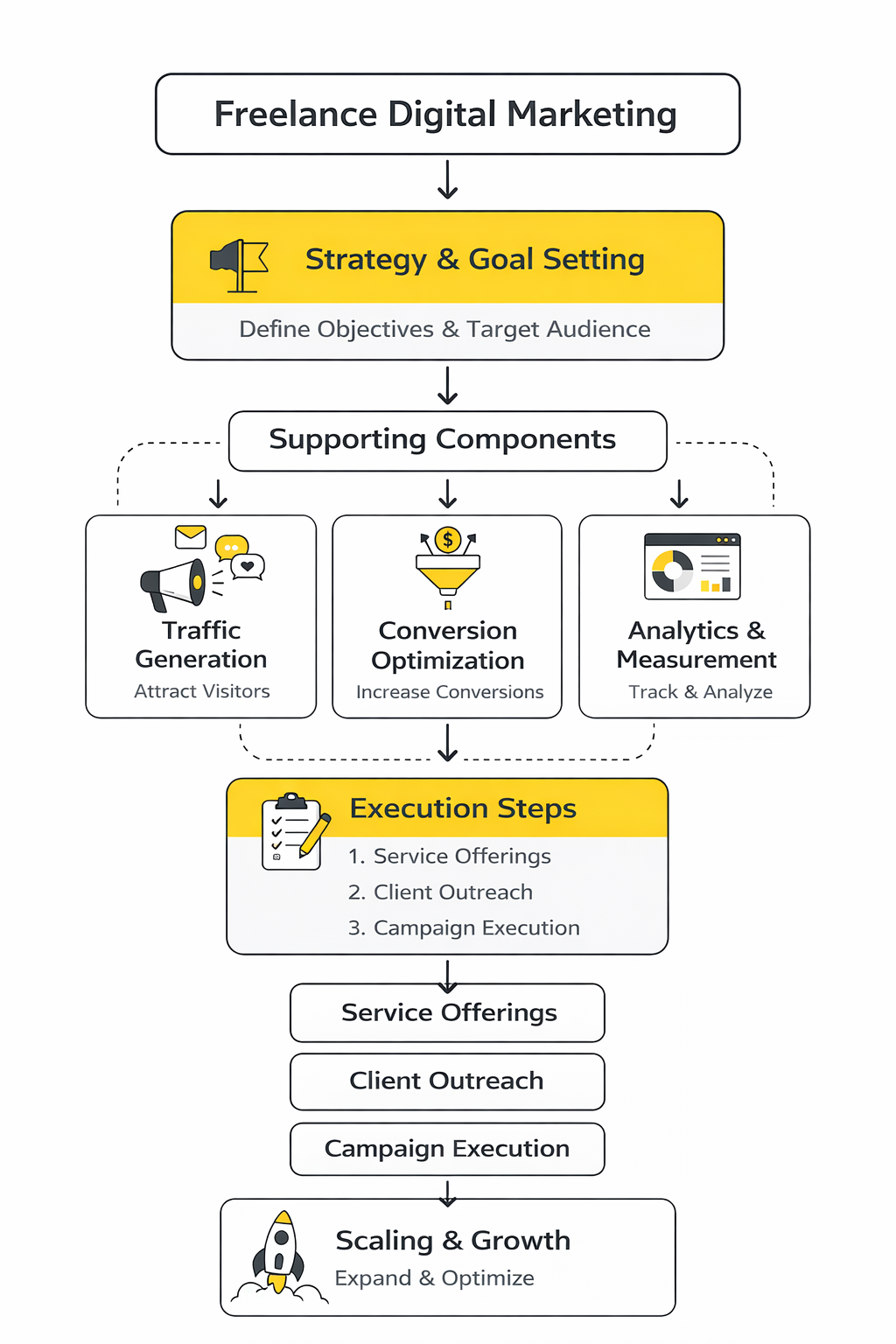
- Positioning means choosing who you help, what problem you solve, and what outcome you can credibly own. This is where niche, offer design, and your client promise live.
- Pipeline means creating a repeatable way to get conversations. That includes content, referrals, outbound, partnerships, search visibility, and follow-up.
- Performance means delivering work that actually helps the client grow. Campaigns, landing pages, email, reporting, testing, and retention all sit here.
- Platform means the business underneath the service. Pricing, proposals, onboarding, automation, scheduling, communication, and documentation decide whether the work feels professional or fragile.
That framework also keeps the article honest. Part 2 will sharpen your niche and offer, Part 3 will build the acquisition side, Part 4 will focus on delivery, Part 5 will tighten operations, and Part 6 will show how to scale without turning your freelance business into a mess. For the platform layer, a lean tool stack usually beats an impressive one, which is why many freelancers standardize around tools like HighLevel, Buffer, Fillout, and Manychat in the places where each one fits naturally.
The real takeaway from Part 1 is not that freelance digital marketing is booming and therefore easy. It is that the field is big enough, busy enough, and mature enough that clear operators can still build excellent businesses inside it. The freelancers who win from here are the ones who stop selling random tasks and start building a system clients can trust.
Choose Your Niche and Client Promise
Most people entering freelance digital marketing make the same mistake first: they describe themselves by channel instead of by business problem. They say they do SEO, paid ads, email, content, or social media, and then they wonder why prospects compare them to dozens of interchangeable freelancers. The better move is to pick a market you understand, choose a problem that costs that market real money, and make your offer easy to understand in one sentence.
That approach fits how buyers are behaving now. Upwork’s 2025 skills research highlights a shift from generalist hiring toward specialist expertise, and Upwork’s investor release on in-demand skills says some specialized freelance skills command hourly rates up to 22% higher than more traditional roles. In plain English, the market is rewarding people who are known for something specific. Upwork+1
Start With a Market, Not a Channel
A niche is not just an industry label. It is the intersection of who you serve, what goes wrong in that business, and how your work changes the outcome. That is why “I help dentists get more qualified implant leads with local search and follow-up automation” is stronger than “I do digital marketing for small businesses.”
This matters because buyers usually decide whether you are relevant before they ever speak with you. 6sense’s 2025 Buyer Experience Report found that buyers choose from one of their day-one shortlisted vendors 95% of the time, while Gartner’s March 2026 sales survey release says 67% of B2B buyers prefer a rep-free experience. If your positioning is vague, you are asking the prospect to do extra mental work, and most of them simply will not. 6sense+1
A strong niche usually has five traits. The business has money moving through it, the problem shows up repeatedly, the result can be measured, decision-makers are reachable, and the sales cycle is not painfully slow. Home services, clinics, law firms, B2B SaaS, agencies, coaches, info businesses, and ecommerce brands can all work, but only when you tie the niche to a clear commercial outcome instead of a vague desire for “more visibility.”
Pick a Problem Expensive Enough to Matter
The easiest way to become forgettable is to offer help with low-stakes busywork. Businesses rarely hire a freelancer because they want more posts, more blog articles, or more dashboards in isolation. They hire because they want booked calls, qualified leads, recovered revenue, lower acquisition costs, stronger retention, or a pipeline they can actually trust.
That is also where the market pain is showing up in the data. Constant Contact’s 2025 Small Business Now report says only 18% of SMBs feel very confident in their marketing effectiveness, 42% have less than an hour a day to spend on marketing, and their top frustration is not knowing what is working. So when you choose a niche, you are really choosing which kind of confusion you want to solve. news.constantcontact.com
That is why the best offers in freelance digital marketing are usually anchored to one painful bottleneck. For a local service company, that might be missed calls and weak lead follow-up. For a Shopify brand, it might be too much paid traffic leaking before email and SMS retention can do their job. For a B2B company, it might be a thin demand pipeline because the website, content, and conversion path are not helping buyers trust the company early enough.
Niche by Market, Problem, and Mechanism
There is a practical way to keep this simple. Instead of choosing only a channel or only a vertical, build your niche using three layers: market, problem, and mechanism. When those three fit together, your positioning stops sounding generic.
- Market: Who exactly are you serving?
- Problem: What costly issue keeps showing up?
- Mechanism: What do you actually do to fix it?
That structure creates much better positioning. “Email marketing freelancer” is broad and slippery. “Retention-focused email and SMS for Shopify brands doing enough volume to care about repeat purchases” is tighter. “LinkedIn content and conversion-focused landing pages for B2B founders who need more sales conversations” is tighter too, because the buyer can instantly see where the work starts and what the work is supposed to change.
You do not need the perfect niche on day one. You need a niche that is narrow enough to let pattern recognition compound. Once you work with the same kind of client repeatedly, your messaging sharpens, your process gets faster, your case studies become more convincing, and your referral network becomes more useful. That is one of the biggest hidden advantages of specialization: it reduces reinvention.
Write a Client Promise You Can Actually Defend
Your client promise is not a slogan. It is the practical sentence that tells the right prospect, “This is for you, and this is why you should keep reading.” Good promises are specific enough to attract the right buyer and restrained enough to stay credible.
A useful formula looks like this: I help [market] achieve [outcome] by fixing [problem] through [mechanism]. That gives you enough structure to sound clear without sounding like a template. The outcome should be tied to something the client already values, and the mechanism should match what you can truly deliver well.
The pressure to get this right is higher now because self-education is doing more of the selling. 6sense’s buyer research shows buyers are engaging sellers earlier, but still doing most of their selection work independently, and HubSpot’s latest marketing statistics page keeps showing that owned assets like website, blog, and SEO remain top ROI drivers while email stays one of the most-used channels across business sizes. A clear promise helps buyers connect your expertise to channels and outcomes they already believe matter. 6sense+1
Bad promises usually fail in one of three ways. They are too broad, too hypey, or too disconnected from business economics. “I help brands dominate online” says almost nothing. “I guarantee explosive growth” sounds unserious. “I create engaging content” may be true, but it does not tell a prospect why that content should matter to revenue, pipeline, retention, or lead quality.
Turn Your Promise Into One Core Offer
Once the niche and promise are clear, build one flagship offer around them. Not five. Not a menu with fourteen services that make you look busy and unfocused. One core offer forces you to define scope, expected outcomes, deliverables, timeline, and the exact work that sits inside the engagement.
A strong offer also respects channel reality. HubSpot’s current benchmark page shows website, blog, and SEO leading ROI for B2B marketers, while Constant Contact’s 2025 SMB data says email is now the most effective channel for 44% of SMBs in its study. So instead of selling disconnected tasks, package the mix that best fits the client’s buying motion. That might mean local SEO plus lead handling for clinics, retention email plus landing-page optimization for ecommerce, or authority content plus conversion pages for B2B service firms. HubSpot+1
This is also the point where your process should become visible. A simple intake form in Fillout, a clean scheduling flow in Cal.com, and one place to manage follow-up in HighLevel or Copper is usually enough to make a solo service feel organized. You do not need a giant tech stack to look professional. You need a clear promise, a focused offer, and a buyer who immediately understands why you fit.
The big idea here is simple: your niche is not a restriction. It is a filter that makes trust easier to earn. When freelance digital marketing starts from a defined market and a defensible promise, client acquisition gets easier, delivery gets cleaner, and the business stops feeling random.
Build a Client Acquisition Engine
Once your niche and client promise are clear, the next job is not “more marketing.” It is building a system that creates qualified conversations without forcing you to start from zero every month. That matters because buyers are making decisions earlier than many freelancers realize: 6sense’s 2025 B2B Buyer Experience Report says buyers evaluate an average of 5.1 vendors, fill 3.6 shortlist spots on day one, and choose from that day-one shortlist 95% of the time, while LinkedIn’s review of Bain buyer-group research says buyers were more than 20 times more likely to choose a vendor that everyone in the buying group had heard of from the start. Your acquisition engine should make you easier to notice, easier to trust, and easier to shortlist before the prospect is fully “ready.” 6sense+1
Stop Relying on Random Visibility
A lot of freelance digital marketing businesses stay unstable because they are built on one traffic source at a time. One month it is referrals, then LinkedIn posts, then cold email, then a freelance platform, then panic. A real acquisition engine spreads the load across a few channels that reinforce each other, so content warms people up, outreach creates direct conversations, and referrals shorten trust-building.
That does not mean you need to be everywhere. It means you need a small stack of channels that match how your buyers already discover and evaluate help. HubSpot’s latest marketing statistics show that website, blog, and SEO remain the top ROI channel for B2B brands, while Constant Contact’s 2025 Small Business Now report says 44% of SMBs now see email as their most effective channel and only 18% feel very confident in their marketing results. That is exactly why a freelancer with a clear site, useful proof content, and disciplined follow-up can still outperform louder competitors. HubSpot+1
The simplest version of this engine is usually enough. You need one place people can understand your offer, one publishing rhythm that demonstrates competence, one direct outreach motion that creates conversations, and one follow-up system so leads do not disappear the second life gets busy. For most freelancers, that is a better bet than chasing every new channel and hoping volume will save weak positioning.
Publish Proof Instead of Just Posting Content
The fastest way to make your acquisition easier is to publish material that reduces buyer risk. That can be a teardown, a short case study, a before-and-after funnel critique, a niche-specific benchmark post, a plain-language guide, or a short email sequence that helps the prospect fix one obvious problem. The point is not to “build a personal brand” in the abstract. The point is to give buyers evidence that you understand their world well enough to be useful before the call even happens.
That trust effect is not subtle. LinkedIn and Edelman’s thought-leadership research shows that 73% of decision-makers see thought leadership as a more trustworthy basis for assessing capabilities than regular marketing materials, and LinkedIn’s companion research summary says 9 in 10 decision-makers and C-suite executives become more receptive to outreach from companies that consistently publish high-quality thought leadership. In other words, good content does not replace sales. It makes sales feel less cold. LinkedIn+1
Quality matters even more now because generic AI content is flooding every feed. Content Marketing Institute’s 2025 B2B benchmarks found that only 4% of B2B marketers report a high level of trust in generative AI outputs, while 52% expect increased investment in thought leadership content and 46% expect content marketing budgets to rise in 2025. The takeaway is blunt: the market still wants content, but not lazy content. If your material sounds like everyone else, it will be ignored like everyone else. Content Marketing Institute
A practical content setup is enough here. Publish consistently through a scheduler like Buffer, collect leads through a simple email flow in Brevo or HighLevel, and track which proof assets actually earn replies or booked calls with a clean link system like Dub. The tool choice is not the edge. The edge is publishing material that makes your niche think, “This person gets it.”
Use Outbound to Open Conversations, Not Force Them
Outbound still works, but only when it stops pretending to be magic. A strong message is usually built on three things: a real observation about the prospect’s situation, a clear point of view on what is being lost, and a low-friction next step. That could be a short audit, a teardown, a simple Loom, or a direct suggestion tied to the bottleneck you solve.
This is where most freelancers sabotage themselves by trying to sound impressive instead of relevant. The prospect does not care that you are “passionate about growth.” They care whether you noticed that their paid traffic is landing on a weak page, their local service business is bleeding missed calls, or their nurture sequence stops after the first opt-in. If your niche from Part 2 is real, your outbound should sound like a specialist noticing familiar problems, not a stranger spraying templates.
Good outbound also works better when it sits next to visible proof. That is the whole point of building the engine instead of relying on one tactic in isolation. When a prospect gets your message, checks your profile or site, and finds useful niche-specific material there, your outreach no longer feels random. It feels like a logical invitation to continue a conversation that already started.
Build Referrals and Partnerships Into the System
Referrals are often treated like luck, but they work better when you build for them on purpose. Ask at the right moment, make the ask specific, and make it easy for the client to know who you help best. A vague “send people my way” request creates vague results. A sharper version like “I’m looking to help more multi-location clinics that need better lead handling after form fills and calls” gives people something they can actually remember.
Partnerships are the same. Designers, developers, videographers, media buyers, CRM consultants, and agency owners already touch the same clients you want. When your offer solves a complementary problem rather than competing with theirs, the relationship becomes useful fast. Constant Contact’s guidance on referrals makes the same underlying point from the customer side: your happiest customers are your best marketers, and referrals tend to bring in more qualified leads because trust is transferred before the first conversation. Constant Contact
This is one place where simple systems help a lot. A short intake form in Fillout, a clean booking flow in Cal.com, and a tagged pipeline inside HighLevel make it easier to separate referrals, partnerships, outbound replies, and content-driven leads. Once you know where good clients actually come from, you stop guessing and start doubling down.
Run a Weekly Process You Can Repeat
Client acquisition becomes less emotional when it turns into a routine. You do not need a heroic launch every quarter. You need a weekly operating rhythm that keeps your name circulating, your proof improving, and your pipeline moving.
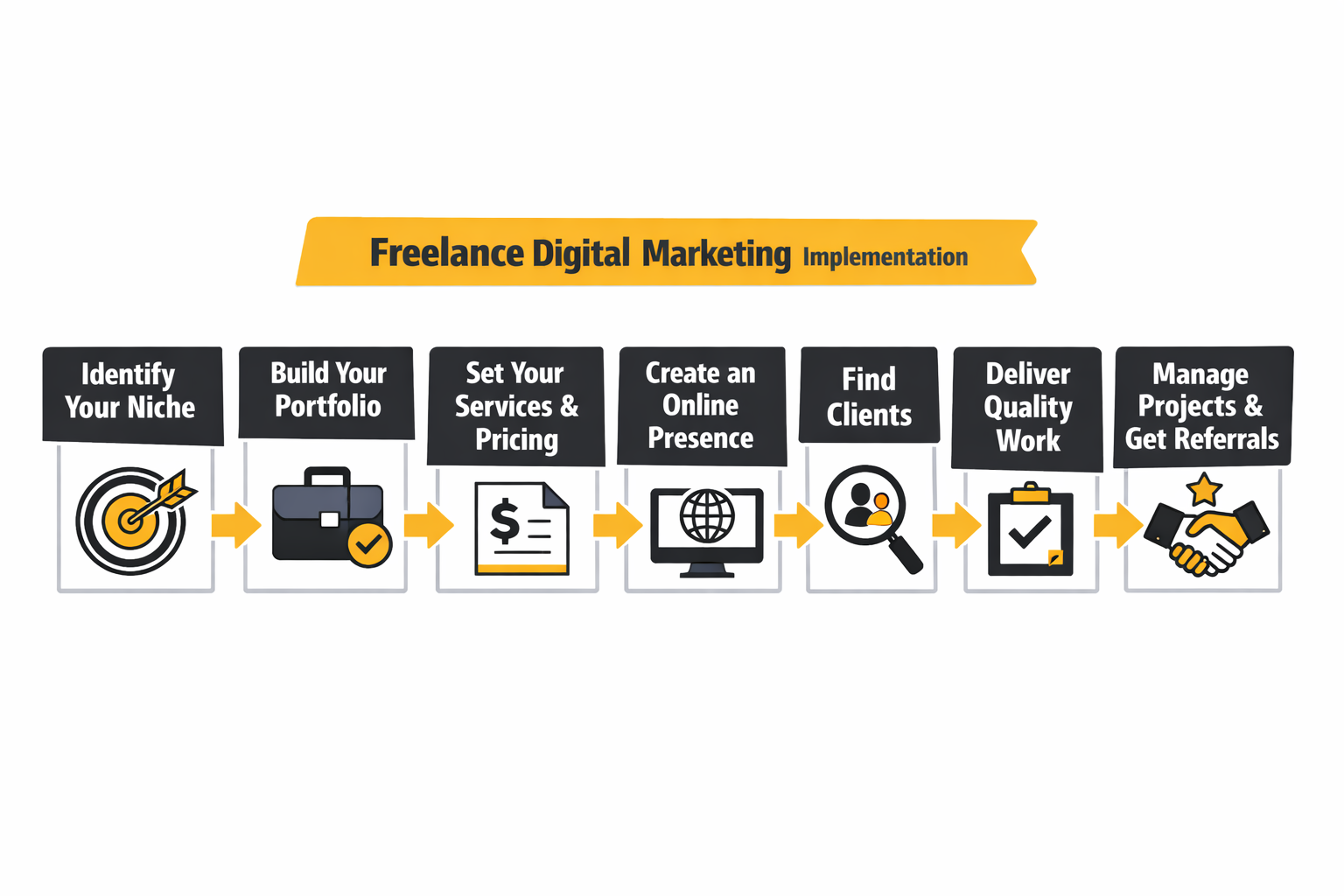
- Refresh your target list. Add a small number of businesses that match your niche, and note real trigger events like weak landing pages, stale offers, missing follow-up, expansion into new locations, or visible ad spend.
- Create one proof asset. Publish something small but sharp each week: a teardown, benchmark, checklist, landing-page rewrite, email critique, or short opinion backed by evidence from your niche.
- Send tailored outreach. Contact a manageable number of prospects with one relevant observation and one practical next step. Keep it human, short, and specific enough that it could not have been sent to everyone else.
- Follow up with substance. Do not just “bump” messages. Add a new angle, a second observation, a quick example, or a useful resource that proves you are paying attention.
- Run diagnostic calls, not generic discovery calls. The point of the call is to identify the real bottleneck, confirm urgency, and decide whether your core offer actually fits.
- Review the numbers weekly. Track replies, booked calls, qualified opportunities, closed deals, average deal size, and where the lead came from. Then keep the channels and messages that move those numbers, and cut the ones that only feed your ego.
That process is simple on purpose. HubSpot’s marketing benchmarks note that 41% of marketers measure content success through sales, which is a much healthier standard than likes, impressions, or vague “awareness” in a freelance business. Your pipeline should tell you whether your content, outreach, and referrals are working together or just keeping you busy. HubSpot
Measure the Pipeline, Not the Performance
A freelance digital marketing business gets stronger when you judge acquisition by commercial outcomes instead of activity volume. More posts do not matter if nobody books. More emails do not matter if replies are weak. More calls do not matter if the deals are unqualified, badly scoped, or constantly churn.
The numbers that usually matter most are straightforward: how many qualified conversations you created, how many turned into proposals, how many proposals closed, how long deals took to close, and which source created the best clients. When you look at acquisition through that lens, the goal changes. You stop asking, “How do I get more visibility?” and start asking, “Which system reliably brings in clients I actually want?”
That is the handoff into the next part. Once your acquisition engine is bringing in the right conversations, the real test begins: can you deliver work in a way that keeps clients paying, trusting, and referring?
Measurement, Benchmarks, and What the Numbers Mean
Getting a client is one thing. Keeping them usually comes down to whether your reporting helps them make better decisions. That matters even more now because budgets are not expanding freely, with Gartner’s 2025 CMO spend survey showing marketing budgets flat at 7.7% of company revenue, while Salesforce’s latest marketing statistics page says 88% of marketers use analytics or measurement tools but only 31% are fully satisfied with their data unification. When money is tighter and trust in the data is weaker, freelance digital marketing stops being a creative exercise and becomes a measurement discipline. gartner.com+1
The goal in this part is not to collect more dashboards. It is to understand which numbers actually explain performance, which ones only describe activity, and which ones should trigger an action. That distinction is what turns reporting from a monthly ritual into a reason for clients to keep paying you. Salesforce+1
Start With a Reporting Spine
The cleanest way to measure freelance digital marketing is to build the reporting spine backward from business value. Start with revenue, booked pipeline, or completed sales. Then trace those outcomes back to qualified leads, booked calls, purchases, or other key events, and only after that look at channel metrics like clicks, sessions, impressions, and open rates. That order follows how Google Analytics and Google Ads now handle key events and conversion management, with Google explicitly treating Analytics as the source of truth for defining key events that can be imported into Ads. Podpora Google+1
In practice, that usually means four layers. First, track the commercial result the client cares about most. Second, track the conversion event that predicts that result. Third, track the source and cost that brought the visitor in. Fourth, track the on-page or in-message behavior that explains why people moved forward or dropped off. That is an operational framework, but it is grounded in the same logic Google and Salesforce push: tie channels to key events, tie key events to value, and make decisions from there. Podpora Google+1
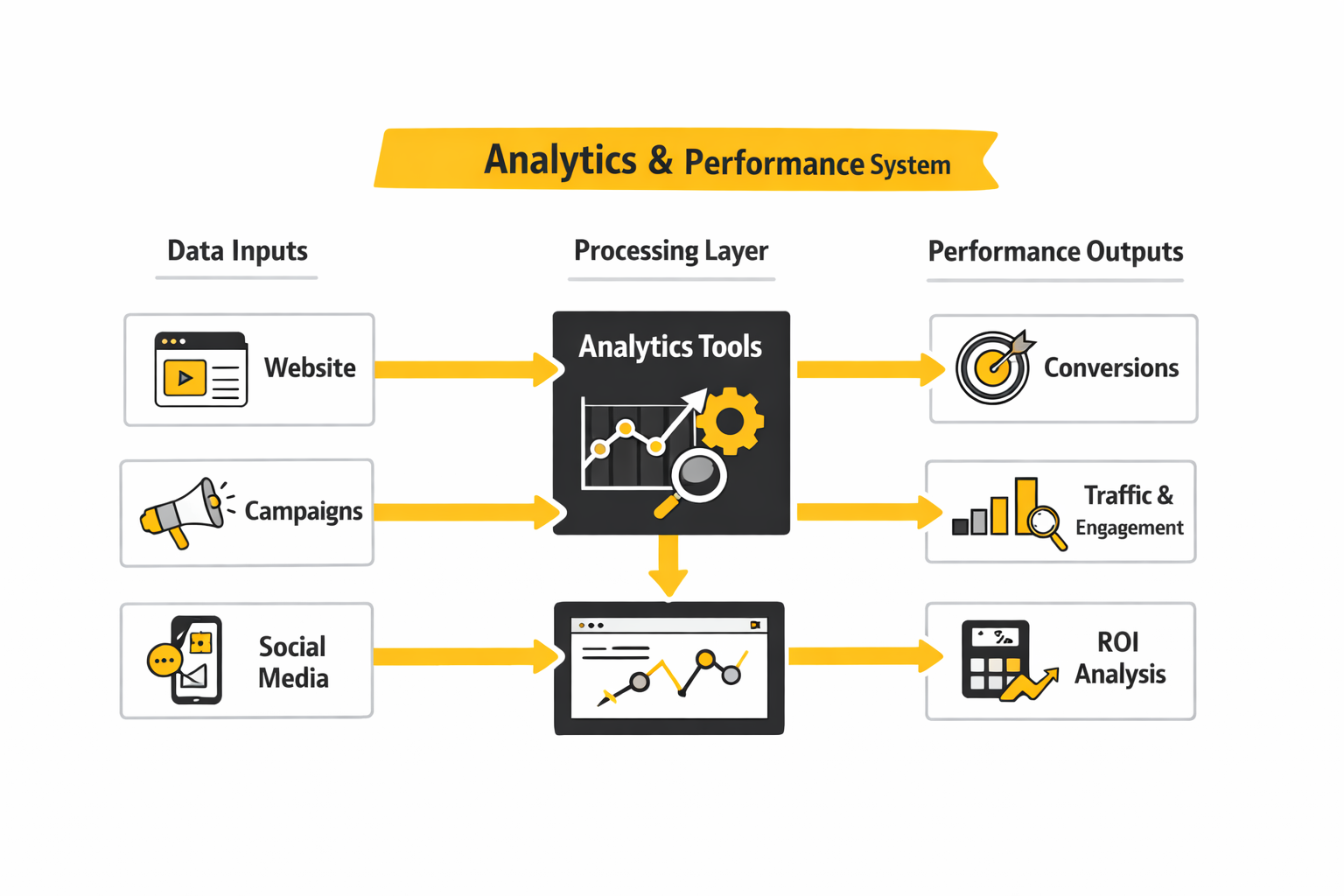
For most freelancers, that reporting spine does not require a giant stack. One CRM or pipeline hub such as HighLevel or Copper, plus email reporting in Brevo, is usually enough to connect lead source, follow-up, and conversion quality in one place. The important part is not the logo on the software. The important part is that the client can see how marketing activity turns into pipeline or sales without guessing. Salesforce+1
Know Which Metrics Matter for This Business Model
A lot of reporting goes wrong because freelancers use the same scoreboard for every client. That does not work. A lead generation business, an ecommerce store, and a content-led B2B company do not succeed through the same sequence of actions, so they should not be judged by the same first-line metrics. This is less about finding the universal KPI and more about choosing the right chain of evidence. Salesforce+2
For lead generation, the most useful core numbers are usually qualified leads, booked-call rate, show rate, close rate, cost per qualified lead, and revenue per lead source. Traffic and click volume can still matter, but only as supporting signals. Google’s attribution reports are useful here because they show how different touchpoints assist conversions instead of pretending the final click did all the work. Podpora Google+2
For ecommerce, the stack changes. Conversion rate, average order value, repeat purchase behavior, and revenue by channel matter more than vanity reach, and GA4’s ecommerce setup is built specifically to capture events like purchases and the revenue tied to them. Salesforce’s ROI guide makes the same broader point: the real job is to compare value created against cost, not to celebrate surface-level engagement that never turns into money. Podpora Google+2
For email-heavy programs, open rate can still tell you whether a subject line earned attention, but it is not enough on its own. Mailchimp’s guidance explains that open rate mostly reflects subject-line appeal and inbox visibility, while click-to-open rate tells you more about how compelling the content and call to action were after the open. Klaviyo’s 2026 benchmarks make the gap even clearer in ecommerce: average campaign email open rate sits at 31%, but average campaign click rate is only 1.69%, which is exactly why “people opened it” and “people moved” are not the same thing. Mailchimp+1
Read Benchmarks as Context, Not Truth
Benchmarks help when they stop you from reacting emotionally to normal performance. They hurt when they become a lazy substitute for understanding the client’s own economics. The best way to use them is as a directional reference, then compare against the client’s past performance, traffic mix, sales cycle, and offer quality before declaring anything good or bad. Unbounce+1
That is exactly why Unbounce’s recent conversion benchmark work is useful. Its March 2025 update is based on 41,000 landing pages, 464 million visitors, and 57 million conversions, and it uses the median rather than the average because outliers distort the picture. The headline figure, a 6.6% median landing-page conversion rate across industries, is helpful as a broad baseline, but even Unbounce stresses that definition and context matter, which means a page collecting newsletter opt-ins should not be judged the same way as a page asking for a high-ticket sales call. Unbounce
The same caution applies to digital experience benchmarks. Contentsquare’s 2025 benchmark report found that the cost of an online visit rose 9% year over year while conversion rates dropped 6.1%, and 40% of visits showed signs of user frustration. That does not just mean “marketing got harder.” It means that more expensive traffic now punishes weak pages and clunky journeys faster than before, so a freelancer looking at falling ROAS or weaker lead flow should inspect the experience itself before blaming the ad platform. Contentsquare
One number from that same report is especially useful because it points straight to action. Contentsquare found that websites increasing session depth by 10% or more saw an average 5.4% lift in conversions. The right interpretation is not “make people click around more.” It is that clearer journeys, better internal paths, and lower friction often increase both engagement and conversion together, which is exactly the kind of fix a freelancer can prioritize. Contentsquare
Separate Leading Signals From Lagging Outcomes
The cleanest reporting systems separate leading indicators from lagging outcomes. Leading indicators tell you whether the work is moving in the right direction now. Lagging outcomes tell you whether that movement eventually became money. Both matter, but they should never be confused. Google Business+1
GA4 is useful here because it defines engagement rate clearly: an engaged session lasts longer than 10 seconds, includes a key event, or has at least two page or screen views. That makes engagement rate a helpful early signal, but still only a signal. A page can have strong engagement and weak revenue, which usually means the message is interesting but the next step is unclear, the offer is weak, or the traffic is mismatched. Podpora Google
Search traffic is a good example of why this matters. HubSpot’s 2026 marketing statistics say nearly 30% of marketers have reported decreased search traffic as consumers shift toward AI tools, while Google says clicks coming from AI Overview search results tend to be higher quality and spend more time on site. So if a client’s sessions are down but conversion rate, lead quality, or sales efficiency are improving, the right conclusion may be that traffic got smaller and better, not that the strategy failed. HubSpot+1
Let the Numbers Trigger the Next Move
Good analytics should create decisions fast. If open rate is healthy but click rate is weak, the subject line worked and the offer or email body needs help. If click-through rate is solid but landing-page conversion is poor, the ad promise and page experience are probably out of sync. If engagement is strong but qualified lead rate is weak, the traffic may be curious rather than ready. Those are not abstract insights. They are next actions. Mailchimp+2
This is also where attribution should stop being treated as the final answer. Google’s attribution reports help you understand assisted conversions, but Google’s 2026 guidance on incrementality testing makes the deeper point: finance leaders care about provable business results, not just pretty channel reports. Google says the minimum cost of an incrementality experiment dropped from a previous high of $100,000 to $5,000 in 2025, making this kind of testing more accessible and pushing marketers toward a better standard of proof. Podpora Google+1
That does not mean every freelancer needs formal lift studies tomorrow. It means you should think like an experimenter. Test the subject line, then the offer, then the landing page, then the follow-up sequence, and keep the test tied to one commercial outcome at a time. Clients stay longer when your reports do not just explain the past, but make the next decision feel obvious. Google Business+1
The bigger lesson is simple. In freelance digital marketing, data is not there to make your work look sophisticated. It is there to show what is actually driving growth, what is leaking value, and what deserves attention next. That is the handoff into Part 5, where the focus shifts from measurement itself to the systems, pricing, and workflow that make your delivery reliable.
Set Up Your Pricing, Tools, and Workflow
By this point, the weak spots in a freelance digital marketing business are usually not creative. They are operational. Clients are under pressure to get more output from flat budgets, with Gartner’s 2025 CMO spend survey showing budgets stuck at 7.7% of company revenue, while The CMO Survey’s 2025 topline report shows marketing leaders expect much heavier use of AI and automation in the next three years than they have today. That combination changes what buyers want from a freelancer: less activity, more clarity, tighter systems, and faster decisions. gartner.com+1
Price for Decision Weight, Not Task Volume
Hourly pricing still has a place, but it gets weaker as soon as the work depends on judgment rather than simple execution. A freelancer who helps a client fix lead quality, improve conversion flow, or tighten retention is not being paid for typing speed. They are being paid for pattern recognition, prioritization, and the ability to make fewer but better moves, which is exactly why Upwork’s 2025 skills data shows specialized expertise commanding premium rates over more general work. Upwork Inc.
That is why the strongest pricing models in freelance digital marketing are usually scoped projects, retainers with clear deliverables, or hybrid models with a fixed base and tightly defined upside. Pure performance deals sound attractive until you remember how little control a freelancer often has over sales calls, fulfillment, offer quality, seasonality, or the client’s follow-up discipline. When budgets are flat, buyers still pay for work that reduces uncertainty, but they usually want the scope, timeline, and ownership boundaries stated clearly up front. gartner.com+1
Keep Your Tool Stack Lean and Connected
A bloated stack makes solo work slower, not smarter. Constant Contact’s 2025 small business research found that only 18% of SMBs feel very confident in their marketing effectiveness, even as 37% increased marketing spend, 44% said email is their most effective channel, and nearly half said they use AI for marketing. That is a strong argument for choosing tools that reduce handoff friction instead of tools that merely look sophisticated in a sales demo. news.constantcontact.com
For most freelancers, one CRM and automation hub, one scheduling tool, one form layer, one landing page builder, and one core email platform is enough. A stack built around HighLevel or Copper, plus Cal.com, Fillout, Replo, Brevo, or Manychat can cover most client delivery without forcing you to duct-tape ten different systems together. The test is simple: if a lead comes in, can you capture it, qualify it, book it, follow it up, and report on it without exporting three CSV files and apologizing for delays. news.constantcontact.com+1
Design a Workflow Clients Can Trust
Clients feel process long before they understand technical skill. They notice whether onboarding is clean, whether access requests are organized, whether the first two weeks create momentum, and whether your updates make the next decision obvious. A freelancer with a repeatable workflow often looks more senior than a freelancer with slightly better channel knowledge but no operating rhythm.
That workflow should remove ambiguity at every stage. Before kickoff, confirm goals, KPIs, logins, decision-makers, and approval timelines. During delivery, use a fixed cadence for implementation, reporting, and review so the client never has to guess what is happening, what changed, or what you need from them next.
The strategic tradeoff here is important. The more custom your process becomes for every client, the more “high touch” it feels in the short term and the harder it becomes to protect quality later. Standardizing 70% of the workflow while tailoring the final 30% to the client’s actual bottleneck is usually the sweet spot for freelance digital marketing.
Protect Margin and Cash Flow Before You Need To
A lot of freelancers think cash flow problems mean they need more clients. Sometimes they just need better terms. QuickBooks’ 2025 late payments report found that 56% of surveyed small businesses were owed money from unpaid invoices, averaging $17.5K per business, and that businesses with more overdue invoices were more likely to report cash-flow problems. quickbooks.intuit.com
That is why deposits, milestone billing, clear pause clauses, revision limits, and explicit payment windows are not “nice to have” admin details. They are margin protection. If a client pays late, delays approvals, expands scope casually, or disappears between review cycles, your workflow should make the commercial consequence automatic instead of emotional.
Use AI Where It Improves Throughput, Not Where It Weakens Trust
AI absolutely belongs inside a modern freelance workflow, but not as a substitute for judgment. The CMO Survey’s 2025 report shows companies currently use AI or machine learning for optimizing and automating marketing about 17.2% of the time on average, expect that to rise to 44.2% over the next three years, and report gains in sales productivity and lower marketing overhead from AI use. At the same time, the same survey shows ongoing challenges around customer information security, brand fit, target-market fit, and understanding how AI-generated decisions are being made. The CMO Survey
That should shape how you use it. AI is strong for first drafts, research organization, transcript cleanup, internal checklists, reporting skeletons, and assistant-style tasks that save time without carrying final client risk. It is much weaker when left unsupervised on positioning, claims, live customer messaging, or strategy recommendations that need nuance, context, and accountability, which fits Salesforce’s current view of marketing that AI adoption is rising while trust, personalization, and data privacy are becoming more central to execution. Salesforce+1
Build Capacity Carefully or You Will Recreate the Agency Problems You Escaped
Scaling sounds attractive right up until you realize you have rebuilt the very overhead you were trying to avoid. The better first move is usually not hiring a full team. It is building a small bench of trusted specialists for design, paid media, development, automation, or analytics so you can expand delivery width without losing strategic control.
That approach matches the market. Upwork’s 2025 research release says nearly half of businesses are turning to freelancers to address critical skill gaps, and The CMO Survey’s 2025 topline report says the biggest people challenge for marketing organizations is hiring the best people. Clients are not asking you to look big. They are asking you to solve a problem without adding drag. Upwork Inc.+1
The expert-level move is to add capacity only when the constraint is repeatable and profitable. If demand is inconsistent, stay lean. If delivery depends heavily on your judgment, productize more before you delegate. If a subcontractor saves time but forces more revisions, handoffs, and rework than they remove, you have not really scaled anything.
This is where freelance digital marketing starts to separate into two paths. One path stays intentionally small, high-margin, and specialist. The other grows into a system with more people, more assets, and more leverage. Part 6 is about making that choice well, scaling without losing trust, and answering the questions that usually decide whether the business keeps compounding or stalls.
Scale Without Losing Quality or Trust
Scaling freelance digital marketing is not about jamming more clients into the same calendar. It is about building a business that can handle flatter budgets, noisier channels, and a market where AI is now expected instead of impressive. Gartner says marketing budgets stayed flat at 7.7% of company revenue in 2025, while HubSpot’s 2026 marketing report frames AI as baseline and says growth is shifting toward clearer brand point of view, trust, and relevance. gartner.com+1
That changes the job. Clients still want execution, but they are rewarding freelancers who make decisions faster, communicate tradeoffs clearly, and create systems that keep working even when one channel slows down. HubSpot’s 2026 statistics page shows that 40% of marketers now treat lead quality and MQLs as their most important success metric, and 44% review campaign performance weekly, which tells you exactly where the professional bar is moving. HubSpot
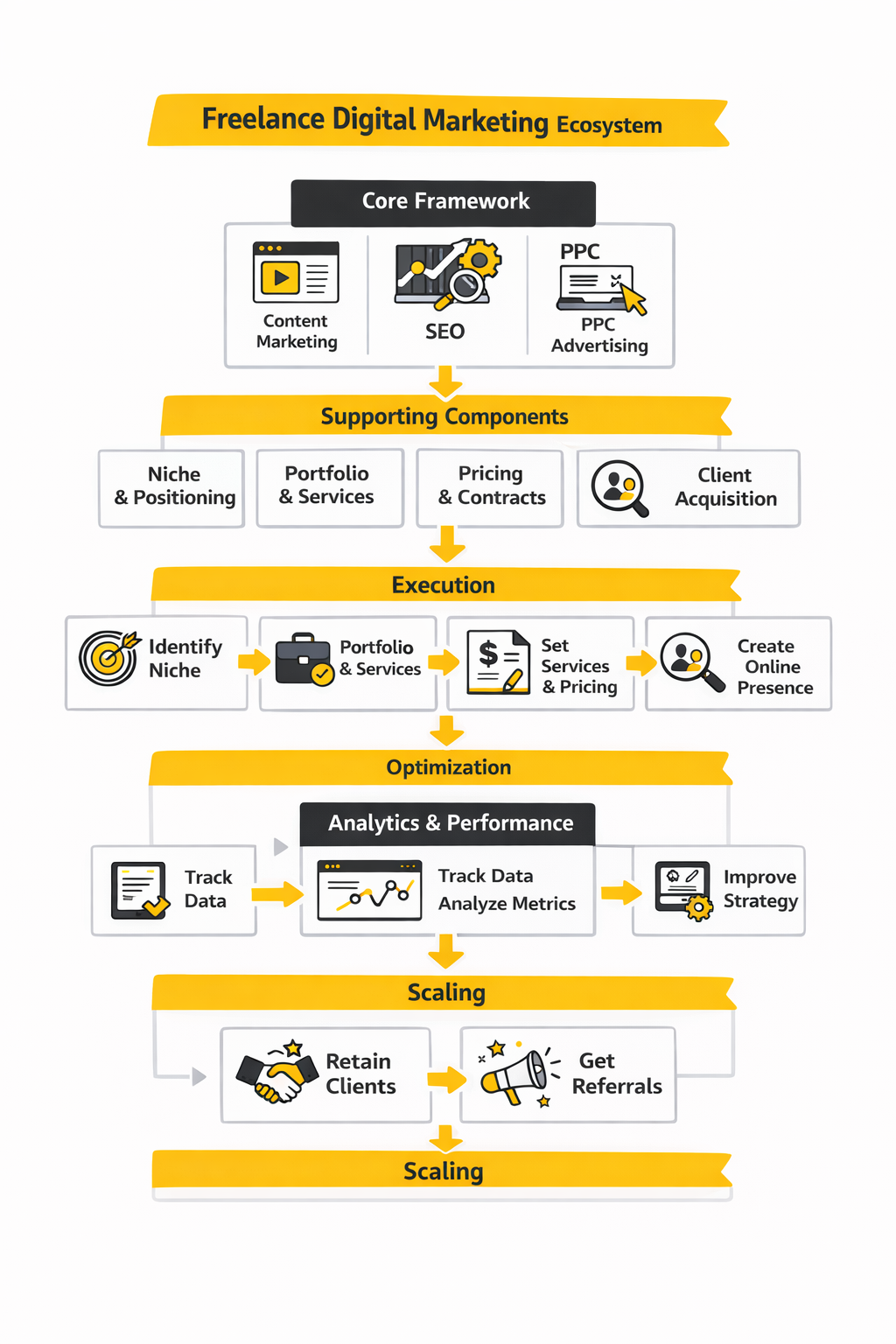
Build an Ecosystem, Not Just a Service
The strongest freelance businesses eventually stop acting like loose collections of tasks. They become small ecosystems made up of one core offer, a clear proof library, a repeatable sales motion, a delivery process, a lightweight tool stack, and a bench of partners or specialists who can extend capacity without wrecking quality. That matters because the opportunity is broad but the competition is broad too: Upwork’s marketing category showed a sample of 11,520 active marketing jobs at the time of review, while MarkeWork promotes 10K+ remote marketing contracts and says it adds 300+ new listings per day. Upwork+1
The practical takeaway is not that you should chase every board or every lead source. It is that you should build a system that lets the right buyers find you in more than one place and then quickly understand why you are a fit. In a market where HubSpot reports that more leads are arriving later in the buying process and more marketers are adapting for traditional and AI-powered search, the freelancer who looks credible across content, referrals, direct outreach, and contract ecosystems has a real edge. HubSpot
A clean ecosystem usually includes a strong site or landing page, a few proof-heavy assets, a follow-up engine, and a reliable home for contracts and conversations. For example, a freelancer might use Replo for faster landing-page deployment, Chatbase for simple lead qualification, or ScaledMail when outbound becomes an actual growth channel rather than a desperate last resort. The point is not to collect software. The point is to remove friction at the exact moments when trust either grows or dies.
Standardize the Boring Parts
If you want to scale without losing quality, standardize the parts of the business that should never depend on your mood. Onboarding, access collection, kickoff structure, reporting format, proposal language, renewal reviews, and offboarding should all feel steady and obvious. That advice lines up with the broader market shift toward workflow discipline, where HubSpot reports that 47% of marketers use automation to make processes more efficient, 92% use automation for data analysis and reporting, and 93% use it for administrative work. HubSpot
What you should not standardize too aggressively is diagnosis, strategic prioritization, and messaging nuance. Those are the parts clients actually pay a premium for, especially now that AI can generate endless average material on command. HubSpot’s 2026 report makes that tension clear: AI is now table stakes, but human-led marketing is still what builds trust and revenue when markets get crowded. HubSpot
Pick the Right Kind of Scale
A lot of freelancers talk about scale as if it only means hiring a team. That is one path, but it is not the only smart one. Upwork’s 2026 gig-economy overview says 4.7 million U.S. independents earned more than $100,000 in 2024, which is a useful reminder that scaling can mean higher rates, better clients, cleaner systems, and stronger margin rather than more payroll. Upwork
For some people, the best version of freelance digital marketing stays small, specialized, and high trust. For others, the better move is to become a boutique operator with recurring offers, subcontractor support, and stronger leverage across content, CRM, and automation. The mistake is not choosing one of those paths. The mistake is drifting into a bigger operation without better positioning, better economics, or better controls.
FAQ - Built for the Complete Guide
Is freelance digital marketing still a good business to start now?
Yes, but it is a worse business to start casually. The market is still large, with Upwork showing 11,520 marketing jobs in its marketplace sample and freelance work continuing to grow as part of the wider independent economy. The opportunity is real, but the easy win is gone, which means clear positioning and proof matter much more than simply calling yourself a marketer. Upwork+1
Should I start as a generalist or a specialist?
Start narrow enough to be understood quickly, then widen only after you have real pattern recognition. Buyers are researching harder, using AI earlier, and making shortlist decisions faster, so a focused offer is easier to trust than a vague promise to do everything. You can absolutely expand later, but being known for one painful problem is still the fastest route to traction. HubSpot+1
Do I need a website before I pitch clients?
You do not need a huge website, but you do need a place where your offer makes immediate sense. That can be a simple site, a focused landing page, or a strong profile page that shows your niche, proof, and next step. In a market where buyers often evaluate vendors before talking to them, having no clear home base makes trust harder than it needs to be. HubSpot
What should my first offer look like?
Your first offer should solve one expensive problem for one clear type of client. It should explain the outcome, the scope, the timeline, and what success looks like without sounding inflated. If the offer cannot be understood in a few sentences, it is probably still too broad.
How many clients should I take at once?
Take as many as you can serve well without hiding from your own reporting, communication, or deadlines. The right number depends on your scope, pricing, and whether you are doing strategic work, production work, or both. A smaller roster of stronger-fit retainers is usually healthier than a crowded calendar full of underpriced chaos.
What should I measure first with a new client?
Start with the commercial outcome, then the conversion event that predicts it, then the traffic source and delivery mechanics behind it. That means leads, booked calls, purchases, retention, or pipeline value come before vanity metrics like reach. HubSpot’s 2026 statistics page shows lead quality, conversion rate, ROI, and CAC sitting above pure lead volume in the metrics marketers care about most, which is exactly the right hierarchy for freelancers too. HubSpot
How should I use AI without making my work look generic?
Use AI to increase throughput on drafts, summaries, reporting structure, admin tasks, and internal research organization. Do not let it replace judgment on positioning, claims, offer strategy, or nuanced customer messaging unless you are reviewing every important output carefully. HubSpot’s 2026 reporting is blunt here: AI is now baseline, not the differentiator, and human-led creativity is still what earns trust when content volume explodes. HubSpot
Are freelance platforms still worth using?
Yes, but only if you treat them as one channel instead of your whole business. Platform demand is still visible, with large job inventory on Upwork and a growing direct-contract style pitch from MarkeWork, but relying on any single marketplace leaves you vulnerable to fee changes, ranking shifts, and race-to-the-bottom behavior. The smarter move is to combine platforms with referrals, direct outreach, and your own proof assets. Upwork+1
When should I raise my prices?
Raise your prices when demand is outpacing your capacity, your process is getting faster, and your work is clearly moving client outcomes. Do not wait until you feel emotionally comfortable, because that moment rarely arrives on its own. If your positioning is sharper, your delivery is more repeatable, and your results are more credible than they were six months ago, your pricing should usually reflect that.
Do I need certifications to win clients?
Not always. Upwork’s own guidance says degrees and certifications can help a profile stand out, but the stronger signal for most buyers is still whether you can think clearly, scope work well, and show relevant proof. Certifications can help at the margin, but they do not rescue weak positioning or weak delivery. Upwork
When should I subcontract or build a small team?
Do it when the bottleneck is consistent and profitable, not when you are just feeling overwhelmed for one busy month. If a trusted specialist helps you protect quality, shorten turnaround, or expand what you can sell without bloating your operation, that is leverage. If delegation creates more revisions, more management drag, and more hidden cost, you have not scaled yet, you have just complicated the business.
What is the biggest mistake people make in freelance digital marketing?
They confuse activity with traction. More posting, more tools, more proposals, and more ideas can feel like progress while the actual business stays fragile underneath. The better standard is simple: are you becoming easier to understand, easier to trust, easier to hire, and easier to keep?
Work With Professionals
Explore 10K+ Remote Marketing Contracts on MarkeWork.com
Most marketers spend too much time chasing clients, competing on crowded platforms, and losing a percentage of every project to middlemen. MarkeWork gives you a better way. Browse thousands of remote marketing contracts and connect directly with companies looking to hire skilled marketers, without platform commissions and without unnecessary gatekeepers. markework.com
If you're serious about finding better opportunities and keeping 100% of what you earn, explore available contracts and create a profile for free at MarkeWork.com.
Work With Professionals
Explore 10K+ Remote Marketing Contracts on MarkeWork.com
Most marketers spend too much time chasing clients, competing on crowded platforms, and losing a percentage of every project to middlemen. MarkeWork gives you a better way. Browse thousands of remote marketing contracts and connect directly with companies looking to hire skilled marketers, without platform commissions and without unnecessary gatekeepers. markework.com
If you're serious about finding better opportunities and keeping 100% of what you earn, explore available contracts and create a profile for free at MarkeWork.com.
I’m mapping the infographic strictly from Part 1’s actual structure now so it stays faithful to the article rather than turning into a generic marketing diagram.
I’m mapping the infographic strictly from Part 1’s actual structure now so it stays faithful to the article rather than turning into a generic marketing diagram.
I’m mapping the infographic strictly from Part 1’s actual structure now so it stays faithful to the article rather than turning into a generic marketing diagram.
I’m mapping the infographic strictly from Part 1’s actual structure now so it stays faithful to the article rather than turning into a generic marketing diagram.