

Influencer marketing used to be treated like a brand side project. That era is over. EMARKETER expects U.S. influencer marketing spending to reach $10.52 billion in 2025, and Influencer Marketing Hub estimates the global market hit $32.55 billion in 2025. The bigger story is not just growth. It is that brands now expect creator partnerships to do real work across awareness, consideration, conversion, and retention.
That shift matters because audiences have changed faster than most marketing teams have. People still see ads, but they increasingly make decisions through trusted creators, niche communities, and repeat exposure inside the platforms where they already spend time. The pressure on brands is obvious in CreatorIQ’s 2025-2026 research showing average creator marketing budgets up 171% year over year, while Sprout Social found that 59% of marketers planned to partner with more influencers in 2025 than in 2024.
At the same time, this channel is getting less forgiving. Consumers buy from creators, but they also punish lazy execution, fake alignment, and sloppy disclosure. BBB National Programs reported that 58% of consumers have purchased because of an influencer endorsement, yet the FTC’s current endorsement guidance makes it clear that material brand relationships must be disclosed clearly and conspicuously. That is why influencer marketing now rewards professional operators, not brands chasing random reach.
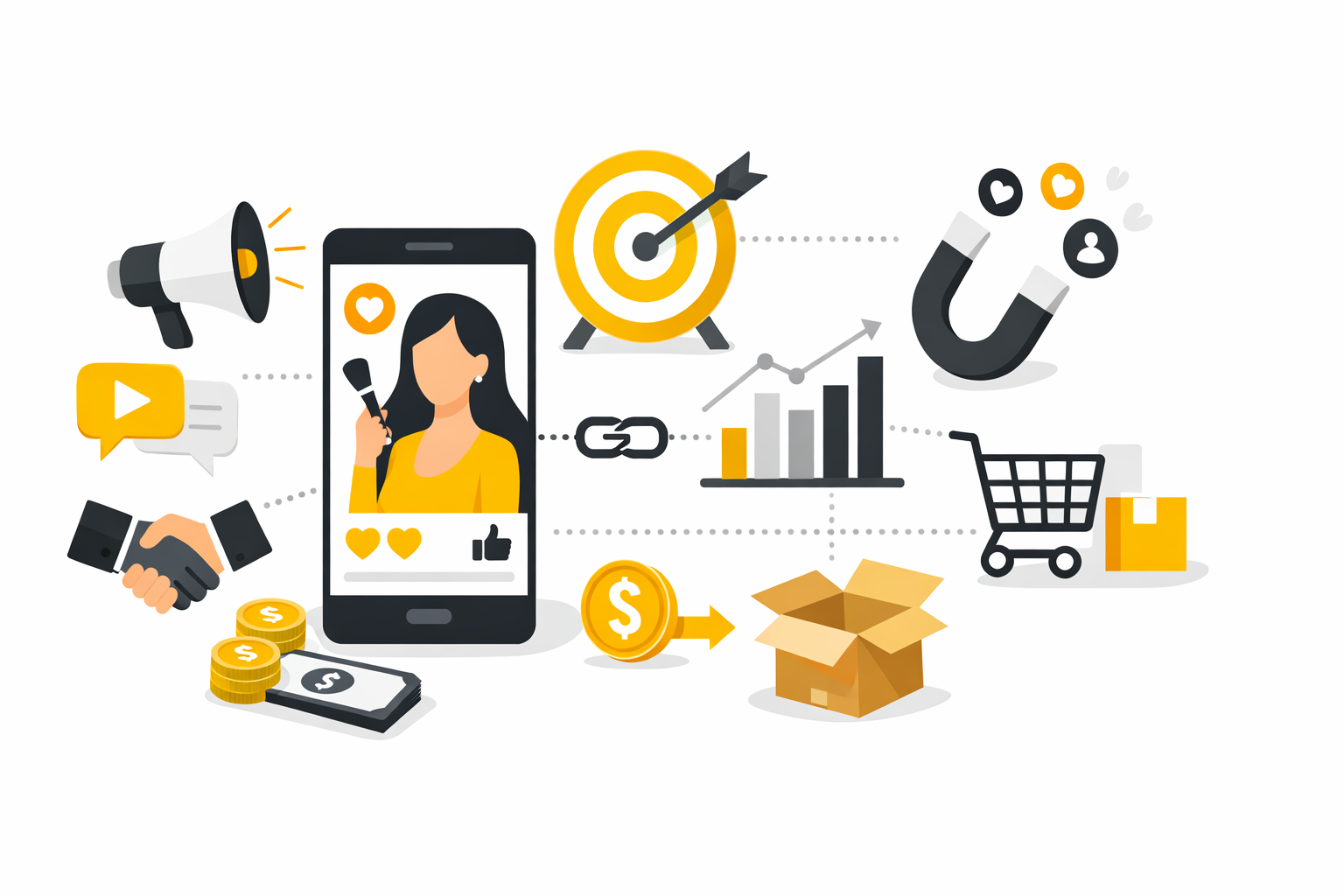
Article Outline
- Why Influencer Marketing Matters Now
- What Influencer Marketing Actually Is
- The Modern Influencer Marketing Framework
- Core Components of High-Performing Campaigns
- How Brands Put Influencer Marketing Into Practice
- Measuring Results, Scaling, and Long-Term Growth
Why Influencer Marketing Matters Now
Influencer marketing matters because it sits at the intersection of trust, distribution, and creative speed. A strong creator can compress the distance between discovery and action in a way that traditional campaigns often cannot, especially when the recommendation feels native to the platform and believable to the audience. That is a huge advantage in markets where brand attention is fragmented and ad fatigue is everywhere.
It also matters because the channel has matured beyond vanity metrics. Sprout Social’s 2025 data shows brands are using influencer partnerships for brand awareness, credibility, engagement, and revenue growth, which tells you something important: teams are no longer asking whether creator collaborations are legitimate. They are asking how to make them measurable, repeatable, and safe to scale.
There is also a structural reason this is becoming a bigger deal. The major platforms are building more infrastructure around creator partnerships, from discovery tools to reporting and monetization layers. You can see that in Google’s expansion of YouTube creator partnership tools for brands and agencies and in YouTube’s newer push to help creators earn more through brand partnerships. When platforms invest in workflow, the channel stops being a trend and starts looking like media.
The Modern Influencer Marketing Framework
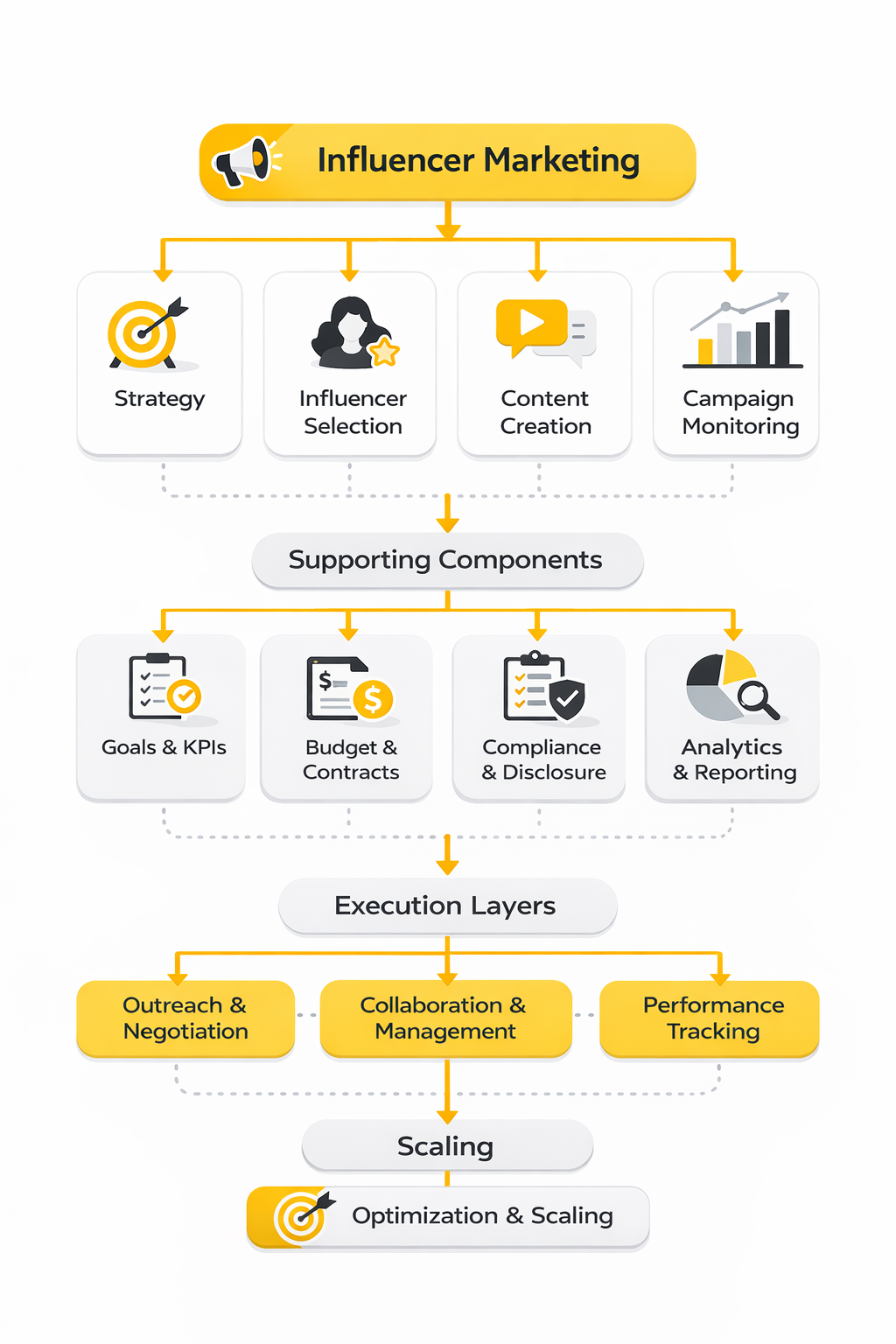
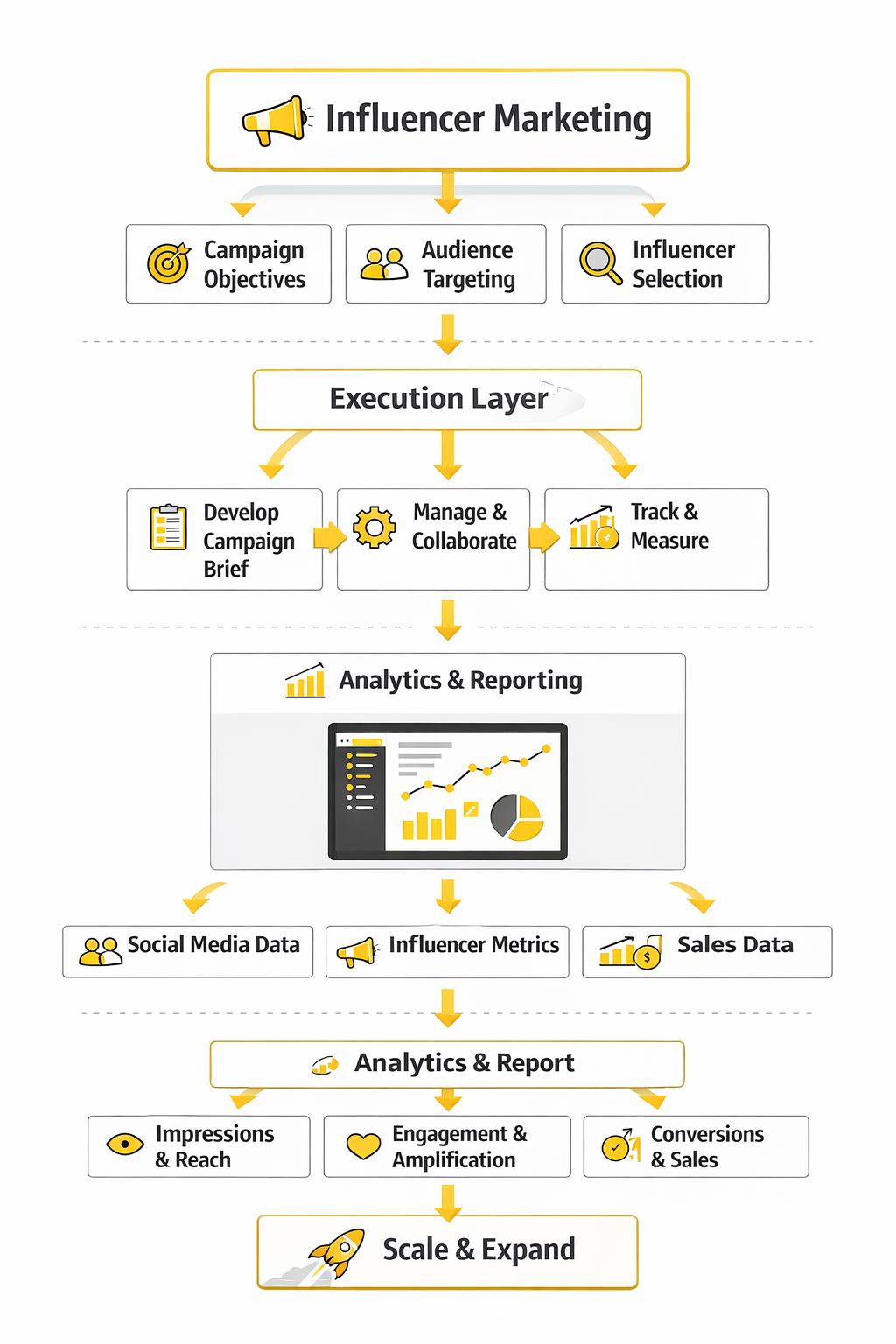
The modern framework for influencer marketing is simple on paper and demanding in practice. You start with business goals, match them to creator types and audience segments, build a content system instead of one-off posts, and then measure both platform performance and downstream business outcomes. That sounds obvious, but a lot of campaigns still fail because teams jump straight from “we need influencers” to “let’s hire someone with a big following.”
The better approach is to think in layers. First comes strategic fit: brand, audience, offer, category, and timing. Then comes execution: creator selection, briefing, creative freedom, disclosure, distribution, landing experience, and reporting. Finally comes optimization: what content themes converted, which creators should become long-term partners, and where the campaign should connect to owned assets like an email platform, a marketing automation stack, or a social publishing workflow.
What separates professional implementation from amateur execution is that the campaign does not end at the post. It flows into a larger system that captures demand, learns from audience response, and compounds over time. That is the mindset this article will use from here on out: influencer marketing is not just creator outreach, it is a performance-capable growth channel with creative, operational, legal, and measurement layers.
What Influencer Marketing Actually Is
Influencer marketing is not just paying someone with followers to mention a product. At its core, it is a structured partnership between a brand and a creator who has earned enough trust with a specific audience to shape attention, perception, and action. That is why solid definitions from Sprout Social, Hootsuite, Shopify, and even McKinsey all land in roughly the same place: brand collaboration, audience trust, and commercial outcomes matter more than raw visibility. blog.hootsuite.com+3
That distinction matters because a lot of weak campaigns are still built around the wrong idea. They assume influencer marketing is rented reach, when in reality it is borrowed credibility packaged inside content that already fits a platform, a niche, and a community. The creator is not just a distribution channel. The creator is part media property, part creative partner, and part trust layer between the brand and the buyer. Sprout Social+1
It also helps to separate influencer marketing from a few things people constantly mix together. It is not the same as celebrity endorsement, even though some celebrity campaigns fall into the category. It is not identical to user-generated content either, because influencer marketing involves an intentional commercial relationship, while UGC can exist with or without one. And it is definitely not the same as affiliate marketing, even though the two often overlap when creators use trackable links, discount codes, or storefronts to push measurable sales.
The cleanest way to think about it is this: influencer marketing works when a creator’s audience sees a recommendation as a believable extension of the creator’s usual content, not as a disruptive ad forced into the feed. That is why niche relevance beats generic popularity so often. A creator with a smaller but tightly aligned audience can produce more useful attention than a massive account with weak audience-product fit, which is exactly why the industry keeps moving toward relevance, storytelling quality, and ROI instead of follower count alone. hootsuite.com+1
Core Components of High-Performing Campaigns
Once you understand what influencer marketing actually is, the next question is what makes it work consistently. The answer is not one magic platform or one creator tier. High-performing campaigns usually come from getting a handful of fundamentals right at the same time: goal clarity, creator fit, creative structure, commercial alignment, compliance, and measurement.
Clear Goals Come First
A campaign without a defined outcome usually turns into expensive content with no decision behind it. Brands need to know whether they are buying awareness, social proof, lead generation, product education, direct sales, or reusable creative assets. That sounds basic, but it changes almost everything, including which creators you choose, what kind of brief you write, how much creative freedom you allow, and what success should look like at the end.
This is where a lot of influencer marketing programs quietly break. A team says it wants conversions, then hires creators whose actual strength is entertainment reach. Or it says it wants awareness, then judges the campaign like paid search. The mismatch is avoidable, but only if campaign goals are decided before outreach begins.
The Right Creator Matters More Than the Biggest Creator
Creator selection is where strategy becomes real. The best partner is rarely the one with the loudest vanity metrics. It is the one whose audience, content habits, credibility, and tone line up with the brand closely enough that the promotion feels natural instead of awkward.
That is also why modern creator programs keep leaning into specialization. Meta’s branded content and creator marketplace tools are built around helping brands and creators find fit, and Google’s creator partnerships hub inside Google Ads pushes discovery, reporting, and campaign management in the same direction. The platforms themselves are signaling that better matching is now part of performance, not just convenience. creators.facebook.com+1
Creative Fit Beats Scripted Messaging
Great influencer marketing does not read like a legal memo pasted into a caption. Brands still need guardrails, of course, but the content usually performs best when creators can translate the product into their own format, language, and rhythm. Audiences can feel the difference almost instantly, and once a placement feels forced, the trust advantage disappears.
This is one reason long-term creator relationships are becoming more valuable than one-off transactions. The longer a creator understands the offer, the objections, and the customer story, the more naturally the product can show up in content. Hootsuite’s 2026 social trends report points to this broader shift toward ongoing partnerships and ROI-based evaluation, which matches what strong operators already see in practice. hootsuite.com
Offers and Conversion Paths Need To Be Built In
This part gets ignored far too often. Even strong creator content will underperform if the audience lands on a weak page, a confusing offer, or a dead-end checkout flow. Influencer marketing is not just a content decision. It is also a systems decision.
That means the campaign needs somewhere to send demand. Sometimes that is a product page. Sometimes it is a quiz, a lead magnet, a booking flow, or a funnel built specifically for creator traffic. Tools like ClickFunnels, Fillout, Cal.com, or Brevo make sense here when the goal is to capture and convert the attention that creators generate instead of letting it evaporate.
Compliance Is Part of Performance
A campaign is not professional if it ignores disclosure rules. The FTC’s guidance is unambiguous that material connections between brands and endorsers must be disclosed clearly and conspicuously, and that standard applies directly to influencer activity on social platforms. This is not admin work sitting on the side of strategy. It is part of the strategy, because once audiences feel misled, performance drops and risk climbs at the same time. Federal Trade Commission+2
The same logic applies platform by platform. Instagram and Facebook require creators to tag business partners in branded content and partnership ad workflows, while major platforms keep adding more structure around commercial relationships. In other words, clean disclosure is no longer a nice extra. It is part of how the ecosystem now functions. facebook.com+1
Measurement Has To Go Beyond Likes
The final component is measurement, and this is where influencer marketing either grows up or stays stuck. Reach, views, engagement, saves, clicks, assisted conversions, direct conversions, branded search lift, content reuse value, and customer acquisition efficiency all matter in different situations. The right dashboard depends on the objective, but the point is the same: metrics have to connect back to business movement.
That is exactly why the channel is becoming more operational. Sprout Social’s 2025 report on investments and impact shows brands tying creator programs to awareness, credibility, engagement, and revenue goals, while Nielsen’s work on influencer effectiveness reflects the same pressure to evaluate impact with more discipline. The era of posting and hoping is fading. Good teams now expect creator campaigns to earn their place in the broader marketing mix. media.sproutsocial.com+1
How Brands Put Influencer Marketing Into Practice
The difference between brands that dabble in influencer marketing and brands that turn it into a reliable growth channel is process. Creative instinct still matters, but it needs a system around it. Without that system, campaigns become a pile of messages, approvals, late assets, unclear expectations, and reporting that tells you almost nothing.
A practical implementation model keeps the moving parts connected from the first creator shortlist to the final performance review. That matters even more now because the major platforms are building creator workflows directly into their ad ecosystems, from YouTube’s creator partnerships hub and BrandConnect tools to TikTok’s Creator Marketplace and scaled collaboration options. The market is telling brands something very clearly: influencer marketing works better when it is operational, not improvised.
Start With the Commercial Goal, Not the Creator List
A lot of teams still start in the wrong place. They open a marketplace, browse creators, and only later try to figure out what the campaign was supposed to accomplish. That is backwards, and it usually leads to mismatched partnerships, fuzzy briefs, and performance that is hard to explain when someone asks what the spend actually achieved.
The smarter move is to define the commercial objective first. If the goal is awareness, your campaign structure, content format, and reporting logic will look very different than a campaign designed to generate product trials, booked calls, or direct ecommerce sales. Sprout Social’s current guidance on influencer marketing metrics reflects exactly that point: brands need objective-specific KPIs before they can judge what success looks like.
Once the business goal is clear, the channel choices start to make sense. A creator-led push on YouTube may fit a product that needs explanation and trust-building. A short-form TikTok program may work better when the product can win on demonstration, social proof, and trend-native discovery. The implementation process gets dramatically easier once the campaign is built around the buyer journey instead of around whoever happens to be available.
Build a Creator Shortlist Around Fit, Not Hype
The next step is creator selection, and this is where discipline pays off fast. Good teams shortlist creators based on audience relevance, content quality, brand safety, platform fluency, and commercial potential. Weak teams get distracted by follower count and end up buying exposure that looks impressive in a spreadsheet but does not move anything meaningful.
This is also why creator discovery tools matter more than they used to. TikTok’s official marketplace positions creator matching, anchor links, and unified reporting as core parts of campaign setup, while Google’s creator partnership tools focus on finding relevant creators, reviewing linked video performance, and tying paid and organic reporting together. The core idea is the same on both sides: the job is not to find a famous person. The job is to find a creator whose audience is likely to care.
A serious shortlist usually includes a mix, not a single bet. Some brands need a few higher-reach creators to widen the top of funnel and a larger set of niche creators to drive depth, trust, and conversion. Others are better off building almost entirely around category specialists because the buying decision is too specific for broad-reach content to do much. Influencer marketing becomes much easier to scale when creator selection is treated like portfolio construction instead of a popularity contest.
Create a Brief That Guides Without Suffocating
Once the right creators are identified, execution moves into briefing. This is where brands either create momentum or kill it. A strong brief gives creators enough context to make smart decisions while leaving room for them to sound like themselves, because the audience can spot brand-scripted content almost instantly.
The brief should cover the campaign objective, audience problem, product truth, required claims, prohibited claims, disclosure expectations, key dates, and the call to action. It should not read like a corporate memo that strips out every bit of personality. The FTC’s endorsement guidance makes the disclosure side non-negotiable, but it does not require robotic content. In practice, the best work usually comes from clear guardrails plus creator autonomy.
This is also the stage where brands need to decide what they are really buying. Are they paying for a post, or for content they can repurpose in ads, landing pages, email sequences, and product pages? That decision affects usage rights, editing expectations, and cost. If you skip that conversation up front, you are setting yourself up for friction later.
A Simple Execution Process That Actually Holds Together
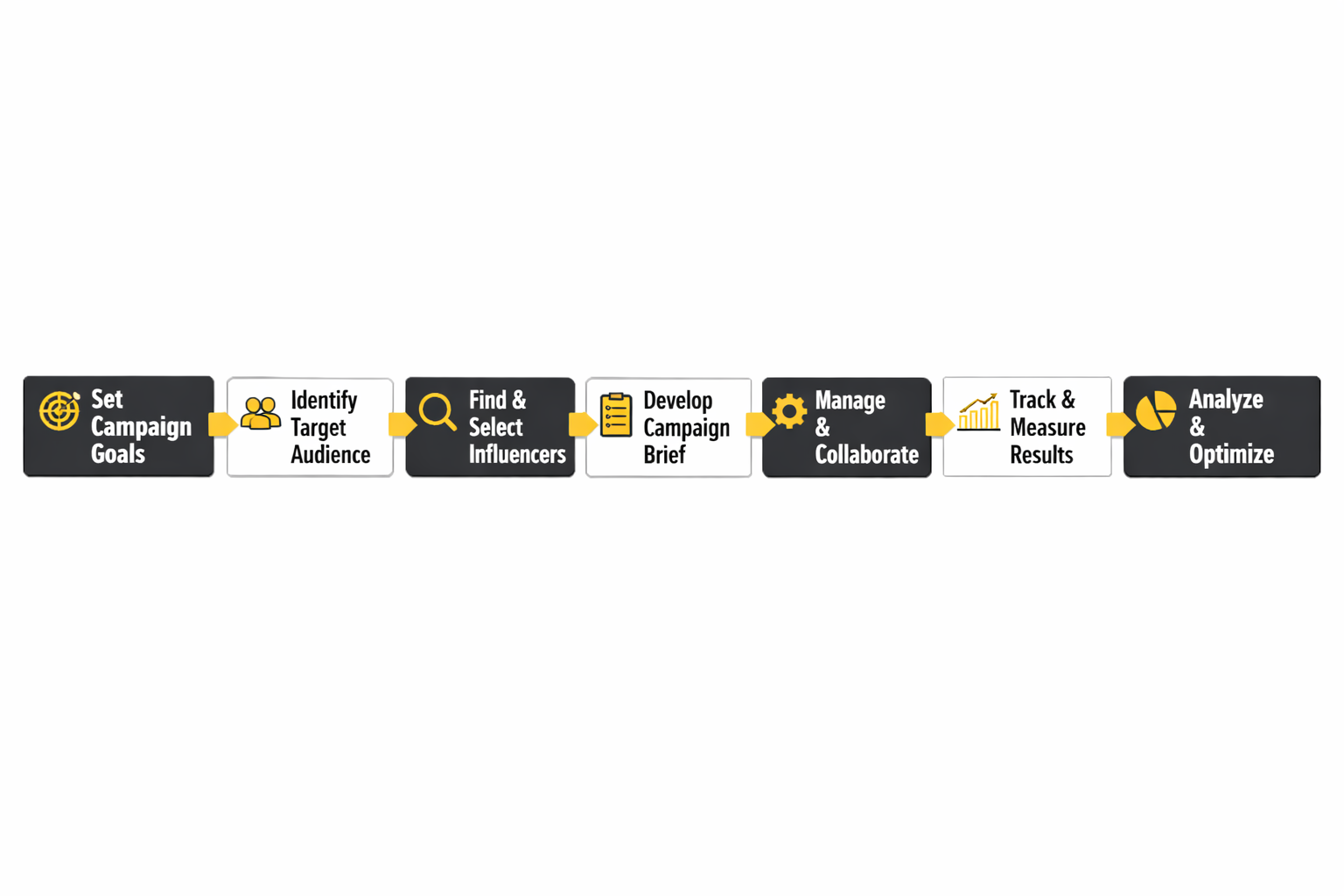
The implementation side of influencer marketing does not need to be complicated, but it does need to be consistent. A repeatable process keeps creative work moving without turning the campaign into chaos. In practice, the workflow usually looks like this:
- Set the campaign objective and define the primary KPI.
- Choose the platforms and content formats that match the buyer journey.
- Build a creator shortlist based on audience fit, content quality, and brand alignment.
- Send outreach with a clear partnership angle, not a generic copy-paste pitch.
- Agree on deliverables, timing, disclosures, payment terms, and usage rights.
- Share a concise brief with required talking points and room for creator interpretation.
- Approve concepts or drafts only where genuinely necessary.
- Launch with tracking links, discount codes, landing pages, or booking flows ready.
- Monitor performance in real time and capture both organic and paid learnings.
- Review results by creator, content angle, offer, and downstream conversion quality.
That process sounds basic because it is. The power comes from doing the basics well, every time. Brands get into trouble when they skip steps, especially around tracking, approvals, or conversion paths, and then try to fix the mess after the content is already live.
The operational stack around that process also matters. If creator traffic is meant to generate leads, you need the landing page, form, calendar, CRM, and follow-up emails in place before launch. That is where tools like ClickFunnels, Systeme.io, Brevo, Moosend, Cal.com, or Copper can make the back end actually work. Creator content can generate attention quickly. The real question is whether the business is ready to catch it.
Treat Outreach Like Partnership Building
Outreach is one of the most underrated parts of influencer marketing. Many brands still send messages that feel transactional, vague, or mass-produced. Creators notice that immediately, especially the good ones who get pitched constantly.
Better outreach is specific. It references why the creator is a fit, what kind of partnership the brand has in mind, what the product actually does, and what success would look like on both sides. That does not mean writing a novel. It means showing enough intent that the creator can tell this is a real opportunity and not another lazy blast sent to fifty inboxes.
This is also where long-term thinking starts to separate serious operators from everyone else. CreatorIQ’s 2025-2026 state of creator marketing research points to a continued move toward more mature creator programs, and Sprout Social’s analysis of influencer relationship management highlights why authenticity and repeat partnerships matter to audiences. In plain English, creators become more valuable when the relationship does not reset to zero every single campaign.
Get the Operational Details Right Before Launch
A surprising amount of campaign pain comes from details that should have been sorted out earlier. Payment timelines, product shipping, draft review windows, legal approvals, usage rights, exclusivity, promo codes, and tracking links are not glamorous topics, but they decide whether the launch feels smooth or messy. This is where influencer marketing starts to look a lot like operations management, because that is what it is.
Rights management deserves special attention. If the content performs well organically, the brand may want to reuse it in paid social, on site, or in lifecycle email. That only works cleanly when those permissions were defined in advance. The more successful the content becomes, the more expensive confusion gets.
The same goes for disclosure. This cannot be patched in casually after the fact. The FTC’s advertising and endorsement materials make it clear that endorsements must be truthful and not misleading, and that material relationships need clear disclosure. Professional implementation means those rules are built into the workflow before creators ever hit publish.
Launch, Learn, and Tighten the System
Once the content goes live, the real work starts. This is the point where brands need to look beyond surface engagement and study what actually happened. Which creator generated the strongest click-through rate, the best watch time, the most qualified traffic, the highest conversion rate, or the most reusable creative asset? Those are the questions that make the next campaign smarter.
This is also where paid amplification can become useful. If a creator post is clearly resonating, brands can extend its lifespan through partnership ad formats and linked asset workflows already being pushed by the platforms. Google’s creator partnership tooling for YouTube is designed around exactly that kind of combined organic and paid view, and TikTok’s creator solutions position scaled launch and performance insight as part of the same operating model.
The important thing is not to treat every campaign as an isolated event. Good teams document what worked, where friction showed up, which creators deserve a deeper relationship, and which content angles produced the strongest business signals. That is how influencer marketing stops being a series of experiments and starts becoming a system the brand can trust.
Measuring Results, Scaling, and Long-Term Growth
If implementation is where influencer marketing becomes real, measurement is where it becomes accountable. This is the point where a brand finds out whether it bought attention, persuasion, sales, reusable creative, or just noise dressed up as activity. A lot of campaigns look healthy on the surface and still underperform in the only place that matters, which is what happens after the audience leaves the post.
The mistake is usually not a lack of data. It is using the wrong data for the wrong goal. Influencer marketing becomes far more useful when you stop asking for one universal metric and start measuring the specific job each campaign was hired to do.
What the Data Actually Tells You
The bigger market trend matters because it explains why measurement standards are rising. EMARKETER expects U.S. influencer marketing spending to keep climbing and hit $13.7 billion by 2027, which means more budget owners, finance teams, and leadership groups are going to ask harder questions about what creator spend delivers. This is not a niche side channel anymore. It is a meaningful budget line, and meaningful budget lines get audited.
The pressure is also coming from inside creator programs themselves. CreatorIQ found that 71% of industry leaders reported creator marketing delivered more than 3x ROI, but that number only becomes useful when you understand what it implies. It does not mean every campaign is a winner. It means the strongest teams are using better operating systems, better creator selection, and better measurement frameworks than everyone else.
That is the real reading of the data. Good results are not random. They usually show up where process quality and measurement discipline are already high.
The Metrics That Matter at the Top of Funnel
Some influencer marketing campaigns are meant to generate awareness first, not immediate sales. In those cases, the top-funnel signals matter, but only if you read them properly. Reach, impressions, video views, watch time, saves, shares, and branded search lift can tell you whether the content earned attention and whether the audience found it worth passing along.
That does not mean every view is meaningful. A large view count without decent watch time or interaction can signal weak message retention rather than strong performance. Nielsen’s work on emerging media found influencer marketing can drive a nine-point lift in brand awareness and showed an aided recall rate of 79%, which matters because recall is a stronger signal than raw exposure. If people remember the brand, the campaign is doing more than filling a dashboard.
This is also why top-funnel influencer marketing should not be judged like paid search. Awareness campaigns need to be measured for mental availability, category entry points, and future demand creation. If a brand treats early-stage creator content like a bottom-funnel checkout ad, it will kill good campaigns before they have time to work.
Engagement Is Useful, but It Is Not the Finish Line
Engagement still matters because it helps you see whether the content resonated enough for people to react, comment, save, or share. But engagement by itself is easy to overrate. A highly active comment section can reflect strong community fit, or it can simply reflect controversy, giveaway behavior, or creator charisma that never translates into purchase intent.
That is why engagement should be read as a directional signal, not a verdict. CreatorIQ’s 2026 pricing guidance notes that moderate-size creators often earn better engagement than much larger accounts, which supports a pattern many brands already know the hard way: scale does not automatically equal persuasion. A smaller creator with tighter audience trust can outperform a massive account when the offer needs credibility, specificity, or demonstration.
The action this should drive is simple. When engagement is high, ask what kind of engagement it is creating. Are people tagging friends, asking buying questions, sharing objections, or saving the post for later? Those behaviors mean more than a pile of passive likes.
The Analytics System That Makes Influencer Marketing Measurable
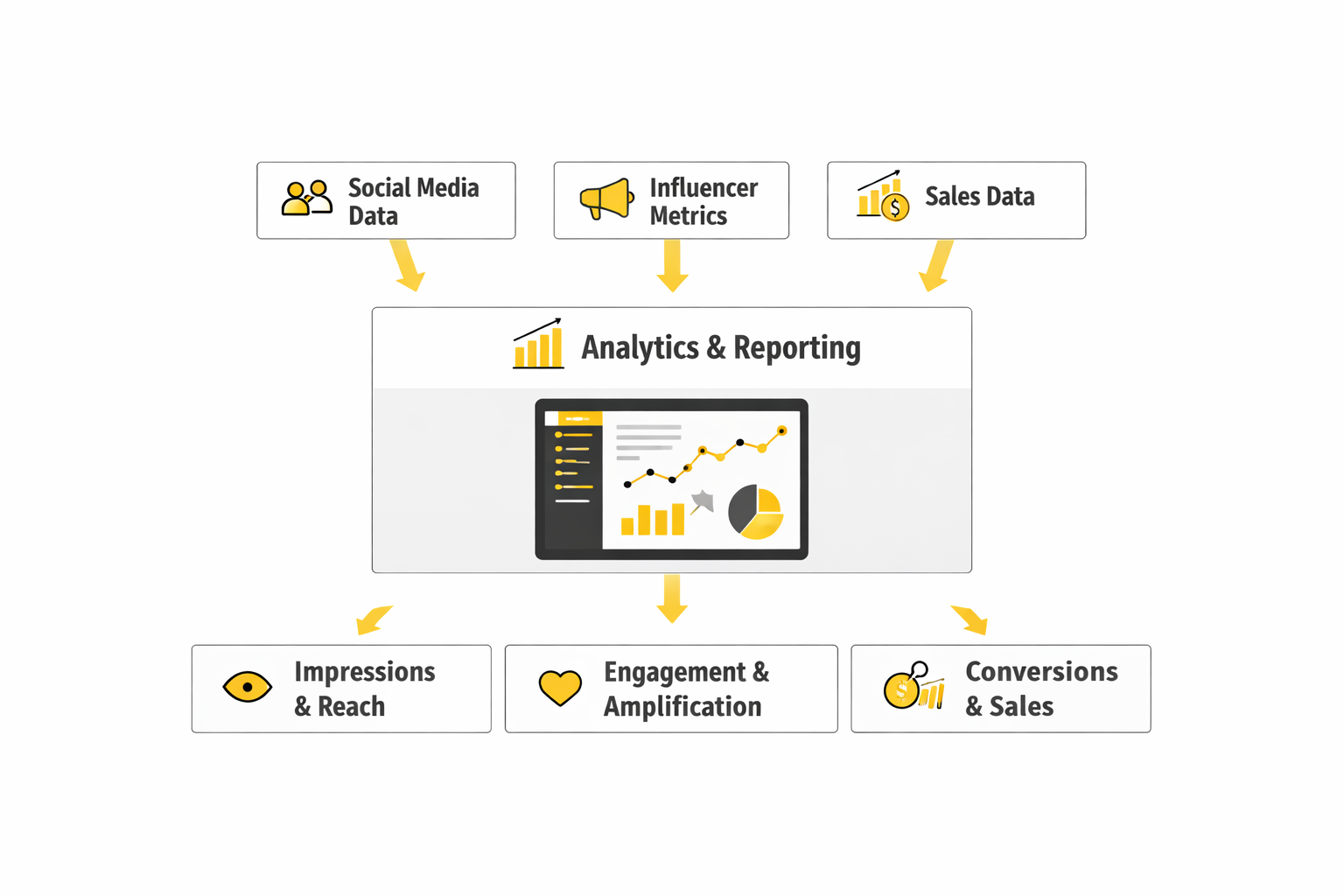
A serious measurement system connects creator activity to business outcomes in layers. The first layer is platform data such as impressions, view-through rate, clicks, saves, shares, and engagement quality. The second layer is traffic behavior, which includes landing-page visits, bounce patterns, session depth, form starts, booked calls, or add-to-cart actions. The third layer is conversion and revenue data, where you track leads, sales, average order value, customer acquisition cost, and retention quality.
That layered view matters because no single metric can explain campaign performance on its own. A creator can generate low click volume but extremely high-quality traffic. Another creator can flood the funnel with cheap clicks that never turn into anything. Without the full chain, both campaigns can look similar on the surface while producing completely different business results.
This is where infrastructure quietly becomes part of influencer marketing performance. Tracking links, promo codes, creator-specific landing pages, quiz flows, form attribution, CRM tagging, and email follow-up are what turn fuzzy creator activity into something a business can actually learn from. If the conversion path is weak, even strong content will look worse than it really is. That is one reason brands often build creator traffic into dedicated flows using tools like ClickFunnels, Systeme.io, Brevo, or Moosend instead of dumping everyone onto a generic homepage.
Conversion Signals Are Where the Channel Grows Up
This is the part many teams say they want, but fewer teams structure properly. If the campaign is meant to drive action, then clicks, conversion rate, assisted conversions, revenue per creator, cost per lead, cost per acquisition, and repeat purchase quality matter much more than social applause. These are the numbers that move influencer marketing from “interesting” to “defensible.”
Consumer behavior data backs up why this matters. Sprout Social highlights that 49% of consumers make purchases at least once a month because of influencer posts, and EMARKETER notes that 58% of adults have bought because of an influencer endorsement. Those numbers do not mean every creator campaign will print money. They mean the channel clearly influences buying behavior, so brands need measurement systems that can capture that effect instead of guessing at it.
The right action here is to stop treating conversion as a lucky side effect. Build for it. Use creator-specific URLs, codes, forms, booking links, and CRM tags. Make the landing experience match the message. And then compare creators not just on volume, but on the quality of outcomes they produce.
Benchmarking the Right Way
Benchmarks are useful, but only when you use them with some maturity. Too many marketers grab a random average and use it like a universal law. That is not how influencer marketing works, because performance changes based on platform, category, audience intent, creator type, content format, offer strength, and campaign objective.
A better use of benchmarks is directional. CreatorIQ’s 2025-2026 report shows high-performing organizations are structurally different, not just luckier. EMARKETER also reports that 53% of U.S. B2B marketers planned to increase influencer budgets in 2025, which tells you the channel is spreading into environments where the buying cycle is longer and the measurement bar is higher.
So the benchmark question should not be “Is my engagement rate above average?” It should be “Is this creator performing better than similar creators on the same platform with the same kind of offer?” Internal benchmarks usually become more valuable than industry averages very quickly. Once a brand has run a handful of campaigns, its own historical data is often the best comparison set it has.
What Good Data Should Make You Do Next
Data is only useful when it changes decisions. If one creator drives stronger retention or higher average order value, that should influence the next budget allocation. If one content angle creates more qualified leads, that angle deserves more testing. If a certain platform produces beautiful engagement but weak downstream performance, the brand needs to decide whether that platform is an awareness play or a distraction.
This is where long-term growth starts. The real win in influencer marketing is not squeezing every answer out of one campaign. It is using every campaign to improve the next one. Over time, that creates a performance flywheel: better creator selection, better briefs, better conversion paths, better data, and then better outcomes.
The strongest teams also stop thinking only in terms of posts and start thinking in terms of assets. A creator video that performs well can become paid creative, landing-page proof, email content, FAQ support, and sales-enablement material. That matters because the return on influencer marketing is often understated when the analysis only counts direct sales and ignores the long shelf life of strong creator content.
Long-Term Growth Comes From Compounding, Not Constant Reinvention
A brand does not scale influencer marketing by restarting from zero every month. It scales by identifying which creators, messages, formats, and offers keep working, then doubling down with more precision. That is a very different mindset from running endless one-off collaborations and hoping the next one somehow fixes the last one.
The market is clearly moving in this direction. CreatorIQ’s research describes operational maturity as the differentiator, and that phrase is worth taking seriously. Mature programs do not obsess over random vanity spikes. They build systems that learn, refine, and compound.
That is the core lesson from the numbers. The data is not there to make the report look smarter. It is there to tell you what to keep, what to cut, where to spend more, and when influencer marketing is actually earning its place in the business.
Advanced Strategy, Tradeoffs, and Risks
By this stage, the biggest mistake is thinking influencer marketing scales by simply adding more creators. It usually does not. It scales when the operating model gets sharper, the measurement gets cleaner, and the brand becomes more selective about what kind of creator relationship it wants to build.
That is where the real strategic tradeoffs begin. More volume can increase reach, but it can also increase inconsistency, disclosure risk, weak-fit partnerships, bloated approvals, and noisy reporting. CreatorIQ’s 2025-2026 research points to operational maturity, brand safety, compliance, data ownership, and centralized program control as major issues for future-ready teams.
Scale Creates Complexity Faster Than Most Teams Expect
A small influencer marketing program can survive on manual coordination for a while. A larger one usually cannot. Once the number of creators, assets, approvals, markets, and usage-rights decisions starts climbing, the campaign stops being a simple outreach exercise and starts acting like a media operation.
That shift matters because scale hides waste. The campaign may look bigger and busier, yet performance can quietly degrade if creator fit weakens, briefs get watered down, or reporting turns into a mix of incompatible metrics. YouTube’s newer brand partnership tooling, including open call inside BrandConnect, is built around scaled creator discovery and workflow management, which tells you exactly where the market is heading: more creator collaboration, but with tighter systems around it.
The First Tradeoff Is Reach Versus Relevance
This is one of the oldest tensions in influencer marketing, and it still matters. Bigger creators can expand visibility quickly, but smaller niche creators often carry more context, more trust, and a more believable fit with specialized products. That does not mean one tier is always better. It means the choice has to reflect the job the campaign is supposed to do.
The danger comes when brands confuse scale with fit. A broad creator may be useful for awareness, but completely wrong for a product that needs explanation, proof, or category-specific trust. CreatorIQ’s pricing and performance guidance highlights that mid-tier creators often produce stronger engagement than much larger accounts, and that should drive a practical decision: do not buy size when what you actually need is persuasion.
The Second Tradeoff Is Creative Freedom Versus Message Control
Strong influencer marketing rarely happens when the brand scripts every line. At the same time, full creative freedom without clear boundaries can produce compliance issues, sloppy claims, or content that misses the commercial point. The job is not choosing one extreme. The job is deciding where the guardrails should sit.
This becomes more important as programs scale across regions, product lines, or regulated categories. The FTC’s endorsement guidance makes it clear that material relationships must be disclosed and endorsements cannot be misleading, which means brands need a review process that protects truthfulness without crushing the creator’s voice. That balance is harder than it sounds, and getting it wrong usually shows up in performance before it shows up in legal review.
Fraud and Audience Quality Are Still Real Risks
A lot of brands talk about authenticity as a brand value. Far fewer treat audience authenticity as an operational requirement. That is a problem, because influencer marketing can look healthy on the surface while quietly leaking budget into fake followers, weak audience quality, or manipulated engagement.
The broader ad ecosystem gives a useful warning here. DoubleVerify reported that bot fraud in North America rose 101% year over year in 2025, including a 106% increase in the U.S., and while that figure is not an influencer-specific stat, it points to the same strategic lesson: digital attention is not automatically trustworthy. Brands running influencer marketing at scale need vetting systems that check audience quality, engagement patterns, suspicious growth, and conversion behavior instead of trusting screenshots and surface-level dashboards.
Brand Safety Is No Longer a Side Conversation
When creator programs were smaller, some brands treated brand safety as a cleanup issue. That approach does not hold up anymore. Once creator partnerships become a visible, repeatable growth channel, every mismatch in tone, audience, political sensitivity, disclosure quality, or platform context becomes more expensive.
This is why brand safety keeps rising in executive conversations. CreatorIQ’s 2025-2026 report says 28% of enterprises believe brand safety will have the biggest impact on marketing in 2026. That is not a warning to avoid creator marketing. It is a warning to stop treating vetting, documentation, and approval logic like optional admin work.
The Best Programs Build a Creator Portfolio, Not a Creator List
A list is static. A portfolio is managed. That difference matters because influencer marketing gets stronger when brands stop viewing creators as interchangeable placements and start segmenting them by role.
Some creators are best for awareness. Some are best for conversion. Some are ideal for testing hooks, offers, or objections. Others may not drive huge direct sales but create excellent assets for paid amplification, email, landing pages, and remarketing. Once you see creators through that lens, budget decisions become more rational and the program becomes easier to defend internally.
That is also where a proper system starts to pay off. A portfolio model lets you compare creator roles, not just creator popularity, and it makes repurposing far easier. When strong assets are identified early, brands can route them into Buffer, Brevo, Dub, or ScaledMail workflows that extend the value of creator content well beyond the original post.
Global and Multi-Market Programs Need Standardization Without Becoming Robotic
As soon as influencer marketing moves across markets, teams face a new problem. They need enough standardization to keep reporting, approvals, brand safety, and rights management under control, but they cannot standardize so aggressively that every creator sounds identical. That is where many international programs flatten their own performance.
The fix is not complicated, but it does require discipline. Standardize the operating system, not the personality. Keep common rules for disclosure, contracts, tracking, rights, reporting, and prohibited claims, while letting local creators adapt tone, examples, and delivery to the audience they actually know.
Long-Term Partnerships Usually Beat Constant Rotation
A lot of brands still behave like every campaign needs a fresh batch of creators. Sometimes that is necessary, especially for market expansion or new audience testing. But constant rotation comes with a cost: every new creator needs onboarding, education, trust-building, creative alignment, and measurement time.
Long-term partnerships often outperform because they remove that repeated friction. The creator learns the product more deeply, the brand learns what kind of content the creator can realistically deliver, and the audience gets repeated exposure that feels more organic than a random one-off mention. That is one reason mature programs keep moving toward ongoing creator relationships instead of isolated placements, a trend reflected in CreatorIQ’s broader findings on program maturity and centralized control.
Expert-Level Execution Means Knowing What Not To Scale
This part matters more than people admit. Not every creator deserves a second campaign. Not every platform deserves more budget. Not every high-engagement post deserves amplification. Expert teams get good not just by spotting winners, but by cutting losers early and without sentimentality.
That is the practical edge in influencer marketing. You do not need perfect prediction. You need a system that can identify weak fit, inflated metrics, unclear commercial value, or rising brand risk before those problems get expensive. The closer the program gets to that standard, the more dependable it becomes.
The Strategic Endgame
At the highest level, influencer marketing stops being about campaigns and starts becoming about market access. Creators give brands a faster way to test messaging, earn trust, generate demand, and produce content that can travel across channels. But that only works when the business treats creator partnerships as part of its growth infrastructure, not as a seasonal add-on.
That is the real expert takeaway. The winners in influencer marketing are not the brands chasing the loudest names or the prettiest vanity metrics. They are the brands building a durable system around fit, trust, process, measurement, and intelligent restraint.
The final layer of influencer marketing is ecosystem thinking. Once a brand gets the basics right, the channel stops being just about matching a creator to a campaign. It becomes a system that connects creators, platforms, paid amplification, landing pages, CRM flows, analytics, and long-term brand positioning into one repeatable engine.
That is where a lot of companies either level up or stall out. The ones that win do not treat creator work as isolated social content. They build a framework where creator insight improves the offer, creator content feeds paid media, and performance data makes the next partnership smarter. That is also why platforms keep investing in more connected partnership tools, from YouTube’s creator collaboration workflows to TikTok’s marketplace and campaign infrastructure.
FAQ - Built for Complete Guide
What is influencer marketing in simple terms?
Influencer marketing is a partnership between a brand and a creator who has enough trust with a specific audience to influence attention, opinions, and buying decisions. The creator is not just posting a sponsored mention. They are translating the brand into content that feels natural in the context of their audience and platform.
That distinction matters because trust is the real asset. The market keeps expanding because brands see creator partnerships as more than awareness plays, with EMARKETER forecasting continued U.S. spending growth through 2027. The better question is not whether influencer marketing works. It is whether the campaign is built well enough to deserve a result.
Why does influencer marketing work so well?
It works because it combines trust, relevance, and platform-native storytelling. Most audiences are better at ignoring ads than marketers want to admit, but they still pay attention to people they follow for expertise, entertainment, or identity. When a creator recommendation feels believable, it shortens the path between discovery and action.
There is also hard behavioral support behind that. Consumer research from Sprout Social and EMARKETER shows that a meaningful share of consumers make purchases because of influencer content. That does not guarantee performance for every brand, but it makes one thing obvious: this channel affects real buying behavior.
Is influencer marketing only for big brands?
No, and in many cases smaller brands can move faster here than bigger ones. A lean team with a focused offer, a clear niche, and a strong landing experience can often build better creator partnerships than a larger company buried in approval layers. Influencer marketing rewards clarity and fit more than corporate size.
Smaller brands also benefit from using niche creators instead of trying to buy prestige. That often leads to a better audience match, stronger engagement quality, and more believable product integration. In practice, smaller budgets can perform extremely well when they are concentrated instead of spread thin.
How do you choose the right influencers?
Start with audience fit, not follower count. Look at what the creator consistently talks about, how their audience responds, whether the tone matches your brand, and whether their content actually helps people make decisions. A creator with the wrong audience is expensive even when the rate looks cheap.
You also need to check how their content performs in context. Are people asking buying questions, sharing product objections, saving posts, or tagging friends who would realistically care? Those are stronger signals than inflated vanity metrics, and they align with the broader industry move toward better creator vetting and brand safety highlighted by CreatorIQ.
Are micro-influencers better than big influencers?
Sometimes yes, sometimes no. Micro-influencers often win on trust, specificity, and audience closeness, especially in categories where explanation matters. Larger creators can still be powerful when the goal is broad visibility, social proof, or fast reach at the top of funnel.
The mistake is pretending one creator tier is always superior. The real question is what job the campaign needs done. If you need mass exposure, broader reach may help. If you need credibility and conversion in a focused niche, smaller creators often outperform.
What platforms are best for influencer marketing?
The best platform depends on the product, the buyer journey, and the content format that makes the offer understandable. YouTube can be strong when the product needs demonstration, education, or review-style trust. TikTok can work extremely well when speed, discovery, and short-form product storytelling matter. Instagram is often effective when visual proof, lifestyle fit, and repeat exposure matter.
Platform choice should never be random. Consumer preference data in Sprout Social’s influencer research shows that audience expectations differ by platform and age group. That means the same product may need completely different creator strategies depending on where the buyer is spending attention.
How much should a brand budget for influencer marketing?
There is no universal number, because budget depends on objective, creator tier, usage rights, platform, market, deliverables, and whether paid amplification is part of the plan. What matters more than absolute spend is whether the budget matches the kind of outcome you want. A brand chasing conversions on a weak budget with poor infrastructure usually ends up blaming creators for a setup problem.
A smarter approach is to budget backward from expected outcomes. Decide what a qualified lead, booked call, sale, or reusable asset is worth to the business, then structure the creator mix around that. Practical guidance from CreatorIQ on budget planning is useful here because it frames spend in terms of ROI logic rather than guesswork.
How do you measure influencer marketing properly?
Measure it in layers. Start with platform performance like views, saves, shares, click-throughs, and engagement quality. Then move to traffic behavior, including landing-page visits, session depth, form starts, booked calls, and add-to-cart actions. Then look at business outcomes such as leads, sales, cost per acquisition, customer quality, and retention.
That layered structure matters because one creator may generate fewer clicks but much stronger buyers. Another may produce a flood of weak traffic that never converts. Good measurement tells you which is which, and that is how influencer marketing becomes a repeatable system instead of a guessing game.
What are the biggest mistakes brands make?
One of the biggest is choosing creators based on size instead of fit. Another is over-controlling the content until it no longer sounds like the creator. A third is expecting creators to fix a weak offer, a poor landing page, or broken conversion tracking. None of those problems can be solved by better posting alone.
Brands also get into trouble when they ignore disclosure, rights management, or post-campaign learning. FTC guidance on endorsements and disclosures is clear enough that there is no excuse for treating compliance like an afterthought. Professional influencer marketing is creative, but it is also operational.
Do brands need contracts and disclosure rules for every campaign?
Yes. Once there is a material relationship, the rules matter. A written agreement helps define deliverables, timing, payment, content rights, review process, exclusivity, and what happens if anything changes mid-campaign. Without that structure, even good partnerships can get messy fast.
Disclosure is just as important. It protects the creator, the brand, and the audience. The law is not asking for complicated theater. It is asking for relationships to be disclosed clearly enough that people are not misled.
Should brands run one-off campaigns or long-term partnerships?
Long-term partnerships usually win when the fit is strong. Repetition helps the creator understand the product better, helps the audience see the recommendation as more credible, and gives the brand more data to work with. A one-off campaign can still be useful for testing, but constant rotation often creates more friction than value.
This is also one of the clearest signs of a mature influencer marketing program. Instead of treating every campaign like a brand-new experiment, strong teams identify which creators are truly worth keeping and deepen those relationships over time. That is far more efficient than restarting trust from zero every month.
Can influencer marketing work for B2B companies too?
Yes, although it often looks different from consumer campaigns. In B2B, the creator might be an operator, consultant, analyst, educator, or niche expert rather than a classic lifestyle influencer. The content also tends to lean more on credibility, explanation, and proof than on trend energy.
The channel is growing there for a reason. EMARKETER reports that more than half of U.S. B2B marketers planned to increase influencer budgets in 2025. That tells you the model is expanding into environments where purchase decisions are slower and scrutiny is higher.
Is influencer marketing the same as affiliate marketing?
No, but they can overlap. Influencer marketing is the broader category of creator-brand collaboration. Affiliate marketing is a compensation model where the partner earns based on tracked actions like clicks, leads, or sales. A creator can be part of an influencer campaign and also use affiliate links or promo codes, but the two things are not identical.
This distinction matters because the measurement and incentives change. If direct-response efficiency matters, affiliate structures can be useful. If the goal is broader brand storytelling, audience trust, or content asset creation, a flat-fee partnership may make more sense.
What tools help influencer marketing perform better?
The best tools are usually the ones that make tracking, conversion, and follow-up easier. A strong creator campaign can still underperform if the audience lands on a weak page or disappears into a broken funnel. That is why brands often connect creator traffic to dedicated systems for lead capture, booking, CRM tracking, and email automation.
Depending on the campaign goal, tools like ClickFunnels
The final layer of influencer marketing is ecosystem thinking. Once a brand gets the basics right, the channel stops being just about matching a creator to a campaign. It becomes a system that connects creators, platforms, paid amplification, landing pages, CRM flows, analytics, and long-term brand positioning into one repeatable engine.
That is where a lot of companies either level up or stall out. The ones that win do not treat creator work as isolated social content. They build a framework where creator insight improves the offer, creator content feeds paid media, and performance data makes the next partnership smarter. That is also why platforms keep investing in more connected partnership tools, from YouTube’s creator collaboration workflows to TikTok’s marketplace and campaign infrastructure.
FAQ - Built for Complete Guide
What is influencer marketing in simple terms?
Influencer marketing is a partnership between a brand and a creator who has enough trust with a specific audience to influence attention, opinions, and buying decisions. The creator is not just posting a sponsored mention. They are translating the brand into content that feels natural in the context of their audience and platform.
That distinction matters because trust is the real asset. The market keeps expanding because brands see creator partnerships as more than awareness plays, with EMARKETER forecasting continued U.S. spending growth through 2027. The better question is not whether influencer marketing works. It is whether the campaign is built well enough to deserve a result.
Why does influencer marketing work so well?
It works because it combines trust, relevance, and platform-native storytelling. Most audiences are better at ignoring ads than marketers want to admit, but they still pay attention to people they follow for expertise, entertainment, or identity. When a creator recommendation feels believable, it shortens the path between discovery and action.
There is also hard behavioral support behind that. Consumer research from Sprout Social and EMARKETER shows that a meaningful share of consumers make purchases because of influencer content. That does not guarantee performance for every brand, but it makes one thing obvious: this channel affects real buying behavior.
Is influencer marketing only for big brands?
No, and in many cases smaller brands can move faster here than bigger ones. A lean team with a focused offer, a clear niche, and a strong landing experience can often build better creator partnerships than a larger company buried in approval layers. Influencer marketing rewards clarity and fit more than corporate size.
Smaller brands also benefit from using niche creators instead of trying to buy prestige. That often leads to a better audience match, stronger engagement quality, and more believable product integration. In practice, smaller budgets can perform extremely well when they are concentrated instead of spread thin.
How do you choose the right influencers?
Start with audience fit, not follower count. Look at what the creator consistently talks about, how their audience responds, whether the tone matches your brand, and whether their content actually helps people make decisions. A creator with the wrong audience is expensive even when the rate looks cheap.
You also need to check how their content performs in context. Are people asking buying questions, sharing product objections, saving posts, or tagging friends who would realistically care? Those are stronger signals than inflated vanity metrics, and they align with the broader industry move toward better creator vetting and brand safety highlighted by CreatorIQ.
Are micro-influencers better than big influencers?
Sometimes yes, sometimes no. Micro-influencers often win on trust, specificity, and audience closeness, especially in categories where explanation matters. Larger creators can still be powerful when the goal is broad visibility, social proof, or fast reach at the top of funnel.
The mistake is pretending one creator tier is always superior. The real question is what job the campaign needs done. If you need mass exposure, broader reach may help. If you need credibility and conversion in a focused niche, smaller creators often outperform.
What platforms are best for influencer marketing?
The best platform depends on the product, the buyer journey, and the content format that makes the offer understandable. YouTube can be strong when the product needs demonstration, education, or review-style trust. TikTok can work extremely well when speed, discovery, and short-form product storytelling matter. Instagram is often effective when visual proof, lifestyle fit, and repeat exposure matter.
Platform choice should never be random. Consumer preference data in Sprout Social’s influencer research shows that audience expectations differ by platform and age group. That means the same product may need completely different creator strategies depending on where the buyer is spending attention.
How much should a brand budget for influencer marketing?
There is no universal number, because budget depends on objective, creator tier, usage rights, platform, market, deliverables, and whether paid amplification is part of the plan. What matters more than absolute spend is whether the budget matches the kind of outcome you want. A brand chasing conversions on a weak budget with poor infrastructure usually ends up blaming creators for a setup problem.
A smarter approach is to budget backward from expected outcomes. Decide what a qualified lead, booked call, sale, or reusable asset is worth to the business, then structure the creator mix around that. Practical guidance from CreatorIQ on budget planning is useful here because it frames spend in terms of ROI logic rather than guesswork.
How do you measure influencer marketing properly?
Measure it in layers. Start with platform performance like views, saves, shares, click-throughs, and engagement quality. Then move to traffic behavior, including landing-page visits, session depth, form starts, booked calls, and add-to-cart actions. Then look at business outcomes such as leads, sales, cost per acquisition, customer quality, and retention.
That layered structure matters because one creator may generate fewer clicks but much stronger buyers. Another may produce a flood of weak traffic that never converts. Good measurement tells you which is which, and that is how influencer marketing becomes a repeatable system instead of a guessing game.
What are the biggest mistakes brands make?
One of the biggest is choosing creators based on size instead of fit. Another is over-controlling the content until it no longer sounds like the creator. A third is expecting creators to fix a weak offer, a poor landing page, or broken conversion tracking. None of those problems can be solved by better posting alone.
Brands also get into trouble when they ignore disclosure, rights management, or post-campaign learning. FTC guidance on endorsements and disclosures is clear enough that there is no excuse for treating compliance like an afterthought. Professional influencer marketing is creative, but it is also operational.
Do brands need contracts and disclosure rules for every campaign?
Yes. Once there is a material relationship, the rules matter. A written agreement helps define deliverables, timing, payment, content rights, review process, exclusivity, and what happens if anything changes mid-campaign. Without that structure, even good partnerships can get messy fast.
Disclosure is just as important. It protects the creator, the brand, and the audience. The law is not asking for complicated theater. It is asking for relationships to be disclosed clearly enough that people are not misled.
Should brands run one-off campaigns or long-term partnerships?
Long-term partnerships usually win when the fit is strong. Repetition helps the creator understand the product better, helps the audience see the recommendation as more credible, and gives the brand more data to work with. A one-off campaign can still be useful for testing, but constant rotation often creates more friction than value.
This is also one of the clearest signs of a mature influencer marketing program. Instead of treating every campaign like a brand-new experiment, strong teams identify which creators are truly worth keeping and deepen those relationships over time. That is far more efficient than restarting trust from zero every month.
Can influencer marketing work for B2B companies too?
Yes, although it often looks different from consumer campaigns. In B2B, the creator might be an operator, consultant, analyst, educator, or niche expert rather than a classic lifestyle influencer. The content also tends to lean more on credibility, explanation, and proof than on trend energy.
The channel is growing there for a reason. EMARKETER reports that more than half of U.S. B2B marketers planned to increase influencer budgets in 2025. That tells you the model is expanding into environments where purchase decisions are slower and scrutiny is higher.
Is influencer marketing the same as affiliate marketing?
No, but they can overlap. Influencer marketing is the broader category of creator-brand collaboration. Affiliate marketing is a compensation model where the partner earns based on tracked actions like clicks, leads, or sales. A creator can be part of an influencer campaign and also use affiliate links or promo codes, but the two things are not identical.
This distinction matters because the measurement and incentives change. If direct-response efficiency matters, affiliate structures can be useful. If the goal is broader brand storytelling, audience trust, or content asset creation, a flat-fee partnership may make more sense.
What tools help influencer marketing perform better?
The best tools are usually the ones that make tracking, conversion, and follow-up easier. A strong creator campaign can still underperform if the audience lands on a weak page or disappears into a broken funnel. That is why brands often connect creator traffic to dedicated systems for lead capture, booking, CRM tracking, and email automation.
Depending on the campaign goal, tools like ClickFunnels