

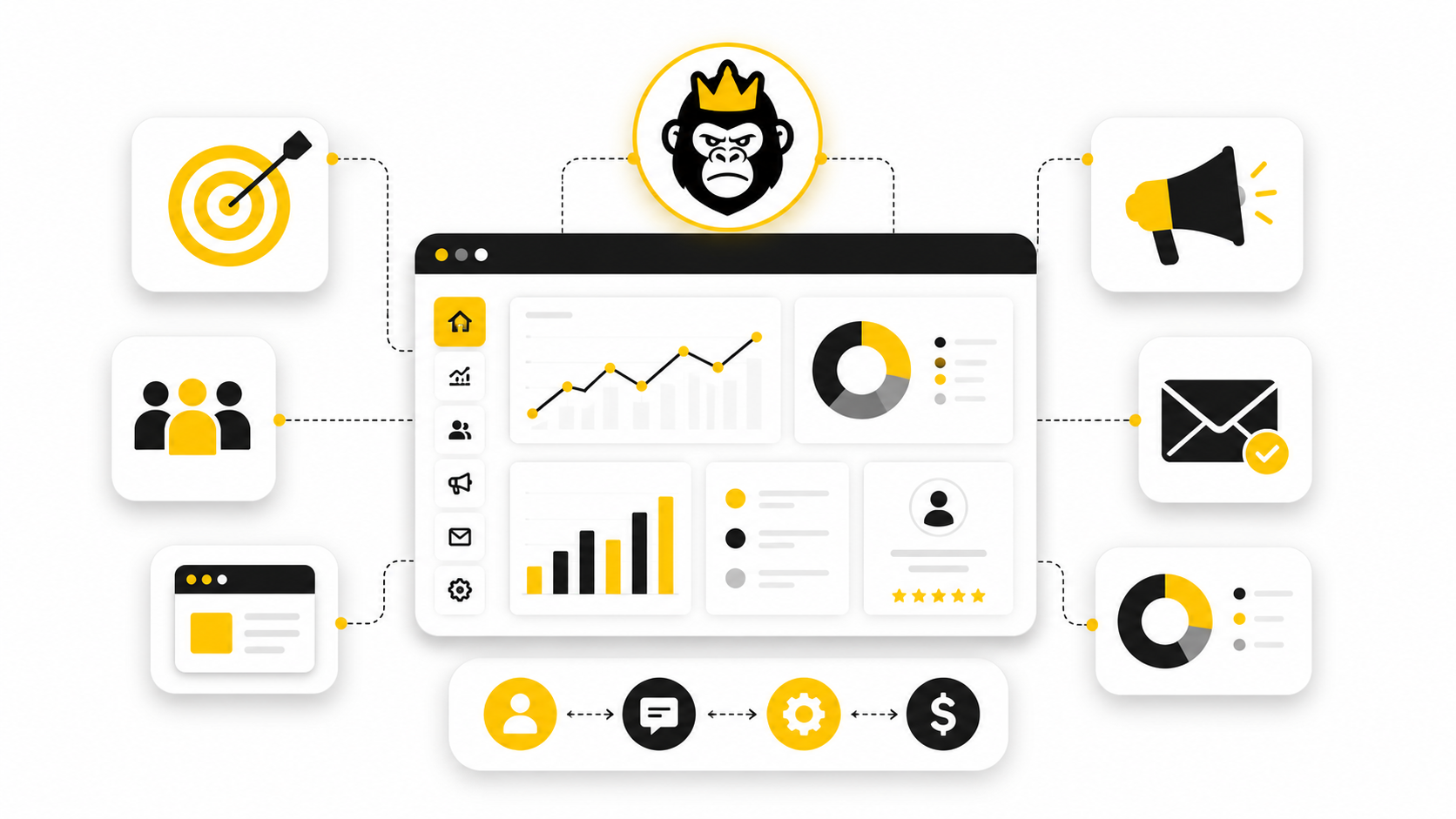
A king kong digital agency is not just a big-name marketing provider. It is the kind of agency that can connect strategy, traffic, conversion, automation, reporting, and commercial discipline into one operating system for growth.
That matters because digital marketing has become too complex for random activity. SEO, paid ads, landing pages, email, social, AI tools, analytics, and sales follow-up all affect each other. When those pieces are managed separately, businesses usually get noise instead of momentum.
This article breaks the topic into a practical six-part guide. The goal is simple: help you understand what a serious digital agency should actually do, what to look for, what to avoid, and how to build a relationship that produces measurable results.
Article Outline
- Why A King Kong Digital Agency Matters
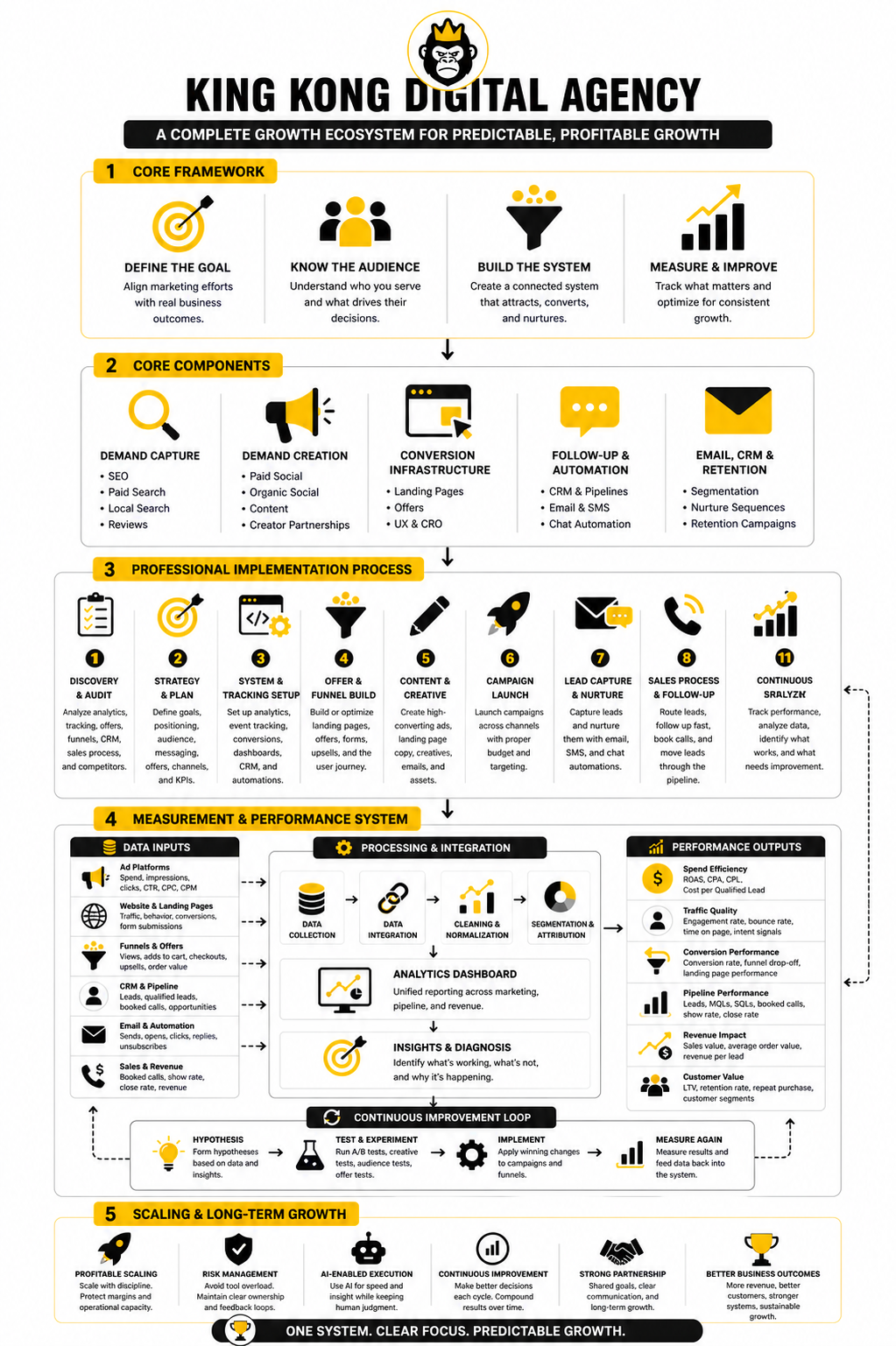
- The Growth Framework Behind A Serious Digital Agency
- Core Services That Actually Move Revenue
- How Professional Implementation Should Work
- How To Evaluate Results, Fit, And Long-Term Value
- Common Questions Before Hiring A Digital Agency
Why A King Kong Digital Agency Matters
The best agencies do not sell activity. They sell sharper execution against a business goal. That difference matters because more traffic, more content, or more campaigns are not automatically useful unless they create qualified demand and convert it into revenue.
A strong agency should challenge weak assumptions before spending money. If the offer is unclear, the funnel is leaky, or the sales process is slow, paid traffic will only expose the problem faster. This is where a serious king kong digital agency earns trust: it looks at the full path from attention to purchase, not just the campaign dashboard.
Business owners often look for an agency when growth feels stuck. The temptation is to buy one tactic, such as SEO, ads, or social media, and hope it fixes everything. A better approach is to treat digital marketing as a system where positioning, channels, conversion assets, follow-up, and measurement all work together.
The Growth Framework Behind A Serious Digital Agency
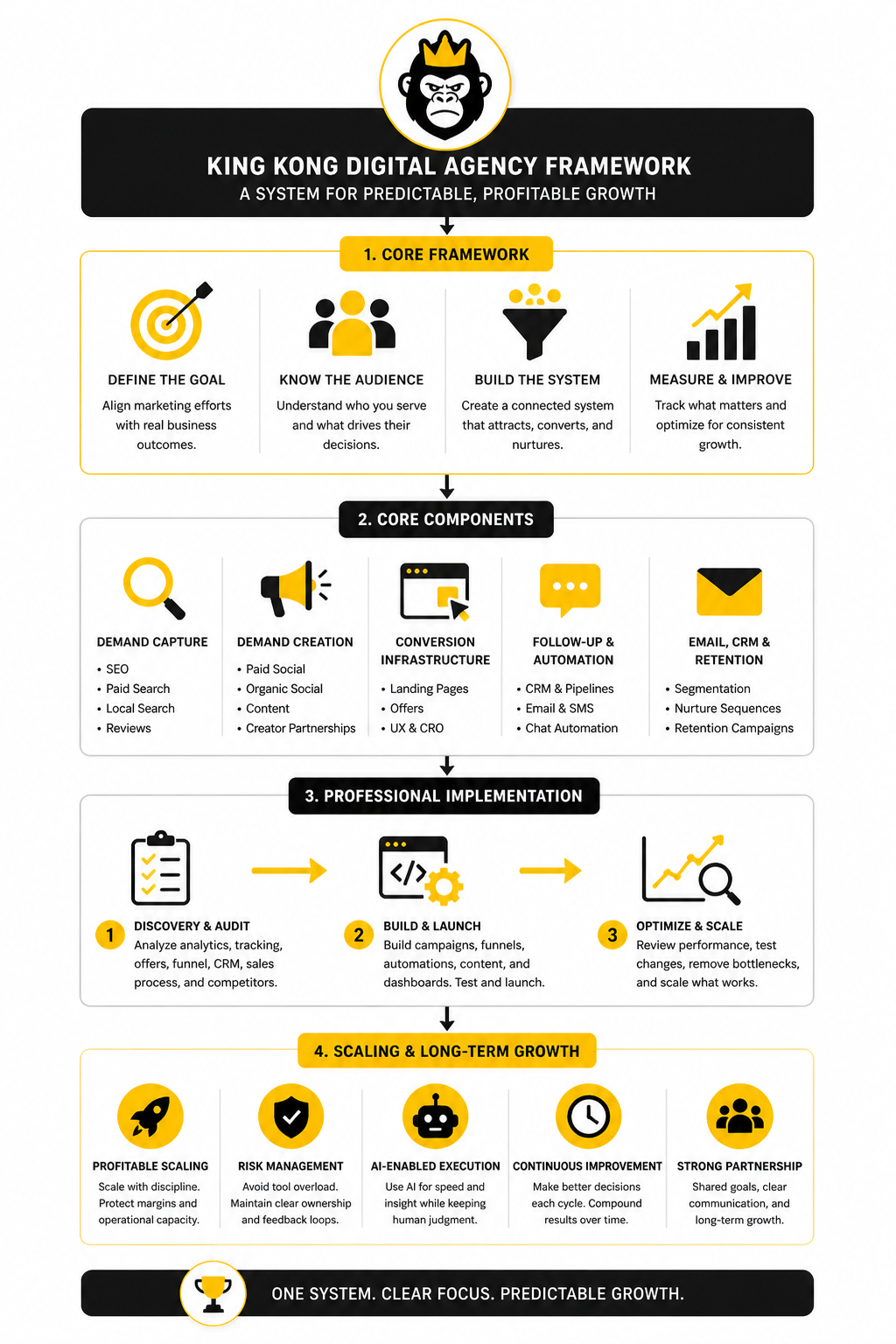
A useful agency framework starts with diagnosis. Before launching campaigns, the agency needs to understand the offer, audience, margins, sales cycle, current traffic, conversion data, and operational capacity. Without that, marketing becomes guesswork dressed up as strategy.
The next layer is channel selection. Not every business needs every platform, and not every platform deserves budget immediately. A local service business, ecommerce brand, SaaS company, and high-ticket consultant may all need different mixes of search, paid social, landing pages, email, automation, and sales enablement.
The final layer is optimization. Campaigns should improve through testing, reporting, and better decisions, not endless “brand awareness” excuses. Tools like GoHighLevel, ClickFunnels, ManyChat, and Brevo can support that system when they are used with a clear strategy instead of being treated as magic buttons.
Core Components Of The Framework
A strong digital agency usually works across four connected components. The first is positioning, because the message must make the right people care. Weak positioning makes every channel more expensive.
The second component is acquisition. This includes search visibility, paid media, content distribution, partnerships, social campaigns, and other ways to create demand. Acquisition only works well when the agency understands where the buyer already spends attention and what stage of intent they are in.
The third component is conversion. Landing pages, funnels, forms, chat flows, booking systems, checkout pages, and email sequences all influence whether interest turns into action. This is why a practical agency will care about the website and follow-up process as much as ad creative or keyword rankings.
The fourth component is measurement. Reporting should not be a monthly screenshot dump. It should explain what happened, why it happened, what is being changed, and how that connects to revenue.
Core Services That Actually Move Revenue
A king kong digital agency should not make services feel mysterious. The core work is usually simple to name, even when the execution is complex: attract the right people, convert more of them, follow up properly, and measure what is working. If an agency cannot explain how each service connects to revenue, that is a problem.
The first revenue driver is demand capture. This is where SEO, paid search, local search, marketplace visibility, and review strategy can help a business appear when buyers are already looking. Search-led work is powerful because it catches intent instead of trying to manufacture attention from scratch.
The second revenue driver is demand creation. This includes paid social, organic social, short-form content, creator partnerships, email list growth, and audience-building campaigns. It is harder to measure than search in the short term, but it becomes extremely valuable when the business has a strong offer and a clear follow-up system.
The third revenue driver is conversion infrastructure. This is where many businesses quietly lose money. A good campaign can still fail if the landing page is vague, the form asks too much, the booking process is clunky, or the sales team responds too slowly.
Search, Content, And Paid Traffic Need One Strategy
SEO and paid ads should not fight each other. They should share insight. Search data can reveal what buyers already want, while paid campaigns can test angles faster than waiting months for organic rankings to mature.
Content also needs discipline. Publishing for the sake of publishing usually creates a bloated site with weak pages and no clear commercial purpose. Strong content supports the buyer journey, answers real objections, strengthens authority, and gives sales teams better assets to use in follow-up.
Paid traffic has its own role. It can create fast learning, scale proven offers, and retarget people who already showed intent. But it should never be used as a substitute for clear positioning, because unclear offers simply become expensive faster.
Funnels, Follow-Up, And Automation Close The Gap
A serious agency thinks beyond the first click. The money is often made or lost after someone fills out a form, starts a checkout, downloads a guide, books a call, or asks a question. That is why follow-up, automation, and pipeline visibility matter so much.
For service businesses and agencies, a platform like GoHighLevel can make sense when the goal is to connect landing pages, forms, calendars, SMS, email, pipeline management, and client communication in one place. For businesses that need focused funnel building, ClickFunnels can be useful when the team wants to build offer-specific sales paths without overcomplicating the main website.
Chat and messaging automation can also improve response speed when used carefully. ManyChat fits businesses that actively use Instagram, Facebook, or messaging flows to capture leads and answer common questions. The key is restraint: automation should remove friction, not make the brand feel robotic.
Email, CRM, And Retention Are Not Optional
Many businesses obsess over new leads while ignoring the people already in their world. That is a mistake. Email, CRM hygiene, segmentation, and retention campaigns often produce better economics because the audience already knows the brand.
A practical king kong digital agency should look at the customer database, not just the ad account. It should ask how leads are tagged, which segments buy fastest, which offers create repeat purchases, and where inactive prospects are leaking out of the system. These questions are not glamorous, but they are where profit often hides.
For email and customer communication, Brevo, Moosend, or a CRM-connected system can support newsletters, nurture sequences, abandoned lead follow-up, customer reactivation, and post-purchase education. The tool is less important than the logic behind it. The agency should know what message goes to which person, when it goes out, and what action it is meant to create.
Professional Implementation Should Feel Structured
Good implementation starts with priorities. A professional agency does not try to fix everything in week one. It identifies the biggest constraint first, then sequences work so the business sees cleaner data and better execution over time.
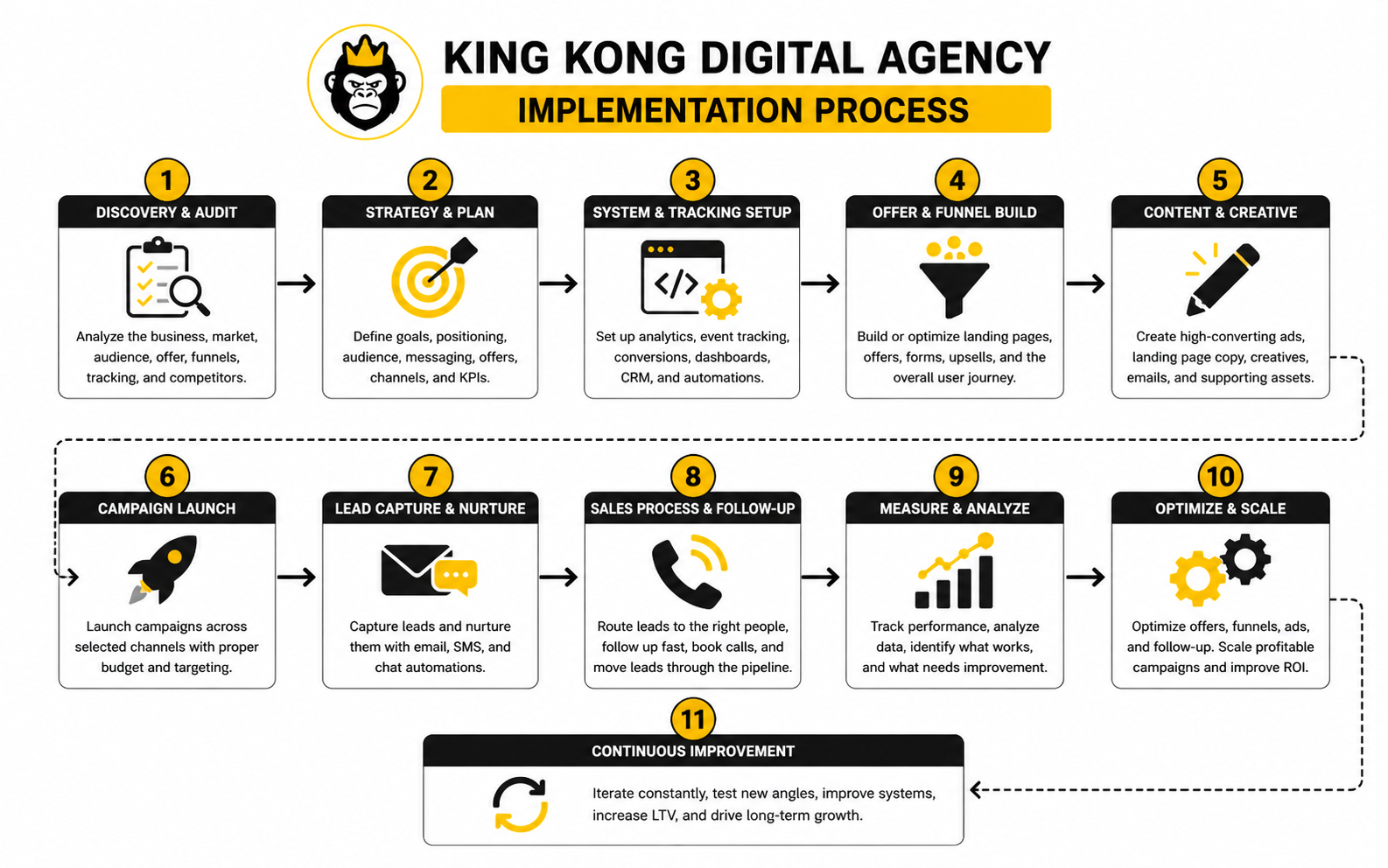
The first phase is usually discovery and audit. This should cover analytics, tracking, creative assets, offers, landing pages, CRM setup, sales process, competitors, and current performance. The point is not to create a giant PDF nobody reads; the point is to decide what needs action.
The second phase is build and launch. This may include campaign setup, landing page creation, funnel mapping, tracking installation, automation workflows, content production, or dashboard configuration. Every asset should have a job, because random assets create random results.
The third phase is optimization. This is where the agency reviews performance, spots bottlenecks, tests changes, and reallocates effort. If the agency only reports numbers but never changes the plan, it is not managing growth; it is narrating activity.
How Professional Implementation Should Work
Implementation is where the promise becomes real. A king kong digital agency can have smart strategy, polished slides, and confident calls, but none of that matters if execution is slow, messy, or disconnected from the client’s actual business. The process needs rhythm, ownership, and clear decision-making.
The strongest agency relationships usually start with a tight operating cadence. Everyone should know what is being built, who owns each piece, what needs approval, and what result the work is supposed to influence. This prevents the classic agency problem where both sides are busy, but nobody is fully accountable.
A practical implementation process also protects focus. There will always be more ideas than capacity. The agency’s job is not to chase every idea; it is to identify the few moves most likely to improve acquisition, conversion, retention, or reporting.
Step 1: Audit The Current Growth System
The first step is not launching ads. It is understanding what already exists. The agency should review analytics, traffic sources, conversion paths, CRM setup, customer segments, sales scripts, offers, landing pages, email sequences, and tracking gaps.
This audit should produce decisions, not just observations. If the website is attracting traffic but not converting, the priority may be landing page clarity. If leads are coming in but sales are weak, the priority may be speed-to-lead, qualification, or follow-up automation.
This is also where the business needs to be honest. If margins are thin, the offer is weak, or the sales team cannot handle more demand, the agency should know before budget goes live. Good implementation starts with the truth, even when the truth is uncomfortable.
Step 2: Define The Commercial Goal
A campaign goal should not be vague. “More visibility” is not enough. The agency and client should define what success means in practical terms, such as booked calls, qualified leads, trial signups, ecommerce purchases, repeat orders, pipeline value, or lower acquisition cost.
This goal then shapes the channel plan. A business that needs urgent lead volume may prioritize paid search, retargeting, and landing page testing. A business building long-term authority may need SEO, content systems, thought leadership, and email nurturing.
The goal also keeps reporting clean. If everyone agrees that qualified booked calls matter most, the dashboard should not hide behind vanity metrics. Impressions, clicks, and engagement can still be useful, but they should support the commercial goal rather than replace it.
Step 3: Build The Assets That Remove Friction
Once the goal is clear, the agency can build the assets needed to move people from attention to action. That may include landing pages, funnel pages, lead magnets, booking flows, checkout pages, CRM pipelines, email sequences, chat flows, ad creative, and sales enablement material. Each asset should reduce confusion or increase trust.
For ecommerce and direct response landing pages, tools like Replo can help teams build and test campaign-specific pages faster. For forms, quizzes, onboarding flows, and lead capture, Fillout can be useful when the business needs a clean way to collect structured information. The point is not to add more software for the sake of it; the point is to make the buying path easier.
This stage should be practical and fast. A good first version that can be tested is usually better than a perfect asset that takes months to approve. The agency should build with learning in mind, because real market behavior will always teach more than internal opinions.
Step 4: Launch With Tracking In Place
Launching without tracking is amateur hour. Before campaigns go live, the agency should confirm that conversion events, forms, call tracking, CRM stages, attribution links, and reporting dashboards are working. Without that foundation, every later conversation becomes a guessing game.
This does not mean tracking will be perfect. Privacy changes, platform limitations, cookie restrictions, and cross-device behavior make attribution harder than it used to be. But harder does not mean optional; it means the agency needs a more disciplined measurement setup.
A clean launch also needs quality control. Ads should match landing pages, forms should submit correctly, emails should fire at the right time, calendar links should work, and sales notifications should reach the right person. These details sound basic, but basic details are often where campaigns quietly break.
Step 5: Optimize Based On Evidence
Optimization should start after enough useful data exists. Changing everything after a few clicks is panic, not strategy. A professional agency looks for patterns in traffic quality, conversion rates, lead quality, sales feedback, cost per acquisition, and customer value before making major moves.
The first changes are often simple. Tighten the offer. Rewrite the headline. Remove weak form fields. Improve the call-to-action. Pause low-quality traffic. Add retargeting. Build a better follow-up sequence. These moves are not flashy, but they can change the economics of the entire campaign.
This is where the relationship becomes more valuable over time. A king kong digital agency should get smarter with every campaign cycle because it is collecting real evidence about the market. If the agency is not learning, documenting, and improving, the client is just renting activity.
The Client’s Role In Execution
Even the best agency cannot fix a business that refuses to participate. The client has to provide access, feedback, approvals, product knowledge, sales insights, and honest performance data. Without those inputs, the agency is forced to operate with one eye closed.
The client also needs to move quickly. Slow approvals kill momentum, especially when campaigns depend on creative testing, page edits, and follow-up adjustments. A simple weekly decision rhythm can prevent weeks of delay.
The best client-agency relationships feel like a shared growth team. The agency brings strategy, execution, and outside perspective. The business brings customer insight, offer knowledge, operational reality, and commercial priorities. When both sides do their part, the work gets sharper fast.
Statistics And Data That Actually Mean Something
Data only helps when it changes what the business does next. A king kong digital agency should not throw random numbers into a report to look smart. It should connect each metric to a decision: keep going, fix the asset, change the offer, improve follow-up, or stop wasting budget.
The first rule is to separate performance signals from vanity signals. Impressions, reach, and views can be useful when the goal is awareness, but they do not prove commercial progress on their own. For most businesses, stronger signals include qualified leads, booked calls, sales opportunities, conversion rate, cost per acquisition, customer acquisition cost, average order value, lifetime value, and payback period.
Benchmarks can help, but they should never become excuses. If ecommerce conversion rates often sit around the low single digits, that does not mean a weak store should accept poor performance forever. It means the agency should compare the business against its own baseline, its category, its traffic mix, and the quality of the offer before deciding what “good” really means.
The Analytics System A Serious Agency Should Build
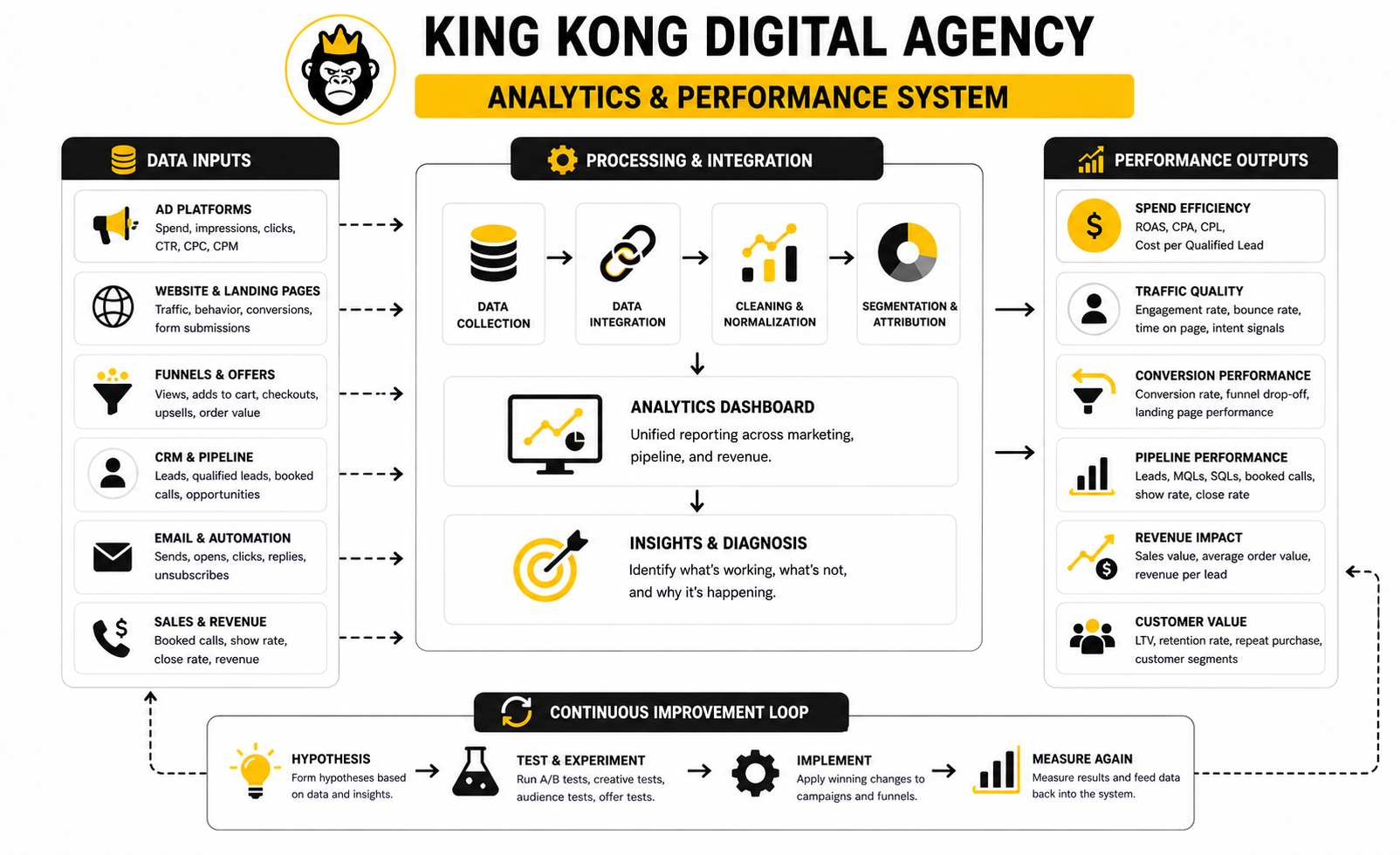
The analytics system should show the full journey, not just the first click. A useful setup connects traffic sources, landing pages, forms, calls, bookings, CRM stages, purchases, repeat purchases, and sales outcomes. This gives the agency enough context to see whether the problem is traffic quality, conversion friction, sales follow-up, or retention.
The reporting structure should be simple enough for a business owner to understand quickly. A clean dashboard might show spend, leads, qualified leads, booked calls, show rate, close rate, revenue, and cost per acquisition. The deeper platform-level data still matters, but the top layer should answer one question fast: are we moving closer to profitable growth?
Attribution also needs maturity. Modern tracking is less perfect than many people want it to be, especially across devices, privacy restrictions, and longer buying cycles. A serious agency does not pretend attribution is flawless; it combines platform data, analytics data, CRM data, and sales feedback to make better decisions.
Benchmarks Are Reference Points, Not Strategy
Benchmarks are useful when they help you spot an obvious gap. If a landing page gets traffic but very few people take action, the agency should inspect message match, page speed, offer clarity, proof, form length, and mobile usability. If ads get clicks but leads are weak, the targeting, creative angle, or promise may be attracting the wrong people.
Email benchmarks should be interpreted carefully too. Open rates can be distorted by privacy features, so clicks, replies, conversions, and revenue are often better indicators of real engagement. If email drives clicks but not sales, the next move is not always “send more emails”; it may be to improve segmentation, landing pages, offer timing, or the post-click experience.
Paid media benchmarks also need context. A cheap lead is not automatically a good lead. If low-cost leads rarely show up, cannot afford the offer, or never close, the real cost is much higher than the dashboard suggests. This is why a king kong digital agency should judge campaigns by downstream quality, not just front-end efficiency.
The Metrics That Should Trigger Action
The most useful metrics act like warning lights. A high click-through rate with low conversion can mean the ad is interesting but the page is not convincing. A high form completion rate with poor sales quality can mean the offer is too broad or qualification is too weak.
A low booked-call rate after lead capture can point to slow follow-up, weak calendar placement, or lack of urgency. A low show rate may require reminders, confirmation messages, better pre-call education, or stronger qualification. A low close rate may reveal a sales process issue rather than a marketing issue.
The agency should translate these signals into specific actions. That might mean rewriting the landing page, narrowing the audience, adding proof, changing the lead magnet, improving automated follow-up, creating a stronger sales handoff, or pausing a campaign that is attracting the wrong prospects. Data should create movement.
Reporting Should Explain The Why
Monthly reports should not feel like a pile of screenshots. The report should explain what changed, what improved, what got worse, what the agency learned, and what happens next. This is where many agencies fail because they report activity instead of interpretation.
A useful report should include context. If conversion rate dropped, did traffic quality change? Did spend shift to a colder audience? Did the offer fatigue? Did a form break? Did sales response time slow down? The numbers only become valuable when the agency investigates the cause.
This is also where the business owner needs to push for plain language. If an agency cannot explain performance without hiding behind jargon, that is a red flag. You do not need a 40-page report; you need clarity, accountability, and next steps.
What Good Performance Looks Like Over Time
Good performance is not always a straight line. Early campaigns often reveal tracking gaps, offer weaknesses, audience mismatches, and conversion leaks. That does not mean the strategy has failed; it means the market is giving feedback.
Over time, the data should become cleaner and the decisions should become sharper. The agency should know which audiences are worth paying for, which messages create better leads, which pages convert best, which follow-up sequences move people forward, and which offers produce the strongest economics. That is how marketing becomes an asset instead of a monthly expense.
The real test is whether the business can make better decisions because of the data. If the numbers help the team spend smarter, sell better, improve the funnel, and forecast growth more confidently, the agency is doing its job. If the numbers only decorate a report, they are just noise.
How To Evaluate Results, Fit, And Long-Term Value
By this stage, the question is no longer whether a king kong digital agency can launch campaigns. Plenty of agencies can do that. The better question is whether the agency can keep making better decisions as the business grows, the market changes, and the easy wins disappear.
Long-term value comes from judgment. An agency has to know when to scale, when to pause, when to protect margin, when to rebuild the offer, and when to tell the client something they may not want to hear. That is the difference between a vendor and a real growth partner.
This is also where business owners need to stop buying based only on promises. A confident sales call is not proof. Look for how the agency thinks, how it diagnoses problems, how it explains tradeoffs, and how it handles uncertainty.
Scaling Is Not Just Spending More
Scaling sounds exciting until the numbers get messy. More ad spend can create more leads, but it can also expose weak conversion rates, slow sales follow-up, poor qualification, thin margins, or operational bottlenecks. If the business cannot handle the extra demand properly, growth starts to create chaos.
A serious agency should scale in stages. It should prove the offer, validate traffic quality, tighten conversion paths, confirm sales capacity, and only then increase budget with discipline. This is especially important as digital ad costs keep pressure on businesses and global advertising investment continues shifting heavily toward digital channels.
The smartest scaling conversations include constraints. How many leads can the sales team actually handle? How fast can fulfillment grow without damaging quality? What customer acquisition cost still leaves healthy profit? These questions are not negative; they protect the business from buying growth it cannot absorb.
The Biggest Risks In Agency Relationships
The first risk is unclear ownership. If nobody knows who owns strategy, creative approval, tracking, CRM hygiene, reporting, or sales feedback, performance problems become hard to fix. Strong agency relationships define ownership early and revisit it often.
The second risk is tool overload. Businesses can stack funnels, CRMs, chatbots, email platforms, dashboards, and AI tools until nobody knows what is actually happening. Tools like GoHighLevel, ClickFunnels, Chatbase, and Buffer can help when they support a clear operating system. They become expensive clutter when they are added without process.
The third risk is weak feedback loops. Marketing teams need sales feedback, customer objections, lead quality notes, retention data, and margin reality. Without that feedback, the agency optimizes toward platform metrics instead of business outcomes.
When To Push For Strategy Over More Tactics
More tactics are not always the answer. If the offer is unclear, adding another channel usually spreads the problem wider. If the landing page does not convert, buying more traffic only increases waste.
A good agency should be willing to slow down and fix the foundation. That might mean refining the offer, narrowing the audience, improving proof, rebuilding the funnel, strengthening follow-up, or changing the sales handoff. These moves are less exciting than launching another campaign, but they usually matter more.
This is where owners need discipline too. It is easy to chase whatever channel is currently getting attention. The better move is to ask whether the current system has been made strong enough before adding another moving part.
How AI Changes The Agency Conversation
AI is useful, but it does not remove the need for strategy. It can help with research, content drafts, ad variations, data summaries, customer support, workflows, and faster production. It cannot decide your positioning, understand your margins, or replace commercial judgment.
A modern king kong digital agency should know how to use AI without making the work generic. That means using AI to speed up execution while keeping human control over brand voice, offer clarity, compliance, customer insight, and final decisions. Faster average work is not a competitive advantage if every competitor can produce the same average work.
AI also creates a quality-control problem. More output means more chances for weak messaging, inaccurate claims, duplicated ideas, or off-brand communication. The agency should have a review process that protects the business before AI-assisted work reaches customers.
What A Strong Long-Term Partnership Looks Like
A strong partnership becomes more useful over time. The agency learns the audience, the economics, the sales cycle, the objections, the best-performing offers, and the patterns behind profitable customers. That learning should compound.
The client should also get smarter. Over time, the business owner should understand which numbers matter, which channels are worth investment, and which bottlenecks limit growth. A good agency does not keep the client confused; it makes the client more confident.
The best sign is not constant excitement. It is calm progress. Fewer random campaigns, cleaner priorities, better decisions, tighter feedback, and a clearer connection between marketing activity and business results. That is what makes the relationship worth keeping.
Common Questions Before Hiring A Digital Agency
At the end of the process, the agency should feel less like a supplier and more like part of the business system. It should understand the offer, the customer journey, the channels, the conversion points, the sales handoff, and the measurement model. That is when marketing stops being a loose collection of tactics and starts behaving like a growth engine.
A king kong digital agency should also make the business more independent over time. That does not mean the client should do everything alone. It means the client should understand the strategy, know what is being measured, and feel confident making decisions with the agency instead of blindly approving whatever comes next.
The final system is not complicated in theory. Build the right offer, attract the right audience, reduce friction, follow up fast, measure honestly, and improve every cycle. The hard part is doing it consistently.
FAQ - Built for Complete Guide
What is a king kong digital agency?
A king kong digital agency is a growth-focused marketing partner that helps a business connect strategy, traffic, conversion, automation, reporting, and optimization. The phrase points to an agency with serious capability, not just a team that runs ads or posts on social media. The best version of this agency helps the business make better commercial decisions, not just launch more campaigns.
What services should a serious digital agency provide?
A serious digital agency should be able to support acquisition, conversion, retention, and measurement. That may include SEO, paid media, landing pages, funnels, email, CRM setup, automation, content, analytics, and reporting. The important part is not the size of the service list; it is whether each service has a clear purpose in the growth system.
How do I know if an agency is actually strategic?
Listen to the questions it asks before making recommendations. A strategic agency will ask about margins, offers, customer quality, sales process, conversion data, capacity, and business goals. If the conversation jumps straight into channels and packages, the agency may be selling activity instead of solving the right problem.
Should I hire an agency or build an in-house team?
It depends on the stage of the business. An agency can be useful when you need specialized execution, faster setup, outside perspective, or a complete growth system without hiring several full-time people. An in-house team can make sense when marketing is already mature, there is enough work to justify dedicated roles, and leadership can manage the strategy properly.
How long does it take to see results?
Some channels can create early signals quickly, especially paid search, retargeting, landing page testing, and follow-up improvements. SEO, content, brand building, and lifecycle marketing usually take longer because they compound over time. The better question is whether the agency is producing useful learning early, then turning that learning into stronger execution.
What should I track before judging performance?
Track the full path from traffic to revenue. That includes spend, traffic quality, conversion rate, leads, qualified leads, booked calls, show rate, close rate, sales value, customer acquisition cost, and lifetime value. A campaign that looks good at the click level can still fail if the leads are weak or the sales process is broken.
What is the biggest red flag when choosing an agency?
The biggest red flag is certainty without diagnosis. No agency should promise aggressive results before understanding the offer, market, funnel, tracking, budget, sales process, and constraints. Strong agencies are confident, but they are also careful because real growth depends on variables they need to inspect first.
How much should I rely on automation?
Automation should support the customer journey, not replace human judgment. Use it for reminders, lead routing, email sequences, chat flows, CRM updates, segmentation, and simple repetitive tasks. Do not use automation to hide a weak offer, spam prospects, or create a cold experience where a personal response would close more business.
Which tools are useful for a digital agency system?
Useful tools depend on the business model. A service business may need CRM, calendars, SMS, email, pipelines, and automation through something like GoHighLevel. A funnel-heavy business may prefer ClickFunnels, while a content or social team may use Buffer to keep publishing organized.
Can AI replace a digital agency?
AI can speed up research, drafting, analysis, reporting, and workflow execution. It cannot fully replace positioning, commercial judgment, customer understanding, creative direction, sales insight, or accountability. A good agency uses AI to move faster while still applying human strategy and quality control.
What should the first 30 days with an agency look like?
The first 30 days should focus on clarity and setup. Expect audits, access requests, tracking review, offer analysis, funnel mapping, campaign planning, asset priorities, and reporting structure. If the agency skips the foundation and rushes into activity, the work may move fast but still miss the real constraint.
When should I leave an agency?
You should consider leaving when the agency cannot explain performance clearly, avoids accountability, repeats the same tactics without learning, ignores sales feedback, or hides behind vanity metrics. Poor results alone are not always the issue because campaigns can need iteration. The real problem is when the agency is not learning, adjusting, and communicating honestly.
Work With Professionals
Explore 10K+ Remote Marketing Contracts on MarkeWork.com
Most marketers spend too much time chasing clients, competing on crowded platforms, and losing a percentage of every project to middlemen.
MarkeWork gives you a better way. Browse thousands of remote marketing contracts and connect directly with companies desperate to hire skilled marketers like you, without platform commissions and without unnecessary gatekeepers.
If you're serious about finding better opportunities and keeping 100% of what you earn, explore available contracts and create a profile for free at MarkeWork.com.