

Klaviyo has emerged as a leading email and SMS marketing platform, widely recognized for its automation, segmentation, and integration capabilities. Understanding Klaviyo cost is critical for businesses aiming to scale their marketing without overspending, as pricing can vary significantly depending on the number of contacts, messages sent, and chosen plan features.
The platform’s pricing model can be complex at first glance, but breaking it down helps businesses forecast expenses, optimize their strategy, and make informed decisions about their marketing budget. This article outlines the key aspects of Klaviyo cost and how it impacts businesses at different growth stages.
Article Outline
- Why Klaviyo Cost Matters
- Pricing Framework Overview
- Core Components of Pricing
- Implementation and Optimization
- Advanced Cost Considerations
- Frequently Asked Questions
Why Klaviyo Cost Matters
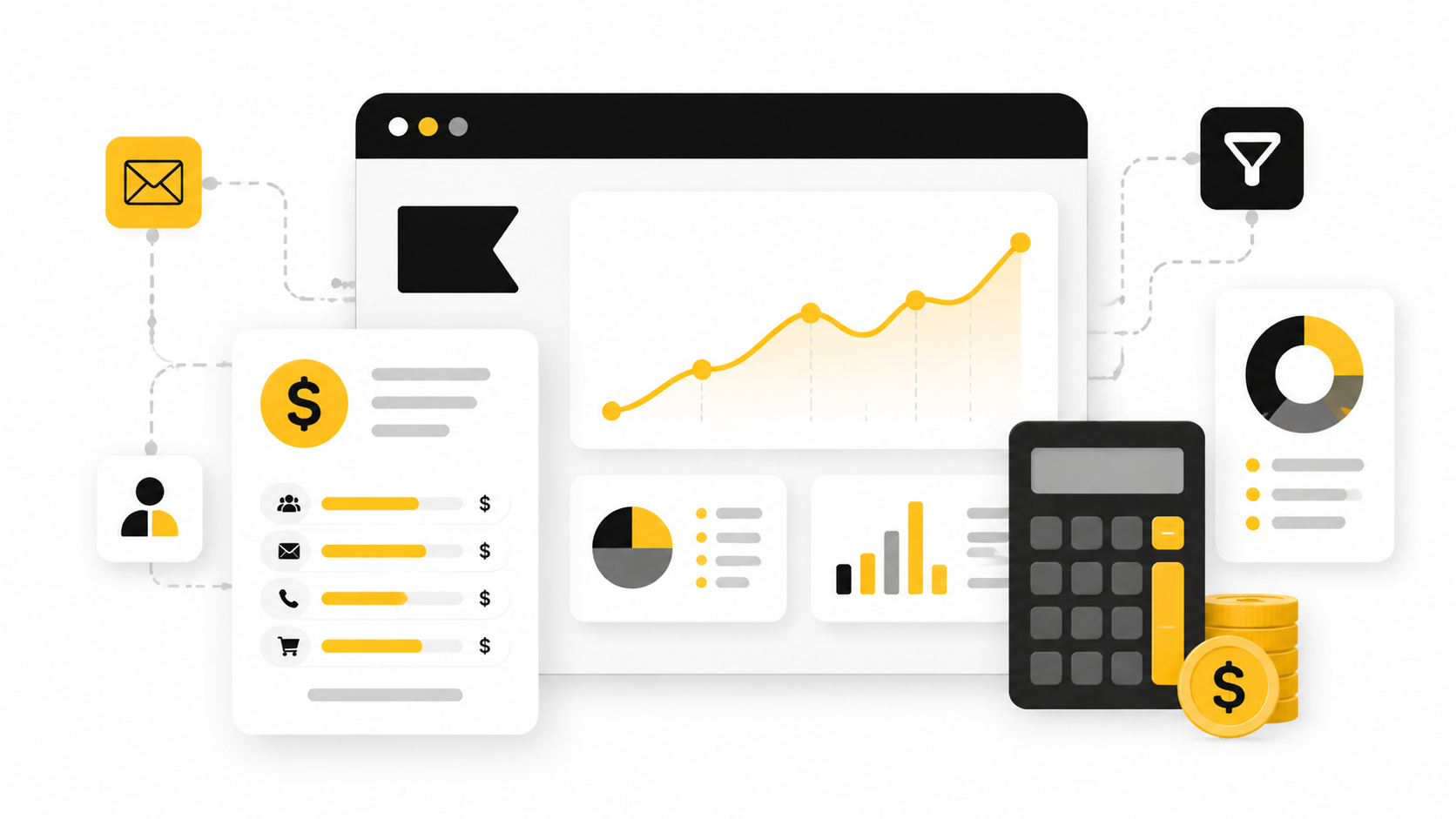
Budgeting for marketing software is more than just comparing dollar amounts. Klaviyo cost directly affects your ROI, especially for e-commerce businesses where email and SMS campaigns drive a significant portion of revenue. Understanding pricing tiers ensures you don’t overcommit for features you don’t need while still leveraging automation that can increase customer lifetime value.
Pricing Framework Overview
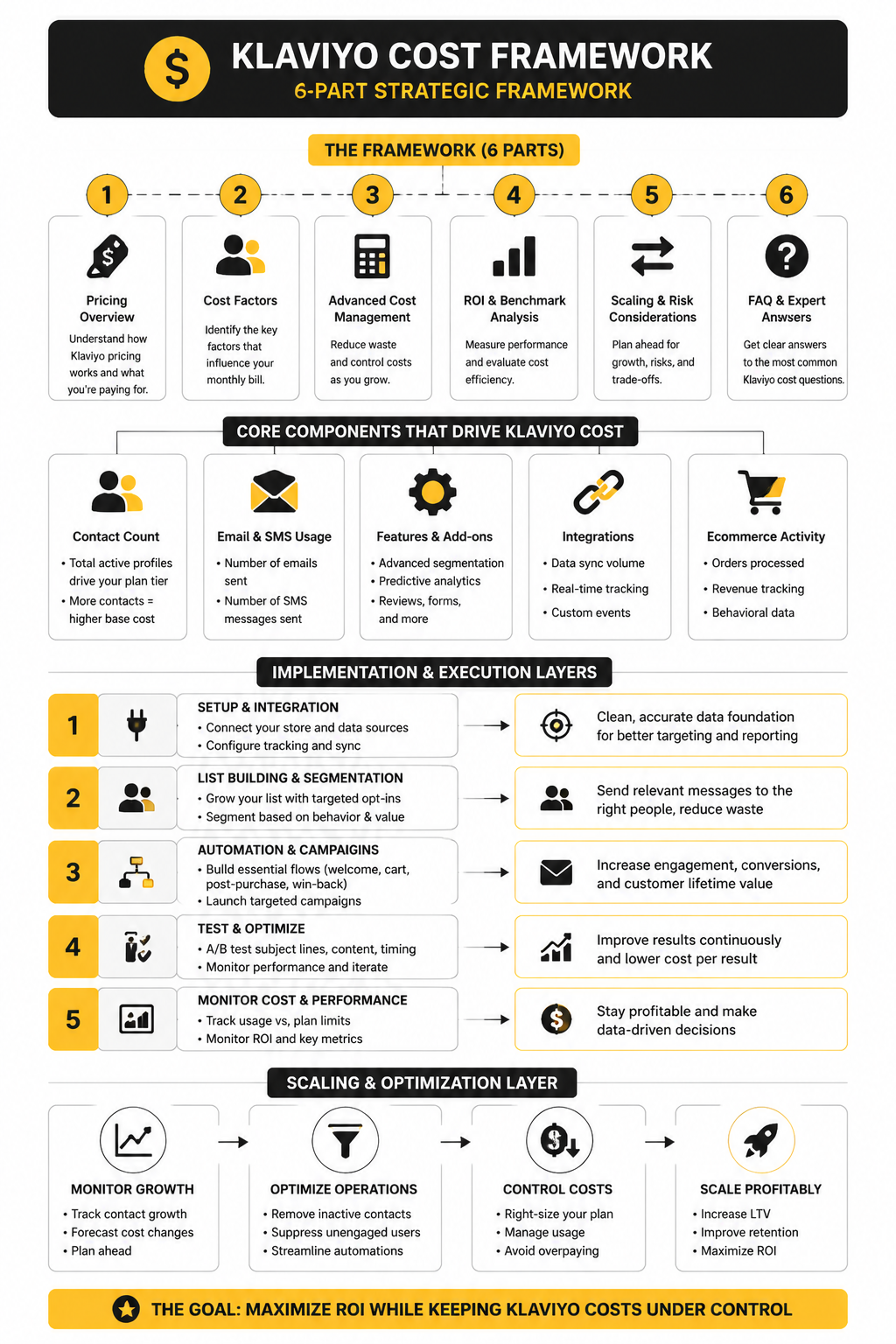
Klaviyo pricing is built around active contacts, email sends, and SMS message volume. Each of these dimensions interacts to determine your total monthly spend. By mapping out your subscriber base and anticipated campaign frequency, you can estimate costs accurately, avoiding surprises as your contact list grows.
Core Components of Pricing
- Active Contacts – Every subscriber counts toward your monthly billing. Segmentation and list hygiene can help control expenses.
- Email Sends – The number of emails sent each month influences pricing, especially for high-volume campaigns.
- SMS Messaging – Charged based on message volume, SMS can scale differently than email, requiring careful monitoring.
- Feature Tiers – Advanced features like predictive analytics and multi-step flows come with higher pricing tiers, offering tools to boost engagement but at an increased cost.
By structuring your marketing strategy around these core components, businesses can align costs with actual performance, ensuring efficient spending while maximizing campaign impact.
Implementation and Cost Breakdown
Understanding the implementation process behind Klaviyo is just as crucial as knowing the pricing tiers. The platform’s cost scales with both the number of contacts and the complexity of your email and SMS workflows. For a business with 5,000 active contacts sending multiple campaigns per week, pricing can vary substantially depending on whether advanced features like predictive analytics, segmentation, or flow automations are utilized.
Step 1: Evaluate Active Contacts
Your monthly cost begins with your active contacts. Every contact who has received or opened an email in the past 30 days counts toward your bill. Companies often underestimate growth, resulting in unexpected spikes in subscription fees. Keeping your contact lists clean and unsubscribing inactive users can significantly reduce costs while improving deliverability.
Step 2: Plan Email Sends
Next, consider the email volume. Klaviyo charges based on the number of emails sent per month. Businesses with high-frequency newsletters or transactional campaigns must monitor their monthly email sends carefully. Strategic segmentation and targeted campaigns help reduce unnecessary sends, lowering overall expenditure while maintaining engagement.
Step 3: Account for SMS Usage
For brands using SMS marketing, costs are calculated per message. SMS can quickly become a major component of your monthly spend if campaigns are frequent or the subscriber list is large. It’s important to integrate SMS with email campaigns efficiently, sending high-value messages to engaged segments to maximize ROI.
Step 4: Select Feature Tier
Klaviyo offers feature-based tiers that affect cost. Advanced tools—like predictive analytics, multi-step automation, or in-depth reporting—can accelerate revenue growth but come at a premium. Businesses must weigh whether the added insights justify the additional expense.
Step 5: Ongoing Monitoring and Optimization
Finally, the cost impact of implementation extends to continuous optimization. Monitoring open rates, click-throughs, and conversion metrics can highlight inefficient flows or segments that inflate cost without generating meaningful revenue. Optimization ensures that you are paying for features and contacts that drive measurable business results, not unused potential.
By following this process, businesses can align their Klaviyo costs with real usage and strategic goals, ensuring that each dollar spent contributes to growth and engagement.
Professional Implementation and Setup
Once you understand the pricing tiers and feature options, the next step is to implement Klaviyo effectively to get the most value for your spend. Proper setup can prevent wasted costs, improve deliverability, and maximize ROI from both email and SMS campaigns.
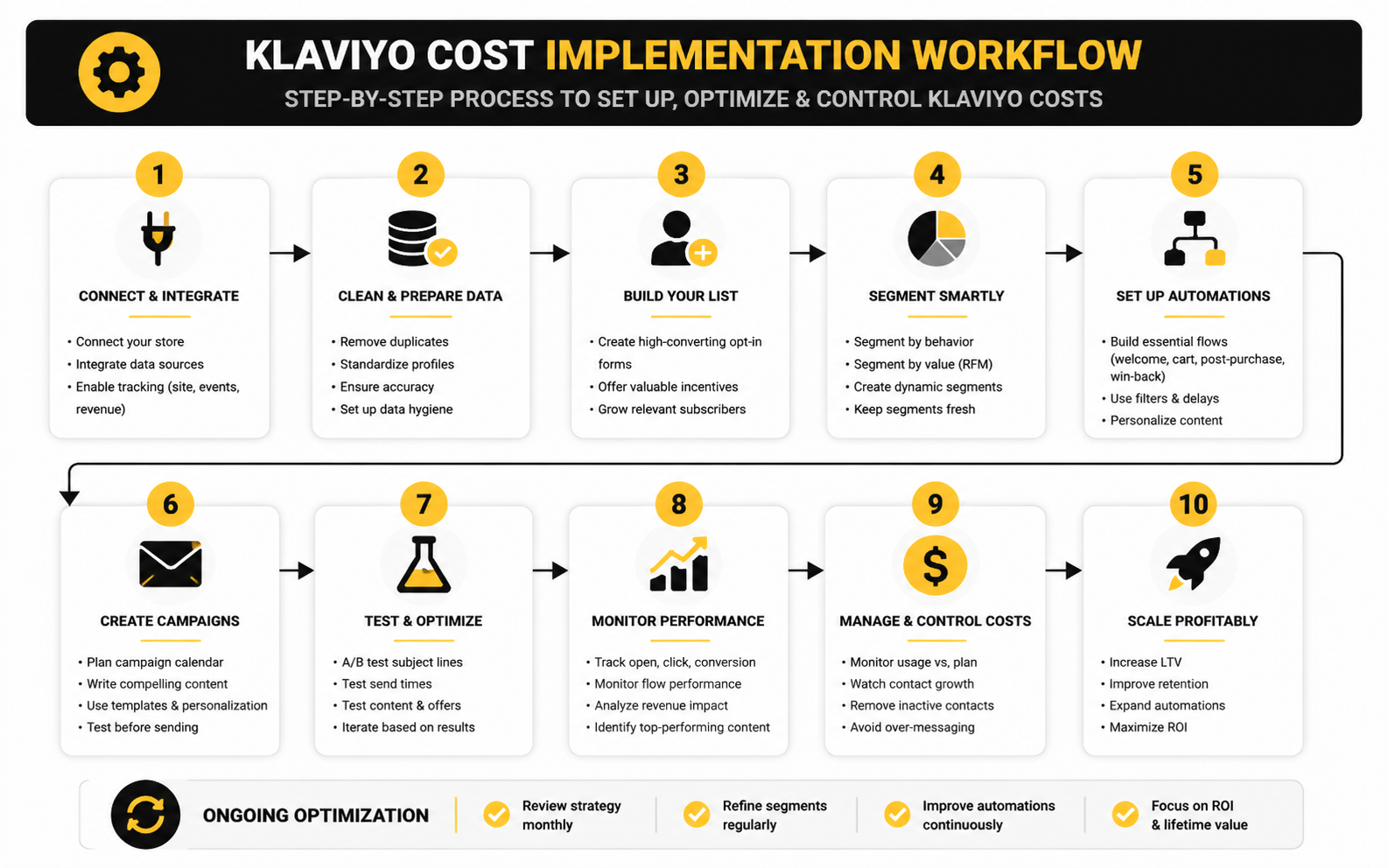
Step 1: Integrate with Your Platform
Klaviyo works seamlessly with ecommerce platforms like Shopify, BigCommerce, and WooCommerce. Integration ensures that your customer data flows automatically into Klaviyo, allowing accurate segmentation and triggered campaigns. A robust integration reduces manual effort and guarantees that every contact is counted correctly for billing and targeting purposes.
Step 2: Segment Your Audience
Segmentation is the backbone of cost-efficient campaigns. By creating segments based on purchase behavior, engagement, or lifecycle stage, you send fewer irrelevant messages while boosting engagement. Well-segmented audiences often result in higher revenue per email, which offsets the platform cost.
Step 3: Build Automated Flows
Automation in Klaviyo is where cost and effectiveness intersect. Set up flows like abandoned cart reminders, post-purchase follow-ups, and welcome series. Each flow should be evaluated for potential revenue generation versus the incremental cost of sending additional messages. Automated flows reduce repetitive work while targeting the right contacts at the right time.
Step 4: Customize Templates and Branding
Professional email templates aligned with your brand not only increase conversions but also reduce the chance of spam complaints, which can indirectly affect your cost by keeping your deliverability high. Klaviyo’s drag-and-drop editor and template library make this process efficient, allowing teams to deploy campaigns without needing a dedicated designer.
Step 5: Monitor and Optimize
Post-launch, monitor key performance indicators like open rates, click-through rates, and conversion metrics. Use this data to adjust segments, refine flows, and manage your contact list actively. Optimized campaigns help you get the most out of your Klaviyo investment, ensuring that you pay for contacts and sends that genuinely drive revenue.
Implementation Process and Workflow
After deciding on the right plan for your business, the next step is implementing Klaviyo in a way that aligns with your goals and maximizes ROI. Understanding the execution flow ensures that every feature you pay for contributes to measurable results.
Step 1: Platform Integration
Start by connecting Klaviyo to your ecommerce or CRM platform. Integration allows automatic syncing of customer data, which is crucial for accurate contact counts and segmenting. This step ensures that your spend correlates directly with actionable marketing opportunities.
Step 2: Audience Segmentation
Segment your subscribers based on behaviors, purchase history, or engagement levels. Effective segmentation helps you send targeted campaigns, reducing unnecessary sends and lowering your cost per conversion. With clear segments, you can prioritize high-value customers and lifecycle stages that matter most.
Step 3: Flow Creation
Set up automated flows such as welcome series, cart abandonment reminders, and post-purchase sequences. Flows automate engagement and maintain consistent communication without extra effort, making each message count towards revenue. Balancing the number of flows with expected ROI helps keep costs efficient.
Step 4: Template and Content Setup
Customize your templates with branded designs and optimized content. Good templates increase conversions and reduce spam complaints, indirectly preserving your sender reputation and keeping long-term costs lower. Klaviyo’s drag-and-drop builder makes this process accessible even for small teams.
Step 5: Launch and Test
Once flows and templates are ready, test each sequence before going live. Testing ensures links, personalization, and triggers function correctly, preventing wasted sends and extra costs. Regular testing also allows you to refine campaigns based on real performance data.
Statistics and Data
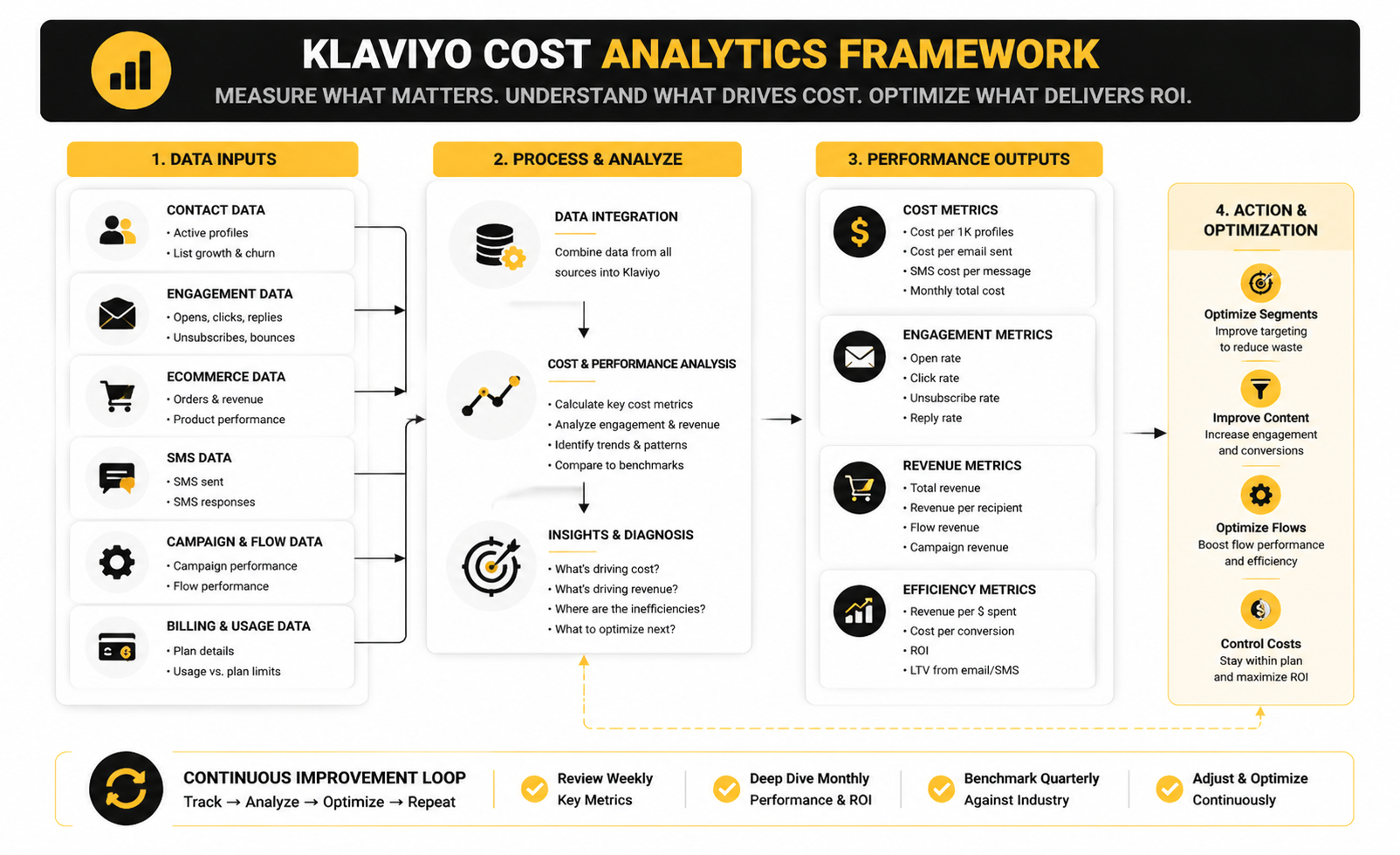
Understanding the numbers behind your Klaviyo usage is essential to managing costs effectively. The platform provides detailed analytics that go beyond just total spend, helping you align investment with performance. Metrics like open rates, click-through rates, and revenue per recipient reveal which segments and campaigns deliver the most value.
Key Benchmarks to Monitor
- Subscriber Count vs. Cost: Klaviyo charges based on the number of contacts, making it critical to clean inactive subscribers. Maintaining a lean list ensures your cost per active contact remains optimized.
- Flow Performance: Automated flows should be evaluated for conversion rates. Low-performing flows may indicate a need for content tweaks or better segmentation, directly impacting ROI.
- Campaign Engagement: Track which campaigns generate the highest click-to-conversion rates. Campaign-level insights allow you to allocate budget toward the most profitable messaging.
Interpreting Data for Action
The analytics are only valuable if they drive decisions. Use performance signals to:
- Adjust segment criteria to focus on high-value customers.
- Refine email timing and frequency based on engagement patterns.
- Reallocate budget from underperforming campaigns to high-performing flows.
By continuously measuring and acting on these data points, you can ensure that your Klaviyo spend is justified and that every dollar contributes to meaningful growth.
Klaviyo Cost Ecosystem and FAQ
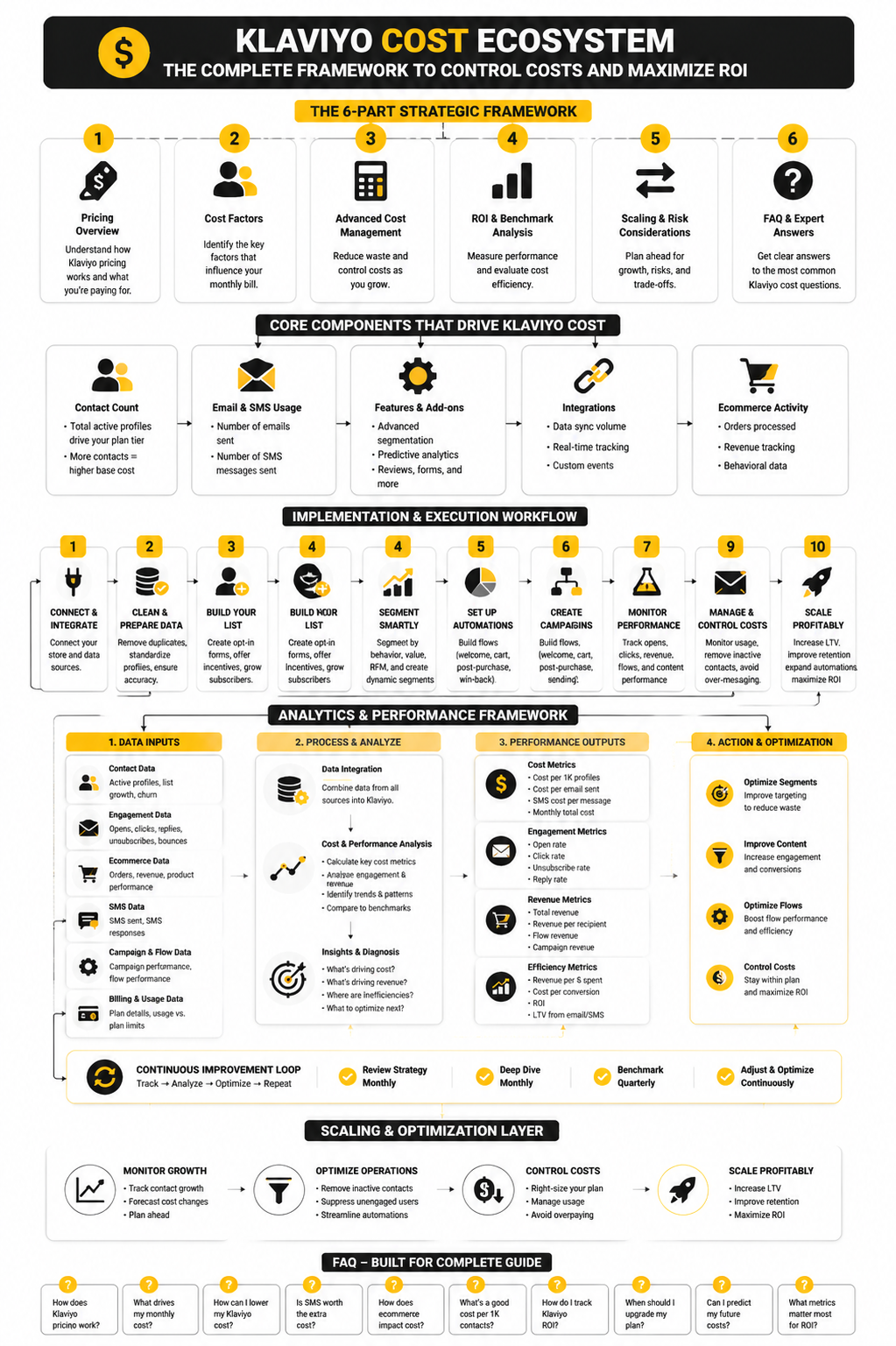
FAQ - Built for Complete Guide
1. What determines Klaviyo’s pricing?
Klaviyo pricing is primarily based on the number of active contacts in your account and the volume of emails or SMS messages you send. Additional features or integrations can also influence the total cost.
2. Is there a free plan for Klaviyo?
Yes, Klaviyo offers a free plan for up to 250 contacts and 500 email sends per month. This plan is ideal for testing features or small-scale campaigns before committing to a paid plan.
3. How much does the basic paid plan cost?
The paid plan starts at around $20 per month for small lists but scales with the number of contacts. Costs increase incrementally as your list grows or if you add SMS marketing.
4. How do SMS messages affect pricing?
SMS marketing is billed separately, usually based on a per-message rate. Sending large volumes of SMS can significantly increase your monthly Klaviyo bill, so monitoring usage is key.
5. Can I reduce costs by cleaning my email list?
Absolutely. Removing inactive or unengaged subscribers reduces the number of active contacts, directly lowering your monthly subscription cost while improving overall campaign effectiveness.
6. Are there hidden fees in Klaviyo?
There are no hidden fees. Costs are transparent based on active contacts, email sends, and optional SMS. However, exceeding your plan’s limits can result in overage charges.
7. How does segmentation impact cost?
Segmentation itself does not add costs, but more complex segments can increase the number of targeted sends, indirectly affecting your email volume and associated costs.
8. Is enterprise pricing available?
Yes, Klaviyo offers custom enterprise plans with advanced features, priority support, and higher send limits. Pricing is negotiated individually based on business needs.
9. How does Klaviyo compare to other platforms on cost?
Klaviyo tends to be more expensive than basic email marketing tools due to its advanced automation, analytics, and integration capabilities. ROI should be evaluated based on revenue impact rather than just monthly fees.
10. Can costs be offset with ROI improvements?
Yes. Optimized campaigns, automation flows, and segmentation can drive higher revenue per subscriber, effectively offsetting higher subscription costs and improving ROI over time.
11. How often should I review my plan?
Regularly reviewing your plan—quarterly or when your contact list grows significantly—helps ensure you’re not overpaying and that your account configuration aligns with your marketing goals.
12. Are discounts available for annual subscriptions?
Yes, choosing annual billing can save around 15-20% compared to monthly payments, making it a cost-efficient option for committed users.
Explore 10K+ Remote Marketing Contracts on MarkeWork.com
Most marketers spend too much time chasing clients, competing on crowded platforms, and losing a percentage of every project to middlemen.
MarkeWork gives you a better way. Browse thousands of remote marketing contracts and connect directly with companies desperate to hire skilled marketers like you, without platform commissions and without unnecessary gatekeepers.
If you're serious about finding better opportunities and keeping 100% of what you earn, invite readers to explore available contracts and create a profile for free at MarkeWork.com.