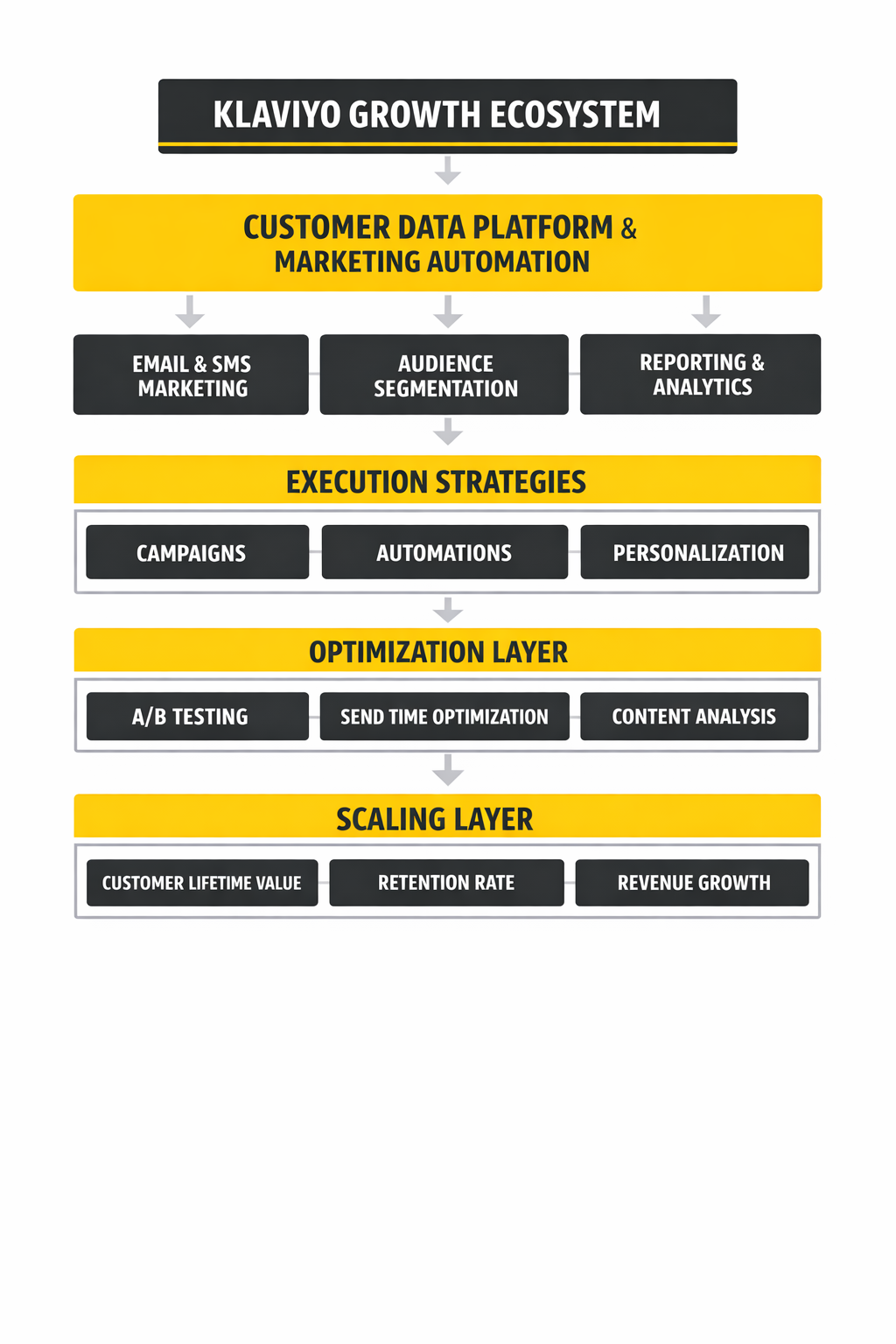
Klaviyo pricing looks simple at first glance. You can start free, the paid plans appear to scale with your business, and the official site positions the platform as a flexible way to combine email, SMS, analytics, and service in one stack. But the real question is not whether Klaviyo has a free plan or where the first paid tier starts. The real question is how fast your bill changes once your active profiles, sends, and channel mix start moving. Klaviyo+1
That is why so many brands get tripped up here. Klaviyo is now serving more than 193,000 customers, and its own current pricing language leans heavily into multi-channel growth, including the claim that brands using email plus SMS see a 19% increase in GMV growth rate. Those benefits can be real, but they also make pricing decisions more important, because growth in profiles and message volume is exactly what pushes costs upward. investors.klaviyo.com+2
Article Outline
- What Klaviyo Pricing Looks Like in 2026
- Why Klaviyo Pricing Matters More Than It Seems
- The Klaviyo Pricing Framework Explained
- The Core Cost Drivers Behind Every Plan
- How to Forecast Your Real Monthly Klaviyo Bill
- How to Keep Klaviyo Costs Under Control Without Killing Growth
What Klaviyo Pricing Looks Like in 2026
At the top level, Klaviyo pricing starts with a free plan and then expands into paid options across marketing, analytics, service, and enterprise. The free tier currently includes up to 250 active profiles, 500 email sends per month, and 150 mobile message credits per month, while paid pricing officially starts at $20 per month. That sounds approachable, and for very small brands it can be. The catch is that the free plan is really a testing ground, not a long-term operating model for a store with steady list growth. Klaviyo+1
What makes this pricing model different from flatter email tools is that Klaviyo is not just charging for the right to log in and send campaigns. Its billing increasingly follows business usage. The platform ties costs to active profiles, message volume, and product mix, which means two brands with the same revenue can pay very different amounts depending on list hygiene, segmentation discipline, and how aggressively they use SMS. Klaviyo’s own help documentation makes that clear: email, mobile messaging, helpdesk, and customer agent products are handled as consumption-based products, while some others are priced by active profiles. Klaviyo Help Center+1
That distinction matters immediately because it changes how you should evaluate the platform. With Klaviyo pricing, you are not only choosing software. You are choosing a growth model where better retention and more channels can increase revenue, but the same growth levers can also increase software spend. That is not automatically bad, but it does mean you need to read the pricing logic before you judge the sticker price. Klaviyo Help Center+1
Why Klaviyo Pricing Matters More Than It Seems
Most articles about klaviyo pricing stop at screenshots of plan tiers. That misses the important part. The real risk is not that Klaviyo is confusing on day one. The real risk is that brands underestimate how active profiles, seasonal sending spikes, and SMS credits interact once the account is live for a few months. Klaviyo even introduced major billing changes effective February 18, 2025 to enforce closer alignment between active profile counts and plan levels, while also adding more flexible overage behavior. Klaviyo Help Center+1
This matters because active profiles are not the same thing as the number of people you think you market to. Klaviyo defines active profiles as messageable profiles, while suppressed, unsubscribed, and deleted profiles do not count toward active profile usage. That sounds generous, but it also means your actual bill depends heavily on whether your account is clean, whether old contacts are being suppressed correctly, and whether your team is actively managing churn inside the database rather than just growing the top line. Klaviyo Help Center+2
There is also a strategic angle here. Klaviyo’s own 2026 Omnichannel Benchmark Report is based on data from more than 110,000 brands, and the company continues to post strong growth, including 32% full-year revenue growth in 2025. In plain English, brands are clearly willing to keep paying for this platform. The smart move is not to ask whether Klaviyo is expensive in the abstract. The smart move is to ask whether your way of using it will produce enough retention and repeat purchase revenue to justify the way the bill scales. Klaviyo+2
The Klaviyo Pricing Framework Explained
The easiest way to understand klaviyo pricing is to think of it as a three-layer framework. First, there is your profile base, which determines whether you still fit your current email plan and influences several other products. Second, there is your sending behavior, especially email volume and mobile messaging usage. Third, there is your product stack, because adding analytics, reviews, service products, or higher-touch support changes the total cost picture. Klaviyo Help Center+1
Klaviyo has also built in multiple ways for accounts to move when usage changes. Depending on the product, you may stop sending, auto-upgrade, or use flexible overages. Klaviyo says flexible sending is a one-time add-on for the next tier’s included capacity at your current unit rate, which can be useful for temporary spikes but is typically more expensive than simply moving to a larger plan if your growth is becoming permanent. Klaviyo Help Center+1
SMS adds another layer because mobile credits are not a flat universal unit. Klaviyo’s credit system varies by country, message type, and even message length, since longer SMS sends can split into multiple segments. That means the same SMS strategy can produce very different costs depending on where your customers are and how your campaigns are written. This is one of the biggest reasons many brands underestimate their real monthly Klaviyo spend. Klaviyo Help Center
The Core Cost Drivers Behind Every Plan
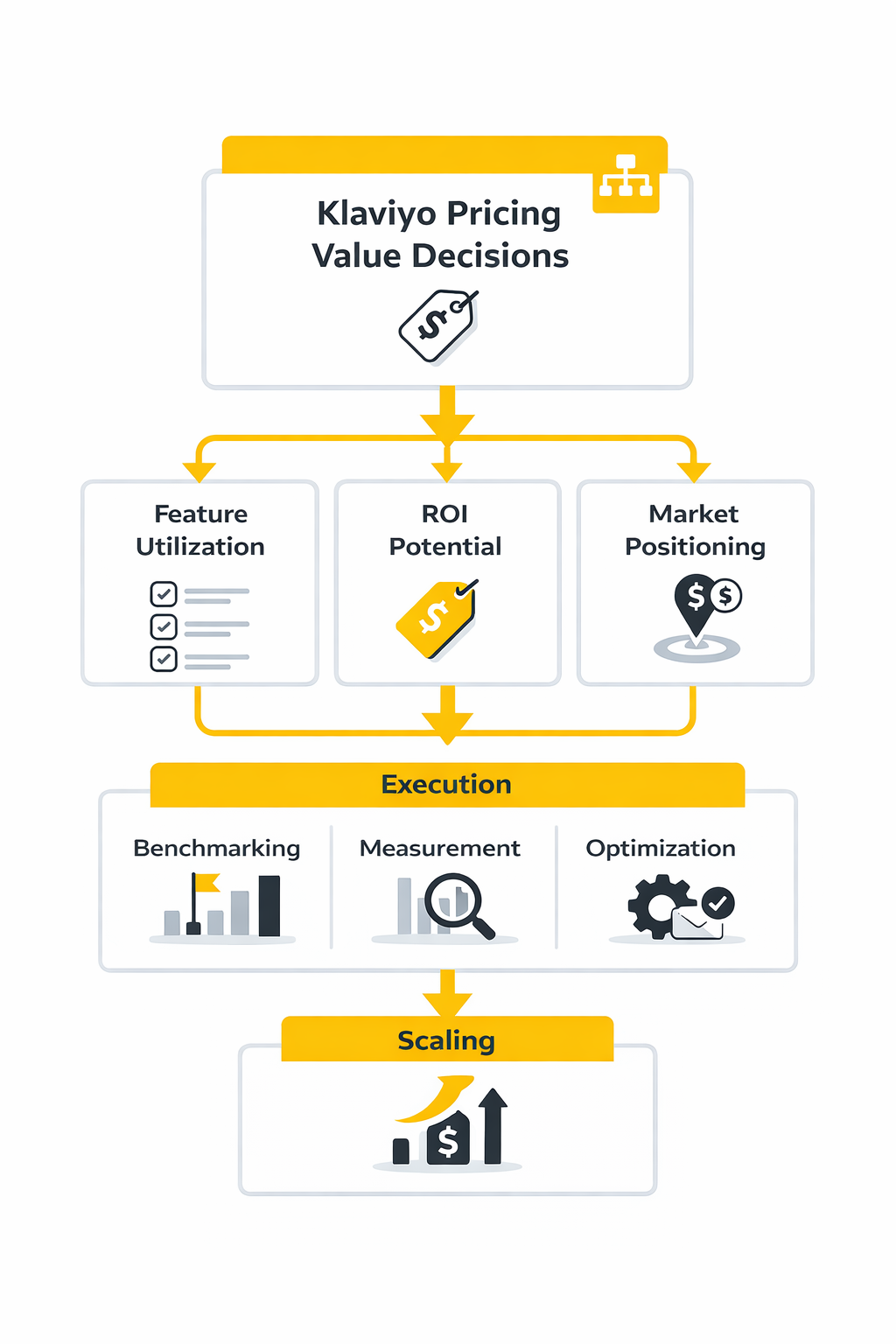
The first driver is active profiles, and this is where a lot of brands quietly lose control of klaviyo pricing. Klaviyo counts messageable people toward plan usage, while suppressed, unsubscribed, and deleted profiles do not count. That means a bloated database is not just messy. It can directly push you into a higher billing tier without giving you any extra revenue in return. (Klaviyo’s usage guide, profile management documentation)
The second driver is email sending behavior, even if your plan conversation starts with profiles. Klaviyo’s billing system now blends profile limits with message usage across products, and the company’s own billing documentation makes clear that overages, plan upgrades, and product-specific rules depend on how much you actually send. In practice, that means a store with disciplined campaigns and strong automation can get more value from the same plan than a store blasting broad sends to weak segments. (billing overview, February 2025 billing change FAQ)
The third driver is SMS complexity, which is where estimates often break. Klaviyo does not treat every text as one neat, fixed unit. Credits vary by country, carrier-related rules, and message length, and once a text runs across multiple segments, your cost can jump faster than expected. Klaviyo’s own mobile credit documentation shows the formula multiplies credits by recipients and message segments, which is exactly why sloppy copywriting can become a budget problem. (mobile credit system guide, SMS message construction guide, multinational SMS sending basics)
The fourth driver is your product mix inside Klaviyo. Once you move beyond basic email into SMS, analytics, customer hub, reviews, or service tools, klaviyo pricing stops being one line item and starts becoming a stack. Klaviyo explicitly separates products that are priced by active profiles from products that are priced by usage, so the more you centralize inside the ecosystem, the more important forecasting becomes. (official pricing page, billing documentation)
Active Profiles Are the Lever Most Teams Underestimate
This is the part that looks boring until the invoice lands. A profile sitting in your account feels harmless, especially if that person is not opening emails anymore, but inactive records still matter when they remain messageable. If you have weak suppression rules, poor list-cleaning habits, or no sunset process at all, you can end up paying for audience size that no longer behaves like an audience. (understanding active profile usage, understanding active email profiles)
Klaviyo’s own deliverability guidance points in the same direction. The platform recommends excluding unengaged contacts from most sends and warns that repeated emailing to disengaged people damages sender reputation. That is a performance issue, but it is also a cost issue, because bad list hygiene makes you pay more to get worse results. (list cleaning guide, deliverability overview, sending schedule guidance)
This is where disciplined operators win. They do not obsess over the lowest advertised plan. They focus on keeping only genuinely marketable profiles active, which improves open rates, reduces wasted sends, and slows unnecessary pricing jumps. That is not glamorous, but it is one of the cleanest ways to control klaviyo pricing without sacrificing growth. (email deliverability best practices, suppression management documentation)
SMS Can Distort Your Budget Faster Than Email
Email usually scales in a way most ecommerce teams understand. SMS is different because the pricing math is more sensitive to execution mistakes. Klaviyo notes that credits vary by destination country, and message segmentation changes the total cost, so a campaign that looks cheap in a quick estimate can become significantly more expensive once it spans multiple markets or uses longer copy. (SMS settings guide, mobile credit system guide)
Character count matters more than people think. Standard SMS commonly allows 160 characters, but Klaviyo notes that special characters or emojis can reduce that threshold to 70 characters, while multipart texts create additional segments and therefore additional cost. In plain English, a slightly too-clever message can cost materially more than a short, clean one. (billing details, SMS/MMS crafting guide)
That does not mean SMS is a bad bet. It means you need tighter controls. Segment by country, watch segment length before every send, and measure ROI at the campaign level instead of assuming all SMS revenue is automatically worth the credits. Brands that want a lighter alternative while they validate list economics sometimes compare Klaviyo against tools like Brevo or Moosend, especially when they are not yet using deep customer data for high-value flows.
How to Forecast Your Real Monthly Klaviyo Bill
A realistic forecast starts with one rule: do not price Klaviyo off the homepage alone. The headline entry point is useful for orientation, but it does not tell you what happens after your list grows, your engagement splits between strong and weak segments, or your SMS campaigns start spanning countries. The better approach is to model cost using active profiles, expected send frequency, and channel mix together. (official pricing page, how billing works)
Start with your true active database, not your total historical contact count. Klaviyo’s usage documentation makes the distinction clear, and that distinction changes everything. If your store has 40,000 profiles in the platform but only 24,000 should realistically remain messageable, then the bill you should forecast is based on the cleaner number, not the vanity number. (usage documentation, suppressed profile explanation)
Then estimate email pressure by asking how often you actually send campaigns and how many automations are live. This matters because a store running one newsletter a week is living in a different pricing reality from a store running campaigns, replenishment reminders, browse abandonment, cart recovery, post-purchase flows, and win-back sequences all at once. A big automation library can be a profit engine, but only if the revenue per recipient supports the added cost structure. (billing overview, email benchmarks, ecommerce email benchmarks)
The performance side is worth paying attention to because the upside is real. Klaviyo’s latest benchmark pages show average campaign revenue per recipient around $0.32, while the top 10% of campaigns reach around $0.97. On the automation side, abandoned cart flows in some higher-ticket segments can reach much stronger returns, with Klaviyo highlighting results as high as $14.14 revenue per recipient. Those numbers do not guarantee your outcome, but they do show why some brands tolerate higher platform costs when the system is implemented properly.
A Practical Forecasting Framework
Use a simple forecasting model and keep it honest:
- Count the active profiles you truly want to market to over the next 90 days.
- Estimate campaign frequency per month by segment, not by total list.
- Estimate flow volume from live automations, especially welcome, cart, browse, and post-purchase.
- Separate SMS by country and check likely segment counts before estimating credits.
- Add a buffer for seasonal spikes, because temporary overages are rarely the cheapest version of growth.
This framework matters because Klaviyo can auto-adjust billing behavior depending on product and usage. The platform’s billing documentation explains that some products upgrade or downgrade automatically based on active profiles, while flexible sending can apply in certain situations when you exceed included capacity. That means forecasting is not optional admin work. It is how you avoid being surprised by a bill that technically followed the rules. (how billing works, billing change FAQ)
The key is to forecast from behavior, not hope. If you know you are about to launch international SMS, run more campaigns before peak season, or expand retention flows, your future Klaviyo bill is already starting to form. Smart teams price that future version of the account before they commit to the strategy, not after.
How to Keep Klaviyo Costs Under Control Without Killing Growth
This is where klaviyo pricing stops being a billing topic and becomes an operating discipline. Most brands do not get into trouble because the platform is secretly charging them random fees. They get into trouble because they let list growth, send volume, and channel expansion happen without any process for deciding what deserves to stay active and what should be cut. (Klaviyo billing works this way, plan changes can happen as usage changes)
The good news is that cost control does not require gutting your retention engine. In fact, the opposite is usually true. Klaviyo’s latest benchmark material shows that flows generate an outsized share of email revenue relative to their share of send volume, which means tighter automation and cleaner targeting can improve efficiency at the same time. One recent Klaviyo benchmark summary says email flows generated nearly 41% of email revenue from just 5.3% of sends. That is exactly the kind of signal smart operators pay attention to.
Start With Profile Hygiene, Not Discount Hunting
The cheapest way to lower klaviyo pricing is often not switching tools. It is cleaning the account you already have. Klaviyo’s own documentation is blunt about active profiles: messageable profiles count, while suppressed and unsubscribed profiles do not. So if your team keeps dead weight inside the messageable pool, you are paying premium software rates for people who are no longer participating in the business. (active profile usage guide, suppression and profile state documentation)
This is also one of those rare cases where cost savings and deliverability improvement point in the same direction. Klaviyo recommends suppressing unengaged contacts and limiting sends to people who still show signs of interest, because weak engagement hurts inbox placement over time. That means every cleanup decision has a double payoff: you stop wasting money on extra profiles, and you improve the odds that the right people actually see your campaigns. (list cleaning best practices, deliverability overview)
The practical move is simple. Build a recurring review process for unengaged segments, suppress contacts that have clearly aged out, and stop treating total list size like a vanity KPI. Bigger is not better when those extra names are inflating your bill and dragging down performance.
Shift Revenue Work Toward Flows and Away From Unfocused Campaigns
Campaigns matter, but they are also where a lot of wasted spend hides. When brands get nervous about growth, they often send more broadcasts to broader groups and hope volume creates revenue. That can work for a short burst, but it usually creates a messy version of klaviyo pricing where you pay more to produce weaker engagement. Klaviyo’s benchmarks keep showing the same pattern: automated lifecycle messages tend to outperform generic sends because they match customer intent more closely. (2026 email benchmarks, ecommerce benchmark report)
The strongest example is still lifecycle automation. Klaviyo highlights abandoned cart performance as one of the highest-return flow categories, and its small business email marketing material points to an average abandoned cart revenue per recipient of $3.07. That does not mean every store should reduce campaigns to almost zero. It means the first dollars of effort should go into the flows that keep earning even when you are not manually sending another promotion.
A smarter operating mix looks like this:
- Keep campaigns focused on launches, promotions, and true merchandising moments.
- Let welcome, cart, browse, post-purchase, replenishment, and win-back flows do the heavy retention work.
- Review revenue per recipient by message type, not just total attributed revenue.
- Cut broad sends that look busy but contribute little to margin.
Build a Cost-Control Process Your Team Can Actually Run
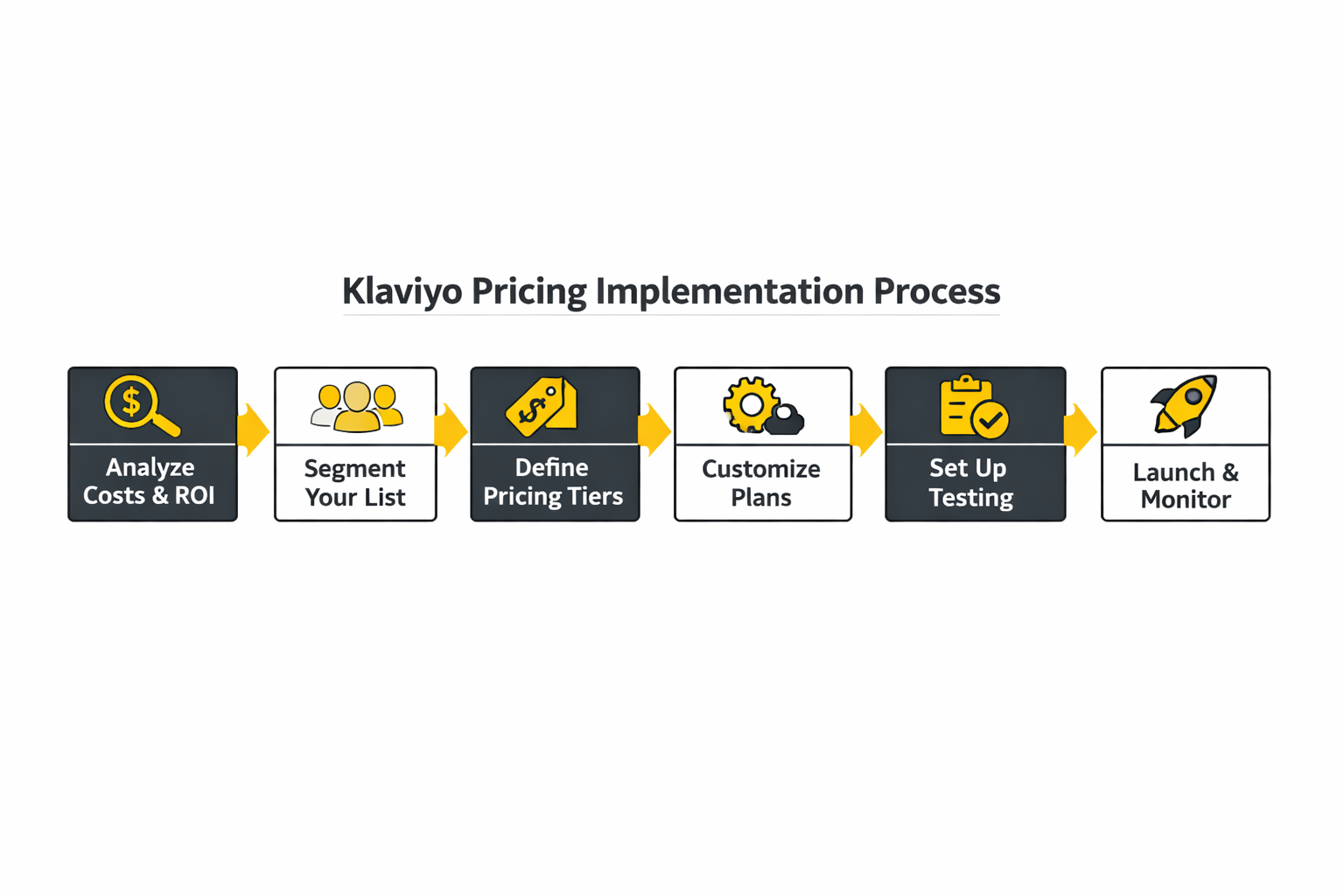
The mistake here is making cost control too theoretical. You do not need a giant finance model before you can improve klaviyo pricing decisions. You need a repeatable process that forces the team to inspect the three things that move the bill fastest: active profiles, sending behavior, and SMS credits. Klaviyo’s billing rules are stable enough that once you understand those levers, most invoice surprises stop being surprises. (billing overview, billing changes FAQ)
A practical monthly process looks like this:
- Review active profile growth versus revenue growth.
- Check whether low-engagement profiles should still remain messageable.
- Compare campaign revenue per recipient against flow revenue per recipient.
- Audit SMS segment length and credit usage by country.
- Decide whether the current plan still matches the next 60 to 90 days, not just the current week.
That last point matters a lot. Klaviyo allows manual plan changes, and some usage patterns can also trigger automatic movement or flexible sending behavior depending on the product. So the right time to make a plan decision is before a known growth spike, not after it has already pushed you into a more expensive month. (change your plan in Klaviyo, how billing works)
Be Ruthless With SMS Execution
SMS can be worth it, but only when it is managed tightly. Klaviyo’s mobile credit system is usage-based, and the total credits required depend on recipient count, destination, and the number of message segments. That means one sloppy send can cost far more than the team expected, especially when longer copy, emojis, or multi-country targeting push messages into extra segments. (mobile credit system, SMS message construction guide, international SMS basics)
The fix is not complicated, but it does require discipline. Keep SMS messages short, avoid unnecessary characters that shrink segment thresholds, split audiences by geography before forecasting, and judge every campaign by profit contribution rather than vanity click metrics. If a text message is not strong enough to justify the credit burn, it should not go out.
This is also where some smaller brands pause and compare lighter alternatives before fully committing to deeper Klaviyo usage. If your business is still validating retention economics and does not yet need the full data-heavy approach, a platform like Brevo or Moosend can be a reasonable benchmark against your current setup. But if you are already running serious ecommerce lifecycle marketing, the better move is usually not escaping Klaviyo pricing. It is learning to operate it properly.
Match the Platform to Your Business Stage
Not every store should use Klaviyo the same way. A young brand with a small list and limited flows should be extremely careful about overbuilding a stack it cannot yet monetize. A more mature brand with repeat purchase behavior, meaningful segmentation, and enough traffic to feed automations can often justify a higher bill because the retention system is doing real work. Klaviyo’s customer growth numbers and benchmark ecosystem show clearly that large numbers of brands are still investing in this model, but that does not mean every brand should copy the same setup on day one. (over 193,000 customers at the end of 2025, peer benchmark positioning)
This is where being honest helps. If your business barely sends, rarely segments, and has weak first-party data, then premium lifecycle tooling will feel expensive because you are not using the engine. If your store already has enough traffic and customer behavior to support targeted flows, retention campaigns, and channel coordination, then klaviyo pricing starts looking less like overhead and more like leverage.
The point is not to pick the cheapest software. The point is to make sure the plan you are paying for matches the maturity of the machine you are actually running.
What the Numbers Really Say About Klaviyo Pricing
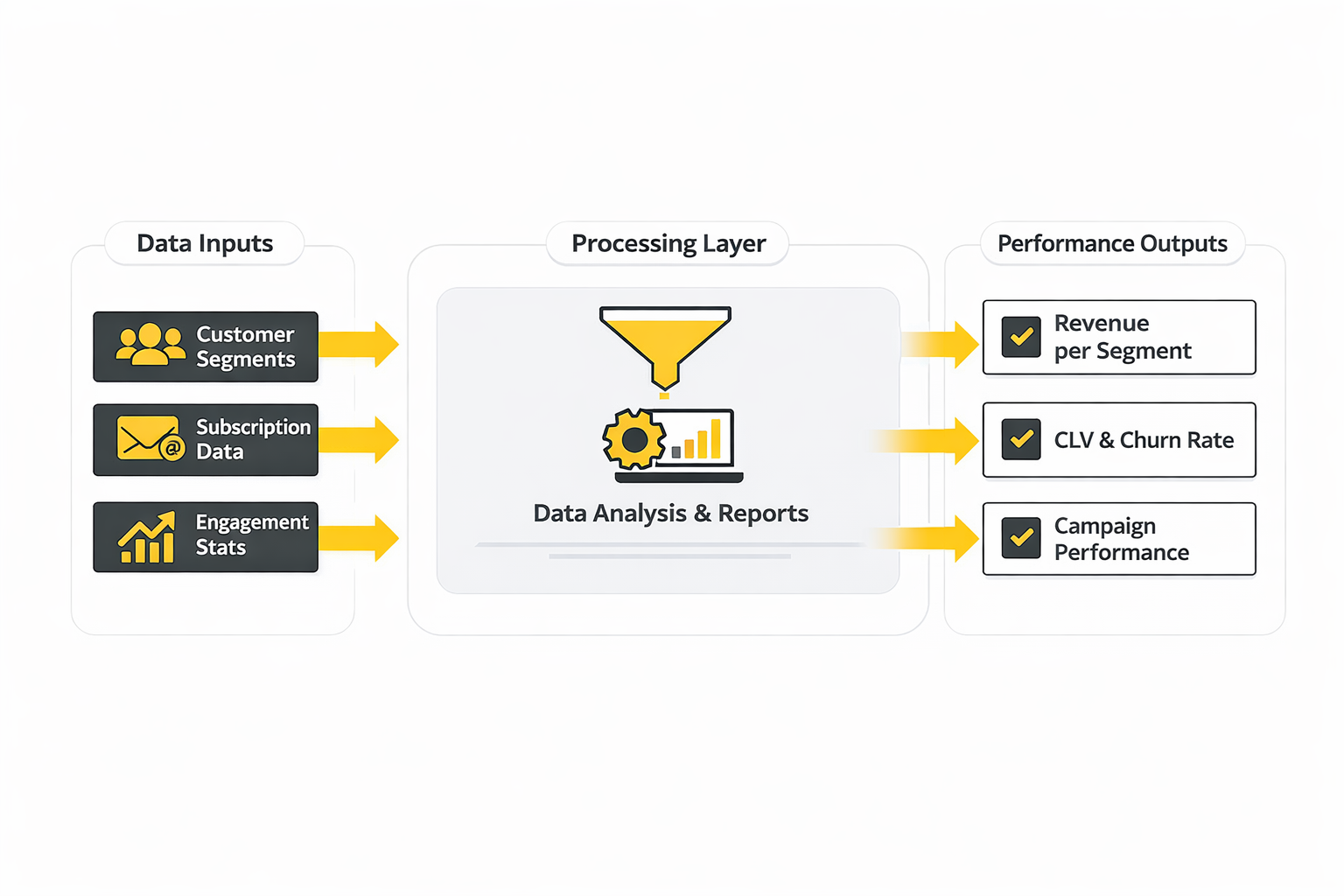
A lot of coverage around klaviyo pricing gets stuck at plan tables. That is useful for orientation, but it tells you almost nothing about whether the spend is paying off. The smarter way to evaluate the platform is to connect cost with performance signals that actually matter: revenue per recipient, placed order rate, flow efficiency, list quality, and SMS profitability. Once you do that, the pricing conversation becomes much clearer.
The first big signal is scale. Klaviyo says its 2026 email marketing benchmarks are based on more than 183,000 customers, while the company reported more than 193,000 customers at the end of 2025. That matters because the benchmark base is not tiny or niche. It gives you a much better lens for judging whether your own retention engine is healthy enough to justify your current Klaviyo bill.
Just as important, Klaviyo’s business keeps expanding. The company reported 32% full-year revenue growth in 2025, reaching $1.234 billion. That does not prove Klaviyo pricing is right for every brand, but it does show the market is still rewarding the platform at scale. In practical terms, brands keep paying because enough of them are getting economic value out of the system.
Revenue Per Recipient Is the Metric That Changes the Conversation
If you only watch opens and clicks, you can fool yourself very easily. Those numbers can move in the right direction while the actual economics stay mediocre. Revenue per recipient is more useful because it pushes you to ask a tougher question: how much money does each send actually create relative to what it costs to maintain the list, run the tool, and expand volume?
Klaviyo’s current benchmark pages show that the average email campaign generates about $0.10 revenue per recipient in one benchmark view, while another current benchmark summary shows average campaign revenue per recipient around $0.32. The difference is a reminder not to compare random stats without context. Benchmark sets can vary by dataset, geography, timeframe, and the way Klaviyo packages results, which is exactly why you should focus less on grabbing a single vanity number and more on comparing your own performance against the right segment and use case.
That said, the directional lesson is extremely clear. Klaviyo repeatedly shows that flows outperform campaigns by a wide margin. Its automation and benchmark content says automated flows can generate up to 30x more revenue per recipient than traditional campaigns, and current abandoned cart data shows this category remains the standout performer.
The Benchmarks That Actually Matter
The most useful benchmark in this whole conversation may be abandoned cart performance. Klaviyo’s current abandoned cart benchmark page says abandoned cart flows drive an average $3.65 revenue per recipient and a 3.33% placed order rate. Other current Klaviyo materials show abandoned cart performance around $3.07 revenue per recipient in a different benchmark framing. Again, the exact number can shift depending on the dataset, but the pattern is stable: abandoned cart flows produce dramatically stronger economics than standard campaigns.
That matters for klaviyo pricing because it gives you a direct decision rule. If your account is getting more expensive, the first question should not be whether to panic about the bill. The first question should be whether your highest-intent flows are built well enough to monetize the added scale. If your abandoned cart, welcome, browse abandonment, and post-purchase systems are weak, a higher plan will feel painful. If those systems are sharp, a higher plan can still be rational because the additional profiles and sends are being turned into orders.
Klaviyo’s ecommerce benchmark material adds more context here. In one current dataset, brands with average order sizes between $100 and $200 saw average revenue per recipient of $7.01 for abandoned cart flows, $3.34 for welcome series, $1.95 for browse abandonment, and $0.84 for win-back. That is useful because it shows flow value is not evenly distributed. Some automation categories are real revenue engines. Others are still worth running, but they should not carry the same expectations.
Placed Order Rate Tells You Whether the Engine Is Working
Revenue per recipient is powerful, but it can get distorted by average order value. That is why placed order rate deserves equal attention. Klaviyo’s 2026 email benchmark update shows the average campaign placed order rate across industries is 0.16%, with the top 10% reaching 0.36%. This is a cleaner view of conversion efficiency because it tells you how often a send becomes an actual order, not just how much revenue happened to come through from bigger-ticket items.
For klaviyo pricing, this metric keeps you honest. If your list is growing and your bill is rising, but your placed order rate is flat or deteriorating, the problem usually is not the plan itself. The problem is that you are scaling an inefficient system. More profiles and more sends only help when the conversion mechanics are strong enough to support the extra spend.
This is also where segmentation proves its value. Klaviyo highlights a case where stronger segmentation produced a 42% month-over-month lift in email revenue per recipient and an 88% increase in SMS revenue per recipient. That is exactly the kind of improvement that can change the economics of a platform. The price may stay the same or even rise, but the output improves faster than the cost.
How to Interpret the Data Without Fooling Yourself
The mistake most teams make is chasing isolated metrics. A higher open rate feels good. A bigger list feels good. More sends can even feel productive. But those are weak signals on their own. The numbers only become useful when you read them together and ask what they imply about cost efficiency.
A better interpretation model looks like this:
- Revenue per recipient tells you whether each send is economically meaningful.
- Placed order rate tells you whether the message is actually converting.
- Active profile growth tells you whether the bill is likely to move.
- Flow share of revenue tells you whether automation is doing the heavy lifting.
- SMS credits and segment usage tell you whether texting is profitable or leaking margin.
When these signals line up, klaviyo pricing becomes much easier to judge. If active profiles are rising, flow revenue per recipient is healthy, and placed order rates are stable or improving, then a higher monthly bill may simply reflect a system that is scaling well. If active profiles are rising while conversion quality slips, the same bill increase is a warning sign.
Why Flow Share Matters More Than Raw Send Volume
One of the most telling current Klaviyo stats is that flows can produce outsized revenue from a very small share of total sends. Klaviyo recently summarized benchmark data showing that email flows generated nearly 41% of email revenue from only 5.3% of sends. That is a huge clue for operators trying to control cost.
It means the goal is not to maximize message count. The goal is to maximize message quality and intent alignment. If a tiny portion of your send volume is doing a massive share of the revenue work, then the obvious action is to strengthen that portion first before adding more broad campaigns that may bloat usage without delivering the same return.
This is one of the cleanest ways to make sense of klaviyo pricing in the real world. A store that relies mostly on weak campaigns will experience the platform as expensive faster than a store built around strong lifecycle automation. Same tool. Very different economics.
What Actions the Data Should Drive
The numbers should push you toward sharper decisions, not just more dashboards. If campaign revenue per recipient is soft, narrow your targeting instead of increasing frequency. If abandoned cart and welcome flows are underperforming benchmark ranges, fix those before worrying about advanced features. If SMS ROI is unclear, cut back until you can prove margin, not just clicks.
The data also argues for regular list discipline. Klaviyo’s billing framework is tied to active profiles and usage, so measurement is not just about marketing optimization. It is part of financial control. If you keep too many low-quality contacts in the messageable pool, you are not simply hurting engagement. You are changing the economics of the account.
That is the real takeaway from the statistics around klaviyo pricing. The platform is not cheap just because a plan table says one number, and it is not expensive just because your monthly bill rises. The only useful question is whether the account is turning additional spend into proportionally better outcomes. When the answer is yes, the pricing can make sense. When the answer is no, the data usually tells you where the leak is.
Advanced Tradeoffs Brands Miss Until the Bill Gets Bigger
Once you move past the early plan tiers, klaviyo pricing becomes less about the published starting price and more about how your operating model compounds cost. Klaviyo’s own billing logic is built around active profiles, messages sent, and product usage, which means growth can be efficient or messy depending on how you scale. The same system that rewards strong retention can also punish loose execution if you keep too many marginal profiles, send too broadly, or stack on products without a clear revenue job for each one. Klaviyo’s billing framework
There is a strategic tradeoff here that serious teams need to face directly. The more you centralize inside Klaviyo, the more useful your data model can become, because email, SMS, analytics, and service signals live closer together. But centralization also means your spend becomes more sensitive to one vendor’s pricing structure and upgrade rules. That can be worth it, especially when the system is actually producing leverage, but it should be a conscious decision rather than something that happens by drift. official pricing structure, 2025 annual results
The Real Scaling Risk Is Operational, Not Just Financial
A lot of teams assume the risk in klaviyo pricing is simply paying more each month. That is only half the story. The bigger risk is scaling a retention system that looks sophisticated on the surface while becoming less efficient underneath. If active profile counts rise faster than revenue per recipient, you are not really scaling well. You are just expanding the cost base.
Klaviyo gives you ways to monitor this, including an account usage view that tracks active profiles, emails sent, SMS credits, and plan changes across billing cycles. That is useful, but the dashboard alone does not protect you. Someone on the team still has to interpret the pattern and decide whether growth is healthy or whether the business is simply paying for more volume without enough lift in conversion quality. account usage tracking
This is why advanced operators stop treating billing as a finance-only problem. They bring merchandising, lifecycle, and paid acquisition into the same conversation. If paid media is flooding the database with weak subscribers, lifecycle marketing inherits the list bloat, and klaviyo pricing becomes the place where that upstream quality problem finally shows up in cash terms.
Attribution Can Make Expensive Tools Look Smarter Than They Are
Here is another uncomfortable truth. Klaviyo can be genuinely valuable and still be easy to over-credit. When teams look only at platform-attributed revenue, the tool can appear more profitable than the broader business reality supports, especially if there is overlap with paid retargeting, direct traffic, branded search, or repeat buyers who likely would have returned anyway.
That does not mean attribution inside Klaviyo is useless. It means you need two lenses. Use platform reporting to optimize messages and flows, but use a wider business lens to decide whether higher Klaviyo pricing is being justified by incremental revenue, not just claimed revenue. If your email and SMS reports look fantastic while total repeat purchase rate, contribution margin, or blended profitability stay flat, you have a measurement problem, not a pricing mystery.
Klaviyo itself makes the case for strong channel impact, including data points like email flows generating nearly 41% of revenue from just 5.3% of sends and the platform’s broader push toward unified customer engagement. That can absolutely be true and still require caution in interpretation. Great reporting should make you sharper, not more gullible.
Overages, Auto-Upgrades, and Flexible Sending Change the Math
A lot of brands still think about klaviyo pricing as if they will manually notice every threshold and calmly decide what to do next. In practice, billing behavior can move faster than that. Klaviyo lets customers choose message upgrade preferences such as automatic upgrades, flexible sending, or manual control, and those settings materially affect how usage spikes turn into spend. upgrade preference settings, manual billing and overage rules
This matters most around product launches, holiday peaks, and international expansion. A short-term spike might be worth absorbing through flexible sending. A sustained increase in list size or send volume usually deserves a more deliberate plan change. Teams that do not distinguish between those two situations often end up paying premium rates for what has quietly become their normal operating level.
The right move is not to fear these billing tools. It is to understand what they are for. Automatic upgrades reduce friction. Flexible sending can smooth temporary bursts. Manual control gives finance tighter guardrails. The expensive version is not any single option by itself. The expensive version is using the wrong one for the growth pattern you actually have.
When Klaviyo Pricing Makes Sense and When It Does Not
Klaviyo pricing makes the most sense when a business has enough behavioral data, traffic volume, and repeat purchase potential to fuel segmentation and automation properly. If the store has meaningful catalog depth, a real lifecycle program, and enough customer intent signals to personalize messaging, the platform can act like an amplifier. In that environment, a rising bill may simply reflect a machine that is monetizing more customer relationships well.
It makes far less sense when the business is still running mostly generic newsletters, weak flows, and broad promotional blasts. In that situation, the software can feel expensive because the business has not built the operating system needed to extract value from it. The platform is capable of advanced work, but capability alone does not create ROI. Execution does.
That is why some smaller teams compare Klaviyo against simpler options while their retention model is still immature. A tool like Brevo or Moosend can be a fair reference point when you need more basic lifecycle coverage at lower complexity. But once segmentation depth, first-party data, and automation maturity start compounding, the better question is usually not whether Klaviyo is expensive. It is whether your team is good enough yet to use what you are paying for.
The Expert Test for a Healthy Klaviyo Account
If you want a clean way to judge whether your current Klaviyo spend is justified, ask five harder questions than most teams ask:
- Is active profile growth staying proportional to revenue growth?
- Are flows doing the majority of the profit-heavy retention work?
- Is SMS being judged by contribution margin, not just top-line attributed revenue?
- Are upgrade settings aligned with real usage patterns instead of left on autopilot?
- Can the team explain why each paid product inside the stack exists?
If the answers are strong, higher klaviyo pricing may be a sign of traction rather than waste. If the answers are fuzzy, the bill is usually exposing deeper operating issues. That is actually useful. A pricing system tied closely to usage forces you to confront whether the business is building a sharper customer engine or just buying more software around the same old habits.
The point of all this is not to make Klaviyo look cheap or expensive. It is to make the decision sharper. When the account is disciplined, benchmark-aware, and built around real customer intent, the pricing can be completely rational. When the account is bloated, loosely managed, and overconfident in its own attribution, the same pricing structure will feel much heavier very quickly.
FAQ About Klaviyo Pricing
Is Klaviyo pricing based on contacts or emails?
Klaviyo pricing is not just a flat “contacts only” model. The platform ties billing to active profiles and, depending on the product, to usage such as emails or mobile message credits. That matters because your cost can rise from list growth, heavier sending, or a broader product stack even if your basic marketing workflow has not changed much on the surface. Klaviyo pricing, how billing works
What counts as an active profile in Klaviyo?
An active profile is a messageable profile. Klaviyo’s help documentation explains that suppressed, unsubscribed, and deleted profiles do not count toward active profile usage, which is why list hygiene has such a direct effect on cost control. This is one of the biggest levers in the whole klaviyo pricing model because sloppy database management can push you into a higher tier without producing any extra revenue. active profile usage
Does Klaviyo have a free plan?
Yes, and it is useful for testing the platform or getting a very small account off the ground. Klaviyo’s official pricing page says the free plan includes up to 250 active profiles, 500 email sends per month, and 150 mobile message credits per month. That is enough to explore the platform, but not enough for a growing ecommerce brand that plans to run serious lifecycle marketing. official pricing page
What happens when you go over your Klaviyo limits?
That depends on your upgrade preferences and the product involved. Klaviyo lets users choose settings such as automatic upgrades, flexible sending, or manual control, so exceeding limits does not always play out the same way. This is exactly why teams should review billing settings before a promotion, launch, or seasonal traffic spike instead of waiting until after the usage surge arrives. upgrade preferences, how to change a plan
Is Klaviyo expensive for small businesses?
It can feel expensive if a small business is not using segmentation, automation, or customer data deeply enough to generate return. It can also be perfectly reasonable when the business has enough traffic and repeat purchase behavior to make flows work hard. The better question is not whether the platform is cheap. The better question is whether your current business stage can turn Klaviyo’s capabilities into enough retention revenue to justify the bill.
Why do some brands feel their Klaviyo bill rises faster than expected?
Usually because more than one cost driver is moving at the same time. Active profiles increase, send volume climbs, SMS campaigns get longer or expand internationally, and suddenly the account no longer behaves like the original estimate. Klaviyo’s billing model is transparent once you understand it, but it is still easy to underestimate when multiple growth levers are being pulled at once. billing overview, mobile credit system
Is SMS inside Klaviyo worth the extra cost?
Sometimes yes, but only when it is managed with discipline. Klaviyo’s current benchmark materials show SMS can be a strong revenue channel, and one benchmark view notes SMS revenue per recipient can even exceed average email RPR in some ecommerce contexts. The catch is that SMS credits depend on destination, length, and segmentation, so the channel needs tighter execution than many teams expect. email and SMS benchmark view, SMS message construction
Which metric matters most when judging whether Klaviyo pricing is worth it?
Revenue per recipient is one of the most useful metrics because it connects message performance to real money instead of surface-level engagement. Klaviyo’s own analytics content makes the case that revenue metrics tell you what to scale and what to cut, while opens and clicks are only part of the story. Pair that with placed order rate and active profile growth, and you get a much clearer picture of whether your spend is being justified. RPR guide, benchmarks reports overview
Do flows really make that much difference to ROI?
Yes, and this is one of the clearest patterns in Klaviyo’s benchmark ecosystem. Klaviyo recently highlighted that flows generated nearly 41% of email revenue from just 5.3% of sends, which tells you how powerful intent-based automation can be when it is built well. That matters for klaviyo pricing because strong flows can support a higher bill far more easily than broad campaigns with weak targeting. 2026 email marketing benchmarks
What is the most valuable flow type to prioritize first?
Abandoned cart remains the standout for most ecommerce brands. Klaviyo’s benchmark content shows abandoned cart flows averaging about $3.65 revenue per recipient and a 3.33% placed order rate in one current benchmark set, with other recent Klaviyo content showing similarly strong economics even when the exact number differs by dataset. That consistency is the point: if your abandoned cart setup is weak, you are probably leaving money on the table while worrying about the wrong part of your software bill. abandoned cart benchmark report, cart abandonment guide
Can cleaning your list actually reduce Klaviyo costs?
Yes, and often faster than people expect. If unengaged but still messageable contacts remain active in the account, they can contribute to higher profile-based pricing while also hurting deliverability. Cleaning the list is one of the rare moves that can improve cost efficiency and campaign performance at the same time. active profiles guide, list cleaning best practices
Should growing brands stay with Klaviyo or switch to a cheaper alternative?
That depends on maturity, not emotion. If the business is still basic in its retention strategy, with weak flows and minimal segmentation, comparing against lighter tools can make sense. A platform like Brevo, Moosend, or even funnel-led tools like Systeme.io may be more aligned with an earlier-stage operation. If the brand already depends on serious lifecycle orchestration and customer data depth, then switching purely to save money can end up costing more in lost performance.
How often should you review your Klaviyo setup from a pricing perspective?
Monthly is the minimum if the account is active and growing. Klaviyo gives visibility into usage and plan movement, but that only helps if someone reviews active profiles, message efficiency, SMS credits, and upgrade settings regularly. Waiting until a large invoice appears is not a pricing strategy. It is just delayed visibility. account usage guide, change your plan
What is the smartest final takeaway on Klaviyo pricing?
Treat klaviyo pricing as a performance system, not a software fee. The platform becomes expensive when the account is bloated, broad, and poorly managed. It becomes rational when the business has strong flows, disciplined segmentation, clear metrics, and enough repeat purchase potential to make the retention engine pay for itself.
Work With Professionals
Explore 10K+ Remote Marketing Contracts on MarkeWork.com
Most marketers spend too much time chasing clients, competing on crowded platforms, and losing a percentage of every project to middlemen.
MarkeWork gives you a better way. Browse thousands of remote marketing contracts and connect directly with companies desperate to hire skilled marketers like you, without platform commissions and without unnecessary gatekeepers.
If you're serious about finding better opportunities and keeping 100% of what you earn, explore available contracts and create a profile for free at MarkeWork.com.