

Most businesses do not hire lead generation companies because they love outsourcing. They do it because pipeline pressure gets real fast. Sales teams need qualified conversations now, internal marketing is already stretched, and the old playbook of buying a list and sending generic outreach is getting weaker every quarter.
That shift is not subtle. Recent B2B research shows buyers are often nearly 70% through their purchasing process before talking to sellers, and 81% have already chosen a preferred vendor before first contact with sales. Gartner has also found that 67% of B2B buyers prefer a rep-free experience, while Forrester reports that 86% of B2B purchases stall during the buying process. In plain English, lead generation still matters a lot, but the companies that do it well have changed their methods because the buyer has changed.
That is why this article is not just a list of agencies. It is a practical breakdown of what lead generation companies really do, where they fit, how their models differ, and how to tell the difference between a legitimate growth partner and a polished vendor with weak execution. If you are comparing providers, trying to fix top-of-funnel performance, or deciding whether to build in-house versus outsource, this framework will save you time and probably save you from an expensive mistake.
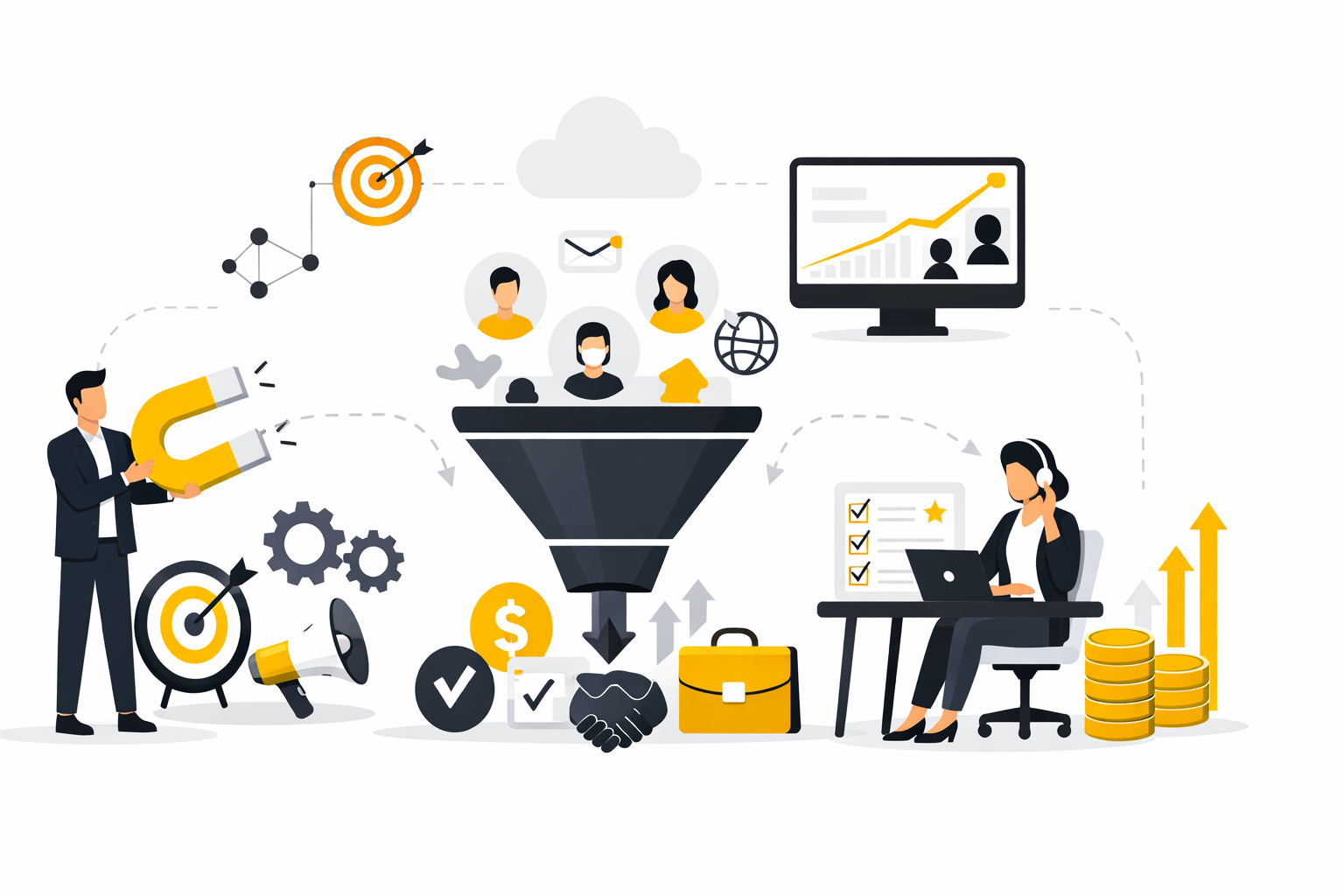
Article Outline
This article is structured to help you move from basic understanding to smart decision-making. We will start with what lead generation companies actually are and why businesses use them now, then move into the operating models behind the industry, the core components of a strong engagement, and the details that matter during implementation. The final section will focus on how to choose a provider without getting trapped by vanity metrics, bad-fit retainers, or lead volume that never turns into revenue.
- What Lead Generation Companies Actually Do
- Why Businesses Hire Lead Generation Companies Now
- The Main Types of Lead Generation Companies
- How to Evaluate a Lead Generation Partner
- What Professional Implementation Looks Like
- How to Choose the Right Company Without Wasting Budget
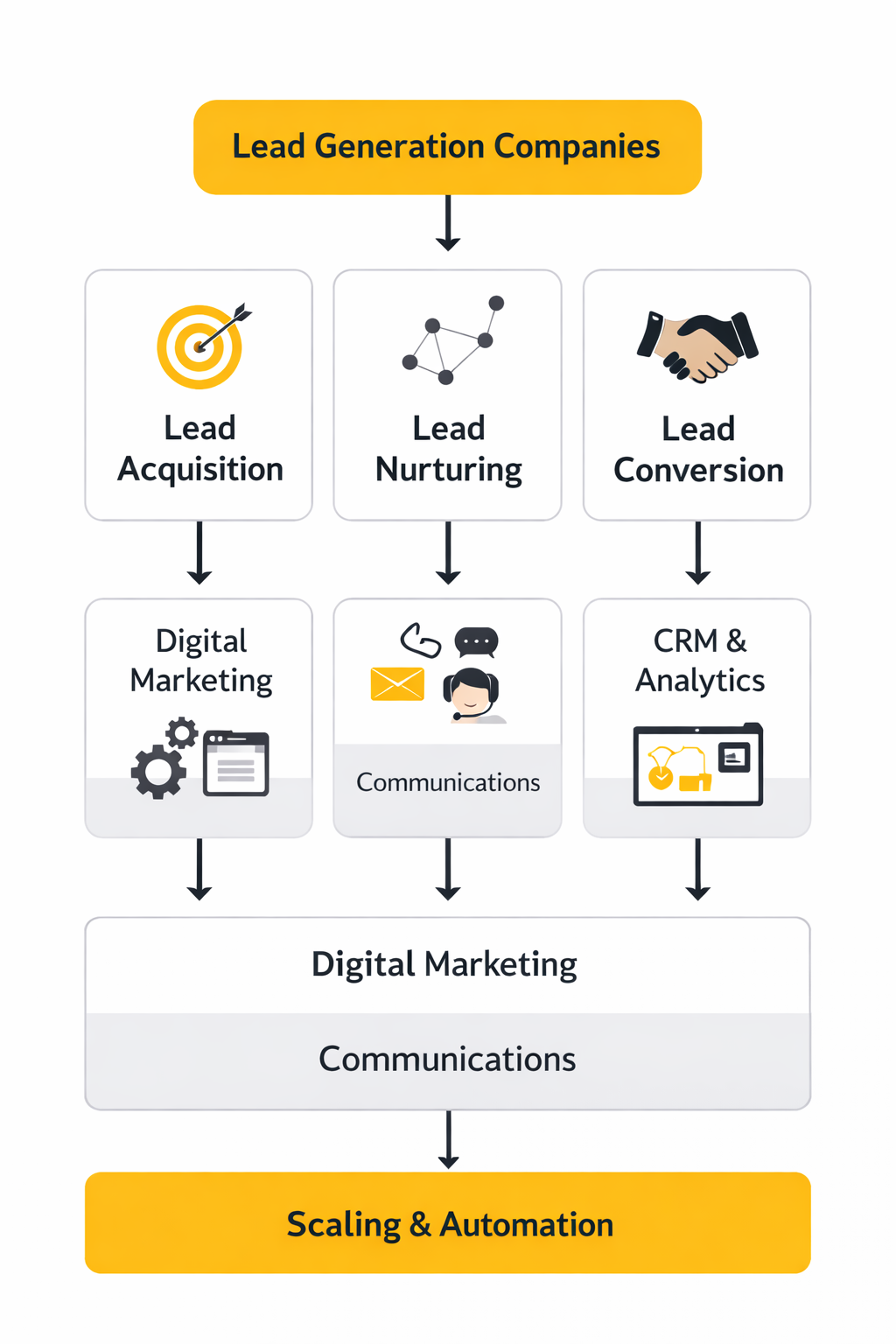
A good lead generation company should do more than fill a calendar. The right one should help you reach the right market, sharpen your message, improve conversion points, and create a cleaner path from first touch to qualified pipeline. That is the standard this article will use from start to finish.
What Lead Generation Companies Actually Do
Lead generation companies sit between market demand and the sales conversation. Their job is not simply to hand over a spreadsheet of names. The good ones build a system that identifies the right accounts, finds the right people inside those accounts, starts relevant outreach, captures intent signals, and moves interested prospects toward a meeting, demo, or qualified pipeline stage.
That sounds simple until you look at how much has to go right. Data quality has to be solid, the targeting logic has to match your ideal customer profile, the messaging has to speak to an actual business problem, and the handoff to sales has to happen before momentum disappears. If even one of those pieces is weak, a lead generation company can create activity without creating revenue, and that is where many businesses get burned.
The strongest lead generation companies usually operate across several layers at once. They combine list building, contact verification, outbound campaign management, inbound capture, appointment setting, CRM workflow support, and reporting. In more mature engagements, they also help shape landing pages, forms, email sequences, and routing logic because top-of-funnel performance depends on the full path, not just the first touch. Tools like ClickFunnels, Systeme.io, Brevo, and Fillout often show up in that stack because they support conversion points that many lead gen campaigns quietly depend on.
The Difference Between Leads, Meetings, and Pipeline
This matters more than most companies admit. A lead is usually just a contact or inquiry that meets minimum criteria. A meeting is stronger because it shows actual engagement, but even booked calls can be low quality if the fit is weak or the prospect had no real buying intent.
Pipeline is the number that forces honesty. If a lead generation company produces hundreds of contacts and dozens of meetings, but almost none turn into real opportunities, the campaign is not working in any serious business sense. That is exactly why smart operators track stage progression instead of celebrating raw volume, and why common B2B funnel benchmarks such as visitor-to-lead rates around 2% to 5%, lead-to-MQL rates around 20% to 35%, and MQL-to-SQL rates around 12% to 26% are useful only when tied to revenue outcomes.
A real partner should be willing to talk about contribution, not just output. That means looking at acceptance rates from sales, opportunity creation, show rates, close rates, and customer acquisition economics. HubSpot’s review of current CPL and CAC trends also makes the same broader point: lead costs are rising in many channels, so wasted leads are getting more expensive, not less as competition increases and acquisition efficiency becomes harder to maintain.
The Channels They Usually Manage
Most lead generation companies are not channel-agnostic in practice, even if they claim to be. They usually lean into one or two acquisition models and build services around those strengths. That is why you need to understand the operating model before signing anything.
Common channel responsibilities include:
- outbound email and multistep prospecting
- LinkedIn outreach and social selling support
- paid search and paid social lead capture
- landing page creation and funnel optimization
- content offers, webinars, and inbound conversion paths
- appointment setting and calendar qualification
- CRM cleanup, routing, and reporting workflows
The important thing is not whether a company offers all of these. The important thing is whether their channel mix fits how your buyers actually behave. In many B2B markets, buyers now self-educate long before they speak to anyone, with 6sense reporting that buyers are nearly 70% through the purchasing process before engaging sellers and 81% already have a preferred vendor by first contact. That changes how outbound, inbound, and remarketing need to work together.
Where the Best Firms Add Real Value
The best lead generation companies do not just execute tasks faster than your internal team. They compress the learning curve. They have already seen what happens when targeting is too broad, when the offer is too weak, when deliverability collapses, when SDRs over-qualify, and when marketing celebrates form fills that sales never wanted in the first place.
That experience can be valuable because the market has become less forgiving. In cold outreach, even strong programs often treat a 5% to 10% reply rate as good performance, and that number only matters if deliverability, contact accuracy, and positive-reply quality hold up. In other words, modern lead generation companies earn their keep by improving precision and process, not by blasting more messages into the void.
Why Businesses Hire Lead Generation Companies Now
Most companies start looking at lead generation companies when growth pressure collides with internal capacity limits. The board wants more pipeline, sales wants more qualified conversations, marketing is already carrying content, paid media, events, and reporting, and nobody has time to build a clean outbound engine from scratch. Outsourcing becomes attractive because it looks faster than hiring, training, tooling, and troubleshooting everything in-house.
But speed is only part of the reason. The deeper reason is that demand capture is harder now. Buyers research more independently, ignore generic outreach more aggressively, and expect tighter relevance when they finally engage. Recent buyer research points in the same direction: buyers now initiate first contact more than 80% of the time, and stalled deals remain a serious problem, with Forrester reporting that 86% of B2B purchases stall during the buying process. That puts more pressure on the early stages of targeting, qualification, and message-market fit.
Internal Teams Are Stretched Thin
A lot of companies still assume lead generation is one job. It is not. It is research, data sourcing, contact verification, copywriting, deliverability management, funnel design, follow-up logic, CRM hygiene, analytics, and sales coordination all stacked together. Asking one marketer or one SDR manager to own that entire system usually ends in patchy execution.
That is why outsourcing can make sense even for companies with decent internal teams. A specialist firm may already have the infrastructure, playbooks, and technical muscle to launch faster. This is especially true when you need supporting assets beyond outreach itself, such as faster landing pages, intake forms, automated routing, or scheduling layers built through tools like Cal.com, Moosend, or Copper.
There is also the simple reality of focus. In-house teams often get dragged into brand campaigns, product launches, partner co-marketing, reporting cycles, and executive requests. Lead generation companies are usually hired because someone wants one group waking up every day thinking about pipeline creation and almost nothing else.
Buyers Have Changed Faster Than Most Teams Have
This is the big one. Many internal teams are still running a 2018 playbook in a 2026 market. They rely on broad personas, weak nurture logic, and messaging that sounds polished but says nothing memorable.
That gap matters because buyer behavior has moved. 6sense’s buyer research shows not only that buyers are deep into the journey before sales engagement, but that 85% already have requirements defined before reaching out. On top of that, current survey coverage of B2B purchasing behavior continues to show a strong preference for low-friction, self-guided buying experiences, with Gartner’s recent findings highlighting the rise of rep-free preference in B2B buying as digital research becomes more dominant.
This changes what a lead generation company has to do well. It is not enough to get attention. They need to match timing, relevance, and credibility. That is why stronger firms spend more time on segmentation, buying signals, and offer structure than weaker firms do.
Companies Need Results Without Long Hiring Cycles
Hiring an internal outbound team looks clean on paper. In practice, it takes time to recruit, train, equip, and stabilize performance. Then you still need management, data providers, process documentation, QA, and analytics. If revenue pressure is immediate, that setup window can feel painfully long.
Lead generation companies offer a shortcut, at least in theory. They can provide a team, a process, and a tech stack without requiring the company to build every layer internally first. That is one reason outsourced providers remain appealing even as more businesses talk about owning their pipeline end to end.
The catch is obvious. A shortcut only helps if the provider is genuinely good. If the firm runs bad data, weak messaging, and shallow qualification, you have not saved time. You have just rented another layer of confusion.
The Economics Favor Specialization in Some Cases
For some businesses, outsourcing is not a compromise. It is the economically sensible choice. A niche SaaS company, regional service firm, consultancy, or early-stage B2B brand may not need a full in-house demand engine year-round, but it still needs a reliable way to generate qualified conversations.
That is where specialized providers can win. They spread tools, expertise, and process costs across multiple clients, which can make their service cheaper than building a full internal team too early. They can also plug into adjacent systems more quickly, whether that means building a lightweight nurture flow in Brevo, a simple conversion funnel in ClickFunnels, or handling social amplification with tools like Buffer when top-of-funnel content needs more reach.
Still, this only works when the business understands what it is buying. Lead generation companies are not magic. They are force multipliers when the offer is real, the market is defined, and the handoff to sales is disciplined. Without those conditions, even a talented provider will struggle to manufacture results out of thin air.
The Main Types of Lead Generation Companies
Not all lead generation companies solve the same problem, and this is where a lot of buyers get tripped up. Two firms can both promise more pipeline while using completely different channels, pricing models, and qualification standards. If you compare them as if they are interchangeable, you will almost certainly choose the wrong partner.
The easiest way to think about the market is by operating model. Some firms are outbound-heavy, some are inbound-first, some sit closer to performance marketing, and some work like outsourced SDR teams with process wrapped around prospecting. That mix matters because buyer behavior is now more fragmented, and many teams are running blended programs rather than relying on a single tactic, with Outreach reporting that 43% of teams use a hybrid model that combines inbound and outbound within the same function.
Outbound Prospecting Agencies
These are the firms most people picture first. They build target lists, source contacts, write outreach sequences, manage email domains and deliverability, and try to book meetings for your team. If your company needs conversations fast and already knows its ideal customer profile, this model can work well.
The upside is speed and focus. The downside is that outbound-only firms can overproduce activity while underproducing fit, especially if they use weak data or shallow personalization. That risk is not theoretical. Contact data degrades fast enough that many teams are effectively prospecting into decay, with widely cited industry benchmarks showing around 22.5% annual B2B data decay and newer market commentary continuing to describe 30% to 40% of B2B contact data becoming stale each year.
Inbound and Demand Generation Firms
These companies focus less on cold outreach and more on attracting interest through search, paid media, content, webinars, lead magnets, and conversion-focused landing pages. They are usually a better fit when buyers need more education before taking a meeting or when the brand already has some traffic that is being under-monetized.
This model tends to produce warmer intent, but it can move slower if the company has weak offers or low brand visibility. It also requires better conversion architecture than many businesses realize. That is one reason tools like ClickFunnels, Systeme.io, and Brevo can become part of the real performance story, because the handoff from ad or content click to qualified lead is where many campaigns quietly fall apart. That gap matters when median landing page conversion rates across large benchmark datasets still sit around 6.6% across industries, which means most traffic does not convert unless the page, offer, and follow-up are sharp.
Appointment Setting and Outsourced SDR Firms
This category overlaps with outbound, but it is more sales-development-led than campaign-led. These providers often assign reps or pod teams to manage prospecting, follow-up, calendar booking, and sometimes early qualification. In practice, they act like an external SDR function.
That can be useful if your internal team lacks bandwidth or process discipline. But this model creates one big question you need to answer up front: who owns quality control after the meeting is booked. If the provider is rewarded mainly for meetings, not accepted opportunities, they have an incentive to optimize for calendar volume instead of pipeline quality.
Paid Media Lead Generation Shops
These companies run search ads, social ads, retargeting, and funnel optimization with the goal of producing leads at an acceptable cost. They are usually stronger when there is existing demand in the market and the offer is clear enough to convert without long education cycles. They can work especially well in local services, transactional B2B, and categories where buyers already know what they want.
The danger here is obvious and expensive. Paid media can create the illusion of control because dashboards look clean, but cost efficiency can break quickly. WordStream’s latest benchmark coverage puts the average Google Ads cost per lead at about $70.11 in 2025, which is manageable only if lead quality, close rates, and margin support it.
ABM and Strategic Pipeline Partners
These are usually more selective firms. They focus on account-based marketing, intent data, segmentation, multichannel orchestration, and tighter alignment between sales and marketing. They are often a better fit for enterprise or higher-value B2B sales where the wrong meeting is not just annoying but costly.
This segment has grown because more teams are trying to improve precision instead of brute-force volume. That shift shows up in market research too, with the 2025 ABM Benchmark Survey highlighting that 71% of practitioners now use an ABM strategy and 40% are integrating it directly with demand generation. In other words, many businesses are no longer treating lead generation as a separate machine. They are trying to connect targeting, content, outreach, and opportunity creation into one system.
How to Evaluate a Lead Generation Partner
Once you understand the types, the next problem is evaluation. This is where polished sales decks can do real damage because almost every provider knows how to talk about pipeline, personalization, and growth. What separates strong lead generation companies from weak ones is not the language. It is the process behind the language.
A good evaluation framework forces the firm to get concrete. You want to know how they define a qualified lead, where the data comes from, how often it is refreshed, how messaging is tested, what happens when campaigns underperform, and how results are reported beyond vanity metrics. The market is clearly moving toward pipeline accountability, with recent B2B survey coverage showing that 52% of marketers rank qualified pipeline as their top priority. That means any serious partner should be able to discuss pipeline mechanics, not just awareness or activity.
Start With Their Targeting Logic
If the targeting is wrong, everything downstream gets polluted. You can have strong copy, polished landing pages, and great follow-up, but none of it will save a campaign built on weak account selection. This is why the first serious question should be about how the firm defines fit.
You want to hear specifics, not fluff. They should be able to explain firmographic filters, buyer roles, trigger signals, exclusions, and how they adapt segments after early feedback. If they talk about “reaching more people” before they talk about “reaching the right people,” that is a warning sign.
Pressure-Test the Data and Deliverability Layer
Many underperforming campaigns are not messaging problems at all. They are data and infrastructure problems wearing a messaging costume. Bad emails, aging records, wrong job titles, poor domain setup, and weak deliverability can tank outreach before the prospect ever sees the offer.
This part matters even more in outbound environments where small technical failures multiply fast. Strong cold email programs still treat bounce control, domain health, and reply quality as core operating metrics, and current benchmark coverage continues to place a good B2B reply rate in roughly the 5% to 10% range for focused campaigns. If a firm talks only about send volume and booked calls, they are skipping the part that keeps the whole engine alive.
Look for a Real Conversion System, Not Isolated Tactics
This is where evaluation becomes practical. A serious partner should be able to map the path from audience selection to conversation to pipeline stage. That includes list building, first touch, follow-up cadence, reply handling, qualification rules, scheduling flow, CRM entry, and reporting.
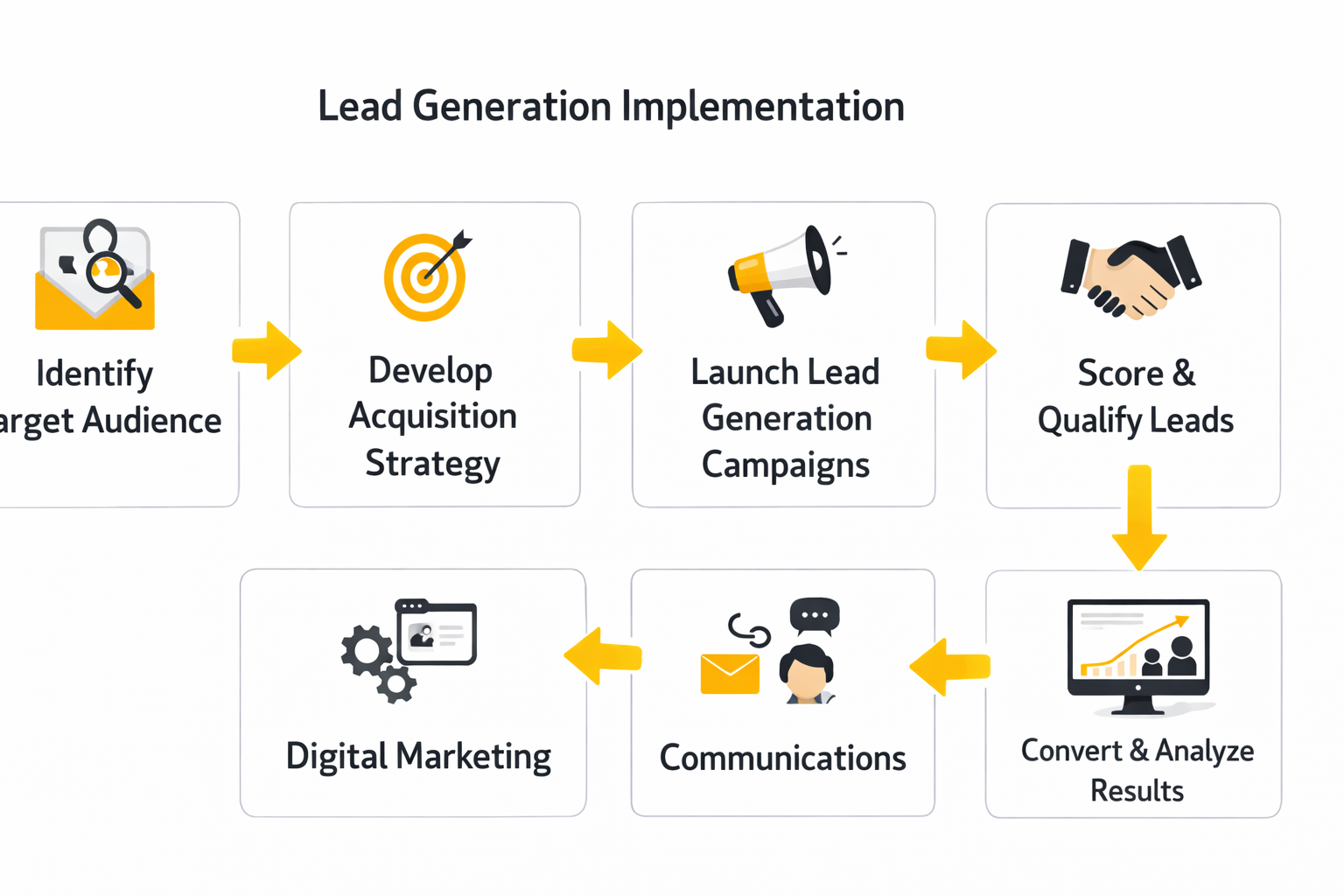
The easiest way to test this is to ask them to walk you through the execution process in order:
- Define the ideal customer profile and exclusions
- Build or validate account and contact lists
- Verify data quality and outreach infrastructure
- Create messaging angles and campaign variants
- Launch outreach or traffic campaigns in controlled batches
- Qualify responses with explicit criteria
- Route qualified prospects into calendar booking and CRM stages
- Review performance by accepted leads, meetings held, opportunities, and pipeline created
If they cannot explain the flow step by step, they probably do not control it tightly enough. That is not a minor issue. It usually means you are buying disconnected tasks instead of a working lead generation system.
Judge the Reporting by What It Leaves Out
Good reporting does not drown you in charts. It tells you what is working, what is failing, and what is changing next. That requires enough honesty to separate leading indicators from final business outcomes.
You should expect visibility into open rates only where they still matter, reply rates only where reply quality is clear, meetings only where show rates are strong, and leads only where acceptance criteria are obvious. Better firms will also connect campaign data to sales outcomes because that is where weak-fit volume gets exposed. The provider does not need perfect attribution to be useful, but they do need a disciplined view of what counts as progress and what does not.
Ask How They Improve the System After Launch
This is one of the best questions in the entire buying process. Lots of lead generation companies are decent at setup and weak at iteration. They can launch a campaign, but they do not really know how to diagnose what broke once live market feedback starts coming in.
The right answer should include testing rhythm, messaging revisions, list refinement, reply analysis, qualification feedback from sales, and offer adjustments where needed. That operational loop matters because modern lead generation is rarely solved on the first pass. The firms worth paying are the ones that treat early campaigns as live intelligence, not as a fixed template they keep forcing after the market has already told them no.
What the Numbers Actually Tell You
A lot of businesses hire lead generation companies and then immediately start looking at the wrong scoreboard. They obsess over top-level activity because it is visible, fast, and easy to report. The problem is that raw activity can make a weak program look healthy for months before revenue reality catches up.
The right way to read performance data is to treat every metric as a diagnostic signal, not as a trophy. Open rates can hint at deliverability or subject-line relevance, reply rates can reveal whether the message landed, meetings can show whether the call to action worked, and pipeline tells you whether the whole system is attracting people who can actually buy. Once you see the funnel that way, measurement becomes useful instead of decorative.
Start With Conversion Economics, Not Vanity Metrics
The single biggest mistake companies make is treating cheap leads as good leads. They see a lower cost per lead and assume the vendor is outperforming. In reality, low-cost leads can become the most expensive leads in the whole funnel if sales rejects them, no-shows rise, or close rates collapse.
That is why you should read cost metrics alongside quality metrics every time. Paid acquisition benchmarks show that the average Google Ads cost per lead reached about $70.11 across industries in 2025, while benchmark datasets for landing pages put the median conversion rate at roughly 6.6% across industries. Those numbers matter because they force a practical question: if traffic is expensive and only a slice converts, how much waste can your funnel absorb before the economics break.
A strong lead generation company understands that equation. It should be able to show not just how leads were produced, but how much each qualified conversation really cost after filtering for fit, show rate, and pipeline contribution. That is the level where budgeting decisions get smarter.
Funnel Benchmarks Only Help When You Know the Stage
Benchmarks are useful, but only if you compare the right stage to the right stage. Too many teams mix inquiry numbers, MQL numbers, booked meetings, and sales-accepted opportunities into one messy pile. Once that happens, the data stops teaching you anything.
A more disciplined reading looks at progression from one stage to the next. Broad benchmark ranges published by HubSpot put visitor-to-lead conversion around 2% to 5%, lead-to-MQL around 20% to 35%, and MQL-to-SQL around 12% to 26%. Those ranges are not a universal truth, but they are useful as directional checks when a provider is claiming huge top-of-funnel success.
Here is the practical move. If lead volume is high but MQL progression is weak, the targeting or offer is probably off. If MQLs look healthy but SQL conversion is poor, the qualification rules may be too loose or the sales handoff may be broken. If SQLs are decent but opportunities stall, the issue may no longer belong to the lead generation company at all.
Reply Rates and Response Signals Need Context
In outbound programs, reply rates get a lot of attention because they feel immediate. That makes sense, but they are one of the easiest metrics to misread. A campaign can have a decent reply rate and still be awful if most replies are negative, confused, or irrelevant.
Current cold email benchmark commentary points to reply rates in roughly the 5% to 8.5% range for well-run multi-touch B2B outreach, with some specialist operators publicizing results near 7.5% across large outbound volumes. The reason these numbers matter is not that you should chase them mechanically. The reason they matter is that they create a reality check against inflated promises.
If a lead generation company boasts massive reply rates, ask what kind of replies those are. You want to separate positive replies, neutral replies, objections, unsubscribe signals, and outright disinterest. That breakdown tells you whether the campaign is creating commercial interest or simply provoking reactions.
How to Build a Measurement System That Helps You Decide
Good analytics should reduce confusion. If the reporting makes you feel busy but not clearer, the system is wrong. The goal is to build a measurement structure that tells you where to intervene next.
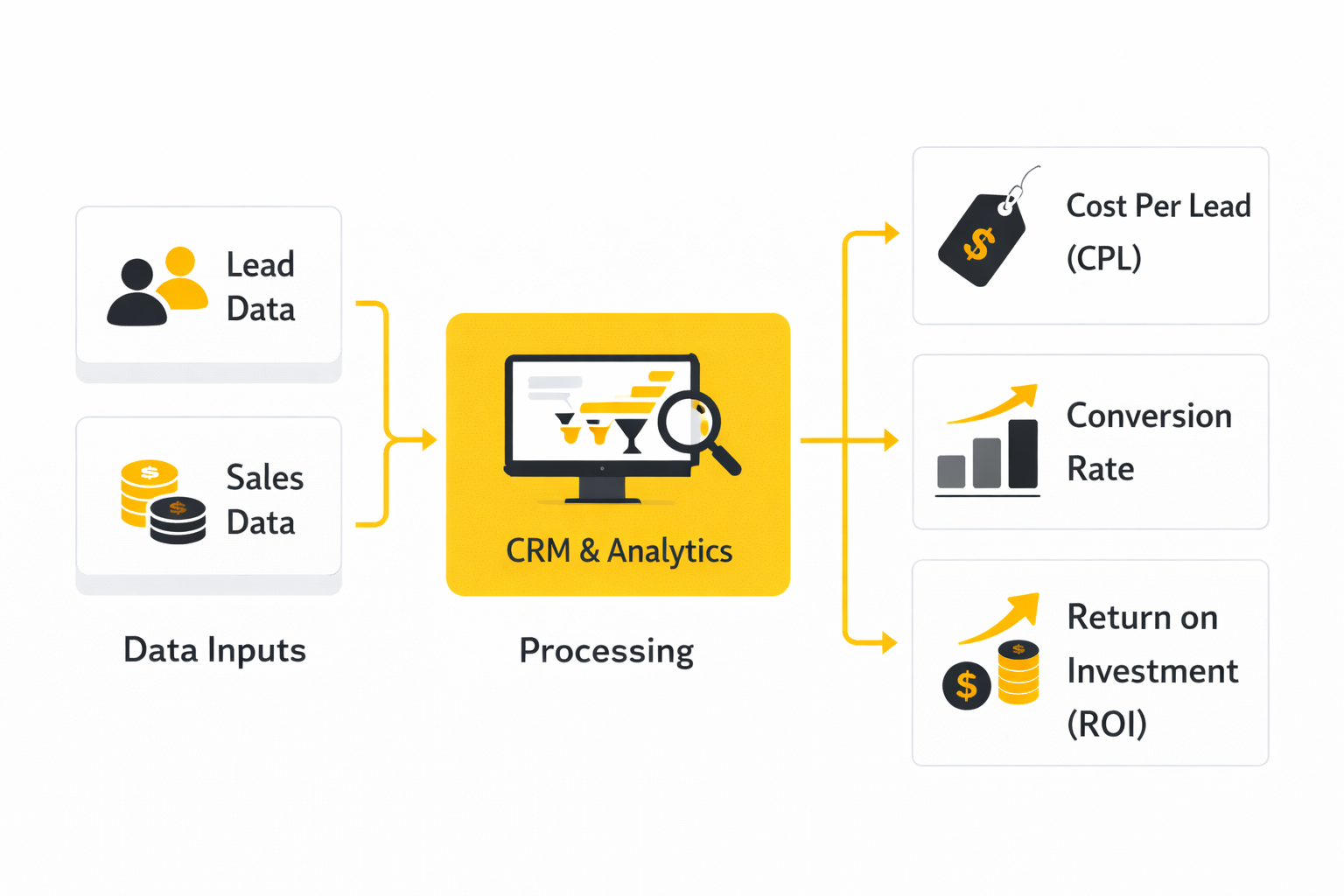
The cleanest way to do that is to track the funnel in layers:
- Acquisition metrics such as traffic, sends, impressions, reach, and click-through rate
- Engagement metrics such as replies, form completions, booked calls, and content downloads
- Qualification metrics such as accepted leads, show rates, sales acceptance, and fit by ICP
- Revenue metrics such as opportunity creation, pipeline value, close rate, and customer acquisition cost
Each layer answers a different question. Acquisition tells you whether the market is being reached, engagement tells you whether the message is working, qualification tells you whether the responses are worth pursuing, and revenue tells you whether the whole machine deserves more budget. This sounds obvious, but many lead generation companies still report mostly on layer one and layer two because those numbers are easier to make look good.
The Metrics That Usually Expose Weak Vendors Fast
Some metrics have a special talent for cutting through polished reporting. They matter because they reveal whether the vendor is creating output or creating business value. When these numbers are hidden, vague, or constantly reframed, that is usually a bad sign.
Pay close attention to:
- lead-to-meeting rate
- meeting show rate
- sales acceptance rate
- opportunity creation rate
- pipeline per meeting
- cost per accepted opportunity
These are harder metrics to manipulate because they live closer to revenue. A lead generation company that resists this level of visibility is usually protecting the wrong kind of success. The firms worth keeping are the ones that are comfortable being measured where it actually hurts.
Why Landing Page and Funnel Data Matter More Now
This point has become more important, not less. Traffic is getting harder to win, attention is getting fragmented, and every wasted click is more painful than it used to be. Recent WordStream commentary on search disruption makes the same strategic point clearly: when website traffic softens, efficiency becomes the growth lever.
That has direct implications for lead generation companies. They cannot just push more traffic or more outreach into a weak conversion path and call it strategy. If the landing page is confusing, if the form asks for too much, if the offer is vague, or if the nurture sequence is sloppy, the numbers will tell you that long before the vendor admits it.
This is exactly where practical tools can make a real difference. A cleaner funnel in ClickFunnels, a simpler nurture setup in Brevo, or a lower-friction form flow in Fillout can improve the numbers not because the tools are magical, but because measurement finally points to the exact bottleneck that needs fixing.
What Good Data Should Make You Do Next
The point of analytics is action. If reply rates are weak, revise targeting and messaging before increasing volume. If traffic is healthy but conversion is poor, fix the page and offer before buying more clicks. If meetings are booking but not showing, tighten qualification and reminder flows, potentially using a cleaner scheduler like Cal.com to reduce friction and improve attendance.
The same logic applies at the back of the funnel. If accepted opportunities are rising but close rates are flat, the problem may have moved into sales execution, pricing, or product-market fit. That is a useful discovery because it stops you from blaming the wrong partner for the wrong problem.
This is really the whole point. The best lead generation companies do not just send reports. They help you understand what the numbers mean, what they do not mean, and what should change next. That is how measurement becomes a growth tool instead of a monthly ritual.
What Professional Implementation Looks Like at Scale
This is the point where a lot of lead generation companies start to separate. Plenty of firms can launch a campaign. Far fewer can scale one without breaking quality, compliance, deliverability, or sales trust.
A professional implementation is not just a bigger version of a small campaign. Once volume rises, weaknesses multiply fast. Bad targeting creates more bad leads, weak qualification wastes more sales time, sloppy list sourcing increases compliance exposure, and poor reporting makes it harder to know which lever actually caused the drop in performance. That is why mature lead generation companies build scale through control, not just through more sends, more traffic, or more SDR hours. Outreach+2
Scaling Without Destroying Lead Quality
The first rule is simple: do not scale a process that has not earned the right to grow. If a campaign is still producing inconsistent lead quality, unstable show rates, or vague pipeline attribution, increasing budget usually makes the mess larger. Good operators stabilize the unit economics first, then widen volume in controlled steps.
That discipline matters because buyers are still doing a huge amount of filtering before speaking to vendors. 6sense’s 2025 buyer research found that buyers continue to rank preferred vendors before first contact, and those early favorites still win at a very high rate. That means scale only works when the program reinforces relevance and trust instead of flooding the market with generic noise. 6sense+2
The practical implication is blunt. If your provider cannot explain how quality holds as volume rises, you do not have a scaling plan. You have a spend plan.
Compliance Is Not a Side Issue
This part gets ignored until it becomes painful. Many businesses evaluate lead generation companies mostly on meetings and cost, then barely look at how data is sourced, stored, enriched, and used. That is a mistake, especially for firms operating across regions, industries, and outreach channels.
In the UK, the ICO makes it clear that B2B marketing can still involve personal data under UK GDPR, and that direct marketing programs should be planned with compliance built in from the start rather than bolted on later. The FTC also notes that the CAN-SPAM Act applies to commercial email broadly, including B2B email, which means operational shortcuts can create legal and reputational problems very quickly. ico.org.uk+2
Serious lead generation companies do not treat compliance like a checkbox. They know list provenance, opt-out handling, lawful basis logic, disclosure standards, and suppression workflows all matter. More importantly, they document them. If a provider gets vague the moment you ask where the data came from, take that seriously.
AI Can Improve Execution, but It Can Also Magnify Sloppiness
AI is now part of the conversation whether people like it or not. It can absolutely help with research, segmentation, draft generation, summarization, routing, and follow-up prioritization. Used well, it increases speed without killing relevance.
Used badly, it creates an avalanche of polished junk. Demand Gen Report’s 2025 ABM survey found that many practitioners see promise in AI for personalization, but nearly 70% still view its current effectiveness as limited. Outreach’s 2026 sales trend coverage also shows that teams using AI tools are gaining time savings, but that only becomes valuable when the extra capacity is redirected into better conversations and tighter deal strategy. Demand Gen Report+2
That is the real tradeoff. AI can make lead generation companies more efficient, but efficiency is not the same as effectiveness. If the underlying targeting is weak, AI just helps you be wrong faster.
The Internal Handoff Still Decides Whether Outsourcing Works
Even a strong external partner can fail inside a weak internal system. This happens all the time. The agency generates interest, books calls, or pushes qualified inquiries into the CRM, and then the internal team responds too slowly, follows up inconsistently, or rejects leads without usable feedback.
That disconnect is more expensive now because buyers increasingly want control over how and when they engage. Gartner’s March 2026 survey found that 67% of B2B buyers prefer a rep-free experience, which means the transition from self-directed interest to human engagement has to feel intentional, fast, and helpful. If the handoff feels clumsy, the buyer does not care whether that failure belongs to sales, marketing, or the lead generation company. Gartner+1
Professional implementation therefore includes internal operating rules. Response times, lead acceptance criteria, routing ownership, disqualification reasons, and meeting feedback loops need to be defined before launch. Without that, the provider is guessing, sales is frustrated, and the data becomes impossible to trust.
The Risks That Usually Show Up Late
The most dangerous problems in outsourced lead generation usually do not appear in week one. They show up after the early excitement, once volume increases and the first flattering reports stop telling the full story. That is why experienced buyers look for delayed risk, not just early momentum.
One common risk is channel concentration. A provider might look strong because one outbound angle or one paid campaign works for a short period, but the program has no resilience once that angle fatigues or costs rise. WordStream’s 2025 benchmark coverage showed Google Ads cost per lead climbing to $70.11 on average, which is manageable only if the downstream math stays strong. Rising acquisition costs punish shallow systems fast. WordStream+2
Another late-stage risk is false confidence from partial reporting. The vendor may celebrate reply rates, click-throughs, or booked meetings while the business quietly experiences poor show rates, weak acceptance, or thin pipeline. By the time leadership notices, months of budget have already been committed to a model that looked efficient only because the wrong metrics were being elevated.
Vendor Dependency Can Become a Strategic Problem
A lot of businesses outsource lead generation because they need speed. Fair enough. The problem begins when they outsource learning as well as execution.
If the provider owns the list logic, the messaging insights, the testing history, the CRM definitions, and the reporting framework, the client can become operationally dependent very quickly. That makes future transitions harder, and it weakens the company’s ability to improve performance internally. The best lead generation companies do not hide the engine. They help the client understand it.
This is also why the right tech stack matters. If key workflows live in transparent systems such as Brevo, Cal.com, Copper, or ClickFunnels, you keep more visibility than if everything is buried inside a provider’s private workflow. The specific tool matters less than the principle: your pipeline system should not become unreadable the moment you change vendors.
Strategic Fit Beats Tactical Brilliance
This is the expert-level filter that matters most near the end of the decision process. A company can be excellent at outbound and still be wrong for your category. Another can be brilliant with paid acquisition and still be a poor fit for long, multi-stakeholder enterprise sales. Tactical brilliance is real, but strategic mismatch usually wins.
That is why the smartest buyers do not ask only, “Are they good?” They ask, “Are they good for this motion, this market, this sales cycle, and this level of internal readiness?” Demand Gen Report’s ABM survey shows more teams blending ABM with demand generation, while Outreach’s recent prospecting coverage shows hybrid inbound-outbound models becoming more common. The market is telling you something important here: rigid single-channel thinking is getting harder to defend. Demand Gen Report+2
That does not mean every company needs a massive multichannel machine. It means the provider should understand where its model fits, where it does not, and what has to be true internally for the engagement to work. That level of honesty is rare, which is exactly why it matters.
Bringing It All Together Into a Working System
By this point, the pattern should be clear. Lead generation companies are not just vendors you plug into your business. They become part of your growth system, whether you intend that or not. That system includes targeting, messaging, channels, conversion points, qualification, handoff, and measurement.
When everything is aligned, it compounds. Better targeting improves response quality. Better messaging improves conversion. Better qualification improves sales efficiency. Better reporting improves decision-making. That is when outsourced lead generation stops feeling like a cost center and starts acting like a growth lever.
When it is misaligned, the opposite happens. More leads create more confusion, more meetings create more wasted time, and more data creates less clarity. That is why the real decision is not just “which company should we hire,” but “what kind of system are we building and who can actually run it with us.”
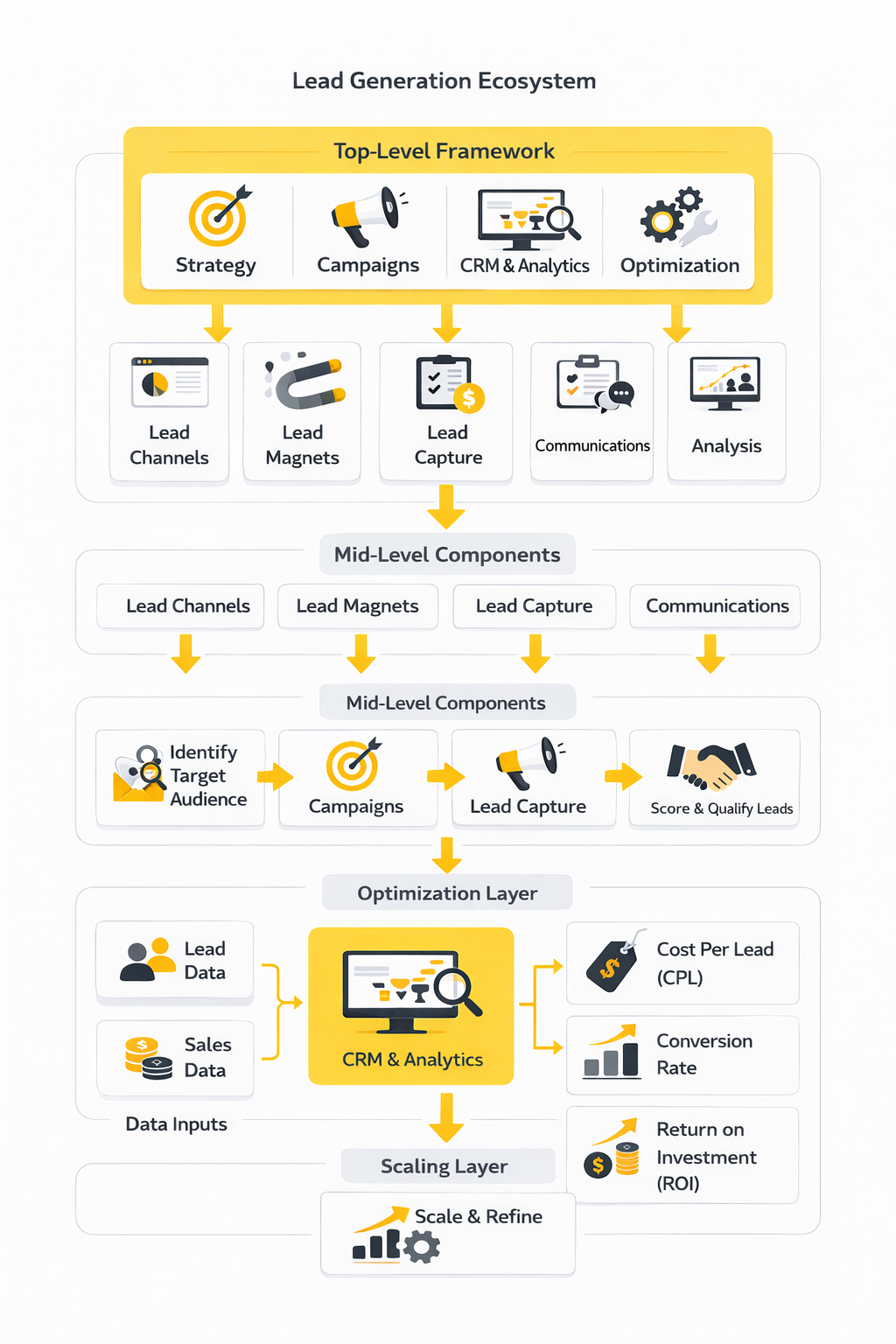
At this stage, the smartest move is to simplify. You do not need ten tools, five agencies, and three disconnected strategies. You need a clean flow from attention to pipeline. That might include a funnel builder like ClickFunnels, a lightweight automation system like Systeme.io, email and nurture through Brevo, and clean intake or survey flows using Fillout. The exact stack does not matter nearly as much as the clarity of the system.
The goal is simple. Every lead generation company you work with should plug into that system, not replace it or obscure it.
FAQ - Built for Complete Guide
What do lead generation companies actually deliver?
Most deliver a mix of contacts, booked meetings, or qualified leads depending on their model. The stronger firms focus on pipeline contribution instead of raw volume, meaning they care about whether leads turn into real opportunities. That distinction matters because activity without conversion is expensive noise.
How much do lead generation companies typically cost?
Pricing varies widely based on model, but common structures include monthly retainers, pay-per-lead, or hybrid performance deals. In B2B, retainers can range from a few thousand to tens of thousands per month depending on complexity. The real cost should always be evaluated against pipeline generated, not just leads delivered.
Are outbound lead generation companies still effective?
Yes, but only when done properly. Buyers ignore generic outreach faster than ever, so targeting, timing, and message relevance matter more than volume. Benchmarks showing reply rates around 5% to 10% are realistic, but only meaningful if those replies translate into qualified conversations.
What is the difference between MQLs and SQLs?
Marketing Qualified Leads (MQLs) meet basic engagement or fit criteria, while Sales Qualified Leads (SQLs) are vetted further and considered ready for direct sales engagement. The gap between the two stages often exposes weak targeting or poor qualification rules. Strong lead generation companies help reduce that gap.
How long does it take to see results?
Outbound programs can produce early signals within weeks, but stable performance usually takes 2–3 months of testing and iteration. Inbound and demand generation models may take longer because they rely on traffic, content, and conversion optimization. The timeline depends heavily on how prepared the system is before launch.
Can I replace my internal team with a lead generation company?
In some cases, yes, especially early-stage or resource-constrained businesses. But most companies get the best results when internal teams and external partners work together. The internal team still owns positioning, product knowledge, and sales execution, which no external provider can fully replace.
What industries benefit the most from lead generation companies?
B2B industries with clear target markets and higher deal values tend to benefit the most. SaaS, consulting, agencies, and professional services are common examples. These businesses can absorb acquisition costs more easily if pipeline quality is high.
What are the biggest red flags when choosing a provider?
Watch for vague targeting explanations, overpromised lead volume, lack of transparency in data sourcing, and reporting focused only on surface metrics. Another warning sign is when the provider avoids discussing pipeline, sales acceptance, or close rates. That usually means they are optimizing for the wrong outcomes.
How do I know if my current provider is underperforming?
Look at downstream metrics. If leads are coming in but sales rejects them, if meetings are booked but not showing, or if pipeline is not growing, something is off. The earlier metrics may look healthy, but the system is not converting into revenue.
Should I build in-house or outsource?
It depends on speed, budget, and internal expertise. Outsourcing is often faster and easier to start, while in-house can offer more control long term. Many companies use a hybrid approach, outsourcing early while gradually building internal capability.
What tools do lead generation companies typically use?
Common tools include CRM systems, email automation platforms, funnel builders, and scheduling software. Examples include Brevo, ClickFunnels, and Cal.com. The specific tools matter less than how well they are integrated into a working process.
Work With Professionals
Explore 10K+ Remote Marketing Contracts on MarkeWork.com
Most marketers spend too much time chasing clients, competing on crowded platforms, and losing a percentage of every project to middlemen.
MarkeWork gives you a better way. Browse thousands of remote marketing contracts and connect directly with companies desperate to hire skilled marketers like you, without platform commissions and without unnecessary gatekeepers.
If you're serious about finding better opportunities and keeping 100% of what you earn, explore available contracts and create a profile for free at MarkeWork.com.