

Digital marketing isn’t just about visibility anymore — it’s about conversion. At its heart, lead generation digital marketing is the systematic process of attracting potential customers online, capturing their interest, and nurturing them toward a sale. In a world where buyers increasingly research online before buying, capturing qualified leads isn’t optional — it’s strategic survival. Lead generation fuels pipelines, aligns sales and marketing, and turns attention into measurable growth.
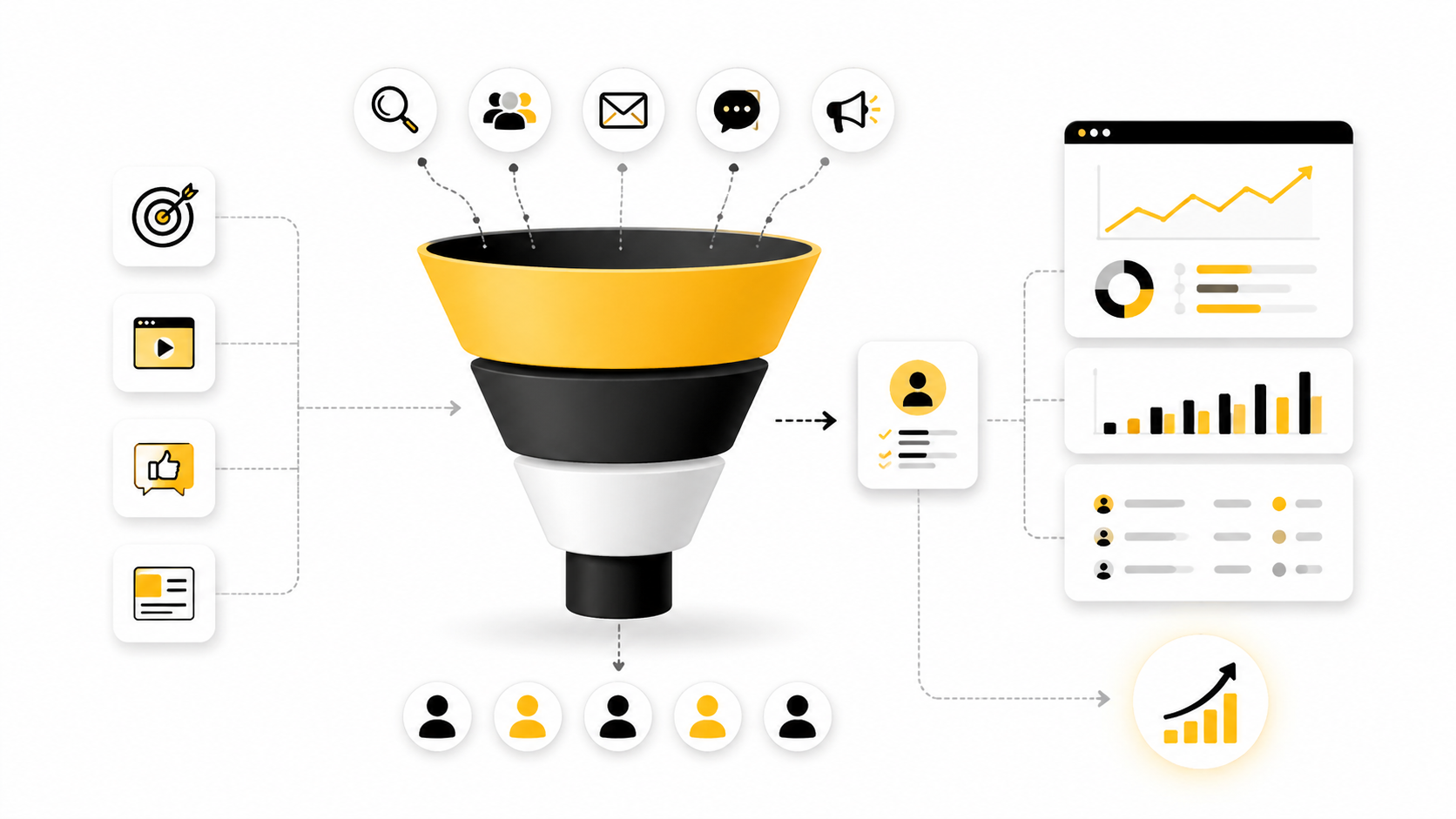
Below is the structure of this article — six parts that build a complete understanding of how lead generation digital marketing works, why it matters, and how to implement it effectively:
- Why Lead Generation in Digital Marketing Matters
- Understanding the Lead Generation Framework
- Core Components of a Lead Generation System
- Professional Implementation and Best Practices
- Common Challenges and How to Overcome Them
- Measuring Success and Scaling Your Efforts
This first part sets the stage: we explore why lead generation deserves attention in digital marketing today and how it fits into broader growth strategies.
Lead generation bridges the gap between online visibility and revenue. While traffic can indicate awareness, leads indicate intent — people who have taken a step toward engaging with your business. Whether through a form fill, newsletter signup, or demo request, a lead represents a real connection with someone potentially ready to buy.
In 2026, lead generation remains a top priority for marketers worldwide. Around 34% of companies rank lead generation as their leading growth priority, often allocating more than half of their marketing budgets to it, because without a steady pipeline of prospects, revenue growth stalls.
But generating leads isn’t enough. Qualifying and nurturing them — moving them from awareness to decision — is where digital marketing shines. Through tailored content, automated workflows, and multi‑channel engagement, modern lead generation creates scalable and measurable growth engines.
Understanding why lead generation matters is critical before we dive into how to build and optimize frameworks that deliver consistent results. This article will take you from foundational concepts to practical implementation in a way that’s actionable for marketers and business owners alike.
Next, we’ll unpack the architecture of an effective lead generation framework and how it supports growth strategies that work in today’s digital landscape.
Understanding the Lead Generation Framework
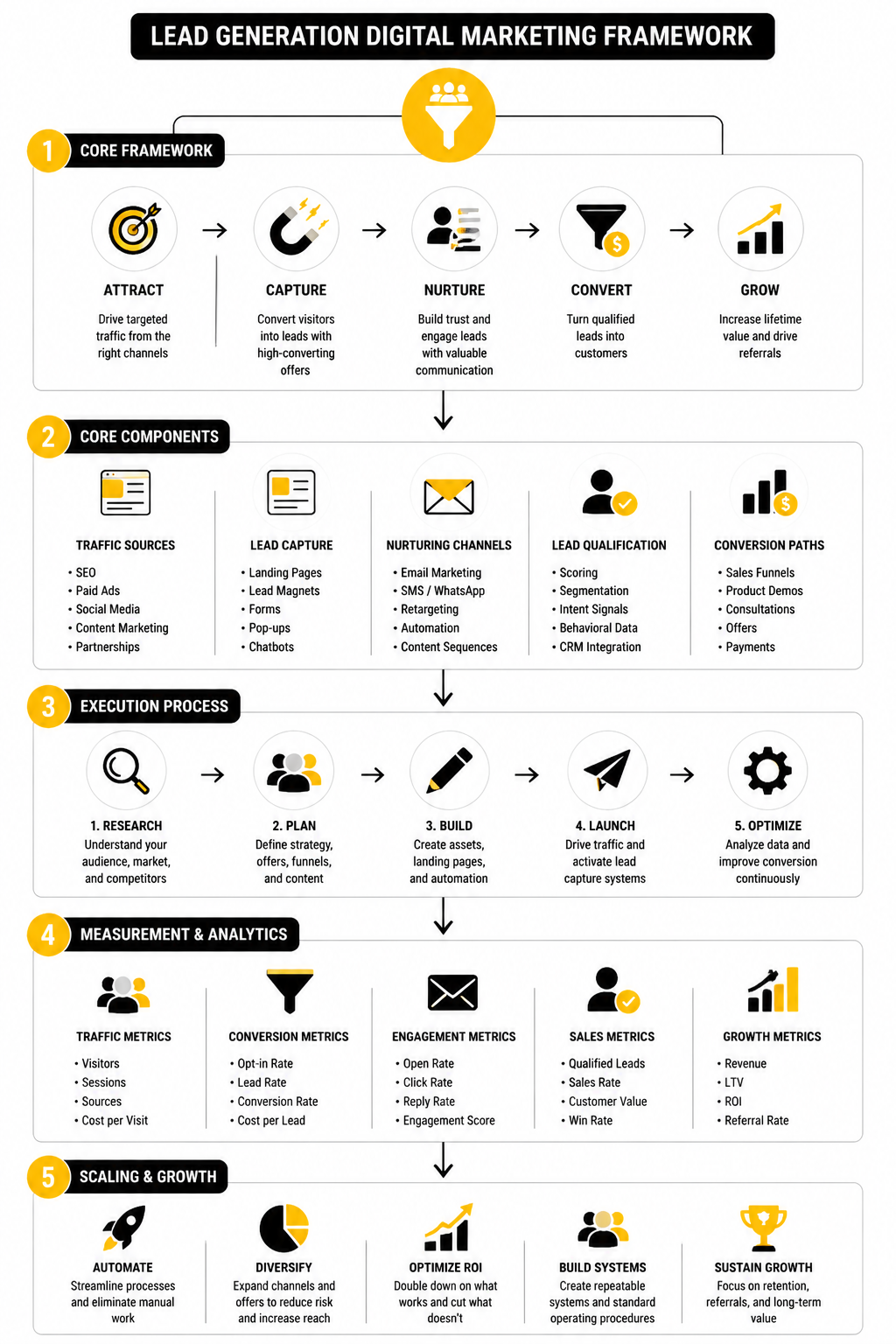
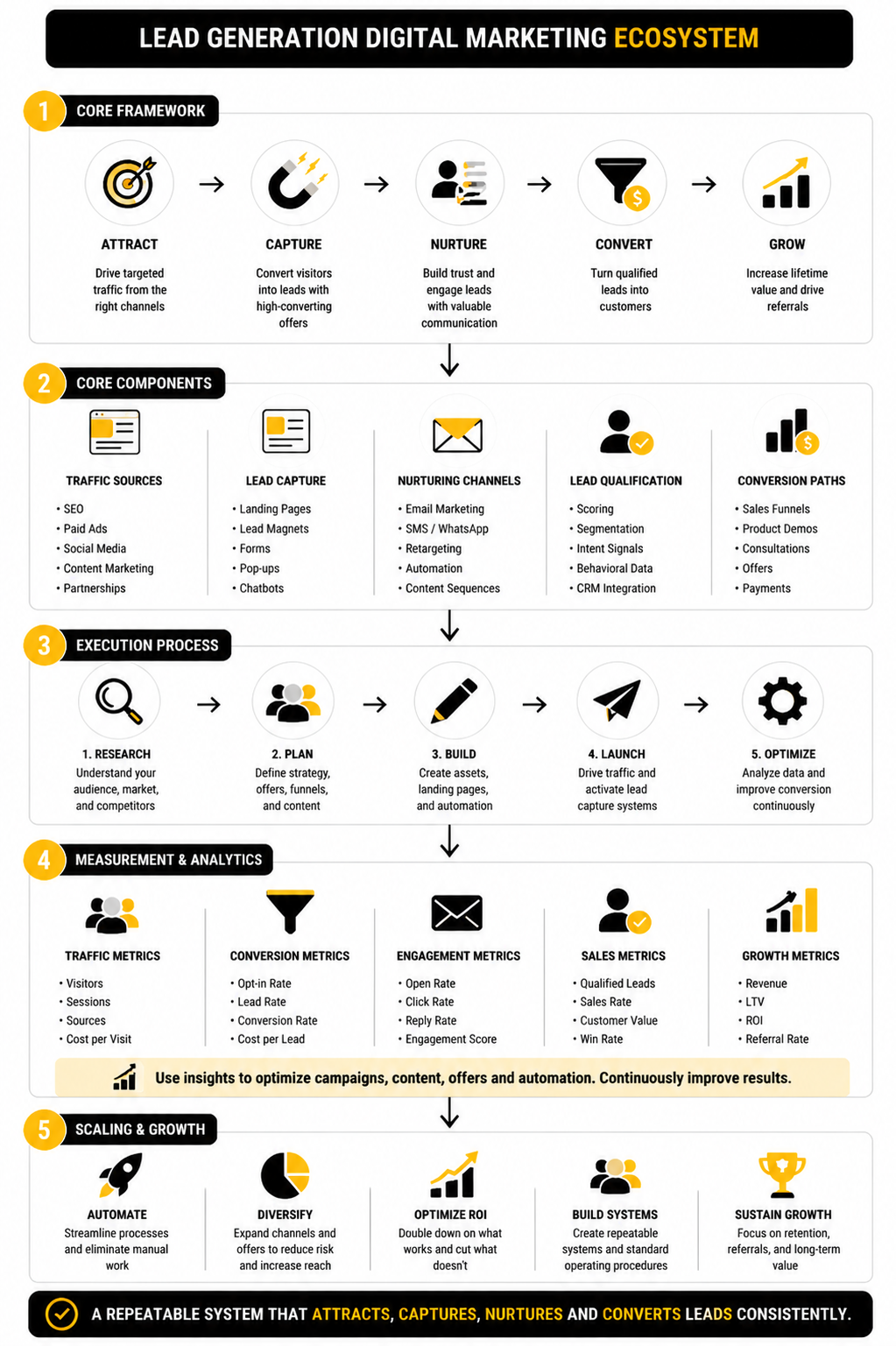
To build lead generation digital marketing strategies that consistently deliver results, you need more than ad‑hoc tactics — you need a clear, stage‑by‑stage framework that turns online interest into real business opportunities. The framework organizes activities into logical steps so you can diagnose where your system works well and where it needs improvement.
A solid lead generation framework maps the buyer’s journey from first exposure to conversion, ensuring every touchpoint is purposeful. It begins with identifying who you’re trying to reach and ends with qualified leads entering your sales process. Below are the key components of a typical digital lead generation framework used by marketers today:
Define Your Target Audience
Before you invest in traffic or tools, clarity on who you’re trying to attract is essential. This involves creating buyer personas or ideal customer profiles that describe demographics, motivations, pain points, and decision‑making behavior. Clear audience definition sharpens every subsequent step, from messaging to channel selection.
Set Clear Goals and Objectives
A framework without measurable goals is like a map without a destination. Establish specific, measurable targets — whether it’s cost per lead, number of Marketing Qualified Leads (MQLs), or conversion rate improvements. These goals help you prioritize tactics and evaluate performance objectively.
Create Valuable Offers and Content
At the heart of lead generation lies the exchange of value. Prospects share their contact information when they believe they’ll gain something useful in return, whether that’s an educational PDF, webinar seat, checklist, or free consultation. These “lead magnets” attract and segment your audience based on intent.
Capture and Qualify Leads
Once visitors engage with your content or offers, the next step is to capture their information through optimized forms and landing pages. But not all captured leads are equal. Lead qualification, often through scoring based on engagement or attributes, helps you focus on the most promising prospects.
Nurture Leads Toward Conversion
Lead nurturing bridges the gap between initial interest and purchase readiness. Through email sequences, retargeting, personalized content, or direct sales outreach, you build trust and guide prospects through the decision process. This stage prevents early drop‑offs and increases conversion efficiency.
Optimize and Iterate
A lead generation framework is iterative. You should analyze performance across stages — from traffic quality to lead engagement and conversion outcomes — and adjust your tactics accordingly. Iterative optimization keeps your system aligned with market shifts, audience behavior, and business goals.
This structured approach transforms isolated marketing activities into a replicable engine that consistently feeds interest into your sales pipeline. In the next section, we’ll break down these components in more detail and show how they work together cohesively to boost acquisition and revenue.
Professional Implementation and Best Practices
Implementing lead generation digital marketing isn’t about throwing a few ads at the wall and hoping something sticks. It’s about orchestrating a repeatable process — from defining your audience to nurturing prospects into sales conversations — so your pipeline fills predictably and consistently. The steps below give you a clear execution path based on how modern marketers structure high‑performing lead systems.
Step‑by‑Step Implementation Process
Successful execution requires clear sequencing and alignment across teams. Each step builds on the last to turn anonymous website visitors into qualified opportunities.
1. Finalize Your Audience Profile and Offer Strategy
Before execution begins, refine your ideal customer profile (ICP) and buyer personas with real market data. This identifies who you’re targeting and what they care about most — the foundation for every campaign. Your offer should address a specific pain point or goal at a defined stage of the buyer journey.
2. Build Capture Assets and Channels
You can’t generate leads if you don’t have systems that attract and collect them. This phase is where planning becomes tangible:
- Landing pages and forms designed for one clear conversion goal.
- Lead magnets such as guides, templates, demos, or webinars tailored to audience needs and funnel stage.
- Multi‑channel capture including paid social ads, organic search, and conversational tools like live chat.
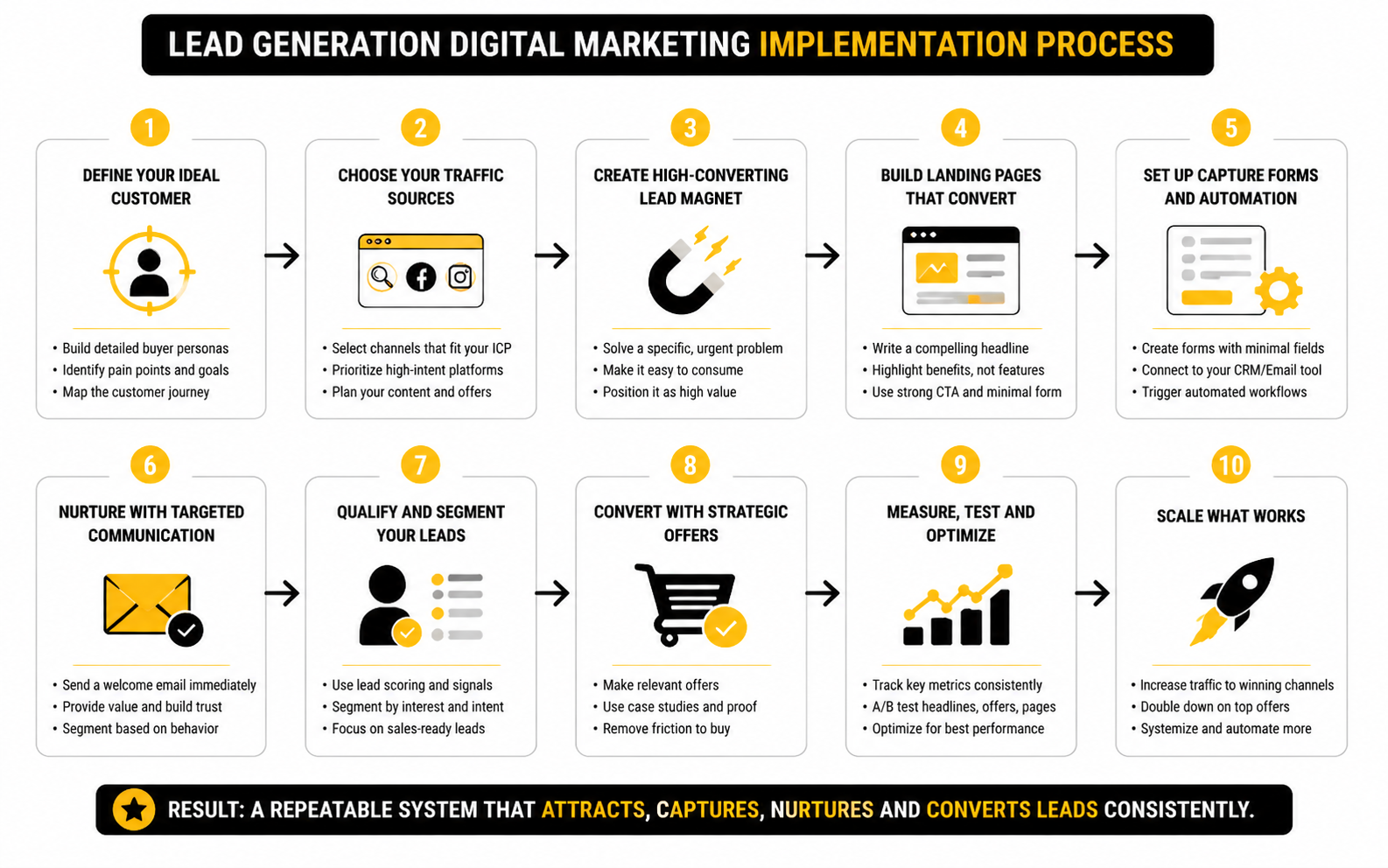
This visual shows common execution points where you attract visitors, capture contact data, and begin moving prospects through your digital system.
3. Drive Targeted Traffic
Once your capture environment is live, you need to bring qualified prospects into it:
- SEO and content marketing attract searchers seeking solutions.
- Paid advertising like search ads or social lead ads with precise audience targeting.
- Retargeting keeps your offer in front of people who engage but don’t convert immediately.
The goal here is not just traffic, but relevant traffic — people whose intent and profile match your ICP.
4. Qualify and Route Leads
Not all leads are equal. A structured qualification system helps you prioritize:
- Lead scoring assigns values based on attributes (company size, job title) and behavior (pages visited, content downloaded).
- Automated routing sends high‑intent leads directly to sales or specialized nurture tracks.
- Rules and thresholds ensure quality leads are acted on quickly and appropriately.
Faster follow‑up improves conversions dramatically; some research shows contacting inbound prospects within minutes can multiply conversion probability.
5. Lead Nurturing and Engagement
Most leads aren’t ready to buy the moment they enter your system. That’s where nurturing comes in:
- Automated email sequences deliver value and education over time.
- Dynamic retargeting ads reinforce key messages based on behavior.
- Personalized content paths guide prospects deeper into your value proposition.
The aim is to build trust and readiness without overwhelming or disengaging prospects.
6. Handoff and Conversion
Once a lead meets your qualification criteria, it should transition smoothly to sales:
- CRM integration keeps context, engagement history, and lead scores visible to reps.
- Sales alerts and SLA agreements ensure timely contact.
- Discovery calls, demos, or proposals become the next logical steps in the buyer journey.
A cohesive handoff eliminates confusion and aligns marketing and sales around conversion outcomes.
Best Practices for Execution
As you implement, focus on these proven practices that top digital marketers use to boost performance:
- Test offers and channels — small changes in wording or placement can improve conversion rates significantly.
- Align marketing and sales goals — shared definitions of MQLs and SQLs reduce friction and improve pipeline quality.
- Automate where possible — automation tools help you scale follow‑ups, scoring, and routing without manual overhead.
With these execution steps and practices in place, your lead generation digital marketing engine becomes a working system rather than a set of disconnected tactics. The next part will explore common challenges teams face during implementation and how to overcome them.
Measuring Performance: Analytics, Benchmarks, and What the Data Actually Means
In lead generation digital marketing, measurement isn’t an optional afterthought — it’s how you know what’s working, what isn’t, and where to invest next. Without clarity on key performance indicators (KPIs), teams end up optimizing noise rather than outcomes, like the number of clicks or impressions that feel good but don’t actually grow revenue. The right metrics tell the story of efficiency, quality, and real contribution to business goals, not just activity.
What You Should Track and Why It Matters
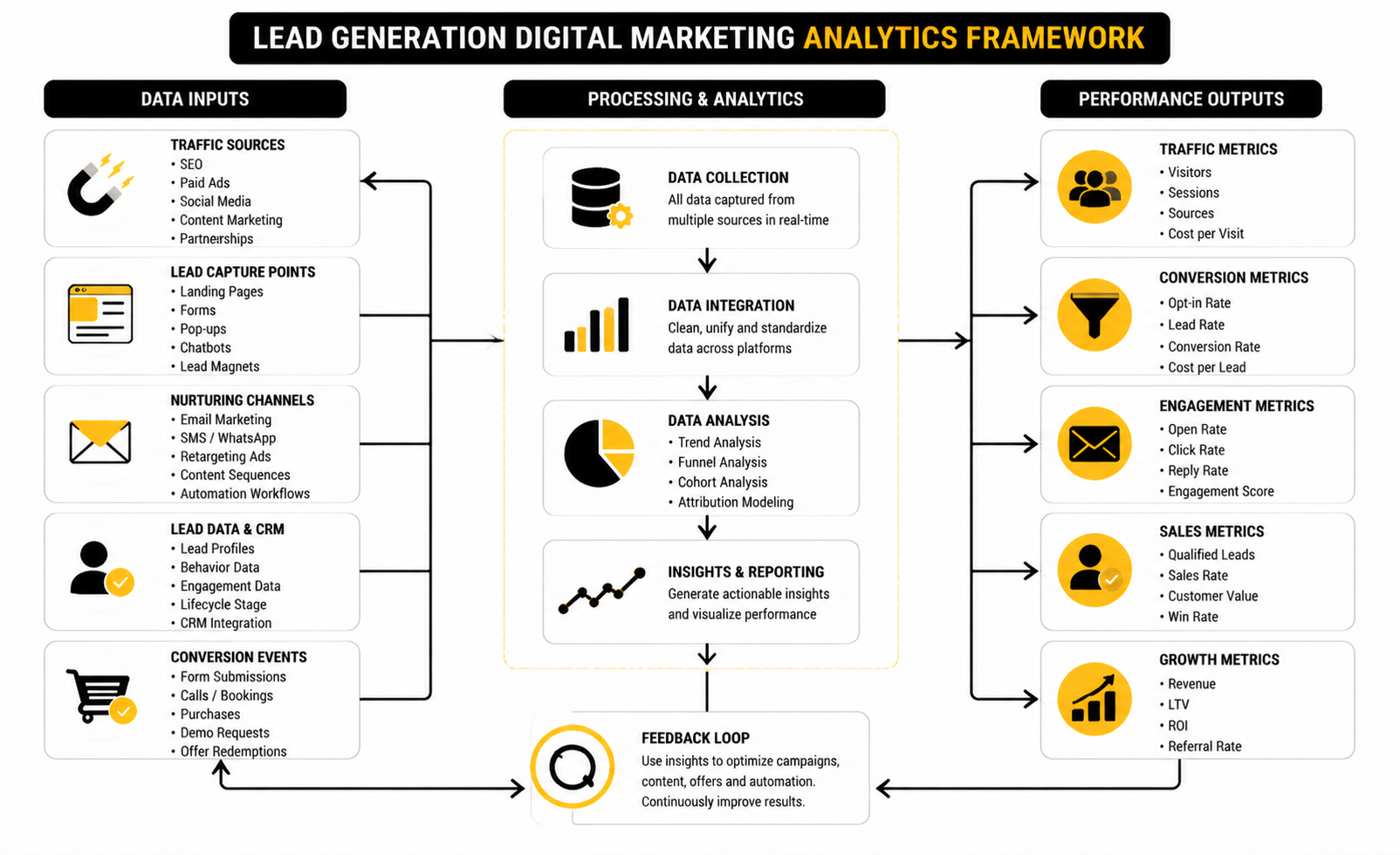
Measurement in lead generation involves tracking a mix of volume, efficiency, quality, and outcome metrics. Each class of data answers a different question:
- Are we attracting enough attention?
- Are we converting it efficiently?
- Are these leads valuable and engaged?
- Is this generating real business impact?
Lead Volume and Conversion Metrics
Lead Volume is the simplest measure: how many leads you’re generating in a given period. But volume alone doesn’t mean success — you can generate lots of leads that never convert into sales, and that still drains resources.
Conversion Rate goes a step deeper by showing what percentage of your visitors actually become leads. A strong conversion rate indicates a good match between offer, audience, and user experience. Low rates often signal friction points in messaging, landing page design, or targeting.
Tracking both metrics together helps you interpret whether changes in lead counts are due to more visitors or better performance. For example, a rising lead volume with flat or falling conversion suggests you might be paying more for traffic without improving effectiveness.
Cost Efficiency and Financial Signals
Cost Per Lead (CPL) is one of the core financial metrics for lead generation digital marketing — it tells you how much you’re spending to bring in each contact. CPL alone doesn’t define success, but it anchors your budget decisions and helps you compare channels on a like‑for‑like basis.
Pair CPL with expected revenue per lead or customer lifetime value (CLV) to judge whether your current approach is sustainable. If you’re spending more to acquire leads than their expected value, the funnel is leaking money, and optimization or tactical shifts are needed.
Lead Quality and Pipeline Contribution
Quantity doesn’t always equal value. That’s where lead quality metrics like Marketing Qualified Leads (MQLs) or Sales Qualified Leads (SQLs) become essential. These metrics measure not just how many leads you have, but how many are relevant to your business objectives.
High lead volume with low quality often signals overly broad targeting or incentives that attract uninterested audiences. Tracking quality over time — by channel or campaign — lets you favor sources that fuel conversions further down the funnel.
Timing and Behavior Metrics
Metrics like lead response time and time to qualification (how long it takes a lead to become an MQL or SQL) show how effectively your team engages and progresses prospects. Faster response times consistently correlate with higher contact and conversion rates, because interest fades quickly once a lead enters the system.
If you find that leads sit dormant before sales contacts them, data can pinpoint where delays happen and what process or automation changes could accelerate movement toward revenue.
Benchmarks That Give Your Data Context
Numbers only tell you so much without context. Benchmarks — industry reference points for conversion rates, CPL, and qualification percentages — help you understand whether your performance is good, average, or lagging. For example, many B2B digital efforts see conversion rates in the 2–3% range on average, so a campaign vastly above that likely has strong targeting and offer alignment.
Benchmarks also help set realistic expectations for stakeholders and create thresholds for alerts if performance falls outside acceptable ranges.
From Data to Action
What separates good measurement from great decision‑making is translating analytics into change:
- Low conversion rates → Test alternate offers, refine landing pages, or simplify forms.
- High CPL with low quality → Reallocate budget to better‑performing channels and tighten targeting.
- Slow response times → Introduce automation or response SLAs to capture interest early.
- Stagnant MQL growth → Revisit audience definitions and nurturing journeys.
In short, numbers only matter when they lead to decisions. Structured measurement bridges the gap between what happened and what you should do next — and that’s the essence of effective lead generation digital marketing.
Strategic Trade‑Offs, Risks, and Scaling Considerations
As you move beyond foundational implementation toward maturing your lead generation digital marketing efforts, the challenges shift. Early wins from targeted campaigns and optimized pages are replaced by questions about how fast to grow, how to balance quality and scale, and what risks can undermine long‑term performance. Advanced practitioners understand that scaling isn’t simply more of the same; it’s about managing trade‑offs, fortifying infrastructure, and avoiding common pitfalls that derail growth.
Quality vs. Quantity: The Core Strategic Trade‑Off
One of the toughest decisions in advanced lead generation is balancing lead volume with lead quality. Data from industry analysis shows that systems optimized for sheer volume often produce leads that look good in dashboards but fail to convert downstream — clogging pipelines and inflating costs without boosting revenue.
Quality‑focused strategies emphasize:
- Targeted segmentation and intent signals over broad lists
- Leads that align with your Ideal Customer Profile (ICP)
- Metrics tied to revenue contribution, not just raw counts
In contrast, volume‑first approaches can produce short‑term bragging rights (e.g., “2,000 leads this month!”) but mask the real costs — wasted sales hours, churned customers, and bloated acquisition costs.
Scaling Without Sacrificing Performance
Scaling lead generation isn’t linear. When you increase spend or expand into new channels without appropriate controls, platforms often shift toward cheaper audiences that meet superficial conversion thresholds but diminish downstream engagement. This is why many successful operators recommend incremental scaling with guardrails on quality metrics.
Key considerations for sustainable scaling include:
- Baseline and threshold setting: Establish quality baselines (contact rates, conversion quality, CPL ranges) and put stop‑loss rules in place if those metrics deteriorate.
- Diversification of channels: Relying on a single traffic source exposes you to algorithm changes and audience exhaustion. Balanced portfolios of search, social, and niche placements reduce systemic risk.
- Capacity planning: Lead generation only adds value if someone can follow up effectively. Scaling far beyond your internal capacity (sales reps, validation teams, service resources) leads to leads going cold or being wasted.
Data Quality and Compliance Risks
Advanced lead generation also grapples with data integrity and regulatory risk. AI‑driven lists and purchased contacts may seem efficient, but they often suffer from data decay — where information is outdated or inaccurate — and may violate privacy norms if not vetted properly.
Poor data quality feeds into larger problems:
- CRM pollution that distorts analytics
- Higher bounce and invalid contact rates
- Brand damage from spammy outreach
- Compliance issues under laws like GDPR or TCPA when consent is unclear
The strategic choice here is to invest in data validation, enrichment, and opt‑in processes rather than chasing low‑cost lists that undermine your campaign integrity.
Organizational Alignment and Revenue Focus
With advanced programs, the risk isn’t just tactical; it’s organizational. When marketing measures success with vanity metrics (MQL counts, email opens) and sales prioritizes closed deals, misalignment inevitably arises. Deep alignment requires shared definitions of success — such as cost per sales‑qualified opportunity (SQO) or pipeline contribution — and integrated planning between revenue teams.
To advance beyond siloed metrics:
- Define shared KPIs across marketing and sales
- Embed feedback loops so sales quality insights influence campaign optimization
- Use revenue attribution models that tie campaigns to revenue outcomes
Long‑Term Risks and Sustaining Growth
Finally, expert practitioners recognize that short‑term spikes in lead volume can mask systemic weaknesses unless strategic investments are made in infrastructure and process design. Scaling without robust systems leads to:
- Diminished conversion rates over time
- Rising customer acquisition costs that erode margins
- Operational bottlenecks in follow‑up and fulfillment
- Poor brand reputation and reduced customer lifetime value
This is where strategic patience pays off. Rather than chasing the fastest path to volume, high‑performance teams build resilient processes, prioritize quality, and treat lead generation as a long‑term engine that must balance growth with stability.
In the next and final section, we’ll wrap up the article with clear guidance on measuring success over time and scaling your lead generation digital marketing in a way that sustains growth while maximizing ROI.
FAQ – Built for Complete Guide
What is lead generation digital marketing?
Lead generation digital marketing is the practice of using online channels — like search engines, social media, email, and content — to attract interested prospects and capture their contact information so they can be nurtured toward a purchase.
How does lead generation differ from general digital marketing?
Digital marketing covers all online promotional activities. Lead generation specifically focuses on capturing and converting interest into actionable contacts that a business can nurture and sell to, making it a subset with a conversion focus.
Which channels work best for lead generation digital marketing?
Performance varies by audience and industry, but common effective channels include search ads (e.g., Google), social media lead ads (e.g., LinkedIn and Meta), organic SEO content, and email campaigns. Combining channels often yields more consistent results.
What is a lead magnet?
A lead magnet is a valuable piece of content or offer — such as a guide, checklist, webinar seat, or discount — that you exchange for a visitor’s contact information. Its quality directly influences conversion rates.
Why is lead quality more important than lead quantity?
High lead volume might look impressive, but leads that aren’t aligned with your ideal customer profile waste time and resources. Quality leads are more likely to convert into paying customers and produce stronger ROI.
How do I measure whether my lead generation efforts are successful?
Key performance indicators include conversion rates (visitor to lead), cost per lead (CPL), lead quality metrics like MQLs/SQLs, and how leads contribute to actual sales revenue over time. These metrics together show efficiency and impact.
What’s a good cost per lead in digital marketing?
There’s no universal “good” number because it depends on industry, offer value, and sales margins. Instead, benchmark against past performance within your business and relative to similar campaigns to decide what’s efficient.
How important is automation in lead generation?
Automation is critical once you scale. Automated follow‑ups, lead scoring, and routing free up teams to focus on high‑value interactions and maintain timely engagement with prospects, which improves conversion outcomes.
Can small businesses benefit from lead generation digital marketing?
Absolutely. Small businesses often see outsized returns because digital lead generation allows precise audience targeting and measurable results, enabling efficient use of limited marketing budgets.
How long does it take to see results from lead generation?
Initial improvements in campaign performance can happen within weeks, but building a stable, high‑quality lead pipeline typically takes several months of testing offers, refining audiences, and optimizing conversion paths.
What common mistakes derail lead generation efforts?
Frequent pitfalls include targeting too broad an audience, weak offers that don’t motivate action, poor follow‑up timing, ignoring data signals, and scaling prematurely without quality controls.
Work With Professionals
Explore 10K+ Remote Marketing Contracts on MarkeWork.com
Most marketers spend too much time chasing clients, competing on crowded platforms, and losing a percentage of every project to middlemen. MarkeWork gives you a better way. Browse thousands of remote marketing contracts and connect directly with companies desperate to hire skilled marketers like you, without platform commissions and without unnecessary gatekeepers.
If you're serious about finding better opportunities and keeping 100% of what you earn, invite readers to explore available contracts and create a profile for free at MarkeWork.com.