

Lead generation strategies are no longer about collecting as many email addresses as possible and hoping sales can sort out the mess. Buyers are more informed, more skeptical, and more comfortable doing their own research before they ever talk to a company. In B2B especially, buyers now use an average of 10 interaction channels during the purchase journey, which makes single-channel lead capture feel outdated fast: McKinsey.
That is why modern lead generation has to work more like a system than a campaign. You need the right audience, a clear offer, useful content, sharp conversion paths, fast follow-up, and a way to separate real demand from casual interest. When those pieces work together, lead generation stops being a volume game and starts becoming a predictable revenue engine.
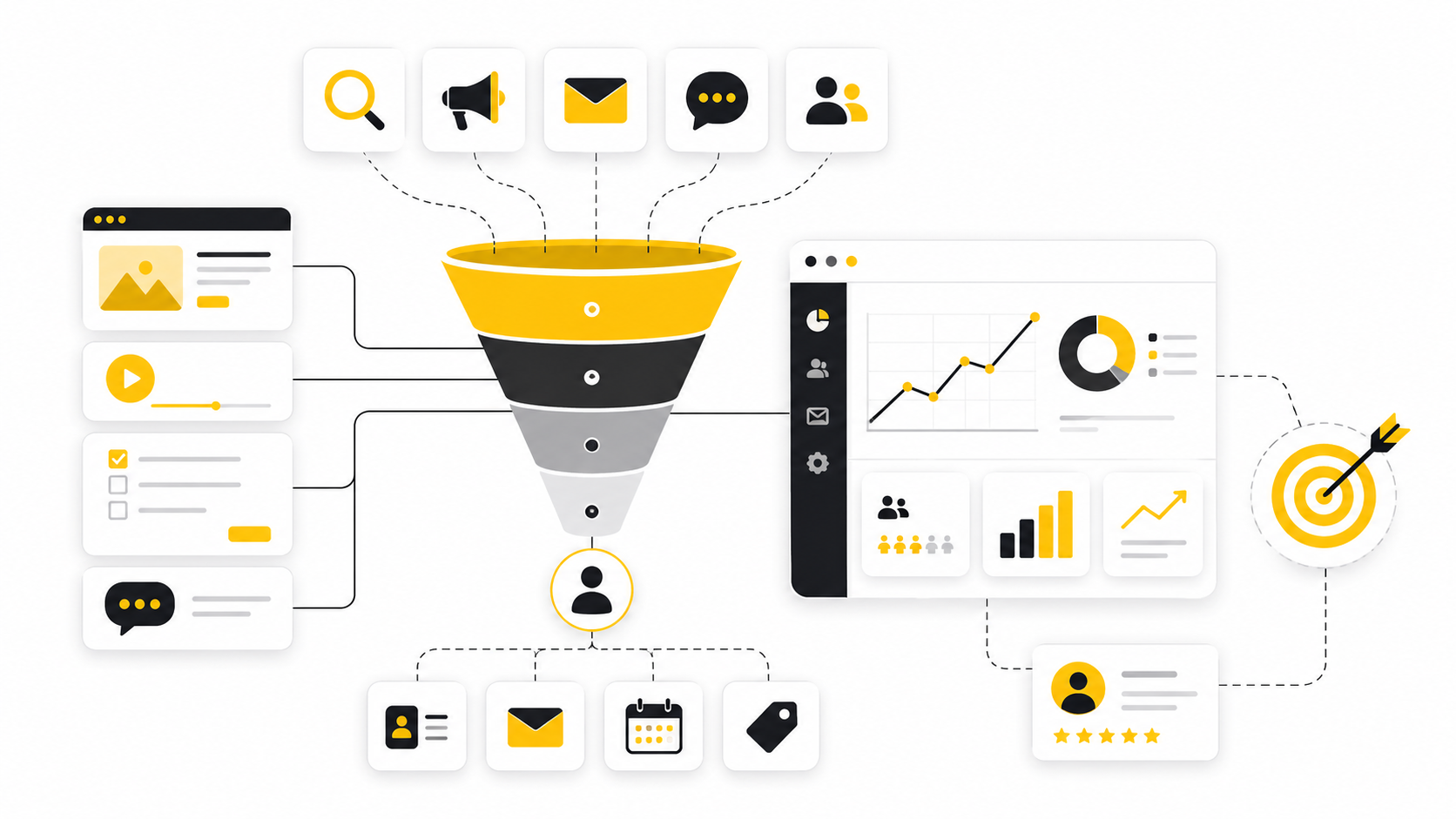
Article Outline
- Why Lead Generation Still Matters
- The Lead Generation Framework
- Core Components of a Strong Lead Generation System
- Choosing the Right Lead Generation Channels
- Professional Implementation and Optimization
- FAQs About Lead Generation Strategies
Why Lead Generation Still Matters
Lead generation matters because attention is fragmented, buyer journeys are longer, and trust is harder to earn. Many companies still treat leads as simple form fills, but that misses the real point. A lead is only valuable when it represents a person or account moving closer to a meaningful business conversation.
The pressure is especially high because buyers are not waiting for sales teams to educate them. Forrester reported that 86% of B2B purchases stall during the buying process, which shows how easily momentum can disappear when prospects do not get the clarity they need: Forrester. Strong lead generation strategies reduce that friction by helping buyers understand the problem, compare options, and take the next step with confidence.
The companies that win are not always the loudest. They are usually the clearest. They know who they want to attract, what pain they solve, and what a qualified opportunity looks like before they start spending money on traffic.
The Lead Generation Framework
A practical lead generation framework starts with four questions: who are you trying to reach, what problem are they already motivated to solve, what offer earns their attention, and what follow-up turns interest into pipeline. This sounds simple, but most weak campaigns fail because one of these questions was skipped. The landing page may look good, but the audience is wrong, the offer is vague, or the follow-up is too slow.
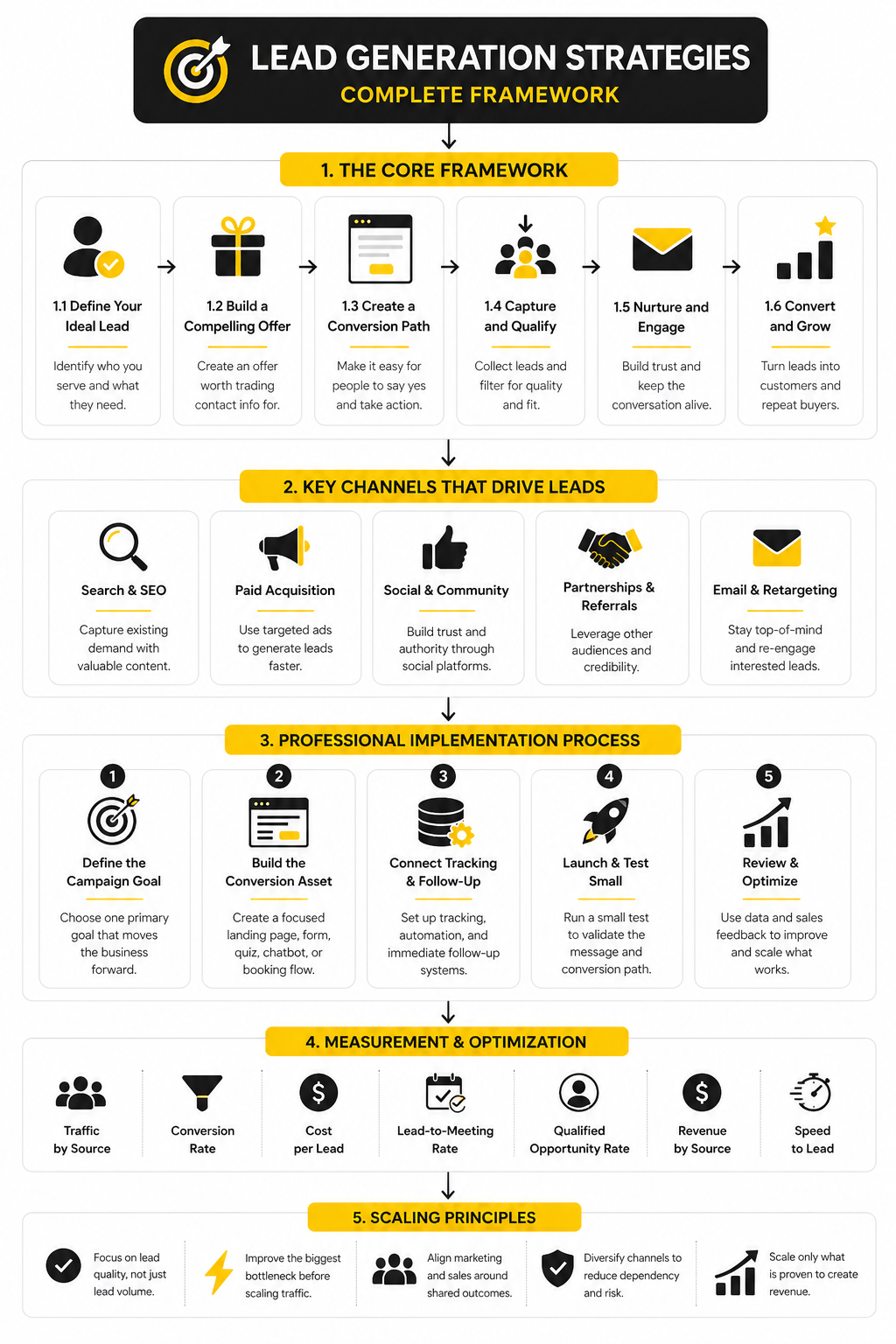
The framework should connect awareness, capture, qualification, and conversion. Awareness creates the first touchpoint through search, social, referrals, events, partnerships, or paid media. Capture turns that attention into a known contact through a form, booking page, quiz, chatbot, calculator, webinar, trial, or direct conversation.
Qualification is where the strategy becomes serious. Not every lead deserves the same level of sales attention, so scoring, segmentation, and intent signals matter. Tools like GoHighLevel, ManyChat, and Brevo can help automate follow-up, but automation only works when the message is based on real buyer intent.
Core Components of a Strong Lead Generation System
A strong lead generation system starts with positioning, not tools. Before you build a funnel, write an ad, or launch a campaign, you need to know exactly who you are trying to attract and why they should care now. Without that clarity, every channel becomes more expensive because you are paying to reach people who were never likely to buy.
The next component is a clear conversion offer. This could be a demo, audit, checklist, webinar, quote request, consultation, free trial, calculator, quiz, or newsletter, but the offer has to match the buyer’s level of awareness. A cold prospect may not want a sales call yet, while a high-intent prospect searching for a solution may want pricing, proof, and a fast way to talk to someone.
The third component is follow-up. This is where many lead generation strategies quietly fall apart. Capturing a lead is only the beginning, and the real money is often made in the sequence after the form fill, especially when the first response is useful, timely, and specific.
Audience Clarity
Audience clarity means knowing more than job titles, industries, and company size. Those details help, but they do not explain motivation. A good audience definition includes the problem the buyer feels, the trigger that makes the problem urgent, and the objections that usually slow the deal down.
This matters because different buyers can look similar on paper while needing completely different messages. A founder looking for booked calls has a different mindset from a marketing director trying to improve attribution, even if both search for lead generation strategies. The stronger your audience clarity, the easier it becomes to write landing pages, choose channels, and build offers that feel relevant instead of generic.
The practical move is to define your best-fit audience before you define your campaign. Start with the customers who already buy fastest, stay longest, and need the least convincing. Then build your lead generation system around attracting more people like them, not around chasing every possible lead.
Offer Fit
Offer fit is the bridge between attention and action. A weak offer asks for too much too soon, while a strong offer gives the prospect a next step that feels natural. That is why a helpful lead magnet, product demo, or diagnostic call can outperform a beautiful page with a vague “contact us” button.
The offer should match both intent and risk. Someone reading a broad educational article may respond better to a guide, template, or email course. Someone comparing platforms may respond better to a demo, migration plan, pricing page, or direct booking link through a scheduling tool like Cal.com.
This is also where speed matters. If a buyer is ready to act, do not bury the next step under friction. Use short forms, clear promises, and immediate confirmation so the prospect knows exactly what happens after they convert.
Conversion Paths
Conversion paths are the routes people take from first touch to lead capture. They include landing pages, forms, chat flows, popups, embedded calendars, checkout pages, and call booking pages. Each path should remove uncertainty and make the next action obvious.
The best conversion paths do not try to say everything. They focus on the buyer’s problem, the promised outcome, proof that the offer is credible, and one clear call to action. If you are building campaign-specific pages, tools like ClickFunnels, Systeme.io, or Replo can help you move faster without turning every test into a development project.
The important thing is not the software itself. The important thing is whether the path matches the campaign. A paid ad should not dump people on a generic homepage, and a high-intent search visitor should not be forced through a low-commitment lead magnet when they are ready to talk.
Lead Capture and Qualification
Lead capture should collect enough information to route and personalize the follow-up, but not so much that the form becomes a wall. The right fields depend on the offer. A newsletter signup can stay light, while a consultation request can ask about budget, timeline, company size, and the problem the prospect wants solved.
Qualification turns raw leads into usable pipeline. This can be done through form answers, CRM fields, website behavior, email engagement, source data, or direct sales review. The point is to separate real buying signals from casual interest so the team does not waste time treating every contact the same.
This is where a CRM or automation platform becomes useful. A system like GoHighLevel, Copper, or Brevo can help organize contacts, trigger follow-up, and keep leads from disappearing after the first interaction. But again, the tool only supports the strategy; it does not replace it.
Nurture and Follow-Up
Most leads are not ready to buy the moment they convert. That does not make them bad leads. It means your follow-up has to build trust, answer objections, and keep the conversation alive without becoming annoying.
Good nurturing is not just a string of “checking in” emails. It gives prospects useful next steps based on what they already showed interest in. A buyer who downloaded a comparison guide should not receive the same sequence as someone who booked a demo and missed the call.
Email, SMS, retargeting, chat, and sales outreach can all play a role, but the message has to stay relevant. For conversational lead capture, ManyChat can work well when the audience is active on social or messaging channels. For email-heavy nurturing, Moosend or Brevo can support segmented campaigns without overcomplicating the process.
Choosing the Right Lead Generation Channels
Channel choice should come after strategy, not before it. Too many teams start with the question, “Should we run ads, post on LinkedIn, build SEO pages, or launch cold outreach?” That is backwards. The better question is, “Where does our best-fit buyer already look for help, proof, and options when the problem becomes urgent?”
This matters because every channel has a different job. Search captures existing demand. Social creates familiarity and trust. Paid media speeds up testing. Partnerships borrow credibility from another audience. Email and retargeting keep the relationship alive after the first interaction.
Strong lead generation strategies usually combine several channels, but they do not treat every channel equally. One or two channels should drive the main volume, while supporting channels improve trust, conversion, and follow-up. That keeps the system focused instead of spreading budget and attention across too many disconnected tactics.
Search and Content
Search is powerful because it captures people while they are actively looking for answers. A person searching for comparison pages, pricing questions, templates, or implementation guides is usually showing more intent than someone passively scrolling social media. That does not mean every visitor is ready to buy, but it does mean the content can meet a real need at the right moment.
The mistake is creating content only for traffic. Traffic is not the same as pipeline. A good content strategy maps topics to buyer intent, then gives each page a clear next step such as a checklist, audit, booking page, demo, or relevant product comparison.
For this to work, content needs to be genuinely useful. Thin articles will not build trust, and generic AI summaries will not make a serious buyer choose you. The content should help the reader make a better decision, understand trade-offs, and see why your solution is relevant without turning every paragraph into a sales pitch.
Paid Acquisition
Paid acquisition is useful when you need speed, testing data, or predictable reach. It can help validate offers faster than SEO, especially when you are entering a new market or promoting a specific campaign. But paid traffic becomes expensive fast when the message, landing page, and follow-up are not aligned.
The campaign should have one clear audience, one clear promise, and one clear next action. Sending paid clicks to a generic homepage usually wastes intent because the visitor has to figure out what to do next. A dedicated landing page built with a focused funnel tool like ClickFunnels, Systeme.io, or Replo is often cleaner because the page can match the ad exactly.
Paid campaigns also need a feedback loop. If the leads are cheap but never close, the campaign is not working. Track source quality, booked calls, show rates, sales conversations, and revenue so you can optimize for business outcomes instead of celebrating low-cost form fills.
Social and Community
Social works best when it builds trust before the buyer is ready to convert. This is especially useful in markets where buyers want to see expertise, opinions, and proof over time. A strong social presence can make paid ads convert better, sales outreach feel warmer, and content distribution much easier.
The goal is not to post random tips forever. The goal is to repeatedly show that you understand the buyer’s problem, have a clear point of view, and can help them move forward. That means sharing practical breakdowns, customer objections, process insights, comparisons, and lessons from real work.
Tools like Buffer and Flick Social can help organize publishing, but consistency only matters when the content is worth seeing. If your posts sound like everyone else’s, more volume will not fix the problem. Better thinking beats louder posting.
Professional Implementation and Optimization
Implementation is where the strategy becomes real. This is the point where you stop talking about “more leads” and start building the actual machine: campaign assets, tracking, routing, follow-up, sales handoff, and reporting. If these pieces are not connected, you can generate interest and still lose the opportunity.
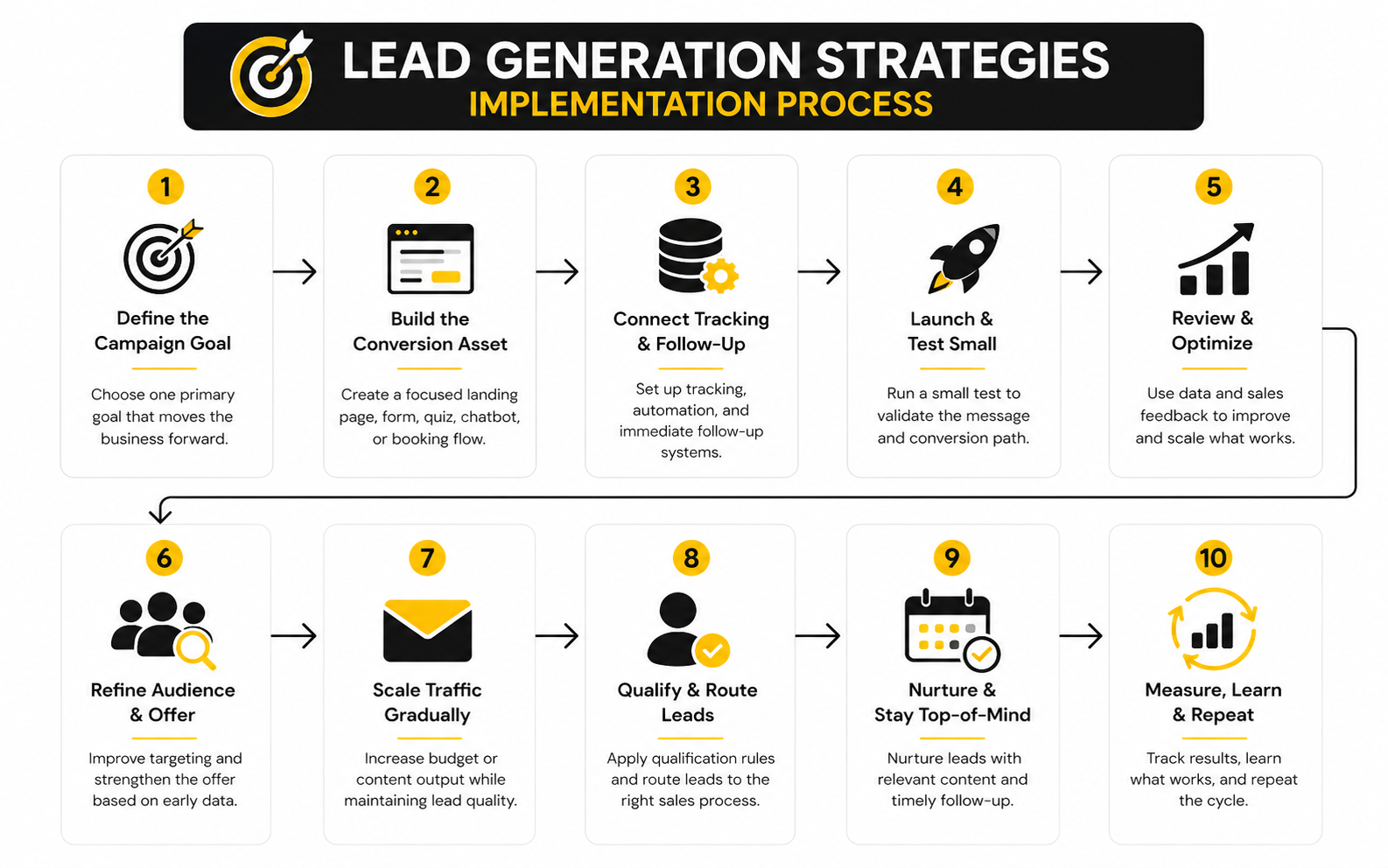
A professional implementation process should move in stages. First, define the audience and offer. Second, build the conversion path. Third, connect the CRM and follow-up. Fourth, launch with a small test. Fifth, review lead quality and revenue signals before scaling.
The order matters. Do not scale traffic before you know the page converts. Do not automate follow-up before you know the message is right. Do not judge a channel only by cost per lead when sales feedback says the leads are weak.
Step 1: Define the Campaign Goal
Every campaign needs one primary goal. That goal could be booked calls, demo requests, trial signups, quote requests, webinar registrations, newsletter subscribers, or qualified inbound inquiries. The more specific the goal, the easier it is to build the right path.
This also prevents mixed messaging. A campaign built for booked strategy calls should not behave like a newsletter campaign. A campaign built for top-of-funnel education should not pressure cold visitors into a hard sales conversation before trust exists.
Start by deciding what action would actually move the business forward. Then build the landing page, form, thank-you page, email sequence, and sales process around that action. Simple wins here because simple is easier to measure.
Step 2: Build the Conversion Asset
The conversion asset is the page, form, quiz, chatbot, booking flow, or funnel where the lead becomes known. This asset should make the offer obvious within seconds. The reader should understand what they get, who it is for, why it matters, and what happens after they submit.
Keep the page focused. Remove unnecessary navigation, vague claims, and anything that distracts from the main decision. Use proof where it helps, but do not pad the page with generic testimonials or unsupported promises.
If the offer requires more qualification, use a form builder like Fillout to ask better questions without making the experience feel heavy. If the offer is conversational, a chatbot option like Chatbase can help answer common questions before a visitor decides whether to take the next step.
Step 3: Connect Tracking and Follow-Up
Tracking has to be in place before traffic starts. You need to know where leads came from, which offer they chose, what they submitted, and what happened after the handoff. Without that, optimization turns into guessing.
Follow-up should begin immediately after the conversion. That can include a confirmation email, calendar reminder, SMS, sales notification, CRM task, nurture sequence, or retargeting audience. A platform like GoHighLevel can be useful here because lead capture, pipeline tracking, and automated follow-up can live in one place.
The key is to keep the first follow-up aligned with the original promise. If someone requested an audit, do not send a generic newsletter first. If someone booked a call, give them the preparation steps that make the call more useful.
Statistics and Data That Actually Matter
Data is useful only when it changes what you do next. A dashboard full of impressions, clicks, opens, and form fills can look impressive while the pipeline stays flat. The job of measurement is not to prove that marketing was busy; it is to show which lead generation strategies create qualified conversations, real opportunities, and revenue.
The first rule is to separate activity metrics from outcome metrics. Activity metrics show whether people are engaging with the campaign. Outcome metrics show whether the campaign is attracting the right people and moving them toward a buying decision.
That distinction matters because a campaign can produce cheap leads and still fail. If those leads do not book calls, attend demos, answer follow-up, or become qualified opportunities, the low cost per lead is just a distraction. You are not optimizing for the cheapest contact; you are optimizing for the most profitable path to a customer.
The Metrics Worth Tracking
The most useful lead generation metrics follow the buyer from first touch to closed revenue. You do not need 40 numbers on the dashboard. You need the few that tell you where momentum is being created or lost.
Track these metrics first:
- Traffic by source
- Landing page conversion rate
- Cost per lead
- Lead-to-meeting conversion rate
- Meeting show rate
- Lead-to-qualified-opportunity rate
- Opportunity-to-customer rate
- Cost per qualified opportunity
- Revenue by source
- Time from lead capture to first response
Each metric answers a different question. Traffic tells you whether the channel is reaching enough people. Conversion rate tells you whether the offer and page are working. Sales-stage metrics tell you whether the leads are actually worth pursuing.
The most important shift is moving from lead volume to lead quality. A 2025 demand generation benchmark survey found that B2B teams are prioritizing better attribution, stronger marketing-sales alignment, and higher-quality leads over traditional volume metrics like raw lead count: Demand Gen Report. That is the right direction because volume only matters when it creates pipeline.
How to Read Conversion Benchmarks
Benchmarks are useful for orientation, but they are dangerous when treated like universal rules. A 3% landing page conversion rate might be poor for a warm remarketing campaign and perfectly acceptable for cold traffic in an expensive B2B category. The number only makes sense when you know the channel, offer, audience temperature, and deal size.
A broad B2B benchmark can give you a starting point. Ruler Analytics data cited in 2025 industry analysis placed the median B2B conversion rate around 2.9%, with major variation by industry and page type: Ruler Analytics benchmark coverage. The action is not to blindly chase that number. The action is to compare your own conversion rate by segment and find the biggest leak.
For example, if paid search traffic converts well but social traffic does not, the problem may not be the page. The problem may be intent mismatch. If demo requests convert but show rates are weak, the issue may be follow-up, reminders, calendar friction, or poor qualification.
Why Speed to Lead Changes the Economics
Speed to lead is one of the cleanest performance signals because it directly affects whether interest turns into a conversation. A prospect who just requested help is in a high-attention moment. If your team waits too long, that moment fades, and the buyer may talk to a competitor first.
This is not just a sales operations detail. It changes the economics of the entire campaign. If two companies pay the same amount for the same lead, the company that responds faster and follows up better can afford more traffic because it extracts more value from each inquiry.
A 2024 lead response study in the legal market found a median online lead response time of 13 minutes, down from 21 minutes the year before: Hennessey Digital. The specific benchmark will vary by industry, but the lesson travels well. If your offer attracts high-intent leads, response speed should be measured in minutes, not days.
Building a Clean Analytics System
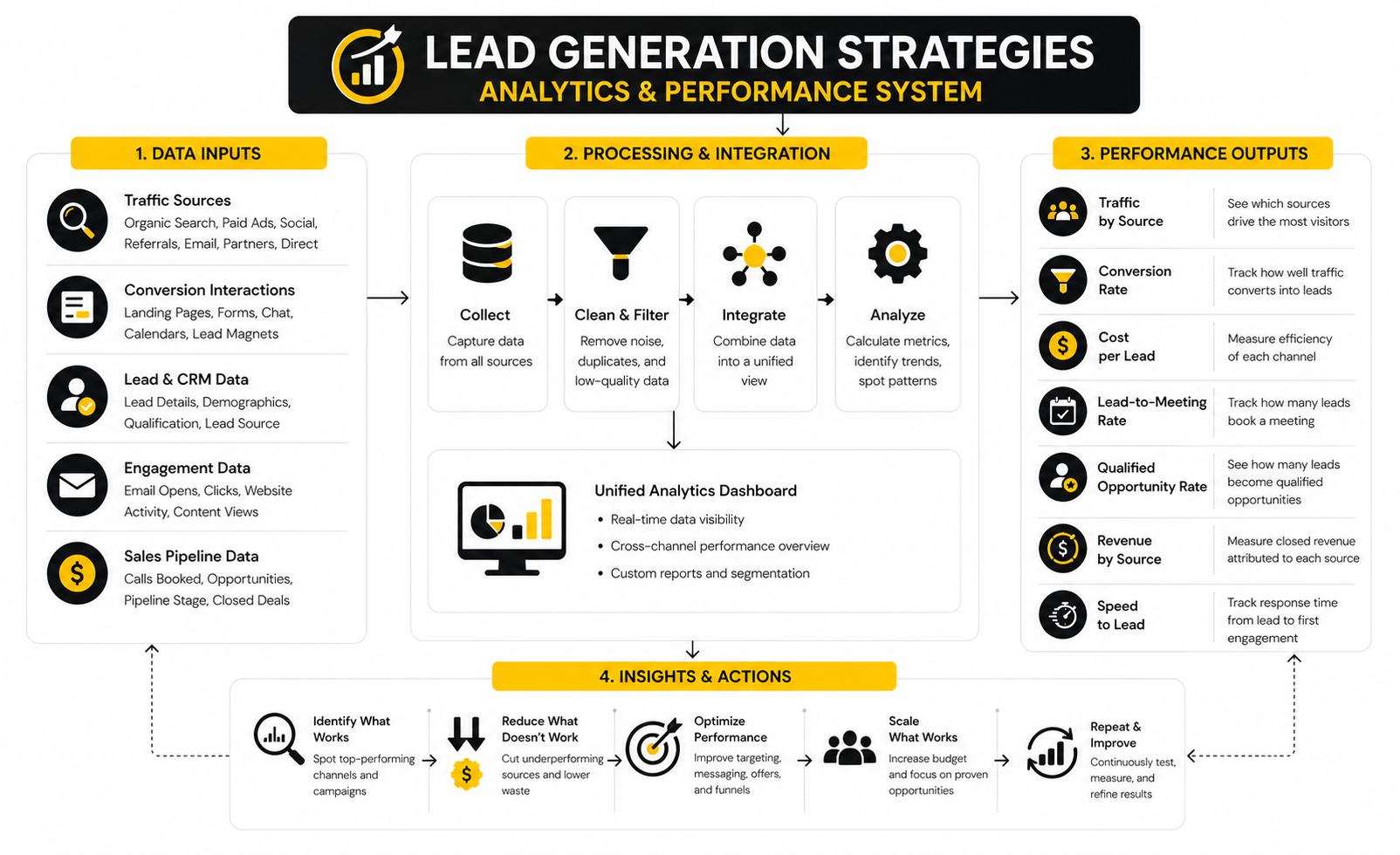
A clean analytics system connects the campaign source, conversion action, CRM stage, follow-up status, and revenue outcome. Without that connection, you can see where leads came from but not whether they became pipeline. That is why source tracking and CRM discipline matter so much.
At minimum, each lead should carry the original source, campaign, offer, landing page, conversion date, qualification status, and next action. This gives you enough visibility to compare channels fairly. A CRM and automation setup in GoHighLevel, Copper, or Brevo can make this easier when the pipeline is growing and manual tracking starts breaking down.
The goal is not perfect attribution. Perfect attribution is usually a fantasy, especially when buyers research across search, social, email, referrals, and direct visits before converting. The goal is useful attribution: enough clarity to know which campaigns deserve more budget, which need fixing, and which should be stopped.
What Email and Nurture Data Really Means
Email metrics are often misunderstood. Open rates can show whether your subject lines and sender trust are working, but they are not the final score. Clicks, replies, booked calls, reactivations, and sales conversations matter more because they show deeper intent.
Recent email benchmark reporting put average open rates around the low 40% range and average click rates around 2% for many campaigns: MailerLite. Those numbers are useful only as a rough reference. A small list of high-intent prospects can outperform a huge cold list even if the open rate looks less exciting.
For lead generation, the better question is whether nurture is moving people forward. Are leads returning to the site? Are they booking calls after receiving education? Are old leads reactivating when a better-timed offer appears? If the answer is no, the sequence probably needs stronger segmentation, better timing, or a more relevant next step.
Turning Data Into Decisions
Data should drive specific action. If a landing page gets traffic but few conversions, test the offer, headline, proof, form length, and call to action. If leads convert but sales rejects them, tighten targeting and qualification. If qualified leads stall after the first call, review the sales handoff and nurture sequence.
The fastest improvements usually come from fixing the biggest bottleneck, not from redesigning the entire system. One campaign may need a better landing page. Another may need faster follow-up. Another may need a stronger offer because the audience understands the problem but does not see enough reason to act now.
Review performance in layers:
- Channel performance: Which sources create leads at a reasonable cost?
- Conversion performance: Which pages and offers turn attention into contacts?
- Qualification performance: Which leads match your ideal customer profile?
- Sales performance: Which leads become meetings, opportunities, and customers?
- Revenue performance: Which campaigns create profitable pipeline?
This is where lead generation strategies become mature. You stop asking, “How do we get more leads?” and start asking, “Where is the system leaking revenue?” That question leads to better decisions, cleaner campaigns, and a pipeline you can actually trust.
Advanced Considerations Before You Scale
Scaling lead generation is not the same as buying more traffic. When the foundation is weak, more traffic only exposes the cracks faster. You get more leads, more noise, more follow-up problems, more sales frustration, and often less confidence in the strategy.
The smart move is to scale only after the system proves that it can turn attention into qualified pipeline. That means the offer converts, the follow-up works, sales accepts the leads, and the economics make sense. Until then, growth should come from controlled tests, not aggressive budget increases.
This is where lead generation strategies become more strategic than tactical. The question stops being “Which tactic should we try next?” and becomes “Which part of the system can handle more volume without lowering quality?” That shift protects your budget and keeps the team focused on revenue, not vanity metrics.
Lead Quality Versus Lead Volume
Lead volume feels good because it is easy to count. Lead quality matters more because it determines whether sales can actually create revenue from the campaign. A company can double its leads and still hurt performance if the extra contacts are poorly matched, low intent, or impossible to reach.
This is why qualification standards need to be clear before scaling. Define what makes a lead worth sales attention, what should go into nurture, and what should be filtered out completely. If those rules are vague, the team will argue about lead quality after the campaign is already running.
A useful lead quality framework should include fit, intent, urgency, authority, and problem clarity. Fit tells you whether the prospect matches your ideal customer profile. Intent tells you whether they are actively exploring a solution. Urgency tells you whether the problem is painful enough to address soon. Authority tells you whether they can influence the buying process. Problem clarity tells you whether the offer actually matches what they need.
Marketing and Sales Alignment
Marketing and sales alignment is not a weekly meeting where everyone politely reviews the dashboard. It is a shared operating system for defining, routing, and improving opportunities. If marketing optimizes for form fills while sales optimizes for revenue, conflict is guaranteed.
The handoff should be specific. Sales needs to know where the lead came from, what they requested, what problem they described, what content they touched, and what follow-up already happened. Without that context, the first sales conversation feels cold even when the lead is technically inbound.
Modern B2B buying also involves more people than many campaigns assume. Forrester’s 2025 buyer research found that 73% of purchases involve three or more departments, with an average of 13 people inside the buyer’s organization and nine outside participants involved in the decision: Forrester. That means lead generation cannot only persuade one person. It must help a buying group build internal confidence.
The Risk of Over-Automation
Automation is powerful, but lazy automation damages trust. When every lead gets the same sequence, the same generic follow-up, and the same artificial urgency, prospects can feel the system more than the help. That is not a small problem because trust is often the difference between a lead that replies and a lead that disappears.
Use automation for speed, routing, reminders, segmentation, and consistency. Do not use it as a substitute for relevance. A high-intent lead who requested a proposal deserves a different experience from someone who downloaded a broad educational resource.
AI makes this even more important. LinkedIn’s 2025 B2B marketing benchmark found that marketers are measuring AI impact through efficiency, revenue growth, conversion rate, lead generation, and return on ad spend: LinkedIn. Efficiency is useful, but if AI helps you send more average messages faster, you have not improved the strategy. You have just automated mediocrity.
Personalization Without Making It Complicated
Personalization does not mean writing a custom essay for every prospect. It means using what you know to make the next message more relevant. Source, industry, role, offer, behavior, and form answers are usually enough to create a better experience.
For example, a founder who books a growth audit from a paid ad should receive a different confirmation and nurture path than an ecommerce manager who downloads a landing page checklist. The first person may need preparation questions and proof of your process. The second may need examples, benchmarks, and a practical reason to book a consultation later.
This is where segmentation pays off. Keep the system simple at first, then add personalization where it clearly improves conversion or sales quality. If you cannot explain why a segment needs different messaging, do not create it yet.
Channel Diversification and Dependency
Relying on one channel is comfortable until it breaks. Paid costs can rise. Search rankings can drop. Social reach can change. Cold outreach can become less effective as inboxes get noisier and regulations tighten.
Diversification protects the pipeline, but it has to be done carefully. Adding five channels at once creates complexity before you know what is working. A better approach is to build one primary acquisition channel, one trust-building channel, and one nurture or reactivation channel before expanding further.
For many businesses, that could mean search content for demand capture, social content for trust, and email for nurture. For others, it could mean partnerships, paid search, and outbound. The right mix depends on where buyers already pay attention and how much education they need before acting.
Compliance, Consent, and Trust
Lead generation also has legal and ethical boundaries. Consent, privacy, email compliance, data handling, and platform rules matter because shortcuts can create real business risk. Even when a tactic works in the short term, it can damage reputation if prospects feel tricked, scraped, or pressured.
This is especially important when using forms, cookies, email sequences, SMS follow-up, chatbots, or enrichment data. Be clear about what people are signing up for, store data responsibly, and avoid making claims you cannot support. Trust is not only a brand asset; it is a conversion asset.
Good compliance also improves quality. When people understand what they will receive and why, the leads you capture are more intentional. That means fewer junk contacts, better replies, and cleaner performance data.
When to Add More Tools
Tools should remove bottlenecks, not create a messy stack. Add software when there is a clear operational problem: leads are not being routed, follow-up is inconsistent, forms are too limited, attribution is unclear, or sales cannot see the full history. Do not add tools just because the current dashboard feels boring.
A simple stack can outperform a complex one when the process is clear. You may only need a landing page builder, form tool, CRM, email platform, calendar, and reporting layer. As the system grows, you can add chat, enrichment, AI support, call tracking, or advanced attribution where the payoff is obvious.
The buying rule is simple: every tool should make the lead journey faster, clearer, or more measurable. If it does not improve the prospect experience or the team’s ability to convert demand, it is probably just another login.
Bringing the System Together
At this point, the pattern should be clear. Lead generation strategies work best when they are connected, measured, and built around buyer intent. A landing page alone is not a system. A CRM alone is not a system. A paid campaign alone is not a system.
The system is the relationship between all of those pieces. Your message attracts the right person, your offer gives them a reason to act, your conversion path captures the signal, your follow-up protects the momentum, and your data shows whether the whole thing is creating revenue. When one part is weak, the rest of the system feels harder than it should.
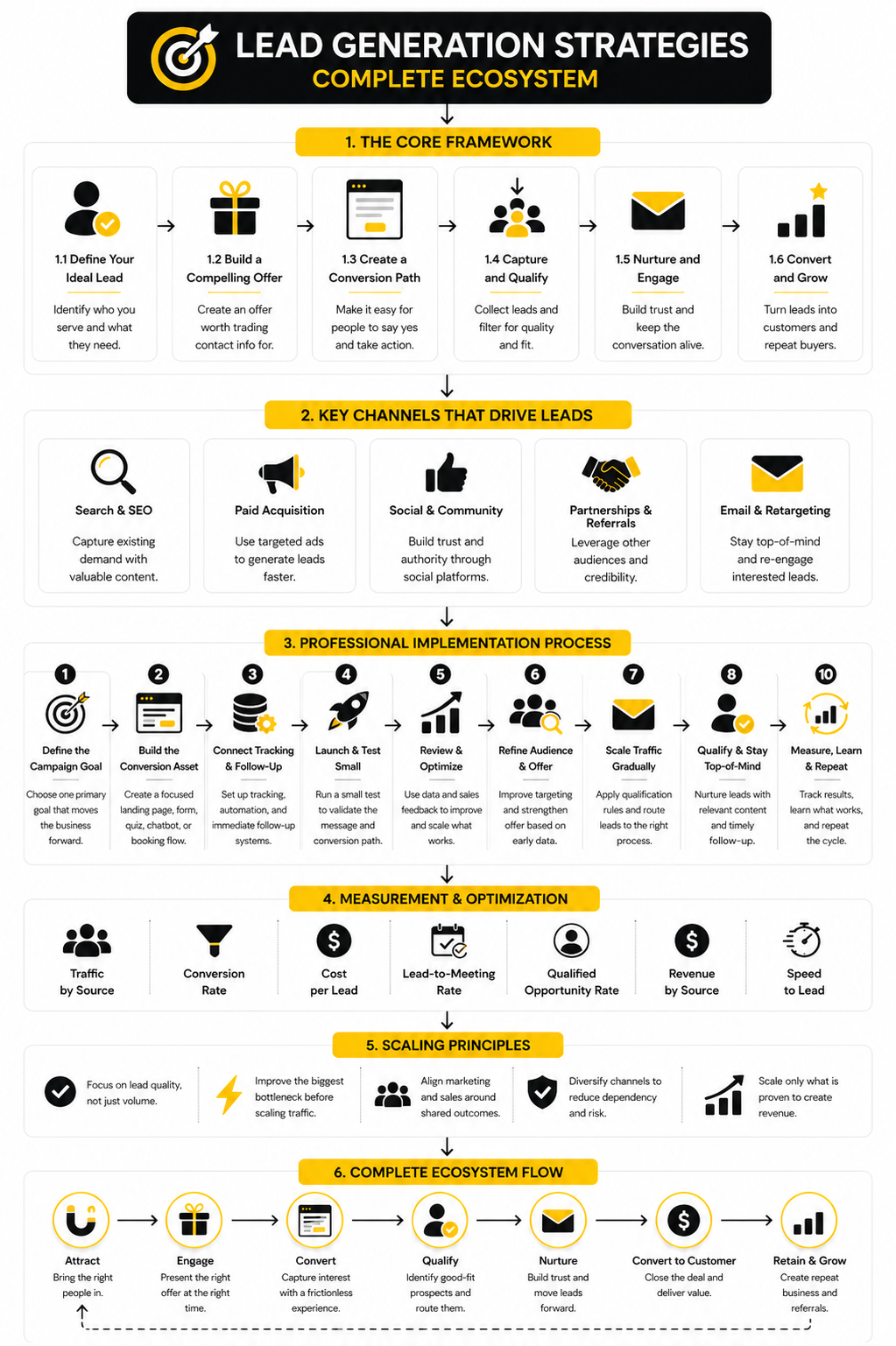
The final move is to make the system easier to improve. Keep the strategy simple enough that your team can understand it, but structured enough that performance does not depend on luck. That is how lead generation becomes a repeatable growth asset instead of a monthly scramble for more contacts.
FAQ - Built for Complete Guide
What are lead generation strategies?
Lead generation strategies are the planned methods a business uses to attract potential buyers and turn their interest into a known contact or sales opportunity. They can include SEO, paid ads, social content, referrals, webinars, lead magnets, chat, outbound, partnerships, and email nurture. The best strategies do not chase every possible lead; they focus on attracting the right people and moving them toward a clear next step.
What is the best lead generation strategy?
The best strategy depends on your audience, offer, sales cycle, and budget. For high-intent demand, search and paid search can work well because people are already looking for a solution. For trust-heavy markets, content, social proof, partnerships, and nurture often matter more because buyers need confidence before they act.
How do you generate high-quality leads?
High-quality leads usually come from strong targeting, clear positioning, and an offer that matches real buyer intent. You need to define who is a good fit, what problem they are trying to solve, and what action shows serious interest. Then your forms, qualification questions, CRM fields, and sales handoff should all support that definition.
Why do many lead generation campaigns fail?
Many campaigns fail because they optimize for lead volume instead of lead quality. They attract people with a weak or overly broad offer, then hand those contacts to sales without enough context. The result is a campaign that looks active on the dashboard but does not create enough qualified conversations.
How many lead generation channels should a business use?
Most businesses should start with one primary channel, one trust-building channel, and one follow-up channel. That could mean SEO, LinkedIn, and email nurture, or paid search, retargeting, and sales calls. Adding too many channels too early usually creates noise before the team has learned what actually works.
What is a good lead magnet?
A good lead magnet solves a specific problem quickly and attracts the kind of person you actually want as a customer. Templates, checklists, calculators, audits, webinars, comparison guides, and diagnostic tools can all work when they match buyer intent. The lead magnet should naturally connect to the next step, not sit disconnected from the sales process.
How important is follow-up in lead generation?
Follow-up is critical because most leads do not convert immediately. The first response should confirm the action, set expectations, and move the prospect toward the next useful step. After that, nurture should answer objections, build trust, and keep the conversation relevant without spamming the lead.
What metrics should I track for lead generation?
Track the metrics that show movement from attention to revenue. Useful numbers include traffic by source, conversion rate, cost per lead, lead-to-meeting rate, show rate, qualified opportunity rate, opportunity-to-customer rate, and revenue by source. If a metric does not help you make a better decision, it should not dominate the dashboard.
Should small businesses use automation for lead generation?
Yes, but only where automation improves speed, consistency, or organization. Small businesses can use automation for confirmations, reminders, email nurture, lead routing, CRM updates, and missed-call follow-up. The mistake is using automation to send generic messages that do not match the prospect’s intent.
What tools help with lead generation?
Useful tools depend on the bottleneck. A funnel builder like ClickFunnels or Systeme.io can help with pages and campaign flow. A platform like GoHighLevel can help with CRM, automation, and follow-up. Tools like Fillout, Brevo, and ManyChat can support forms, email, and conversational capture.
How long does lead generation take to work?
Some channels can produce leads quickly, especially paid search, paid social, referrals, and outbound. Other channels, such as SEO, content, and organic social, usually take longer because they build trust and visibility over time. The real question is not only how fast leads arrive, but how quickly those leads become qualified conversations and revenue.
What is the difference between demand generation and lead generation?
Demand generation creates awareness, interest, and trust before someone is ready to buy. Lead generation captures that interest and turns it into a known contact or sales opportunity. They work best together because demand without capture can be hard to measure, while lead capture without demand often feels forced.
How do I improve poor lead quality?
Start by reviewing the source, offer, form questions, and sales feedback. Poor lead quality often means the campaign is attracting the wrong audience or promising something that pulls in curiosity instead of buying intent. Tighten the message, add better qualification questions, and measure qualified opportunities instead of raw lead count.
When should a company scale its lead generation?
Scale when the system is already producing qualified leads at a cost the business can support. Before increasing spend, confirm that the landing page converts, follow-up happens quickly, sales accepts the leads, and opportunities are moving through the pipeline. Scaling too early usually makes weak systems more expensive.
Work With Professionals
Explore 10K+ Remote Marketing Contracts on MarkeWork.com
Most marketers spend too much time chasing clients, competing on crowded platforms, and losing a percentage of every project to middlemen.
MarkeWork gives you a better way. Browse thousands of remote marketing contracts and connect directly with companies desperate to hire skilled marketers like you, without platform commissions and without unnecessary gatekeepers.
If you're serious about finding better opportunities and keeping 100% of what you earn, explore available contracts and create a profile for free at MarkeWork.com.