

Most businesses don’t fail because they lack effort. They fail because they misunderstand the market they’re operating in. That misunderstanding compounds over time—wrong positioning, poor pricing, misaligned messaging—and eventually leads to decisions that feel right internally but collapse externally.
Market analysis is what prevents that slow drift into irrelevance. It forces clarity. It replaces assumptions with evidence and gut feelings with patterns you can actually validate. When done properly, it becomes less of a one-time activity and more of a continuous competitive advantage.
In today’s environment, where industries shift faster than ever and customer expectations evolve in real time, market analysis is no longer optional. It’s the operating system behind every serious growth strategy.
Article Outline
- The Real Role of Market Analysis in Modern Business
- Why Market Analysis Matters More Than Ever
- Market Analysis Framework Overview
- Core Components of a Strong Market Analysis
- How Professionals Actually Execute Market Analysis
- Common Pitfalls and What Most People Get Wrong
The Real Role of Market Analysis in Modern Business
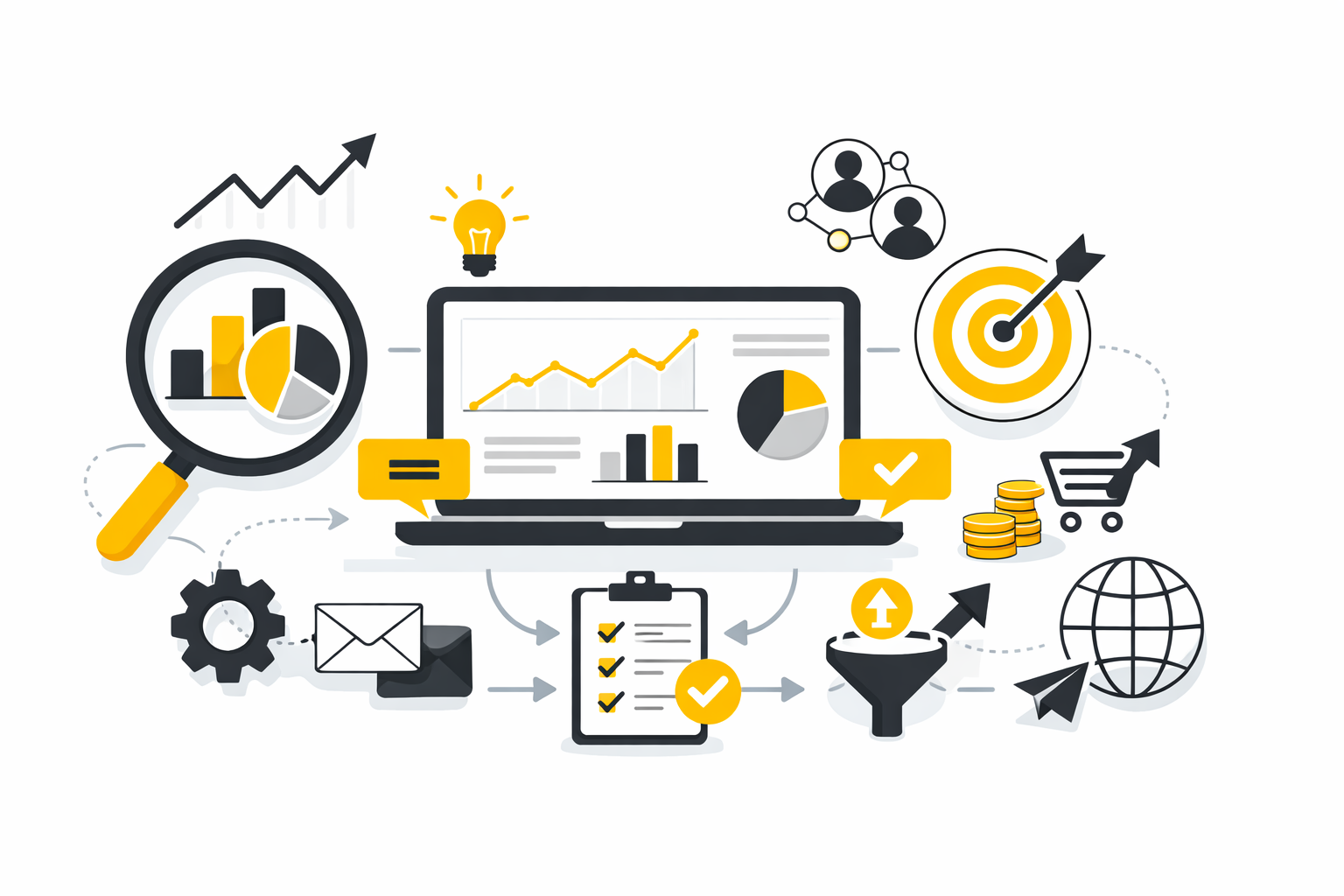
Market analysis isn’t just about collecting data. It’s about understanding how multiple forces interact—customers, competitors, trends, and economic conditions—and translating that into decisions that move the business forward.
At its core, market analysis answers three critical questions:
- Where is the opportunity?
- Who is the customer really?
- What is the competitive reality?
When companies ignore these questions, they rely on internal assumptions. When they answer them properly, they gain external awareness—and that’s where real leverage comes from.
Recent industry data from Statista shows that over 70% of failed product launches are linked to poor market fit rather than poor execution. That distinction matters. Execution can be fixed. Market misalignment is much harder to recover from.
This is why high-growth companies build systems around continuous market insight. Tools like GoHighLevel are increasingly used not just for marketing automation, but for tracking customer behavior patterns that feed directly into ongoing market analysis.
Why Market Analysis Matters More Than Ever
The environment has changed. What worked even three years ago is no longer reliable.
Three major shifts have made market analysis more critical than ever:
1. Faster Market Cycles
Industries are evolving at a pace that traditional planning cycles can’t keep up with. Product lifecycles are shorter, trends emerge faster, and customer expectations shift almost instantly.
A report from McKinsey highlights that companies able to adapt to market changes quickly are significantly more likely to outperform competitors in revenue growth.
Without continuous market analysis, businesses react too late.
2. Customer Behavior Is Less Predictable
Customers now have more information, more options, and shorter attention spans. Their decisions are influenced by:
- Social proof
- Micro-trends
- Platform algorithms
- Peer recommendations
This makes static personas outdated. Real market analysis focuses on dynamic behavior patterns instead.
Platforms like ManyChat help businesses capture real-time customer interactions, giving insights that traditional surveys simply can’t provide anymore.
3. Competition Is More Aggressive
Barriers to entry have dropped across almost every industry. That means:
- More competitors
- Faster imitation
- Increased pricing pressure
Market analysis is what allows a business to differentiate strategically instead of competing blindly.
Without it, companies default to price wars. With it, they compete on positioning, value, and timing.
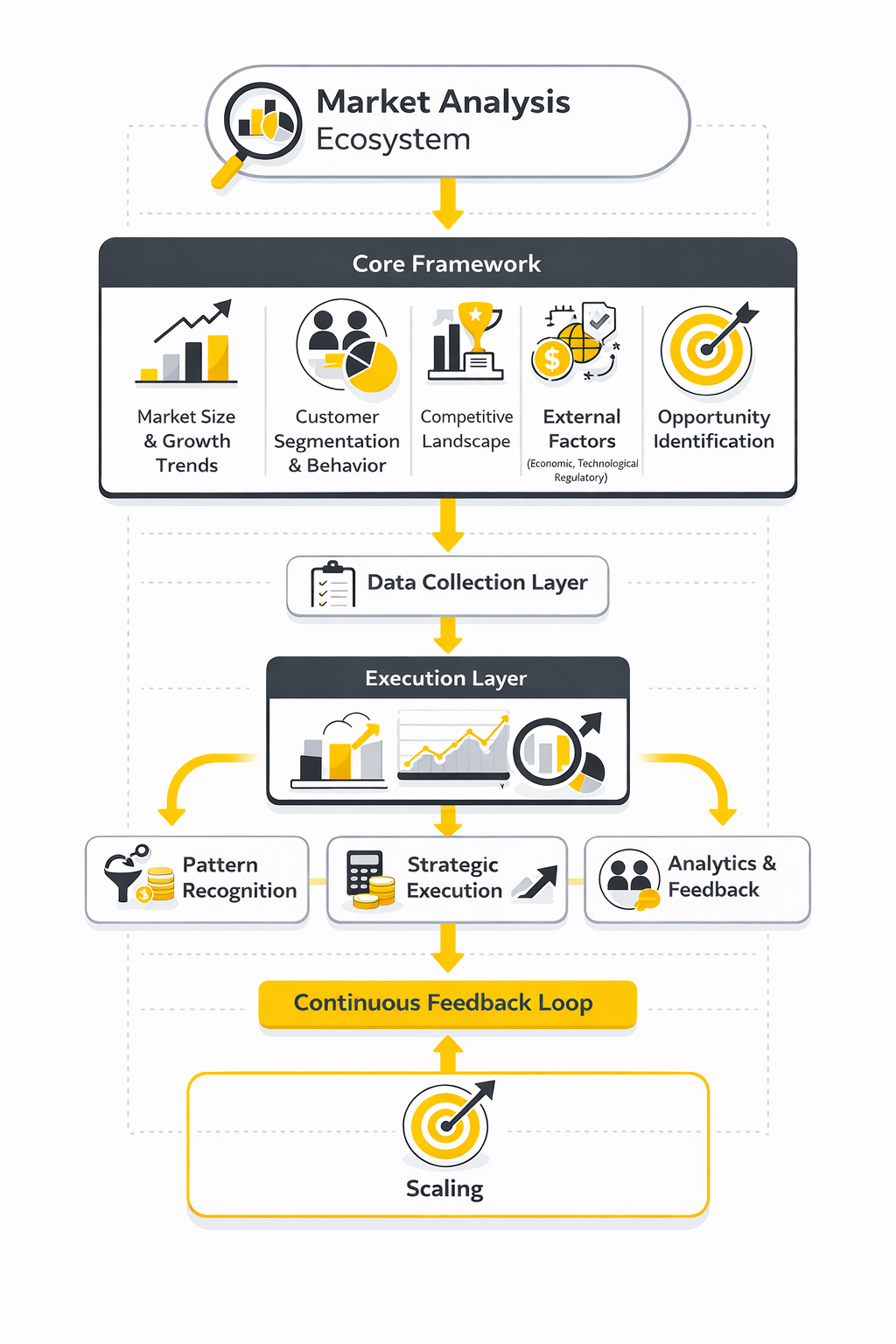
Market Analysis Framework Overview
A strong market analysis isn’t random. It follows a structured framework that ensures nothing critical is missed.
At a high level, the framework includes:
- Market size and growth trends
- Customer segmentation and behavior
- Competitive landscape
- External factors (economic, technological, regulatory)
- Opportunity identification
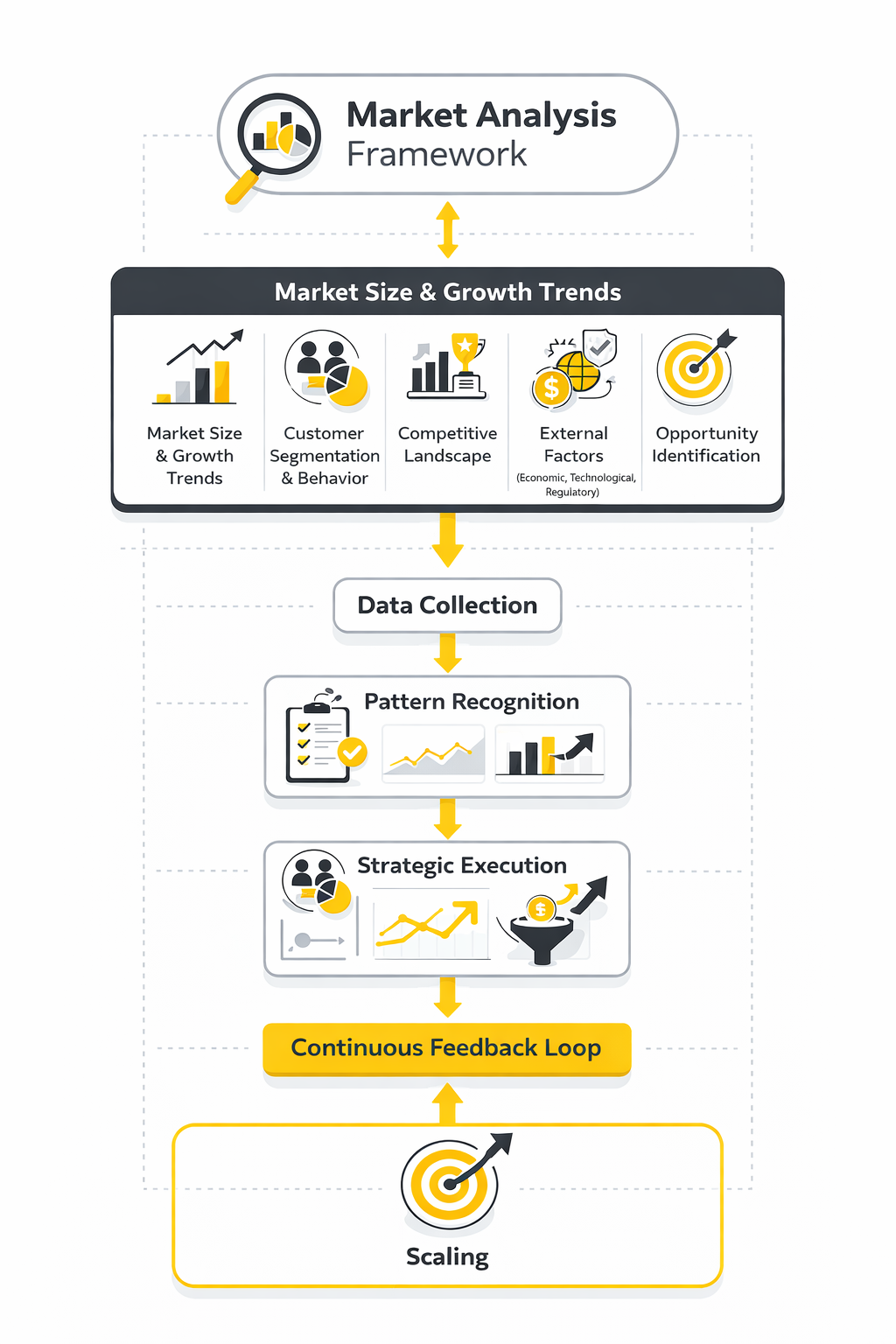
This framework acts as a decision-making filter. Every insight should connect back to one core question: does this improve our ability to compete and grow?
Modern teams often integrate multiple tools into this process. For example:
- Funnel analysis using ClickFunnels
- Customer communication tracking via Brevo
- Social trend monitoring through Buffer
These tools don’t replace market analysis—they enhance it by providing better inputs.
The key is not the tools themselves, but how the insights are connected into a cohesive understanding of the market.
The next part dives deeper into the core components of market analysis—where most businesses either build real clarity or completely lose direction.
Core Components of a Strong Market Analysis
Once the framework is clear, the real work begins. This is where most businesses either gain sharp clarity or end up drowning in disconnected data that never turns into action.
A strong market analysis is built on a few core components. Miss one of them, and the entire picture becomes distorted.
Market Size and Growth Reality
Understanding market size isn’t just about big numbers—it’s about accessible opportunity. There’s a massive difference between a large theoretical market and the portion you can realistically capture.
Serious analysis breaks this down into:
- Total Addressable Market (TAM)
- Serviceable Available Market (SAM)
- Serviceable Obtainable Market (SOM)
Recent global data from IBISWorld and Statista consistently shows that industries with strong growth trajectories tend to attract aggressive competition quickly. That means identifying growth early is useful—but understanding saturation is what actually protects margins.
This is where tools like Systeme.io can quietly become powerful. By analyzing funnel conversion data across different segments, you’re not just estimating market demand—you’re observing real buying behavior at scale.
Customer Segmentation That Reflects Reality
Most businesses think they understand their customer. Very few actually do.
Traditional segmentation—age, gender, location—is too shallow to drive meaningful decisions today. What matters now is:
- Buying intent
- Pain point intensity
- Trigger events
- Channel preference
Research from Deloitte highlights that companies using behavioral segmentation outperform peers in customer retention and lifetime value. That’s not surprising. Behavior predicts action far better than demographics ever could.
Advanced segmentation often comes from tracking real interactions. Platforms like Chatbase allow businesses to analyze conversations at scale, revealing patterns that surveys simply miss.
Competitive Landscape That Goes Beyond Surface Level
Looking at competitors is easy. Understanding them is harder.
Most companies stop at:
- Pricing comparisons
- Feature lists
- Visual branding
That’s surface-level analysis. Real competitive insight digs deeper into:
- Positioning strategy
- Customer perception
- Distribution channels
- Retention mechanisms
A detailed report from Harvard Business Review emphasizes that companies win not by copying competitors, but by identifying gaps in how value is delivered.
Tools like Replo make it easier to reverse-engineer high-performing landing pages and understand how competitors convert attention into revenue. That’s where real insights live.
External Forces You Can’t Ignore
No market operates in isolation. External forces shape demand, pricing, and even customer expectations.
These typically fall into four categories:
- Economic conditions
- Technological shifts
- Regulatory changes
- Cultural trends
For example, inflation data from World Bank and IMF over the past two years has shown direct impact on consumer spending behavior across multiple industries.
Ignoring these factors leads to strategies that look good internally but fail externally. Strong market analysis always accounts for the broader environment.
Identifying Real Opportunities (Not Just Ideas)
This is where everything comes together.
Opportunity isn’t about what could work. It’s about what:
- Solves a real problem
- Has measurable demand
- Faces manageable competition
- Can be executed profitably
The difference between ideas and opportunities is evidence.
Businesses that consistently find high-quality opportunities tend to rely on systems, not guesswork. For example, combining automation tools like GoHighLevel with structured data collection allows teams to continuously validate whether an opportunity is strengthening or weakening over time.
How Professionals Actually Execute Market Analysis
Knowing the components is one thing. Executing them properly is something else entirely.
Professionals don’t approach market analysis as a one-time report. They treat it as an ongoing process with clear stages.
Stage 1: Data Collection With Intent
Most people collect too much data and still miss what matters.
Effective market analysis starts with focused questions:
- What decision are we trying to make?
- What information would change that decision?
From there, data collection becomes targeted instead of overwhelming.
Common sources include:
- Industry reports
- Customer interviews
- Behavioral analytics
- Competitor tracking
Automation plays a big role here. Tools like Firecrawl help extract structured data from large volumes of web content, turning scattered information into usable insight much faster.
Stage 2: Pattern Recognition and Synthesis
Raw data doesn’t create value. Patterns do.
This is where professionals look for:
- Repeating customer behaviors
- Shifts in demand
- Gaps in competitor offerings
- Emerging trends
The goal isn’t to analyze everything. It’s to identify what actually matters.
Platforms like Trycomp can assist in synthesizing complex datasets, helping teams spot connections that would otherwise take weeks to uncover manually.
Stage 3: Translating Insight Into Strategy
This is the step most businesses skip—and it’s why their market analysis never pays off.
Insights must lead to decisions:
- Adjusting positioning
- Refining pricing
- Targeting different segments
- Changing distribution channels
If analysis doesn’t change behavior, it’s just intellectual exercise.
Execution tools matter here. For example, ClickFunnels allows rapid testing of new offers and messaging, turning insights into measurable outcomes quickly.
Stage 4: Continuous Feedback Loop
Markets don’t stand still. Neither should your analysis.
High-performing companies build feedback loops that continuously update their understanding of the market. This includes:
- Tracking conversion rates
- Monitoring customer feedback
- Watching competitor changes
- Measuring retention and churn
Email platforms like Moosend are often used not just for communication, but for gathering ongoing behavioral data that feeds directly back into market analysis.
The loop looks like this:
- Analyze
- Act
- Measure
- Refine
And then repeat—continuously.
The next part focuses on where market analysis breaks down in the real world, and why even experienced teams often get it wrong.
Turning Market Analysis Into a Repeatable System
At this point, the difference becomes obvious.
Most businesses understand market analysis conceptually. Very few turn it into a system they can execute consistently. That’s the gap between occasional insight and sustained competitive advantage.
Professionals don’t rely on one-off research projects. They build processes that run continuously, feeding decision-making every week—not once a year.
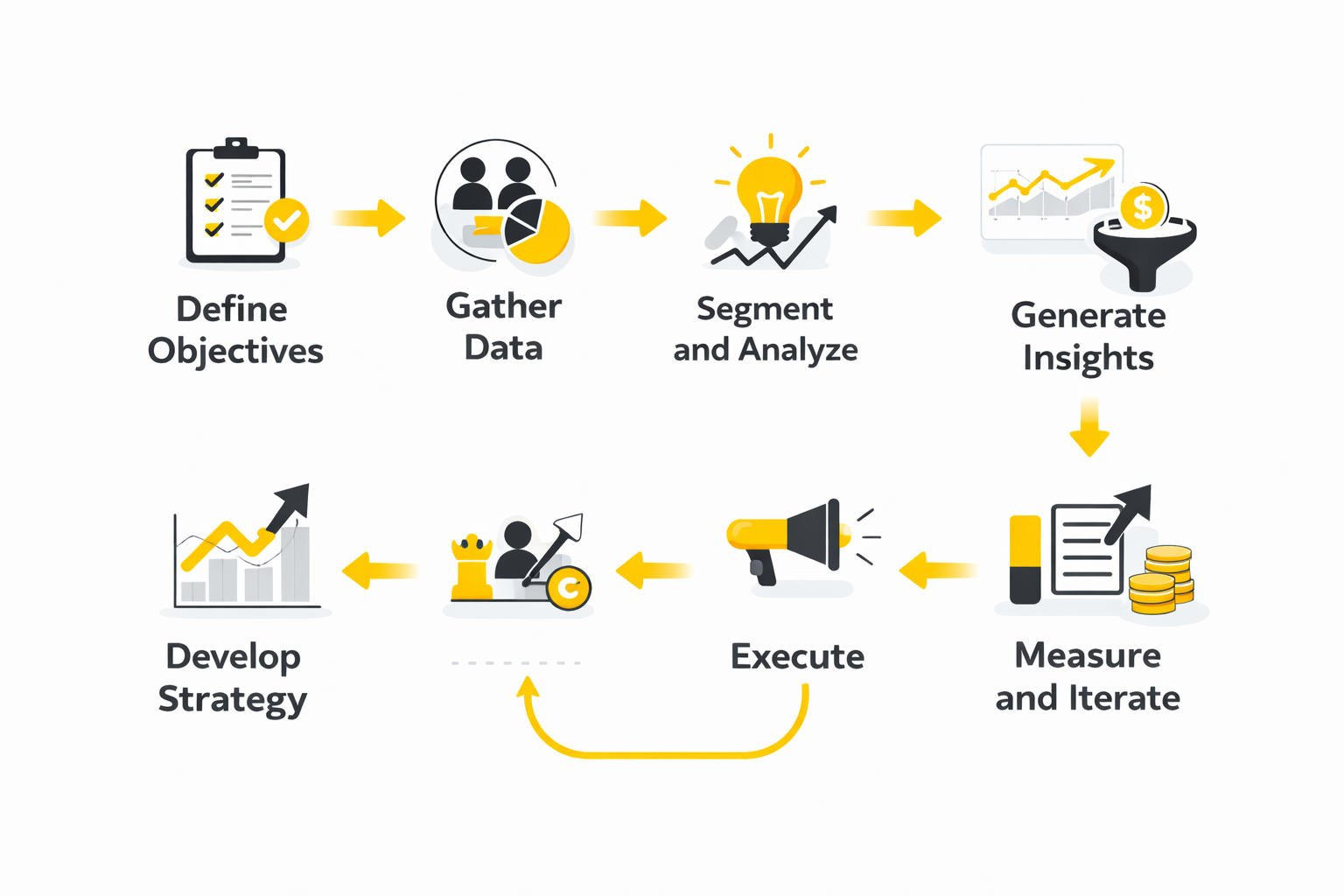
Building a Practical Market Analysis Workflow
A workable system doesn’t need to be complex. It needs to be structured and repeatable.
Here’s what that typically looks like in practice:
- Define a specific decision to support
- Collect targeted data (not everything)
- Extract patterns and insights
- Translate those insights into action
- Measure outcomes and refine
This sequence sounds simple, but execution is where things break down. Most teams skip steps or rush the process, which leads to incomplete or misleading conclusions.
The key is discipline. Every cycle of market analysis should follow the same logic, even if the inputs change.
Step 1: Define the Decision Before the Data
This is where professionals immediately separate themselves.
Instead of asking “What does the market look like?”, they ask:
- Should we enter this segment?
- Should we reposition our offer?
- Should we increase prices?
Clarity at this stage prevents wasted effort. Without it, teams collect massive amounts of data that never actually influence a decision.
In high-performing teams, this step is often tied directly to revenue goals or growth experiments. Tools like GoHighLevel are used to align marketing data with specific business outcomes, ensuring analysis stays grounded in reality.
Step 2: Collect Data That Actually Moves the Needle
Data collection is not about volume—it’s about relevance.
The most useful sources tend to fall into three categories:
- Direct customer signals (conversations, feedback, behavior)
- Market signals (trends, demand shifts, search patterns)
- Competitive signals (offers, messaging, positioning changes)
A common mistake is relying too heavily on reports while ignoring real-time behavior. That’s why modern workflows integrate live data streams wherever possible.
For example, using ManyChat allows businesses to capture thousands of customer interactions, revealing patterns that static reports simply can’t show.
Step 3: Turn Raw Data Into Clear Patterns
This is where most teams get stuck.
They collect data, maybe even organize it—but they don’t extract clear patterns that lead to decisions.
Effective pattern recognition focuses on:
- What is consistently happening?
- What is changing over time?
- What is being ignored by competitors?
It’s not about analyzing everything. It’s about identifying the few signals that actually matter.
Tools like Firecrawl help structure large datasets, making it easier to spot recurring themes across content, competitors, and customer discussions.
Step 4: Translate Insights Into Immediate Action
Insight without action is useless. This is where market analysis becomes valuable—or completely wasted.
Every insight should lead to a decision such as:
- Adjusting messaging
- Refining target segments
- Testing new pricing models
- Launching a new offer
Speed matters here. The longer it takes to act, the less relevant the insight becomes.
Execution platforms like ClickFunnels allow teams to quickly deploy new funnels, landing pages, and offers based on fresh market insights—without long development cycles.
Step 5: Measure What Actually Happened
This is where assumptions get challenged.
After implementation, the focus shifts to:
- Conversion rates
- Customer acquisition cost
- Retention metrics
- Revenue impact
The goal is simple: did the decision improve performance?
If not, the insight was either incomplete or misinterpreted. Either way, it feeds into the next cycle of analysis.
Email platforms like Brevo often double as measurement tools, tracking engagement and behavioral responses that validate whether a strategy is working.
Step 6: Close the Loop and Iterate
This is where market analysis becomes a true system.
Instead of treating each project separately, professionals build a loop:
- Insight leads to action
- Action produces data
- Data refines insight
Over time, this loop compounds. Decisions become sharper, faster, and more aligned with reality.
Automation tools like Trycomp help maintain this loop by continuously analyzing incoming data and updating insights without requiring manual intervention every time.
Why Execution Speed Changes Everything
There’s one factor that often gets underestimated: speed.
Two companies can have the same insights. The one that executes faster wins.
Market conditions shift constantly. Opportunities don’t stay open forever. Delayed execution turns good analysis into outdated information.
Research from Boston Consulting Group shows that companies with faster decision cycles consistently outperform slower competitors in both revenue growth and market share gains.
Speed doesn’t mean rushing blindly. It means reducing friction between insight and action.
That’s why modern market analysis is tightly connected to execution tools. The faster you can test, measure, and adapt, the more valuable your analysis becomes.
The next part breaks down where this entire process fails in real-world scenarios—and why even well-resourced teams often get misleading conclusions from their market analysis.
Reading the Numbers Without Getting Misled
This is where market analysis becomes dangerous if you don’t know what you’re looking at.
Data feels objective, but interpretation is where people go wrong. A dashboard full of numbers can create false confidence fast, especially when teams focus on movement without understanding meaning.
The job is not to collect more metrics. The job is to identify which signals actually tell you whether the market is responding, whether your positioning is landing, and whether your growth is healthy or fragile.
The Metrics That Actually Matter
In practice, most market analysis ends up circling the same core performance signals. That’s not because businesses lack imagination. It’s because a small set of metrics tends to reveal whether the market sees real value.
The most useful signals usually include:
- Conversion rate
- Customer acquisition cost
- Payback period
- Retention rate
- Churn rate
- Average order value or revenue per account
- Expansion revenue or repeat purchase behavior
Each one answers a different question. Conversion rate tells you whether the market is responding. Acquisition cost tells you how expensive that response is. Retention tells you whether the initial win was real or just temporary.
Why Benchmarks Need Context
Benchmarks are useful, but only when handled properly.
A benchmark should never be treated like a universal target. It is a reference point, not a verdict. A conversion rate that looks weak in one category can be strong in another, and a customer acquisition cost that seems high can still be excellent if retention and expansion are strong enough to support it.
This is exactly why strong teams don’t ask, “Is this number good?” They ask, “Good relative to what?” Relative to channel, business model, buying cycle, price point, and customer quality, the same number can tell two completely different stories.
Conversion Rate Is a Signal, Not a Trophy
Conversion rate gets too much attention in isolation.
A rising conversion rate can mean your messaging is sharper and the market fit is improving. It can also mean you narrowed your audience, lowered your prices, or created a short-term spike that doesn’t hold up later. On its own, it doesn’t tell the full story.
That’s why serious teams pair conversion rate with downstream metrics. If conversions rise but retention falls, the market analysis is telling you something uncomfortable: you may be getting more buyers, but worse customers.
Tools like ClickFunnels are valuable here because they make it easier to test offer structure, page flow, and messaging fast enough to see whether conversion improvements are actually sustainable.
Customer Acquisition Cost Only Matters When Paired With Retention
A lot of teams obsess over lowering acquisition cost. That makes sense on the surface, but it can become a trap.
Cheap customers are not automatically good customers. If they churn quickly, require heavy support, or never buy again, low acquisition cost is mostly an illusion. It looks efficient on paper while quietly destroying economics underneath.
This is why customer acquisition cost has to be interpreted alongside retention, revenue quality, and payback speed. Platforms like GoHighLevel help centralize these signals so you’re not judging acquisition in a vacuum.
Retention Is Where the Market Tells the Truth
Retention is one of the cleanest signals in market analysis because it strips away hype.
Customers may click because of a headline. They may buy because of urgency. But they stay because the value is real. That’s why retention often reveals more about market strength than acquisition ever will.
When retention is weak, one of three things is usually happening:
- The product or service is overpromised
- The wrong customer segment is being targeted
- The onboarding or delivery experience is breaking trust
That makes retention more than a customer success metric. It is a market feedback mechanism.
Churn Should Trigger Investigation, Not Panic
Churn is one of those metrics that gets people emotional fast. That reaction is understandable, but not always helpful.
A spike in churn does not automatically mean the business is in trouble. It means the business needs to investigate. Maybe pricing changed. Maybe a competitor launched something aggressive. Maybe the wrong customers were brought in during a recent campaign.
The action is not to panic. The action is to segment the churn and trace the source.
Tools like Brevo help teams connect campaign behavior, engagement patterns, and drop-off signals so churn can be interpreted in context instead of as a single blunt number.
A Healthy Analytics System Connects Leading and Lagging Indicators
This is where measurement becomes genuinely useful.
Leading indicators give early signals. They include things like response rates, demo bookings, trial starts, email engagement, or sales call quality. Lagging indicators confirm what already happened. They include revenue, retention, churn, and expansion.
Strong market analysis uses both.
If you rely only on lagging indicators, you react too slowly. If you rely only on leading indicators, you can fool yourself with early optimism. The real advantage comes from connecting the two and watching how early interest translates into durable business outcomes.
What a Good Measurement Stack Looks Like
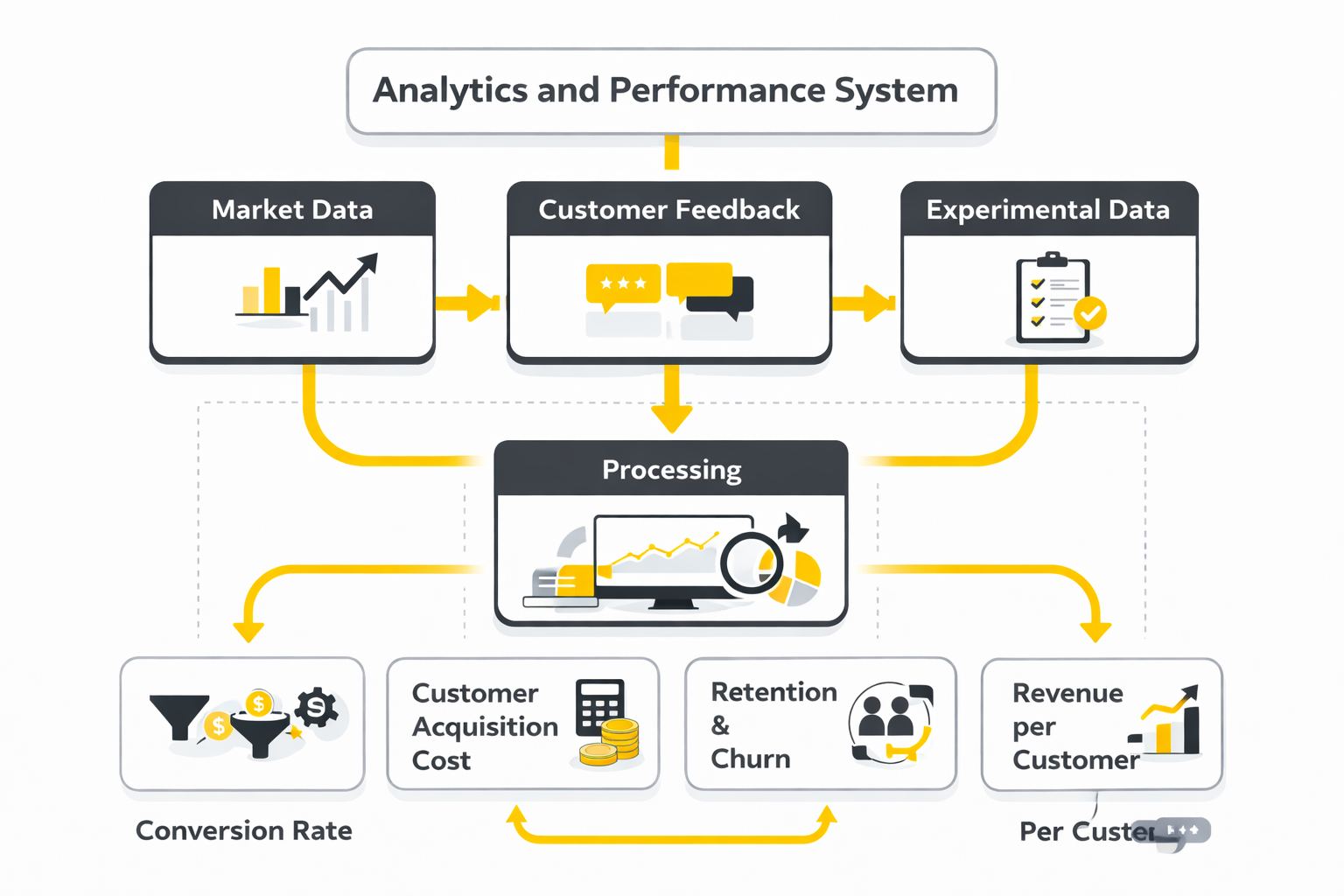
A useful analytics system doesn’t need to be bloated. It needs to show cause and effect clearly.
In practical terms, the stack should let you answer:
- Where demand is coming from
- Which segment is responding
- What those prospects do next
- Which customers stay, expand, or disappear
That means your analytics setup has to connect channels, campaigns, customer behavior, and revenue outcomes. When those pieces are disconnected, market analysis becomes guesswork dressed up as reporting.
This is one reason teams combine systems with different strengths. ManyChat can surface live conversational signals, while Firecrawl can help structure competitive or market data that would otherwise stay messy and unusable.
The Action Behind the Number Matters Most
Every metric should lead to a decision.
If conversion drops, you review offer clarity, landing page friction, and channel quality. If acquisition cost rises, you examine creative fatigue, audience saturation, or sales inefficiency. If retention falls, you go straight into onboarding, delivery, and segment fit.
That’s the real point of measurement. Not reporting. Not vanity. Not filling slides.
The point is to make faster and better decisions.
The Best Teams Watch Trends, Not Isolated Snapshots
Single data points are seductive because they feel simple. They are also one of the easiest ways to make bad decisions.
A one-week spike can be noise. A one-month decline can be seasonal. A single strong cohort can hide broader weakness. What matters is the pattern over time, especially when you compare trends across channels, segments, and offers.
This is where disciplined market analysis wins. Instead of reacting to every fluctuation, strong teams look for repeated signals, consistent movement, and cross-metric confirmation. That’s how they separate real market shifts from random variance.
The next part moves into the mistakes that quietly ruin market analysis, even inside smart companies with decent data and experienced teams.
Where Market Analysis Breaks Down in the Real World
At this level, the issue is no longer knowledge. Most teams understand frameworks, metrics, and even execution processes. The problem is how those elements interact under pressure—deadlines, growth targets, internal bias, and incomplete data.
Market analysis rarely fails because people don’t try. It fails because subtle mistakes compound quietly until decisions start drifting away from reality.
Mistaking Data Volume for Insight
One of the most common traps is over-collecting data.
Teams assume that more dashboards, more reports, and more tools will lead to better understanding. In practice, the opposite often happens. The signal gets buried under noise, and decision-making slows down instead of improving.
Research published through MIT Sloan consistently highlights that organizations with clearer data focus outperform those with excessive data complexity. The difference is not access—it’s prioritization.
This is why experienced teams aggressively filter inputs. They decide in advance which signals matter and ignore everything else.
Confirmation Bias in Disguise
Market analysis is supposed to challenge assumptions. In reality, it often reinforces them.
When teams already believe in a strategy, they tend to interpret data in ways that support it. They highlight positive signals, downplay negative ones, and rationalize inconsistencies.
This is especially dangerous during growth phases. Early success creates confidence, and confidence makes teams less critical of their own analysis.
A practical way to counter this is to structure analysis around disconfirming evidence. Instead of asking “Why is this working?”, ask “What would prove this wrong?” That shift alone dramatically improves decision quality.
Over-Reliance on Historical Data
Past performance is useful—but it can also be misleading.
Markets evolve. Customer expectations shift. Competitors adapt. A strategy that worked six months ago may already be losing effectiveness.
Data from PwC shows that companies investing in real-time analytics capabilities respond significantly faster to market changes than those relying on historical reporting cycles.
The implication is clear: market analysis must prioritize current signals over historical comfort. That often means integrating live data sources and shortening feedback loops.
Tools like Buffer help track real-time content and audience engagement trends, making it easier to detect shifts as they happen rather than after the fact.
Treating Segments as Static
Customer segments are not fixed. They evolve as behavior, context, and expectations change.
A segment that was highly profitable a year ago might become saturated, price-sensitive, or less responsive over time. Yet many businesses continue targeting it as if nothing changed.
This creates a subtle but costly misalignment between strategy and reality.
Advanced teams constantly revalidate their segments. They monitor:
- Changes in buying behavior
- Shifts in engagement patterns
- New competitors entering the same segment
Platforms like Chatbase are particularly useful here because they surface evolving customer conversations in real time, revealing shifts long before they appear in traditional reports.
Ignoring Distribution as Part of Market Analysis
A major blind spot in many analyses is distribution.
Teams focus heavily on product and pricing while underestimating how much distribution channels shape outcomes. The same offer can perform completely differently depending on where and how it is presented.
Market analysis should always include:
- Channel effectiveness
- Platform-specific behavior
- Audience-channel fit
Ignoring this leads to false conclusions. A weak result might not mean the offer is wrong—it might mean the distribution is misaligned.
This is why funnel-level testing matters. Using platforms like ClickFunnels, teams can isolate variables and understand whether the issue lies in the offer, the messaging, or the channel itself.
Scaling Too Early Based on Incomplete Signals
Early success can be misleading.
A campaign performs well, conversions look strong, and the instinct is to scale immediately. But without deeper validation, that growth can collapse just as quickly.
This is where market analysis needs to slow things down, not speed them up.
Before scaling, strong teams validate:
- Consistency across multiple cohorts
- Stability of acquisition costs
- Retention behavior over time
- Channel saturation limits
Scaling without this validation often leads to rising costs, declining quality, and eventually, a broken growth model.
Automation tools like GoHighLevel help monitor these signals across campaigns, ensuring that scaling decisions are based on stable patterns rather than short-term spikes.
The Tradeoff Between Speed and Depth
There’s always tension between moving fast and analyzing deeply.
Move too slowly, and you miss opportunities. Move too fast, and you act on incomplete information.
High-performing teams don’t try to eliminate this tradeoff. They manage it.
They run fast cycles with small bets, validate quickly, and only go deep when signals justify it. This approach allows them to maintain speed without sacrificing accuracy.
Systems like Trycomp support this by continuously analyzing incoming data, reducing the need for long manual analysis cycles while still maintaining insight quality.
When Market Analysis Becomes a Competitive Advantage
At a certain level, market analysis stops being a support function and becomes a strategic asset.
Companies that do it well don’t just react to the market. They anticipate it. They see shifts earlier, test faster, and adapt with less friction.
This advantage compounds over time.
While competitors are still debating what the data means, these teams are already acting on it.
The final part brings everything together into a practical conclusion and answers the most common questions about market analysis in real-world business scenarios.
Bringing It All Together Into a Scalable Market Analysis System
At this point, everything connects.
Market analysis is not a report. It’s not a dashboard. It’s not a one-time project. It’s a system that continuously improves how a business understands reality and responds to it.
The companies that win are not the ones with the most data. They are the ones with the clearest interpretation and the fastest execution loop.
What this looks like in practice is simple—but not easy:
- Clear decision-driven analysis
- Focused data collection
- Fast pattern recognition
- Immediate execution
- Continuous feedback
Over time, this system compounds. Each cycle improves the next. Each insight becomes sharper. Each decision becomes more aligned with what the market actually wants.
This is where market analysis stops being reactive and starts becoming predictive.
Tools can support this system, but they don’t replace it. For example:
- GoHighLevel connects marketing, CRM, and behavioral data into one ecosystem
- Systeme.io helps validate offers and funnels quickly
- ClickFunnels enables rapid testing and deployment of new ideas
But the real advantage comes from how these inputs are used—not from the tools themselves.
FAQ - Built for Complete Guide
What is market analysis in simple terms?
Market analysis is the process of understanding your customers, competitors, and overall market conditions so you can make better business decisions. It replaces assumptions with evidence and helps identify real opportunities instead of guessing.
How often should market analysis be done?
It should be continuous. While deeper reviews may happen quarterly, high-performing teams track market signals weekly or even daily to stay aligned with changing conditions.
What is the biggest mistake in market analysis?
The biggest mistake is collecting data without connecting it to decisions. If analysis doesn’t lead to action, it becomes noise instead of value.
How do you know if your market analysis is accurate?
You don’t judge accuracy by how detailed it is. You judge it by outcomes. If your insights lead to better conversion, retention, and growth, your analysis is aligned with reality.
What tools are best for market analysis?
There is no single “best” tool. It depends on your workflow. Platforms like GoHighLevel, ManyChat, and Firecrawl are commonly used because they provide real-time, actionable data.
What is the difference between market research and market analysis?
Market research is the process of gathering data. Market analysis is interpreting that data and turning it into strategic decisions. One feeds the other.
Can small businesses benefit from market analysis?
Yes, often more than large companies. Smaller businesses can adapt faster, so insights from market analysis can be turned into action quickly, creating a strong competitive edge.
How do you identify a real market opportunity?
A real opportunity exists when there is clear demand, a solvable problem, manageable competition, and a path to profitability. It’s validated through data, not just ideas.
What metrics matter most in market analysis?
The most important metrics are those tied to real outcomes:
- Conversion rate
- Customer acquisition cost
- Retention
- Churn
- Revenue per customer
These reveal whether the market is responding and whether the business model is sustainable.
How long does it take to see results from market analysis?
If executed properly, early signals can appear within weeks. However, meaningful patterns—especially around retention and profitability—typically take longer to validate.
Is market analysis only for launching new products?
No. It’s equally important for improving existing products, optimizing pricing, refining messaging, and identifying new growth channels.
What separates advanced market analysis from basic analysis?
Advanced market analysis focuses on systems and feedback loops. Instead of one-time insights, it continuously adapts strategy based on real-time data and evolving market conditions.
Work With Professionals
Explore 10K+ Remote Marketing Contracts on MarkeWork.com
Most marketers spend too much time chasing clients, competing on crowded platforms, and losing a percentage of every project to middlemen.
MarkeWork gives you a better way. Browse thousands of remote marketing contracts and connect directly with companies desperate to hire skilled marketers like you, without platform commissions and without unnecessary gatekeepers.
If you're serious about finding better opportunities and keeping 100% of what you earn, explore available contracts and create a profile for free at MarkeWork.com.