

AI copywriting has transformed the way businesses, marketers, and content creators approach writing. From generating blog posts to crafting compelling email campaigns, the technology behind AI copywriting tools has advanced rapidly, allowing even small teams to produce professional-grade content at scale. While some worry that AI might replace human writers, the reality is that it enhances creativity, speeds up production, and helps optimize content for conversions.
To understand AI copywriting fully, it’s essential to break down the mechanisms, strategies, and practical implementation methods. This article will provide a structured approach, ensuring you can leverage AI effectively in your marketing efforts without losing authenticity or quality.
Article Outline
- Why AI Copywriting Matters
- Framework Overview
- Core Components of AI Copywriting
- Professional Implementation Strategies
- Measuring Success and Optimization
- Common Challenges and Best Practices

Why AI Copywriting Matters
AI copywriting is not just a trend—it’s a tool reshaping the content landscape. Businesses that implement AI-powered writing solutions report faster content production and measurable improvements in engagement. For example, marketing teams using AI tools like GoHighLevel AI have noted significant reductions in content creation time, allowing them to focus more on strategy and creative direction.
The technology leverages advanced natural language processing models to understand context, tone, and audience intent. This means AI can produce blog posts, social media content, email sequences, and even ad copy that resonates with the target audience. With the rising demand for personalized marketing, AI copywriting ensures that messages are not only timely but also relevant.
Moreover, AI copywriting tools provide data-driven suggestions, helping writers optimize headlines, improve readability, and test multiple versions of content efficiently. This combination of speed, precision, and insight makes AI an indispensable asset for modern marketing teams.
Framework Overview
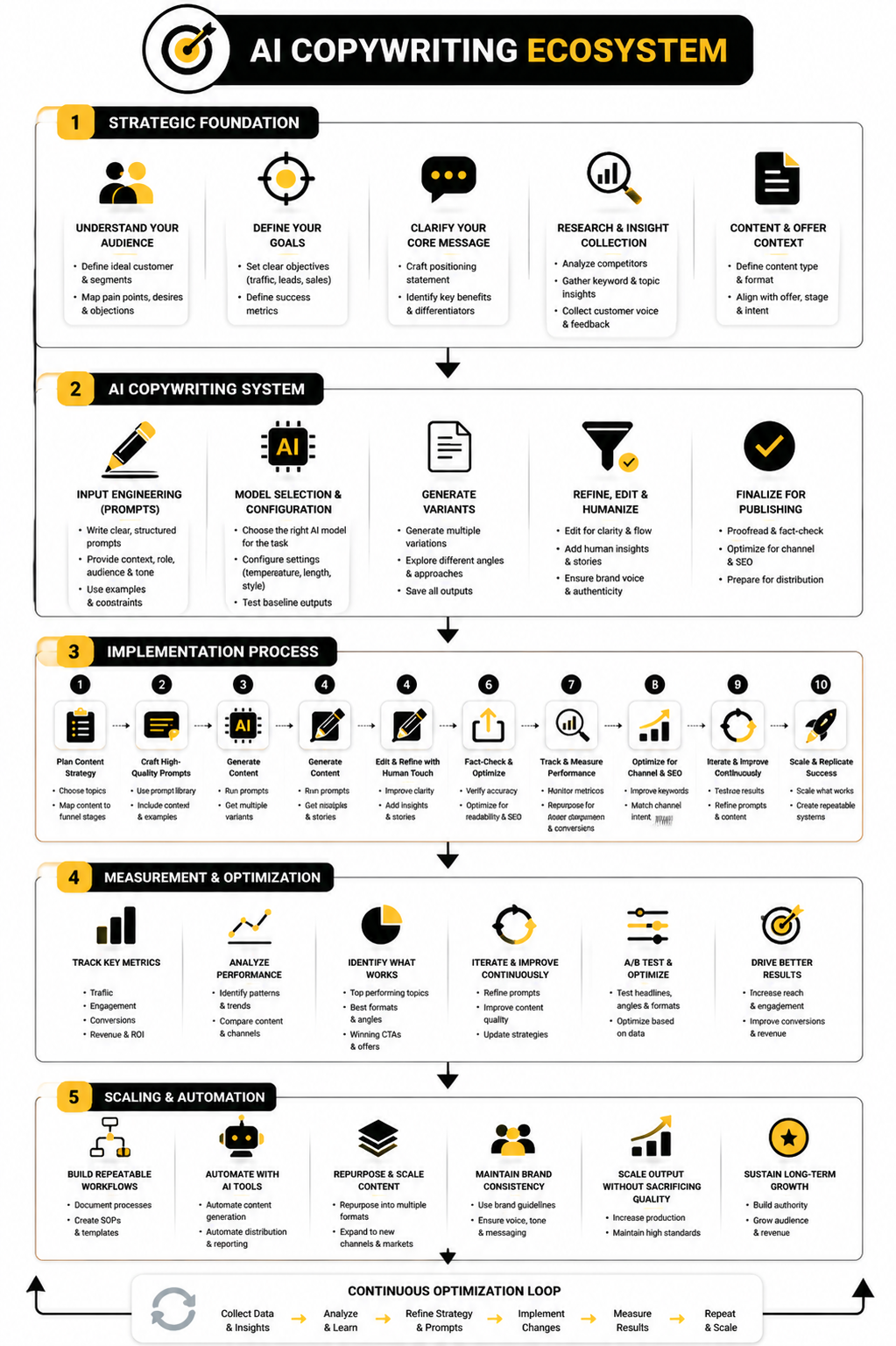
AI copywriting follows a systematic framework that ensures content is both high-quality and effective. At its core, the framework integrates research, drafting, editing, and optimization stages.
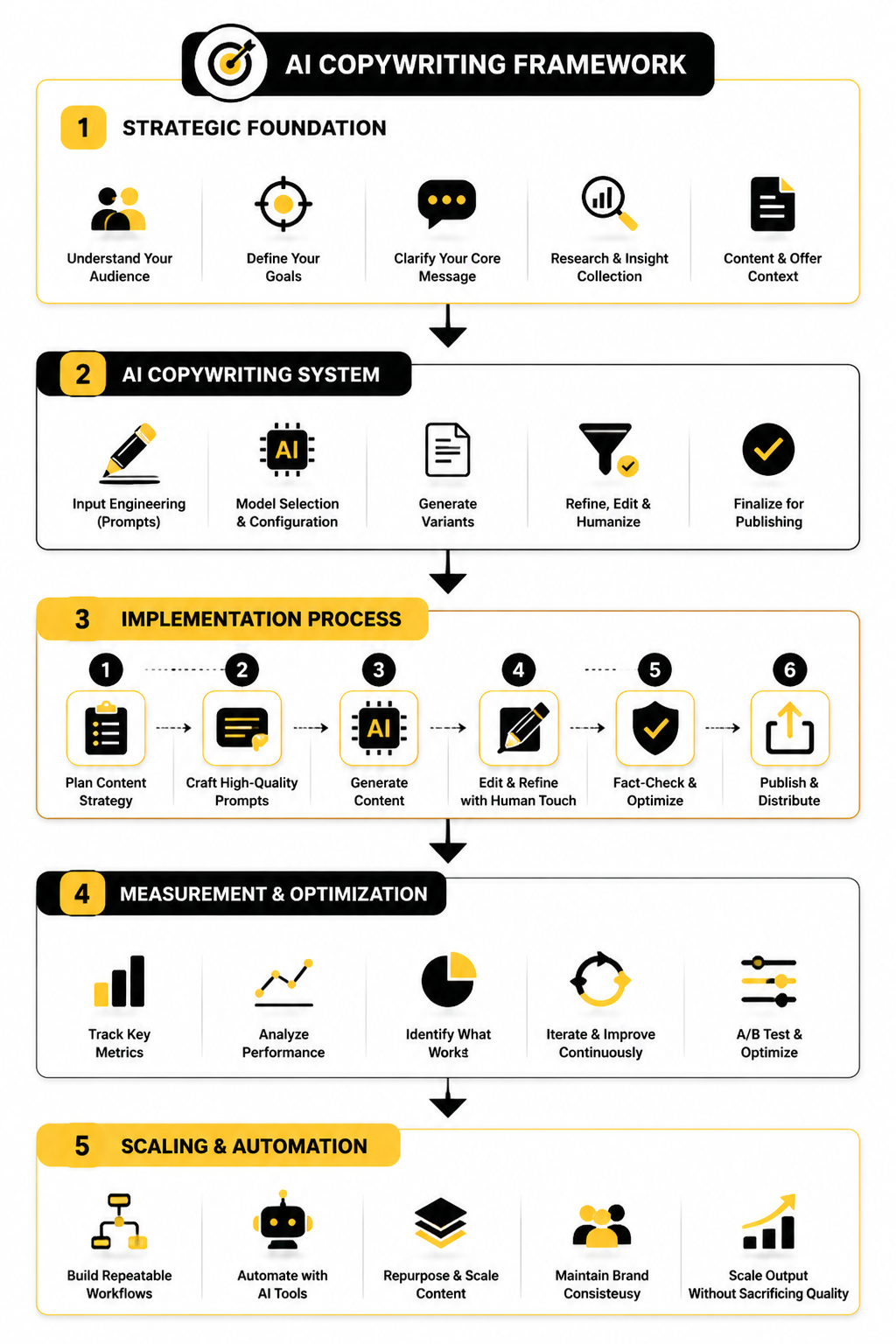
- Input & Research: Collect audience insights, keywords, and competitive content to guide AI generation.
- Drafting & Generation: Use AI to create initial content drafts, ensuring alignment with brand voice and goals.
- Review & Editing: Human oversight refines tone, structure, and factual accuracy.
- Testing & Optimization: Evaluate performance metrics, A/B test headlines, and tweak copy for maximum engagement.
By adhering to this framework, marketers can streamline their workflow and maintain content quality even at scale. AI acts as an accelerator, but human judgment ensures authenticity and relevance.
Core Components of AI Copywriting
The effectiveness of AI copywriting depends on several key components:
- Language Models: Advanced algorithms like GPT-4 are trained on diverse datasets to produce coherent and contextually appropriate content.
- Prompt Engineering: Crafting precise prompts ensures the AI generates content that meets specific objectives.
- SEO Integration: AI can optimize content for search engines while maintaining readability.
- Tone and Style Adaptation: AI tools can mimic brand voice consistently across multiple channels.
- Performance Analytics: Insights from engagement metrics inform iterative improvements in content strategy.
Each of these components works together to create content that is not only technically accurate but also persuasive and engaging. When used correctly, AI copywriting can elevate campaigns far beyond basic automation.
Professional Implementation Strategies
Implementing AI copywriting effectively requires more than just access to a tool—it demands a deliberate process and alignment with business goals. Companies that jump straight into content generation without a plan often see inconsistent results. A structured approach ensures that AI enhances creativity rather than producing generic outputs.
- Define Objectives Clearly: Identify what you want to achieve with each piece of content. Whether it’s lead generation, social engagement, or educating your audience, a clear goal guides the AI in producing relevant and persuasive copy.
- Select the Right Tools: Platforms like GoHighLevel and Replo provide robust AI engines capable of tailoring output to different formats, from email sequences to landing page content. Choosing the right tool prevents wasted time and improves content quality.
- Human Oversight and Editing: AI can generate drafts at scale, but human editors ensure factual accuracy, brand consistency, and emotional resonance. For example, marketing teams using AI for email campaigns often see higher open rates after reviewing and adjusting subject lines and calls-to-action.
- Iterative Testing: Implement A/B testing on AI-generated content to determine which variations perform best. This data-driven approach allows teams to refine tone, style, and messaging continuously.
Real-world application shows that brands integrating AI into structured workflows experience measurable gains. For instance, small agencies that adopted AI copywriting noticed a 50% reduction in content turnaround time while maintaining or improving engagement rates. This combination of speed and quality is what separates casual users from professionals.
Measuring Success and Optimization
Creating content is just the beginning—tracking performance and optimizing based on data is crucial for AI copywriting. Without metrics, it’s impossible to know whether your AI content resonates with the audience or drives results.
- Engagement Metrics: Monitor clicks, open rates, and social shares to gauge initial reception. Tools like ManyChat can help track engagement for automated campaigns.
- Conversion Rates: AI copywriting is often used to drive action, whether it’s signing up for a webinar or purchasing a product. Measuring conversion rates helps determine which messaging works best.
- SEO Performance: Ensure AI content aligns with keyword strategy and performs well in search rankings. Integrating analytics ensures you can adjust headlines, meta descriptions, and internal links to maximize organic traffic.
- Iterative Improvements: Leverage AI’s ability to learn from previous campaigns. By analyzing performance data, the AI can generate improved versions of copy that better target audience behavior and preferences.
Brands that continuously measure and adjust AI-generated content see stronger ROI. For example, companies using AI for email campaigns often achieve up to 20-30% higher click-through rates compared to traditional manual writing, highlighting the value of ongoing optimization.
Common Challenges and Best Practices
Despite its advantages, AI copywriting comes with challenges. Understanding these pitfalls and adopting best practices ensures the technology serves as a productivity multiplier rather than a liability.
- Maintaining Authenticity: AI can produce generic content. Incorporating human insights and brand voice prevents messaging from feeling robotic.
- Avoiding Over-Reliance: While AI speeds up production, critical thinking and creativity remain human strengths. Always review AI output to ensure originality and relevance.
- Ethical Considerations: Ensure content generated by AI is truthful, non-discriminatory, and compliant with advertising standards. Ethical lapses can damage brand reputation.
- Prompt Precision: Poorly crafted prompts result in weak or off-target content. Investing time in learning prompt engineering can drastically improve output quality.
Adhering to these practices helps marketers leverage AI responsibly and effectively. Tools like ClickFunnels and GoHighLevel provide resources and templates to support best practices, making professional implementation more accessible for teams of any size.
By combining structured workflows, rigorous measurement, and attention to quality, businesses can turn AI copywriting from a novelty into a core component of their content strategy.
Step-by-Step Execution of AI Copywriting
Turning AI copywriting from theory into practice requires a hands-on, step-by-step approach. The process should be systematic, ensuring that each piece of content aligns with brand goals and audience needs. Proper execution bridges the gap between AI-generated drafts and polished, high-performing copy.
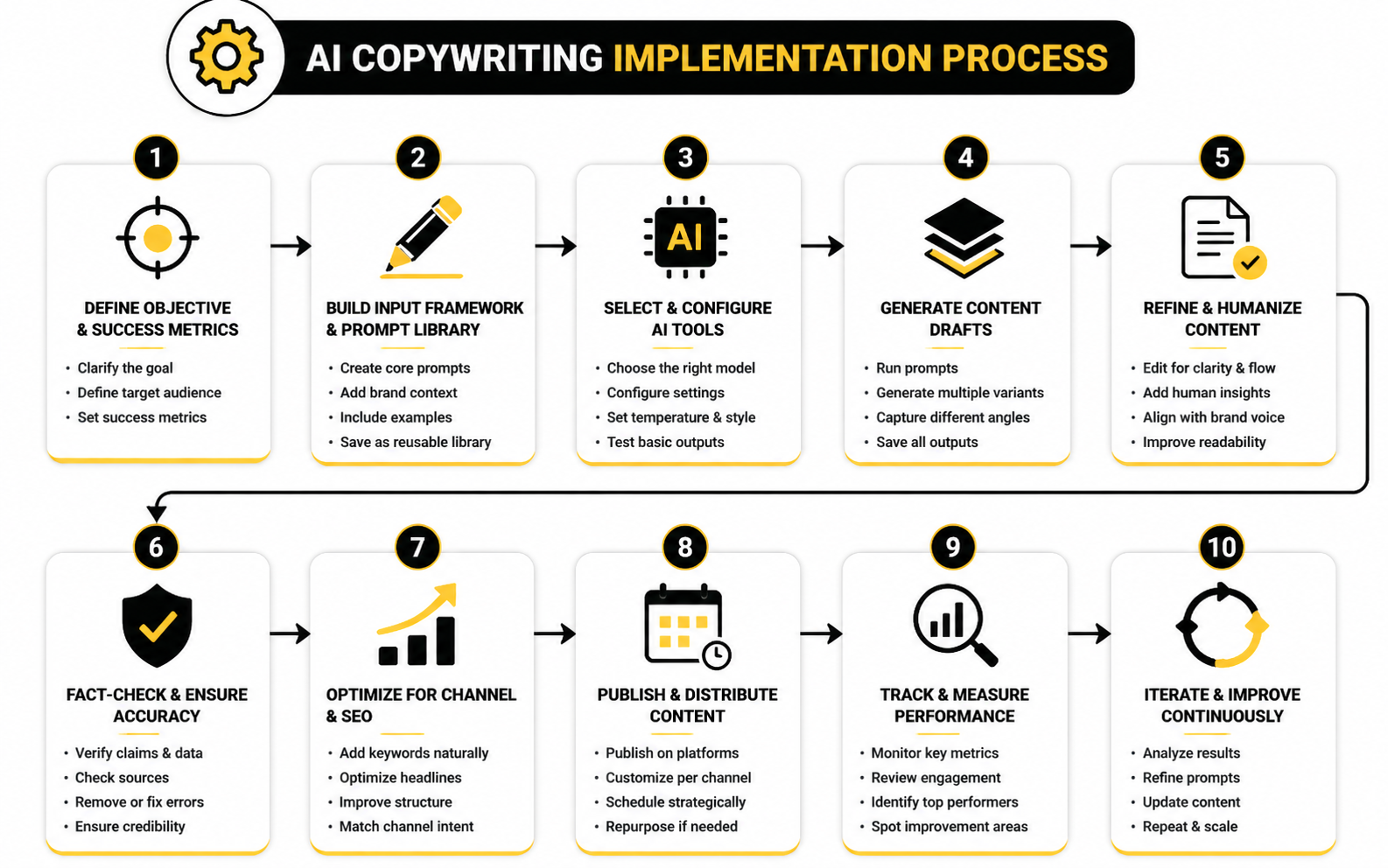
Step 1: Gather Inputs and Context
Before generating content, compile all relevant information:
- Audience Insights: Identify demographics, preferences, and pain points. Understanding your audience ensures AI output resonates effectively.
- Brand Voice Guidelines: Provide tone, style, and messaging rules so AI maintains consistency across channels.
- Content Goals: Define whether the piece is intended for engagement, lead generation, or conversion.
- Keyword and SEO Data: Include target keywords, search intent, and topic clusters for optimized visibility.
This preparation ensures AI has the context needed to create meaningful content rather than generic or off-target drafts.
Step 2: Generate Initial Drafts
With inputs ready, use AI platforms like GoHighLevel AI or Replo to produce the first drafts:
- Input structured prompts reflecting content goals and audience context.
- Request multiple variations to explore different tones and messaging approaches.
- Evaluate which drafts capture the intended brand voice and purpose.
Multiple iterations allow marketers to identify the strongest angles while saving time compared to traditional manual drafting.
Step 3: Refine and Edit
AI drafts rarely emerge perfect. Human oversight is crucial:
- Fact-Checking: Ensure all statements, statistics, and references are accurate and up-to-date.
- Tone Adjustment: Align language with brand personality and target audience.
- Structural Edits: Optimize headings, bullet points, and paragraph flow for readability.
This step ensures the content is polished, professional, and credible before publication.
Step 4: Test and Optimize
Once the draft is finalized, move into performance testing:
- A/B Testing Headlines and CTAs: Small changes can dramatically affect engagement.
- Monitor Engagement Metrics: Track clicks, opens, and conversions using platforms like ManyChat for automated campaigns.
- Iterate Based on Data: Adjust copy based on real-world performance to continuously improve results.
This iterative cycle transforms AI-generated content into high-performing assets, combining speed and data-driven insights with human judgment.
Step 5: Scale and Automate
After refining the process, businesses can scale AI copywriting:
- Automated Campaigns: Use AI to generate email sequences, social posts, and landing page copy efficiently.
- Template Libraries: Maintain reusable AI prompts and content templates for consistent messaging across campaigns.
- Cross-Channel Integration: Deploy AI-generated content seamlessly across marketing platforms, including ClickFunnels and Systeme.io.
By mastering this execution process, teams can leverage AI copywriting to produce quality content faster, maintain brand consistency, and drive measurable results across marketing channels.
Statistics and Data
Understanding the impact of AI copywriting requires more than just anecdotal evidence; analyzing metrics provides a clear picture of performance and opportunities. Numbers reveal what resonates with audiences, which messages drive conversions, and how efficiently resources are being used.
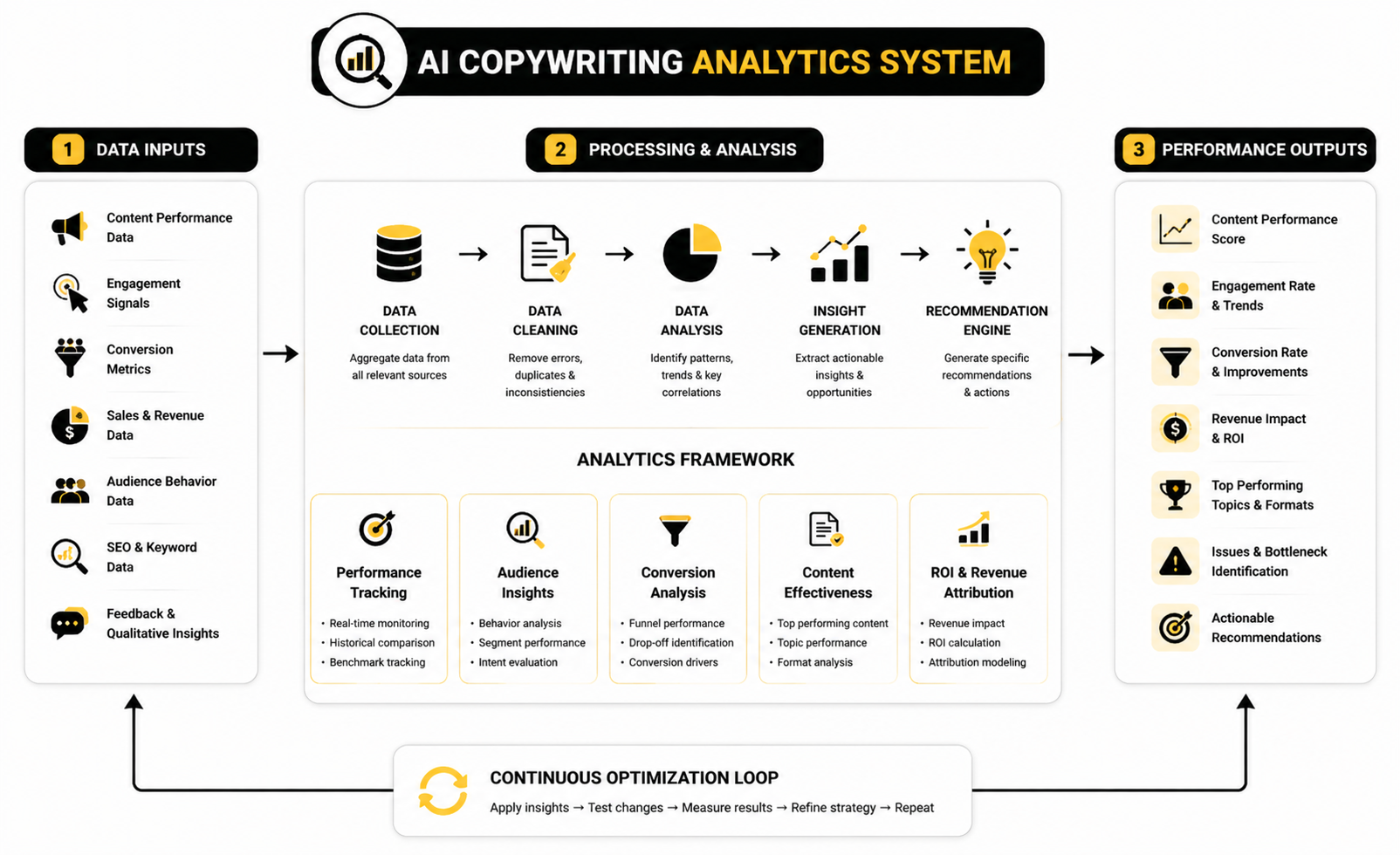
Key Metrics to Track
- Engagement Rates: Click-through rates, open rates, and social interactions show how well your content captures attention. For example, campaigns optimized with GoHighLevel have reported noticeable improvements in email engagement within weeks of implementing AI-generated variations.
- Conversion Performance: Beyond engagement, measuring sign-ups, purchases, or other desired actions determines ROI. AI copywriting can boost conversions when prompts are tailored to highlight benefits and create urgency.
- Content Velocity: Track how quickly content is produced and deployed. Teams using AI tools like ClickFunnels can release campaigns at a higher frequency without sacrificing quality.
- SEO Metrics: Organic traffic, keyword rankings, and search visibility indicate whether AI content aligns with search intent. Integrating keyword strategy with AI prompts ensures content both engages readers and performs in search engines.
Interpreting Data
Metrics alone are meaningless without context. Engagement spikes, for example, may indicate interest, but they only drive value if they convert into meaningful actions. Conversion drops could signal that headlines attract attention but content fails to deliver value or clarity. Tracking the right combination of metrics allows marketers to pinpoint bottlenecks and refine AI-generated content for maximum impact.
Benchmarking and Optimization
Establishing benchmarks for each channel helps identify performance gaps. For instance, if the industry average click-through rate for marketing emails is around 20%, your AI-generated campaigns can be evaluated against this baseline.
- Iterate Prompt Strategies: Adjusting AI prompts based on performance data can enhance clarity, tone, or call-to-action effectiveness.
- A/B Testing: Continuous testing of variations ensures that the best-performing copy informs future campaigns.
- Cross-Channel Insights: Comparing performance across email, social, and landing pages helps unify messaging and identify high-impact content formats.
By grounding AI copywriting efforts in concrete data, marketers can make informed decisions, reduce guesswork, and optimize content strategy for both engagement and conversion.
Advanced Considerations for AI Copywriting
As teams scale their use of AI copywriting, several strategic and operational considerations emerge that go beyond basic implementation. Understanding these tradeoffs is essential for maintaining quality, efficiency, and audience trust.
Balancing Automation and Human Oversight
AI can dramatically increase output, but over-reliance can compromise authenticity. Expert teams maintain a hybrid workflow:
- Editorial Gatekeeping: Always review AI drafts for tone, factual accuracy, and brand alignment.
- Creative Enhancement: Use AI for structure and initial drafts, while humans add nuance, storytelling, and persuasive techniques.
- Contextual Adjustments: AI may misinterpret niche contexts; human intervention ensures relevance and clarity.
This balance maximizes productivity while preserving the human touch that drives audience connection.
Managing Risks and Ethical Challenges
AI-generated content can inadvertently produce errors or biases. Companies must implement safeguards:
- Content Audits: Regularly review AI outputs to ensure compliance with advertising standards and ethical guidelines.
- Bias Mitigation: Avoid repeating stereotypes or insensitive phrasing by monitoring AI prompts and outputs.
- Transparency: Clearly indicate when automated content is used in campaigns where authenticity is critical, such as educational or financial communications.
Proactive risk management prevents reputational damage and maintains audience trust.
Scaling AI Across Teams
Scaling AI copywriting introduces operational challenges:
- Prompt Standardization: Develop reusable prompt templates to maintain consistency across departments.
- Cross-Channel Integration: Ensure AI content adapts correctly for emails, social media, landing pages, and blogs. Tools like GoHighLevel can centralize AI workflows for enterprise teams.
- Training and Support: Teams must understand best practices for AI usage, including prompt engineering, editing, and iterative optimization.
Without structured scaling, organizations risk inefficiency and inconsistent messaging, undermining the potential benefits of AI.
Strategic Tradeoffs
Investing heavily in AI copywriting has tradeoffs to consider:
- Speed vs. Creativity: AI generates fast drafts, but pure automation can dilute creative depth. Balance speed with targeted human input.
- Short-Term Gains vs. Long-Term Brand Equity: Optimized campaigns may deliver immediate engagement, but sustained brand voice requires careful curation.
- Cost vs. ROI: While AI tools reduce content production costs, oversight, testing, and optimization still require human investment.
Understanding these tradeoffs allows teams to maximize AI copywriting’s value while avoiding common pitfalls and maintaining strategic control.
By approaching AI with an expert lens, organizations can scale content production, maintain quality, and ensure campaigns deliver both measurable results and lasting brand impact.
FAQ - Built for Complete Guide
1. What is AI copywriting?
AI copywriting uses artificial intelligence to generate written content, from blog posts to email sequences, based on prompts and audience insights. It accelerates content creation while maintaining relevance and brand voice.
2. How accurate is AI-generated content?
Accuracy depends on prompt quality and human oversight. While AI produces coherent drafts, reviewing for factual correctness, tone, and context is essential to ensure reliability.
3. Can AI replace human writers entirely?
AI enhances productivity but does not replace human creativity or strategic thinking. Professionals refine AI drafts, add nuance, and ensure messaging aligns with brand identity.
4. Which platforms are best for AI copywriting?
Tools like GoHighLevel, Replo, and ClickFunnels provide robust AI engines for various content types, including emails, landing pages, and social media posts.
5. How do I measure the effectiveness of AI content?
Track engagement metrics (clicks, opens, shares), conversions, SEO performance, and audience feedback. These indicators help refine content and optimize campaigns for better results.
6. Is AI content SEO-friendly?
Yes, AI can integrate keywords and structure content to align with search intent. Combining AI output with SEO analysis ensures visibility and engagement across channels.
7. What are common challenges with AI copywriting?
Maintaining authenticity, avoiding biases, managing prompt quality, and ensuring factual accuracy are key challenges. Human oversight mitigates these risks effectively.
8. How scalable is AI copywriting for teams?
Highly scalable when processes and templates are standardized. AI can generate content across channels efficiently, but teams must maintain review systems to preserve quality.
9. Can AI improve conversion rates?
Yes, when prompts are crafted strategically and content is tested iteratively. AI can produce multiple variations for A/B testing, optimizing headlines, CTAs, and messaging for higher conversions.
10. How do I get started with AI copywriting?
Begin by selecting a reliable AI platform, defining your audience and content goals, and practicing prompt engineering. Start small, test outputs, and gradually integrate AI into larger campaigns.
11. Are there ethical concerns with AI-generated content?
Yes. Ensure outputs are truthful, non-discriminatory, and compliant with advertising standards. Transparency about automated content usage maintains audience trust.
12. What’s the ROI of using AI for content creation?
Organizations using AI report faster production, reduced costs, and improved engagement metrics. Combined with iterative testing, AI often yields higher returns than traditional manual writing processes.
Work With Professionals
Explore 10K+ Remote Marketing Contracts on MarkeWork.com
Most marketers spend too much time chasing clients, competing on crowded platforms, and losing a percentage of every project to middlemen. MarkeWork gives you a better way. Browse thousands of remote marketing contracts and connect directly with companies desperate to hire skilled marketers like you, without platform commissions and without unnecessary gatekeepers.
If you're serious about finding better opportunities and keeping 100% of what you earn, invite readers to explore available contracts and create a profile for free at MarkeWork.com.