

Email marketing newsletters remain one of the most powerful tools for building customer relationships, driving engagement, and boosting sales. Despite the rise of social media and messaging apps, businesses that invest in well-crafted newsletters see higher ROI and stronger brand loyalty. The key lies in understanding how to structure your campaigns, create compelling content, and optimize every stage of the reader journey.
In this article, we’ll break down email marketing newsletters into six comprehensive sections:
- Why It Matters – Understanding the strategic value of newsletters in modern marketing.
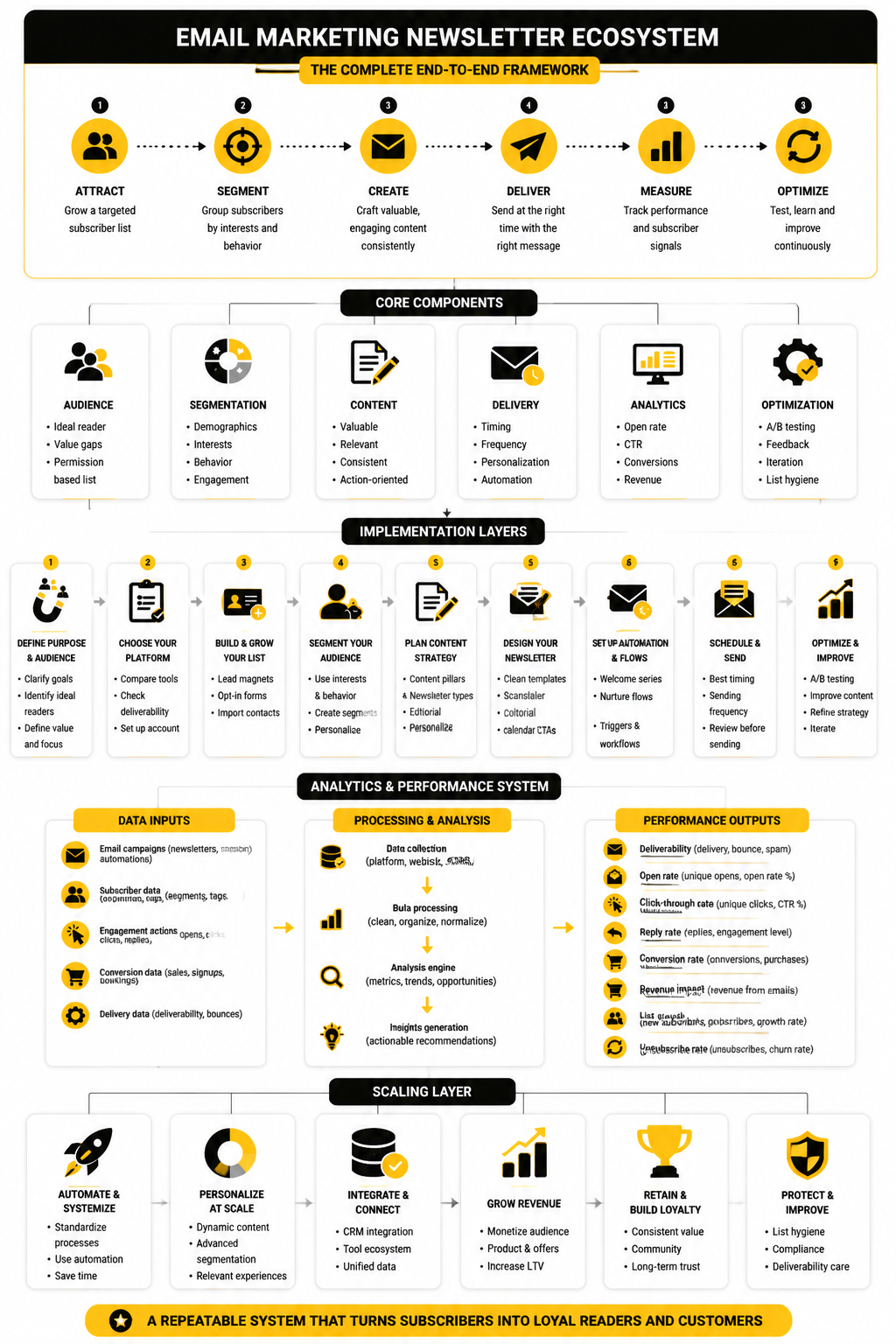
- Framework Overview – A visual guide to structuring an effective newsletter.
- Core Components – The essential elements that make a newsletter successful.
- Professional Implementation – Best practices for crafting, sending, and tracking newsletters.
- Optimization & Growth – Strategies for improving open rates, click-throughs, and conversions.
- Future Trends – What’s next in email marketing and how to stay ahead.
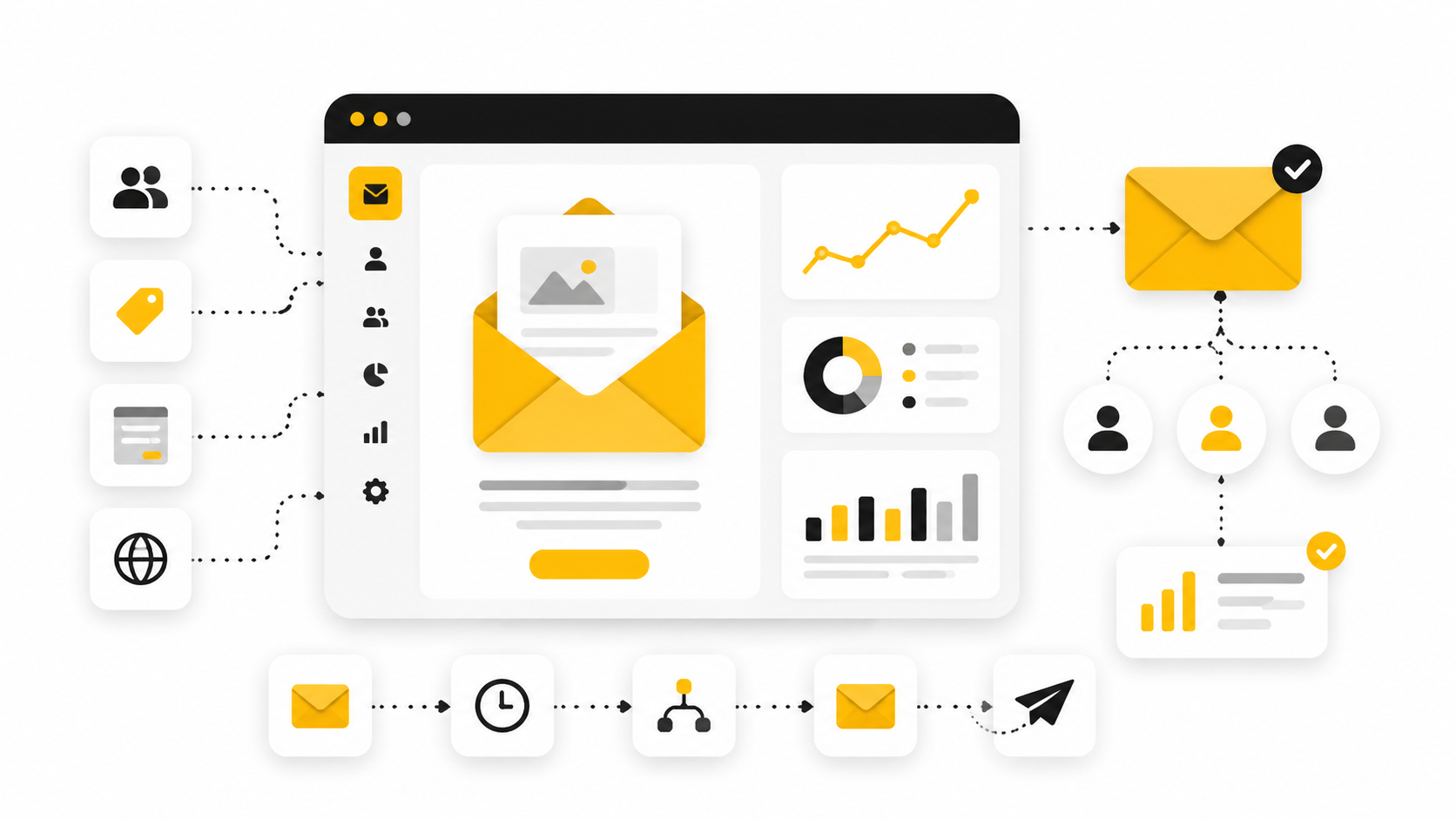
Why It Matters
Newsletters are more than just a way to push promotions—they are a direct line to your audience. Unlike social media, email provides a controlled environment where your message isn’t subject to algorithm changes. In fact, marketers see an average ROI of 42:1 for email campaigns, making it one of the most cost-effective marketing channels available.
A real-world example comes from an e-commerce brand that struggled with declining sales due to algorithm changes on social platforms. They invested in a segmented newsletter strategy, offering tailored product recommendations. Within three months, open rates increased by 38%, and monthly revenue from email alone grew by 24%. This demonstrates how newsletters can serve as a reliable engine for revenue, customer retention, and brand loyalty.
Beyond sales, newsletters build authority and trust. When readers consistently receive useful content—tips, updates, and insights—they start seeing your brand as a go-to resource. This long-term engagement often translates into higher lifetime value and stronger customer advocacy.
Framework Overview
An effective newsletter strategy requires a clear framework. At its core, it blends audience understanding, compelling content, and precise delivery timing. The framework breaks down into three main pillars:
- Audience Segmentation – Targeting subscribers based on behavior, preferences, or demographics.
- Content Strategy – Delivering relevant stories, updates, or offers that capture attention.
- Automation & Analytics – Using tools to schedule emails, track performance, and optimize results.
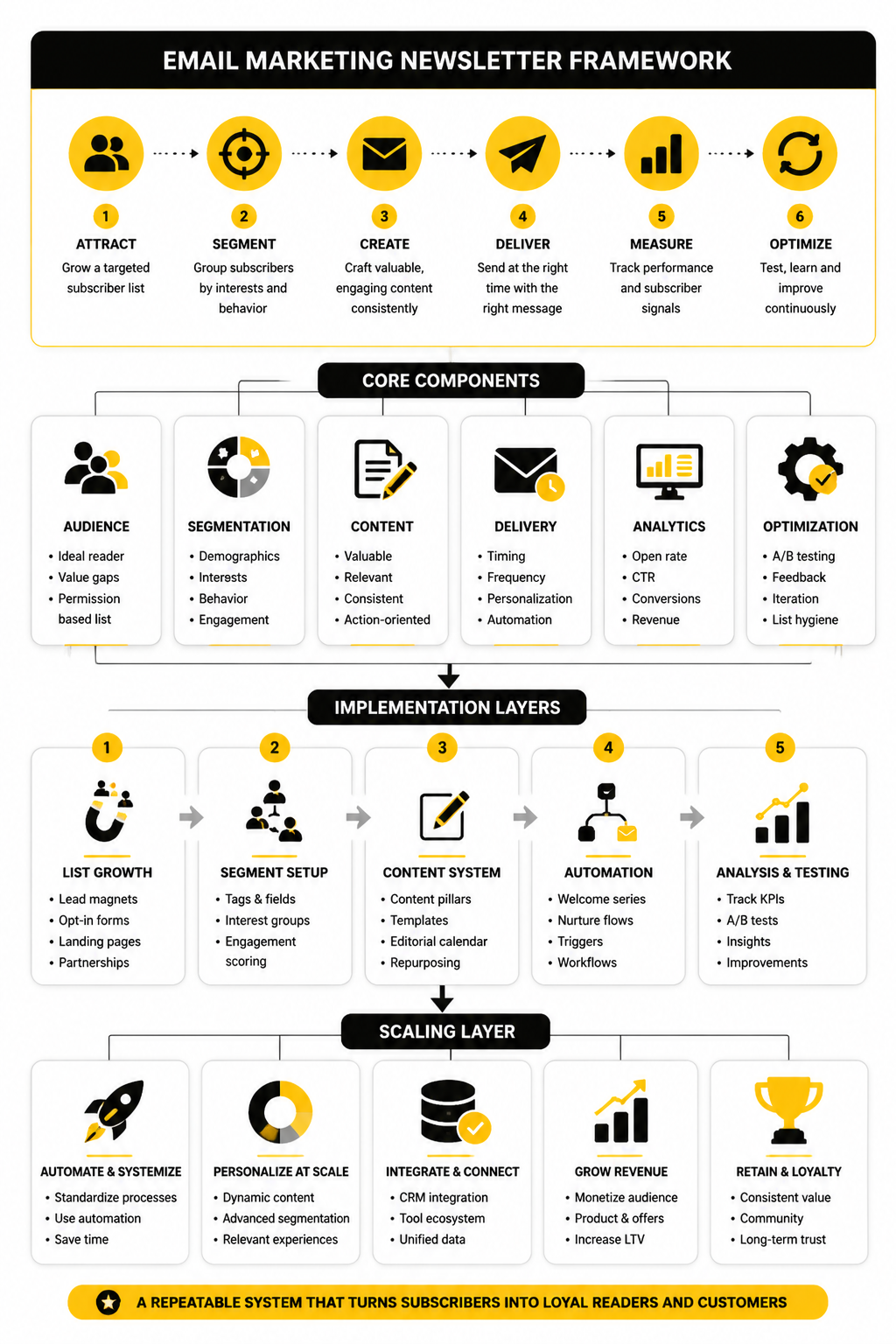
This structure ensures that every newsletter isn’t just sent—it resonates. By aligning content with audience needs and leveraging automation, marketers can reduce churn, improve engagement, and ultimately drive conversions.
Using a solid framework also makes testing easier. A/B testing subject lines, content formats, and CTAs becomes systematic, allowing data-driven decisions rather than guesswork. This approach is critical for scaling campaigns without losing the personal touch that makes newsletters effective.
Core Components
Creating a successful email marketing newsletter requires attention to several core components that work together to capture attention and drive action. Each element plays a strategic role in keeping readers engaged and moving them through your funnel.
Subject Lines and Preheaders
Your subject line is the first impression your newsletter makes. It determines whether the email is opened or ignored. Studies show that 35% of recipients open emails based on the subject line alone.
A compelling subject line is concise, specific, and evokes curiosity or urgency. Pair it with a preheader that complements the headline by offering extra context or a benefit, giving readers a reason to click. Testing different variations through A/B experiments can help identify the tone, length, and phrasing that resonates most with your audience.
Content and Structure
The body of the newsletter must balance value with readability. Break content into digestible sections, using bullet points, bold text, and subheadings to guide the reader. High-performing newsletters often include:
- Educational insights or industry news relevant to the audience
- Actionable tips that solve a problem
- Curated product or service highlights
- Engaging stories or case studies
A real example is a SaaS company that integrated customer success stories into its monthly newsletter. By highlighting real wins, they increased click-through rates by over 20% and reduced unsubscribe rates. The narrative approach not only informed readers but also built credibility and connection.
Visuals and Branding
Consistent visuals strengthen brand recognition and make content more engaging. This includes header images, product shots, icons, and well-designed CTAs. Images should support the message, not distract from it. A clean, mobile-optimized layout ensures readability across devices, which is critical since over 50% of emails are opened on mobile.
Calls to Action (CTAs)
Every newsletter should include clear, actionable CTAs. Whether the goal is driving traffic to a landing page, encouraging a sign-up, or promoting a product, the CTA should be unmistakable and compelling. Using action-oriented language like “Claim Your Free Trial” or “Explore Our New Guide” improves engagement. For example, linking directly to ClickFunnels 3-Month Trial can drive immediate conversions for interested readers.
Personalization and Segmentation
Segmenting your audience and personalizing content ensures relevance. Personalization can be as simple as including the recipient’s first name or as advanced as dynamic product recommendations based on past behavior. Brands using segmentation see higher engagement rates and ROI, making this a cornerstone of any professional email strategy.
Analytics and Feedback
Tracking opens, clicks, conversions, and unsubscribes provides insights for continuous improvement. Tools like GoHighLevel or Brevo help marketers identify patterns, optimize content, and test new strategies. Monitoring these metrics allows newsletters to evolve based on real data rather than assumptions, maximizing their impact over time.
By combining these core components—subject lines, content structure, visuals, CTAs, personalization, and analytics—you create newsletters that not only reach inboxes but also engage readers and drive measurable results.
Professional Implementation
Executing an email marketing newsletter effectively requires turning strategy into a repeatable process. A solid implementation plan ensures that every email reaches the right audience, resonates with readers, and drives measurable results.
Step 1: Platform Selection and Setup
Choosing the right email marketing platform is critical. Tools like GoHighLevel or Brevo offer automation, segmentation, and analytics capabilities that streamline campaign management.
Start by importing your subscriber list and setting up custom fields for personalization. Ensure compliance with GDPR and CAN-SPAM laws to avoid deliverability issues and maintain trust with your audience. A clean, permission-based list is more valuable than a large, unengaged one.
Step 2: Designing the Newsletter
Once the platform is ready, focus on the design. Use a modular structure with clear sections, headings, and CTAs. Mobile optimization is essential since most users open emails on smartphones. Keep branding consistent with colors, fonts, and logos to reinforce recognition and professionalism.
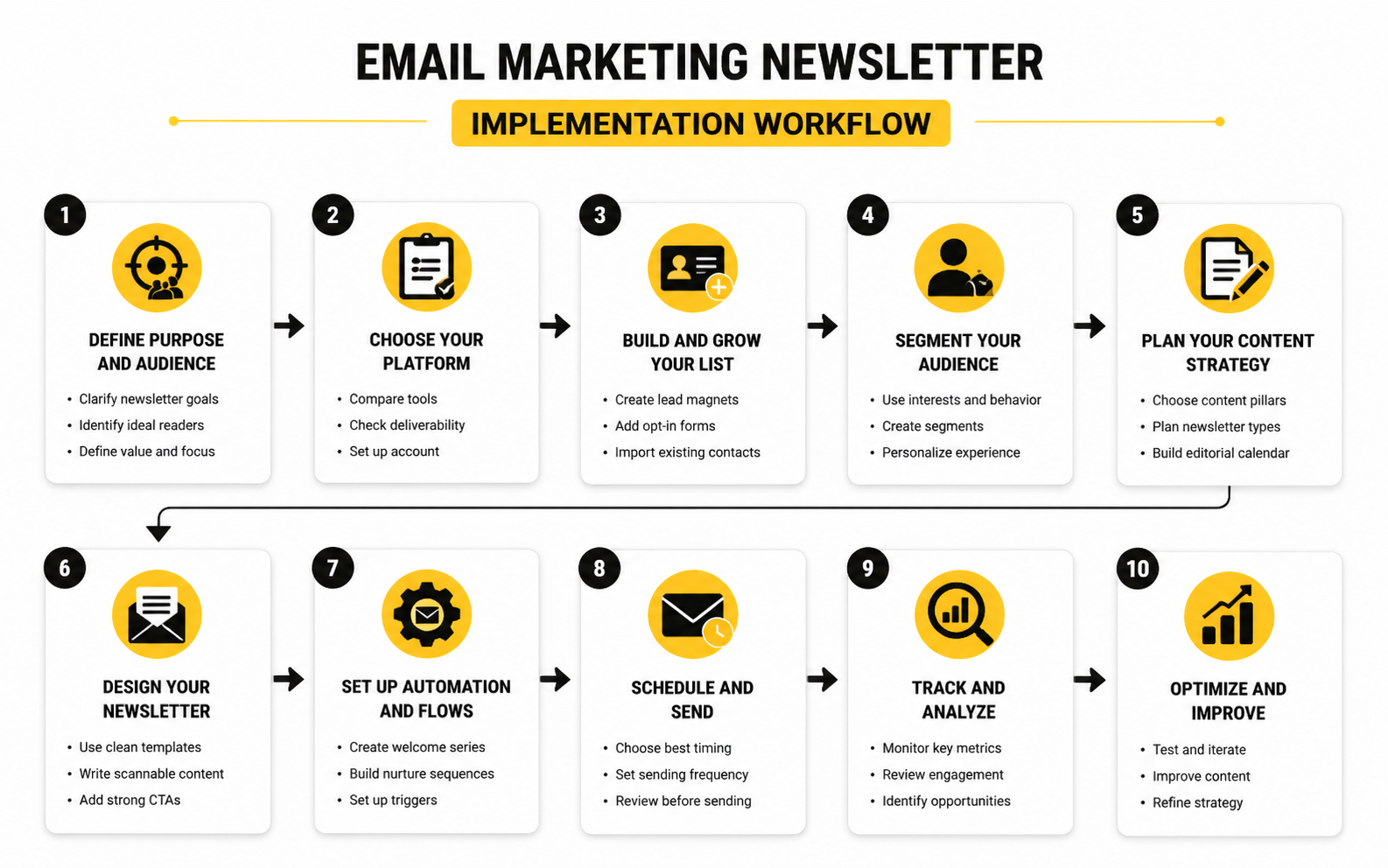
Step 3: Crafting Content
Content should combine value and action. Begin with a strong headline and preheader, followed by informative or entertaining content tailored to the audience segment. Incorporate visuals, bullet points, and hyperlinks to guide readers toward the desired actions, whether it’s visiting a landing page, signing up for a webinar, or exploring a new product.
For example, an online coaching company that included actionable tips and links to ClickFunnels signup flows in their newsletter saw a 30% boost in conversions compared to generic updates. The structured guidance made it easy for readers to take the next step immediately.
Step 4: Automation and Scheduling
Automation is the backbone of professional implementation. Set up triggered emails based on behavior, like welcome sequences, abandoned cart reminders, or follow-ups after engagement. Scheduling regular newsletters—weekly, bi-weekly, or monthly—keeps your brand top-of-mind. Testing send times using analytics helps identify peak engagement windows.
Step 5: Monitoring and Optimization
Finally, track performance metrics such as open rates, click-through rates, and conversion rates. Use A/B testing to refine subject lines, content layouts, and CTAs. Platforms like GoHighLevel AI provide insights that allow marketers to iterate rapidly, ensuring each newsletter performs better than the last.
By following these steps—platform setup, design, content creation, automation, and optimization—you can implement email marketing newsletters that are consistent, professional, and impactful, driving measurable business growth.
Statistics and Data
Understanding how your email marketing newsletter performs is critical to making informed decisions and driving meaningful results. Metrics go beyond vanity numbers—they reveal what resonates with your audience, what motivates action, and where adjustments are necessary.
Key Metrics to Monitor
The most valuable data points include:
- Open Rate – Indicates whether your subject lines and sender reputation are compelling. A consistently low open rate suggests you need to improve your headlines or segment your audience more effectively.
- Click-Through Rate (CTR) – Shows engagement with your content and CTAs. High CTRs often correlate with well-targeted, relevant content.
- Conversion Rate – Measures the ultimate success of your email in prompting an action, like a purchase, sign-up, or download. It ties engagement directly to business outcomes.
- Bounce Rate – Tracks undelivered emails. A high bounce rate can hurt deliverability and indicates issues with list quality.
- Unsubscribe Rate – Signals content misalignment or frequency issues. Monitoring trends can prevent larger list attrition.
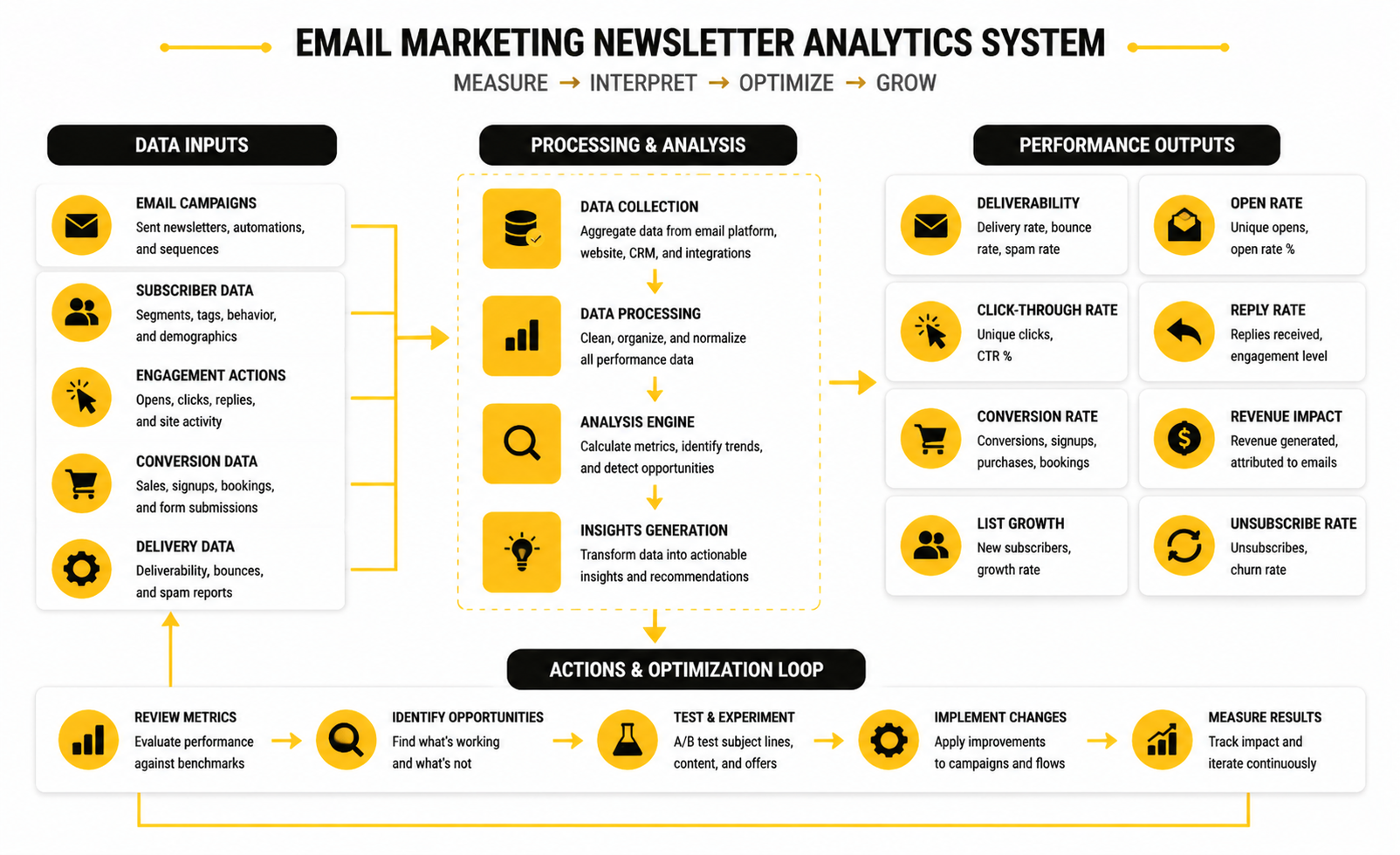
Interpreting the Data
Data alone isn’t enough; interpretation is where results are driven. For example, a 25% open rate paired with a 10% CTR suggests your subject line is strong but your content or CTA may need refinement. Conversely, low opens with high CTRs indicate your engaged segment loves the content, but your audience targeting needs improvement.
Benchmarking against industry standards provides context. For B2C e-commerce, average open rates hover around 18–25%, while CTRs typically range from 2–5%. Comparing your campaigns to these numbers helps prioritize which metrics to optimize first.
Using Analytics for Action
Analytics should drive decisions, not just observation. Segment audiences based on engagement patterns, test new subject lines, and refine content layouts. Tools like GoHighLevel and Brevo enable deep tracking and automation, making it possible to act on insights in real-time.
A practical example comes from a SaaS provider that monitored CTR by device type and found mobile users were less likely to click CTAs. By adjusting button size and layout for mobile, click-through rates improved by 18% within a month. This shows how detailed metrics not only measure performance but reveal actionable opportunities to enhance engagement and conversions.
In short, the right statistics illuminate the story behind your newsletter’s performance and guide continuous improvement, turning raw data into measurable business growth.
Optimization and Growth
Once your email marketing newsletter is running smoothly, the next step is scaling and optimizing for maximum impact. This phase moves beyond foundational practices into strategic decisions that separate high-performing campaigns from average ones.
Segmentation and Personalization at Scale
Scaling effectively requires segmenting your audience into meaningful groups. Beyond basic demographics, consider engagement levels, past purchases, and behavioral triggers. Personalization at scale—like dynamic product recommendations—can increase click-through rates by up to 29%.
A practical approach involves using automation platforms like GoHighLevel to set up multi-step sequences tailored to each segment. This ensures that even as your subscriber list grows, each reader receives content that feels relevant and timely.
Testing and Iteration
Advanced growth comes from rigorous testing. A/B tests on subject lines, email copy, visuals, and CTAs uncover what drives engagement. Test one variable at a time, analyze results, and iterate. Over time, this builds a playbook of high-performing patterns that can be replicated across campaigns.
Managing Frequency and Avoiding Fatigue
As your newsletter cadence increases, the risk of subscriber fatigue rises. Monitor engagement metrics closely and adjust frequency based on behavior. Some audiences respond well to weekly updates, while others prefer bi-weekly or monthly content. Providing preferences within signup forms helps maintain trust and reduces unsubscribes.
Strategic Tradeoffs
There are tradeoffs to consider when optimizing for growth. Highly personalized emails can drive engagement but require more sophisticated infrastructure and data management. Similarly, aggressive segmentation improves relevance but may complicate reporting. Balancing automation efficiency with human oversight ensures quality content at scale.
Leveraging Multi-Channel Integration
Email marketing works best when integrated with other channels. Combining newsletters with social media, SMS, or retargeting campaigns amplifies reach and reinforces messaging. For example, a campaign that pairs newsletter content with a ClickFunnels landing page or Systeme.io automation can convert engaged readers into active customers more efficiently.
By focusing on segmentation, continuous testing, managing frequency, weighing strategic tradeoffs, and integrating channels, your email marketing newsletter can grow in sophistication and scale, delivering consistent ROI while maintaining relevance for your subscribers.
Future Trends in Email Marketing Newsletters
The landscape of email marketing newsletters continues to evolve rapidly, with AI, automation, and personalization shaping the next generation of campaigns. Marketers are increasingly using predictive analytics to anticipate subscriber behavior, enabling proactive engagement strategies rather than reactive ones. AI-driven content recommendations allow newsletters to dynamically adapt to each recipient’s interests, driving higher click-through and conversion rates.
Another emerging trend is integrating multi-channel touchpoints. Emails now serve as hubs connecting SMS, social, push notifications, and in-app messaging. This creates a cohesive ecosystem where newsletters are part of a larger, seamless user journey. Additionally, privacy regulations and evolving consumer expectations emphasize transparency, consent, and meaningful engagement over sheer volume.
Investing in these advanced trends ensures that your newsletter strategy remains future-proof and continues to deliver measurable ROI in a competitive digital landscape.
FAQ - Built for Complete Guide
1. What is an email marketing newsletter?
An email marketing newsletter is a regularly sent email that provides information, updates, promotions, or insights to a subscriber list with the goal of nurturing relationships and driving engagement.
2. How often should I send newsletters?
Frequency depends on audience preferences, but most successful campaigns send weekly, bi-weekly, or monthly, balancing engagement with avoiding subscriber fatigue.
3. What makes a newsletter effective?
Effectiveness comes from relevant content, compelling subject lines, personalized messaging, clear calls-to-action, and mobile-optimized design.
4. How do I grow my subscriber list?
Use lead magnets, sign-up forms, referral programs, and partnerships with platforms like ManyChat or Replo to attract targeted subscribers.
5. What metrics should I track?
Monitor open rates, click-through rates, conversion rates, bounce rates, and unsubscribe rates to understand engagement and identify improvement areas.
6. How can I improve my open rates?
Focus on clear, compelling subject lines, personalized preheaders, and segmentation based on subscriber behavior or interests.
7. How do I prevent my emails from going to spam?
Use verified sender addresses, avoid spammy language, maintain clean lists, and follow GDPR/CAN-SPAM compliance to improve deliverability.
8. Can newsletters drive direct sales?
Yes, newsletters with well-crafted CTAs and targeted offers can convert readers into customers, especially when paired with landing pages or e-commerce funnels like ClickFunnels.
9. How important is design in newsletters?
Design impacts readability and engagement. Use clear structure, visuals, and responsive layouts to ensure content is accessible across devices.
10. Should I personalize my newsletters?
Absolutely. Personalized content based on subscriber data increases relevance, engagement, and conversion rates significantly.
11. What tools help manage newsletters efficiently?
Platforms like GoHighLevel, Brevo, and Systeme.io provide automation, segmentation, analytics, and campaign management to streamline execution.
12. How do I scale a newsletter campaign?
Leverage automation, advanced segmentation, multichannel integration, and performance tracking to expand reach without sacrificing personalization or quality.
Work With Professionals
Explore 10K+ Remote Marketing Contracts on MarkeWork.com
Most marketers spend too much time chasing clients, competing on crowded platforms, and losing a percentage of every project to middlemen. MarkeWork gives you a better way. Browse thousands of remote marketing contracts and connect directly with companies desperate to hire skilled marketers like you, without platform commissions and without unnecessary gatekeepers.
If you're serious about finding better opportunities and keeping 100% of what you earn, invite readers to explore available contracts and create a profile for free at MarkeWork.com.