

Purchasing mailing lists keeps showing up because it looks like a fast answer to a slow problem. When a team needs pipeline, launches a new offer, or feels stuck waiting for organic signups, a broker’s spreadsheet can feel like momentum. That is exactly why this topic deserves a sober, practical look instead of the usual blanket advice.
The bigger issue is that buying a list is no longer just a “maybe it works, maybe it doesn’t” tactic. It now runs straight into Google’s bulk sender rules on spam rates, authentication, and one-click unsubscribe, Yahoo’s bulk sender requirements and 0.3% complaint ceiling, and Microsoft’s newer requirements for high-volume senders. In plain English, the cost of getting this wrong is higher than it used to be.
The legal picture is not identical everywhere either. The FTC’s CAN-SPAM guide focuses on truthful headers, disclosures, physical address, and opt-outs, while the UK ICO says marketing emails to individuals require specific consent unless a narrow soft opt-in applies. That mismatch is one reason so many businesses get confused about purchasing mailing lists in the first place.
- Why Purchasing Mailing Lists Still Looks Attractive
- Why the Shortcut Usually Fails
- A Risk Framework for Evaluating Bought Data
- The Core Components of a Permission-Based Email List
- How to Build a Professional List Growth System
- FAQ: Buying Lists, Cold Outreach, and Safer Alternatives
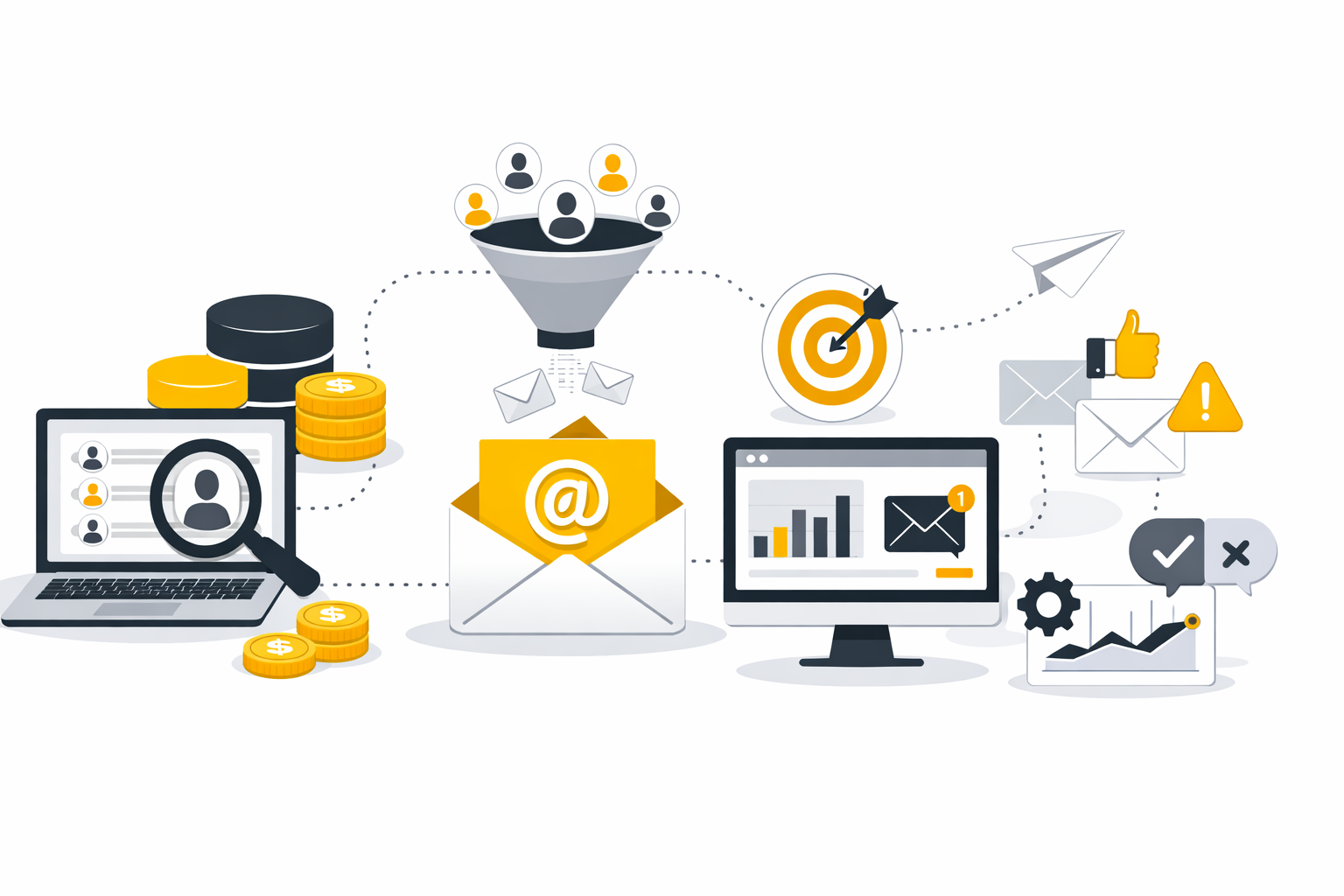
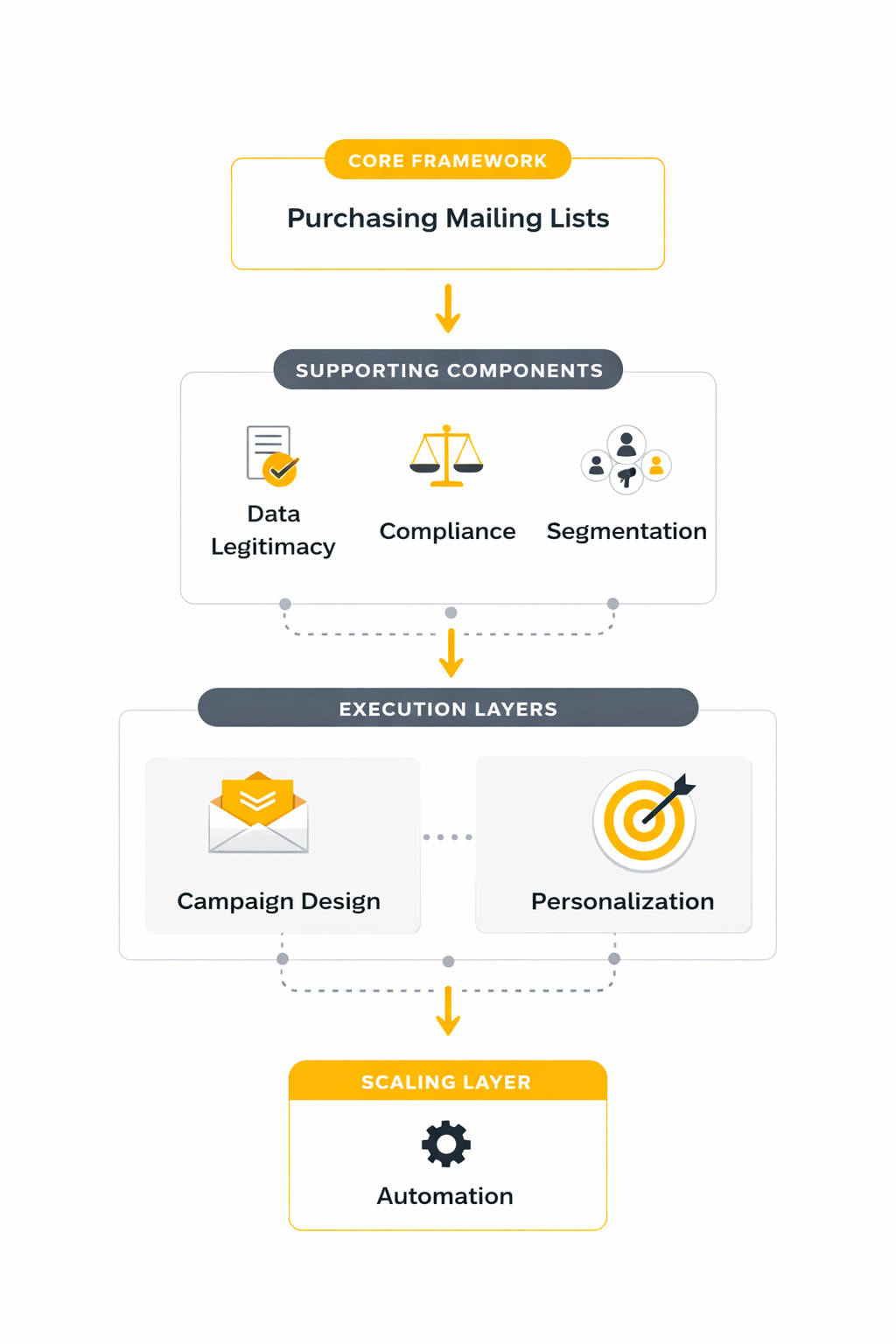
Why Purchasing Mailing Lists Still Looks Attractive
The appeal is obvious. You get volume fast, you skip the slow work of building trust, and you can tell yourself that more contacts means more chances to win. For founders, sales teams, agencies, and ecommerce brands under pressure, that promise is hard to ignore.
The problem is that most people collapse three separate questions into one. They ask whether a list can be bought, when the smarter questions are whether the people on it actually expect to hear from you, whether your email platform will let you use it, and whether mailbox providers will treat that traffic as wanted mail. Those are not the same decision, and treating them like they are is where expensive mistakes start.
That is also why a broker’s promise of “verified” or “compliant” data is nowhere near enough. HubSpot says contacts obtained through purchased or rented sources cannot be used in its marketing email tool and are highly likely to bounce, unsubscribe, mark emails as spam, and cause blocklistings. Mailchimp’s terms ban purchased, rented, or third-party lists, Klaviyo prohibits purchased, rented, borrowed, or third-party-provided contacts, Brevo forbids importing purchased, rented, borrowed, or third-party lists, and MailerLite requires permission-based subscriptions and says third-party-acquired lists are not allowable. Before you even send the first campaign, the mainstream market is already telling you where this usually ends.
Why the Shortcut Usually Fails
The first reason purchased mailing lists fail is simple: they create negative signals faster than they create revenue. Google tells bulk senders to keep spam rates below 0.1% and avoid ever reaching 0.3% or higher, while Yahoo says senders should keep complaint rates below 0.3%. When recipients do not recognize your brand, opens drop, complaints rise, and even people who might have bought from you later never get a fair chance to see your emails because your reputation takes the hit first.
The second reason is list quality. Even if a seller claims the data is fresh, you still have no control over how those addresses were gathered, how many times they have been resold, or how many have already gone stale. That matters because Mailgun explicitly warns that sending to a spam trap after buying a list can contribute to blocklisting, which means one “growth hack” can damage the domain and infrastructure you need for the campaigns that actually matter.
The third reason is strategic, and this is the one people underestimate. Purchased mailing lists distract you from building assets you own: consent, intent, first-party data, and a real feedback loop. A much better use of time is building opt-in capture paths with pages from Replo, forms from Fillout, conversational acquisition with Manychat, and a CRM plus automation stack like HighLevel or Brevo. That route is slower for a week, but dramatically better for the next year.