

Sales and marketing are two sides of the same coin in business growth, yet many organizations struggle to connect them effectively. When executed in harmony, these functions drive higher revenue, stronger customer engagement, and more predictable growth. A structured approach ensures that marketing generates qualified leads, and sales converts those leads efficiently into paying customers.
The benefits are measurable: companies with aligned sales and marketing teams see up to 208% more revenue from marketing efforts and higher customer retention rates. The challenge lies in integrating processes, tools, and metrics to create a seamless flow from initial engagement to closed deals.
Article Outline
- Why Sales and Marketing Alignment Matters
- Framework Overview of Sales and Marketing
- Core Components of Sales and Marketing
- Professional Implementation Strategies
- Performance Metrics and Analytics
- Advanced Strategies and Scaling
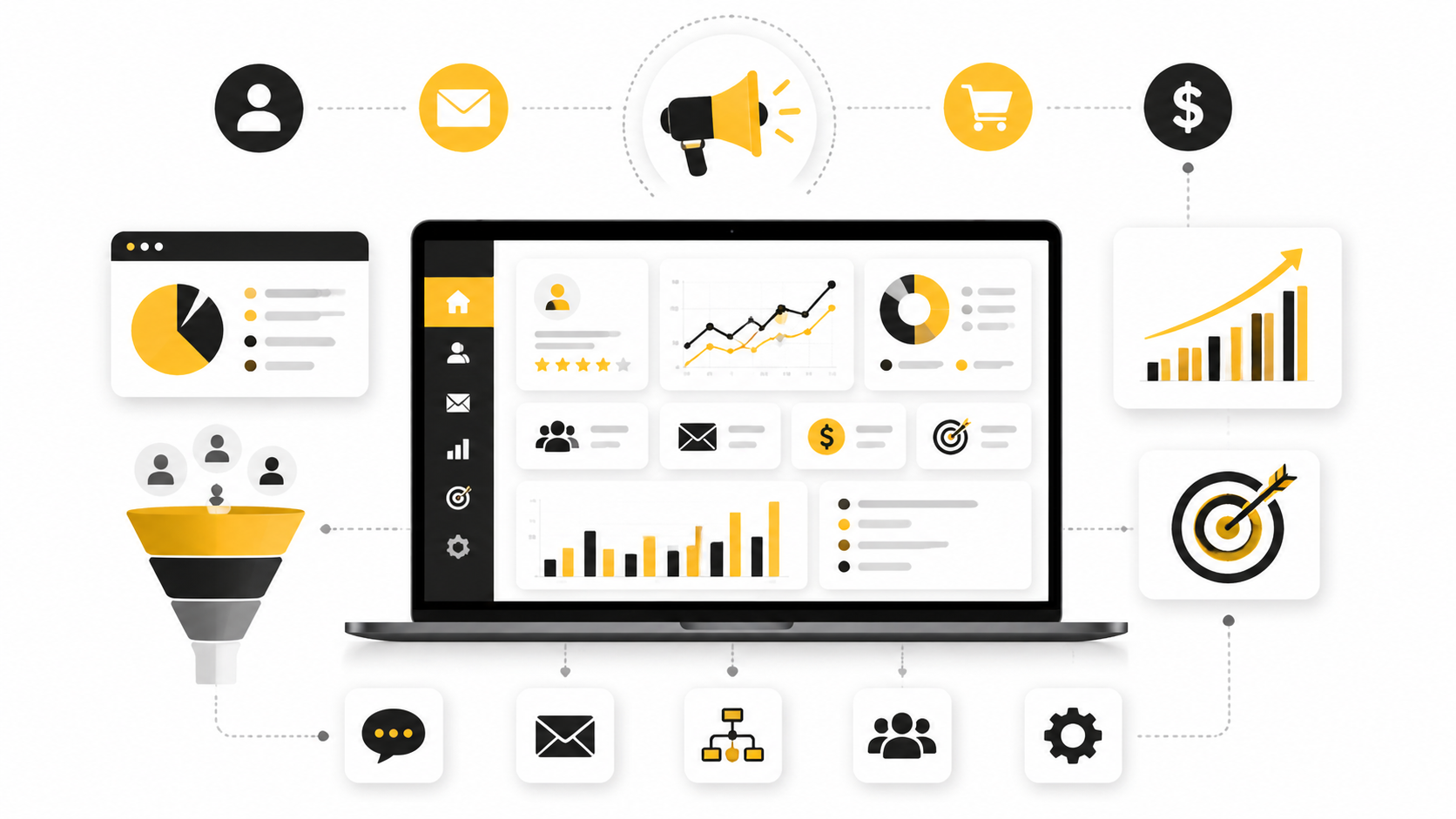
Why Sales and Marketing Alignment Matters
Sales and marketing alignment is the linchpin for business growth. When these teams operate in silos, you see wasted budget, conflicting messages, and missed opportunities. Companies that synchronize their sales and marketing efforts can generate up to 208% more revenue while reducing customer acquisition costs. This is because a coordinated approach ensures that marketing campaigns attract the right leads and sales follows up efficiently, increasing conversion rates.
Successful alignment also improves customer experience. A prospect receives consistent messaging from the first touchpoint to the close, which builds trust and accelerates decision-making. This unified approach fosters clarity around objectives, accountability, and metrics that truly matter for growth.
Key Benefits of Alignment
- Improved lead quality and conversion
- Clearer customer journey mapping
- Enhanced ROI for marketing campaigns
- Stronger brand consistency across channels
Framework Overview of Sales and Marketing
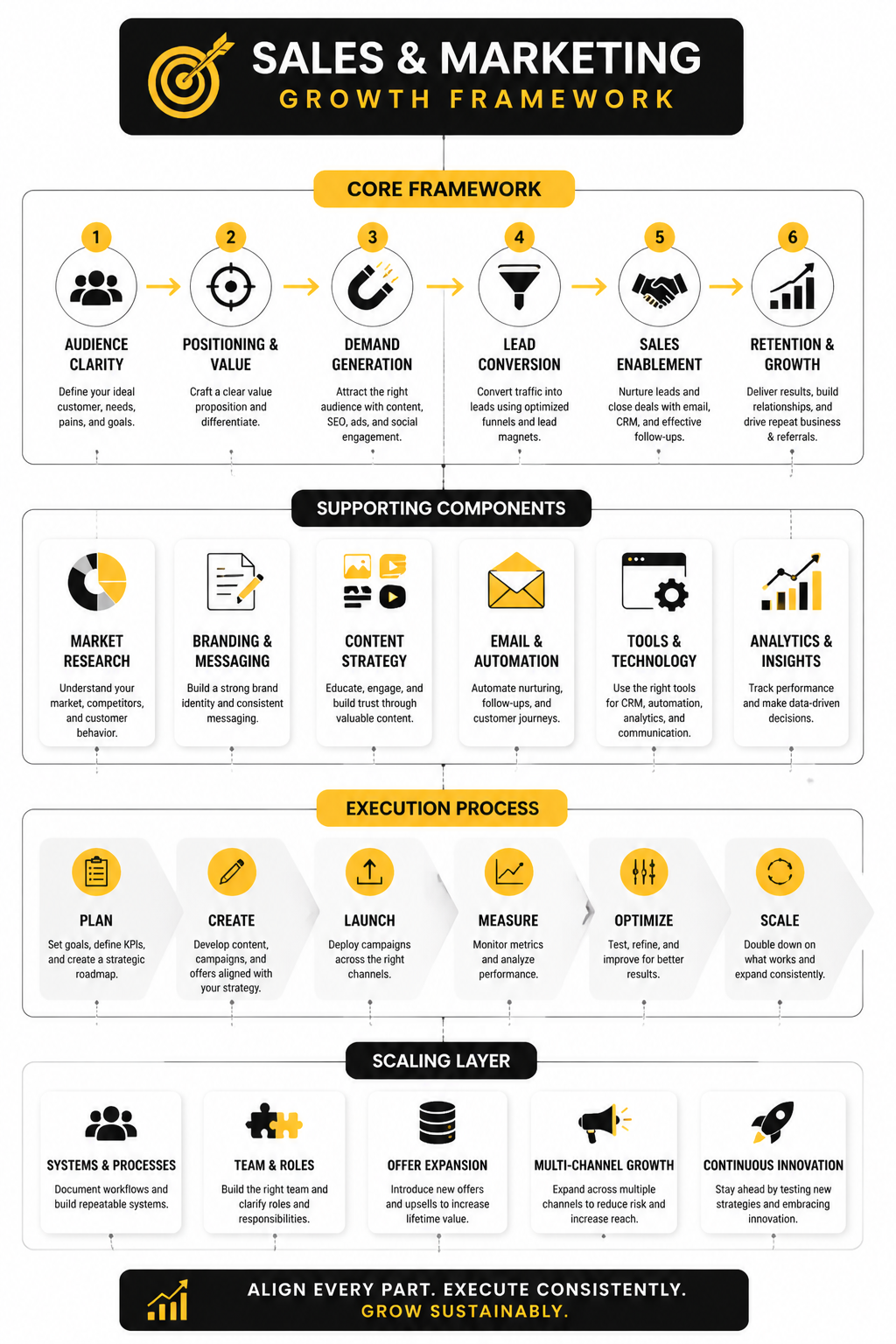
A robust framework is essential to connect marketing strategies with sales execution. The framework starts with defining target audiences and messaging, then flows into campaigns, lead nurturing, and sales enablement. It incorporates measurement systems to evaluate performance and feedback loops for continuous improvement.
This structure ensures that every initiative has a purpose and measurable outcome, minimizing resource wastage and maximizing impact. A solid framework allows teams to adapt quickly when market conditions change and ensures that both marketing and sales share common goals and KPIs.
Core Elements of the Framework
- Audience and Persona Definition – Understanding the ideal customer and mapping their journey.
- Content and Campaign Strategy – Creating content that resonates and drives engagement.
- Lead Management Systems – Capturing, qualifying, and routing leads effectively.
- Sales Enablement Tools – Providing sales with insights and assets to close deals faster.
- Measurement and Analytics – Tracking performance, refining strategy, and identifying growth opportunities.
Implementing a Sales and Marketing Strategy
Execution is where strategy meets reality. Once your framework is defined, the next step is translating it into actionable steps that drive measurable results. This involves setting up campaign workflows, aligning content creation with sales cycles, and ensuring every tool and team member knows their role in the process.
Clear, documented processes reduce miscommunication between teams and create a repeatable system that scales. Automation tools play a critical role in streamlining repetitive tasks, such as lead scoring, email nurturing, and performance reporting, which frees up the team to focus on high-impact activities.
Step-by-Step Implementation Process
- Define Campaign Objectives – Establish clear goals for each marketing initiative, linked directly to sales KPIs.
- Develop Content and Assets – Produce high-value content and sales enablement materials that guide prospects through the funnel.
- Set Up Lead Management – Implement systems for capturing, segmenting, and assigning leads efficiently.
- Deploy Campaigns Across Channels – Use email, social, and digital advertising to reach your target audience.
- Integrate Automation Tools – Automate lead scoring, follow-ups, and reporting for efficiency and consistency.
- Monitor and Adjust – Continuously track performance and refine campaigns to improve conversion rates and ROI.
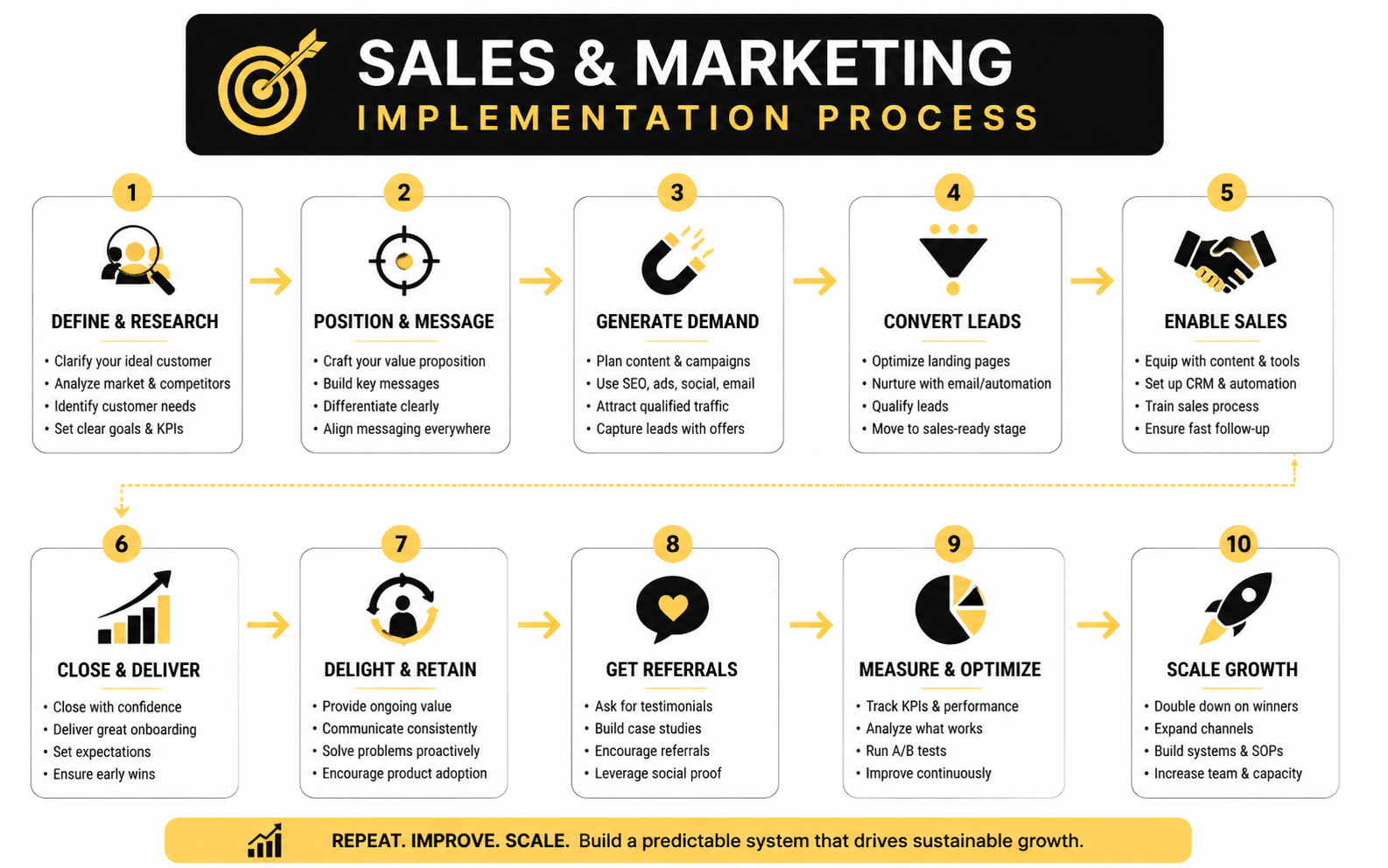
This structured approach ensures that marketing and sales efforts are not only coordinated but also measurable. With a clearly mapped process, teams can quickly identify bottlenecks, optimize communication, and replicate success across multiple campaigns. The goal is a fluid, responsive system that accelerates growth while maintaining alignment between marketing initiatives and sales execution.
Statistics and Data
Measuring the effectiveness of your sales and marketing efforts is crucial for sustainable growth. Raw metrics alone—like leads generated or website visits—don’t tell the full story. The real value comes from interpreting the data to understand which strategies drive conversions, which channels yield the highest ROI, and where resources should be allocated.
Tracking performance signals such as customer engagement rates, lead velocity, and conversion ratios provides actionable insights. For example, if a particular email sequence shows declining open rates, it indicates a need to refine subject lines, timing, or content targeting. Similarly, analyzing sales funnel drop-offs can reveal bottlenecks in the buyer journey that require immediate attention.
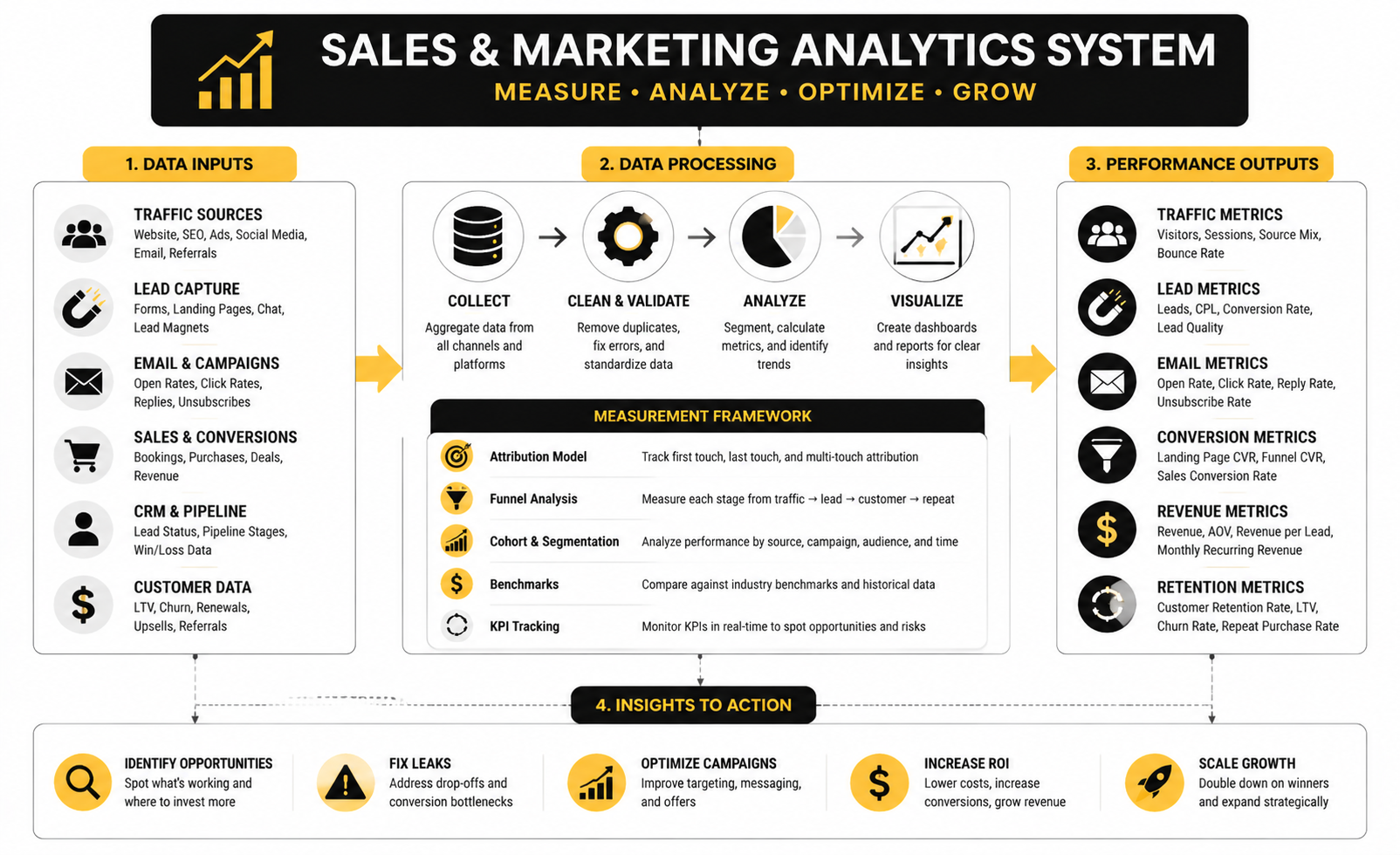
Benchmarking against industry standards and historical data allows teams to evaluate progress objectively. Metrics like cost per acquisition (CPA), lifetime value (LTV), and marketing-sourced revenue help quantify the direct impact of marketing on sales performance. By regularly monitoring these signals, businesses can iteratively optimize campaigns, shift focus to high-performing tactics, and align sales and marketing efforts toward measurable revenue growth.
Execution and Implementation
Turning a sales and marketing strategy into tangible results requires disciplined execution. High-level plans mean little without a systematic approach to putting them into action. This is where clear workflows, defined responsibilities, and real-time monitoring intersect to drive measurable impact.
The implementation process starts with defining priority initiatives based on potential ROI and organizational capacity. Teams then map each initiative to specific channels, audiences, and content assets. Clear accountability and a timeline for delivery ensure that tasks are executed without bottlenecks, while iterative feedback loops allow for rapid course correction as results come in.
Once execution begins, the focus shifts to integrating cross-channel campaigns. Cohesive messaging across email, social media, paid media, and direct sales touchpoints amplifies impact and improves conversion rates. Monitoring engagement metrics at each stage helps pinpoint underperforming segments and provides actionable insights for optimization.
Scaling efforts responsibly involves automating repetitive tasks, leveraging data-driven decision-making, and continuously testing variations. For example, using predictive analytics to forecast customer behavior can streamline targeting, reduce wasted spend, and accelerate revenue growth. Expert teams combine these operational efficiencies with creative experimentation to maintain both scale and agility in their campaigns.
Complete Ecosystem and FAQ
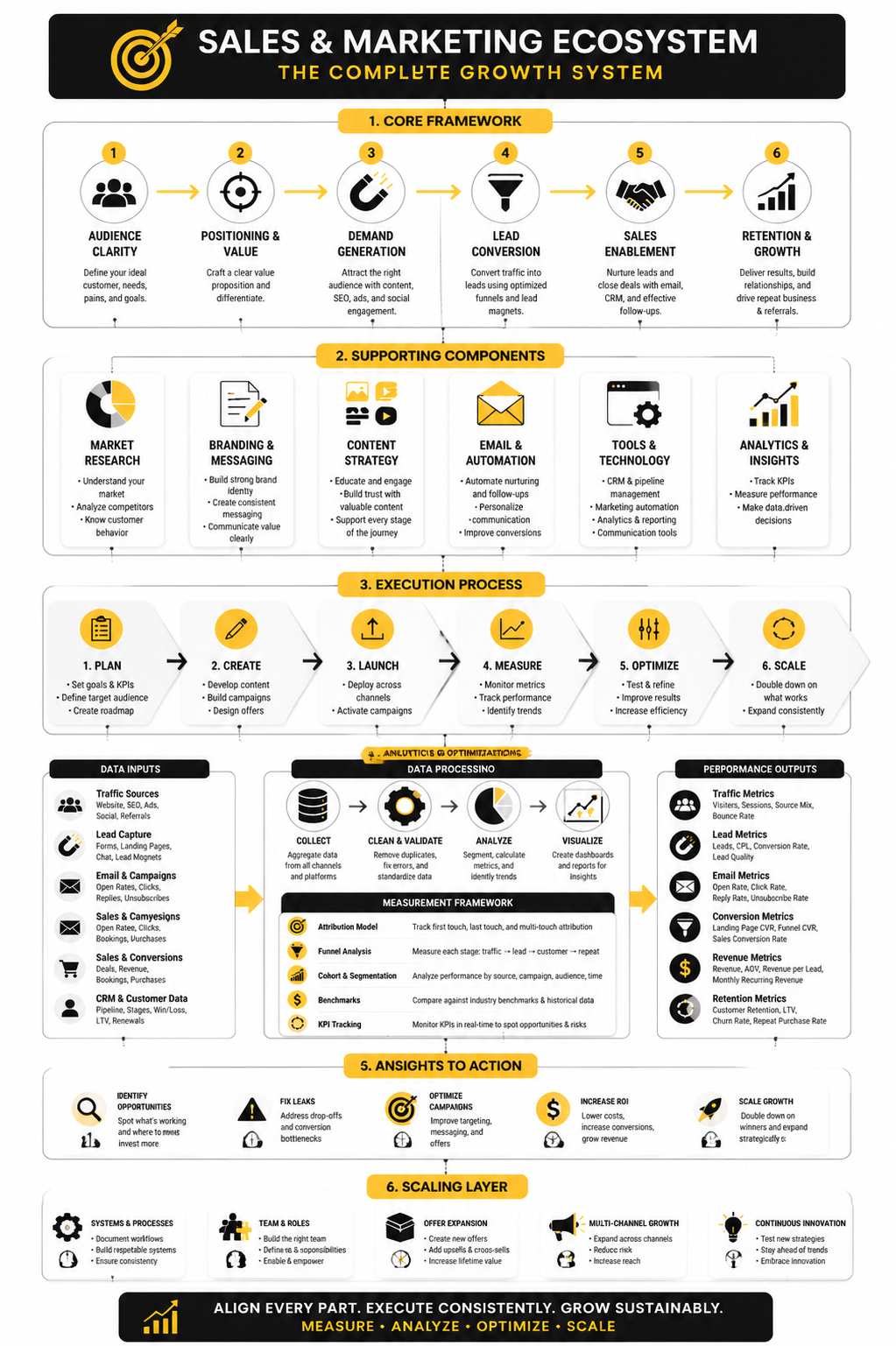
FAQ - Built for Complete Guide
1. What is the most effective sales and marketing strategy for small businesses?
A blended approach combining digital marketing, social media outreach, and email campaigns tends to yield the highest ROI for small businesses. Prioritize channels where your audience is most active and focus on measurable results.
2. How do I measure marketing performance effectively?
Track KPIs like conversion rates, customer acquisition cost, engagement metrics, and revenue attribution. Tools like GoHighLevel can consolidate data for real-time insights.
3. Should I prioritize inbound or outbound marketing?
Both are critical. Inbound drives long-term engagement through content and SEO, while outbound delivers immediate pipeline opportunities. The balance depends on your business cycle and goals.
4. How often should I update my marketing strategy?
Review strategy quarterly to respond to market shifts, consumer behavior, and competitor activity. Continuous testing and iteration ensure your campaigns remain effective.
5. What role does automation play in sales and marketing?
Automation streamlines repetitive tasks like email sequences, lead nurturing, and reporting. Platforms like ManyChat and Brevo enable personalized automation at scale.
6. How can I align sales and marketing teams effectively?
Define shared KPIs, establish regular communication, and use integrated CRM systems to ensure both teams have visibility into leads, conversions, and revenue attribution.
7. What are common mistakes to avoid in scaling marketing campaigns?
Avoid over-reliance on a single channel, neglecting data analysis, and scaling without process automation. Ensuring operational efficiency is key to sustainable growth.
8. How do I determine the best budget allocation across channels?
Base allocation on historical performance, customer lifetime value, and acquisition costs. Testing different spends across channels helps optimize ROI over time.
9. Which metrics indicate a campaign is underperforming?
Low engagement, declining conversion rates, high churn, or negative ROI are strong signals. Regular monitoring allows for timely adjustments and reallocation of resources.
10. How do I maintain brand consistency across multiple campaigns?
Develop a clear brand guideline, maintain consistent messaging, and use centralized content repositories. Consistency builds recognition and trust with your audience.
Work With Professionals
Explore 10K+ Remote Marketing Contracts on MarkeWork.com
Most marketers spend too much time chasing clients, competing on crowded platforms, and losing a percentage of every project to middlemen. MarkeWork gives you a better way. Browse thousands of remote marketing contracts and connect directly with companies desperate to hire skilled marketers like you, without platform commissions and without unnecessary gatekeepers.
If you're serious about finding better opportunities and keeping 100% of what you earn, invite readers to explore available contracts and create a profile for free at MarkeWork.com.