

Social media marketing (SMM) has evolved from a trendy add-on to a core strategy for brands aiming to connect with their audiences and drive measurable growth. Businesses no longer have the luxury of guessing which platforms or tactics work—they need a structured approach to maximize engagement, conversions, and brand visibility. Today, successful SMM blends creativity, analytics, and automation to create a seamless customer journey across multiple channels.
The power of social media lies in its reach and immediacy. Platforms like Instagram, TikTok, Facebook, LinkedIn, and X (formerly Twitter) allow brands to communicate directly with their target audience, build communities, and generate leads. However, without a coherent framework, campaigns can feel scattered, ineffective, or wasteful. That’s why understanding the underlying structure of SMM is crucial for sustainable results.
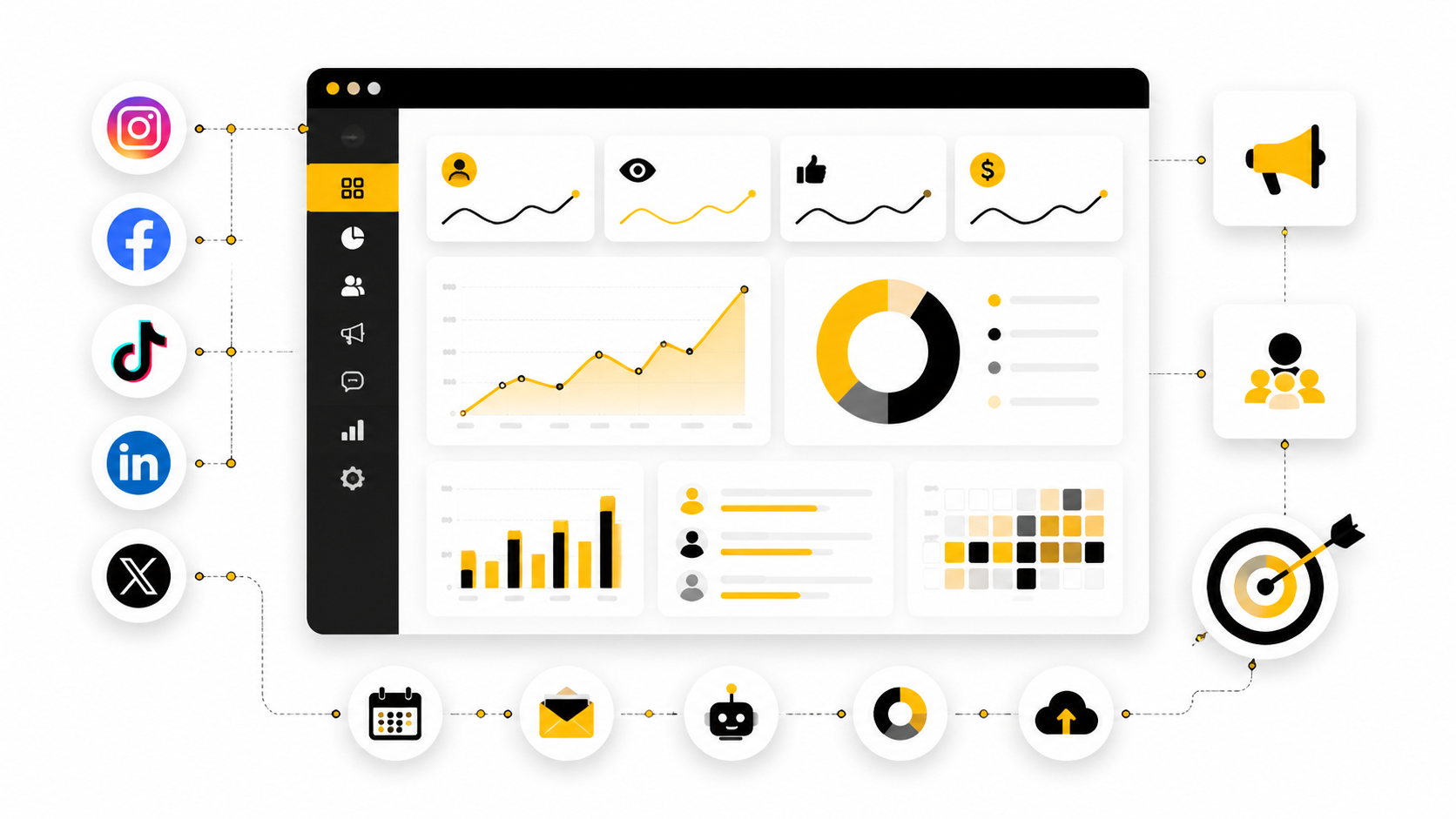
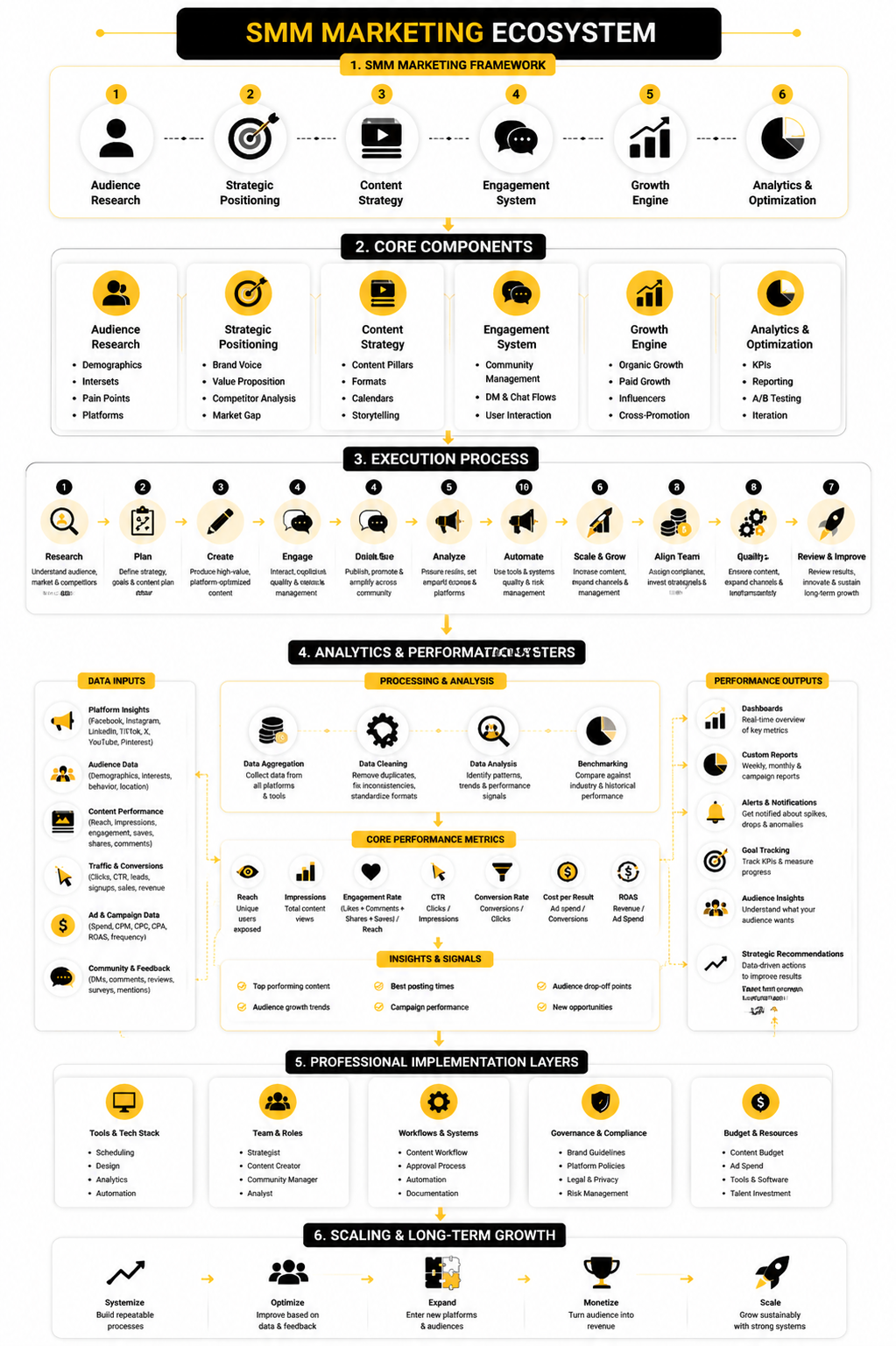
Here’s how this article is structured to give you a complete roadmap for effective social media marketing:
- Why SMM Matters – Exploring the strategic importance of social media in modern business.
- Framework Overview – Introducing a comprehensive framework for executing campaigns successfully.
- Core Components – Breaking down essential elements of high-performing SMM strategies.
- Professional Implementation – Practical steps and tools for executing campaigns like an expert.
- Case Studies and Success Stories – Real-world examples demonstrating effective SMM in action.
- Future Trends and FAQs – Emerging trends in SMM and answers to common questions.
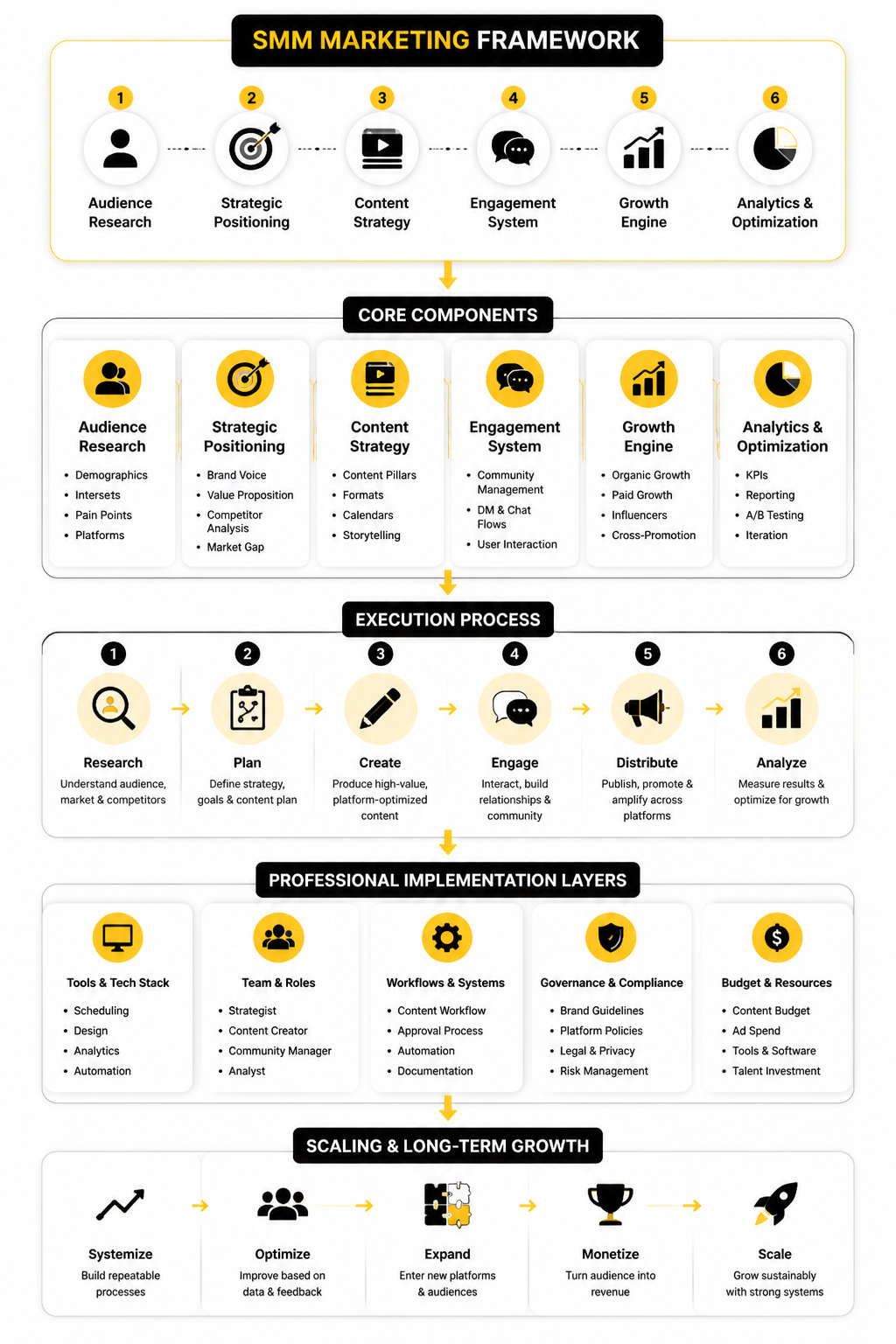
Each part of this guide builds on the previous one, ensuring you gain both the conceptual understanding and practical tactics needed to implement successful campaigns. By following this structure, you’ll be able to create campaigns that not only generate likes and shares but also meaningful business outcomes.
Do you want me to continue with Part 2: Why SMM Matters next?
Why SMM Matters
Social media marketing is no longer optional—it's a cornerstone of modern business growth. Brands that ignore SMM risk missing direct access to millions of potential customers. Platforms like Instagram, TikTok, and LinkedIn offer not just visibility but engagement opportunities that traditional advertising struggles to match.
One key reason SMM matters is the ability to build trust and authority. Consumers today research brands online before making purchasing decisions, and social media provides a public space for brands to demonstrate expertise, share customer success stories, and respond to concerns in real time. A well-managed presence can convert casual followers into loyal advocates. For example, brands using platforms like GoHighLevel can automate follow-ups and engagement sequences that turn social interactions into measurable leads.
SMM also drives targeted traffic at a lower cost than traditional advertising. With advanced targeting options, marketers can reach specific demographics, locations, and interests with precision. Paid social campaigns often outperform search ads in both cost per acquisition and engagement, particularly when paired with content strategies that feel authentic rather than pushy.
Another important aspect is data-driven decision-making. Social media platforms provide rich analytics on user behavior, engagement patterns, and campaign performance. By monitoring these metrics, brands can continually optimize content, refine messaging, and allocate budgets where they have the highest return on investment. Tools like ManyChat integrate conversational marketing with social campaigns, making it easier to capture insights while interacting with followers.
Finally, SMM matters because it creates a direct line to your audience. Unlike search engines or email lists, social platforms allow brands to participate in ongoing conversations, respond instantly to trends, and shape their own narrative. This direct access, when managed strategically, can transform social interactions into long-term revenue growth and brand loyalty.
Framework Overview
Implementing social media marketing effectively starts with a structured framework that connects strategy with action. Without a clear roadmap, campaigns often become reactive rather than proactive, wasting time and resources. A solid SMM framework guides content creation, audience targeting, and performance tracking in a unified way.
The framework begins with goal definition. Before posting a single piece of content, brands need to define what success looks like—whether it’s lead generation, brand awareness, community growth, or sales conversions. Clear objectives dictate the tone, content format, and platforms chosen. Tools like GoHighLevel can assist in setting measurable goals and automating progress tracking.
Next comes audience analysis. Understanding demographics, behavior, and engagement preferences is critical. This isn’t just about age or location; it includes interests, purchasing patterns, and content consumption habits. Platforms provide analytics dashboards, but supplementing this with social listening tools ensures brands stay ahead of trends.
Finally, content planning and scheduling create consistency, which is a core principle of professional SMM. Posting sporadically reduces visibility and engagement, while a well-structured calendar ensures a balanced mix of promotional, educational, and interactive content. Automation tools like ManyChat or Replo streamline this process, allowing marketers to focus on crafting messages that resonate.
Core Components
Once the framework is in place, the next step is understanding the core components that make campaigns successful. At a high level, these include:
- Content Types – From short-form videos to carousel posts and stories, using diverse formats keeps audiences engaged.
- Engagement Mechanisms – Polls, quizzes, comment prompts, and user-generated content foster interaction and brand loyalty.
- Paid Amplification – Social ads complement organic reach, targeting specific audiences for faster results.
- Analytics & Reporting – Tracking KPIs like engagement rate, click-through rate, and conversion metrics enables data-driven adjustments.
- Automation & CRM Integration – Systems like GoHighLevel integrate messaging, lead capture, and follow-ups to maintain momentum without constant manual effort.
These components work together to create campaigns that are scalable, measurable, and repeatable, rather than ad hoc efforts that burn resources with little return.
Professional Implementation
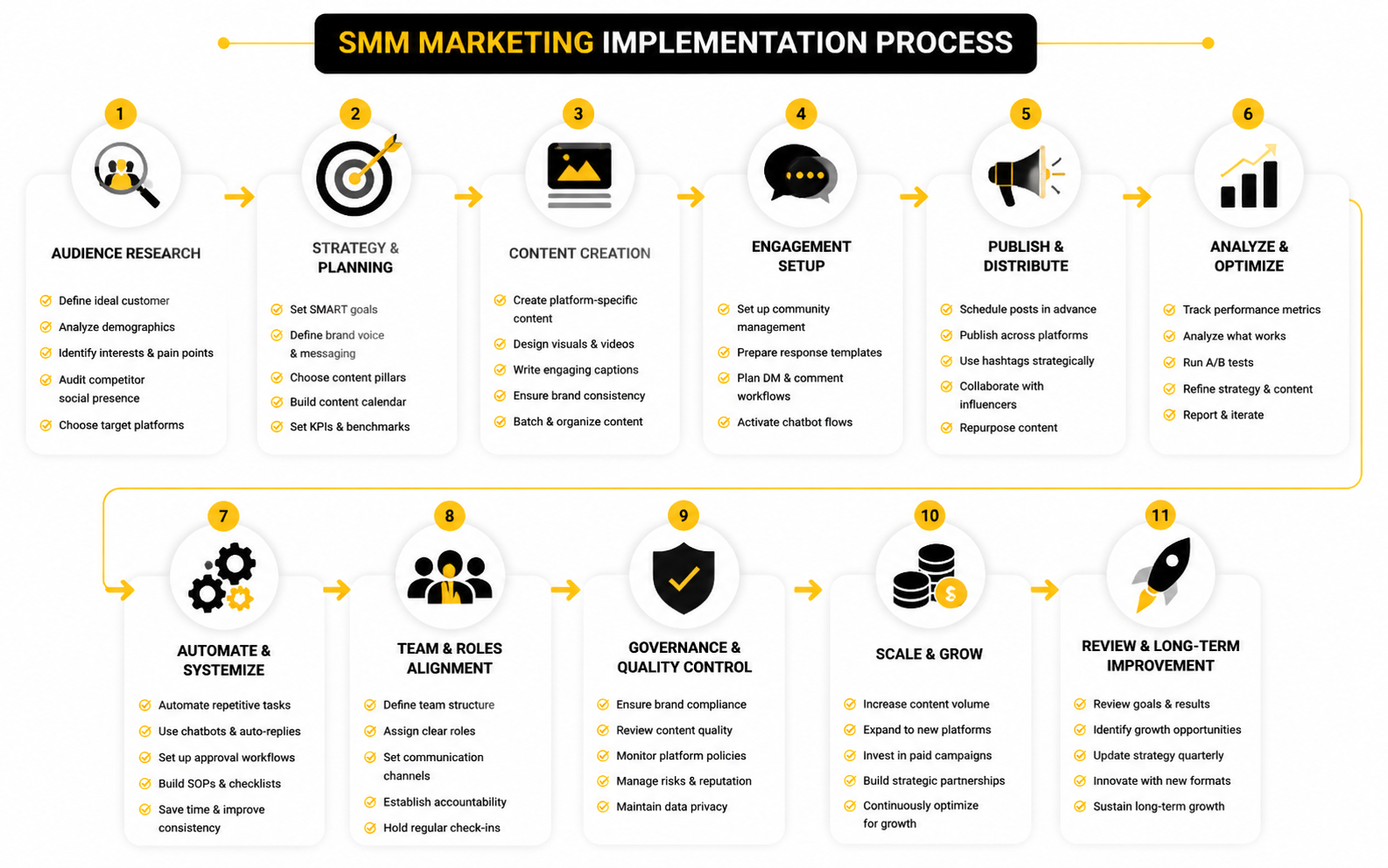
Execution is where the framework and core components come to life. A professional SMM approach follows a step-by-step process:
- Platform Selection – Identify which channels align with audience behavior and business objectives. Not all platforms are suitable for every brand.
- Content Creation – Develop posts, videos, and graphics based on the content calendar. High-quality visuals and authentic messaging are key to standing out. Tools like Replo help design landing pages and content assets that maintain brand consistency.
- Scheduling & Automation – Use social media management platforms to schedule posts, automate interactions, and set reminders for real-time engagement. Platforms like Buffer simplify this process while tracking performance.
- Paid Campaign Setup – Launch targeted ads with clearly defined budgets and KPIs. Test multiple creatives and audiences to optimize performance efficiently.
- Monitoring & Optimization – Track engagement metrics, conversion data, and audience feedback. Iterate quickly to improve results, leveraging insights from tools like GoHighLevel.
- Community Management – Respond to comments, messages, and mentions promptly to build trust and loyalty. Active interaction can often be more valuable than the content itself.
Executing SMM with this level of precision ensures campaigns are not only visually appealing but strategically effective, converting engagement into tangible business results.
Would you like me to continue with Part 4: Case Studies and Success Stories next?
Statistics and Data
Measuring social media marketing performance is more than just tracking likes or follower counts. Numbers become meaningful when they inform strategy, reveal audience behavior, and guide decision-making. High-performing campaigns rely on metrics that reflect both engagement and conversion.
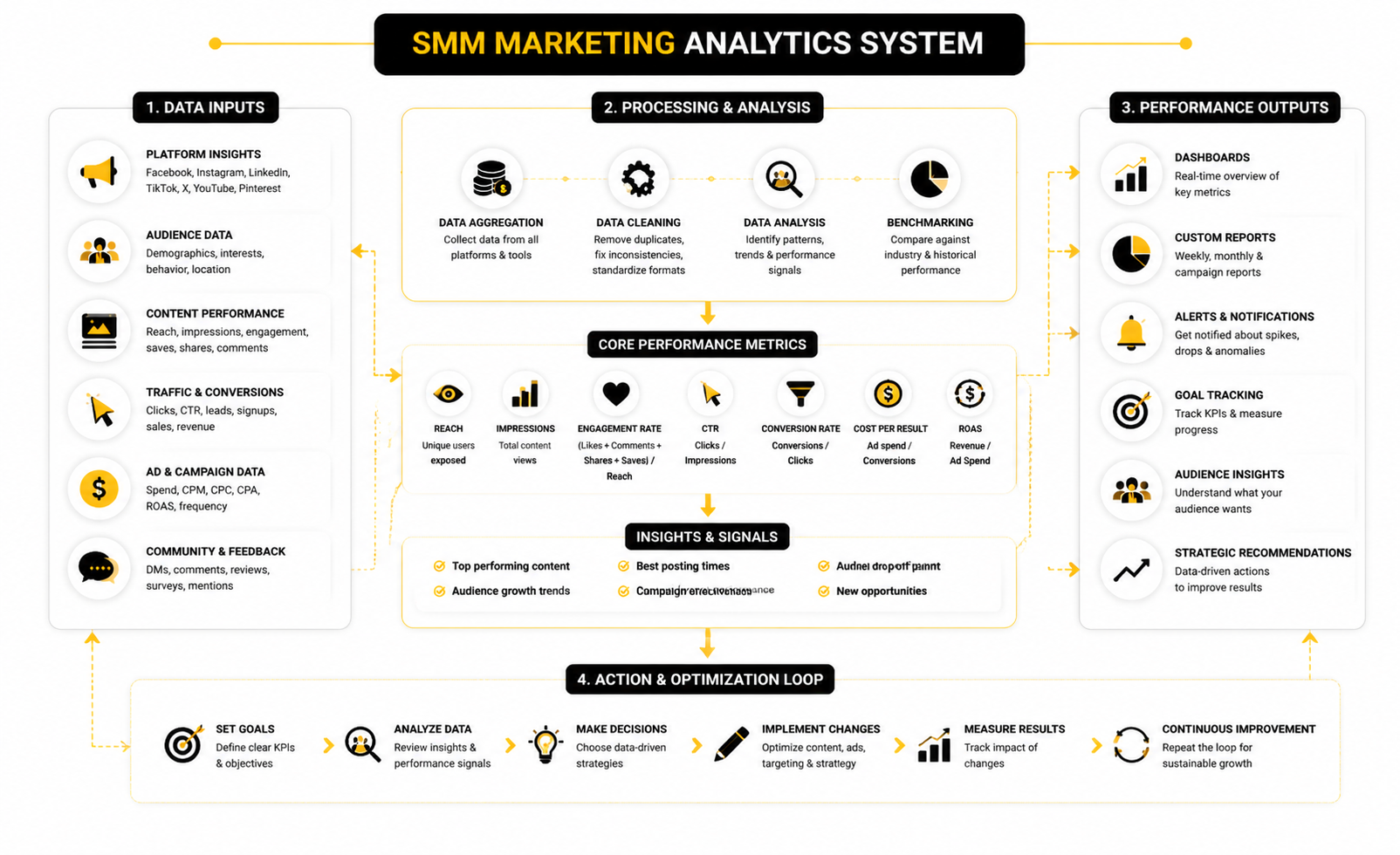
One of the most critical signals is engagement rate, which shows how your audience interacts with content relative to its reach. This includes likes, comments, shares, and saves. A high engagement rate often correlates with stronger brand loyalty and a more active community. Tools like Buffer or GoHighLevel consolidate these metrics into actionable dashboards, allowing marketers to identify which content formats or topics resonate most.
Another essential metric is conversion tracking. Social interactions are valuable, but turning engagement into measurable business outcomes—like sign-ups, purchases, or lead captures—is the ultimate goal. Integrating automation platforms such as ManyChat or Replo enables direct tracking from social touchpoints to sales or CRM entries, showing which campaigns deliver real ROI.
Reach and impressions provide context for engagement. Reach measures how many unique users see content, while impressions indicate total views, including repeat exposure. These metrics help evaluate whether your content is spreading to new audiences and maintaining visibility among existing followers.
Finally, audience sentiment and behavior analytics are critical. Understanding which posts generate positive or negative responses allows for course correction before campaigns lose momentum. Social listening platforms and integrated analytics help identify trends, detect pain points, and refine messaging. By combining engagement, conversion, reach, and sentiment data, brands can make informed decisions and continuously optimize their SMM strategy for growth.
Advanced Considerations for SMM Marketing
As social media marketing matures, success goes beyond basic posting and engagement. Brands face strategic trade-offs, scaling challenges, and evolving risks that require expert-level guidance. Understanding these factors separates campaigns that plateau from those that deliver sustained growth.
One critical consideration is platform prioritization. Not every channel will produce the same ROI, and spreading resources too thin can reduce impact. Advanced marketers analyze audience overlap, content suitability, and paid amplification costs before committing fully to platforms. For instance, investing heavily in TikTok may yield rapid visibility, but LinkedIn may drive higher-quality B2B leads.
Scaling campaigns introduces operational complexity. Increasing ad spend or posting frequency without proper automation, analytics, and team processes can lead to inconsistent messaging or audience fatigue. Tools like GoHighLevel or ManyChat help maintain scalability by automating messaging, lead capture, and follow-up sequences while preserving personalization.
Risk management is another vital aspect. Social media is highly public; missteps can damage brand reputation instantly. Crisis planning, content review processes, and real-time monitoring of sentiment are essential for mitigating potential backlash. Additionally, understanding platform policy changes, algorithm updates, and data privacy regulations ensures campaigns remain compliant and effective.
Finally, strategic trade-offs often arise between short-term performance and long-term growth. Aggressive paid campaigns can drive immediate results but may undercut organic engagement or brand authenticity. Conversely, focusing solely on organic strategies might take longer to generate measurable ROI. The most effective SMM strategy blends both approaches, using automation, analytics, and creative storytelling to achieve balanced, sustainable growth.
By factoring in these advanced considerations, marketers can scale campaigns confidently, minimize risks, and make strategic choices that align with long-term business objectives.
FAQ - Built for Complete Guide
1. What is SMM marketing and why is it important?
SMM marketing, or social media marketing, is the strategic use of social platforms to promote a brand, engage audiences, and drive conversions. It’s important because it allows direct communication with potential customers, builds trust, and provides measurable results that traditional marketing often cannot deliver.
2. How do I choose the right social media platforms?
The best platforms depend on your audience demographics, content type, and business goals. For example, LinkedIn is ideal for B2B networking, Instagram and TikTok for visual storytelling, and Facebook for broad consumer engagement. Analyze where your target audience is most active and align your strategy accordingly.
3. How often should I post content?
Consistency is key, but quality always outweighs quantity. Posting 3–5 times per week on major platforms is a good starting point, with adjustments based on engagement and analytics. Scheduling tools like Buffer can help maintain a consistent cadence without burning your team out.
4. What metrics matter most in SMM?
Engagement rate, reach, impressions, click-through rates, and conversions are the primary metrics. Each tells a different story: engagement signals audience interest, reach shows visibility, and conversions demonstrate tangible business impact.
5. Can paid advertising enhance SMM performance?
Absolutely. Paid campaigns amplify reach, target specific demographics, and can accelerate results. Platforms like GoHighLevel offer integrated paid campaign management alongside organic efforts, streamlining ROI tracking.
6. How do I measure ROI from social media marketing?
ROI can be tracked through conversions, lead captures, sales, or other defined goals. Using analytics dashboards and automation tools like ManyChat helps link social interactions directly to revenue outcomes.
7. How do I handle negative feedback or social media crises?
Always respond promptly and professionally. Have a crisis management plan in place, monitor sentiment, and adjust content strategies if needed. Transparency and timely engagement prevent minor issues from escalating into reputational damage.
8. What role does content variety play in SMM?
Content variety keeps your audience engaged and addresses different preferences. Mix videos, carousel posts, stories, and interactive content like polls or quizzes to maintain interest and maximize engagement.
9. Can automation tools replace human interaction?
Not entirely. Automation streamlines repetitive tasks, but personal engagement is still critical for building trust and community. Tools like Replo and GoHighLevel balance automation with human oversight.
10. How do I scale SMM campaigns without losing quality?
Scaling requires structured processes, analytics, and automation. Prioritize high-performing platforms, leverage scheduling and automation tools, and maintain content quality standards to ensure consistent messaging while expanding reach.
11. How do I keep up with changing algorithms and trends?
Stay updated by monitoring platform updates, following industry news, and testing new formats. Social media is dynamic; continuous experimentation combined with data analysis ensures campaigns remain effective.
12. How long does it take to see results from SMM?
Results vary depending on strategy, audience, and campaign goals. Organic growth often takes several months, while paid campaigns can show measurable outcomes within weeks. Combining both approaches accelerates overall impact.
Work With Professionals
Explore 10K+ Remote Marketing Contracts on MarkeWork.com
Most marketers spend too much time chasing clients, competing on crowded platforms, and losing a percentage of every project to middlemen. MarkeWork gives you a better way. Browse thousands of remote marketing contracts and connect directly with companies desperate to hire skilled marketers like you, without platform commissions and without unnecessary gatekeepers.
If you're serious about finding better opportunities and keeping 100% of what you earn, invite readers to explore available contracts and create a profile for free at MarkeWork.com.