

Finding a social media agency near me isn’t just about convenience — it’s about partnering with a team that understands modern digital growth and can help your business compete online. Social media marketing agencies today offer far more than simple posting: they build strategies, create bespoke content, manage paid advertising, track performance, and integrate social into your broader sales funnel.
Below you’ll find the full article structure you can expect in this series:
- Why a Social Media Agency Matters for Local Businesses
- IMAGE 1
- Core Services Offered by Social Media Agencies
- IMAGE 2
- How Agencies Build a Social Media Framework
- What to Look for in a Local Social Media Agency
- Measuring Success and ROI from Social Media
- Frequently Asked Questions About Social Media Agencies
A strong social media presence today isn’t optional for growth — it’s a strategic asset. Whether you’re a small shop in Bucharest or a growing enterprise in London, a local agency can give you strategic direction, expert execution, and measurable business results.
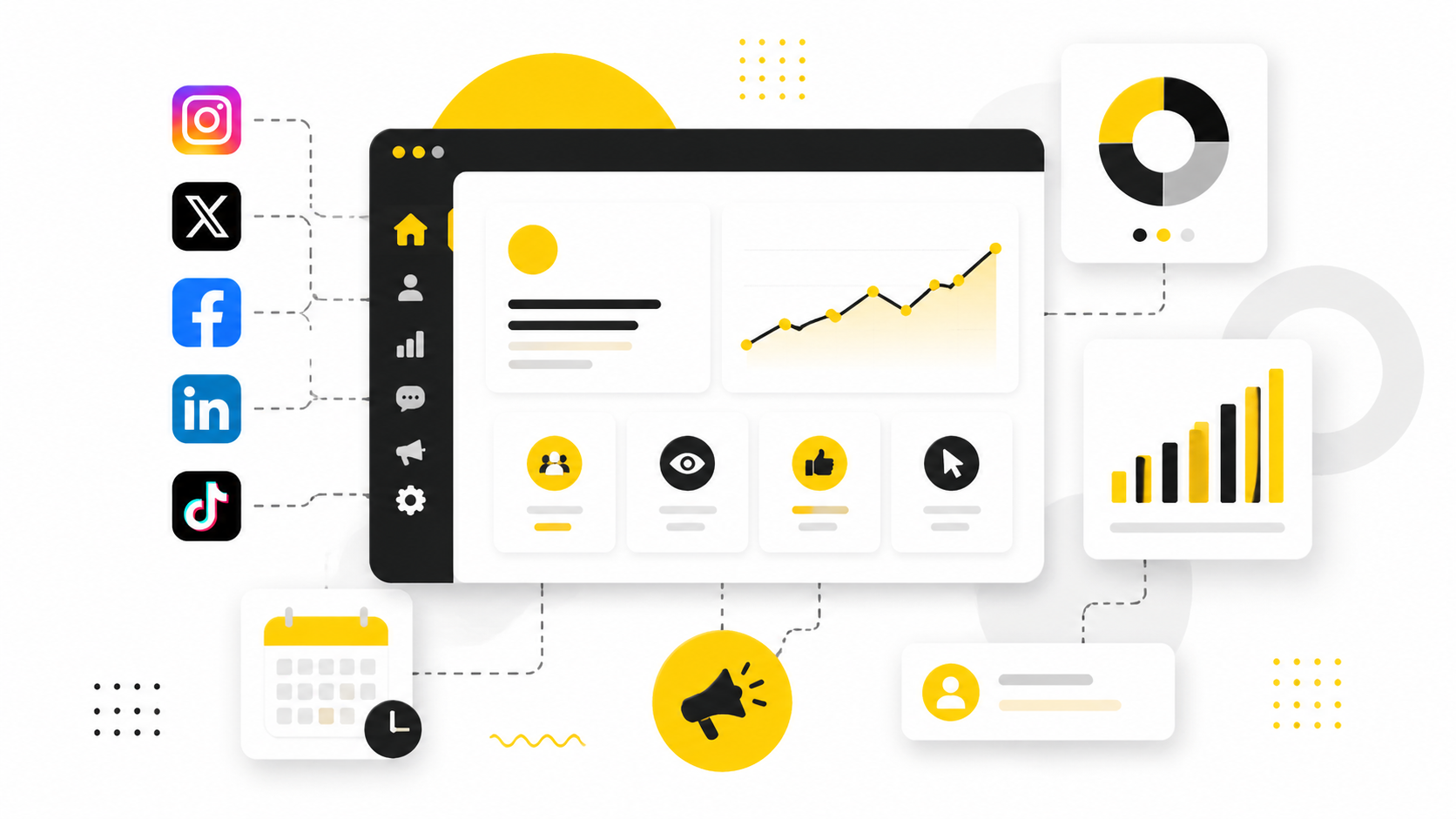
Your audience isn’t just online — they live on platforms like Instagram, TikTok, LinkedIn, and Facebook. Agencies help you meet them where they already are with content and campaigns that speak directly to their behaviors and expectations.
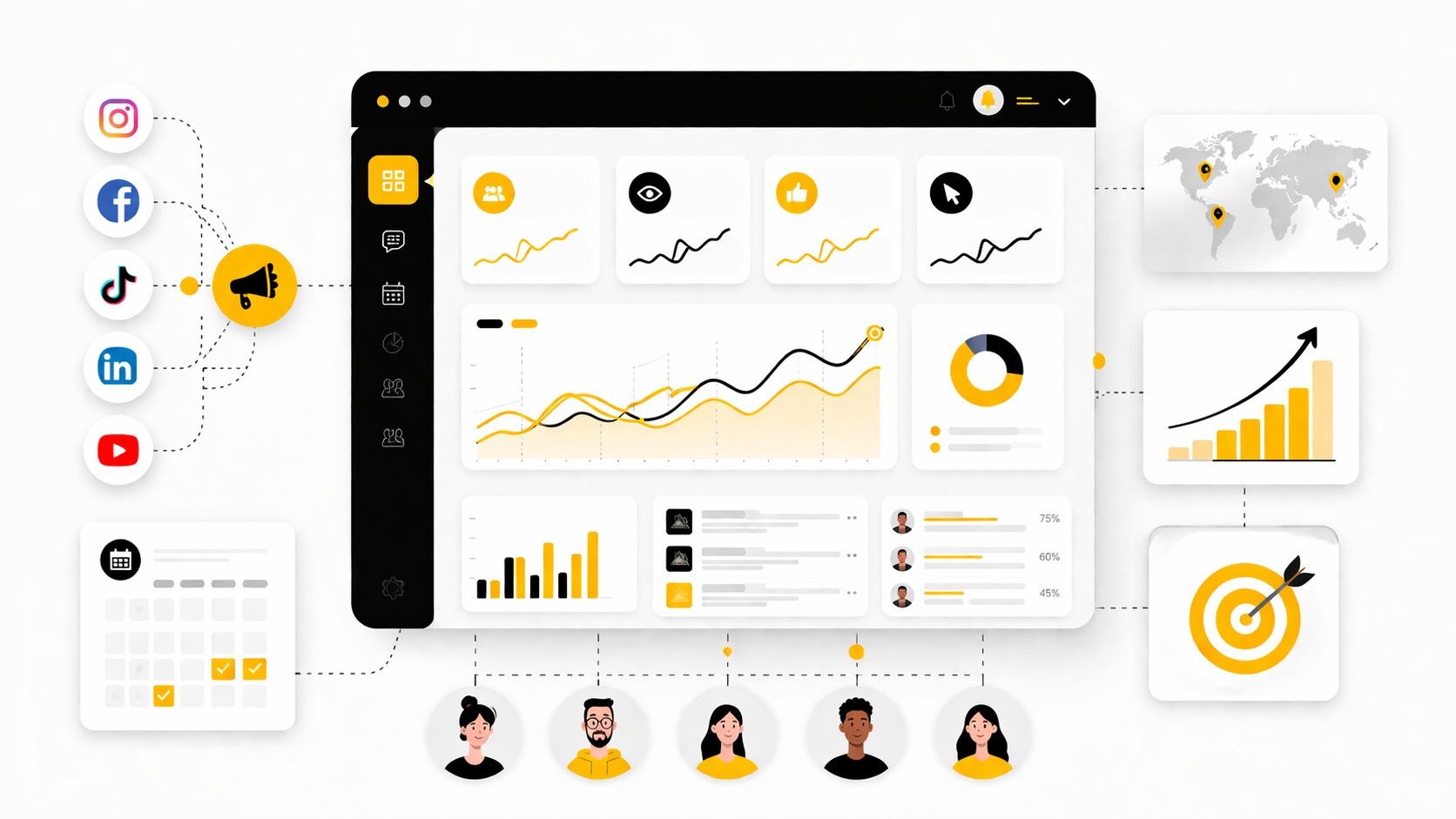
Understanding how a social media agency builds its services into a cohesive framework will help you evaluate potential partners more effectively. In later sections, we’ll break down the core components of that framework, how local agencies differentiate themselves, and how to measure the impact of your investment.
Let’s dive into what each part of this guide will cover next.
Core Services Offered by Social Media Agencies
When you search for a social media agency near me, it’s helpful to know what specific services you’re actually hiring — and why those services matter for your business growth. Modern social media agencies go far beyond posting content on your behalf; they build, execute, and optimise a strategy that turns social channels into reliable business drivers.
Strategic Planning and Social Media Roadmaps
A core responsibility of any professional social media agency is developing a strategy aligned with your business goals rather than posting randomly. This starts with understanding your brand, target audience, competitors, and where your customers are most active. From there, an agency creates a roadmap that defines:
- Which platforms are most relevant for your audience
- What type of content supports your goals (awareness, leads, sales)
- When and how often to post
- What success looks like with clear KPIs
This high‑level plan ensures that every piece of content and every campaign serves a purpose, rather than adding noise to your social presence.
Content Creation and Scheduling
Content is the fuel of social media, and agencies manage the entire lifecycle from ideation to publication. Rather than generic posts, they craft:
- Platform‑specific content (e.g., short videos for TikTok, carousels for Instagram)
- Visuals and graphics that reflect your brand identity
- Copy that engages your audience and encourages action
Professional content calendars keep your channels consistent and prevent gaps or rushed last‑minute posts. This kind of planning and quality control is why hiring a skilled team matters — well‑designed content performs measurably better than sporadic DIY posts.
Community Management and Engagement
A “social media agency near me” often acts as an extension of your own team, handling real‑time interactions with your audience. Community management includes:
- Responding to comments, private messages, and reviews
- Engaging with followers in a way that aligns with your brand voice
- Addressing feedback — both positive and negative — professionally
Active engagement builds trust and loyalty, turning passive followers into advocates and repeat customers. A local agency will understand cultural nuances that matter for your audience, which can be especially valuable for small and medium businesses.
Paid Advertising and Campaign Management
Organic reach has declined on many platforms, making paid campaigns a key part of growth for most brands. Agencies manage social advertising by:
- Designing targeted campaigns based on audience segmentation
- Testing multiple creatives and messages to improve conversion rates
- Allocating budgets across platforms like Meta, LinkedIn, and TikTok
When done strategically, paid social ads accelerate visibility and drive measurable business outcomes, such as leads or purchases, rather than just impressions.
Analytics, Reporting, and Continuous Optimisation
Tracking results isn’t optional. A social media agency doesn’t just post and walk away — they analyse performance data to improve your strategy over time. This includes:
- Monitoring KPIs like engagement, conversions, and reach
- Producing reports that connect activity to business results
- Refining plans based on what works and what doesn’t
By turning data into actionable insights, agencies help ensure your investment delivers actual value instead of guesswork.
Together, these services form the backbone of what a modern social media marketing partner delivers — a structured, strategic, and results‑focused approach rather than ad‑hoc online activity. Working with a local or nearby agency can also mean faster communication and deeper understanding of your market dynamics.
How a Social Media Agency Implements Your Strategy
Now that you understand what core services a social media agency near me offers, the next big question is: how do these strategies actually get executed in real work? The implementation phase is where planning becomes tangible results — and the best local agencies follow a clear, structured process to make that happen.
A Step‑by‑Step Implementation Workflow
Great agencies don’t just post randomly; they follow a consistent multi‑phase workflow that ensures quality, alignment with your goals, and measurable progress over time.
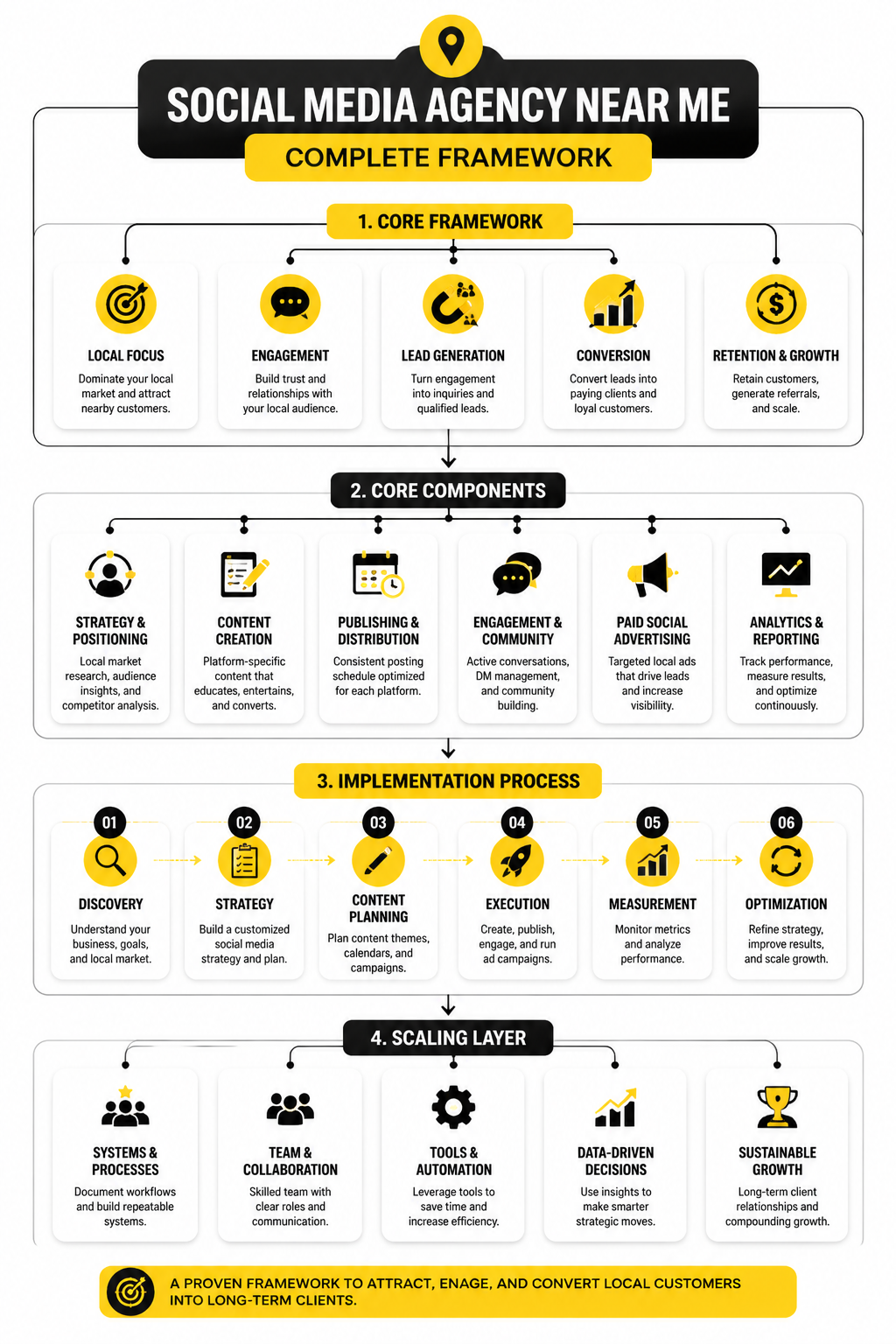
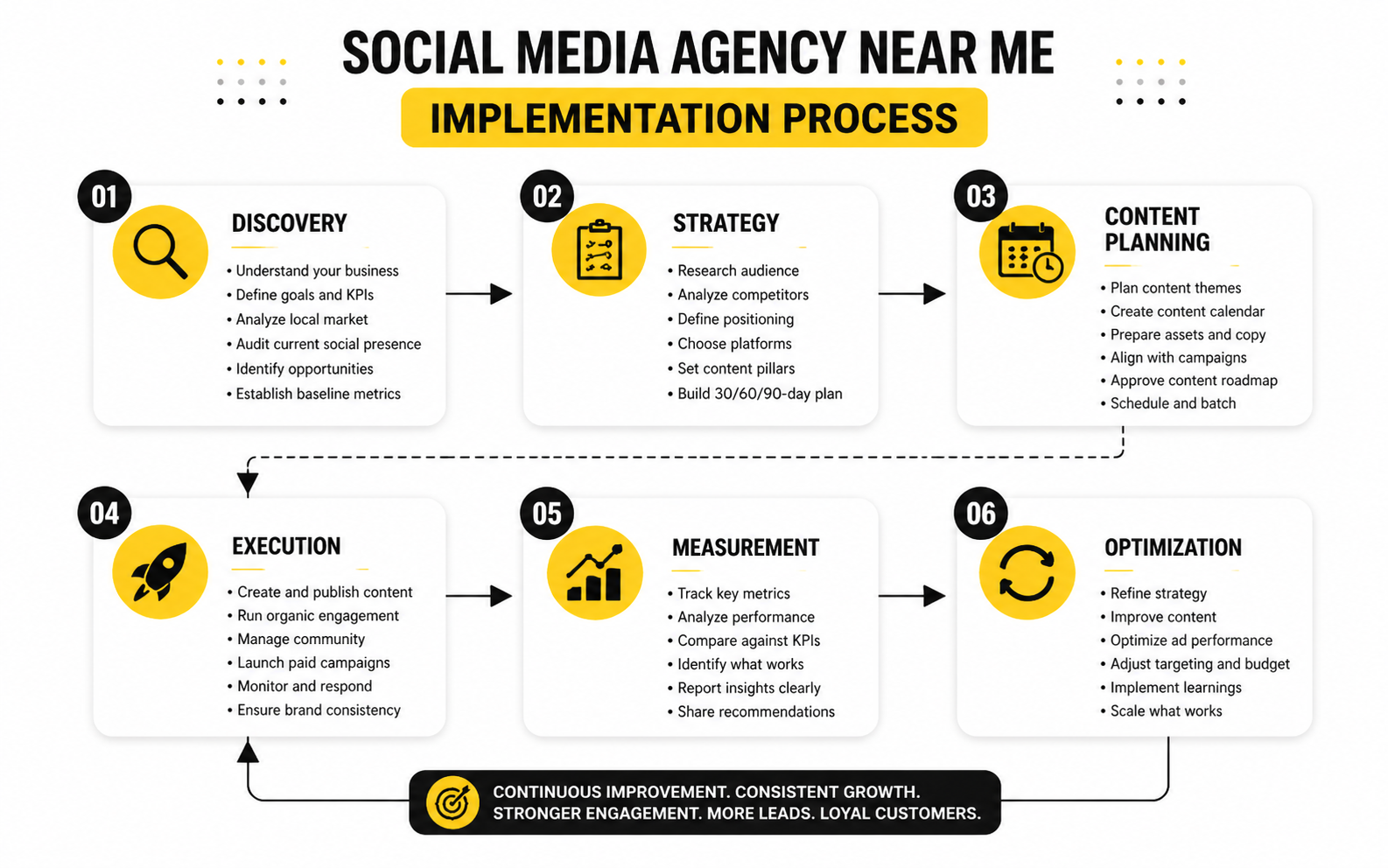
1) Kickoff and Goal Translation
The first real work typically happens immediately after onboarding. The agency takes your high‑level business goals and translates them into specific social objectives — for example, turning “increase awareness” into measurable targets like profile visits or engagement rates. This step sets expectations and defines what success looks like.
2) Detailed Audience and Competitor Research
Before any content is produced, agencies dig into who your audience really is and how competitors are engaging them. This includes analyzing demographics, interests, online behaviour, and competitor content that performs well. Research this deep helps inform every next step, from messaging to platform choice.
3) Content Planning and Calendar Creation
With a strategy and research in hand, the next step is planning. Agencies build a content calendar that outlines what will be published, when, and on which platforms. This calendar aligns with your goals and seasonal opportunities, ensuring consistency and purpose in every post. It also sets a rhythm that prevents rushed or reactive posting.
4) Production and Creative Development
Once the calendar is set, the creative team gets to work. This phase involves:
- Writing captions and micro‑copy
- Designing visuals, graphics, and motion content
- Editing photos and videos
- Creating campaign‑specific assets
The goal is to ensure all content is on‑brand and optimized for each platform before anything goes live.
5) Review, Approval, and Scheduling
Before publishing, content goes through a review process — both internally within the agency and often with client approval. This step catches errors, aligns messaging, and ensures every piece supports campaign goals. Once approved, posts are scheduled using dedicated tools that manage timing and consistency across channels.
6) Publishing and Community Engagement
With scheduling in place, the agency actively publishes content and manages real‑time engagement. This includes monitoring comments, replies, messages, and mentions so that your brand interacts meaningfully with its audience. Active engagement helps build community and trust online.
7) Monitoring, Analytics, and Optimization
Implementation isn’t complete without measurement. Agencies track metrics that align with your objectives — engagement rates, reach, clicks, leads, or sales — and use these insights to refine future content, adjust timing, and enhance campaign performance. This feedback loop ensures your strategy continually improves over time.
Why a Structured Implementation Matters
A structured process like this transforms social media marketing from guesswork into a system that’s:
- Predictable — you know what’s happening and when
- Efficient — teams aren’t scrambling last‑minute
- Measurable — you can see real results
- Aligned — content supports business goals
When you search for a social media agency near me, asking about their implementation workflow can be one of the best ways to gauge professionalism and potential impact on your brand’s growth.
Next up, we’ll explore what to look for when choosing the right local social media agency partner.
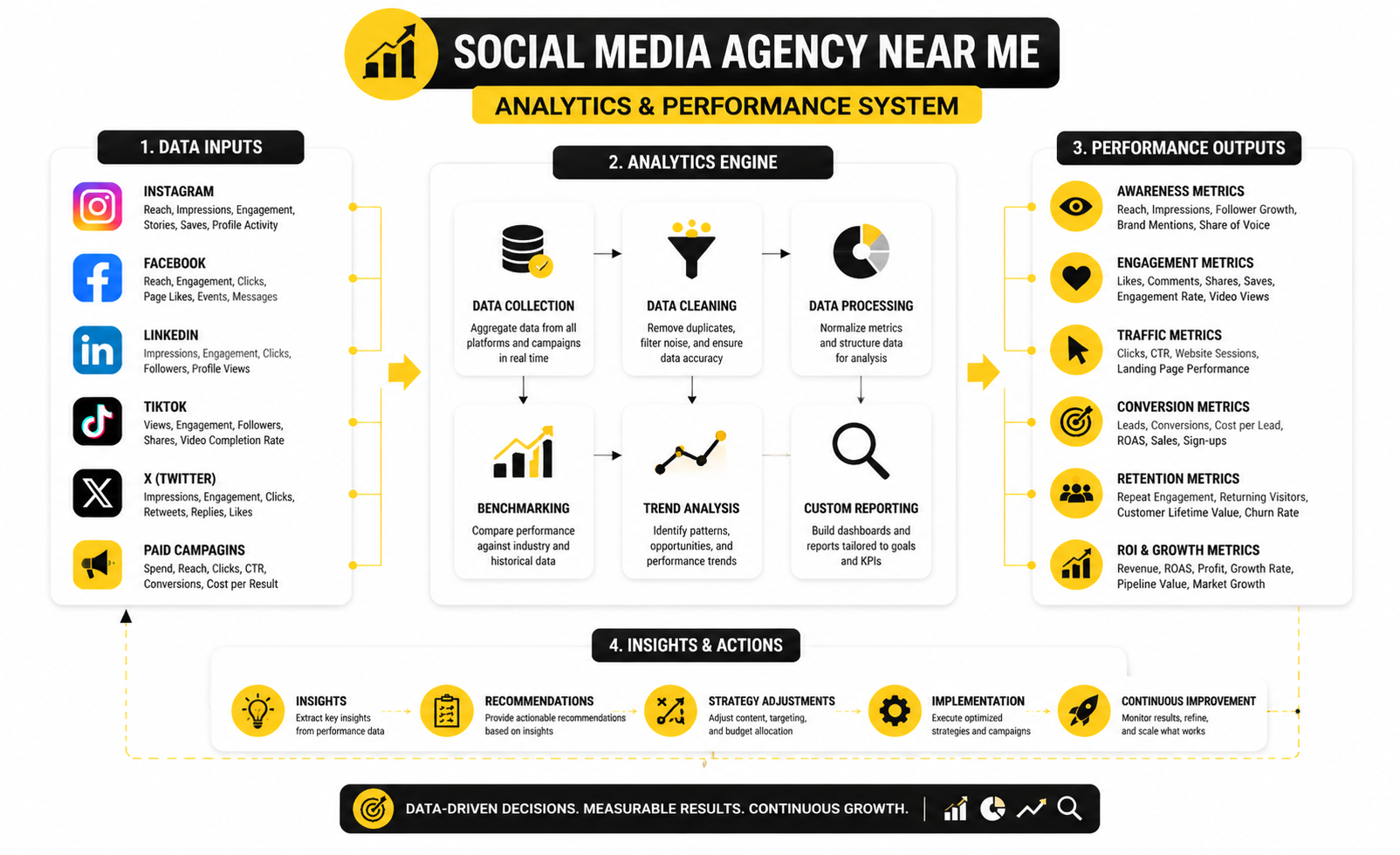
Measuring Social Media Performance: What the Data Really Means
If you’re investing in a social media agency near me, you want more than pretty posts and cute captions — you want measurable outcomes that show your business is growing. The numbers that come out of social media analytics aren’t just stats on a page. They’re diagnostic tools that tell you whether your content is reaching the right people, how your audience feels about your brand, and whether your efforts are moving the business forward. Good analytics help you interpret performance, adjust strategy, and make decisions that lead to real results.
Why Metrics Matter
Metrics — like reach, engagement, conversions, and audience growth — translate activity into insights. They show what happened and help you understand why it happened so you can improve. These metrics only become valuable when they’re tied to clear business goals. For example, awareness‑focused metrics won’t move the needle on sales if your priority is generating leads. Aligning metrics to strategy means you’re not just watching numbers — you’re watching performance that matters.
Key Performance Indicators to Track
A robust measurement framework looks at performance across multiple dimensions. Each tells a part of the story:
- Awareness Metrics: Reach and impressions show how many people are seeing your content and how often it’s displayed. These indicate visibility rather than interaction.
- Engagement Metrics: Engagement rate — likes, shares, comments, and saves relative to reach — signals how much your audience interacts with your content and which posts resonate most.
- Conversion Metrics: Click‑through rates and conversion rates reveal whether social activities drive actual actions like website visits, sign‑ups, or purchases. These are often the most critical business indicators.
- Audience Growth: Follower count and growth rate help assess long‑term traction, but should always be interpreted alongside engagement — a big audience means little without interaction.
The trick isn’t collecting all data — it’s selecting the right metrics that tell a story about your goals and performance.
Benchmarks and What Good Performance Looks Like
Raw numbers are hard to interpret without context. Benchmarks give you baselines so you know if a 2 % engagement rate is average or exceptional. Different platforms and industries have different expectations, and comparing to a median helps you understand whether your performance should be celebrated or needs improvement. Benchmarks are especially useful when reviewing quarterly or annual progress because they reveal trend shifts and signal when strategy adjustments are necessary.
Turning Data Into Action
Numbers without interpretation are noise. When your agency reviews analytics, they should answer what should we do next? — not just what happened? For example:
- If engagement rates are high but conversions are low, refine your calls‑to‑action or landing page experience.
- If reach is increasing but engagement is falling, test new formats or content themes.
- If audience growth slows, consider targeted paid campaigns to reach new prospects.
A measurement framework is effective only when it leads to decisions that improve performance. The best agencies use analytics to create actionable insights rather than reports filled with vanity numbers.
Ultimately, understanding what the data actually means — and what you should do about it — turns social media from a guessing game into a performance‑driven growth channel. When you work with a social media agency that prioritises analytics and benchmarks, you’re not just watching metrics — you’re using them to fuel smarter strategy and sustained business results.
Advanced Considerations When Working with a Social Media Agency
When hiring a social media agency near me, it’s tempting to focus on deliverables and short‑term outputs. But smart brands and mature teams look deeper — beyond monthly posts and campaign reports — to understand strategic trade‑offs, risks, and scaling dynamics that can make or break a partnership. This section explores those advanced considerations so you’re prepared for the realities of long‑term growth and professional collaboration.
Balancing Scope and Specialisation
One of the biggest strategic decisions you’ll face is how broad or focused your agency’s role should be. Some agencies position themselves as full‑service partners, handling everything from paid advertising to influencer outreach and creative production. Others specialise tightly in one area, such as community growth or short‑form video.
Choosing a full‑service agency can simplify coordination, but spreads expertise thin and risks mediocre performance on complex tasks. A specialised agency may deliver superior results in its niche, but could leave gaps in your overall strategy. The right choice depends on your business maturity, budget, and what outcomes you value most. Tailoring agency engagement to your immediate growth phase helps avoid scope creep and misaligned expectations.
Transparency, Reporting and Real Results
Once engagements begin, not all reported metrics are equally useful. Vanity metrics — like follower counts or superficial engagement — can make dashboards look attractive, but they don’t always correlate with real business outcomes such as qualified leads or revenue impact. A strong partnership demands reporting tied to outcomes that matter for your goals, with transparent access to data sources and context for numbers that move the business forward.
This means pushing beyond surface analytics and asking your agency to explain:
- How metrics align with business goals
- Which actions are driving your key outcomes
- What’s being tested, learned, and iterated each month
Good agencies don’t just report numbers — they narrate them into strategy adjustments.
Risks of Overextension and Scaling Too Fast
While growth is desirable, scaling an agency relationship — or your own social efforts — too fast carries real risks. Agencies under pressure to grow may take on clients outside their core expertise, dilute quality, or prioritise client count over performance depth. Agencies themselves also face common scaling challenges — from operational bottlenecks to talent gaps — that impact delivery quality for all clients.
For your brand, the risk manifests as:
- Inconsistent content quality
- Slow turnaround times
- Misalignment between strategy and execution
- Burnout‑induced churn in your internal or agency teams
Mitigating these risks means setting clear performance expectations, defining quality standards upfront, and evaluating whether an agency’s internal processes and team structure are equipped for your needs.
Collaboration and Internal Alignment
Even the best agencies don’t operate in a vacuum. One common pitfall brands encounter is expecting an external partner to replace internal work entirely. Effective collaboration still requires your team’s input on audience insights, product details, brand voice, and key strategic priorities.
When internal and external teams aren’t aligned, campaigns can drift off brief or miss nuance that only your organisation understands. Clear communication channels, regular feedback loops, and shared documentation help maintain alignment and ensure the agency’s work reflects your evolving priorities.
Budgeting, Cost Transparency and Value Over Time
Price isn’t just a number — it’s a strategic indicator of what you’re actually purchasing. Benchmarks show that social media agencies typically charge retainers and hourly rates tied to experience level and service depth. Higher fees often reflect more sophisticated analytics, advanced creative systems, and deeper strategic insight — not just more content output.
Before committing, clarify:
- What deliverables are included versus optional
- How extra work (scope creep) is charged
- Whether performance incentives are part of the engagement
A partnership that prioritises long‑term value over short‑term volume usually leads to better outcomes.
Long‑Term Strategy vs Short‑Term Wins
Finally, remember this: social media success builds over time. Quick wins can happen, but they aren’t the foundation of sustained growth. Aligning with an agency that understands iterative optimisation — testing creative, refining audiences, and adjusting strategy month after month — sets the stage for predictable progress rather than unpredictable luck.
Choosing and managing an agency wisely means preparing for these advanced trade‑offs and risks, and building a partnership that’s both strategic and resilient. When done right, a local social media agency becomes a growth engine rather than just an execution partner.
FAQ - Built for Complete Guide
What is a social media agency near me and why is local proximity important?
A social media agency near me is a firm that manages social platforms, content, campaigns, and analytics for local businesses. Local proximity matters because a nearby agency often understands regional audience nuances, cultural context, and market behaviour more deeply, which can improve communication and execution.
How do I know if a social media agency is the right fit for my business?
Before signing, ask about past experience in your industry, specific platforms they specialise in, and how they measure success. Clear answers that align with your goals and honest case examples help confirm fit.
What services should I expect from a social media agency?
Typical services include strategy development, content creation, community engagement, paid advertising, analytics, and reporting. The best partners tailor these services to your objectives rather than offering one‑size‑fits‑all packages.
How much does hiring a social media agency cost?
Costs vary widely based on services, team size, campaign complexity, and deliverables. Most agencies work on monthly retainers or hybrid models; always ask for a breakdown of what’s included and what’s extra.
How long until I should expect to see results?
Social strategies take time to mature. Many agencies recommend a 30/60/90‑day plan where early phases focus on setup and learning, and later phases focus on optimisation and measurable outcomes.
What key metrics should I track with my agency?
Focus on metrics tied to your goals — reach and impressions for visibility, engagement rates for audience interest, and conversions for business outcomes. Vanity metrics like follower count are less useful unless they tie to real actions.
Will I own my accounts and data?
You should always retain ownership of ad accounts, tracking pixels, and audience data. Avoid agencies that require you to cede control, as this can limit future flexibility and transparency.
Who will manage my account day‑to‑day?
Ask if senior strategists or junior staff will handle your work, how many clients they manage concurrently, and who your main contact will be. This influences quality and responsiveness.
What reporting should I expect?
Good agencies provide regular, clear reports with context — not just numbers. Look for reports tied to strategic decisions, insights, and recommendations for next steps, not just dashboards.
How do I avoid common pitfalls with social media agencies?
Common risks include vague deliverables, unclear success definitions, hidden fees, and lack of transparency. Mitigate these by clarifying scope, access rights, KPIs, and reporting before signing any agreement.
Work With Professionals
Explore 10K+ Remote Marketing Contracts on MarkeWork.com
Most marketers spend too much time chasing clients, competing on crowded platforms, and losing a percentage of every project to middlemen. MarkeWork gives you a better way. Browse thousands of remote marketing contracts and connect directly with companies desperate to hire skilled marketers like you, without platform commissions and without unnecessary gatekeepers.
If you're serious about finding better opportunities and keeping 100% of what you earn, invite readers to explore available contracts and create a profile for free at MarkeWork.com.