

Finding reliable social media managers near you is no longer just a convenience—it’s a competitive advantage. With over 5.4 billion people using social media globally and users spending hours daily across platforms, brands that show up consistently win attention, trust, and ultimately revenue .
But here’s the reality: most businesses aren’t struggling because they’re not posting. They’re struggling because they’re posting without strategy, consistency, or measurable outcomes. That’s exactly where local social media managers step in—and why demand for them keeps rising as businesses shift budgets toward social-first growth.
This guide breaks down how to think about hiring the right expert near you, what actually matters, and how to avoid wasting time or money on the wrong fit.
Article Outline
- Why Hiring Local Social Media Managers Matters More Than Ever
- How to Find Social Media Managers Near You
- Framework for Evaluating the Right Candidate
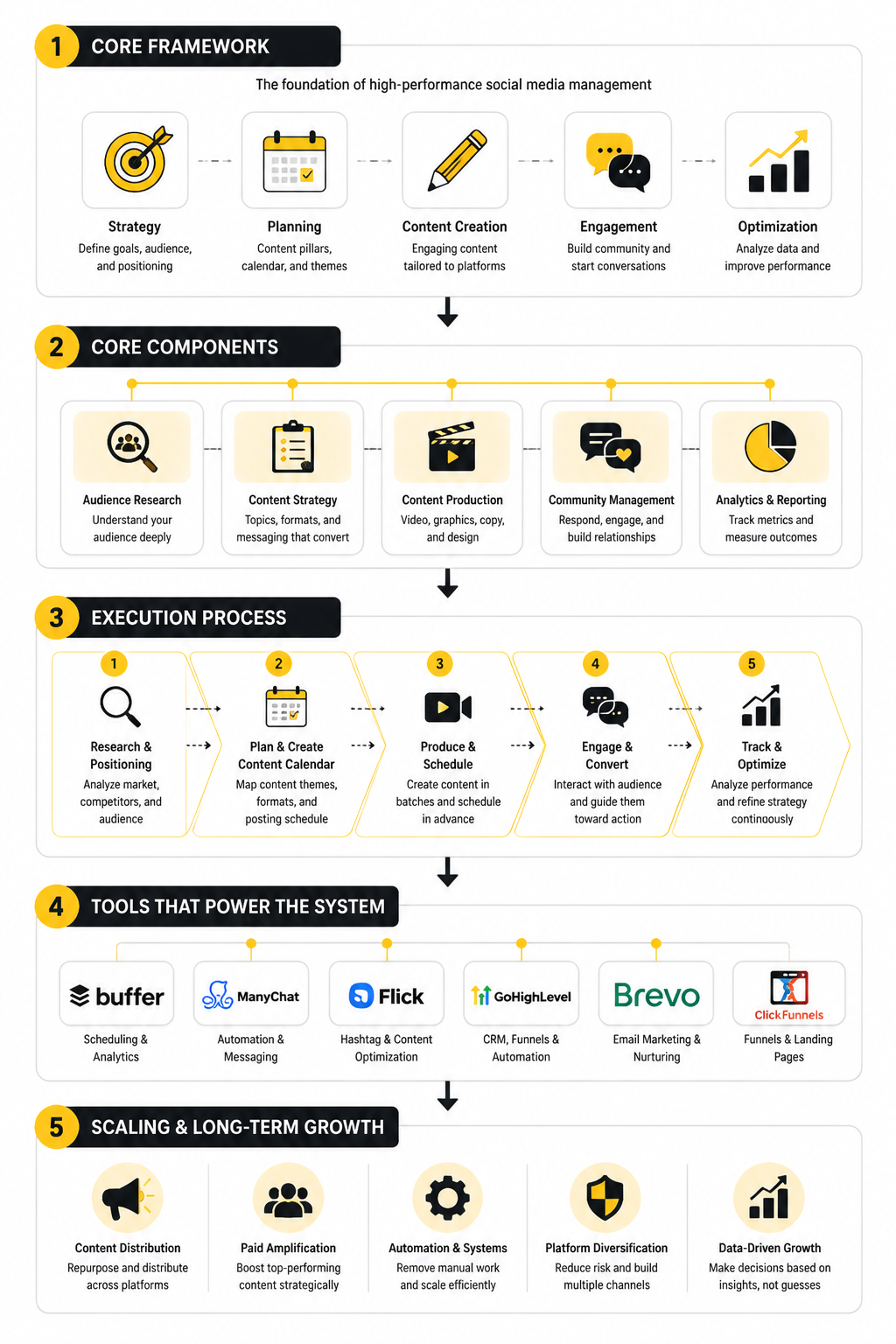
- Core Components of High-Performance Social Media Management
- How Professionals Implement Winning Strategies
- Costs, Tools, and Long-Term Growth Strategy
Why Hiring Local Social Media Managers Matters More Than Ever
The phrase “social media managers near me” isn’t just about geography—it’s about relevance. Local professionals understand cultural nuances, local trends, and audience behavior in a way remote generalists often miss.
Social media has evolved into a primary discovery channel, with 58% of consumers finding new businesses through platforms like Instagram, TikTok, and Facebook . That means your social presence is often your first impression—and it needs to feel native, not generic.
Local managers also bring practical advantages:
- They can create content on-site (photos, videos, events)
- They understand regional buying behavior
- They can collaborate in real-time if needed
And there’s another shift happening: businesses are treating social media as customer service. With 78% of marketers expecting social platforms to become the primary support channel, responsiveness and tone matter more than ever .
If your social media feels disconnected or slow, you’re not just losing engagement—you’re losing customers.
What “Social Media Managers Near Me” Actually Means Today
Ten years ago, a social media manager mostly scheduled posts. Today, that role has expanded into something far more strategic.
A modern social media manager is responsible for:
- Content strategy (what to post and why)
- Platform-specific growth (TikTok ≠ LinkedIn)
- Community engagement (DMs, comments, brand voice)
- Analytics and optimization
- Paid campaign coordination
- Influencer or creator collaboration
This shift is driven by how complex the ecosystem has become. The average user now engages with nearly 7 different platforms per month , meaning brands need multi-channel strategies—not just one account.
That’s also why tools have become essential. Platforms like Buffer help manage scheduling and analytics, while automation tools like ManyChat handle conversations at scale.
The best local managers don’t just “post content”—they build systems.
The Real Reason Businesses Search for Local Talent
When someone searches for social media managers near them, it’s usually triggered by a specific pain point:
- “We’re posting but not growing”
- “We don’t have time to manage this”
- “Our competitors are outperforming us”
- “We need better leads or sales from social”
These aren’t content problems. They’re strategy problems.
And strategy requires context.
For example, a restaurant in your city needs completely different content than an e-commerce brand selling globally. A local manager understands:
- Peak engagement times in your region
- Local events and trends to leverage
- Language tone and cultural references
- Competitor positioning in your area
That context is often the difference between content that blends in—and content that drives results.
The Shift Toward Professional Social Media Systems
Another reason local social media experts are in demand is the rise of integrated marketing systems.
Businesses are no longer treating social media as a standalone channel. Instead, they’re connecting it with:
- CRM systems
- Email marketing
- Lead capture funnels
- Automation workflows
This is where platforms like GoHighLevel come into play, combining social engagement, lead tracking, and automation into one system.
A skilled social media manager doesn’t just grow followers—they build pipelines.
That includes:
- Turning comments into conversations
- Turning conversations into leads
- Turning leads into customers
And doing it consistently.
The Framework You’ll Use to Choose the Right Manager
Before you start reaching out to people near you, you need a clear framework. Otherwise, you’ll default to choosing based on price or surface-level portfolios—which is where most hiring mistakes happen.
In the next section, we’ll break down exactly how to evaluate social media managers near you using a structured approach that filters out amateurs and highlights real operators.
Because finding someone nearby is easy.
Finding someone who actually delivers results is not.
How to Find Social Media Managers Near You
Once you understand why local expertise matters, the next step is actually finding the right people. This is where most businesses get stuck—not because there aren’t options, but because there are too many low-quality ones mixed in.
Searching “social media managers near me” on Google will give you a mix of freelancers, agencies, and directories. The problem is that search results don’t filter for performance—they filter for SEO.
So you need a smarter approach.
Start With Platforms That Show Real Work
Instead of relying only on search engines, look at platforms where social media managers actively showcase results and content.
Focus on:
- LinkedIn (case studies, client work, recommendations)
- Instagram or TikTok (their own content performance)
- Local business directories with verified reviews
- Freelance platforms where past projects are visible
A serious social media manager will have proof—not just claims. You should see consistent posting, audience engagement, and clear positioning.
If their own social presence is weak or inconsistent, that’s your first red flag.
Use Local Signals to Narrow Down the Right Fit
Not every talented manager is the right fit for your business. Local context still matters, even in a remote-first world.
When evaluating options near you, prioritize:
- Experience with businesses in your region
- Familiarity with your industry or customer type
- Ability to create content on-site if needed
- Understanding of local language and tone
This is especially important for service businesses, retail, hospitality, and anything that relies on local visibility.
A global strategy won’t fix a local relevance problem.
Tap Into Tools That Help You Identify Serious Professionals
The difference between amateurs and professionals often comes down to systems. The best social media managers don’t operate manually—they use tools that improve consistency, analytics, and performance.
For example:
- Scheduling and analytics platforms like Buffer show how structured their workflow is
- Automation tools like ManyChat reveal whether they understand conversational marketing
- Hashtag and content optimization tools like Flick indicate platform-specific expertise
You don’t need to master these tools yourself. But the person you hire absolutely should.
Don’t Ignore Referrals and Local Networks
One of the most underrated ways to find strong social media managers near you is through direct referrals.
Ask:
- Other business owners in your area
- Marketing agencies you trust
- Industry-specific communities
- Local networking events or meetups
Referrals cut through noise. If someone is consistently recommended, it usually means they deliver results—not just content.
And more importantly, they’re easier to vet because you can see real outcomes from businesses similar to yours.
Framework for Evaluating the Right Candidate
Once you have a shortlist, the real work begins. This is where most hiring decisions go wrong—because people evaluate based on aesthetics instead of performance.
A good-looking Instagram feed doesn’t mean the strategy works.
You need a framework.
1. Strategy Before Content
The first question you should ask any social media manager is simple:
“How do you decide what to post?”
If the answer is vague or focused only on trends, that’s a problem.
Strong candidates will talk about:
- Audience research
- Content pillars
- Funnel stages (awareness → engagement → conversion)
- Platform-specific strategies
They’ll explain why something works—not just what they do.
And if they connect social media to lead generation systems using platforms like GoHighLevel, that’s a strong signal they think beyond vanity metrics.
2. Proof of Measurable Results
You’re not hiring for activity. You’re hiring for outcomes.
Ask for:
- Growth metrics (followers, reach, engagement trends)
- Lead generation examples
- Conversion or revenue impact where possible
- Before-and-after snapshots of accounts
Social media is one of the most measurable marketing channels. If someone can’t show data, assume the results aren’t there.
3. Platform Depth, Not Surface-Level Knowledge
Every platform behaves differently.
A manager who treats TikTok, Instagram, and LinkedIn the same way will underperform.
Look for:
- Specific strategies per platform
- Understanding of algorithms and content formats
- Ability to adapt messaging depending on audience intent
For example, short-form video dominates attention, with video content generating significantly higher engagement rates than static posts across most platforms (sprout social index).
If they’re not prioritizing that shift, they’re already behind.
4. Communication and Responsiveness
Social media doesn’t sleep. Messages, comments, and trends move fast.
That means your manager needs to:
- Respond quickly
- Maintain consistent tone
- Handle customer interactions professionally
This is where tools like ManyChat can scale conversations, but strategy still matters.
You’re not just hiring someone to post—you’re hiring someone to represent your brand publicly.
5. Process and Consistency
The final piece is operational.
Ask how they:
- Plan content calendars
- Batch or produce content
- Track performance
- Iterate based on data
Professionals will have clear workflows. Amateurs will improvise.
Consistency is what drives growth over time. Without a system, even good ideas fail.
At this point, you should have a clear idea of how to find and evaluate social media managers near you without guessing.
In the next section, we’ll break down the core components that actually make social media management work, so you know exactly what you’re paying for—and what results to expect.
Core Components of High-Performance Social Media Management
Once you’ve identified strong candidates using the framework, the next question becomes practical: what are you actually paying for?
This is where clarity matters. Most businesses hiring social media managers near them assume they’re buying “content.” In reality, high-performance social media management is a system made up of multiple moving parts—and each one directly impacts results.
Content Strategy That Aligns With Business Goals
Content without direction is noise. The strongest social media managers don’t start by asking what to post—they start by defining what success looks like.
That includes:
- Clear business objectives (leads, sales, awareness)
- Defined audience segments
- Content pillars tied to customer intent
- Platform-specific positioning
For example, short-form video continues to dominate across platforms, with engagement rates consistently outperforming static formats across industries (sprout social index). A manager who ignores that shift is already limiting your growth potential.
Strategy determines everything that follows. Without it, even great content won’t convert.
Content Production and Creative Execution
Once the strategy is set, execution becomes the bottleneck. This is where most businesses underestimate the workload.
A professional social media manager handles:
- Video creation (short-form, reels, TikToks)
- Graphic design and visual consistency
- Copywriting tailored to each platform
- Hook-driven storytelling for attention
And this isn’t done randomly. Content is typically batched, planned, and optimized based on performance data.
Tools like Flick help refine hashtags and reach, while structured workflows ensure consistency. Without this layer, posting becomes reactive—and results become unpredictable.
Audience Engagement and Community Building
Posting content is only half the job. The real leverage comes from interaction.
When users comment, message, or react, they’re signaling interest. Ignoring that is leaving opportunity on the table.
Strong social media managers:
- Respond quickly to comments and DMs
- Guide conversations toward outcomes
- Maintain a consistent brand voice
- Build relationships over time
This is also where automation starts to scale impact. Platforms like ManyChat allow businesses to handle large volumes of messages without losing responsiveness, which is critical as engagement grows.
Analytics, Testing, and Optimization
Social media is not static. What works this month may not work next month.
That’s why continuous optimization is non-negotiable.
A professional approach includes:
- Tracking reach, engagement, and conversion metrics
- A/B testing content formats and messaging
- Identifying trends and doubling down on winners
- Cutting underperforming strategies quickly
Data-driven iteration is what separates consistent growth from random spikes.
Scheduling and analytics tools like Buffer make this process scalable, but the interpretation still requires expertise.
How Professionals Implement Winning Strategies
Understanding the components is one thing. Seeing how they come together in a real workflow is what makes it actionable.
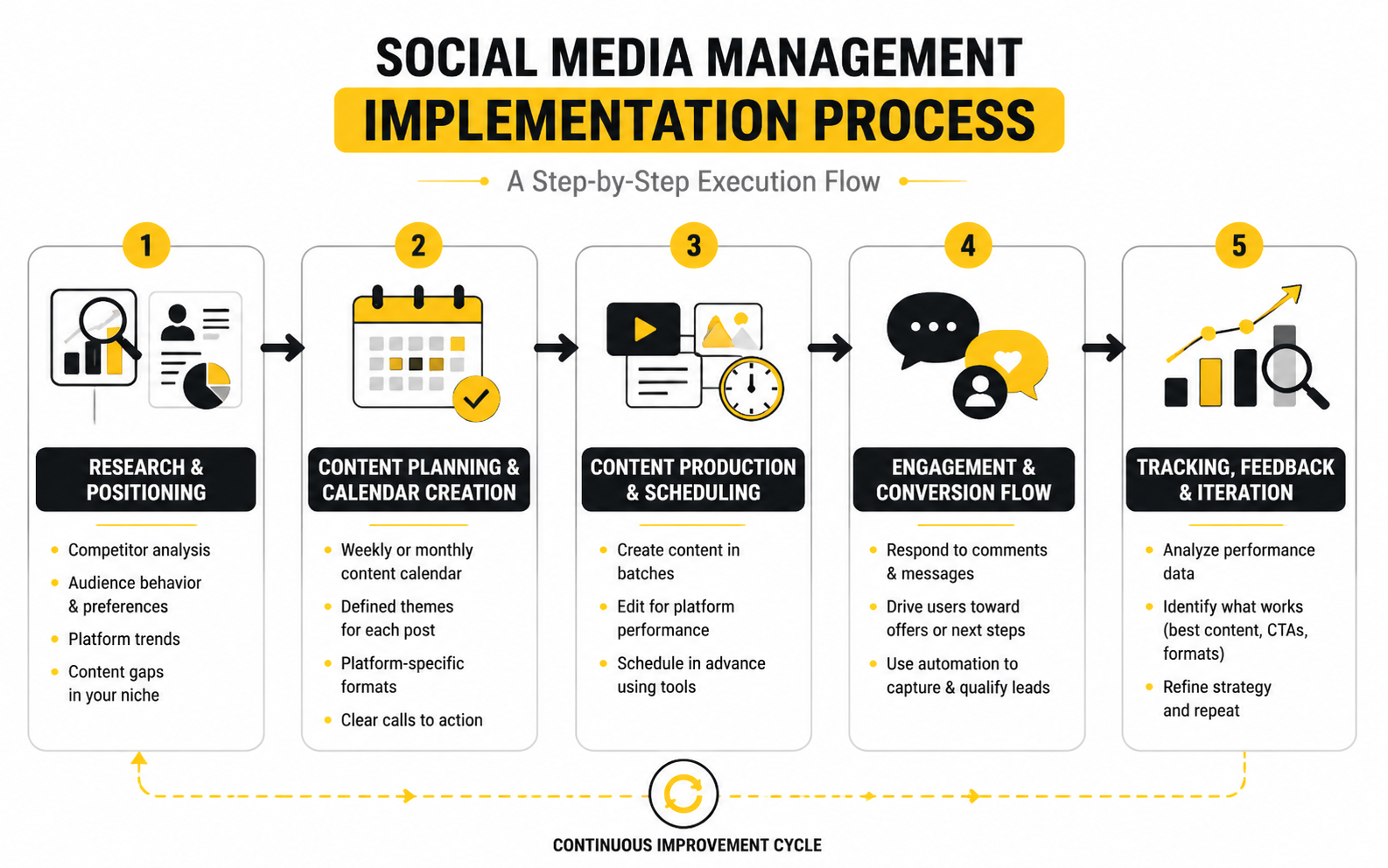
At a high level, professional social media managers follow a structured process. It’s not complicated—but it is disciplined.
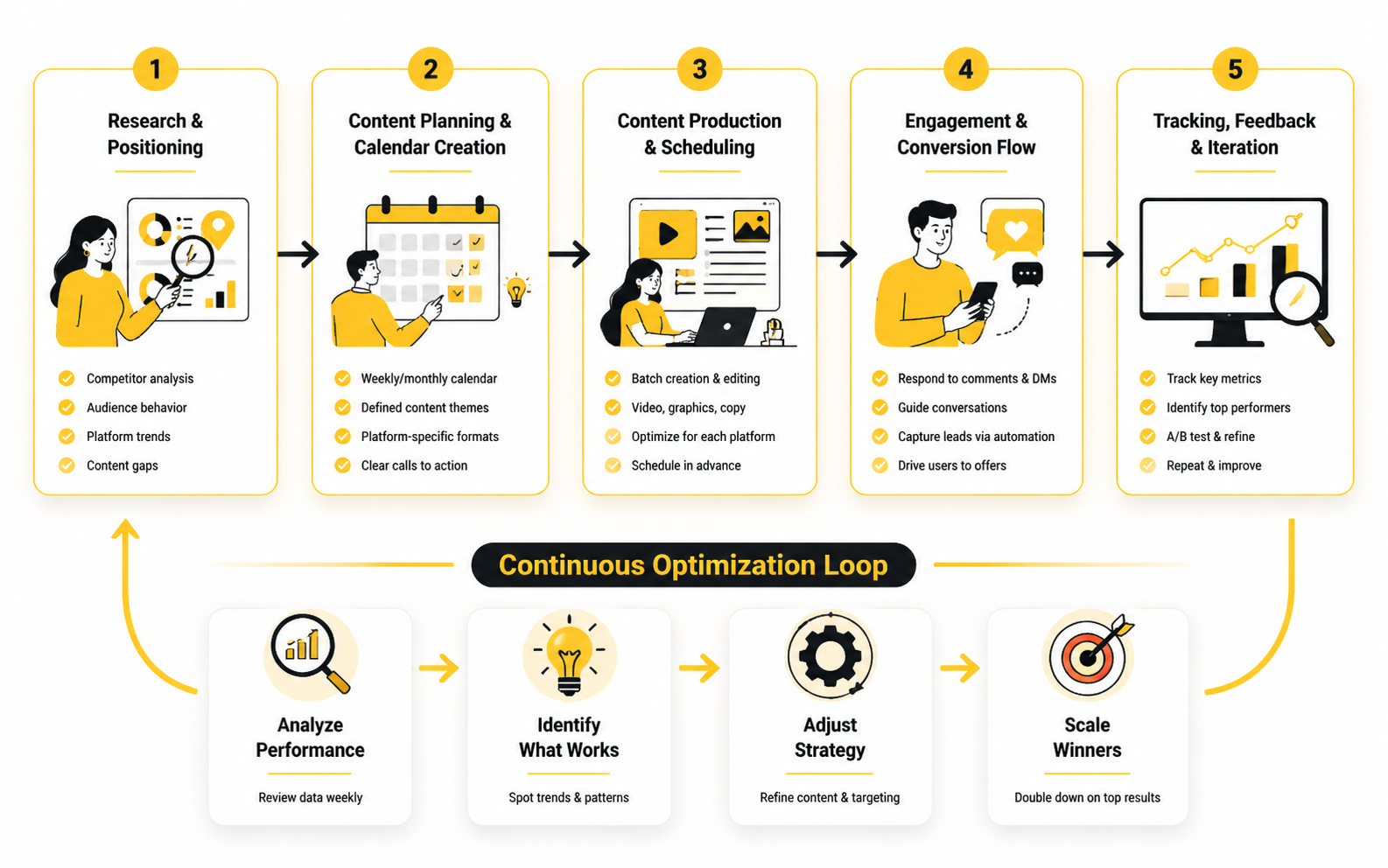
Step 1: Research and Positioning
Everything starts with context.
This includes:
- Competitor analysis
- Audience behavior and preferences
- Platform trends
- Content gaps in your niche
The goal is simple: identify where attention already exists and how your brand can stand out within it.
Without this step, content becomes guesswork.
Step 2: Content Planning and Calendar Creation
Once the strategy is clear, the manager builds a content plan.
This typically includes:
- Weekly or monthly content calendars
- Defined themes for each post
- Platform-specific formats (video, carousel, story)
- Clear calls to action
Planning removes friction. Instead of deciding what to post daily, the entire system runs on a schedule.
Step 3: Content Production and Scheduling
Execution is where consistency is built.
Content is:
- Created in batches
- Edited for platform-specific performance
- Scheduled in advance using tools like Buffer
This allows for:
- Higher quality output
- Less daily stress
- More time for optimization and engagement
Consistency is one of the strongest drivers of growth—and it only happens with systems.
Step 4: Engagement and Conversion Flow
After publishing, the focus shifts to interaction.
This includes:
- Responding to comments and messages
- Driving users toward offers or next steps
- Using automation where appropriate
For example, integrating messaging automation through tools like ManyChat allows businesses to capture leads directly from conversations.
This is where social media transitions from “content channel” to “revenue channel.”
Step 5: Tracking, Feedback, and Iteration
The final step closes the loop.
Managers analyze:
- Which posts performed best
- What content drove engagement or conversions
- Where users dropped off
Then they refine the strategy.
This cycle repeats continuously. Over time, the system becomes more efficient, more predictable, and more profitable.
At this stage, you can clearly see what separates high-performing social media managers near you from the rest: they don’t rely on creativity alone—they rely on process.
In the next section, we’ll break down how professionals take this process even further by integrating advanced tools, paid strategies, and scalable systems that turn social media into a long-term growth engine.
Performance Data That Actually Matters (And How to Use It)
At this point, you understand how social media managers near you operate and what systems they use. Now comes the part that most businesses either misunderstand or completely ignore: measurement.
Data is not just about reporting results. It’s about making decisions.
The difference between average and high-performing social media management is simple—one reacts to numbers, the other uses numbers to predict what to do next.
The Metrics That Actually Drive Decisions
Not all metrics are equal. Vanity numbers like follower count or likes can look impressive, but they rarely tell the full story.
Instead, focus on signals that tie directly to growth and revenue:
- Reach and impressions → Are you getting visibility?
- Engagement rate → Is your content resonating?
- Click-through rate (CTR) → Are people taking action?
- Conversion rate → Are you turning attention into results?
- Response time → Are you capturing opportunities fast enough?
For context, engagement rates vary significantly by platform and format, with short-form video consistently outperforming static content across industries (sprout social index). That insight alone should influence your entire content strategy.
The key is not just tracking these metrics—but connecting them.
How to Interpret Social Media Data Correctly
Raw numbers don’t mean much without context.
For example:
- A post with high reach but low engagement usually means the hook worked, but the content didn’t deliver
- High engagement but low conversions means the content is interesting, but not aligned with your offer
- Strong conversions with low reach means the strategy works—but needs amplification
This is where most businesses misinterpret performance. They optimize for what looks good instead of what actually works.
Professional social media managers don’t just report numbers—they diagnose patterns.
Building a Simple Analytics System That Scales
You don’t need complex dashboards to get clarity. You need consistency.
A basic but effective system tracks:
- Weekly content performance
- Top-performing formats and topics
- Conversion signals (clicks, leads, inquiries)
- Audience growth trends
Tools like Buffer simplify this by centralizing scheduling and analytics, making it easier to see what’s working across platforms.
For businesses focused on lead generation, integrating social data into systems like GoHighLevel allows you to track the full journey—from first interaction to final sale.
Turning Engagement Into Measurable Revenue
This is where analytics becomes real.
Social media is no longer just about visibility. It’s a direct input into your sales pipeline.
To make that work, you need to connect:
- Content → engagement
- Engagement → conversation
- Conversation → lead
- Lead → customer
Automation plays a key role here. Tools like ManyChat allow businesses to capture and qualify leads directly through messaging, turning engagement into something measurable and scalable.
Without this connection, you’re only tracking attention—not outcomes.
Benchmarks That Actually Mean Something
Benchmarks only matter when they guide action.
Instead of chasing industry averages, focus on:
- Your own performance trends over time
- Improvement in engagement quality
- Growth in conversion efficiency
- Reduced response times
For example, if your engagement rate improves but conversions stay flat, the next step isn’t more content—it’s better alignment between content and offer.
If response times are slow, you’re losing opportunities. Studies show that faster response rates significantly increase customer satisfaction and conversion likelihood (hubspot research).
Benchmarks should trigger decisions, not just reporting.
What This Means When Hiring Social Media Managers Near You
When evaluating or working with local talent, this is where the real separation happens.
Ask:
- How do they track performance?
- What metrics do they prioritize?
- How do they connect social activity to revenue?
- What changes do they make based on data?
If the answers revolve only around likes, followers, or “brand awareness,” you’re not looking at a performance-driven approach.
The right social media managers near you will think in systems, not posts. And their analytics will reflect that.
Now that you understand how performance is measured and optimized, the final piece is execution at scale—how professionals turn these insights into long-term growth, predictable results, and sustainable systems.
That’s exactly what we’ll break down next.
Advanced Strategy: Scaling Social Media Beyond Basic Management
By now, you understand how to find, evaluate, and measure social media managers near you. But if you want real leverage, you need to think beyond management and into scaling.
This is where most businesses plateau. They hire someone, see initial growth, and then hit a ceiling because the system isn’t designed to expand.
Scaling requires different decisions.
The Tradeoff Between Content Volume and Content Quality
One of the biggest strategic decisions is how much content to produce versus how refined that content should be.
There are two common approaches:
- High-volume posting (daily or multiple times per day)
- Lower-volume, high-production content
Both can work, but they solve different problems.
High-volume strategies increase surface area. More content means more chances to hit algorithmic momentum. This works well on platforms like TikTok or Instagram Reels.
High-quality strategies focus on conversion and brand positioning. Fewer pieces, but each one is designed to drive action.
The best social media managers near you understand when to use each—and when to combine them.
When to Introduce Paid Amplification
Organic reach is powerful, but it’s not unlimited.
Even high-performing content will eventually plateau without amplification. That’s where paid social comes in.
Instead of guessing what ads might work, professionals:
- Identify top-performing organic posts
- Turn those posts into ads
- Scale what already proves engagement
This approach reduces risk and improves ROI because you’re not starting from zero.
It also connects naturally with funnel tools like ClickFunnels, where traffic from social media can be converted into structured customer journeys.
The Risk of Platform Dependency
One of the biggest mistakes businesses make is relying too heavily on a single platform.
Algorithms change. Reach fluctuates. Entire strategies can break overnight.
This isn’t theoretical—platform updates regularly shift visibility and engagement patterns, forcing brands to adapt quickly (sprout social index).
That’s why experienced managers diversify:
- Multiple platforms instead of one
- Owned channels like email lists
- Direct messaging systems
Tools like Brevo help capture and nurture leads outside social platforms, giving you control over your audience.
Because at the end of the day, followers are borrowed. Data is owned.
Scaling Through Systems, Not People
A common instinct is to scale by hiring more people.
But the smarter move is to scale systems first.
High-performing social media managers near you build repeatable workflows:
- Content batching and repurposing
- Automated lead capture and follow-up
- Structured reporting and optimization cycles
This reduces dependency on individual effort and increases consistency.
Platforms like GoHighLevel bring these systems together, combining CRM, automation, and marketing workflows into a single ecosystem.
The goal is simple: make growth predictable.
The Hidden Bottleneck: Content Distribution
Most businesses focus heavily on creating content—but ignore distribution.
That’s a mistake.
Even great content fails without proper exposure.
Advanced strategies include:
- Repurposing one piece of content across multiple platforms
- Leveraging collaborations and partnerships
- Using micro-influencers for targeted reach
- Recycling top-performing content strategically
Distribution multiplies output without multiplying effort.
This is one of the highest-leverage moves any social media manager can make.
Long-Term Positioning vs Short-Term Wins
There’s always tension between quick results and long-term brand building.
Short-term tactics:
- Trend-based content
- Viral hooks
- Aggressive calls to action
Long-term strategies:
- Authority positioning
- Consistent messaging
- Trust-based content
You need both—but not in equal measure all the time.
The best social media managers near you adjust based on your current stage:
- Early stage → prioritize visibility and growth
- Growth stage → balance reach and conversion
- Mature stage → focus on brand equity and retention
Without this balance, you either burn out chasing trends or grow too slowly to compete.
At this point, you’re not just thinking about hiring someone—you’re thinking about building a system that works.
In the final section, we’ll tie everything together with practical takeaways and answer the most common questions businesses have when choosing and working with social media managers near them.
Bringing It All Together: Your Social Media Growth Ecosystem
At this stage, everything connects.
Finding the right social media managers near you is not about hiring someone to post content. It’s about building a system that consistently attracts attention, converts that attention into leads, and turns those leads into revenue.
The real advantage comes when all components work together:
- Content strategy aligned with business goals
- Consistent production and publishing systems
- Engagement workflows that capture demand
- Analytics loops that refine performance
- Scalable tools that remove manual bottlenecks
When these pieces are integrated, social media stops being unpredictable. It becomes a controlled growth channel.
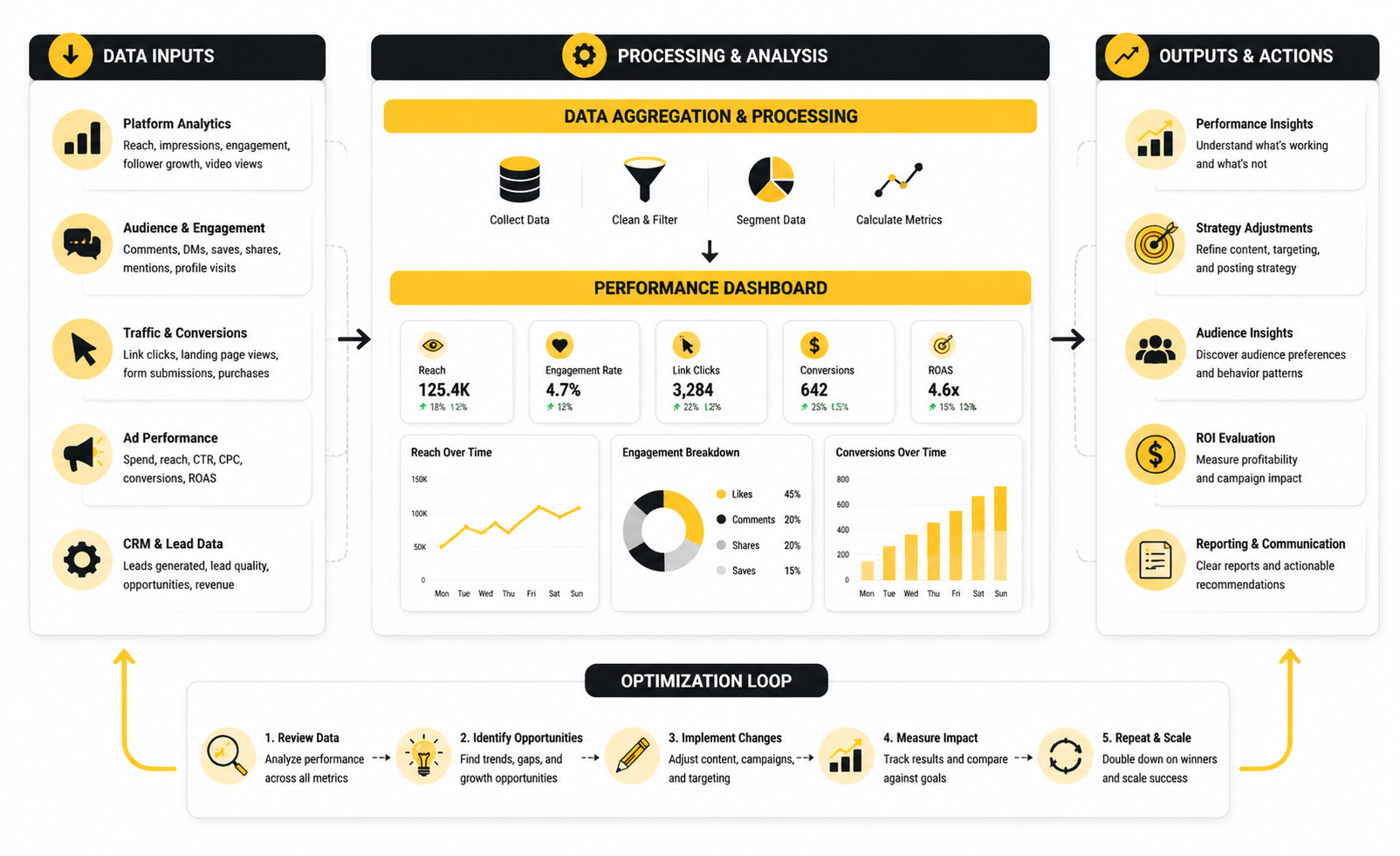
The strongest setups don’t rely on a single tactic. They combine tools and systems into one ecosystem:
- Scheduling and analytics via Buffer
- Lead capture and automation through ManyChat
- CRM and funnel integration with GoHighLevel
- Conversion-focused pages built using ClickFunnels
Individually, these tools are helpful. Together, they create leverage.
And that’s the difference between “doing social media” and using it as a business asset.
FAQ - Built for Complete Guide
How much do social media managers near me typically cost?
Pricing varies widely depending on experience, scope, and deliverables. Freelancers may charge a few hundred per month for basic posting, while experienced professionals or agencies can charge thousands for full strategy, content, and automation systems. The key is not cost—it’s return.
Should I hire a freelancer or an agency?
Freelancers are often more flexible and cost-effective, especially for small businesses. Agencies bring more resources and structured systems. The right choice depends on your growth stage and complexity of needs.
How long does it take to see results?
Most strategies take 60–90 days to show meaningful traction. Social media is compounding—early consistency builds the foundation for later acceleration.
What platforms should my business focus on?
It depends on where your audience spends time. For many businesses, Instagram, TikTok, and LinkedIn dominate, but the right platform is always audience-driven, not trend-driven.
Can social media actually generate leads and sales?
Yes—when connected to a system. Without funnels, automation, and follow-up, it stays at the awareness level. With tools like GoHighLevel, social media becomes a direct lead generation channel.
What should I expect in a monthly report?
A good report includes:
- Performance metrics (reach, engagement, conversions)
- Insights on what worked and why
- Clear next steps or strategy adjustments
If you’re only seeing numbers without insights, you’re missing value.
How do I know if my current manager is underperforming?
Warning signs include:
- No clear strategy
- Inconsistent posting
- No measurable growth or insights
- Focus on vanity metrics instead of outcomes
Performance should be improving over time, not staying flat.
Is it better to hire locally or remotely?
Local managers bring context and hands-on content opportunities. Remote managers may offer broader expertise. The best choice depends on whether your strategy requires local presence.
How important is video content today?
Extremely important. Video consistently drives higher engagement and reach compared to other formats, making it a core part of most successful strategies (sprout social index).
Do I need paid ads if I already have organic growth?
Not immediately, but eventually yes. Paid amplification helps scale what already works organically, reducing guesswork and accelerating growth.
What’s the biggest mistake businesses make with social media?
Treating it as a content task instead of a system. Without strategy, measurement, and conversion paths, even consistent posting won’t deliver meaningful results.
Work With Professionals
Explore 10K+ Remote Marketing Contracts on MarkeWork.com
Most marketers spend too much time chasing clients, competing on crowded platforms, and losing a percentage of every project to middlemen.
MarkeWork gives you a better way. Browse thousands of remote marketing contracts and connect directly with companies desperate to hire skilled marketers like you, without platform commissions and without unnecessary gatekeepers.
If you're serious about finding better opportunities and keeping 100% of what you earn, explore available contracts and create a profile for free at MarkeWork.com.