

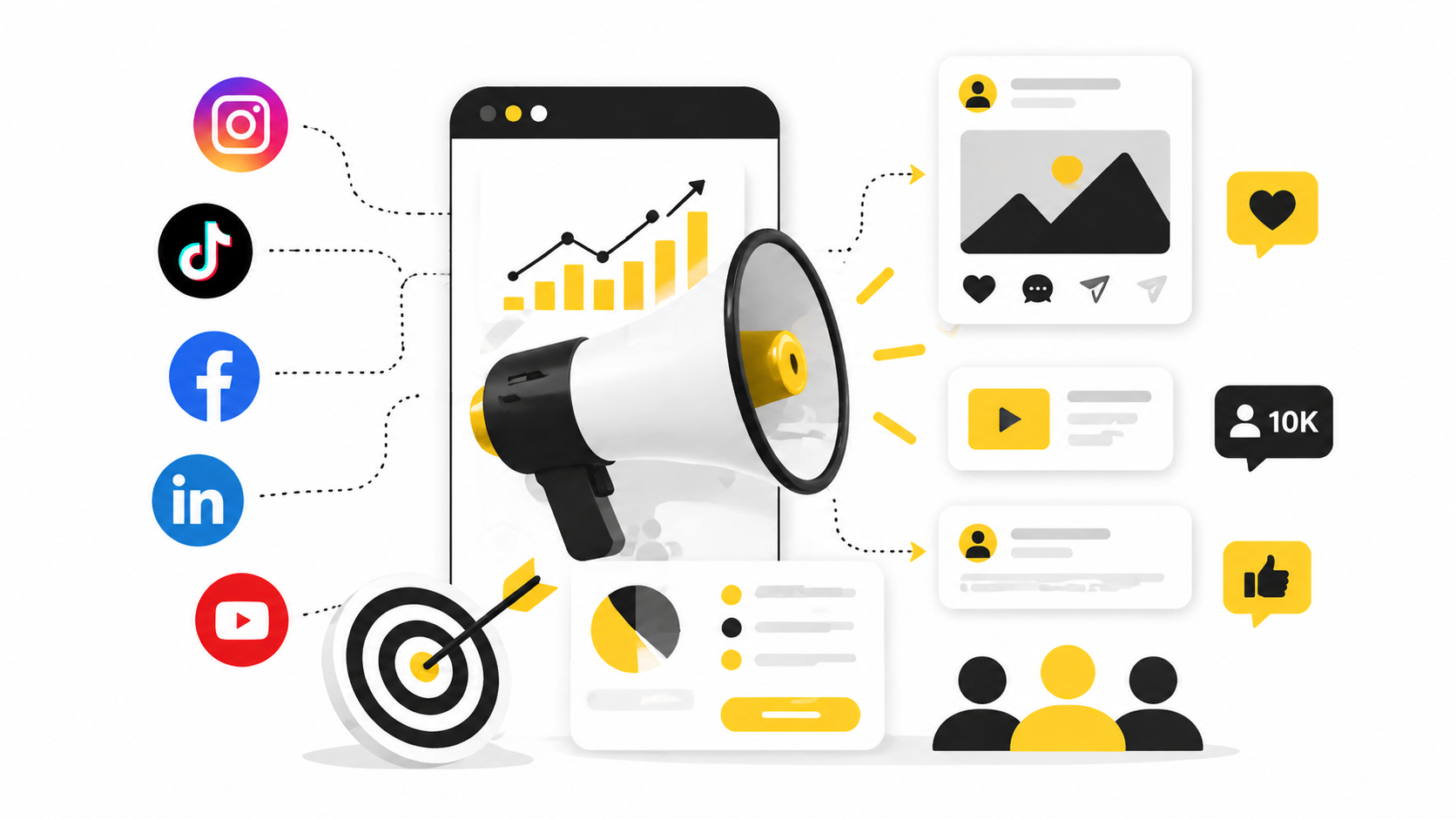
Social media promotion has evolved into a critical component of modern business strategy. Companies that excel in social promotion don't just post content—they create systematic campaigns that increase visibility, drive traffic, and convert followers into customers. Leveraging social platforms effectively can lead to measurable growth in engagement and revenue while establishing brand authority in competitive markets.
Brands that integrate structured promotion strategies see up to 3.5x higher engagement rates compared to inconsistent posting. By understanding platform mechanics, content dynamics, and audience behaviors, businesses can turn social channels into powerful conversion engines rather than just communication tools. Beyond reach, social promotion strengthens credibility, nurtures communities, and encourages ongoing customer interaction, forming the foundation for sustainable growth.
Article Outline
- Why Social Media Promotion Matters
- Framework Overview
- Core Components
- Professional Implementation
- Measurement and Analytics
- Scaling and Optimization
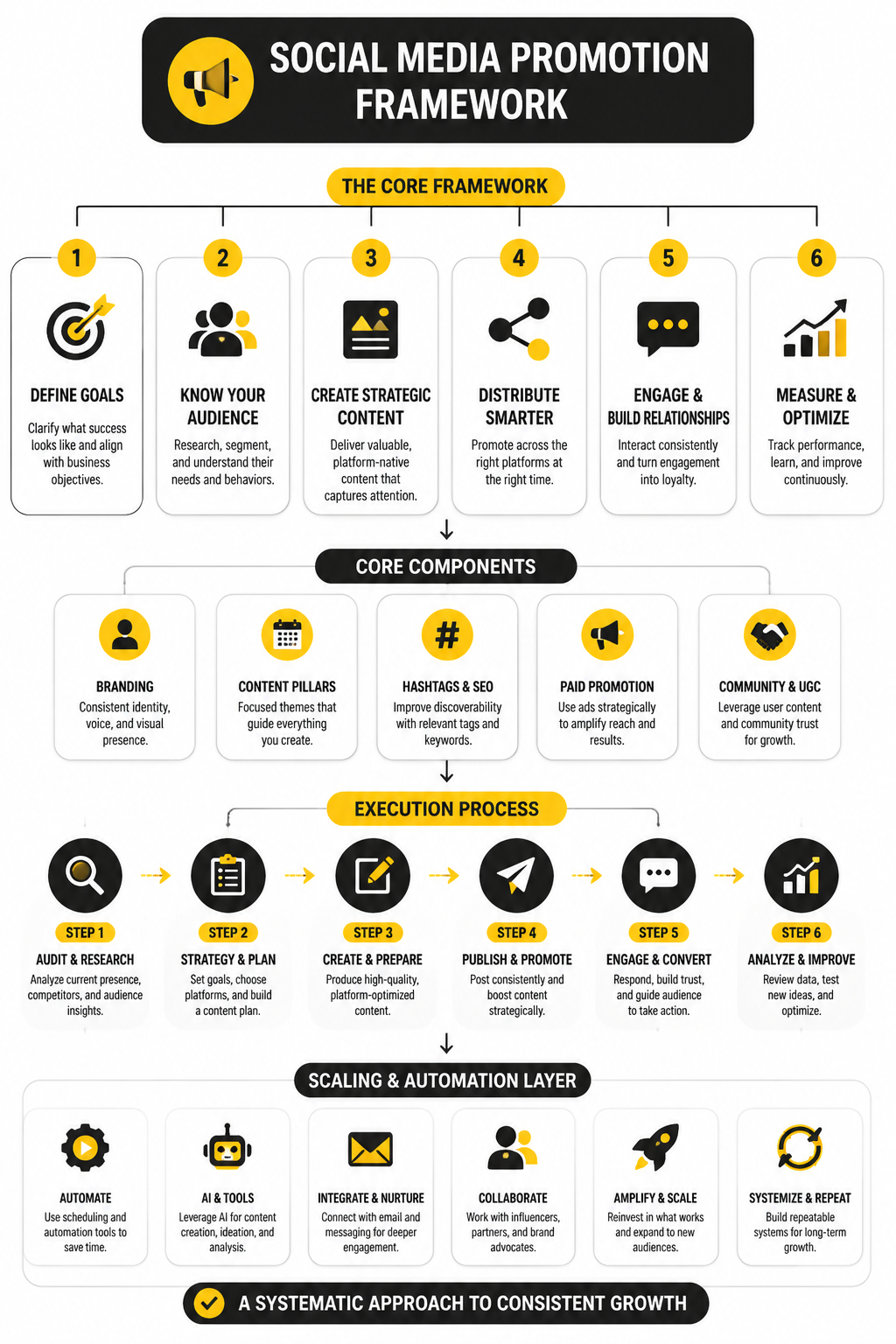
This article will break down each part of the framework in detail, providing actionable insights for businesses seeking to build a repeatable, measurable, and scalable social media promotion system.
Why Social Media Promotion Matters
Social media promotion is no longer optional—it's a necessity for businesses that want to maintain visibility and grow their audience. Brands that execute well-crafted campaigns consistently see measurable improvements in engagement, brand awareness, and customer acquisition. Platforms like Instagram, LinkedIn, Facebook, and TikTok are not just broadcasting channels; they are interactive ecosystems where businesses can build trust, create meaningful connections, and drive conversions.
Successful social promotion also helps businesses capitalize on viral opportunities and trending topics. Companies that monitor engagement patterns and adapt their messaging in real-time often outperform competitors who rely solely on scheduled posts. By treating social media promotion as an integrated part of the marketing mix rather than a peripheral task, businesses can achieve sustained growth while efficiently allocating resources.
Framework Overview
At its core, a strong social media promotion strategy is structured around a few key layers:
- Audience Insight: Identifying target demographics, behaviors, and content preferences.
- Content Strategy: Crafting posts, stories, and campaigns that resonate with the audience.
- Distribution Channels: Selecting the optimal platforms and posting schedules to maximize reach.
- Engagement and Interaction: Monitoring comments, messages, and social shares to foster relationships.
- Measurement and Optimization: Tracking KPIs, testing content variations, and iterating for better performance.
This framework provides a clear structure for businesses to follow, ensuring that every activity is aligned with broader marketing goals and capable of delivering tangible results. It allows teams to prioritize actions that yield the highest ROI, avoid wasted efforts, and scale successful tactics effectively.
Core Components
Each element of the framework contains actionable components that make social media promotion practical and effective:
- Target Audience Definition: Use tools like Buffer to analyze audience demographics and engagement patterns.
- Content Calendars: Plan posts, videos, and stories to maintain consistency across platforms.
- Creative Production: Develop visuals, copy, and video content tailored to each platform’s best practices.
- Platform-Specific Tactics: Leverage unique features such as Instagram Reels, LinkedIn Articles, or TikTok Challenges to increase organic reach.
- Automation and Scheduling: Employ systems like ManyChat or GoHighLevel to streamline posting and follow-up interactions.
- Analytics and Reporting: Track performance with dashboards and reporting tools to inform future campaigns.
By combining these components into a cohesive system, businesses create a repeatable process that balances creativity with data-driven decisions. This ensures that every campaign contributes to the overarching objectives, from engagement to lead generation.
Professional Implementation
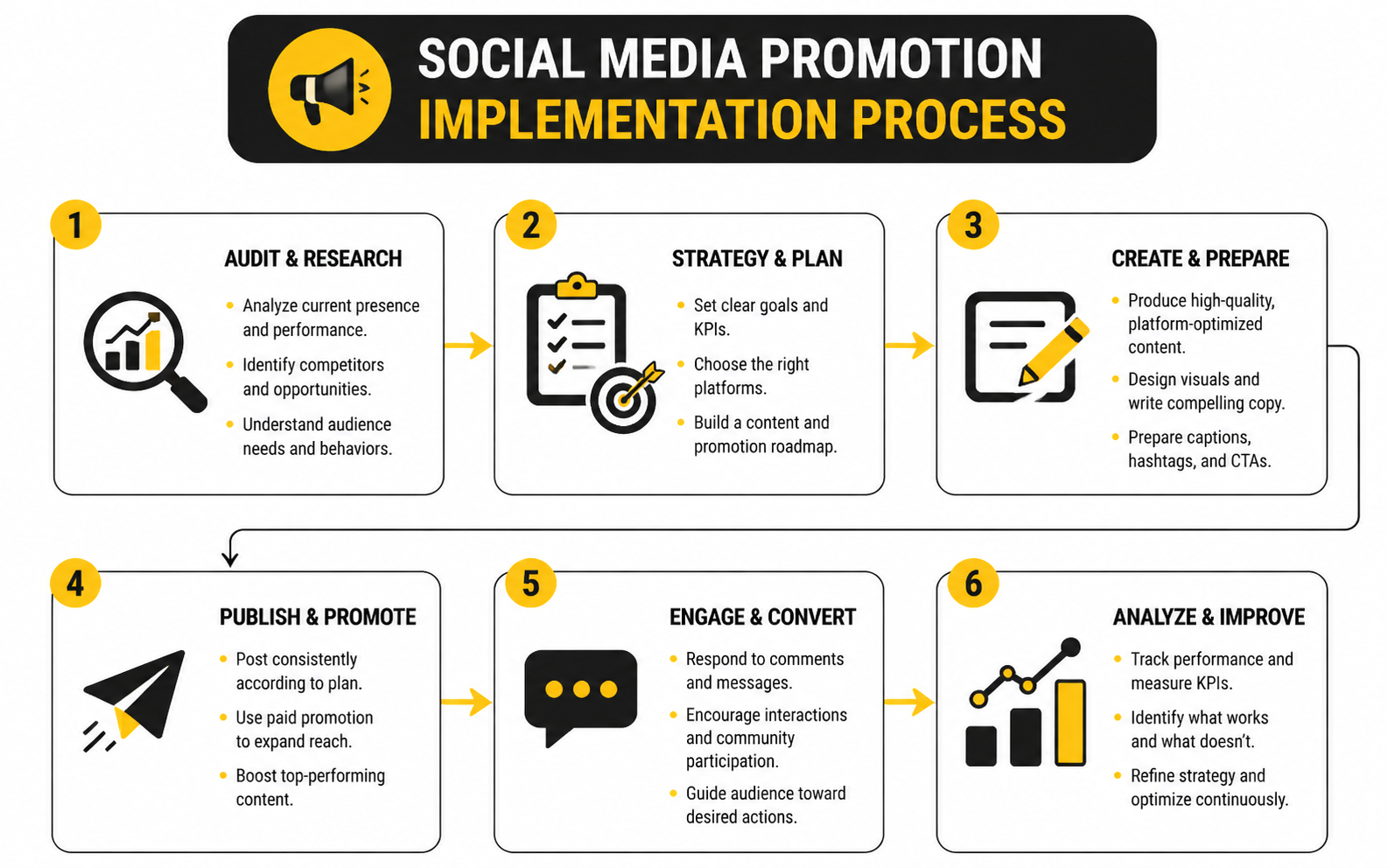
Execution is where the framework turns into results. Professional implementation requires disciplined processes and collaboration across marketing, design, and analytics teams:
- Audit Existing Channels: Review current social presence and identify gaps or opportunities.
- Define KPIs: Establish measurable goals for engagement, clicks, and conversions.
- Develop Campaign Assets: Produce content in advance, following brand guidelines and platform requirements.
- Schedule and Publish: Use automation tools to maintain consistency while optimizing for peak engagement times.
- Monitor and Respond: Engage with your audience in real-time to build trust and community.
- Analyze and Iterate: Assess campaign performance against KPIs and refine strategies for continuous improvement.
This disciplined approach ensures that social media promotion moves beyond sporadic posting into a structured, scalable system that drives measurable growth and strengthens brand presence.
Executing Social Media Promotion Effectively
Turning a social media strategy into real-world results requires a disciplined approach that aligns content, audience, and timing. The implementation phase is where planning transforms into measurable engagement, sales, or lead generation. For many brands, this is the stage that separates sporadic posting from a systemized growth engine.
A successful execution begins with audience segmentation. Tailoring messages for different demographics, interests, and behavioral patterns increases relevance and engagement. Tools like Buffer or GoHighLevel allow marketers to schedule and target posts efficiently, ensuring that content reaches the right people at the optimal times.
Equally important is the content production workflow. This includes creating visuals, copy, and interactive elements suited for each platform. The production stage must also incorporate brand consistency and alignment with campaign goals. By standardizing content creation pipelines, teams can maintain a steady flow of high-quality material without burning out resources.
Monitoring and real-time engagement is another critical layer. Social media thrives on interaction; responding to comments, messages, and shares promptly fosters trust and keeps audiences active. Integrating chat automation through systems like ManyChat can streamline repetitive tasks while maintaining a personal touch.
The final step in execution is analytics-driven iteration. Using data to adjust messaging, posting schedules, and content types ensures campaigns remain dynamic and effective. Tracking key performance indicators such as reach, engagement rate, click-through rate, and conversion metrics helps marketers refine strategies continuously. By treating execution as a loop rather than a one-off effort, businesses maximize both efficiency and impact.
Breaking down implementation into these actionable steps—audience targeting, content production, engagement management, and data-driven iteration—creates a repeatable system that can scale across multiple campaigns and platforms. This structured approach converts social media promotion from a set of tasks into a strategic, performance-driven machine.
Measuring Social Media Promotion Success
Data is the compass that guides social media promotion. Without tracking and interpreting metrics, even the most polished campaigns risk wasting resources. The key is understanding which signals truly reflect engagement, brand growth, and conversion potential.
Start with reach and impressions, which show how many people see your content. While high numbers can indicate visibility, they don’t automatically translate to engagement. Pair reach with engagement metrics like likes, shares, comments, and click-through rates to gauge how content resonates with your audience. For instance, posts on LinkedIn that generate strong comment threads often indicate thought leadership and deeper audience interaction, beyond surface-level visibility.
Conversion tracking is another essential layer. Measuring actions such as form submissions, downloads, or purchases allows marketers to connect social activity directly to business outcomes. Integrating tools like GoHighLevel and ManyChat enables automation of these funnels while maintaining precision in measurement.
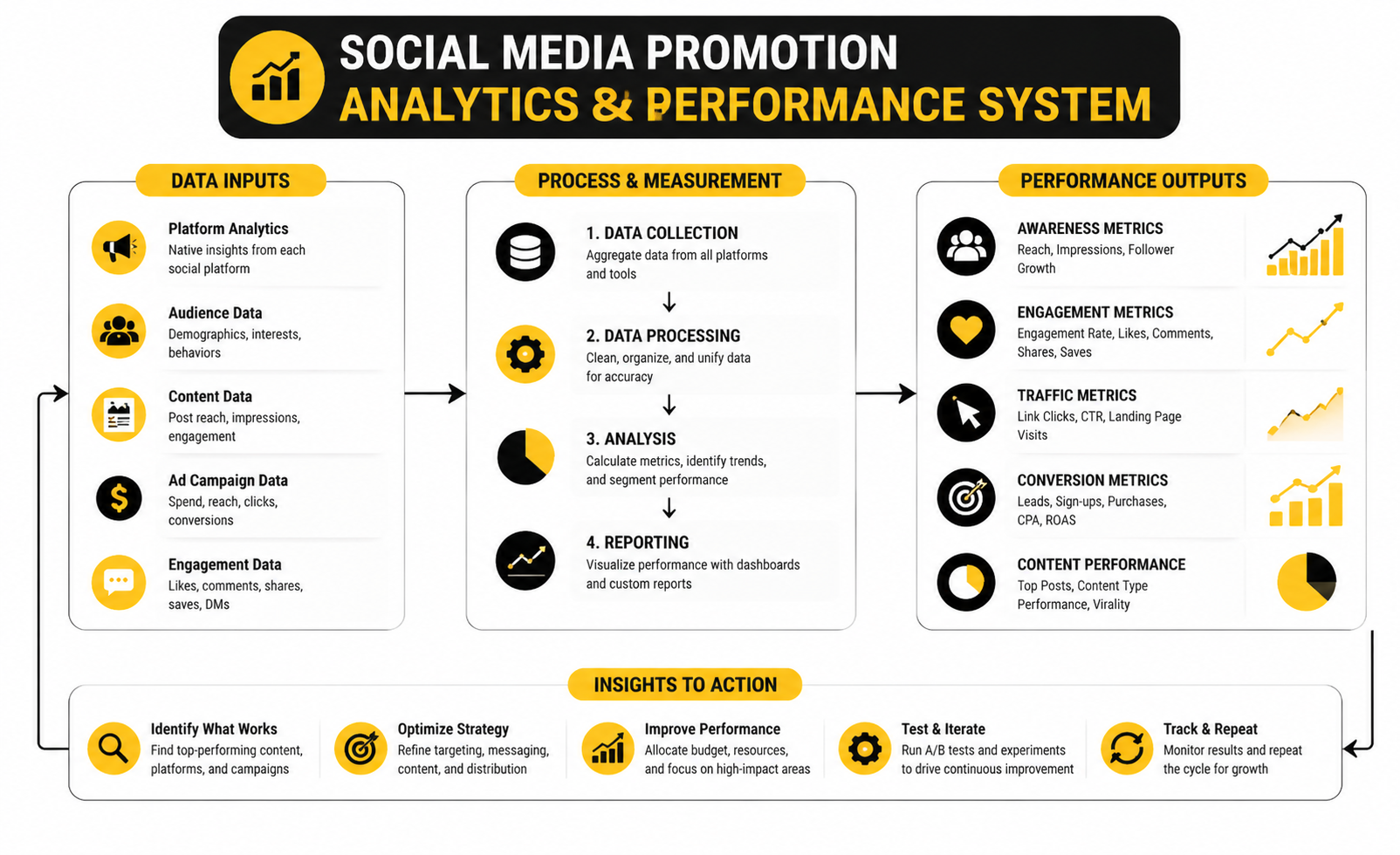
Once the data flows in, benchmarks and performance comparisons help contextualize results. Comparing engagement rates across platforms, or against previous campaigns, reveals patterns that can guide future content strategies. High engagement but low conversion might indicate that your messaging excites audiences but doesn’t drive them to act, signaling the need for stronger calls-to-action or optimized landing pages.
Finally, translating these numbers into actionable insights is crucial. Regularly review which content formats, posting times, and audience segments drive the best outcomes. By consistently refining your approach based on hard data, social media promotion becomes a feedback-driven engine, maximizing ROI and keeping your campaigns aligned with business goals.
Implementing a Social Media Promotion Strategy
Execution is where strategy turns into tangible results. Effective social media promotion relies on a structured process, ensuring each step aligns with overarching business goals and audience expectations. A disciplined approach transforms sporadic posting into a consistent, growth-driven engine.
The first step is content planning and scheduling. Determine the mix of posts that balance engagement, education, and conversion. Use tools like Replo or ClickFunnels to automate publishing across platforms, maintaining both frequency and consistency without manual overload.
Next is audience targeting and segmentation. Platforms provide robust analytics to identify high-value audience segments. Tailoring messaging to these groups enhances engagement and drives measurable outcomes. Dynamic targeting ensures that campaigns remain relevant as audience behaviors evolve over time.
Monitoring and iterative optimization is critical once campaigns are live. Track performance in real time, adjusting creative, messaging, or posting schedules based on engagement trends and conversion data. Tools like GoHighLevel allow marketers to integrate multi-channel analytics and automate responses, ensuring campaigns scale efficiently while staying adaptable.
Finally, integrate cross-channel reinforcement. Promote content across social networks, email, and even paid media to maximize visibility and retention. Consistency in tone and value proposition strengthens brand recognition, while multi-channel touchpoints improve the likelihood of conversion. This layered approach converts social media promotion from a series of isolated efforts into a cohesive growth engine.
Building the Complete Social Media Promotion Ecosystem
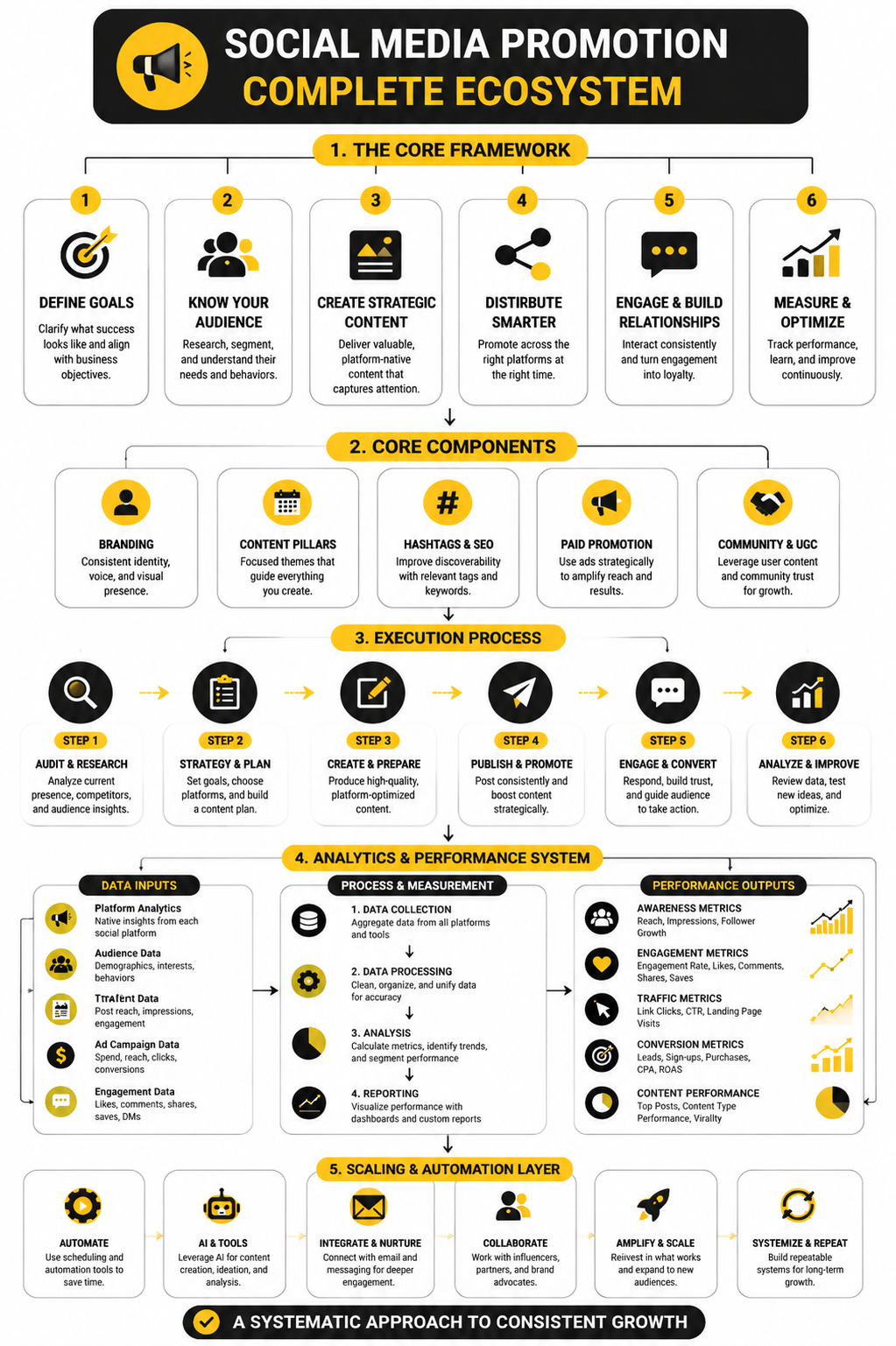
Creating a comprehensive social media promotion ecosystem requires understanding how each component interacts to drive results. At the top level, strategic goals define the content direction, target audiences, and key performance indicators. Mid-level components include content creation, platform selection, and engagement strategies that align with audience behavior. The execution layer handles publishing, ad campaigns, and community management, ensuring every action supports overarching objectives. Optimization and scaling layers focus on analytics, iteration, and expanding reach efficiently without diluting brand consistency.
FAQ - Built for Complete Guide
1. What is the first step in effective social media promotion?
Start with clear objectives and audience segmentation. Knowing your target allows you to tailor content that resonates and drives engagement.
2. How often should I post on social media?
Frequency depends on your platform and audience habits. Consistency is more important than volume, but scheduling multiple posts per week generally yields better engagement.
3. Which platforms should businesses focus on?
Choose platforms based on where your audience spends their time and the type of content you create. For B2B, LinkedIn and Twitter work well; for visual products, Instagram and TikTok perform better.
4. How do I measure social media success?
Track KPIs like engagement rates, reach, click-through rates, and conversion metrics. Monitoring these numbers helps optimize campaigns and improve ROI.
5. Should businesses use paid advertising on social media?
Yes, paid campaigns can amplify reach and target specific audiences. Combining organic and paid strategies typically produces the strongest results.
6. How can I improve engagement on posts?
Create content that is relevant, visually appealing, and interactive. Responding promptly to comments and messages also encourages ongoing engagement.
7. What role does content variety play?
Mixing posts—educational, promotional, interactive, and user-generated—keeps audiences engaged and prevents fatigue. Diverse content also supports different stages of the customer journey.
8. How do I optimize campaigns over time?
Analyze performance data regularly and adjust posting times, formats, and messaging. Experimentation and iteration are key to refining your strategy.
9. Can small businesses compete on social media?
Absolutely. Small businesses can leverage niche audiences, authentic storytelling, and targeted ads to compete effectively against larger brands.
10. How do I scale social media promotion effectively?
Invest in automation tools, delegate tasks, and standardize workflows. Scaling requires maintaining quality while increasing output, and strategic data-driven decisions ensure growth without inefficiency.
Work With Professionals
Explore 10K+ Remote Marketing Contracts on MarkeWork.com
Most marketers spend too much time chasing clients, competing on crowded platforms, and losing a percentage of every project to middlemen. MarkeWork gives you a better way. Browse thousands of remote marketing contracts and connect directly with companies desperate to hire skilled marketers like you, without platform commissions and without unnecessary gatekeepers.
If you're serious about finding better opportunities and keeping 100% of what you earn, invite readers to explore available contracts and create a profile for free at MarkeWork.com.