

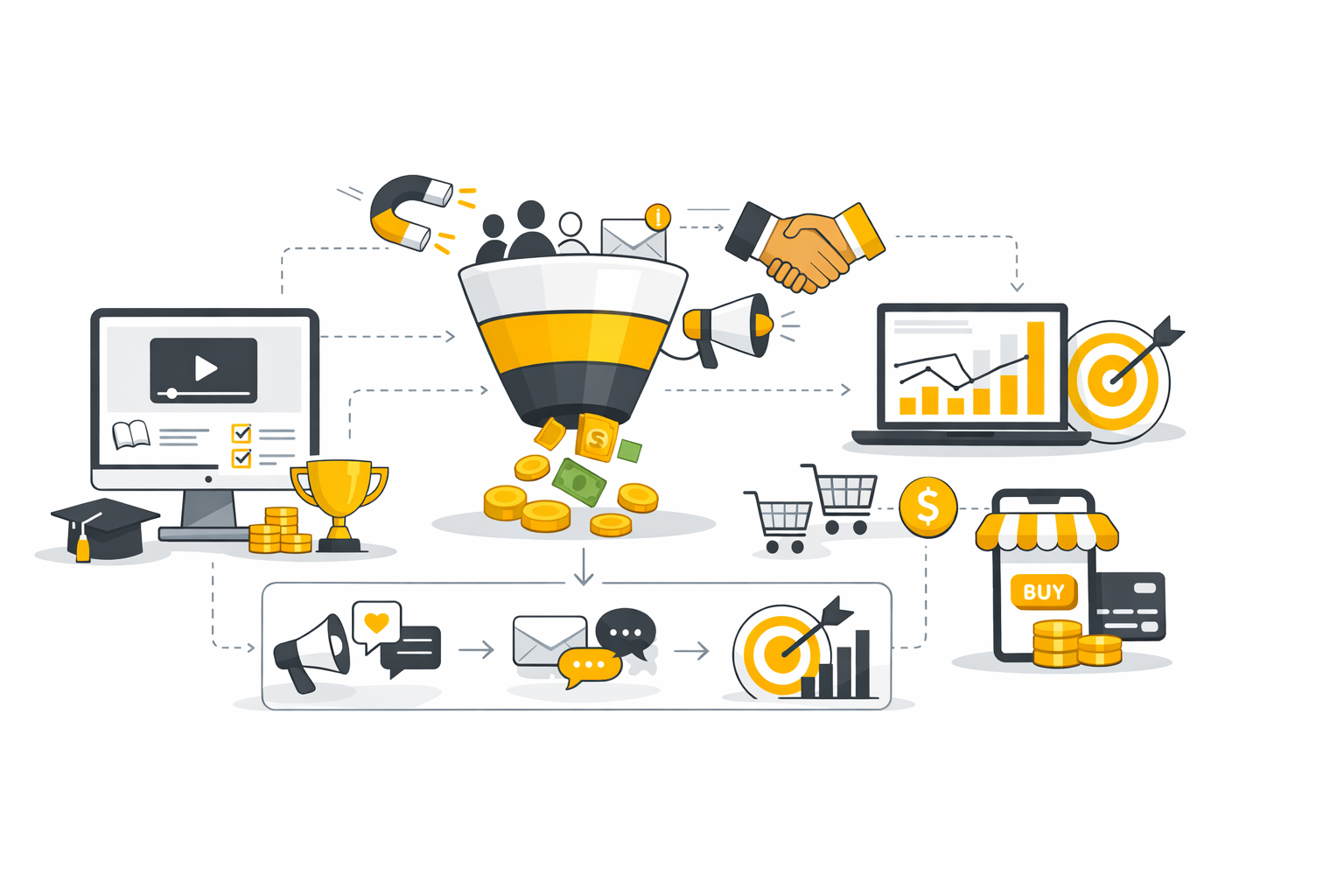
By the time someone gets serious about Legendary Marketer, the real issue is no longer whether the platform can teach useful concepts. The harder question is whether the business being built on top of those concepts can survive contact with competition, platform shifts, compliance pressure, and the boring realities of scale. That is where beginner enthusiasm usually collides with operator-level judgment.
This matters because a model can work at small volume and still break when you try to grow it. A few affiliate commissions from warm traffic do not prove that a business is durable. They prove that something in the chain worked once. Scaling requires a much stricter standard: repeatable acquisition, consistent conversion, compliant messaging, stable follow-up, and a brand position that does not disappear the moment one offer cools off.
The Biggest Tradeoff Is Speed Versus Durability
Legendary Marketer can feel attractive because it gives people a fast path into a monetizable environment. You can learn the language of offers, funnels, and follow-up faster than if you tried to piece everything together from random free content. That speed has value, especially for beginners who need structure more than theory.
But speed has a cost when it encourages people to build on rented ground. If your traffic comes mainly from one platform, your monetization depends on one offer, and your messaging sounds interchangeable with hundreds of other affiliates, then your business may grow quickly and still remain fragile. The creator economy may be attracting major ad budgets, but larger markets usually raise the penalty for looking generic, not lower it. The IAB’s 2025 creator ad spend and strategy report makes the growth story obvious. The more useful lesson is that growth brings competition, and competition punishes sameness.
Offer Dependency Becomes a Serious Risk at Scale
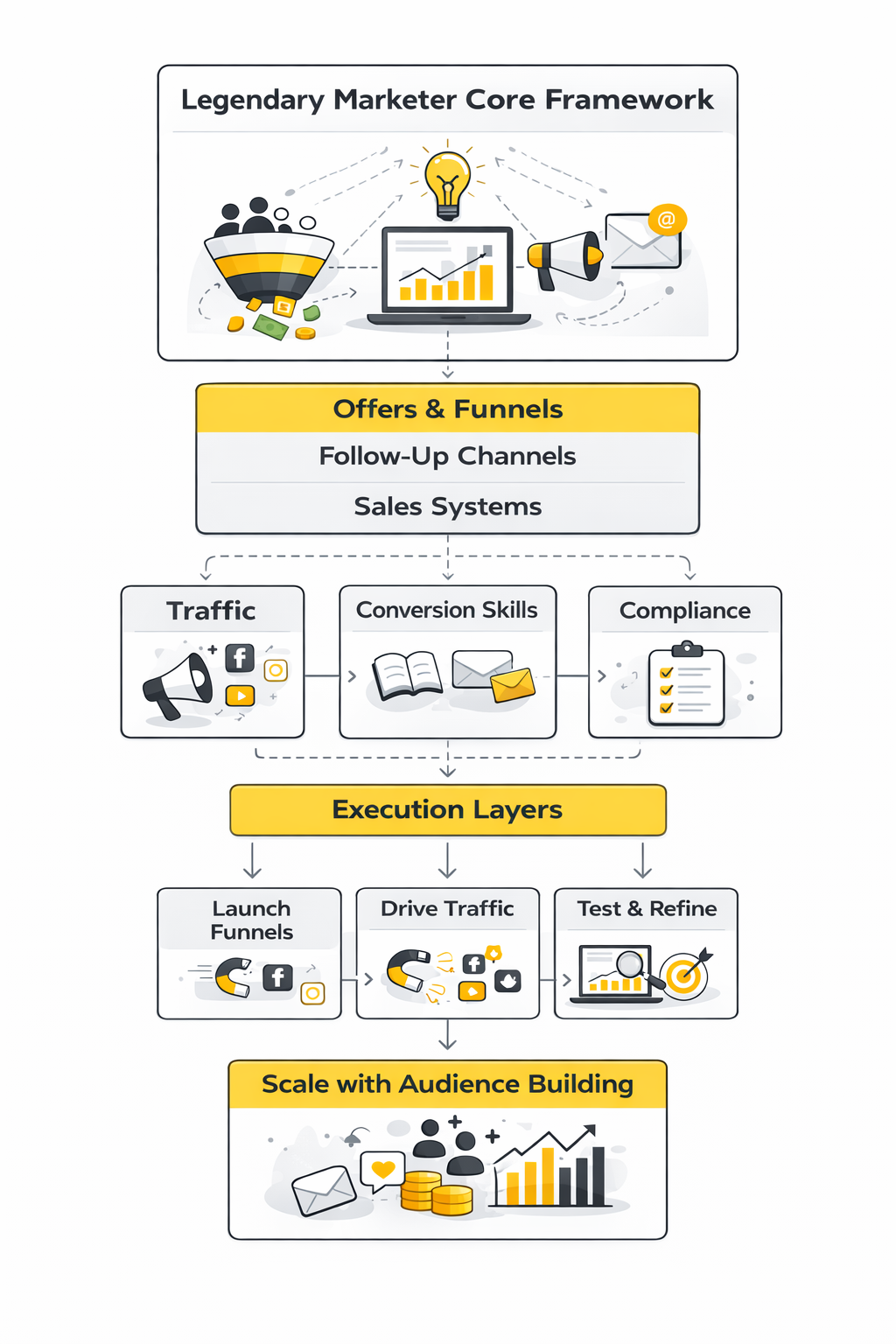
This is one of the most important strategic issues in the whole article. A beginner can get away with centering everything around one offer because the goal at first is usually momentum and skill-building. But the more revenue grows, the more dangerous that dependence becomes.
If your content, email list, funnel structure, and public identity all revolve around one brand, then you are exposed to changes you do not control. Commission structures can change. Brand positioning can evolve. Audience sentiment can shift. The offer can still be legitimate and useful, yet become less suitable for your specific audience over time. That is why advanced operators diversify earlier than beginners expect. They keep learning from one ecosystem without becoming trapped inside it.
A strong move here is to treat Legendary Marketer as one monetization option inside a broader business architecture. That architecture might eventually include your own lead magnet, your own consulting offer, a different affiliate stack, or a content system designed to promote multiple relevant products instead of a single flagship one. That approach is slower at first, but it creates resilience.
Compliance Risk Scales Faster Than Most People Think
Compliance usually feels abstract until the audience gets bigger. Then it becomes operational very quickly. The FTC’s business guidance says advertising claims have to be truthful, not deceptive, and supported, while its endorsement materials make clear that affiliates and influencers need transparent disclosure of material connections. Those standards are not niche legal footnotes. They shape how a serious business can market without inviting unnecessary risk. FTC advertising basics, endorsement guidance, and Disclosures 101 all point in the same direction.
This becomes more important as revenue grows because scale magnifies everything. A vague earnings implication that slips by in a small post can become a real liability when repeated across dozens of assets, ads, emails, and social posts. The professional move is to build disclosure and claim discipline into the workflow itself. Do not treat compliance as cleanup. Treat it as part of content production.
Scaling Traffic Exposes Weak Positioning
A lot of people think the next level is simply more traffic. It often is not. More traffic mostly reveals whether the underlying positioning is strong or weak. If your content is too broad, your pre-sell is thin, or your audience only clicks from curiosity, then scaling traffic tends to scale waste.
That is why the benchmark data from affiliate channels matters in a very practical way. The 2025 affiliate benchmark from impact.com showed that clicks rose while conversion rates fell, which means more attention did not automatically translate into more buying. For someone building around Legendary Marketer, that should drive a clear action: sharpen the bridge between content and offer before pouring more volume into the top of the funnel.
This is also where content maturity matters. A beginner can publish motivational content and get some traction. A scaling operator usually needs deeper content that handles objections, clarifies fit, explains tradeoffs, and attracts people who are closer to a buying decision. That is not as flashy, but it is much more bankable.
What Smarter Scaling Actually Looks Like
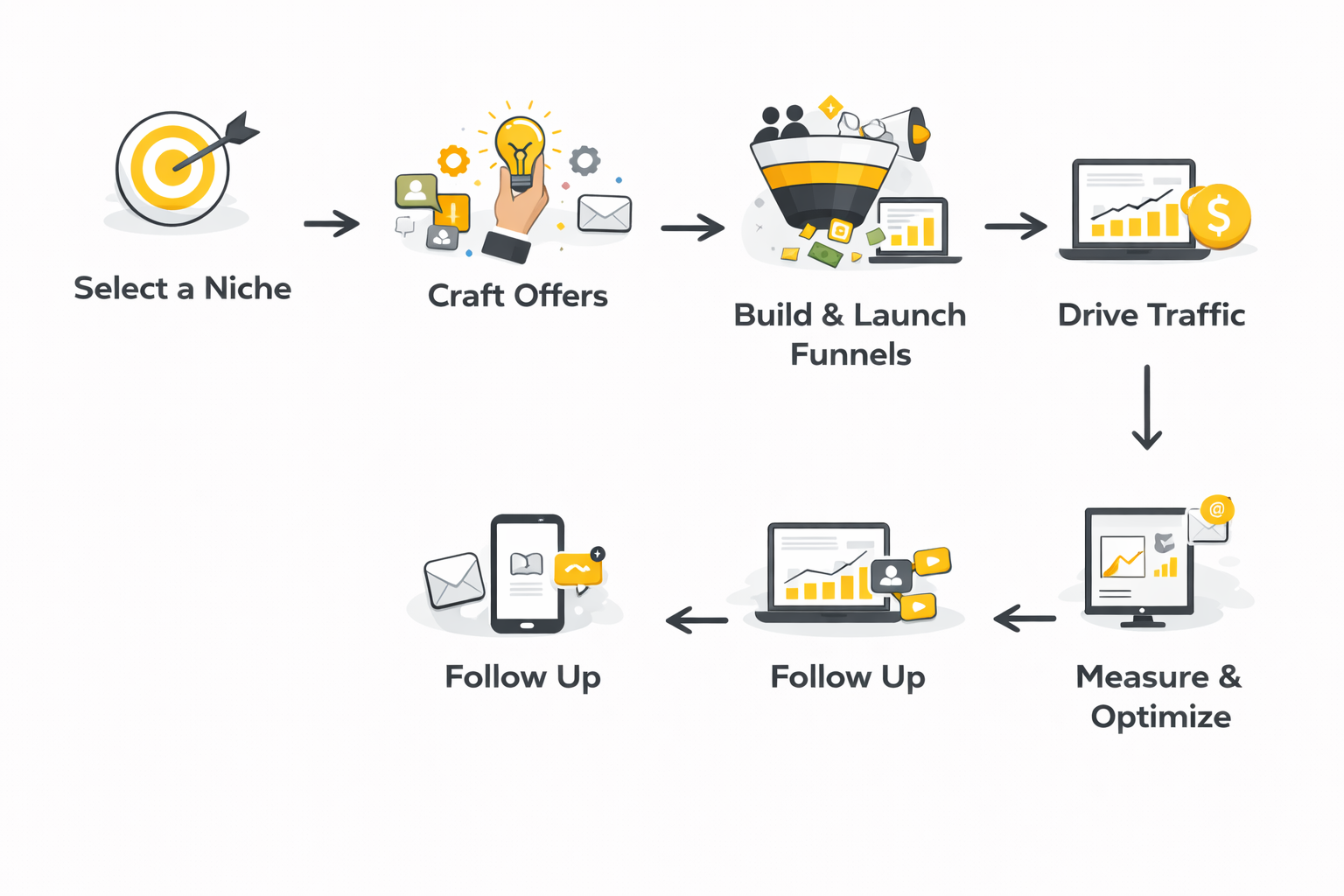
Smarter scaling usually has less drama than people expect. It is less about finding a magic traffic source and more about tightening the business in layers. First, improve message-to-market fit. Then improve the lead capture path. Then improve follow-up. Then improve offer alignment. Then expand channels carefully. This sequence is boring, but boring is often where durable margin comes from.
Build Owned Assets Before You Need Them
One of the smartest moves an advanced operator makes is building assets that remain useful even if a platform or offer changes. That means an email list, a content archive, first-party audience data, and a simple brand position people can remember. These are the things that let you keep momentum even when algorithms move or conversion patterns change.
That is also why email still matters so much in this model. The DMA’s 2025 Email Benchmarking Report found delivery rates rose to 98% in 2024 and unique click rates reached 2.3%, while Mailchimp’s current benchmark overview shows how click rates and opens vary by industry. The lesson is not that email is easy. It is that owned follow-up remains one of the few assets you can control more directly than social reach.
If someone is moving beyond hobby mode, this is the point where infrastructure starts to matter more. A basic stack can live comfortably in Systeme.io or ClickFunnels, while a more process-heavy business may prefer GoHighLevel for pipeline visibility, automations, and client-style workflow structure. The strategic point is bigger than the software choice: own the audience relationship as early as possible.
Separate Education Revenue From Identity
This is a subtle point, but it matters a lot. Plenty of people can generate some revenue around Legendary Marketer and still fail to build a real identity in the market. They become known as a promoter of a platform instead of a trusted voice with a clear point of view. That makes scaling harder because authority borrowed from a brand is weaker than authority built through consistent insight.
A stronger path is to let the education inform your thinking without letting it define your entire public presence. Teach what you are learning in your own words. Build content around audience problems, not just around the program. Recommend tools and offers only when they match a clear use case. Over time, this makes your business less dependent on one company’s narrative and more dependent on your own relevance.
Use Benchmarks as Boundaries, Not as Guarantees
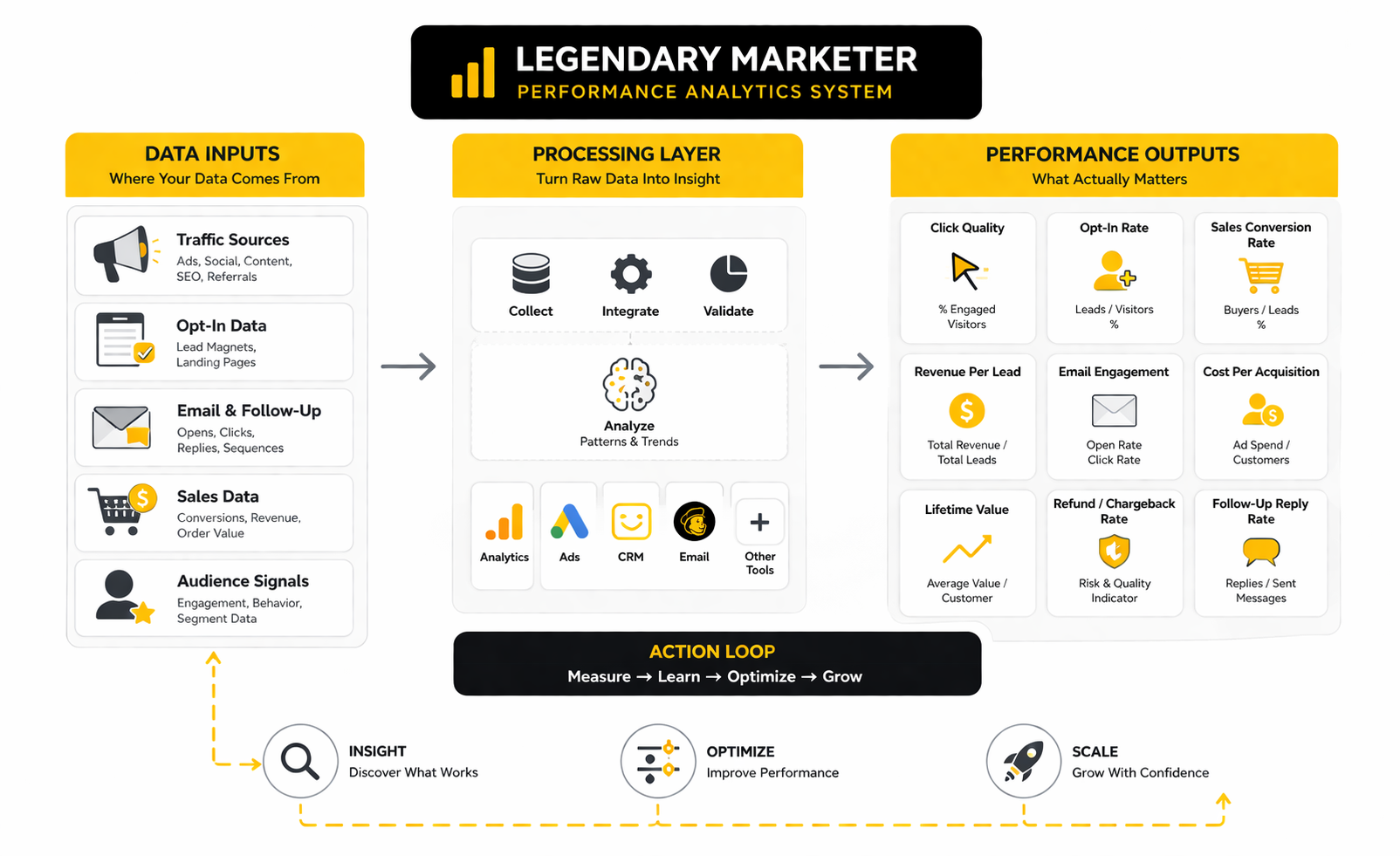
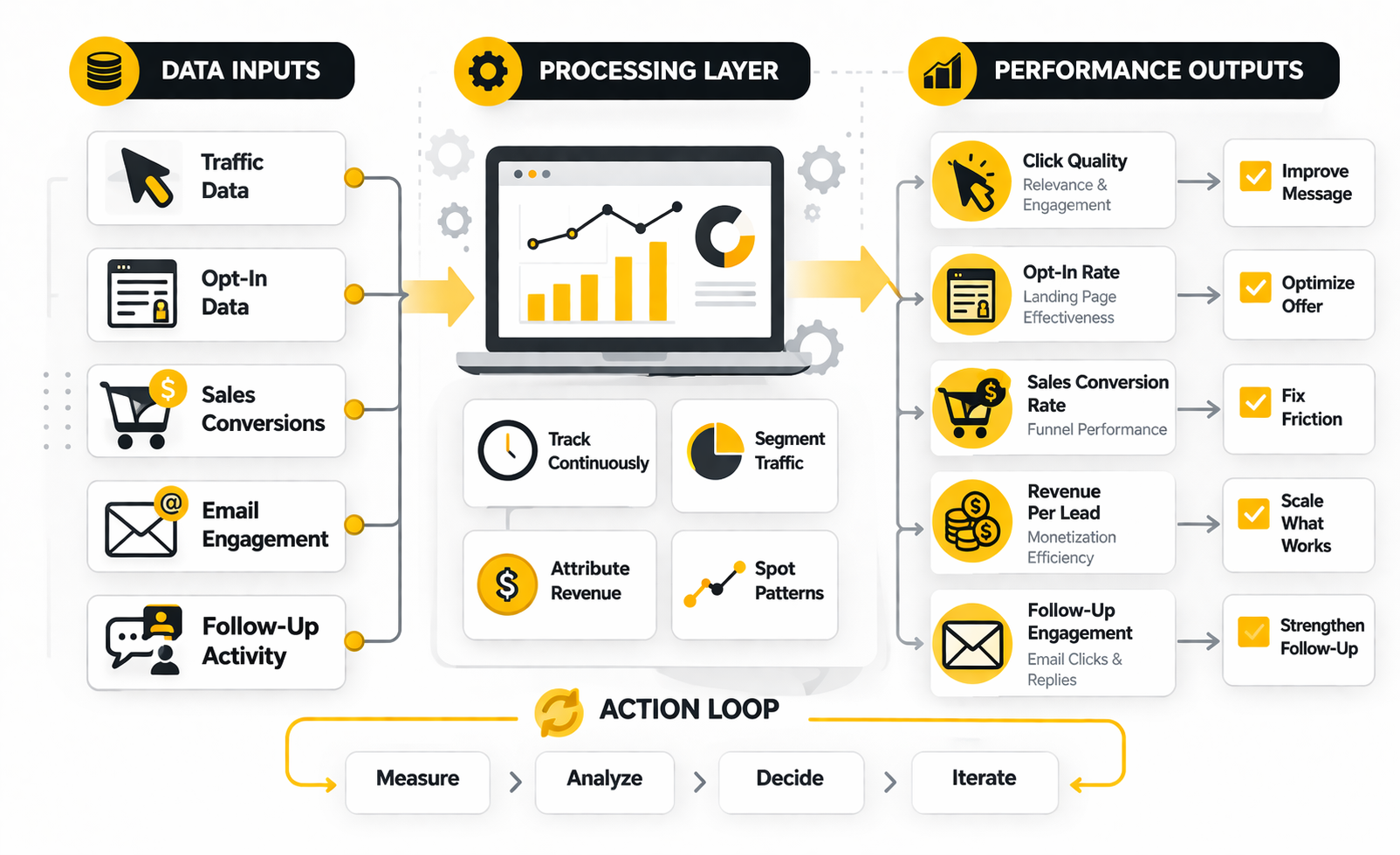
Benchmarks are useful because they stop you from guessing blindly. They can tell you whether your click rates are absurdly low, whether your email engagement is lifeless, or whether your funnel is healthy relative to broader channel behavior. But they become dangerous when people treat them like promises.
That is especially relevant in a space like legendary marketer, where testimonials and visible wins can distort expectations. The better use of benchmarks is to set boundaries. If your numbers are far below what healthy channels often show, something likely needs fixing. If your numbers are healthy but profits are still thin, the problem may be economics rather than copy or traffic. Benchmarks help you diagnose. They do not replace strategy.
The Real Expert-Level Question
At a higher level, the key question is not “Can Legendary Marketer make money?” The better question is “Does using Legendary Marketer help me become a better operator with stronger assets, cleaner systems, and a more defensible business?” That question is harder, but it is also much more honest.
A platform like this can absolutely accelerate learning. It can also keep people circling in a loop if they confuse activity with leverage. The expert move is to keep extracting transferable skills while steadily reducing dependence on any single offer, channel, or brand narrative. That is how training becomes capability instead of becoming another identity trap.
The final part of this article will bring the whole thing together with a straight answer on how to judge Legendary Marketer, where it fits, where caution is smart, and the most common questions people still have once the hype has worn off.