

Building and leveraging targeted email lists is no longer optional for marketers who want measurable, high-converting campaigns. Today, precision in email marketing directly correlates with engagement, retention, and revenue growth. When executed properly, these lists allow businesses to reach the right audience at the right time with messages that resonate.
From small businesses to enterprise SaaS companies, marketers who prioritize list segmentation see a significant uplift in performance. Platforms like GoHighLevel and Brevo have demonstrated that well-segmented email campaigns can outperform generic blasts by a wide margin, driving both clicks and conversions while protecting sender reputation.
Here’s how this article will guide you through building, maintaining, and leveraging targeted email lists for consistent, measurable results:
- Why Targeted Email Lists Matter: Understand the value of precision and how targeted audiences improve engagement and ROI.
- Framework Overview: Step-by-step system for building accurate, actionable email lists.
- Core Components: Breakdown of the essential elements that make a list high-performing.
- Professional Implementation: Practical strategies for deploying, testing, and optimizing campaigns.
- Analytics and Measurement: Track effectiveness, identify patterns, and refine targeting.
- Scaling and Optimization: Advanced methods for expanding your lists and improving performance without losing quality.
Why Targeted Email Lists Matter
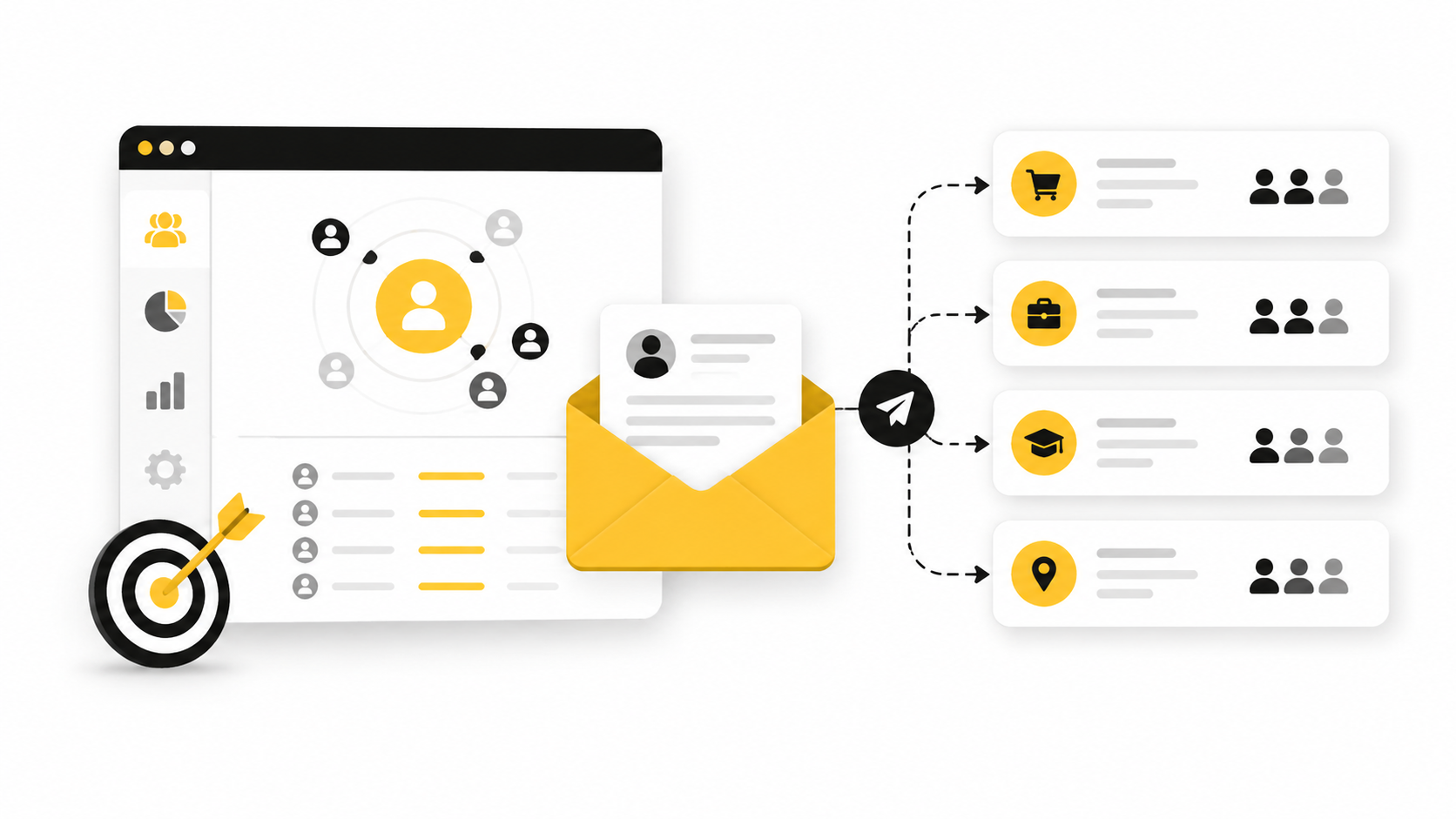
A well-curated targeted email list is the foundation of any successful email marketing strategy. When your messages reach the right audience, open rates, click-through rates, and conversions improve significantly. Generic lists often result in low engagement and higher unsubscribe rates, which can harm your sender reputation and deliverability.
Targeting allows marketers to send highly relevant content, promotions, and updates. For example, segmenting by past purchase behavior, industry, or engagement history can boost campaign effectiveness by over 70% in some reported studies. It also enables more precise personalization, which increases trust and strengthens customer relationships.
By understanding why precision matters, you can prioritize building lists that truly reflect your ideal audience. This ensures every email has a higher probability of driving meaningful action.
Framework Overview
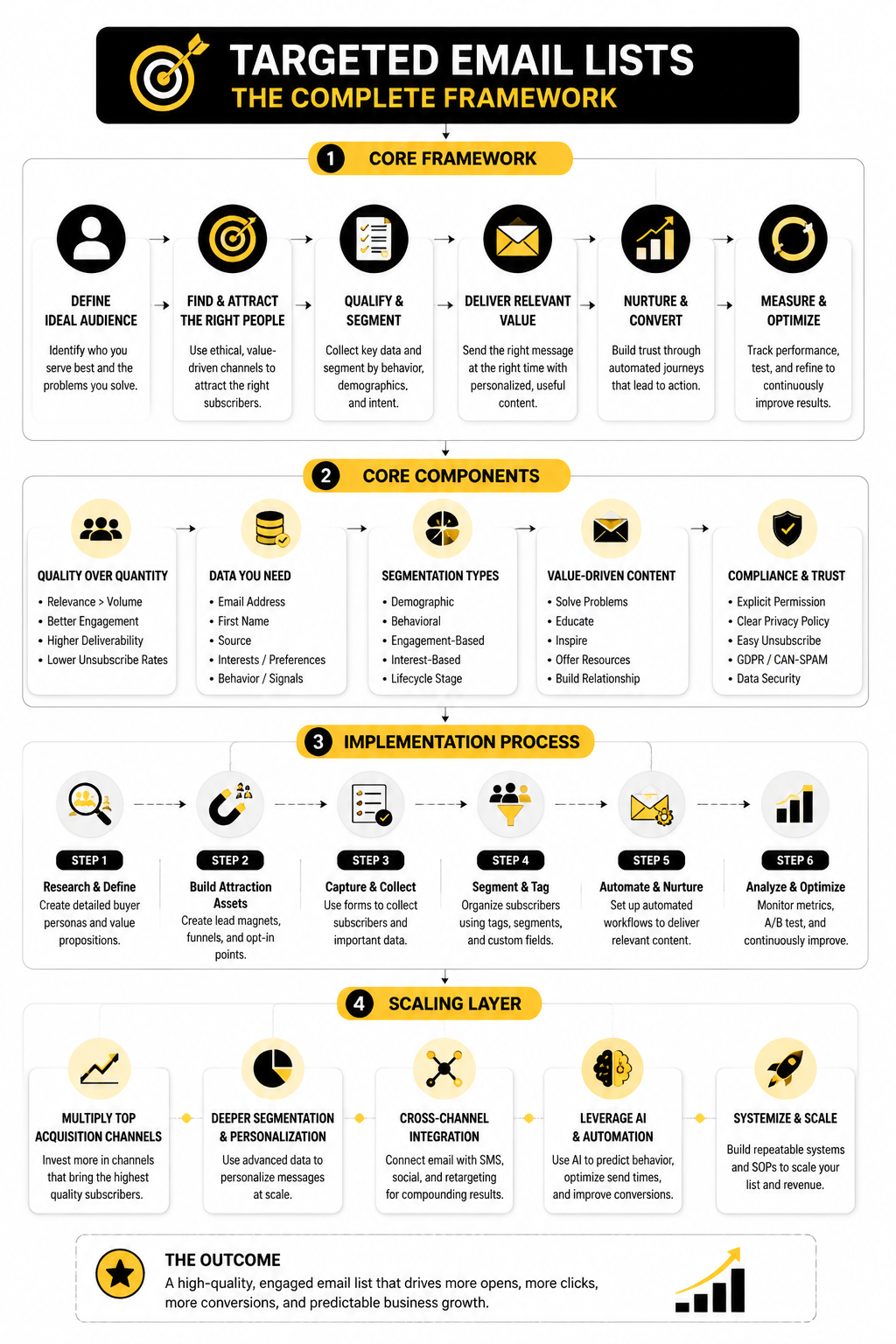
Creating a reliable targeted email list requires a clear system. A strong framework guides how you capture, verify, segment, and maintain your contacts for maximum efficiency. The framework typically includes:
- Audience Research: Define your ideal customer profiles, understand their pain points, and identify engagement patterns.
- Data Capture: Use lead magnets, signup forms, and integrations with tools like GoHighLevel to collect accurate subscriber information.
- Segmentation: Organize contacts based on demographics, behavior, purchase history, or engagement to deliver relevant content.
- Validation & Cleaning: Regularly verify emails to reduce bounce rates and maintain list hygiene.
- Compliance: Ensure adherence to privacy laws such as GDPR, CAN-SPAM, and CASL to protect your business and your audience.
Following this framework systematically sets the stage for actionable, measurable campaigns that perform well over time.
Core Components
The core elements of a high-performing email list include:
- Verified Contact Information: Accurate email addresses are non-negotiable for effective delivery.
- Segmentation Attributes: Data points such as location, role, interests, and past interactions allow for hyper-targeted messaging.
- Engagement Signals: Tracking opens, clicks, and conversions helps refine future campaigns.
- Lead Source Data: Understanding where subscribers originated provides context for messaging strategies.
- List Health Metrics: Monitoring unsubscribe rates, bounce rates, and inactive subscribers prevents degradation of deliverability.
These components work together to create a robust foundation that supports strategic marketing efforts.
Professional Implementation
Executing targeted email campaigns requires a combination of strategy, technology, and continuous optimization. Professionals focus on:
- Automation: Tools like Brevo and ManyChat help streamline list management, send behavior-triggered emails, and maintain engagement.
- A/B Testing: Testing subject lines, send times, and content variations identifies what resonates best with each segment.
- Lifecycle Campaigns: Mapping subscriber journeys ensures timely and relevant touchpoints that drive conversions.
- Monitoring and Analytics: Tracking performance metrics to detect trends, optimize campaigns, and improve ROI.
Implementing Targeted Email Lists: Step-by-Step
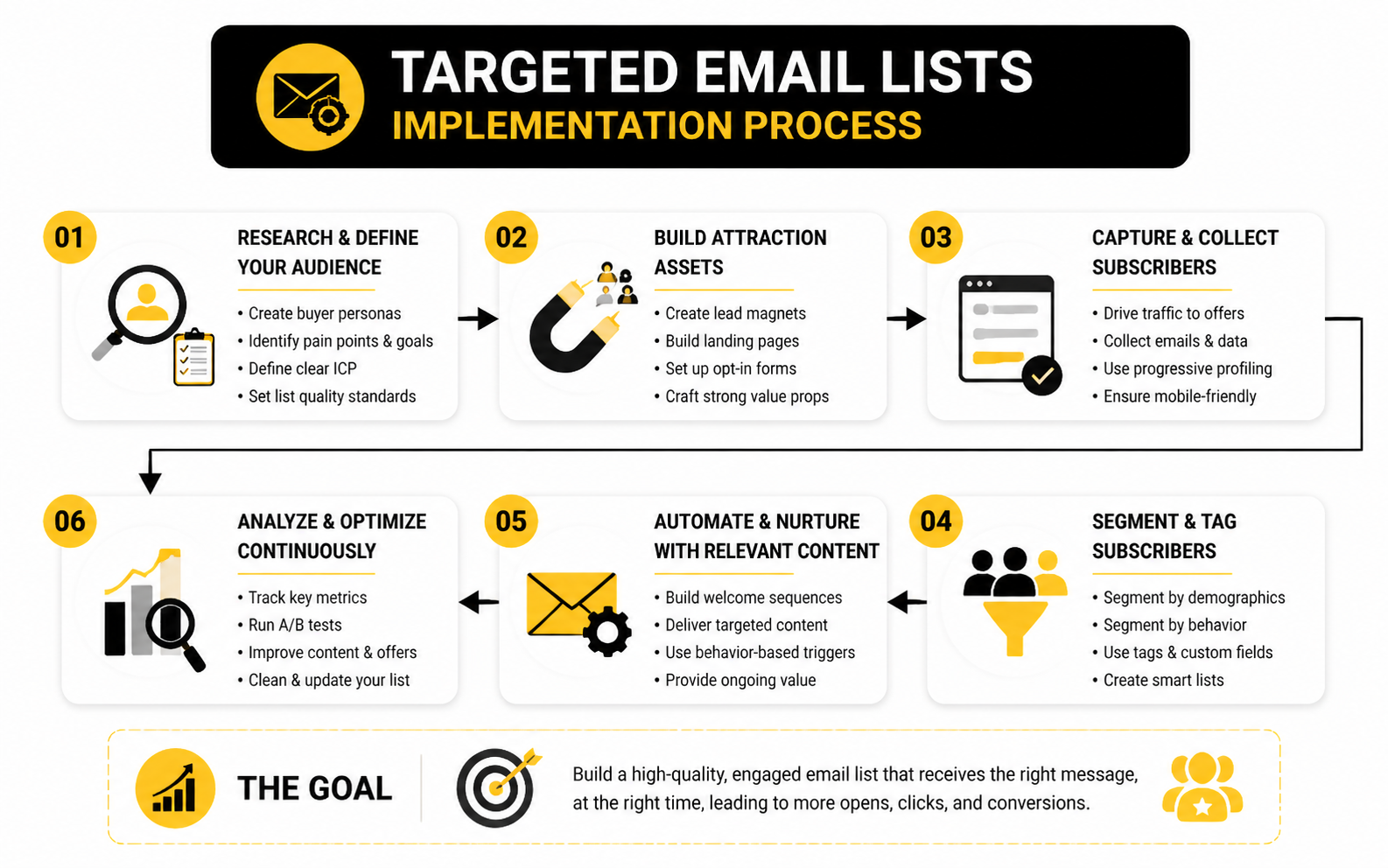
Building and deploying targeted email lists effectively requires a clear execution process. Without structured steps, even the best lists can fail to deliver results. The goal is to ensure each subscriber receives relevant messages that drive engagement and conversions.
Step 1: Data Collection
Start by gathering subscriber information from verified and high-quality sources. This includes:
- Opt-in forms on websites or landing pages
- Lead magnets like ebooks, guides, or exclusive offers
- Integrations with CRM and marketing automation platforms such as GoHighLevel or ManyChat
The focus should be on collecting actionable data such as email, name, interests, and past behavior.
Step 2: Data Cleaning and Verification
Maintaining list hygiene is critical. Remove duplicates, invalid addresses, and unengaged contacts regularly. Verified email addresses reduce bounce rates and improve deliverability. Tools like Brevo offer built-in validation that can automate this step, ensuring your list remains healthy.
Step 3: Segmentation
Segment your audience based on relevant attributes:
- Demographics (age, location, industry)
- Behavioral signals (previous clicks, purchases, site visits)
- Engagement level (active vs inactive subscribers)
Segmentation ensures that campaigns are personalized, which directly impacts open rates and click-throughs. Research shows that targeted emails generate significantly higher engagement than generic campaigns.
Step 4: Content Personalization
Once segments are defined, tailor email content to each group. Personalized subject lines, dynamic content blocks, and offers aligned with subscriber preferences increase relevance. This step is essential for converting a passive subscriber into an active customer.
Step 5: Automation Setup
Use automation to schedule campaigns, trigger emails based on actions, and nurture leads through workflows. Automation platforms like Replo or GoHighLevel streamline repetitive tasks, freeing your time for strategic optimization.
Step 6: Testing and Optimization
Before sending broadly, perform A/B testing on subject lines, call-to-actions, and email designs. Measure performance metrics like open rates, click-through rates, and conversion rates. Continuous testing ensures each campaign performs better than the last, improving ROI over time.
Step 7: Monitoring and Reporting
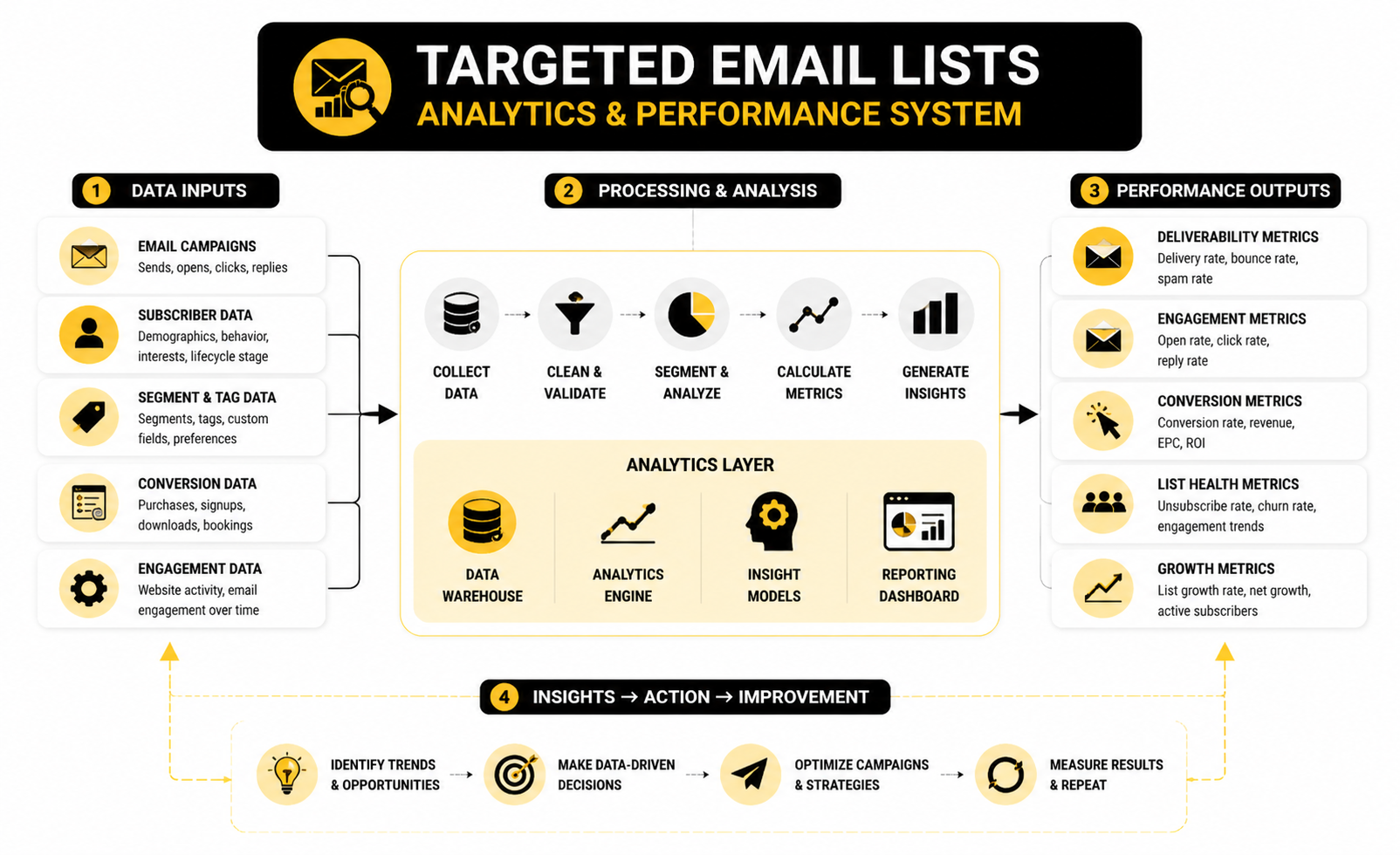
Finally, implement a robust analytics system to track campaign performance. Dashboards can show engagement trends, segment performance, and list growth. Use insights to refine targeting, adjust messaging, and plan future campaigns more effectively.
Measuring Performance and Analyzing Data for Targeted Email Lists
Understanding the effectiveness of targeted email lists requires a structured analytics approach. Without proper measurement, campaigns operate in the dark, leaving potential conversions and engagement untapped. Data helps marketers understand what works, what doesn’t, and where to optimize.
Key Metrics to Track
The most meaningful metrics for email list performance include:
- Open Rate: Indicates the effectiveness of subject lines and initial engagement.
- Click-Through Rate (CTR): Measures how compelling the content and offers are within the email.
- Conversion Rate: Shows the percentage of recipients completing the desired action, such as purchasing or signing up.
- Bounce Rate: Highlights issues with list hygiene, such as invalid or inactive email addresses.
- Unsubscribe Rate: Provides insight into relevance and frequency of messaging.
These metrics not only measure current performance but also guide future targeting and content strategy.
Benchmarking and Comparative Analysis
Compare your email metrics against industry benchmarks to gauge effectiveness. For instance, a recent email marketing report highlights average CTRs of 2–5% across B2B sectors, giving context for evaluating your campaigns. Benchmarking ensures that your campaigns remain competitive and realistic.
Interpreting the Data
Numbers alone aren’t actionable without context:
- High open rates but low CTRs suggest the subject line is effective but the content or call-to-action needs improvement.
- Rising bounce rates indicate a need for data cleaning and verification.
- Consistent low engagement may signal that segmentation is off or the offers are not compelling.
Understanding the story behind the numbers allows marketers to make informed decisions about list segmentation, content optimization, and sending cadence.
Driving Action From Insights
Use analytics to continuously refine your email campaigns:
- Adjust messaging for segments showing low engagement.
- Optimize sending times for different audiences based on historical performance.
- Test variations in subject lines, creative elements, and offers to see what resonates best.
By systematically measuring and interpreting your data, targeted email lists become a powerful tool for increasing ROI, improving subscriber satisfaction, and scaling marketing efforts.
Advanced Strategies and Scaling Considerations for Targeted Email Lists
As you move beyond the basics, mastering targeted email lists involves understanding the nuanced tradeoffs between growth, engagement, and deliverability. High-volume campaigns can be tempting, but without proper segmentation, sending frequency, and list hygiene, performance can deteriorate quickly.
Strategic Tradeoffs
Scaling targeted lists often requires balancing three key aspects:
- Reach vs. Relevance: Expanding your list can increase potential revenue but may dilute engagement if new contacts are less aligned with your niche.
- Frequency vs. Fatigue: Sending emails too frequently can lead to unsubscribes and spam complaints, while too infrequent communication may cause your brand to be forgotten.
- Automation vs. Personalization: Automated flows save time and scale efficiently, but overly generic messaging risks lower conversions.
Understanding these tradeoffs allows you to make informed choices about when to invest in list growth versus optimizing content and targeting.
Risk Management
Maintaining a healthy email ecosystem requires vigilance:
- Deliverability Risks: Poor list hygiene, spam complaints, or outdated contacts can trigger ISP blocks.
- Compliance Risks: Laws like GDPR and CAN-SPAM mandate proper consent management, clear opt-outs, and accurate data handling.
- Reputation Risks: Over-solicitation or irrelevant messaging can damage brand trust, affecting future campaigns and partnerships.
Regular audits, consent verification, and engagement monitoring mitigate these risks and ensure long-term list sustainability.
Scaling Techniques
To scale effectively while preserving quality:
- Segment Intelligently: Use behavior, demographics, and engagement history to create micro-segments for highly relevant campaigns.
- Leverage Multi-Channel Integration: Combine email campaigns with social media retargeting, SMS follow-ups, and landing page personalization to reinforce messaging.
- Test and Optimize Continuously: A/B test subject lines, copy, and send times; measure results; and iterate rapidly to maintain optimal performance.
By combining disciplined list management with strategic experimentation, marketers can grow targeted email lists sustainably while maximizing engagement and ROI.
Final Ecosystem and FAQ for Targeted Email Lists
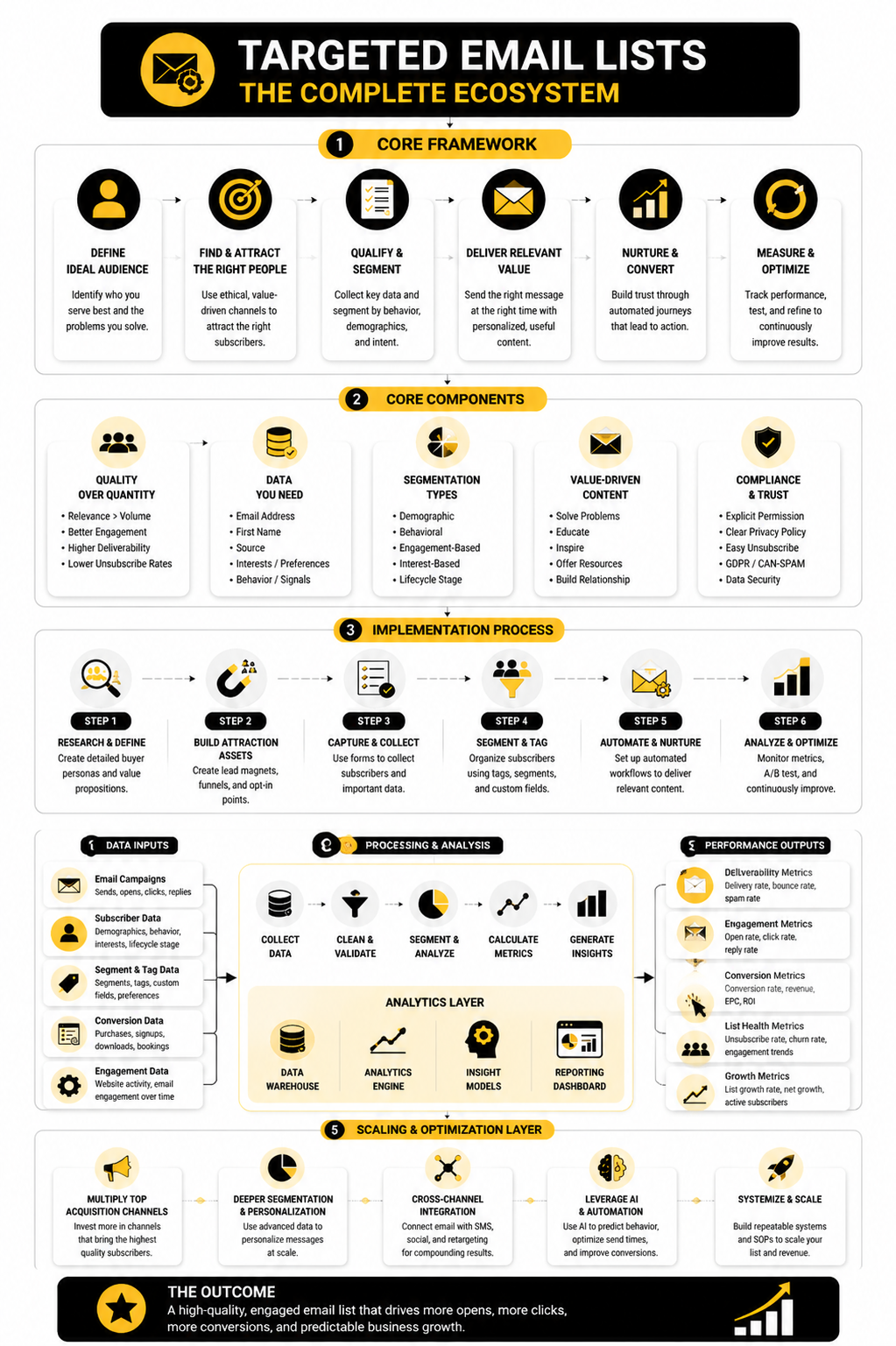
FAQ - Built for Complete Guide
1. What exactly is a targeted email list?
A targeted email list consists of contacts carefully segmented by interests, demographics, behavior, or engagement patterns to ensure messages reach the right audience, maximizing relevance and response rates.
2. How do you build a high-quality targeted email list?
Start with opt-in forms, lead magnets, and verified data sources. Continuously segment users based on engagement and behavior to keep the list focused and high-performing.
3. Why is segmentation critical for email performance?
Segmentation ensures that your emails resonate with recipients, improving open rates, click-throughs, and conversions while reducing unsubscribes and spam complaints.
4. How often should you clean a targeted email list?
Regular list hygiene is vital. Remove inactive or bounced emails at least quarterly to maintain deliverability and engagement metrics.
5. What metrics matter most for evaluating email list performance?
Key indicators include open rates, click-through rates, conversion rates, bounce rates, and engagement over time. These metrics reveal how effectively your campaigns are connecting with your audience.
6. Can automation improve targeted email campaigns?
Yes. Automated workflows allow personalized follow-ups, triggered sequences, and consistent engagement without overwhelming manual effort, while keeping communications relevant.
7. How do GDPR and CAN-SPAM regulations affect list management?
Compliance requires explicit consent, transparent opt-ins, easy unsubscribe options, and accurate data storage. Noncompliance risks fines and deliverability issues.
8. What role do lead magnets play in growing targeted lists?
Lead magnets attract high-intent contacts who are more likely to engage with your campaigns. Offering valuable content increases opt-in quality and list relevance.
9. How can you integrate multi-channel strategies with email lists?
Pair emails with social retargeting, SMS alerts, and personalized landing pages to reinforce messaging and expand touchpoints, improving overall campaign performance.
10. What are common mistakes to avoid with targeted email lists?
Avoid overloading contacts with irrelevant messages, ignoring segmentation, neglecting compliance, and failing to track performance metrics. These errors reduce ROI and hurt sender reputation.
11. How do you measure ROI from targeted email campaigns?
Compare revenue generated, conversions, and engagement against campaign costs. Include metrics like cost per lead and lifetime value to evaluate financial impact.
12. What’s the best approach to scale a targeted email list?
Focus on quality growth—prioritize relevant opt-ins, automated segmentation, and cross-channel amplification rather than simply increasing list size.
Work With Professionals
Explore 10K+ Remote Marketing Contracts on MarkeWork.com
Most marketers spend too much time chasing clients, competing on crowded platforms, and losing a percentage of every project to middlemen. MarkeWork gives you a better way. Browse thousands of remote marketing contracts and connect directly with companies desperate to hire skilled marketers like you, without platform commissions and without unnecessary gatekeepers.
If you're serious about finding better opportunities and keeping 100% of what you earn, invite readers to explore available contracts and create a profile for free at MarkeWork.com.