

TikTok marketing is not a side experiment anymore. It is now one of the few channels where brands can still earn attention with creativity first, then compound that attention with paid amplification, creator partnerships, and increasingly direct commerce. When a platform can reach 1.59 billion people through ads and still reward fresh, native content more than polished corporate messaging, smart marketers should pay attention.
What makes TikTok different is not just scale. It is the way discovery works. TikTok’s own retail research found that 77% of users discover new brands and products on the platform, while 61% say TikTok inspires them to buy or try something. That combination matters because it compresses the old journey of awareness, consideration, and action into a much faster loop.
The mistake most companies make is treating TikTok marketing like an extra social media task. It is not. Done properly, it is a system that connects audience research, creative angles, creator credibility, media buying, landing pages, and measurement. That is the structure this article will follow across all six parts.
Article Outline
- Why TikTok Marketing Matters in 2026
- The TikTok Marketing Framework
- Audience Research and Positioning
- Content Systems That Earn Attention
- Paid Distribution, Creators, and Conversion
- Measurement, Optimization, and FAQ
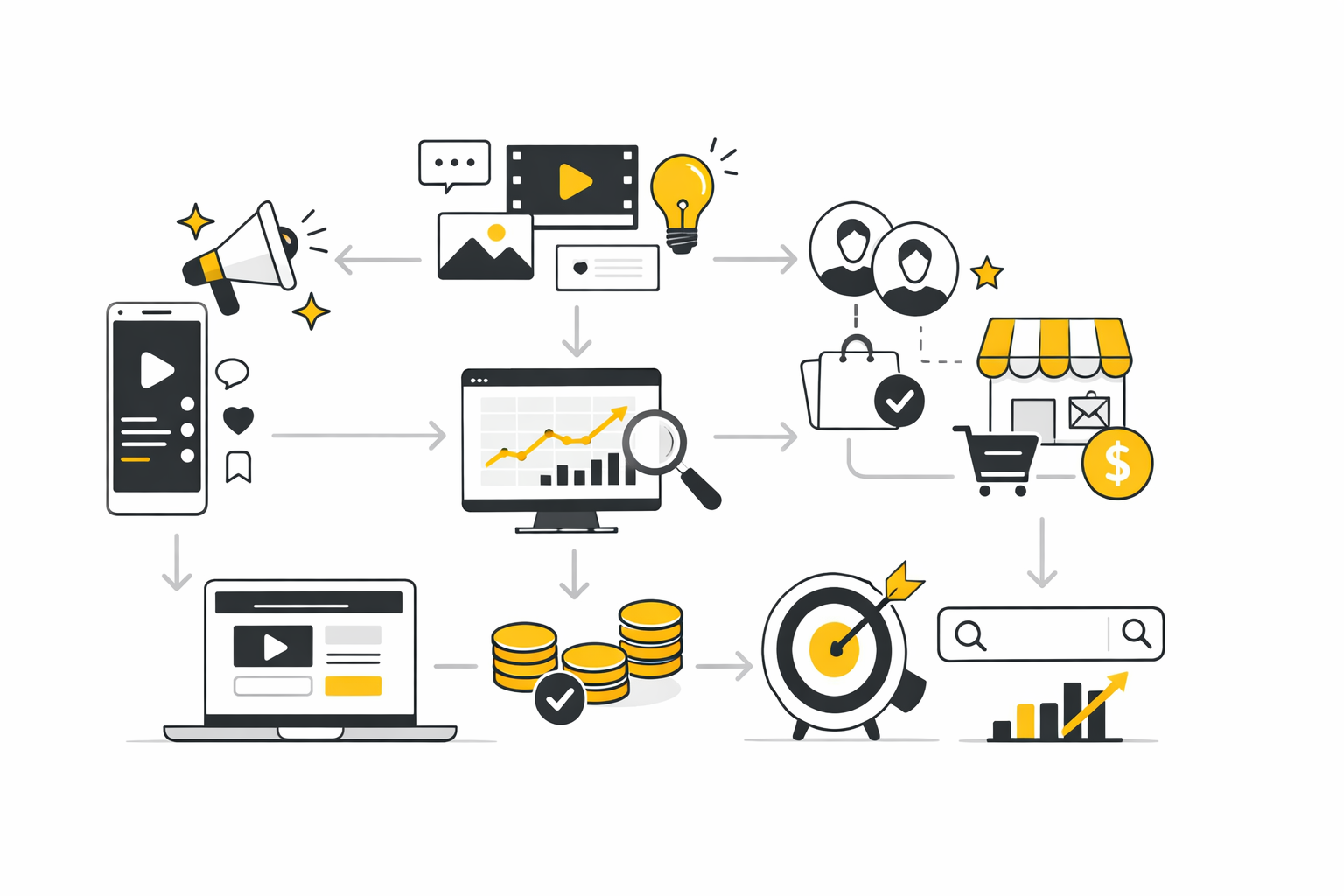
Why TikTok Marketing Matters in 2026
The strongest argument for TikTok marketing is simple: attention is there, and it is still unusually responsive to good creative. Recent benchmark data from Socialinsider’s 2025 TikTok study shows average engagement rising to 4.90% in the first half of 2025, which is the kind of signal marketers should not ignore. A crowded channel with weak engagement is expensive and frustrating. A crowded channel that still rewards relevance is a different opportunity entirely.
There is also a bigger strategic reason to care. TikTok is not just an awareness platform anymore; it is becoming a more complete business environment. TikTok’s product updates at TikTok World 2025 focused on full-funnel growth, AI-assisted creative production, search, and automation, which tells you exactly where the platform is heading. In other words, the brands that learn TikTok marketing now are not only learning how to post better videos. They are learning how a major discovery-and-conversion ecosystem works.
The cultural side matters too. TikTok’s own What’s Next 2025 report makes the shift clear: the old model of brands broadcasting polished messages at consumers is fading, and creator-and-community collaboration is replacing it. That is why stiff brand content usually underperforms here. People respond to personality, usefulness, entertainment, and participation, not corporate distance.
The economics of placement support this as well. Kantar’s Media Reactions 2024 study notes that campaigns are seven times more impactful in receptive environments, and that point matters more on a platform where users are actively discovering ideas, products, and identities. TikTok marketing works best when a brand behaves like it belongs in the feed instead of interrupting it.
The TikTok Marketing Framework
A practical TikTok marketing framework starts with a simple idea: do not build content first. Build fit first. That means understanding what your market already cares about, what format the platform rewards, what promise your offer can actually deliver, and what action you want people to take after the view. Without that sequence, even strong creative turns into noise.
At a high level, the framework looks like this: audience insight, positioning, content concepts, production system, creator leverage, paid amplification, conversion path, and measurement. TikTok itself reinforces the importance of structure in its creative best practices, recommending a flow built around a hook, clear value, and a direct call to action. That is not just ad advice. It is a useful operating model for organic and paid execution.
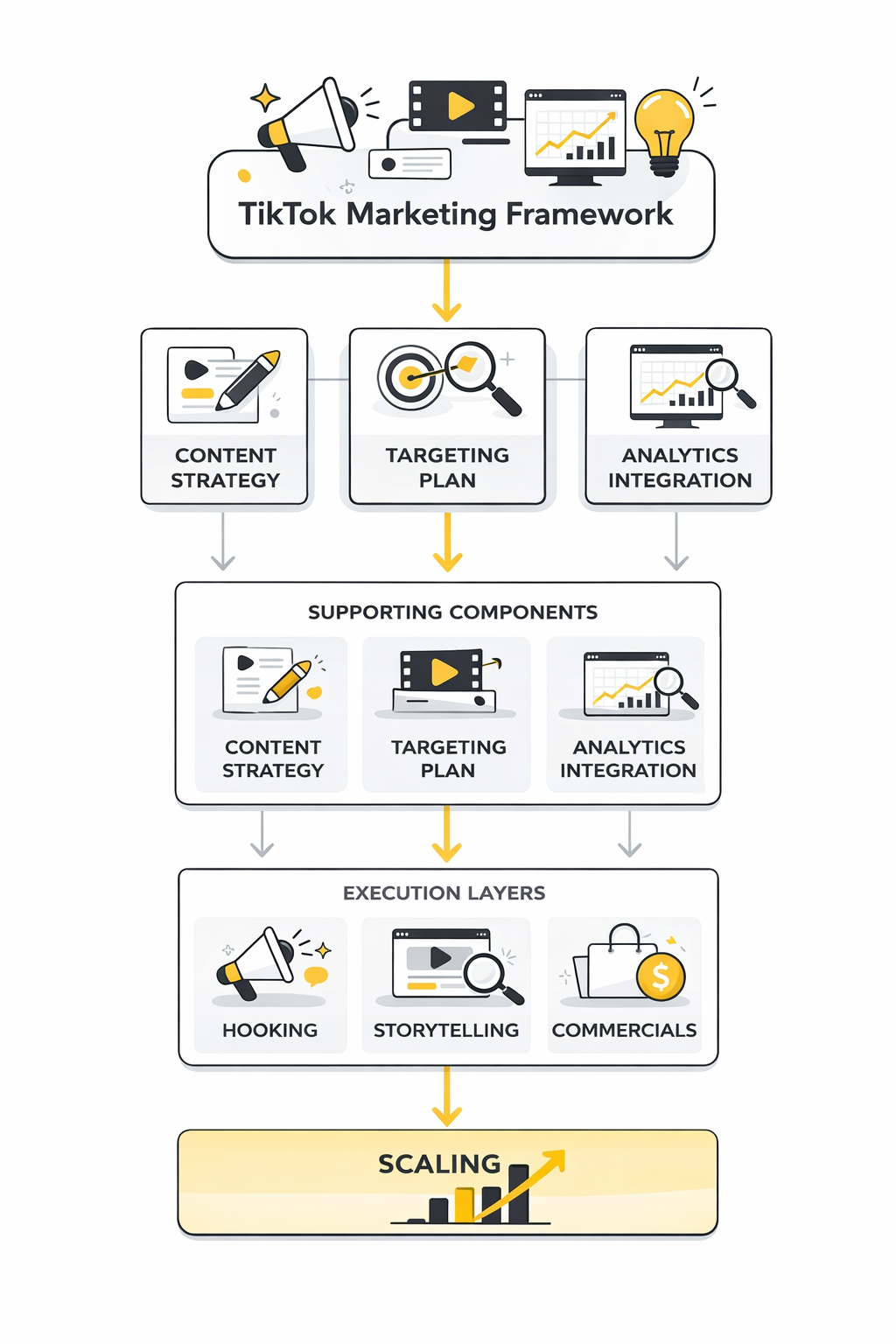
The best TikTok marketing teams also stop separating organic and paid as if they are different worlds. TikTok’s Spark Ads format is a good example of why that old split breaks down, because it lets brands amplify organic posts while preserving engagement, social proof, and creator signals on the original content. That creates a more efficient loop: publish organically, identify signals, then scale what proves it can hold attention.
This framework also forces a reality check on tools and infrastructure. A TikTok view is valuable only when the next step is frictionless, whether that means a product page, lead form, email capture, or a clean funnel. For brands that need a lightweight way to connect content with conversion, tools like Buffer for publishing workflows or Systeme.io for simple funnel building can fit naturally into the process. The platform rewards speed, but speed without a system burns budget fast.
That is the foundation for the rest of this article. The next part moves into audience research and positioning, because before you worry about virality, you need to know exactly who you are trying to attract, what they already watch, and what role your brand can credibly play in their feed.