


Turn Good-Fit Conversations Into Retainers
Once you have attention, proof, and a scoreboard, the next step in how to get more markting clients as a freelancer is turning interest into durable revenue. This is where a lot of freelancers stay too reactive. They keep chasing first projects when the better move is to design engagements that create continuity, better outcomes, and less pipeline panic.
That shift matters because buyers are often deciding early which vendor feels safest and most credible. In 6sense’s 2025 Buyer Experience Report, 94% of buying groups ranked vendors before talking to them, and the first vendor contacted won nearly 80% of the time. For a freelancer, that means the sales process is not just about persuasion on the call. It is about confirming the confidence your positioning and proof already created. 6sense
A retainer becomes much easier to sell when the client sees three things clearly. First, the problem is ongoing rather than one-and-done. Second, your work affects a business metric they care about. Third, stopping the work after one month would create drag instead of relief. When those three conditions are true, a recurring engagement feels practical rather than pushy.
Sell Continuity, Not Hours
Clients do not wake up wanting a retainer. They want stable outcomes, faster execution, and less internal chaos. So the strongest way to frame an ongoing engagement is around continuity of progress, not a block of monthly labor.
That sounds simple, but it changes the whole conversation. Instead of saying you are available for twenty hours per month, show the client what continuity protects: campaign momentum, testing cadence, content consistency, reporting rhythm, stakeholder alignment, CRM hygiene, or channel optimization. The sale gets easier when the retainer feels like operational stability instead of rented time.
This is also where specialization helps again. A freelancer who owns a repeated business problem can justify recurring work more naturally than one who sells disconnected tasks. Ongoing email optimization, LinkedIn content systems, paid search management, lifecycle automation, and conversion improvement all map much more cleanly to retainers than vague “marketing support.”
Know When To Offer A Project And When To Offer A Retainer
Not every lead should be pushed into monthly work. That is one of the most important strategic tradeoffs at this stage. Some clients need a defined fix, some need a pilot, and some genuinely need continuous support.
A project makes sense when the scope is clear, the client mainly needs expertise for a contained problem, or trust is still low. A retainer makes sense when the business needs repeated execution, regular iteration, and ongoing judgment. If you try to force a retainer where a project is the better fit, you increase friction. If you keep selling projects where continuity is required, you stay trapped in constant selling.
The smartest approach is usually a sequence. Start with a paid diagnostic, sprint, audit, or implementation project, then transition into a retainer only when the need for ongoing work becomes obvious. That is cleaner for the client and safer for you because the engagement earns its next phase.
A Simple Way To Structure The Upgrade Path
- Entry offer Use a short engagement to diagnose the problem, create a plan, or fix one critical bottleneck. This lowers commitment risk and gives the client a reason to experience your process.
- Core engagement Once the problem and opportunity are visible, move into recurring work tied to execution and iteration. This is where monthly revenue becomes predictable.
- Expansion layer Add adjacent work only after the core system is working. Expansion should feel like compounding success, not upselling for the sake of it.
This structure protects both sides. The client gets a rational buying path, and you avoid the common mistake of presenting an oversized proposal before enough trust exists.
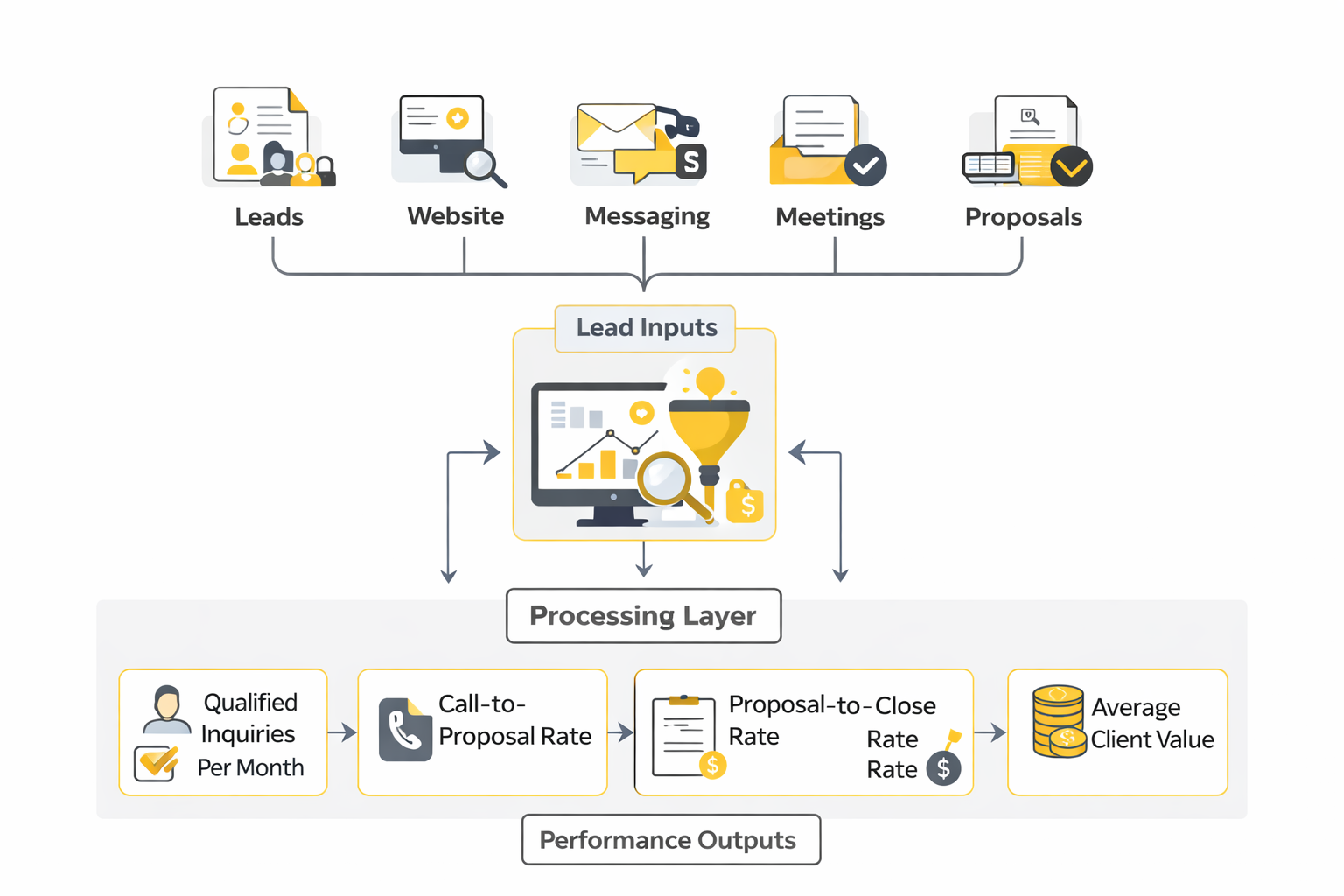
Protect Margin As You Grow
More clients is not always better. More profitable, more stable, and more aligned clients are better. That sounds obvious, but freelancers regularly damage their business by saying yes to too many custom requests, too much communication sprawl, and too many low-context tasks that destroy margin quietly.
This is where advanced discipline starts to matter. You need rules for what is included, how revisions work, how meetings are handled, how quickly you respond, and what counts as out-of-scope. Without those rules, the business becomes emotionally exhausting long before it becomes financially impressive.
Tooling can help here, but only if it supports a clean operating model. A simple CRM like Copper, a scheduler like Cal.com, and a lightweight form system like Fillout can reduce admin drag. The win is not the software itself. The win is protecting your attention so client delivery does not collapse under coordination overhead.
Be Careful With Customization Creep
Customization is seductive because it feels client-centric. In reality, too much of it often makes the service harder to deliver, harder to price, and harder to scale. The trick is to customize diagnosis and recommendations while standardizing the delivery backbone.
That means your client-facing language can stay flexible while the internal engine stays repeatable. Your onboarding, reporting, review cadence, asset requests, and proposal format should not be reinvented every time. Consistency makes you faster, calmer, and easier to trust.
This matters even more now because sales teams broadly are under pressure to simplify workflows and keep win rates healthy in a tougher buying environment. HubSpot’s 2025 Sales Trends Report says 91% of sales teams are maintaining or growing win rates, while Salesforce’s 2026 State of Sales shows teams leaning harder into enablement, consolidation, and partner-driven revenue. For a freelancer, that translates into one practical lesson: simpler systems usually beat heroic improvisation. offers.hubspot.com+1
Use Strategic Partners Without Becoming Dependent On Them
Partnerships can be one of the best advanced growth levers for freelancers. Designers, developers, media buyers, consultants, RevOps specialists, and small agencies often need reliable marketing operators they can refer. The right partner channel can shorten trust-building because you arrive pre-vetted.
But there is a risk here too. If one partner becomes your whole pipeline, you have not built a business. You have built a dependency. That can feel comfortable for a while, then dangerous all at once if priorities shift or their pipeline slows.
A healthier approach is to treat partners as one lane in a diversified acquisition mix. Salesforce’s 2026 State of Sales found that 89% of sales professionals see partner selling as increasingly important for hitting revenue targets. That does not mean freelancers should outsource all growth to others. It means partnerships are powerful when they sit alongside content, referrals, outbound, and direct demand from your own audience. Salesforce
Expert Signals Clients Notice More Than You Think
At this level, small signals start carrying outsized weight. Fast follow-up, crisp proposals, direct communication, and clear boundaries all make you look more senior. Many freelancers obsess over logos and portfolio aesthetics while ignoring the operational details clients actually experience.
What buyers often remember is whether the next step felt easy. Did the recap arrive quickly? Did the proposal reflect the actual business problem? Was the scope understandable? Did the timeline feel grounded? These moments create confidence because they suggest your delivery will be organized too.
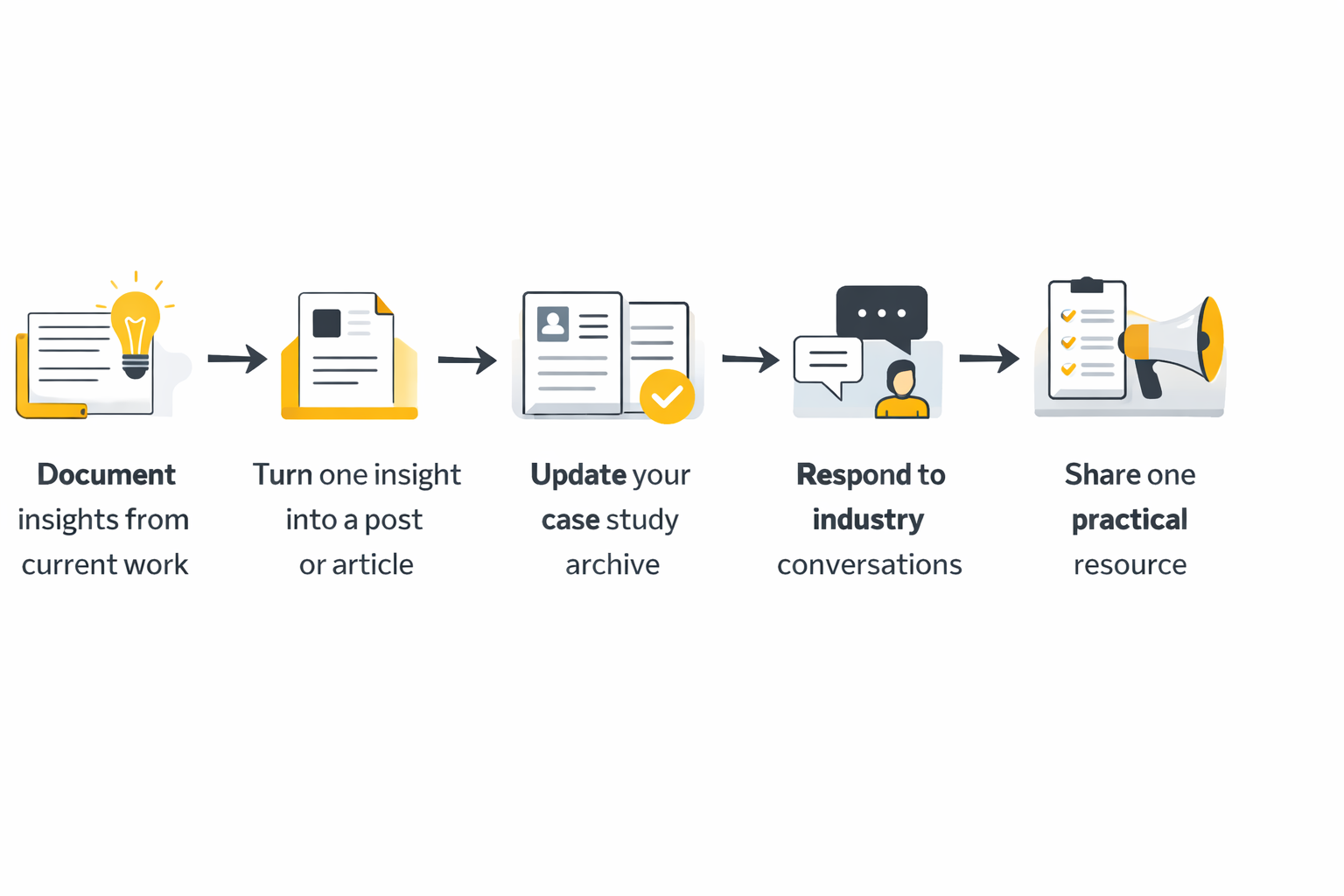
Thought leadership also keeps pulling weight here. Edelman and LinkedIn’s 2025 B2B Thought Leadership Impact Report found that strong thought leadership makes hidden decision-makers more receptive to outreach. For freelancers, that means your articles, posts, teardown threads, and case-study thinking are not just top-of-funnel assets. They also support closing by making the buyer feel they are hiring judgment, not just hands. edelman.com+1
The Real Scaling Decision
Eventually, every successful freelancer runs into the same question: do you want more clients, bigger clients, better systems, a micro-agency model, productized services, or a smaller business with higher margins? There is no universal right answer, but there is a wrong one: drifting into scale without choosing it.
Scaling adds complexity fast. More accounts create more coordination, more quality control risk, and more delivery management. Bigger retainers can be better, but only if your process, boundaries, and communication model can support them without dragging down the actual work.
That is why the strongest expert move is often subtraction. Fewer offers. Fewer client types. Fewer channels. Fewer weird exceptions. The freelancer who looks most scalable from the outside is often just the one who removed more friction than everyone else.
What To Carry Into The Final System
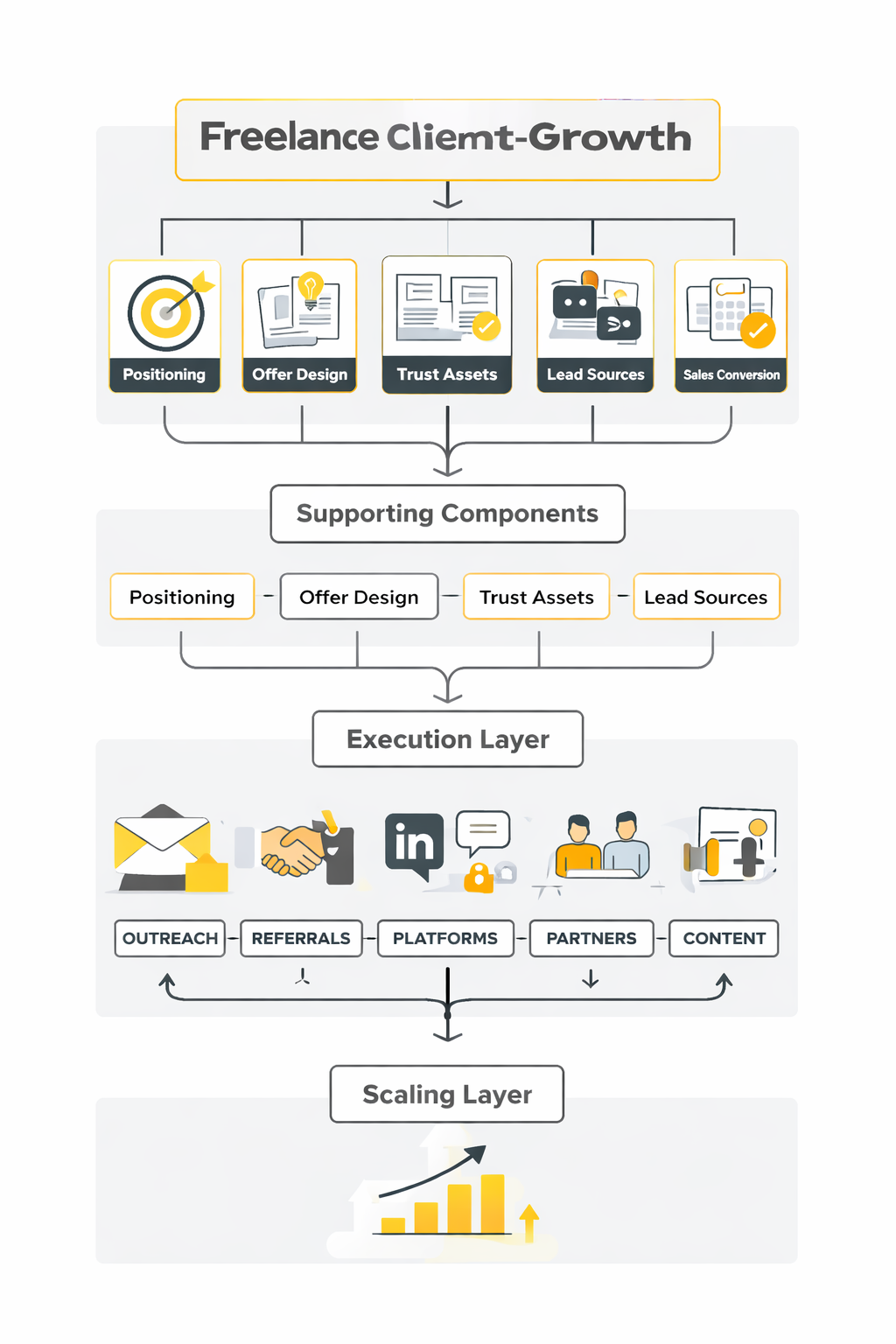
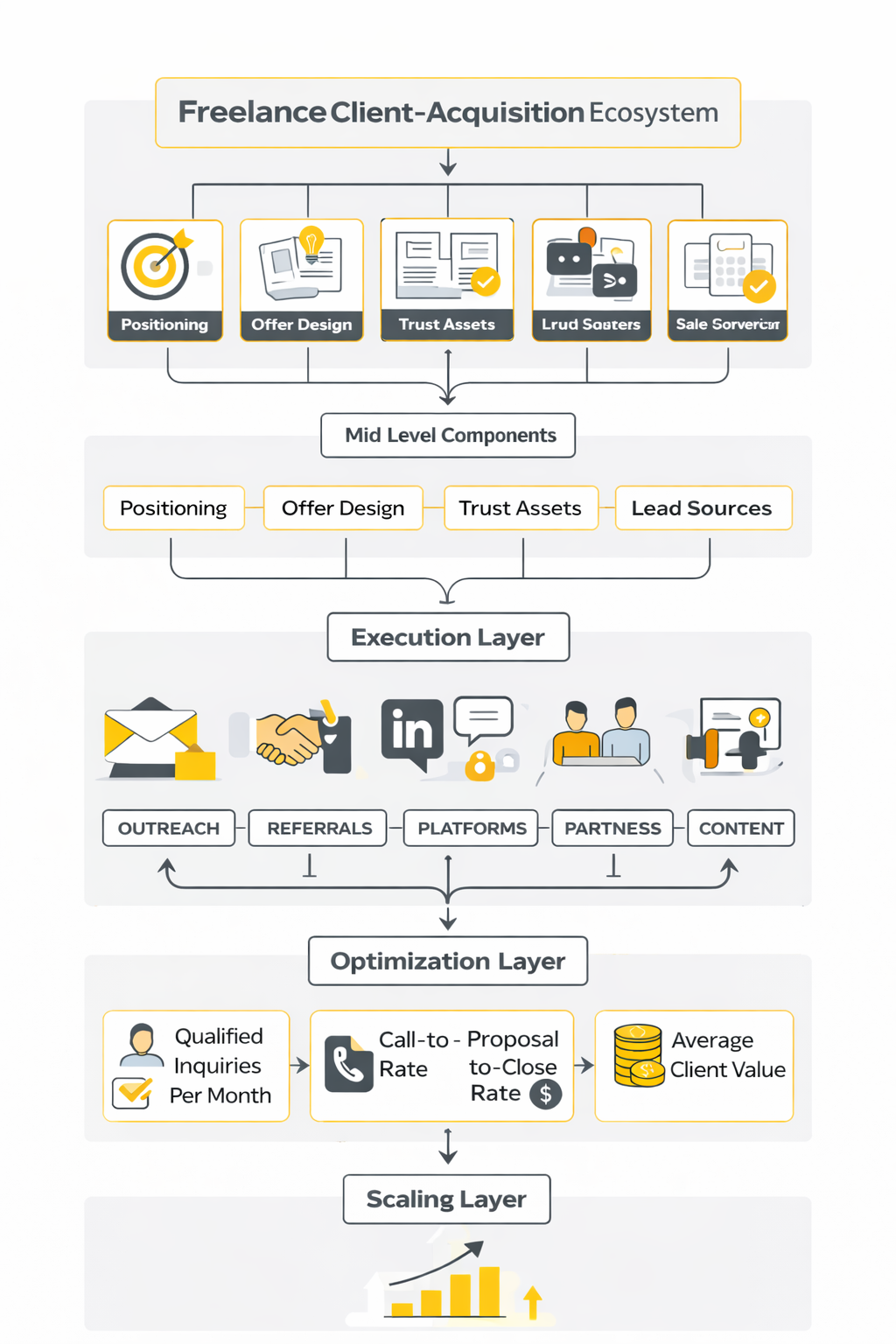
By now the pattern should be clear. Better client growth does not come from random volume. It comes from stacking clarity, trust, process, measurement, and conversion in the right order. Once those pieces are working together, growth becomes less emotional and more operational.
The final step is turning everything into a repeatable acquisition system you can maintain without burning out. That means knowing what to do weekly, what to review monthly, what to automate carefully, and what to keep human because it still creates the trust that closes the best clients.