

Webshop marketing is not just ads, email blasts, or posting product photos on social media. It is the full system that turns attention into sales, sales into repeat purchases, and repeat purchases into durable profit. That matters more than ever because U.S. ecommerce sales reached an estimated $1.2337 trillion in 2025 and 16.4% of total retail sales, while global ecommerce is expected to account for about one-fifth of retail sales in 2025. At the same time, Baymard’s 2025 checkout benchmark still puts average cart abandonment at 70.19%, and Baymard’s rolling reference list highlights a 71.72% 2025 reading from Uptain. Census.gov+3
That is the real story behind webshop marketing. The opportunity is huge, but the leak is huge too. If your store attracts traffic and still struggles to grow, the problem is often not demand alone. It is usually a broken chain between acquisition, product discovery, product-page persuasion, checkout, and retention. Baymard Institute+1
The stakes get even higher on mobile, where a lot of browsing starts and a big share of buying decisions are made. EMARKETER projected mobile commerce would make up 44.6% of U.S. retail ecommerce sales in 2024, and Google’s retail study found that a 0.1-second mobile speed improvement correlated with an 8.4% increase in conversions and a 9.2% increase in average order value. In plain English, weak webshop marketing is expensive because it wastes the click before the shopper ever gives you a fair chance. EMARKETER+1
- Why Webshop Marketing Matters
- The Webshop Marketing Framework
- Customer Acquisition Channels That Bring Qualified Traffic
- Product Pages, Merchandising, and Checkout That Convert
- Retention, Email, SMS, and Loyalty That Increase Lifetime Value
- Professional Implementation, Measurement, and Optimization
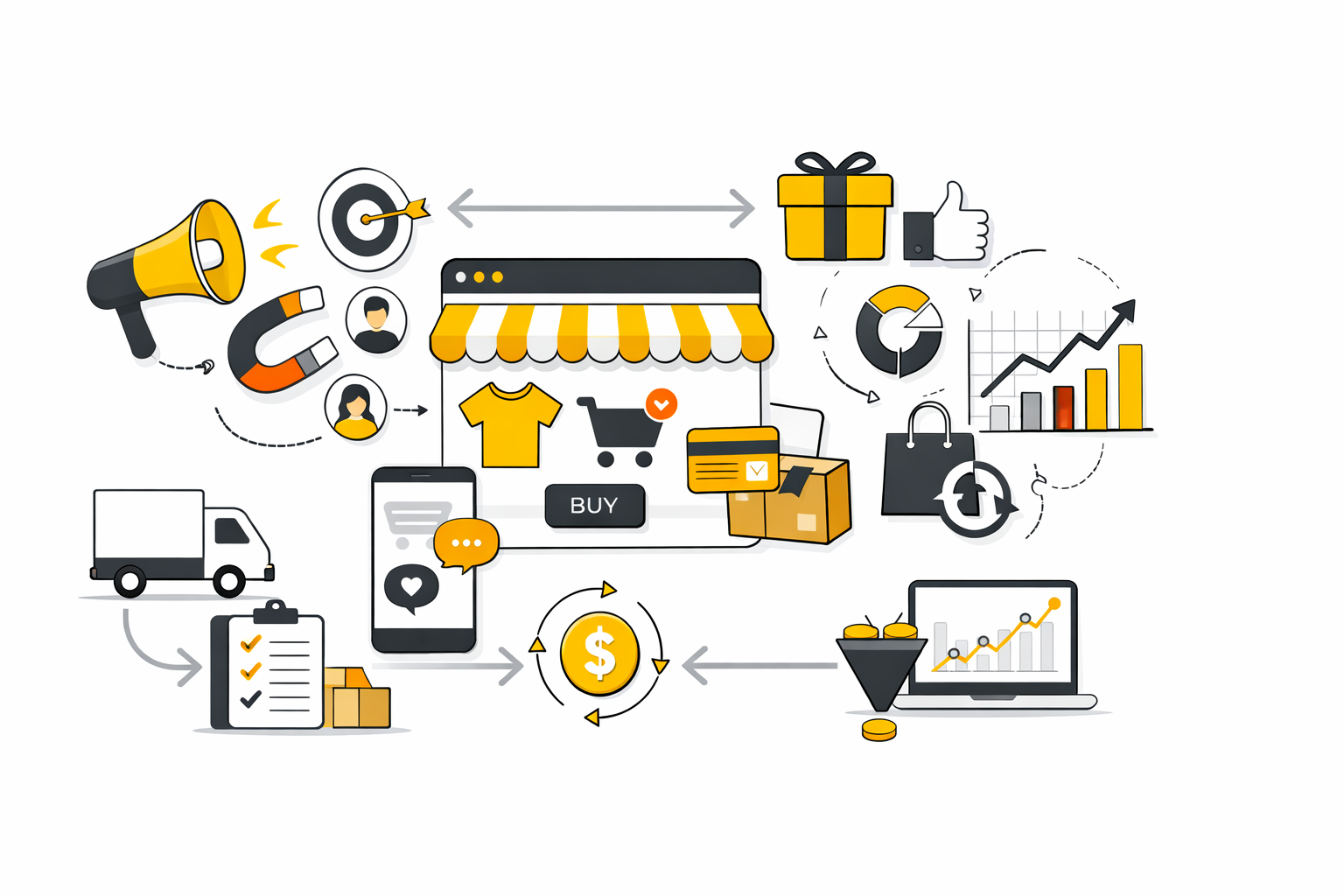
Why Webshop Marketing Matters
A webshop used to get away with thinking in channels. One person ran Meta ads, someone else sent emails, and the site itself was treated like a static catalog that “should convert” if the products were good enough. That model breaks once acquisition costs rise, comparison shopping gets easier, and customers expect relevance across every step of the journey. McKinsey notes that consumers increasingly want tailored online interactions, while NRF expects digitally influenced sales to keep expanding beyond 60%. McKinsey & Company+1
That shift changes what good marketing looks like. Good webshop marketing does not stop at getting the click. It shapes the offer, sharpens the landing experience, reduces friction on mobile, supports the purchase with trust signals, and keeps the relationship alive after checkout. When that system is missing, brands end up buying traffic for pages that are too slow, too generic, or too confusing to finish the job. Google Business+1
There is also a margin reason to care. Revenue is not the same as healthy revenue, and ecommerce businesses feel that fast when returns, discounts, and abandoned carts pile up. NRF estimates that 19.3% of online sales will be returned in 2025, and 82% of consumers say free returns matter when they shop online. So marketing cannot make promises in isolation from operations, fulfillment, and post-purchase experience. If the message pulls in the wrong buyer or sets the wrong expectation, the P&L pays for it later. NRF
This is why webshop marketing matters so much for modern ecommerce brands. It connects customer intent to the full buying experience instead of treating channels like separate departments. Once you see it that way, growth becomes less about random tactics and more about building a reliable commercial engine.
The Webshop Marketing Framework
The simplest way to think about webshop marketing is as a system with four connected jobs: attract qualified demand, convert that demand on the site, recover and retain customers after the first visit, and measure what is actually creating profitable growth. Most stores do something in all four areas. The difference is that strong stores connect them, while weak stores leave gaps between them. Census.gov+2
A practical framework matters because it keeps you from over-investing in the visible part of marketing and under-investing in the parts that decide whether the spend pays back. Many teams are still tempted to treat paid acquisition as the growth lever and everything else as support work. In reality, the onsite experience and retention system often determine whether acquisition scales cleanly or turns into a treadmill. Baymard’s checkout research and Google’s mobile speed findings point to the same conclusion: the closer a shopper gets to buying, the more expensive friction becomes. Baymard Institute+1
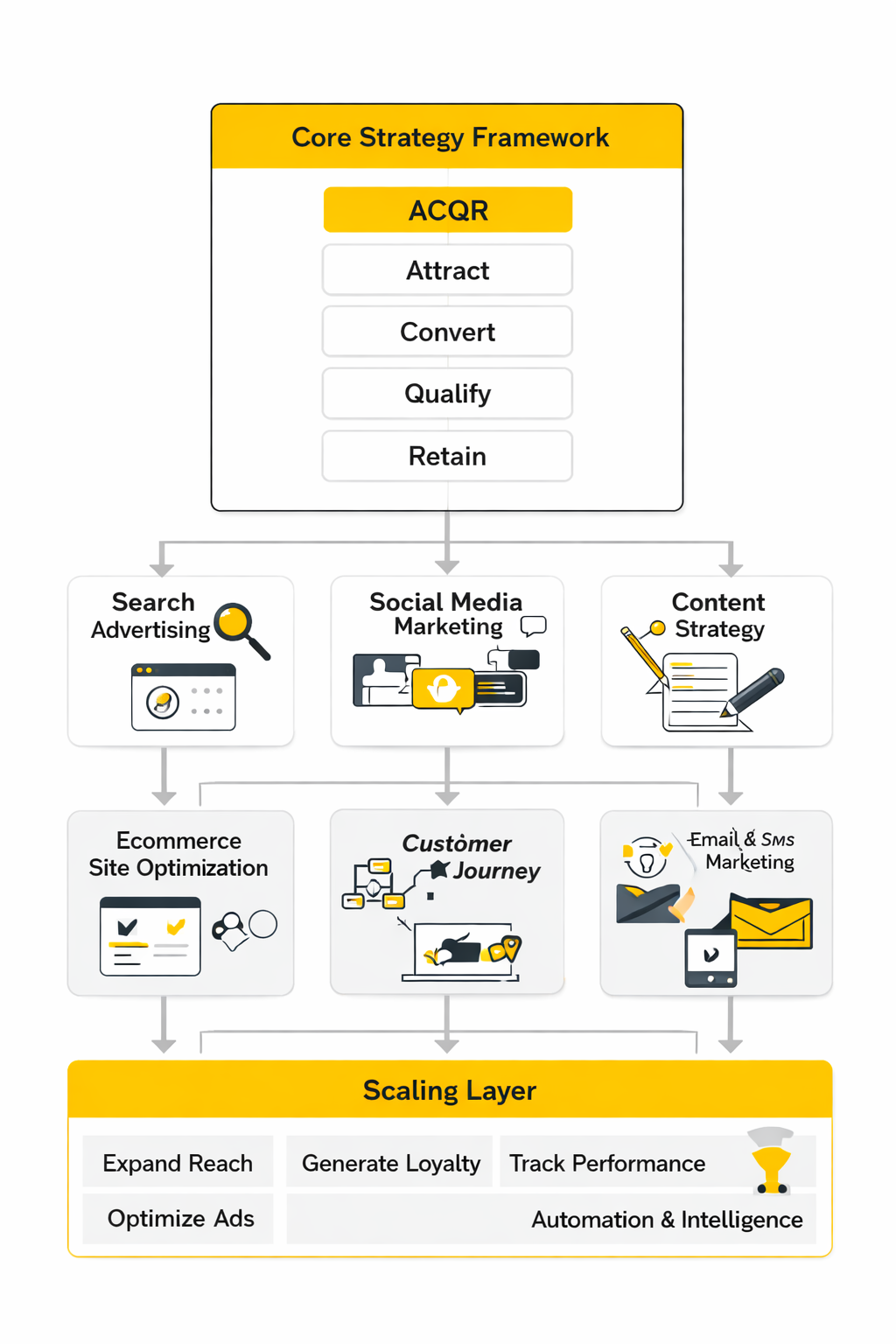
- Demand creation and demand capture This is where your webshop earns attention before the visit and captures intent when shoppers are ready to act. It includes search, paid social, creator content, email capture, organic content, retail media, and branded demand. The goal is not just more traffic. The goal is more of the right traffic, with the right expectation, landing in the right place.
- Merchandising and conversion This is where marketing stops being abstract and becomes commercial. Your product pages, collection pages, bundles, offers, reviews, shipping clarity, and checkout experience all sit here. If a shopper lands on the site and cannot quickly understand what to buy, why to trust it, and how to complete the purchase, acquisition spend gets burned instead of compounded.
- Retention and recovery A visitor who does not buy today is not automatically lost, and a first-time buyer is not automatically a customer worth keeping. Retention includes email, SMS, post-purchase education, replenishment, loyalty, win-back flows, and cart or browse recovery. For many shops, this is where profit improves fastest because it lifts revenue from customers you already paid to acquire.
- Measurement and operating rhythm This is the part most teams skip until performance drops. You need clean attribution thinking, weekly review habits, clear channel roles, creative testing, and a simple view of contribution by source, offer, and customer segment. Without that discipline, stores react to noise, misread channel performance, and end up optimizing for vanity metrics instead of margin.
A lot of implementation problems come down to speed, ownership, and tooling. If your team wants to launch campaign pages faster, test offers without waiting on a dev sprint, or improve merchandising agility, a tool like Replo can make sense. If conversational journeys matter for your channel mix, especially on social and messaging platforms, Manychat is one practical route. And if you want a broader operating layer for CRM, follow-up, and automation, HighLevel or an email-first platform like Brevo can fit depending on how your store is structured.
The important point is not the tool itself. It is whether your stack makes it easier to execute the framework consistently. Good webshop marketing is repeatable because the team can launch, learn, refine, and relaunch without rebuilding the entire machine every time.
From here, the next section moves into the first job in the system: how to bring in qualified traffic that actually has a chance to convert.
Customer Acquisition Channels That Bring Qualified Traffic
The biggest mistake in webshop marketing is chasing traffic before you define what kind of traffic your store can actually convert. That sounds obvious, but a lot of brands still buy impressions, clicks, and reach with no clear view of buying stage, margin, or message match. Google’s 2025 summary of the 4S behaviors makes the issue clear: people move between streaming, scrolling, searching, and shopping in ways that are messy, overlapping, and hard to force into a clean funnel.
That changes how acquisition should work. You do not build a serious webshop by betting everything on one channel. You build it by giving each channel a job, then making sure the landing page, offer, and follow-up match the intent that channel creates.
Start with search and shopping intent
Search is still one of the most valuable acquisition layers because it captures people who are already trying to solve a problem, compare options, or make a decision. Google’s late-2025 retail guidance showed how research-heavy shoppers have become, with 83% of early October holiday purchases researched beforehand and most shoppers using Google or YouTube to build confidence before buying. That holiday data is not the whole market, but it reflects a broader truth: shoppers are less impulsive and more deliberate than many stores assume.
For a webshop, that means search is not just an SEO project and not just a paid search line item. It is a visibility system made up of product pages, category pages, merchant feeds, reviews, schema, pricing clarity, and fast landing experiences. Google’s own documentation shows that free listings can place products across Search, Maps, YouTube, the Shopping tab, Images, Lens, and more, while product structured data and product snippet markup can make price, availability, ratings, shipping information, and other details more visible before the click.
That is why strong webshop marketing treats the product feed like media, not admin. Your titles, images, attributes, variants, and availability data are part of acquisition because they shape whether the right shopper clicks at all. If your product data is thin or messy, you pay the price twice: first in lower visibility, then again in lower conversion quality.
Use paid social to create demand before the shopper searches
Paid social does a different job. It is not mainly there to capture fully formed intent. It is there to create curiosity, frame the problem, show the product in context, and move someone from passive attention to active consideration.
That role matters because many people will not search for your product until something causes the search. Google’s 2025 retail work argues that customer journeys are now blended across channels, and 64% of U.S. holiday shoppers said their scrolling, streaming, searching, and shopping behaviors were mixed together. In practice, this means a strong Meta, TikTok, or YouTube campaign can make your branded search, direct traffic, and retargeting performance look smarter later.
The trap is treating paid social like a magic vending machine. If the creative is vague, the audience is broad, and the landing page is generic, the campaign may still produce clicks without producing useful commercial signal. Good webshop marketing uses paid social to test hooks, offers, product angles, audience objections, and merchandising messages that can later be reused across the site, email, search copy, and even product page structure.
For stores that want to launch campaign pages quickly and test creative-message fit without waiting on a development queue, Replo is one of the more practical options. The point is not to make prettier pages for the sake of it. The point is to get faster at matching the ad promise to the page experience, because that is where paid social either compounds or collapses.
Treat creators as a commerce channel, not a side project
Creator-led acquisition has moved far beyond vanity partnerships. The IAB projected U.S. creator ad spend would reach $37 billion in 2025, which is a useful signal that brands no longer see creators as optional awareness garnish. They see creators as part of the buying journey.
That shift makes sense because creators do something branded ads often struggle to do on their own: they compress trust-building. They can demonstrate the product, answer objections, compare alternatives, show use cases, and give the shopper enough confidence to keep moving. Even Google’s holiday guidance pointed to creators as a confidence builder near purchase, while YouTube’s merchant tools now support the YouTube Shopping affiliate program for eligible merchants and creators.
Social commerce is giving that behavior more commercial weight. U.S. social commerce sales were projected to reach $87.02 billion in 2025, and TikTok says research with GlobalData found that 83% of shoppers discovered a new product on TikTok Shop and 70% discovered a new brand there. You do not need to treat every platform claim as universal truth to see the direction of travel. Discovery is increasingly happening inside content, not only before or after it.
The practical takeaway is simple. Do not brief creators like they are making polished TV ads. Brief them like they are helping a real shopper decide. The content that usually works best in webshop marketing is not the most cinematic; it is the most clarifying.
Capture owned audience before the first order
Not every qualified visitor buys on the first session, and pretending otherwise is one of the fastest ways to waste acquisition spend. Some people need a reminder, some need proof, some need a better offer, and some simply run out of time. If you only count a first-session purchase as success, you leave a lot of value on the table.
That is why owned audience capture belongs inside acquisition, not only retention. Email capture, SMS opt-ins, quizzes, guided product selectors, and conversational follow-up all help you keep the conversation going after the first click. They also make your paid traffic more efficient because a visitor who does not buy today can still become an addressable lead tomorrow.
The best version of this is helpful, not pushy. A skincare brand might use a product-matching quiz, a home brand might offer a buying guide, and a fashion store might capture intent through a waitlist, size alert, or restock flow. Tools like Fillout can help with higher-intent forms and quizzes, while Manychat is useful when your acquisition system depends on social DMs and automated conversations. If your stack needs a broader CRM and follow-up layer, HighLevel or Brevo are the kind of tools that can make first-touch traffic more recoverable.
Build your channel mix by buying stage, not by hype
This is where a lot of webshop marketing gets cleaner. Search captures active demand. Paid social creates demand and gives you creative signal. Creators accelerate trust. Owned capture keeps the window open when the first session does not convert. None of those channels replace the others well, and forcing one channel to do every job usually makes it expensive.
A better way to think about the mix is by sequence. Which channels introduce the product, which channels help the shopper compare, which channels close the decision, and which channels recover the ones who leave? Once you answer that honestly, budget allocation gets easier because you stop arguing about platforms and start assigning responsibilities.
That also makes it easier to avoid lazy attribution decisions. A click from branded search may look like the hero, but it often arrives after social exposure, creator content, reviews, retargeting, or email nudges have already done the heavier persuasion. Good webshop marketing respects the final click, but it does not confuse the final click with the whole reason the sale happened.
The next step is where most of these acquisition gains either stick or disappear: the store itself. Qualified traffic only matters if your product pages, merchandising, and checkout do their job when the shopper arrives.
Product Pages, Merchandising, and Checkout That Convert
Once your acquisition channels start doing their job, webshop marketing becomes much less about reach and much more about conversion quality. This is the point where traffic turns into revenue or disappears into bounce, indecision, and abandoned carts. Baymard’s current benchmarks are a useful reality check here: 51% of ecommerce sites still have “mediocre” or worse product page UX, 58% of desktop product lists and 78% of mobile product lists perform at a “poor” to “mediocre” level, and 64% of desktop checkouts plus 63% of mobile checkouts still score “mediocre” or worse.
That combination explains why so many stores feel stuck. They are not always failing to attract interest. They are failing to make decisions easy once the shopper arrives. Good webshop marketing fixes that by treating the storefront itself as a sales environment, not just a container for products.
Merchandising starts before the product page
A lot of conversion problems begin one step earlier than people think. They begin on collection pages, search results, and product grids where shoppers are trying to narrow options without getting overwhelmed. If that layer is cluttered, repetitive, or hard to filter, buyers never reach the product page in the right mindset.
This is especially costly on mobile, where screen space is tighter and patience is lower. Baymard’s 2025 benchmark found that mobile product-list UX is still “poor” to “mediocre” at 78% of sites, which tells you something important: a lot of stores are still making product discovery harder than it needs to be. That is not a design issue in isolation. It is a webshop marketing issue because merchandising quality changes which products get seen, which offers get compared, and which shopper journeys stay alive.
Strong merchandising usually has a few clear traits. It reduces duplicate variants where possible, surfaces the attributes people actually shop by, and helps users compare without forcing them to click blindly through a dozen near-identical pages. The goal is not to show everything at once. The goal is to help the right product become obvious faster.
Product pages need to answer buying questions immediately
The job of a product page is not to “look premium.” The job is to remove doubt in the order a real shopper feels it. That usually means the page has to clarify the product, show what makes it different, explain how it works, make pricing and delivery expectations obvious, and support the decision with evidence.
This is where many brands underperform even when their creative is strong. Baymard’s product page benchmark shows that only 49% of ecommerce sites have “decent” or “good” product page UX, which means weak PDP structure is still common. Nielsen Norman Group’s ecommerce research also emphasizes that effective product-detail pages need clear content hierarchy, useful imagery, and enough information to reduce uncertainty rather than increase it.
In practice, that means a high-converting product page usually needs better sequencing, not more clutter. The shopper should be able to understand the core offer above the fold, scan the proof without hunting, and access shipping, returns, size, compatibility, or usage details before anxiety starts to rise. Google’s shopping ecosystem reinforces that same logic outside the site, because shipping cost, shipping speed, and return policy are major factors shoppers consider, and Google now makes it easier for merchants to surface that data directly in search environments.
Trust is built with specifics, not slogans
One of the most common webshop marketing mistakes is trying to compensate for weak clarity with generic trust language. “Premium quality.” “Loved by customers.” “Fast shipping.” Those phrases are not useless, but they are rarely persuasive on their own. Buyers trust specifics far more than chest-beating.
Google Merchant Center’s guidance makes this visible even before the click. Product cards can show annotations and badges for sale price, promotions, product ratings, shipping information, and other attributes, because those details help the offer stand out and can improve performance. That is a strong clue for the product page too. The same details that earn attention in search are often the details that earn confidence on-site.
So instead of relying on brand adjectives, strong product pages make the risk feel smaller. They show what ships, when it ships, how returns work, what other buyers experienced, what the materials or dimensions are, and what the buyer should realistically expect. Good webshop marketing does not hide that information in the footer and hope for the best. It uses it to remove hesitation where hesitation actually happens.
Checkout is where friction becomes expensive
By the time a shopper reaches checkout, you are no longer persuading from scratch. You are protecting momentum. That is why checkout friction hurts so much. Every extra field, surprise cost, confusing validation message, or delay now lands when the buyer is closest to completing the purchase.
Baymard’s latest checkout benchmark shows just how common the issue remains, with 64% of desktop sites and 63% of mobile sites still delivering “mediocre” or worse checkout UX. Shopify’s 2025 checkout guidance points in the same direction from a platform angle, noting that buyers increasingly expect purchases to happen in seconds, especially with mobile wallets and stricter performance expectations. This is one reason checkout optimization often lifts revenue faster than another round of top-of-funnel spend.
The practical implication is straightforward. Remove anything that slows decision or makes the buyer feel trapped. Be transparent on total cost early, keep the path short, support fast-pay options where relevant, and make errors easy to fix without punishment. If your store creates tension at the final step, your webshop marketing system leaks profit right where intent is highest.
A practical implementation process for conversion work
Most stores know they should improve product pages and checkout. The problem is that the work stays vague. Teams say they need a better PDP, a cleaner cart, or a faster checkout, but they do not turn that into a repeatable process.
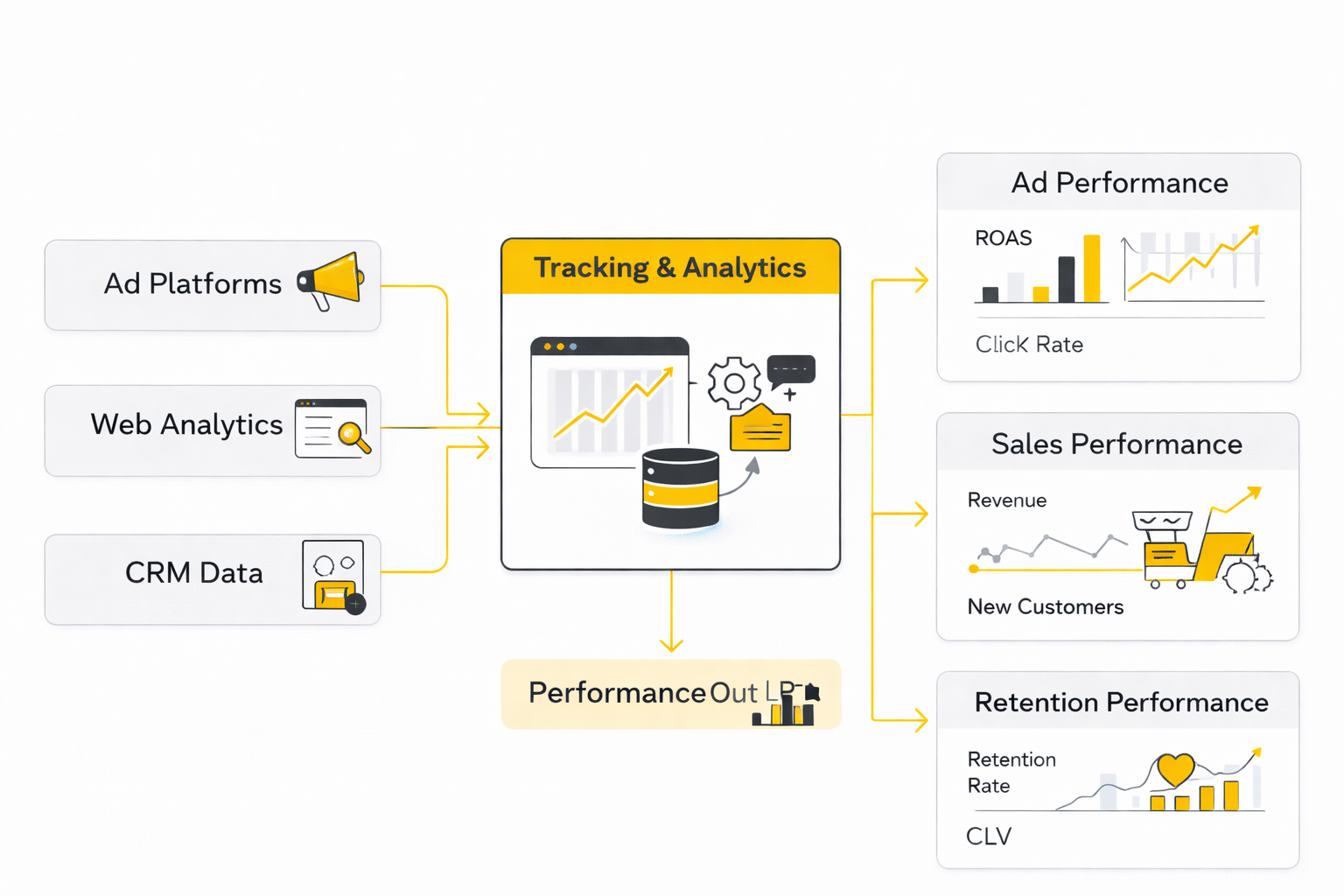
A better approach is to treat conversion work like a structured operating loop:
- Find the biggest leak first Start with evidence, not opinion. Look at product-page exits, low-performing collection pages, cart drop-off, mobile behavior, and the gap between add-to-cart and checkout completion. The point is to identify where the buying journey breaks hardest, because that is where webshop marketing improvements compound fastest.
- Match the leak to a user question Every major conversion problem usually maps to a real shopper concern. They may not understand the difference between two products, may not trust the delivery promise, may not know if returns are easy, or may feel overwhelmed by too many options. Once you identify the question, the fix becomes more specific and much easier to test.
- Rewrite the page around decision sequence This is where execution becomes tangible. Rework the page so the shopper gets the right information in the right order: offer clarity, proof, practical details, objections, and action. Tools like Replo are useful here because they let teams move faster on landing pages and merchandising layouts without turning every test into a development project.
- Tighten checkout around speed and certainty Keep fields and surprises to a minimum, support the payment methods your buyers already expect, and make shipping and returns visible before the shopper starts worrying. Google’s own search guidance highlights that accurate shipping and return information can enhance listings and help improve visibility and potential traffic, which tells you how commercially important those details are even before checkout begins.
- Test one meaningful change at a time Too many teams redesign everything at once and learn nothing. Test a tighter buy box, clearer variant handling, stronger delivery messaging, better review placement, or a simpler cart step. The purpose is not to create activity. It is to create usable insight that improves the next round of execution.
That process matters because it keeps conversion work tied to commercial outcomes instead of aesthetics. Good webshop marketing is rarely built by one dramatic redesign. It is built by repeated, evidence-led improvements that make buying easier every month.
Conversion improves when the storefront and the message finally match
The strongest webshops usually feel coherent. The ad promise matches the collection page, the collection page matches the product page, and the product page matches the checkout experience. There is no jarring handoff where the shopper suddenly feels they landed in a different business than the one they clicked into.
That is why merchandising and conversion work should sit inside your marketing system, not outside it. If your acquisition channels promise convenience, the site should feel easy. If they promise premium quality, the product page should prove it in concrete ways. If they promise a low-risk first order, shipping, payment, and returns should make that promise believable.
This is also where a few practical tools can help. If you want to add a guided shopping assistant or reduce repetitive presale questions, something like Chatbase can support the experience in a natural way. But the tool is never the strategy. The strategy is still the same: reduce uncertainty, preserve momentum, and make the next step obvious.
The next section moves into what happens after the first purchase or the first abandoned session, because that is where webshop marketing starts compounding through retention, recovery, and customer lifetime value.
Bringing the Full Webshop Marketing System Together
At this point, webshop marketing should look less like a collection of tactics and more like one operating system. Acquisition brings in qualified traffic, merchandising helps shoppers find the right product, product pages and checkout reduce hesitation, retention extends customer value, and measurement tells the team where the next improvement belongs. The goal is not to make every channel perfect at once. The goal is to make the handoff between channels, pages, and follow-up feel tight enough that revenue stops leaking at every step.
Professional execution usually gets simpler when the team agrees on one weekly rhythm. Review traffic quality through ecommerce events like view_item, add_to_cart, begin_checkout, and purchase, then compare those signals against repeat purchase behavior and customer lifetime value so you can see whether growth is getting healthier or just louder. Google Analytics explicitly recommends those ecommerce events for online sales, and Shopify’s current CLV guidance is useful for keeping decisions tied to long-term value instead of only first-order revenue. Google Podpora+2
The stack should support that operating rhythm, not complicate it. A lot of stores do well with a leaner setup that combines Replo for faster landing-page testing, Manychat for conversational capture, Brevo or HighLevel for lifecycle and CRM execution, Buffer or Flick for social publishing support, Fillout for quizzes and lead capture, Cal.com for booking calls or demos, Copper for relationship tracking, and Anything.link for cleaner campaign routing. The exact stack can change. What matters is that the store can launch faster, learn faster, and tighten the system without turning every adjustment into a major project.
FAQ for Building a Complete Webshop Marketing System
What should I fix first if my webshop is already getting traffic but not enough sales?
Start where intent is strongest. If shoppers are reaching product pages but not adding to cart, the problem is probably merchandising, offer clarity, or trust. If they are adding to cart and then disappearing, checkout friction is the more likely leak, and Baymard’s current research suggests that is still a widespread issue across ecommerce. Baymard Institute+1
Should a new webshop focus on SEO or paid ads first?
Most new stores benefit from using both, but for different reasons. Paid ads can create faster learning around hooks, offers, and landing pages, while search foundations like product feeds, structured data, and clean category architecture make the store easier to discover over time. Google Merchant Center also makes free product listings available across several Google surfaces, which means search visibility is not only a long-game SEO play anymore. Google Podpora+1
What are the first metrics I should track in webshop marketing?
Track the buying path before you obsess over blended conversion rate. The most useful early sequence is product views, add to cart, begin checkout, and purchase, because it shows exactly where shoppers lose momentum. Google Analytics is built around those ecommerce events and uses its purchase journey reporting to highlight where users drop off between steps. Google Podpora+1
What is a good conversion rate for a webshop?
There is no single number that tells you whether a webshop is healthy. A store with higher-priced products, longer consideration cycles, or more repeat behavior can have a lower conversion rate and still be stronger than a store chasing cheap first orders. Industry benchmarks are still useful as warning lights though, especially when Baymard’s latest checkout research continues to show around 70% cart abandonment across ecommerce. Baymard Institute+1
How important is mobile performance in webshop marketing now?
It is central, not secondary. Google’s retail speed research found that a 0.1-second improvement in mobile speed correlated with an 8.4% increase in conversions and a 9.2% increase in average order value, which is exactly why mobile performance should be reviewed like a revenue metric instead of a technical vanity metric. When most stores are still underperforming on mobile product-list and checkout UX, faster mobile execution becomes a serious commercial advantage. Baymard Institute+1
Do shipping and return details really belong inside marketing?
Yes, because they change whether the click turns into trust. Google now supports shipping and return information directly through Search Console and product markup, which means those details influence visibility and shopper confidence even before someone lands on the site. If a store hides shipping costs or makes returns feel vague, marketing has already created doubt before checkout ever starts. Google for Developers+2
Do I need email and SMS from day one?
You need at least one owned channel early, because not every qualified visitor buys on the first session. Email is usually the cleaner starting point because it supports welcome, cart recovery, product education, and post-purchase communication without making the brand feel intrusive too quickly. SMS becomes much more valuable once the store has real repeat behavior, clear consent, and a strong reason to use urgency well.
How do I know whether my traffic problem is really an offer problem?
Look at the sequence, not the headline metric. If traffic clicks through but quickly leaves category pages or product pages, the promise may be mismatched, the audience may be off, or the merchandising may be too weak to hold attention. If traffic stays engaged and still fails late in the funnel, the offer, trust signals, delivery promise, or checkout flow are more likely to be the real issue.
Can AI improve webshop marketing, or is it mostly hype?
AI helps when it speeds up useful work like creative iteration, customer-support assistance, segmentation support, catalog organization, or faster page testing. It becomes dangerous when brands use it to hide weak positioning, generic offers, or sloppy lifecycle logic behind more content volume. The best use of AI in webshop marketing is to accelerate decisions that are already grounded in customer behavior, not to replace strategic thinking.
When should I hire specialists instead of handling everything in-house?
Hire specialists when the store is bottlenecked by complexity, not just by workload. That usually happens when paid acquisition needs tighter creative testing, lifecycle needs real segmentation, analytics needs cleaner attribution thinking, or merchandising changes are piling up faster than the team can execute them. A specialist should remove a growth constraint, not simply add more reporting layers and meetings.
What usually breaks when a webshop starts to scale?
Scaling usually breaks at the handoffs. More traffic exposes weak collection pages, more orders expose poor post-purchase communication, and more lifecycle sending exposes deliverability issues if authentication and sender discipline are not in place. Google’s sender rules require SPF or DKIM for all senders and DMARC for bulk senders, so retention growth can quietly stall if email infrastructure is treated like an afterthought. Google Podpora+1
How should I think about retention without becoming too discount-dependent?
Treat retention as a relevance problem before you treat it as a promotion problem. The second order should be supported by timing, product fit, post-purchase trust, replenishment logic, and useful communication, not only by another coupon. Once discounts become the main reason people return, webshop marketing starts teaching customers to wait instead of teaching them to prefer your store.
What is the clearest sign that webshop marketing is finally working?
The clearest sign is not one viral ad or one strong week. It is when acquisition, conversion, and retention start reinforcing each other, so the store can spend to acquire customers without depending on perfect conditions every month. When the funnel becomes more predictable, repeat purchase improves, and the team can point to one or two concrete bottlenecks instead of guessing across everything at once, the system is finally behaving like a real growth engine.
Work With Professionals
Explore 10K+ Remote Marketing Contracts on MarkeWork.com
Most marketers spend too much time chasing clients, competing on crowded platforms, and losing a percentage of every project to middlemen. MarkeWork gives you a better way. Browse thousands of remote marketing contracts and connect directly with companies desperate to hire skilled marketers like you, without platform commissions and without unnecessary gatekeepers.
If you're serious about finding better opportunities and keeping 100% of what you earn, explore available contracts and create a profile for free at MarkeWork.com.